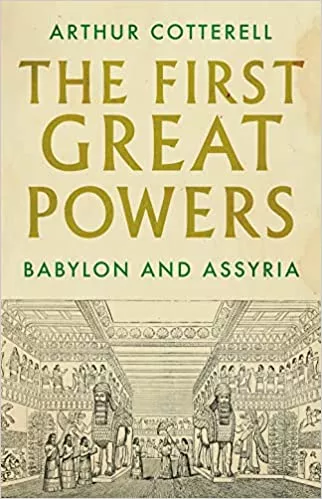
The First Great Powers: Babylon and Assyria
Jane Waldron Grutz
Arthur Cotterell.
Hurst, 2019.
Noted historian Cotterell brings the long and complex history of Mesopotamia to life in this survey of one of the world’s first great civilizations. This history begins in the fourth millennium BCE, on the Euphrates River, with the founding of the world’s first city, Uruk, in Sumer, where it is thought the Sumerians began to inscribe symbols on clay tablets. There, cuneiform was born, the world’s first form of writing. What followed was progress in the sciences, particularly mathematics and astronomy, paving way for the rise of Babylon and later Assyria, where both sciences were used to control economies and foretell the future. Cotterell states the role played by kings and gods throughout Mesopotamian society and how advances in warfare allowed some nations to expand and, over time, create power centers capable of administrating large tracts of land and bringing diverse peoples together into a unified whole, thereby creating a civilization not so different from our own.
You may also be interested in...
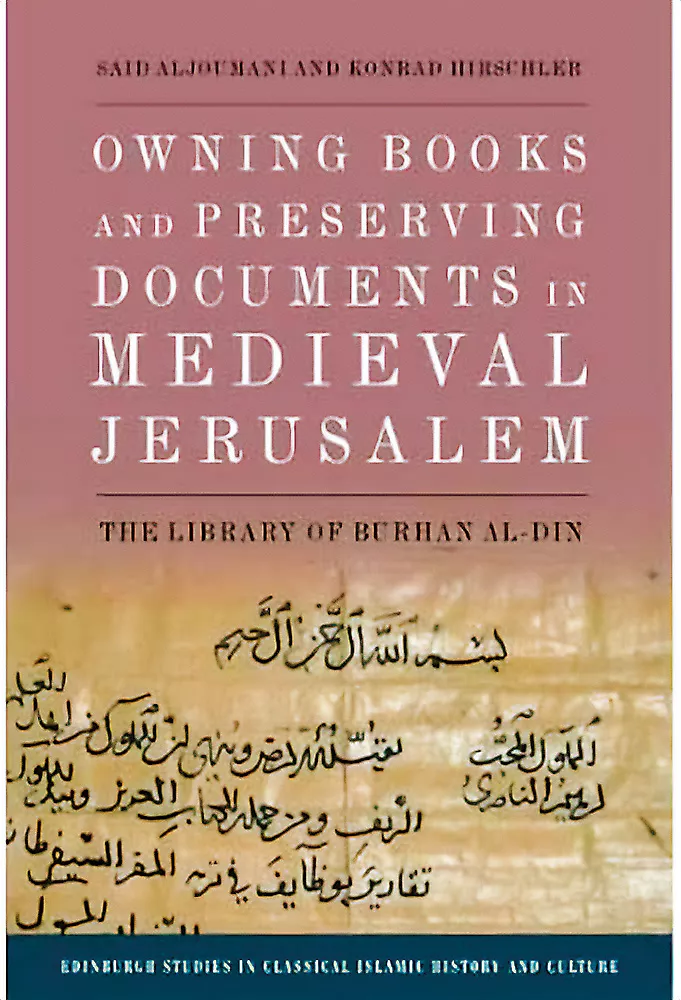
Owning Books and Preserving Documents in Medieval Jerusalem—Book Review
In this painstaking work, Owning Books and Preserving Documents in Medieval Jerusalem, historians Said Aljoumani and Konrad Hirschler explore a culture in which books became woven into the fabric of daily life through the case of Burhān al-Dīn Ibrāhīm al-Nāsīrī.
A Scholarly Look at Football in the Middle East—Our Book Review
This collection, edited by Abdullah Al-Arian, explores the early history and growing influence of football throughout the region.