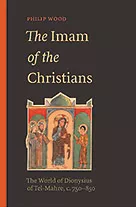
The Imam of the Christians: The World of Dionysius of Tel-Mahre, c. 750–850
Robert W. Lebling
Philip Wood.
Princeton UP, 2021.
“[M]y immediate purpose is to investigate how Dionysius and near-contemporary historians in the Jacobite tradition imagined their environment.”
—From The Imam of the Christians
This story of Dionysius of Tel-Mahre, the ninth-century Jacobite Syriac Orthodox patriarch of Antioch, under the Abbasid Caliphs al-Ma’mun, al-Mu’tasim and al-Wathiq, focuses on the Jacobite communities of eastern Turkey and northern Syria, where Dionysius held sway, exploring the theoretical and working relationships between the Islamic Caliphate, centered in Baghdad, and the coexisting Christian communities, led by patriarchs. Dionysius, born along the present-day border of Turkey, Syria and Iraq, capitalized on his knowledge of Arabic and Islamic culture, building linkages with Baghdad that ultimately created an “Islamicate” Christianity significantly different from the Christendom of Europe and Byzantium. Dionysius and other similarly inclined Orthodox clergy used their ties with the Abbasids to exert authority over rival Christian Orthodox leaders, often supported with troops from Baghdad. In fact, to emphasize his links to the Abbasids in both power and theology, Dionysius referred to himself as an “imam,” a term that also applied to the caliph Al-Ma’mun.
—Robert W. Lebling
You may also be interested in...
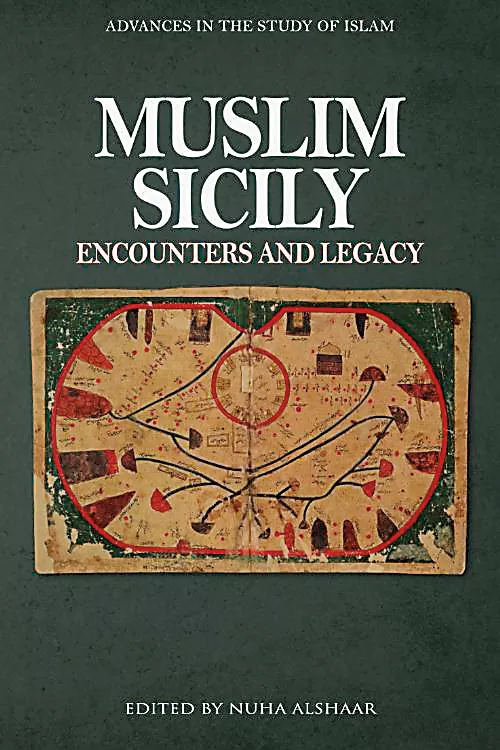
Nuha Alshaar’s Essay Compilation Muslim Sicily—Our Book Review
What emerges from this volume by Nuha Alshaar, a professor of Arabic literature and Islamic studies, is a rounded picture of Sicily as a site of cultural exchange that shaped the medieval Mediterranean.
Memoir Paints World’s Biggest Game as Great Connector—Our Book Review
Tim Bascom transforms a lifetime of playing football across five continents into a meditation on belonging, arguing that the game’s great gift is not the goals but the wordless understanding it creates among people.