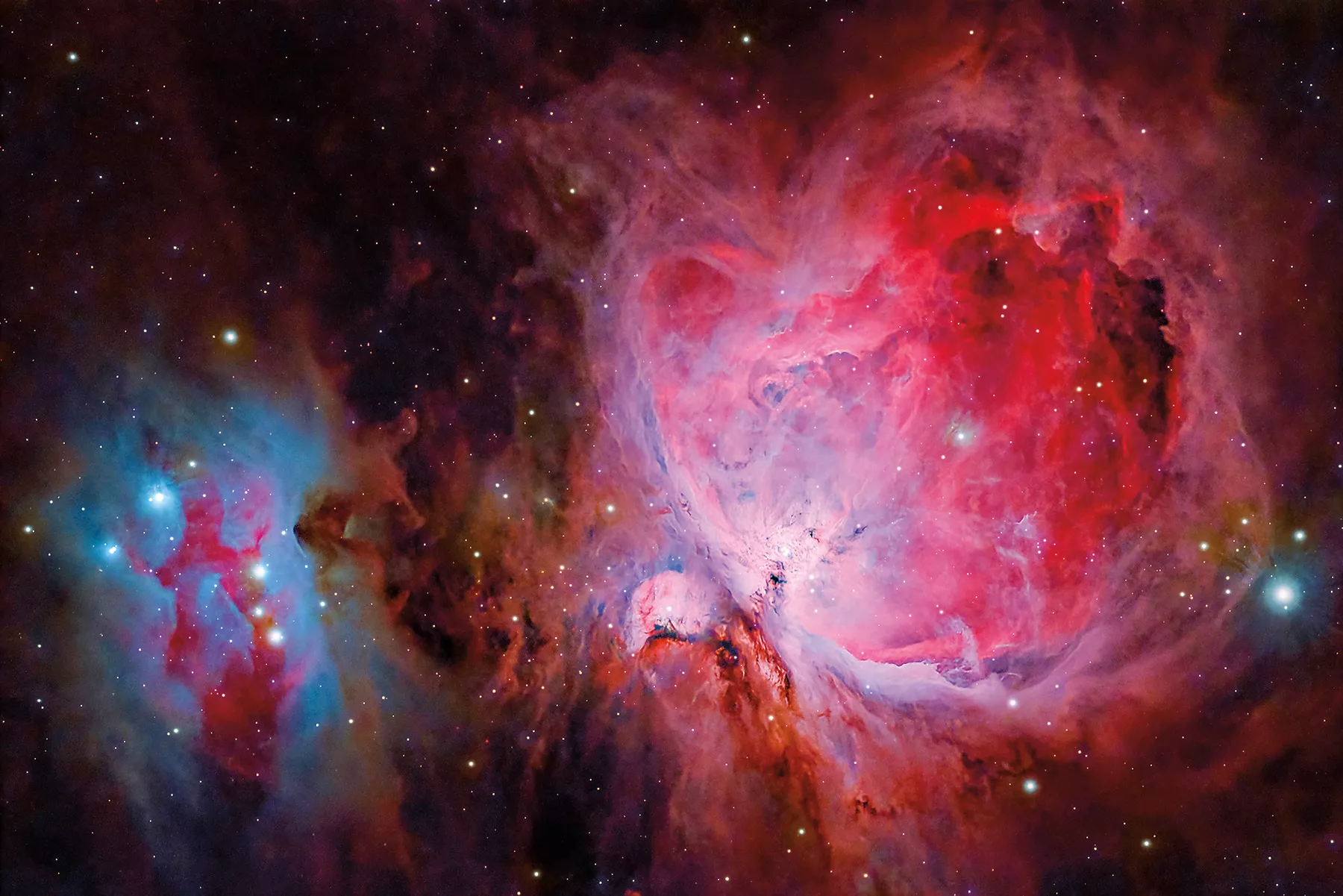
Spotlight on Photography: Orion Through a 3D-Printed Telescope
With his homemade telescope, Astrophotographer Zubuyer Kaolin brings the Orion Nebula close to home.
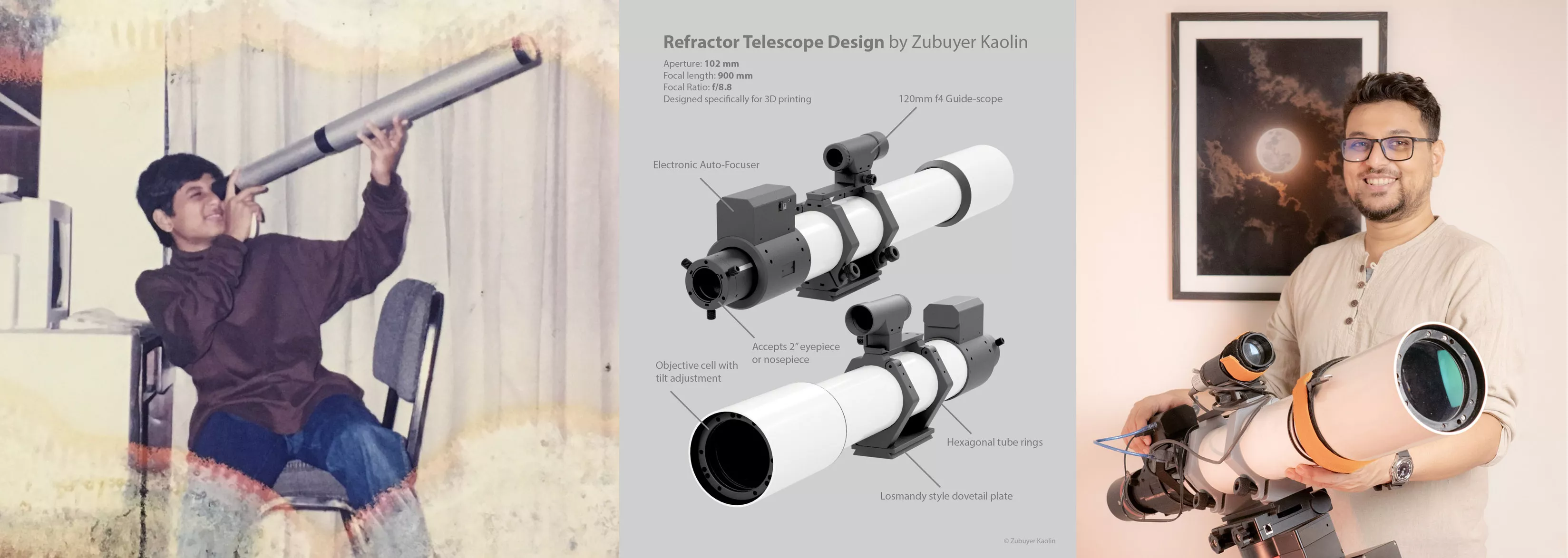
I had a keen interest in astronomy and the universe around us from an early age, and I crafted my first telescope from cardboard tubes and spectacle lenses when I was 12 years old. I remember looking at the Pleiades star cluster with it and seeing thousands of stars that were invisible to my naked eyes. I was awestruck, and promised myself that when I grow up, I’d make a better telescope!
In 2018 I started tinkering with electronics, robotics and 3D printing. I suddenly had the means to fulfill my childhood dream. In September 2019 I took my first image of a deep-sky object from my rooftop using nothing but a standard mirrorless camera on a tripod.
I had to overcome many technical challenges: tracking the sky precisely, building a reliable rig that can take very long exposures, modifying my camera to be more sensitive to the light emitted by the nebulae, etc.
In 2024, for three nights, I pointed my homemade telescope, made of PVC pipe and 3D-printed parts, at the most famous nebula in the winter night sky. I collected more than 11 hours of data and decided to use the best eight hours of it. After many hours of processing, this is my final image of the great Orion Nebula as seen from Dhaka, Bangladesh.
Zubuyer Kaolin is a Bangladeshi astrophotographer who captures breathtaking images beyond Earth’s atmosphere. Learn more about Kaolin, his telescope and his passion for photography at AramcoWorld.com.
@the.z.axis
@zubuyer
zubuyerkaolin.com
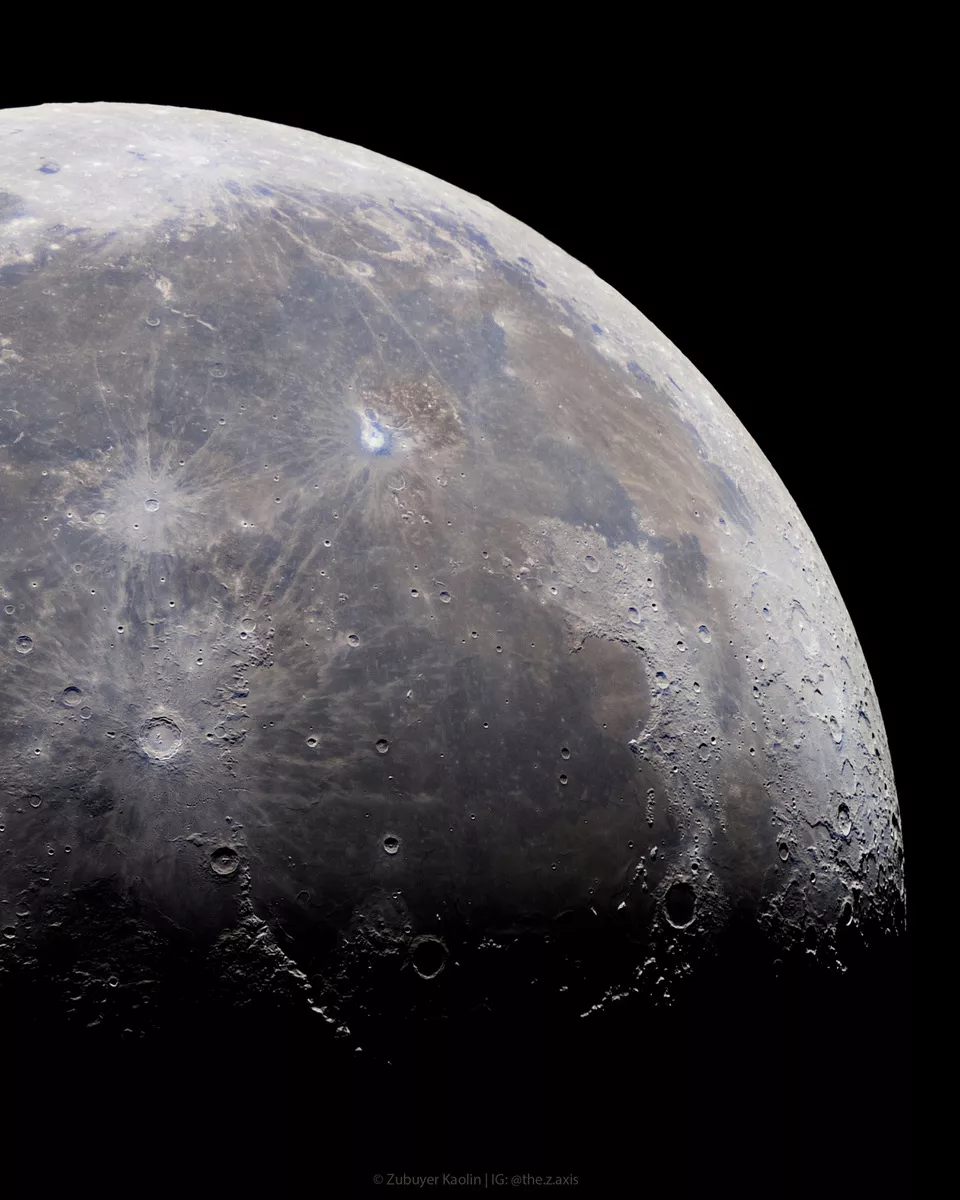
Half Moon
You may also be interested in...
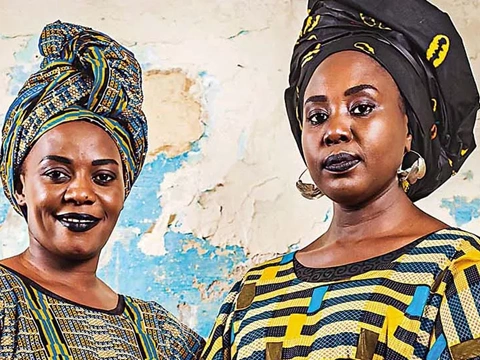
"Duet": Senegalese Double Portrait
Arts
“Duet” comes from the Latin root word duo which means two. The Duet series focuses on double portraits, a tradition in West Africa.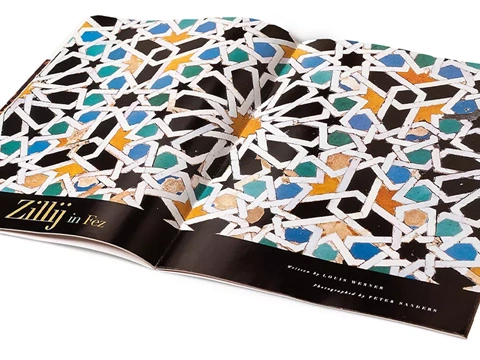
Spotlight on Photography: Explore Moroccan Zellige (Zillij) Tilework in Fez With Peter Sanders
Arts
In patterns and refractions, the old city of Fez, Morocco, comes to life through the geometric tile works known as zillij. In 2001, AramcoWorld commissioned photographer Peter Sanders to tell the story of a family who for five generations has added new dimensions to art and architecture.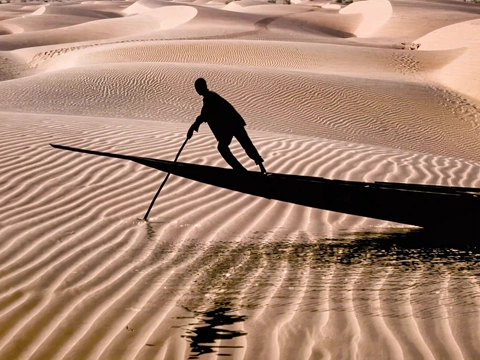
FirstLook: Poetic Fusion
Arts
Prior to our modern practice of image manipulation with editing software, photographers worked more with planned intention and craft.