The American Hands Weaving Legacies From Saffron Threads
Meet the keepers of US-grown saffron—a spice prized around the world—who have cultivated it as a culturally important ingredient for generations.
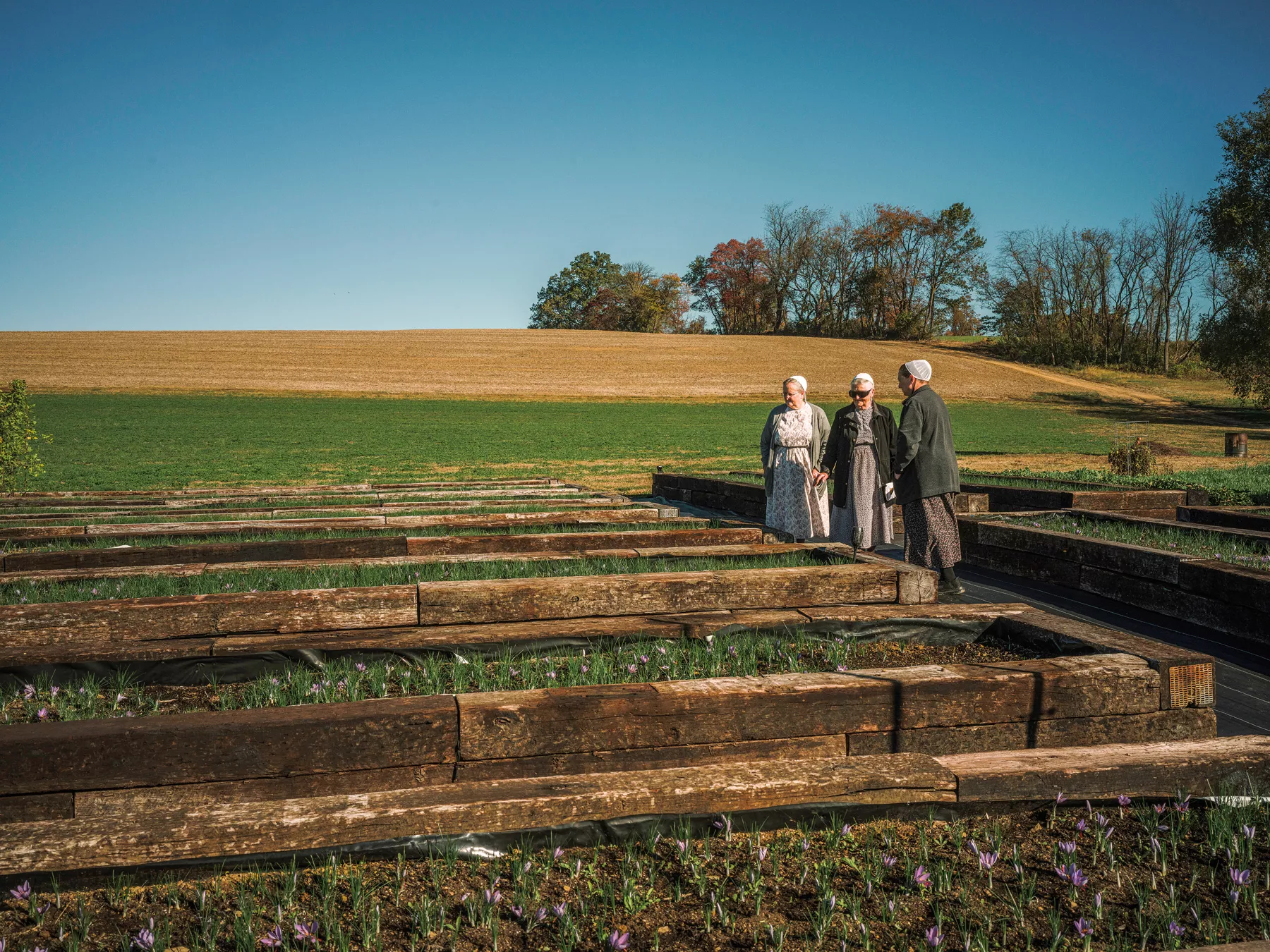
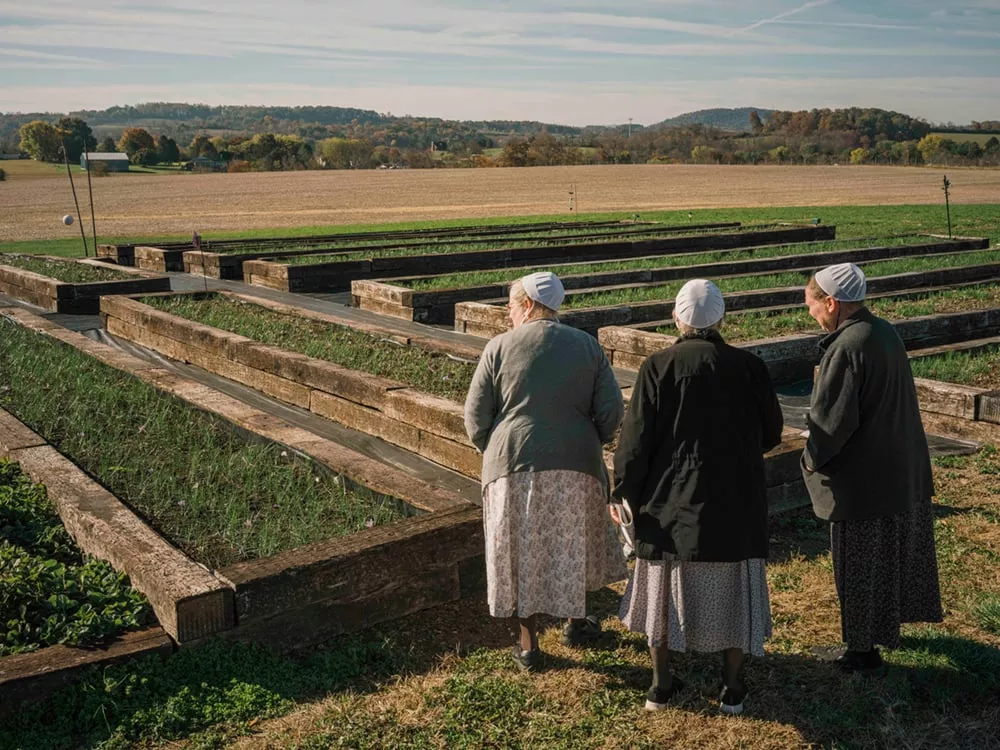
At the peak of the sloping hillside at the zenith of autumn, three women survey the fields of purple crocuses at their feet. As the chill of the previous evening still ripples through the morning air, impossibly fat bees buzz around them, drunk on the pollen from the open flowers. Marked by their modest clothing and covered hair, the women gauge the hours ahead required to pick the precious flowers and pluck out their fire-red stigmas to be gently dried and transformed into saffron, the world's most expensive spice.
These are not the ancient saffron fields of South Asia or Iran, where the highest grade of saffron can sometimes rival the price of gold. This is Berks County, Pennsylvania, in the northeastern United States. The women, Christine Martin, Ruth Zimmerman Martin and her daughter Wanda, are Mennonites: keepers of American saffron.
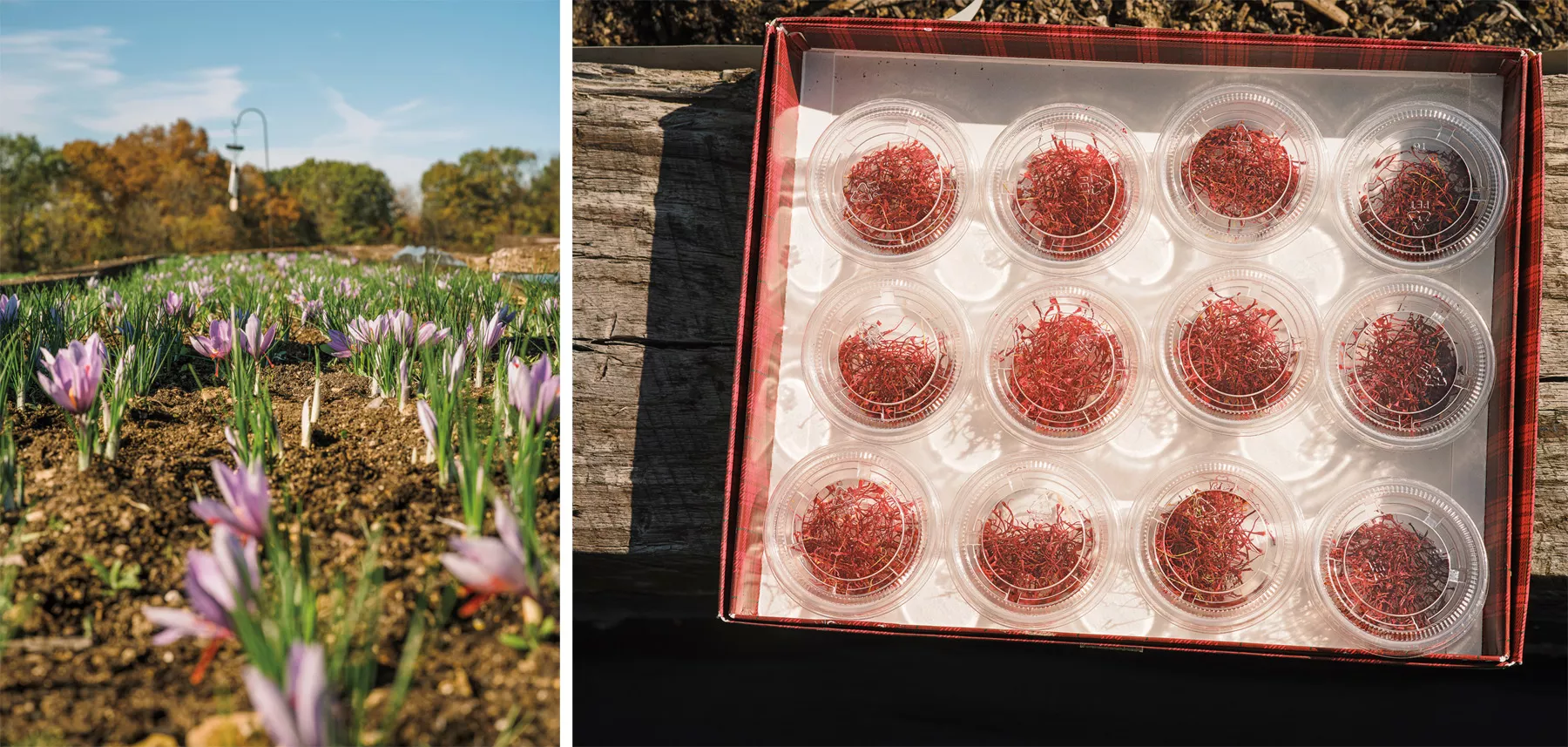
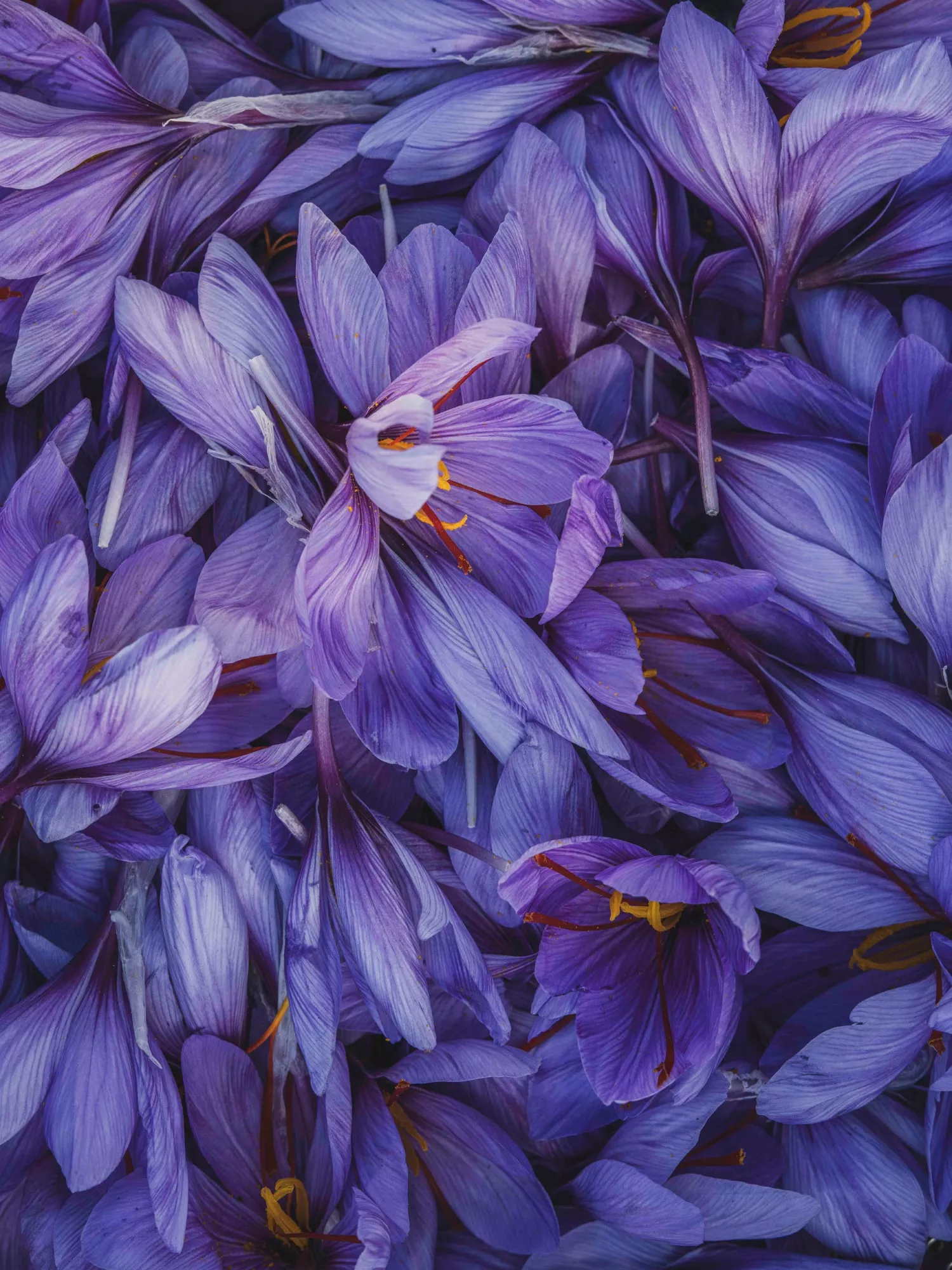
Left Crocuses bearing saffron stigmas open in the sun at Christine Martin's farm in Mohrsville, Pennsylvania. Right Martin keeps her harvested saffron stigmas in an old Whitman's chocolate box. Top Christine Martin surveys her farm with Ruth Zimmerman Martin and her daughter Wanda (no relation to Christine).
"Have you ever seen anything more beautiful?" the eldest of the three, Ruth Zimmerman Martin, asks, beaming. No relation to Christine, the octogenarian gave the younger woman some of her first saffron corms more than 20 years ago. "I'd say she's really succeeded with it," Ruth tells me.
As is expected in their culture, Christine remains humble in the face of her older neighbor's praise. She knows there are long hours ahead of her for picking the red stigmas from the pretty purple crocuses.
"I'll put them in small packages to send to family and friends with their Christmas cards," she says. After keeping some for her own cooking, the rest will be sold in small containers in her nephew's butcher shop about 35 miles away.
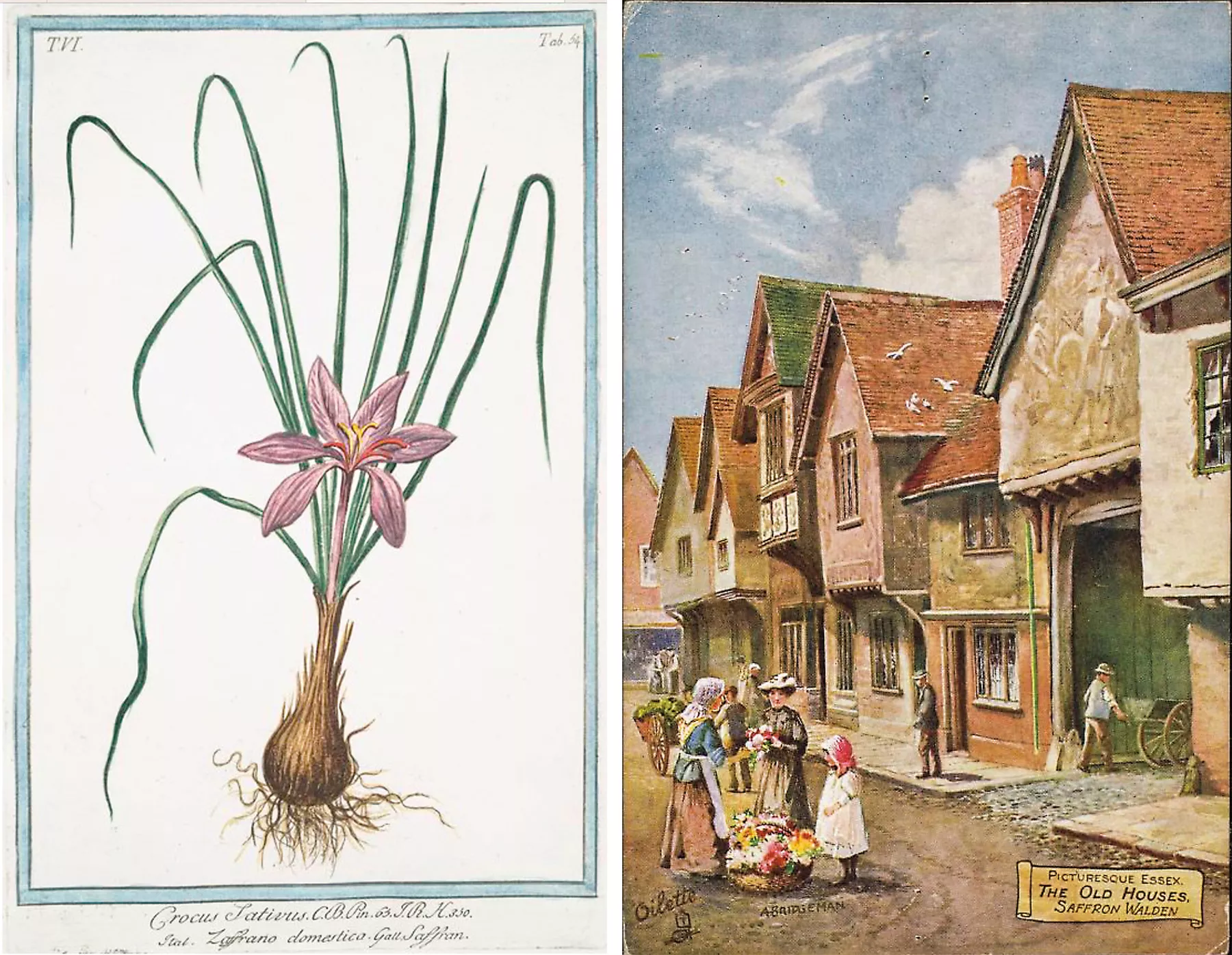
Left An 18th-century drawing of the saffron crocus by Roman botanist and physician Giorgio Bonelli. Right A postcard, circa 1906, depicting the picturesque town of Saffron Walden recalls that in the Middle Ages, saffron was grown as far north as England, not unlike the way it's grown in the US today.
Left: New York Public Library; Right: The Newberry Library
Heartland of American Saffron
Mennonites like the Martins are a Christian pacifist, close-knit community committed to simple living and plain dress. They have been growing saffron in this region for generations.
This little-known fact that I first came across while researching my book Saffron: A Global History immediately captured my attention. As a person of both Middle Eastern and South Asian descent, I grew up certain in the knowledge that Americans and Europeans knew little of the precious spice that was so important to our cuisine.
It turns out I was wrong. Mennonites are descended from Swiss and Norwegian immigrants, who were versed in using saffron in foods like St. Lucia buns, a Christmastime treat. They likely learned saffron farming in Pennsylvania from the Schwenkfelders, a sect of German Protestants who were both saffron farmers and merchants who arrived in Pennsylvania in the early 18th century carrying saffron corms (as the bulbs are properly called) to William Penn's New World colony. There they joined previous émigrés from Germany incorrectly labeled "Pennsylvania Dutch"-a misunderstanding of the word "Deutsch," which means "German." Saffron became key to elevating their simple foods for special occasions, and so it has been grown continually for generations.
Ruth Zimmerman Martin lives just outside Lititz, Pennsylvania, the historical heartland of American saffron. About 75 miles west of Philadelphia, the birthplace of the nation, Lititz was the Schwenkfelder saffron traders' first stop.
Dubbed "the coolest small town in America," Lititz is 5,000 miles (8,047 kilometers), three continents and almost six millennia from saffron's birthplace in the Mediterranean. Along its main street, 18th-century homes and businesses now house cute shops and trendy restaurants. But just outside town, it's still common to see Amish carriages traveling the paved roads, just as their ancestors did when those same throughfares were made of dirt.
It is here that the descendants of the Geelder Deutsch and the Mennonites, their Anabaptist cousins, still largely live around the site of their forebears' arrival. And it is here in Lititz that saffron growing became vibrant and widespread as both a private and commercial enterprise into the early 19th century.
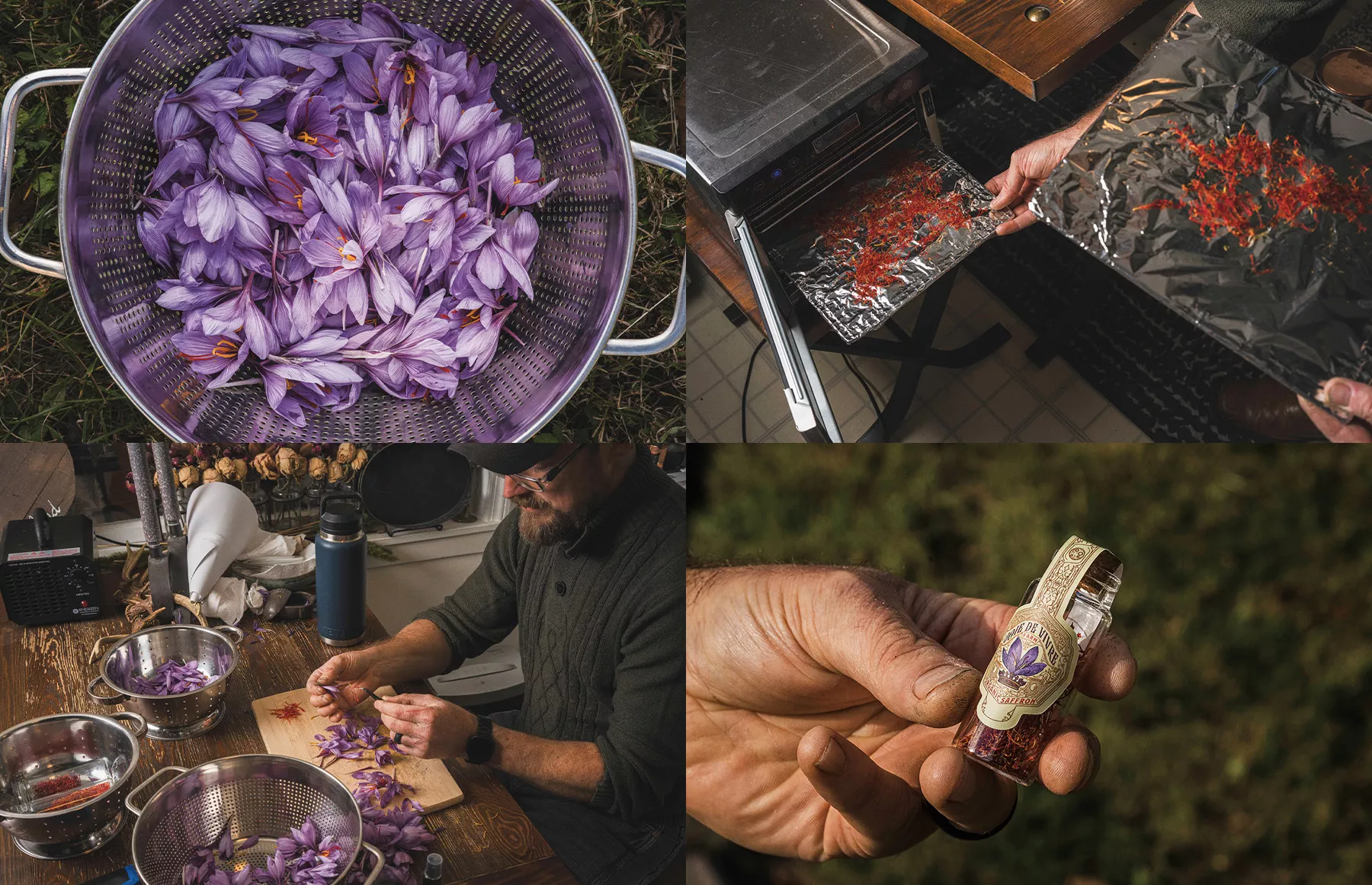
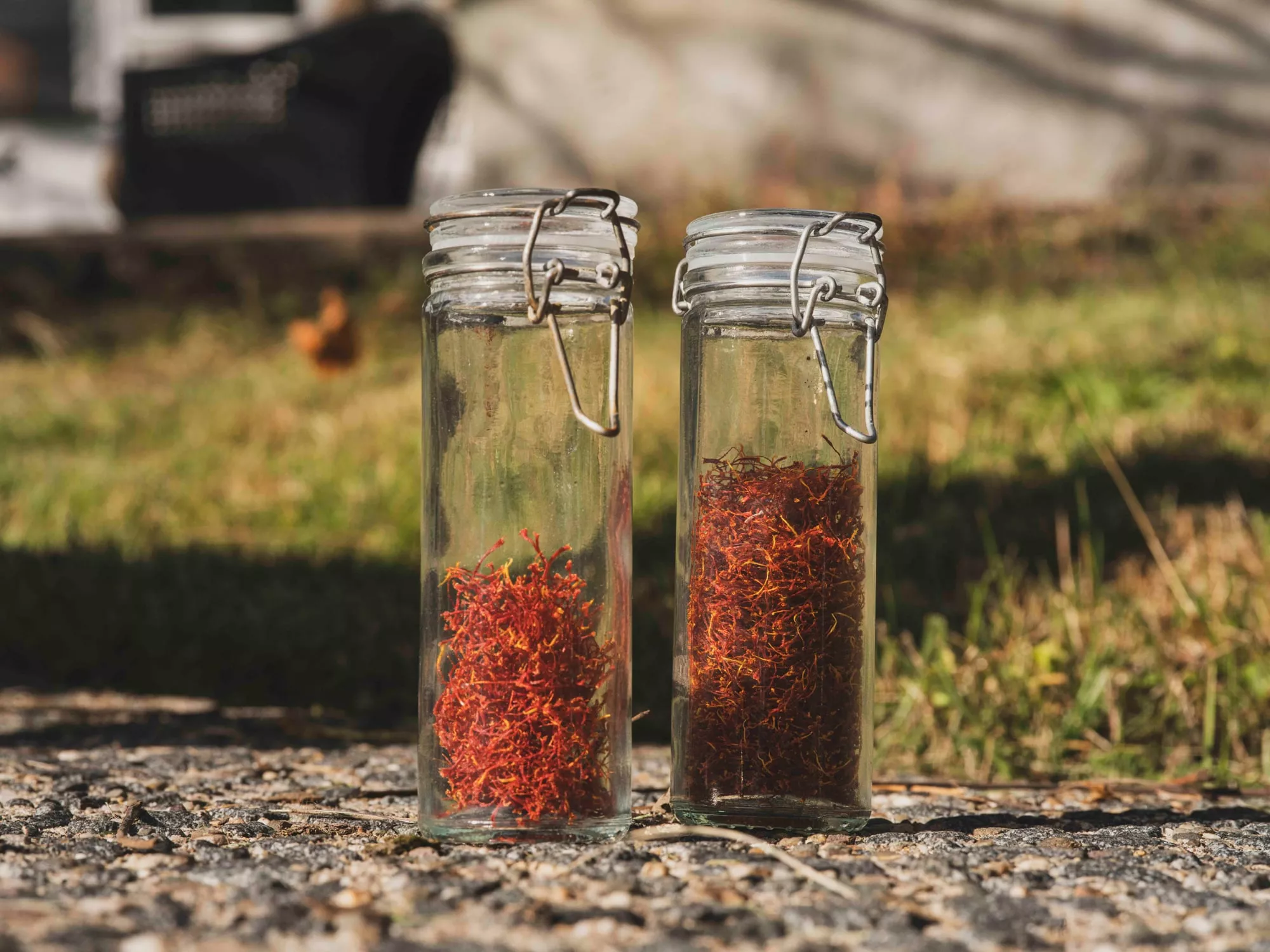
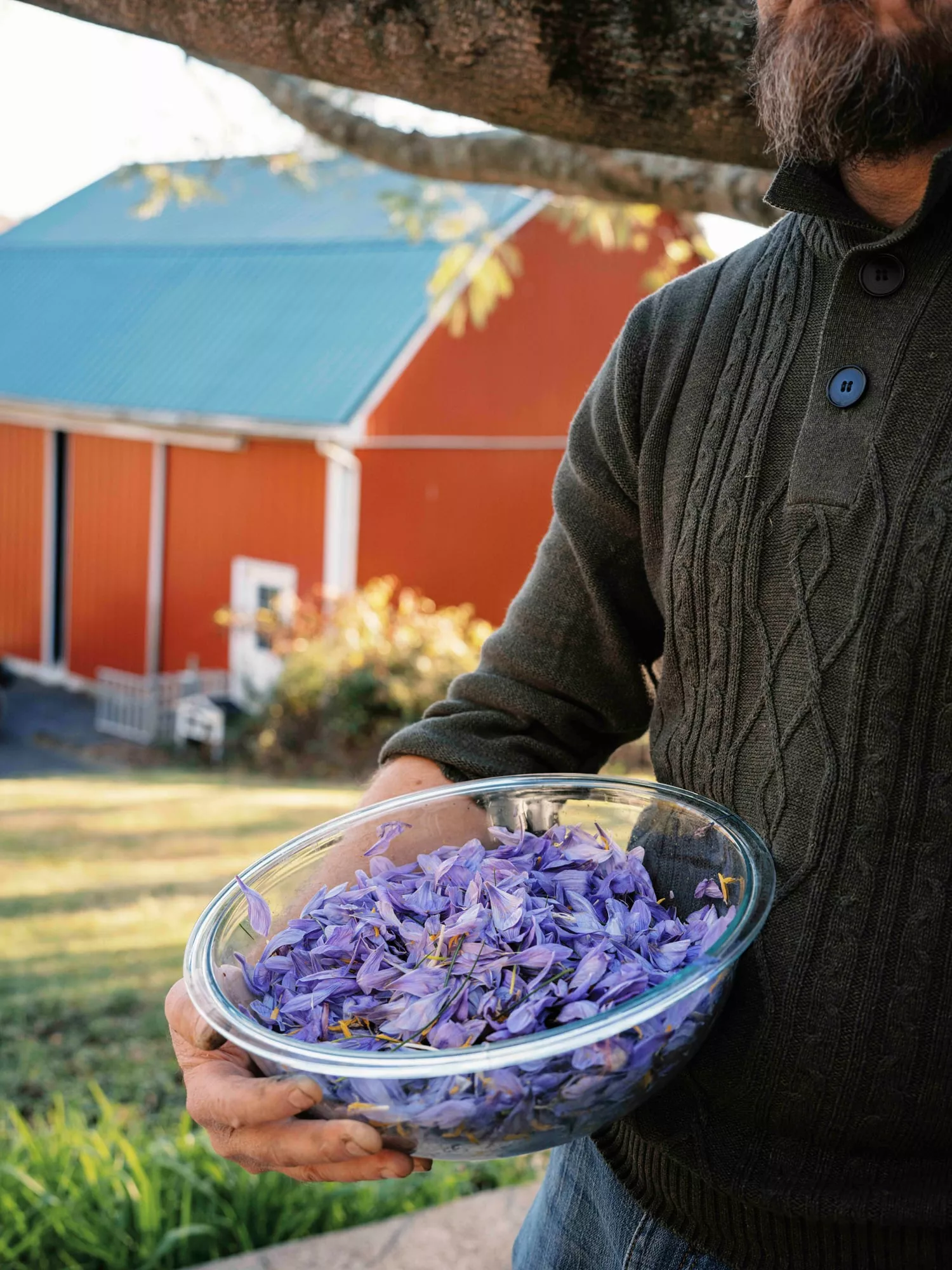
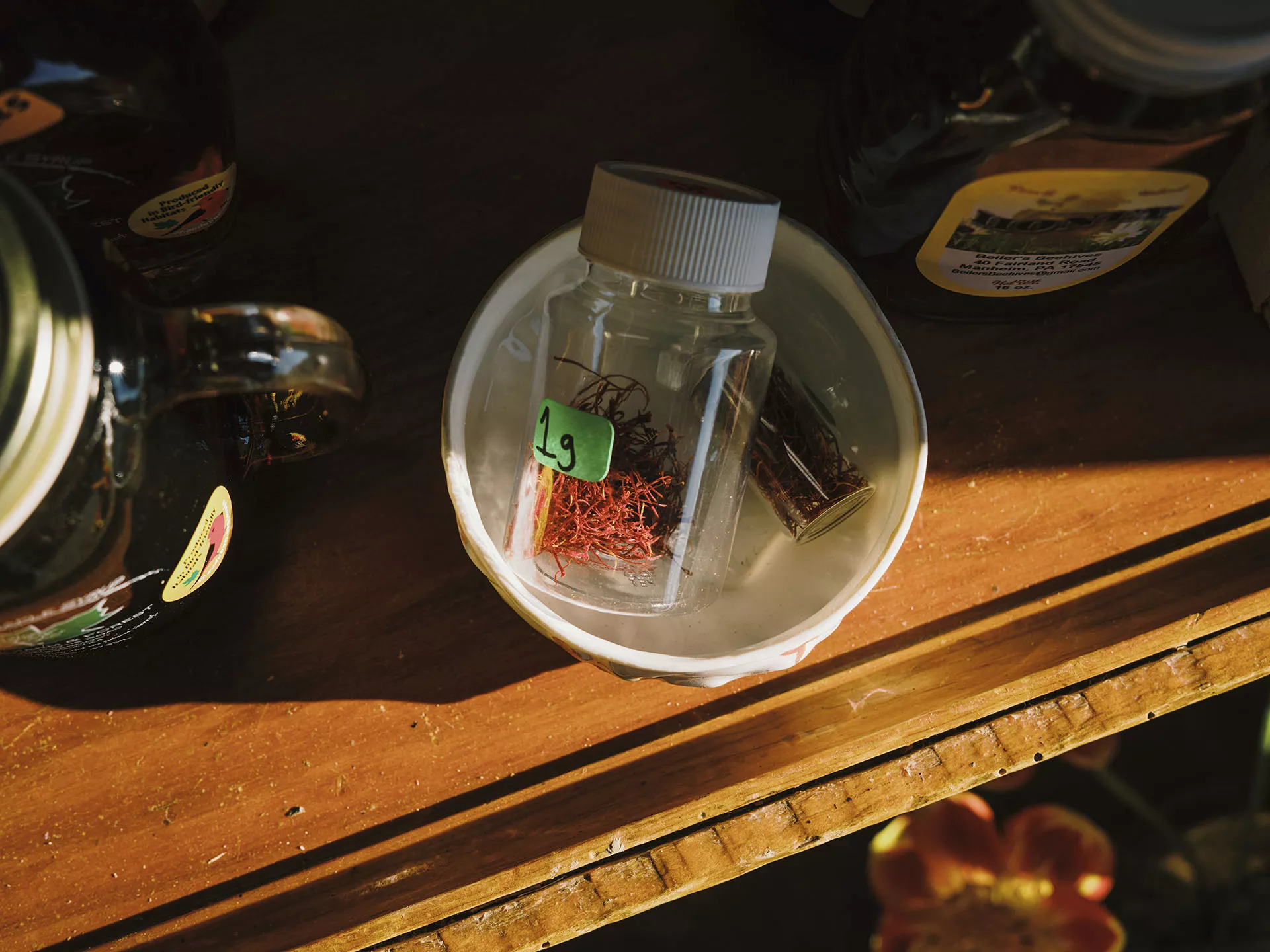
Top left Freshly picked saffron crocuses from Toby Allspach's farm in Coopersburg, Pennsylvania; Left Allspach separates the few stigmas from the flowers daily during harvest season; Above rightAllspach places the stigmas into a food dehydrator; and Right a vial containing 1 gram of saffron is ready to be sold.
I spoke to local dairy farmer Martin Keen when writing Saffron: A Global History. He told me that his family has used saffron for generations. "They had 40 large garden beds, and one would be nothing but pure saffron," he said.
Keen explained the lack of recipes or written history about saffron growing in the Lancaster County community was because growing saffron was women's work. "Usually it was grown in family vegetable gardens, and the vegetable garden was the purview of the wife and daughters," he said. "You never find farm journals written by women."
Keen also told me that saffron was culturally important to the Geelder Deutsch as a flavoring in soups, stews and baked goods. Those who did not grow it could buy it from the local Mennonite grocers and pharmacies-in small packets kept behind the counter, just as it is today. At home saffron was stored in wooden pedestal jars hand carved especially for that purpose and painted in a folk German style.
In the 18th century, saffron was also capturing the interest of America's wealthiest citizens. While researching saffron of this period, I came across a letter at the Library of Congress from President Thomas Jefferson, who wrote Philadelphia horticulturist Bernard McMahon in 1807 seeking saffron corms for Monticello, his estate in Virginia. McMahon had returned just three months before from traveling the Louisiana Purchase territory-land the US bought from France that stretches from the Mississippi River to the Rocky Mountains-with explorers Lewis and Clark as the duo's official plant collector. It was probably from this same Lancaster County community that the gardening guru collected those specimens.
In modern-day Lititz, Charlene Van Brookhoven, an avid gardener and member of the Lititz Historical Foundation, muses that while saffron was fit only for kings in Asia and Europe, here in Lancaster County it is a staple among simple rural people who add it to boiled chicken or dumplings to make their meals a little more special.
Although not herself a Mennonite but rather of German Moravian descent, Van Brookhoven has enjoyed saffron dishes in her travels to Spain and Italy. Today she grows a small planter of saffron for her own use. Many of her neighbors do the same-gone are the vast gardens of home-grown saffron she witnessed decades ago. She became fascinated with the abundant use of saffron, which she considered a sophisticated international flavor, among the neighbors she calls "simple folk."
"Here are these unassuming people quietly eating simple dishes with a spice that adorned the table of royalty," she notes.
Queen of the East
From its first harvest three millennia ago in Greece to its mass cultivation in Persia in the 10th century BCE, saffron indeed largely graced the tables of nobles and kings.
Ancient writers like the first-century CE Roman/Spanish writer Columella are among those who first described saffron movement through the world: Phoenician traders first took the precious corms, native to the Mediterranean and southwestern Asia, from Santorini in modern-day Greece by ship to ancient Iran, where it was cultivated and carried along on the silk trade routes to the Roman Empire, to the Middle East, Asia and the north of both Africa and India. It quickly became integral to local culture. Moors from the North of Africa brought saffron to Spain in the sixth century where it became integral to the cuisine of the Iberian peninsula during the next 800 years of Muslim rule.
From Spanish paella to Moroccan saffron tea to Iran's layered rice dishes and Arabic coffee, saffron is important in both sweet and savory dishes as well as in natural medicine. The third-century CE Greco-Roman physician Galen wrote about saffron's medicinal uses, as did Persian physician Ibn Sina in his Al-Qanun fi al-Tibb or "The Canon of Medicine" written in 1025 CE.
Just as the ancients realized its value, so too do people throughout the Middle East and North Africa with shops singularly selling saffron still common in bazaars in Morocco, Saudi Arabia, India, Turkey, Iran and elsewhere. It remains the world's most expensive spice. Our obsession with saffron makes it feel reasonable to me that wars have been fought over it. According to Pat Willard's 2002 book Secrets of Saffron: The Vagabond Life of the World's Most Seductive Spice, in the 14th century a ship filled with saffron destined for Basel in Switzerland was intercepted by a group of European nobles. An international conflict ensued. International counterfeiting rings have tried to capitalize on the public's hunger for a cheaper alternative from antiquity to today.
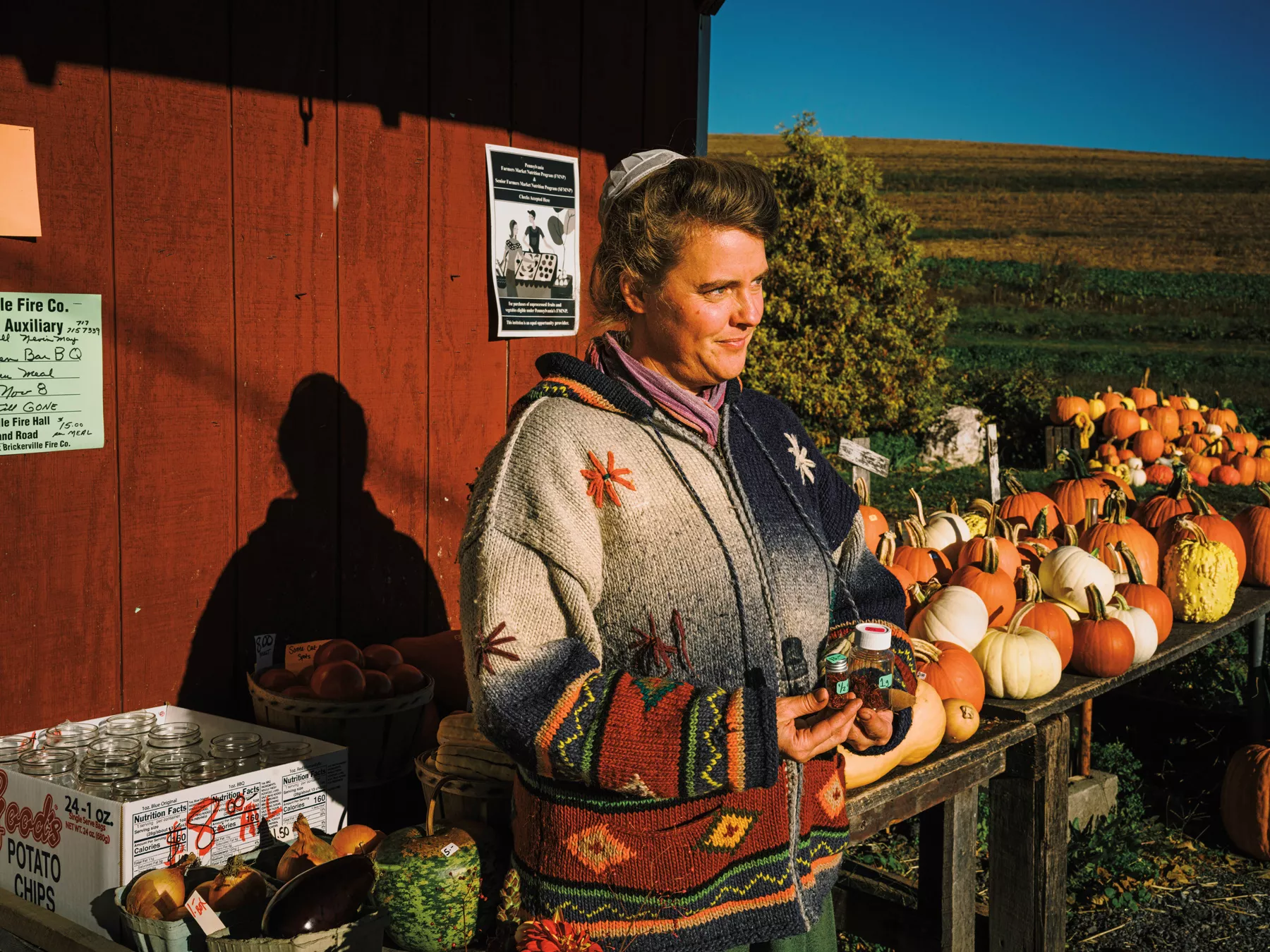
Gwen Hoover sells saffron in Lititz, Pennsylvania, where saffron growing became widespread as both a private and commercial enterprise in the early 19th century.
Legend says that saffron first reached Europe with English crusaders who smuggled the highly regulated corms when returning from the Holy Lands in the 14th century CE. According to food historian Andrew Dalby, around that time Venice had largely cornered the market on imports of the valuable spice.
Sixteenth-century English writer Richard Hakluyt devoted several pages to the viability of commercial saffron growing in England in his papers. The plant grew decently in chalky or sandy soil, even in Northern European climes like Essex in England, where it gave its name to the village of Saffron Walden.
By the 15th century, the German town of Nuremberg became a powerhouse of saffron trade. In addition to farming saffron, German merchants imported vast quantities of the spice from the east and traded it across Europe, where it was valued for its culinary and medicinal uses. It was so important to the city's economic fortunes that Nuremberg and other saffron trading cities enacted the Safranschou Code, which strictly regulated the spice and severely punished counterfeiters.
“Here are these unassuming people quietly eating simple dishes with a spice that adorned the table of royalty.”
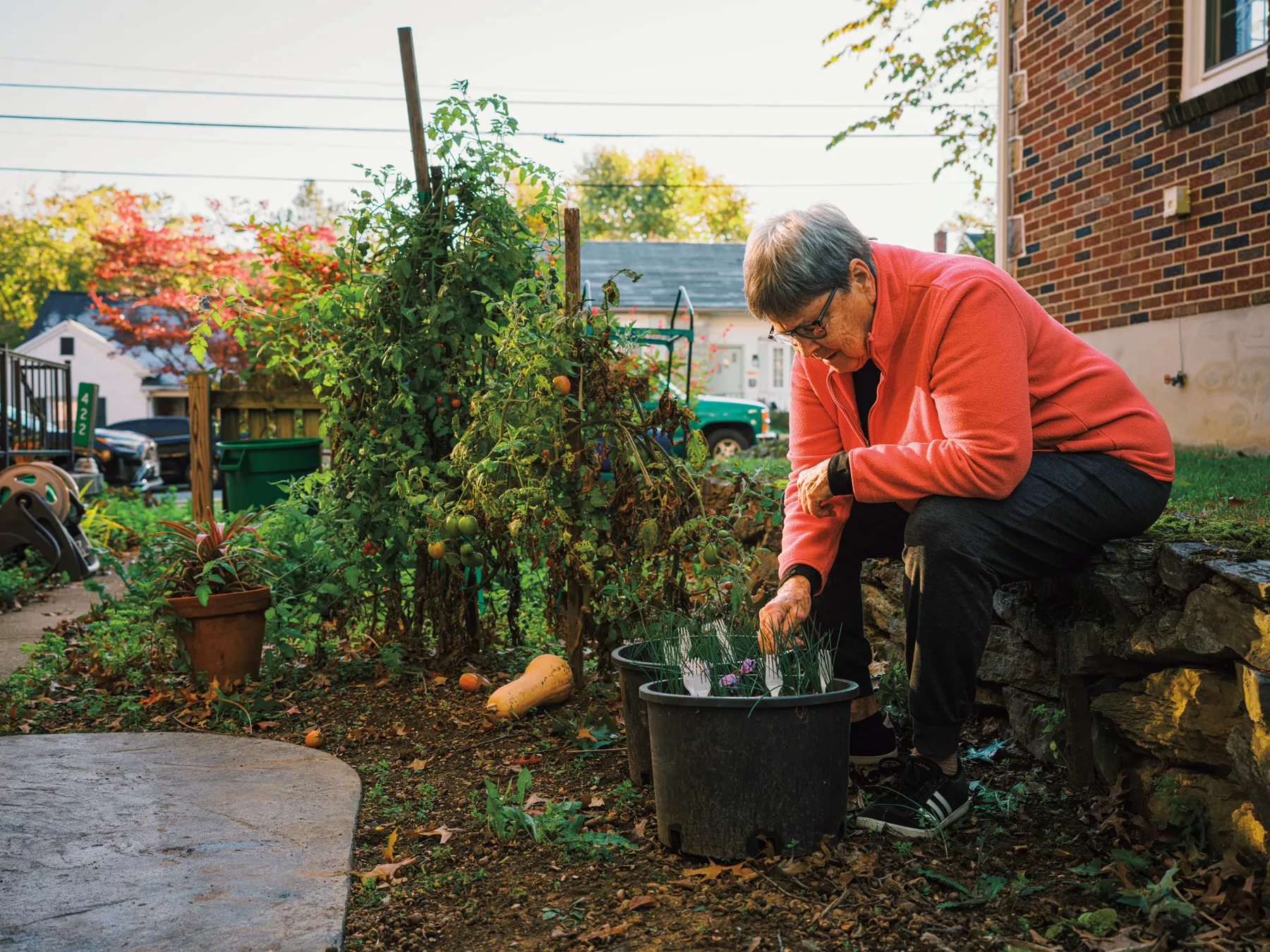
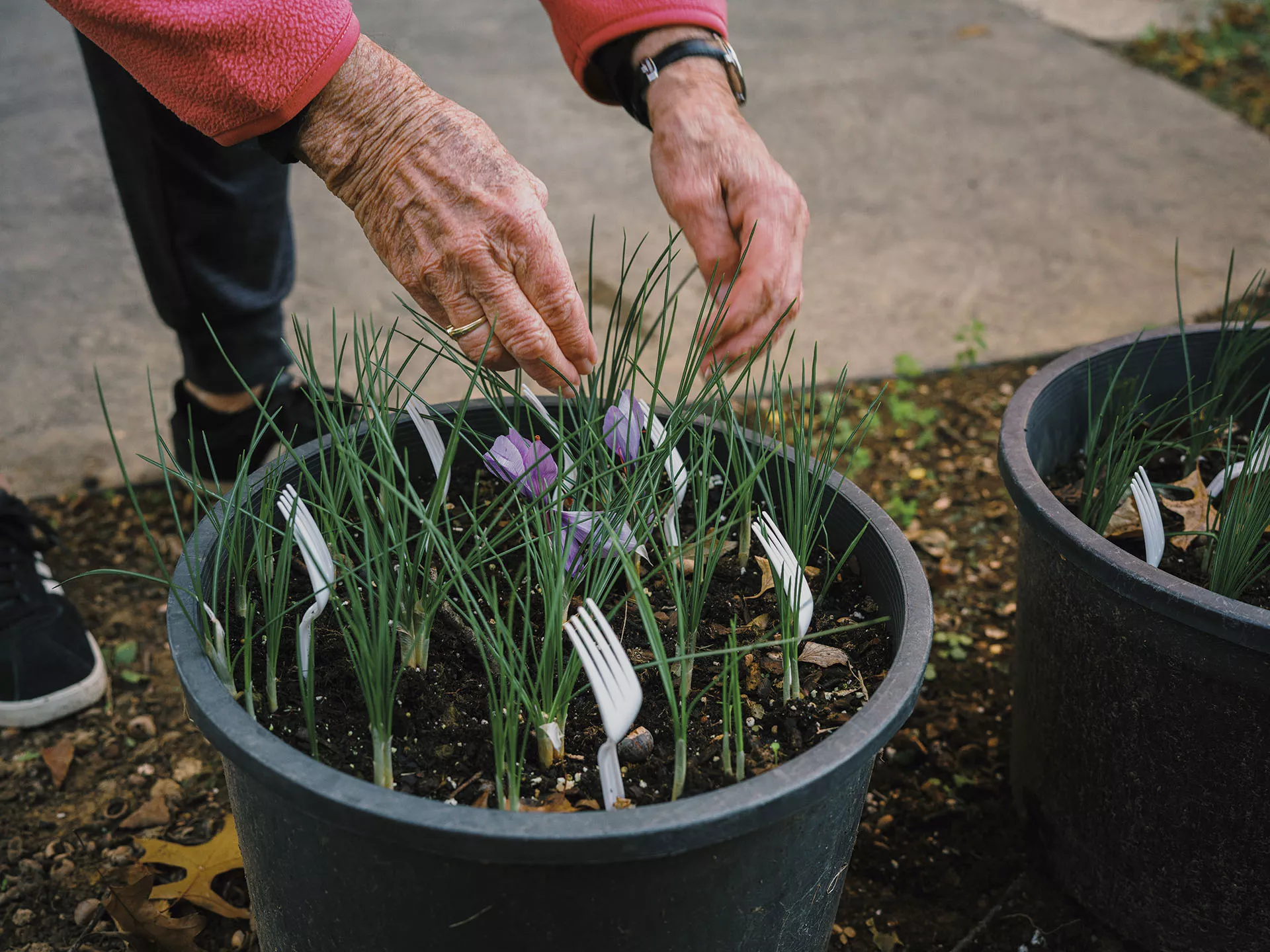
Charlene Van Brookhoven checks on her saffron at her home in Lititz. She keeps forks in the pot to deter rabbits and other animals.
Saffron Arrives in America
In America saffron was advertised for culinary and medicinal use as early as the 1720s. English cookbooks most often used by American colonists, like Hannah Glasse's 1747 The Art of Cookery Made and Easy, feature several saffron recipes.
Around the same time, the arrival of the Schwenkfelders with their corms made it easier to access saffron in the New World. Fifty years later Delaware farmer John Spurrier gave advice for growing saffron in his 1793 book The Practical Farmer, including the wisdom that saffron flowers should be harvested as soon as they fully open-right after the last of the morning dew has dried. Because the flowers are so delicate, harvesting and processing the bright red stigmas or threads at the blooms' center still must be done by hand. This is true wherever saffron grows, whether at Christine Martin's farm or an hour away at Toby and Janelle Allspach's Joie De Vivre Saffron farm in Cooperburg, Pennsylvania.
"When the saffron is ready, it is a family affair. We get my mom, our friends and our young helper Trent to harvest. It's probably about 10 to 15 people, and we make a party out of it," said Toby Allspach. "We will go out there before the sun comes up because as soon as those crocuses open, they start to deteriorate. We get them picked, and then we just kind of spend the afternoon carefully separating and drying the stigmas."
The Allspachs are not Mennonites, and they have no other cultural or familial tie to saffron. In fact, despite being born and raised as Pennsylvanians, they had no idea they were living in American saffron country. The couple began growing saffron in 2022 for personal use when Janelle was suffering from health issues after a car accident. When traditional medicine failed her, she started researching holistic treatments. She came across multiple scientific studies that confirmed the ancient belief that saffron was valuable for inflammation, digestive issues, eye diseases, to treat anxiety and depression and more.
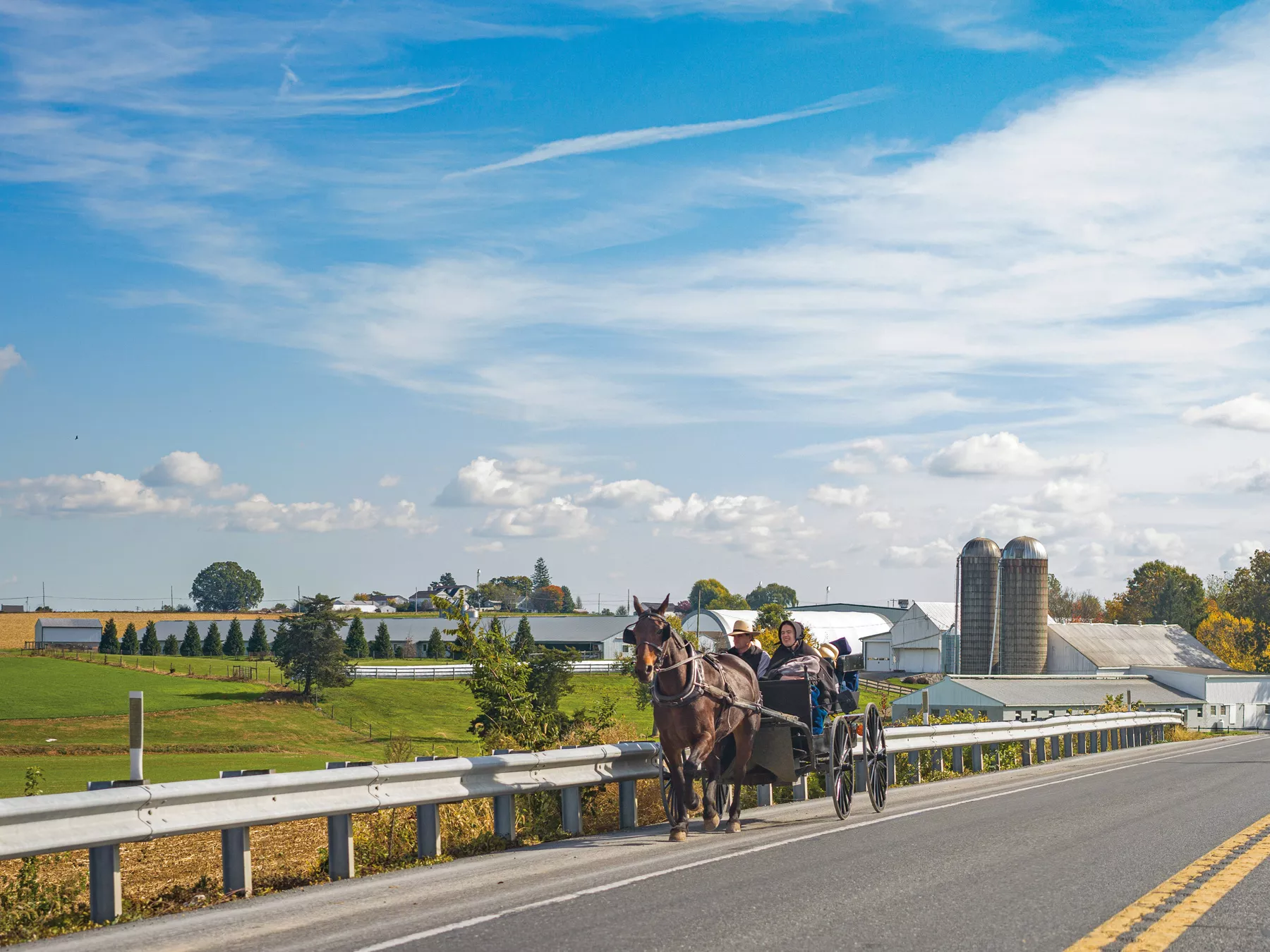
Mennonite horse-drawn carriages travel paved roads just outside Lititz.
According to research published by the US National Institutes of Health in 2022 based on studies in Iran and at the University of Vermont, compounds in saffron do, in fact, alleviate symptoms of depression and mental fatigue.
The couple decided to try growing saffron in a 25-square-foot patch in their yard and were surprisingly successful-netting 30 to 40 grams (1 to 1.5 ounces) of finished saffron by the second year. Given that saffron is most often sold in single-gram or half-gram quantities, the Allspachs' first attempts yielded a bumper crop.
Today as in the past, Pennsylvania saffron is mostly sold locally at farmers markets or small specialty stores. Additionally, Joie De Vivre and other small farms tend to sell their products online, including saffron syrups, sprays and other flavored products, along with pure saffron. As their harvest expands, they hope to branch out to other states. In 2024 they increased their saffron field from 25 square feet to a full acre, on land rented from a fallow farm next door. Their hope is to yield 100 grams from this year's harvest.
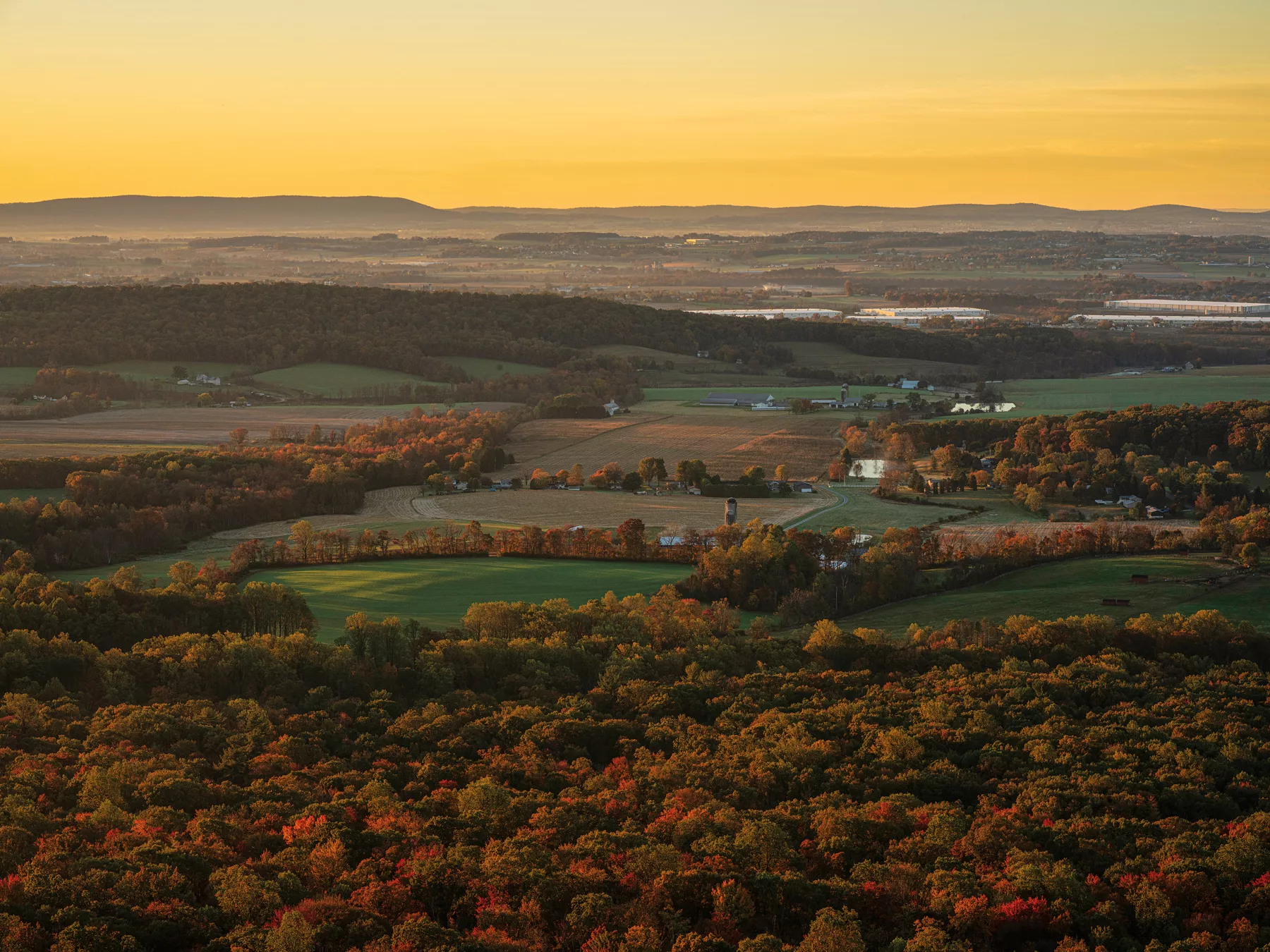
The sun rises over farm country in southeastern Pennsylvania. Americans have grown saffron—prized for centuries in the Middle East and North Africa for its culinary and medicinal properties—since the 1700s.
Whatever the reasons for the renewed interest in growing saffron outside its traditional regions, the University of Vermont has created the North American Center for Saffron Research and Development to promote saffron cultivation as a financial opportunity for small farmers. The organization hosts symposia and offers growing, harvesting and processing advice for those hoping to become saffron farmers in various states.
But even as small homestead farms are once again putting American saffron on the map, in Pennsylvania it's the small home growers, like Christine Martin and Ruth Zimmerman Martin, who are keeping the culture alive.
While she grew up eating saffron-flavored dishes, Ruth's mother was not a saffron grower. She learned on her own 40 years ago when her husband, Lloyd, a dairy farmer, was gifted saffron in return for moving a widow's belongings. She tried her hand, and to her surprise, the crocuses came up. As the years passed, Ruth tried different soils, fertilizers and techniques for separating the corms, which naturally multiply under the soil. Her expertise grew, and so did her fields. Soon she was being consulted by the local farm extensions and the University of Vermont to teach others.
“[Harvesting] is a family affair. We will go out there before the sun comes up.”
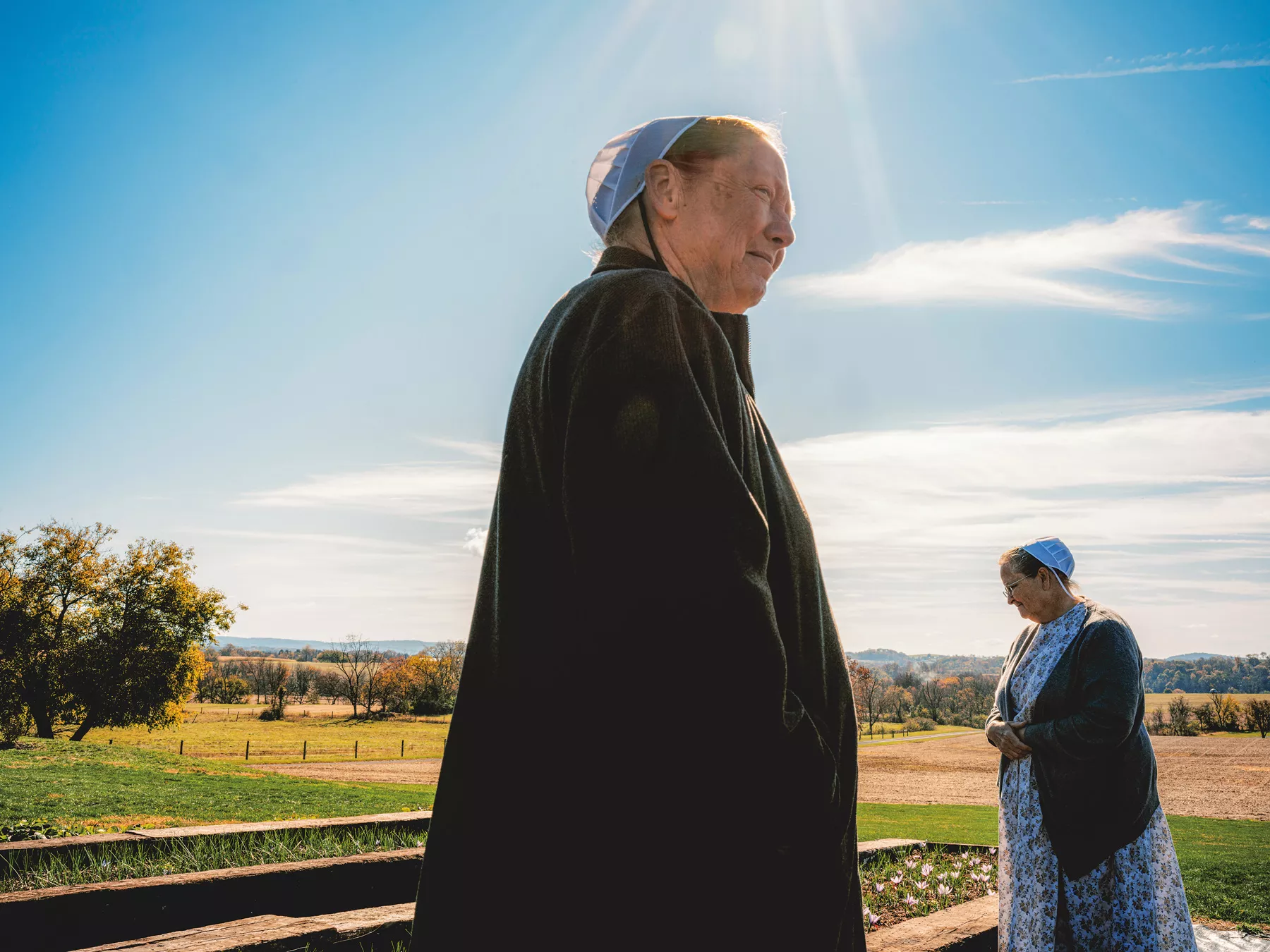
Christine Martin surveys her farm with Ruth Zimmerman Martin and her daughter Wanda (no relation to Christine).
The year after Lloyd passed away in year 2007, 3,233 saffron crocuses bloomed on her land. "That was so beautiful," she said. "I called my daughter to look at how beautiful they were. I was taking saffron stigmas out until suppertime."
A year later, when she sold her farm to move in with her daughter, Ruth started growing saffron in a planter-like Van Brookhoven-because she couldn't give up her decadeslong passion. Ruth credits her golden thumb to paying close attention to what the finicky plant demands and experimenting with fertilizers, drainage and natural ways to repel critters.
"You do exactly what saffron wants you to do, and then the plants bless you," she said.
About the Author

Greg Kahn
Greg Kahn is an award-winning American documentary and fine art photographer. Kahn’s photography centers on the forces that shape personal and cultural identity. His work has been exhibited in major galleries and museums around the world and published in The New York Times Magazine, National Geographic and British Vogue, among others.

Ramin Ganeshram
Ramin Ganeshram is an award-winning journalist and culinary historian focused on colonial and early-19th-century history of the United States and the Caribbean. She is also a professionally trained chef who has authored cookbooks including Sweet Hands: Island Cooking From Trinidad & Tobago and Saffron: A Global History and is working on various forthcoming books.
You may also be interested in...
The World’s First Oils
History
Science & Nature
Pressed, extracted or distilled from any of hundreds of plants, pure “essential” oils are not just a rising multibillion-dollar global industry: They are among the world’s oldest organic wellness products, now available almost everywhere.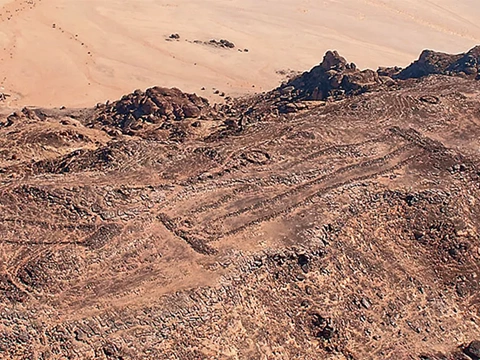
Saudi Arabia's Mustatils: Mysterious Monuments of the Desert
History
Science & Nature
In northwest Saudi Arabia, scattered across an area twice the size of Portugal, archeolog|sts and aerial surveyors have identified more than 1,000 roughly built, low, rectangular stone structures that date back 7,000 years to an era when today's deserts were savannas. These mustatils-"rectangle" in Arabic-have been long-known to regional tribes, and in 2018 archeologists began to investigate and excavate. Discoveries of animal bones and horns point toward ritual purposes. The great number of mustatils may be evidence of population and social organization. But why are there so many-and in so many different places? While no two are quite the same in length and width, all are close in height and shape. Amid more questions than clues, archeologists continue to dig.
Disease Detectives of Lebanon
Science & Nature
Dropping into bat caves to examine and swab their inhabitants is a day’s work for the epidemiologists at the Beirut-based biomedical research lab Human Link, whose sleuthing in 2012 helped fight mers. Now they are on the case to help the world find a vaccine to prevent covid-19.