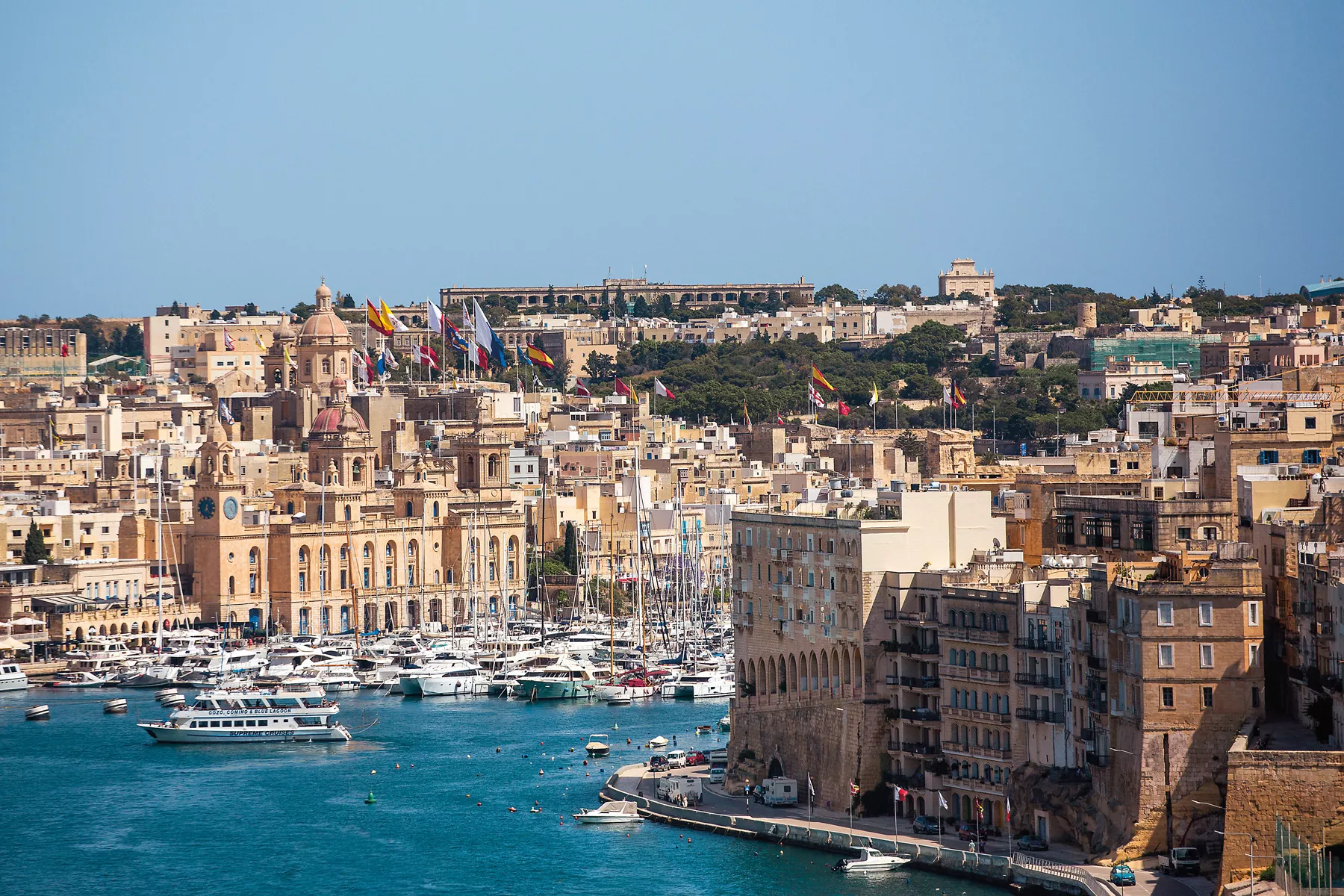
Arabic Roots of Maltese: A Semitic Tongue Shapes Island Nation
Maltese—Europe's only Semitic language—is a mix of mostly Arabic with Italian and English, carrying echoes of Malta's Arab dynastic past.
Mohamed Kasem remembers the shock when the passport control officer at Malta International Airport told him, "Għandek viża għal ħmistax-il jum."
"He said I had a visa for 15 days," says Kasem, "but I couldn't believe he would say this to me in Arabic."
Except, this had not been the case. Instead, Kasem, a native of Homs, Syria, had been given his first introduction to Maltese-Europe's only Semitic language, which is made up of several languages, including an Arabic dialect, Italian and English.
It instantly made this small cluster of islands between Sicily and the North African coast feel like home to Kasem. So much so that today he's only a 15-minute drive from where he first landed 20 years ago, hanging out with his friends at a shawarma restaurant called Aleppo Food.
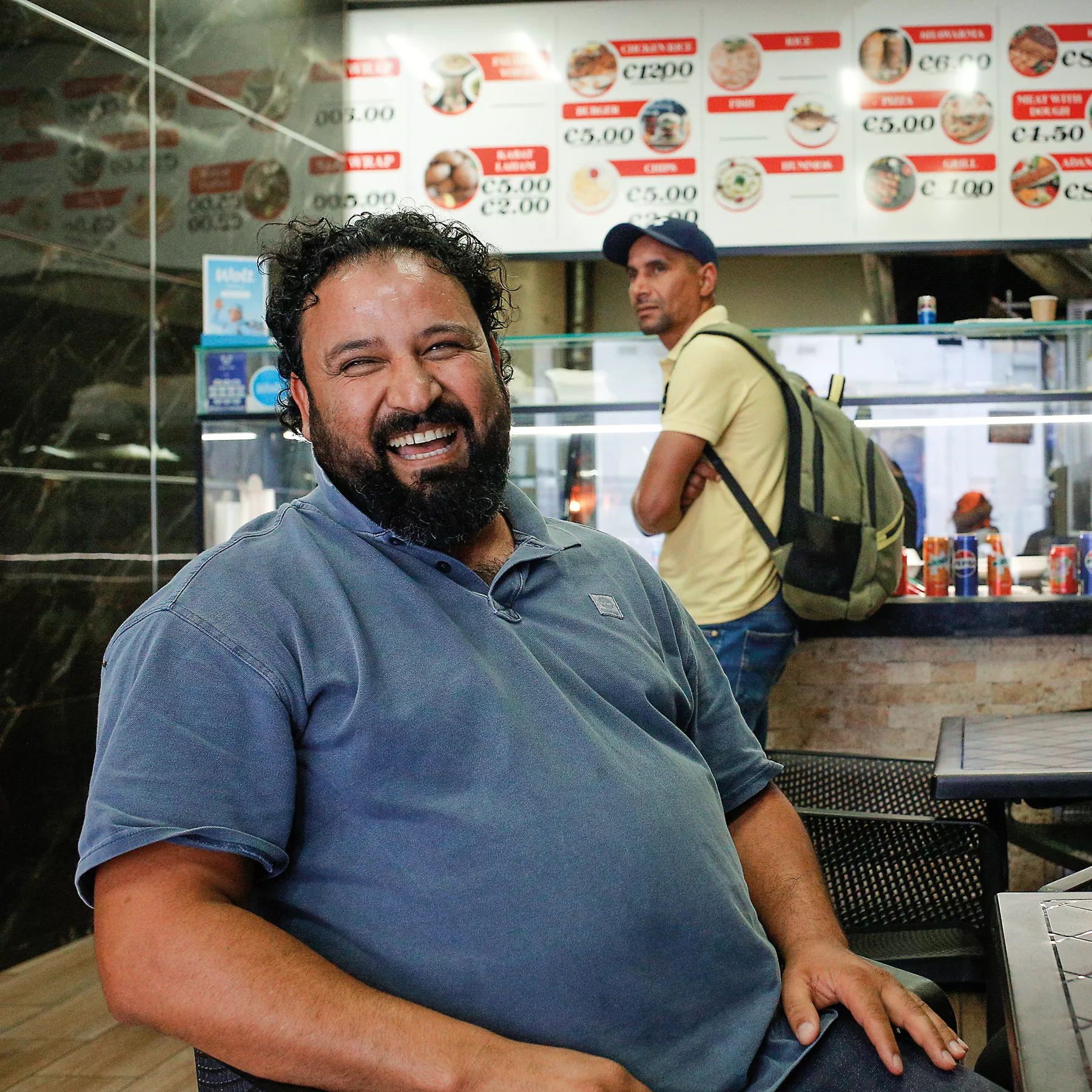
The dominant presence of Arabic within Maltese helped Mohamed Kasem feel right at home after emigrating from Syria. Top Valletta, the capital of Malta, is a port city.
"I'm a fluent Maltese speaker," he says, "but it was so easy because [so much] of Maltese is Arabic."
While Arabic makes up 32 percent of Maltese, researchers confirm it's a much bigger part, as much as 60%, of the language in everyday speech. "I learned mostly on the street," Kasem says. "Even the place we're in is called Hamrun, which is like the Arabic word for 'red' [hamra]." According to one theory, the town derives its name from the reddish clay found in the area.
Challenges of tracking down Malta's Arab history
Hamrun, now a town of 10,000 people, was settled by the Aghlabids-an Arab dynasty that originated from parts of modern-day Tunisia, Libya and Algeria-which in 870 CE wrested control of Malta from the Byzantines.
However, finding archeological evidence of this centuries-old empire in Malta has been nearly impossible, according to Matthew Grima, a lead researcher at Heritage Malta, a government-run agency tasked with preserving the country's cultural artifacts. He says Malta's Islamic period is "void of a lot of material culture in our collection and thus [is] seldomly researched."
Grima believes that the Norman conquest of Malta, which occurred in 1091 CE, led to either the destruction, deterioration or phasing-out of the country's Islamic architectural remnants.
Yet the main market in the capital of Valletta is called Is-Suq Tal-Belt. Arabic speakers will immediately understand that part of its name is nearly identical to sūq (or souq), the Arabic word for "marketplace" or "commercial quarter." Elsewhere city signs greet visitors with merhba, which means "welcome" and comes directly from the Arabic marhaba. And a local nonprofit organization, Dar l-Emigrant, which was established to assist Maltese emigrants moving abroad, uses the word dar, which in both languages means "home."
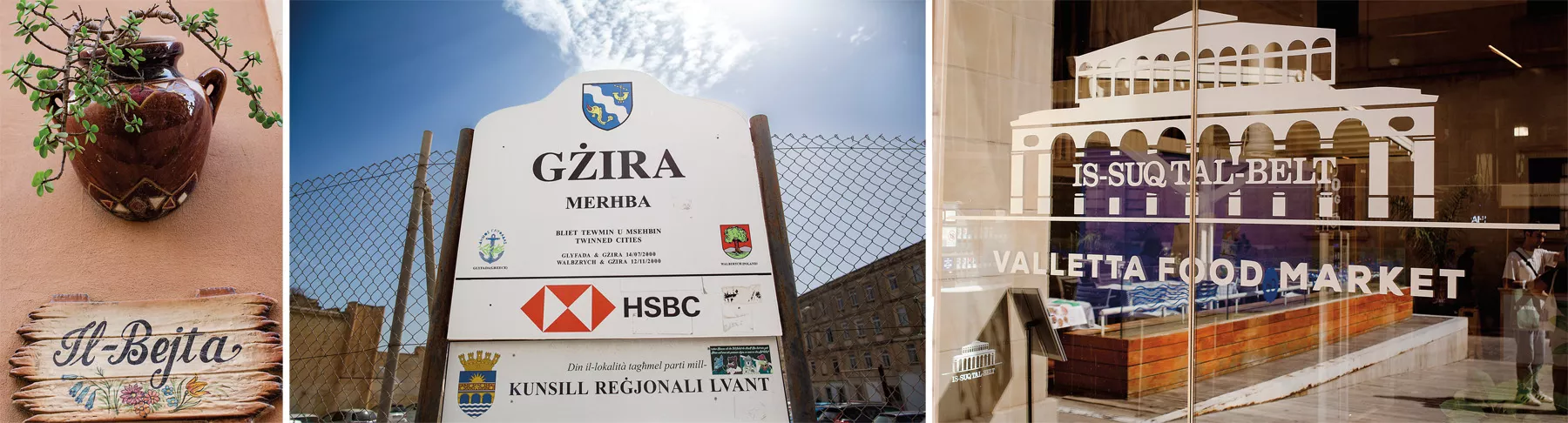
Left to Right A doorway in Valletta bears a sign using the Maltese Il-Bejta, meaning "the nest" in the context of a cozy home and stemming from the Arabic bayt; a sign greeting visitors to the city of Gżira says merhba, which means "welcome" in Maltese and comes from the Arabic marhaba; and Arabic speakers would easily recognize Valletta's main market, Is Suq Tal-Belt, by sūq (souq), or "marketplace."
As Europe's sole Semitic language, Maltese is also the only Semitic language that employs the Latin alphabet.
Arabic's centuries-long survival in Malta
In 1048 CE, a community of Arabic speakers settled in Malta, says Joseph M. Brincat, a retired professor of linguistics at the University of Malta and one of the island nation's foremost authorities on the Arab origins of Maltese. He says not much is known regarding where these people came from, but he says their language survived on the island under extraordinary circumstances.
"The Normans, the Swabians, the Angevins, the Aragonese and the Castilians never bothered to interfere with the way the people spoke," Brincat says about the long line of successors who controlled Malta. While Italian was the official language of Malta for centuries, "so long as the [local people] obeyed the laws, they were happy, and that's how Arabic survived in Malta but nowhere else in the Christian world."
According to Brincat, a dialect of Arabic coming from Sicily (spoken between the ninth and 14th centuries called Siculo-Arabic) continued to evolve even during the rule of the Knights Templar-a medieval Christian order that controlled the island from 1530 to 1798. "Because these knights of Malta did not identify with any one European state," says Brincat, "they were not interested in changing the language that was loyal to any outside place."
His research shows that Malta lost contact with outside Arabic speakers in 1446 CE, "and Maltese started developing on its own, getting simplified grammar and [becoming] Romanized." It's partially why it's the world's only Semitic language that is written in the Latin alphabet-with added diacritics (markings to indicate sounds that are specifically heard in Maltese.)
Politics played another major role in Maltese's popularity. "[Maltese] was used as a tool by the British who wanted to cut off Malta from [Sicily]," says Brincat, who notes political tensions between the British and Italians began to strain during the lead-up to World War II. And in 1934, Maltese joined English as an official language of the country.
Brincat says that doesn't mean the British didn't try to perpetuate now debunked myths of revisionist history, which persist today. "If you read the Encyclopedia Britannica of the 1950s," Brincat says, "the article insists that Maltese is of Punic origin, and that the Maltese are a Punic race."
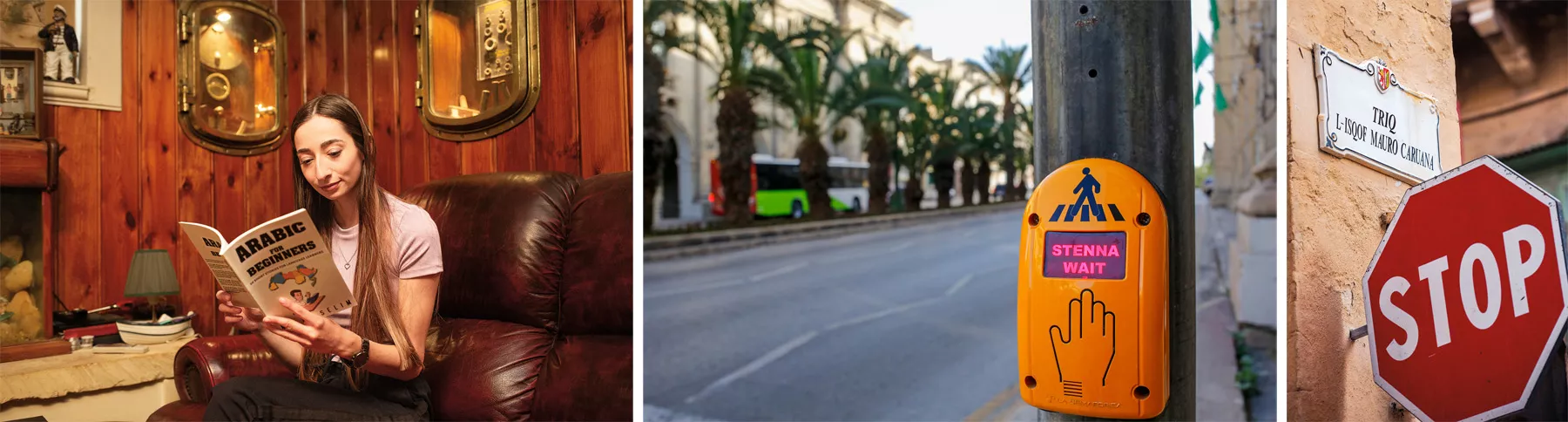
Left Oriana Cachia, a Maltese woman, studies Arabic at her home in the southern seaside town of Marsaskala. Middle A street crossing cautions pedestrians in Maltese and English: stenna, which is much like the Arabic istanna, and "wait." Right A Valletta street named for the late Catholic bishop of Malta Mauro Caruana uses the Maltese word for "road," triq, which reflects the Arabic tariq (tareek). L-Isqof, meaning "Bishop," is also similar in Arabic (pronounced "Osqof" or "Isqof").
Changing tides of communicating in Malta
In the southern seaside town of Marsaskala, 27-year-old Oriana Cachia flips through her Arabic studies workbook. She says she has wanted to learn the language since childhood. "I knew it was very close to my language, but what made me actually start was my trip to Morocco two years ago."
Cachia says speaking Maltese was exciting for the people around her in the cities of Marrakech and Essaouira. "They were so happy to hear a language similar to theirs, and it made me want to gain a full understanding of Arabic."
However, apart from some private tutors and a course at the University of Malta, Cachia says, not many opportunities are left in Malta to learn Arabic. That's a far cry from the mid-1970s, when for a short time, the Maltese government made Arabic compulsory as a secondary language of study in state-run schools. Wanting to increase trade with North Africa, the government welcomed Arabic teachers sent by Libya. Ultimately, the policy did not catch on and was dismantled. According to a 2022 government survey, few people on the island speak standard Arabic despite 90 percent of the island's population having a basic understanding of Maltese.
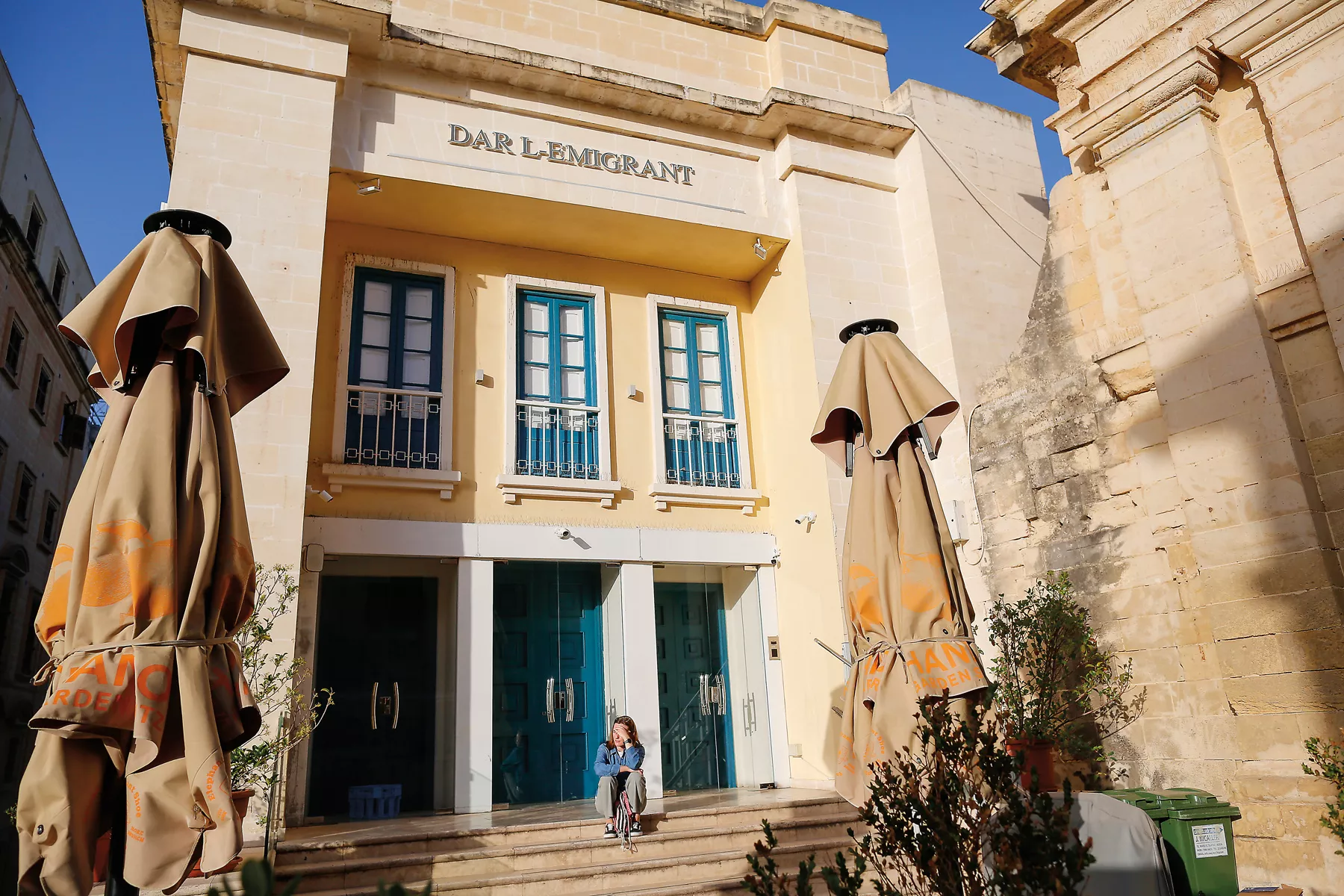
Nonprofit organization Dar l-Emigrant was established to assist Maltese emigrants moving abroad. Its name includes dar, which in both Maltese and Arabic means "home."
“Our languages have built a bridge between our two cultures.”
Nowadays, Cachia relies on tutors when she has a rare free moment from work, but she's not deterred. "I go on the Shahid [streaming platform] and watch as many crime shows and dramas as I can, usually Syrian or Lebanese ones, because I like the dialect." As for music, she says the Egyptian rock band Cairokee is among her favorites.
Turning to a chapter about counting, Cachia goes into an explanation about how numbers in her native tongue are pronounced nearly identically to Arabic. However, when asked to write them down phonetically in Maltese, Cachia has to rely on a translation app. "When I'm speaking with my friends, I can say everything perfectly in Maltese, but it's more of a spoken language than one that is commonly written." This disconnect is exacerbated by the sheer number of regional variations of Maltese that are spoken by only half a million people, on an island nation so small that a cross-country trip can take as little as 40 minutes.
This, combined with a recent influx of native English speakers moving to the island and the dominance of English-language media, has prompted government officials to sound an alarm over what's being called a national crisis, as headlines in the Times of Malta and MaltaToday show. The officials also cite a low proficiency in Maltese even among primary school educators.
An enduring linguistic legacy
Malta's multicultural mix of immigrants, ones who have lived here for decades and those who can trace their lineage back centuries, is represented across St. Joseph High Street back in the town of Hamrun.
A pan-African shop of goods called Inshallah Minimarket is sandwiched between a Catholic church and an Afghan restaurant. Just a few blocks down, past the diner sporting American flags and the Australian butcher, is the Halweyat nut shop. While most of the chocolate for sale is from Türkiye, the shopkeeper, Amer Farid, is most definitely Syrian, which is revealed by a close inspection of the baklava that is devoid of the liberal amount of honey for which Turks are known.
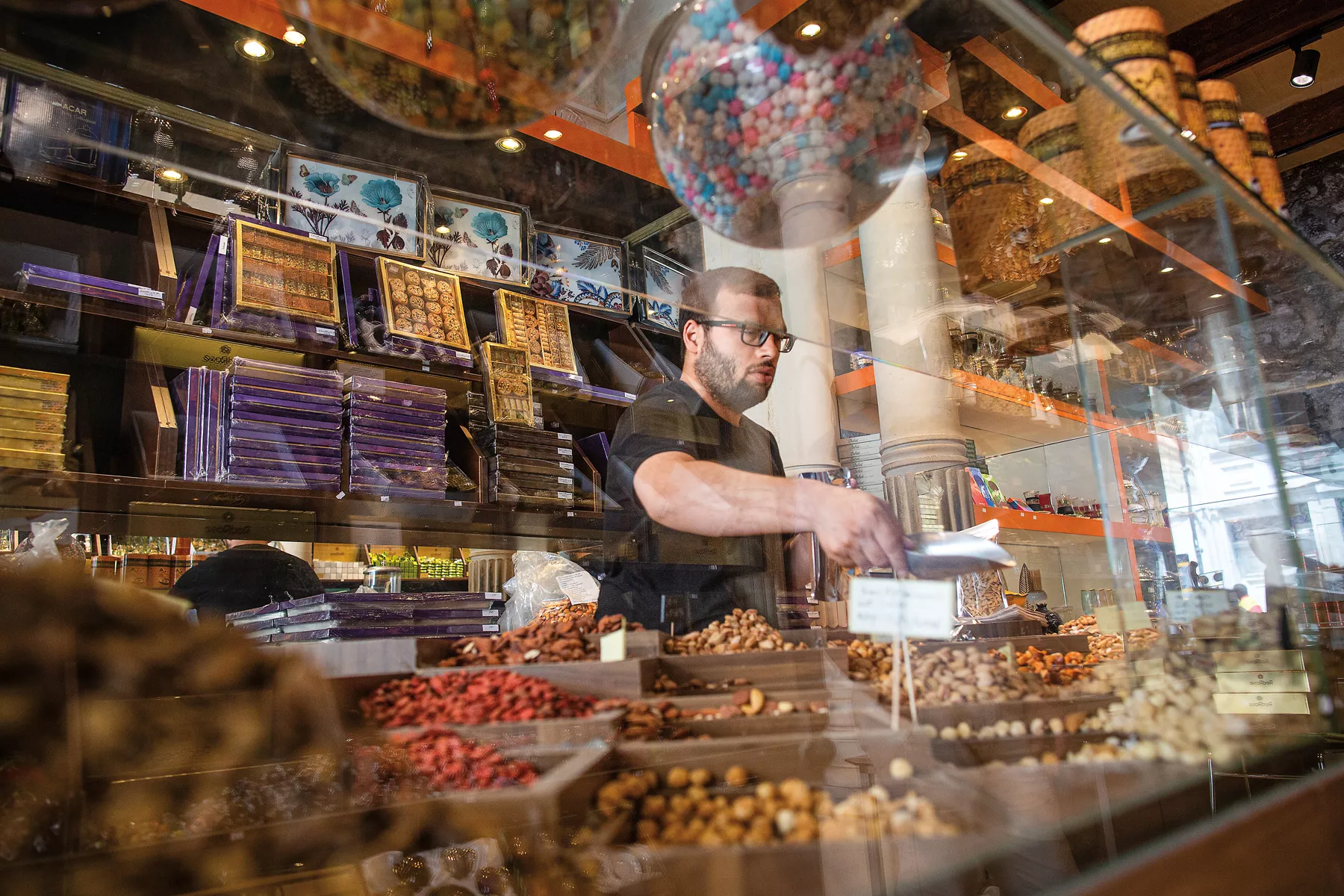
Syrian shopkeeper Amer Farid works at the Halweyat nut shop in Hamrun, Malta.
A customer, Aesop, who's from Morocco, notes a stark difference between the Arabic in Maltese and the language he speaks in his home country. "In Morocco, you can say that Darija [Moroccan Arabic] is a dialect of Arabic, whereas in Malta it sounds like they've just added pure Arabic into the mix with English and Italian."
While Farid agrees, he alludes to something more profound than linguistic similarities.
"Our languages have built a bridge between our two cultures, and I think it's why I find the Maltese people so welcoming," he says. "As a Syrian, this is more why I've learned Maltese in a matter of months than years."
About the Author
Jack Zahora
Jack Zahora is an award-winning journalist whose work has appeared on various major outlets including National Public Radio and Al Jazeera English. He’s also the Chief Content Officer and managing partner of TW Storytelling Agency, a media company that’s based in Lisbon, Portugal.
Tara Todras-Whitehill
Tara Todras-Whitehill is an award-winning photojournalist and CEO of the TW Storytelling Agency, based in Lisbon, Portugal. Her passion is empowering NGOs, social impact teams, and journalists with impactful storytelling.
You may also be interested in...
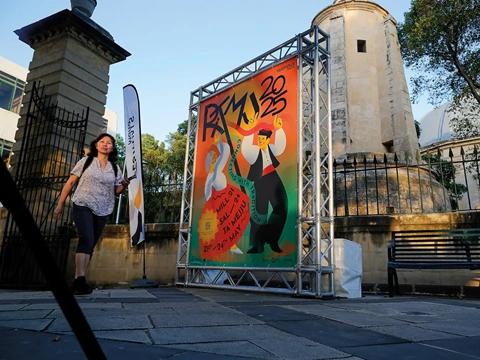
Għana Folk Music Helping to Keep Maltese Language Alive
Culture
Ghana, Malta's poetic folk music tradition, is in harmony with a reinvigorated sense of national pride—and is helping to protect the Maltese language.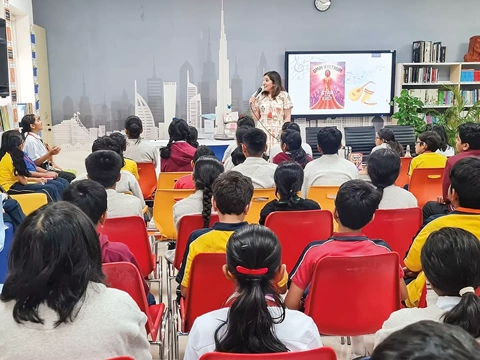
Meet the Author Who Invites Children To Discover ‘Star of the East’
Arts
Culture
In Umm Kulthum: The Star of the East, Syrian American author and journalist Rhonda Roumani illuminates the life of a girl from the Nile Delta who rose to become one of the most celebrated voices in the Arab world.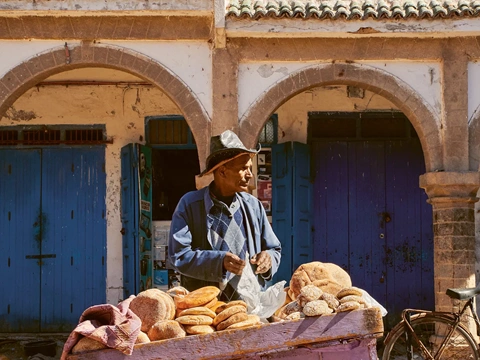
A Quiet Path Through Recipes: A Conversation With Jeff Koehler
Arts
Culture
Jeff Koehler approaches food as a vessel for storytelling, for geography and cultural identity.