Where Fog Met Feet: Football's Spread From England to the World
Since its birth in 1863 in London, football has spread around the globe, with billions of fans who connect with the game as a source of cultural pride beyond the pitch.
In London’s Covent Garden district, a juggler entertains tourists as commuters head home and theatergoers drift toward the West End. Few pause to consider that they have walked past the birthplace of one of the world’s great spectacles.
The Grand Connaught Rooms on Great Queen Street rarely attract attention unless a conference is underway. But in 1863, when the venue was known as the Freemasons’ Tavern, it hosted the meetings that produced the first unified rules of association football.
Those decisions did not invent the game. They standardized it, made it transferable and enabled it to spread far beyond London.
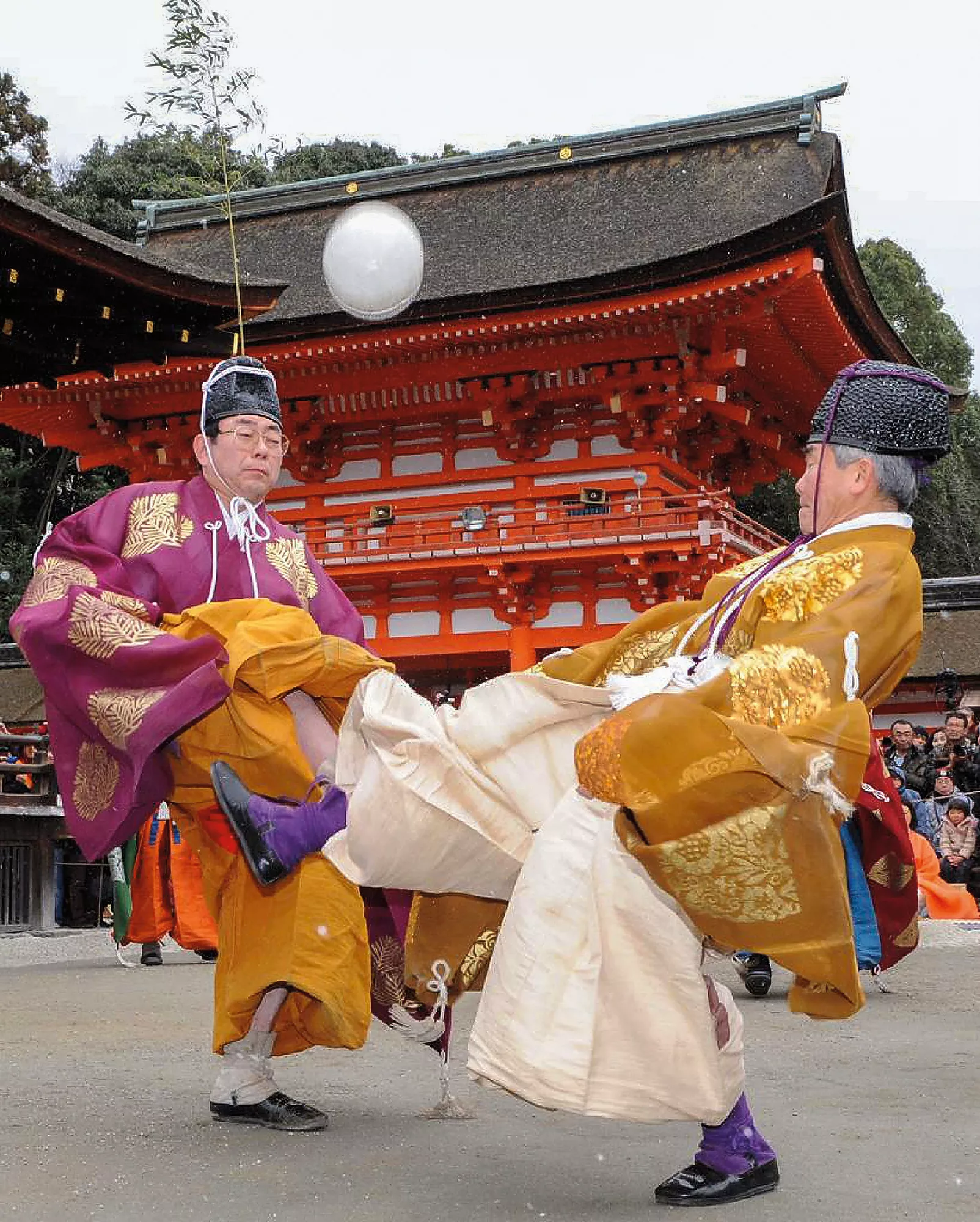
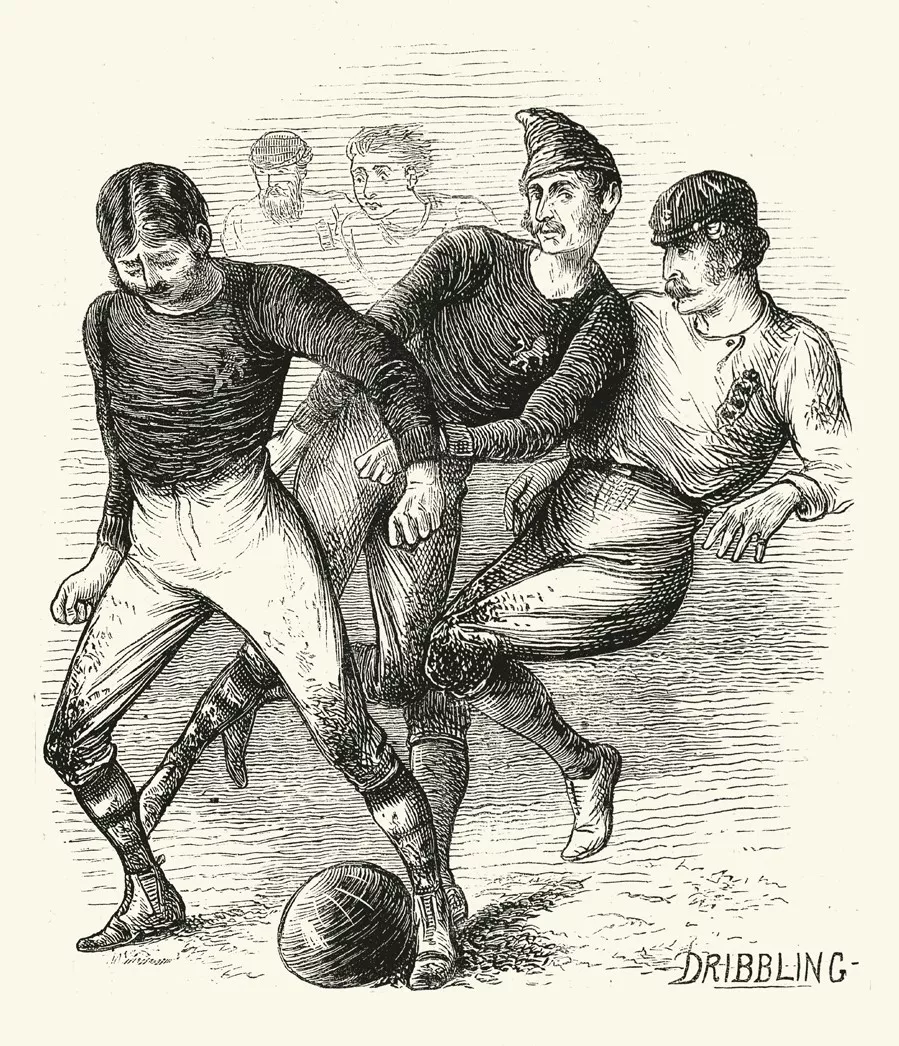
Reenactors in traditional kimonos practice kemari, a Japanese predecessor of football, in 2012 at Shimogamo Shrine in Kyoto. Top A vintage newspaper sketch depicts the very first international football match, between England and Scotland, in 1872.
Sankei/Getty Images Top Getty Images
Today football is watched and played on every continent. The 2022 FIFA World Cup in Qatar, the first to take place in the Arab world, reached nearly 5 billion people globally, with 1.5 billion watching the final. These figures underline how far the sport has traveled since Victorian England. (FIFA is the acronym for Fédération Internationale de Football Association.)
Keir Radnedge, an author and former editor of World Soccer magazine, has covered the tournament since 1966. “My history of the World Cup goes back to the days of black-and-white television,” he says. “It was a football tournament. Now it’s a global social media populist event.”
Deep Roots, Different Games
According to the FIFA Museum, long before 1863, cultures across Asia, Europe and the Americas had developed ball games of their own.
“Football did not appear out of nowhere in 1863,” says Marco Fazzone, managing director of the FIFA Museum in Zurich. “What happened in England was not the invention of play but the codification of one specific version of it.”
Earlier games such as Japan’s kemari or China’s cuju were not direct ancestors of the modern sport, he explains, but “parallel expressions of the same human impulse” to play.
Kemari was played in Japan for more than a millennium. Cuju, documented in ancient China, existed in various forms for nearly 2,000 years and involved kicking a ball.
In Mesoamerican civilizations, in what is now Mexico and Central America, ball games carried ceremonial and symbolic meaning, with players propelling the ball using their hips.
In ancient Greece and Rome, written accounts describe ball games as part of daily life. Victorian reformers later pointed to Greek games such as episkyros as distant forerunners.
What England provided in the 19th century was not the instinct to play. It was structure.
That structure emerged in a society being reshaped by industrialization and urban growth, where public schools were codifying sports and expanding railway networks were connecting towns and cities.
Formalizing the Modern Game
By the mid-19th century, different English schools, universities and clubs were playing by their own variations of rules.
In 1863 solicitor Ebenezer Morley proposed the creation of a governing body to establish a unified code.
On October 26 that year, representatives from London-area clubs met at the Freemasons’ Tavern and formed the Football Association. Over subsequent meetings, the “Laws of the Game” were agreed upon, and association football formally separated from rugby.
By 1871 the FA Cup was launched as the first organized national competition. In 1888, 12 clubs formed the Football League, the world’s first professional league.
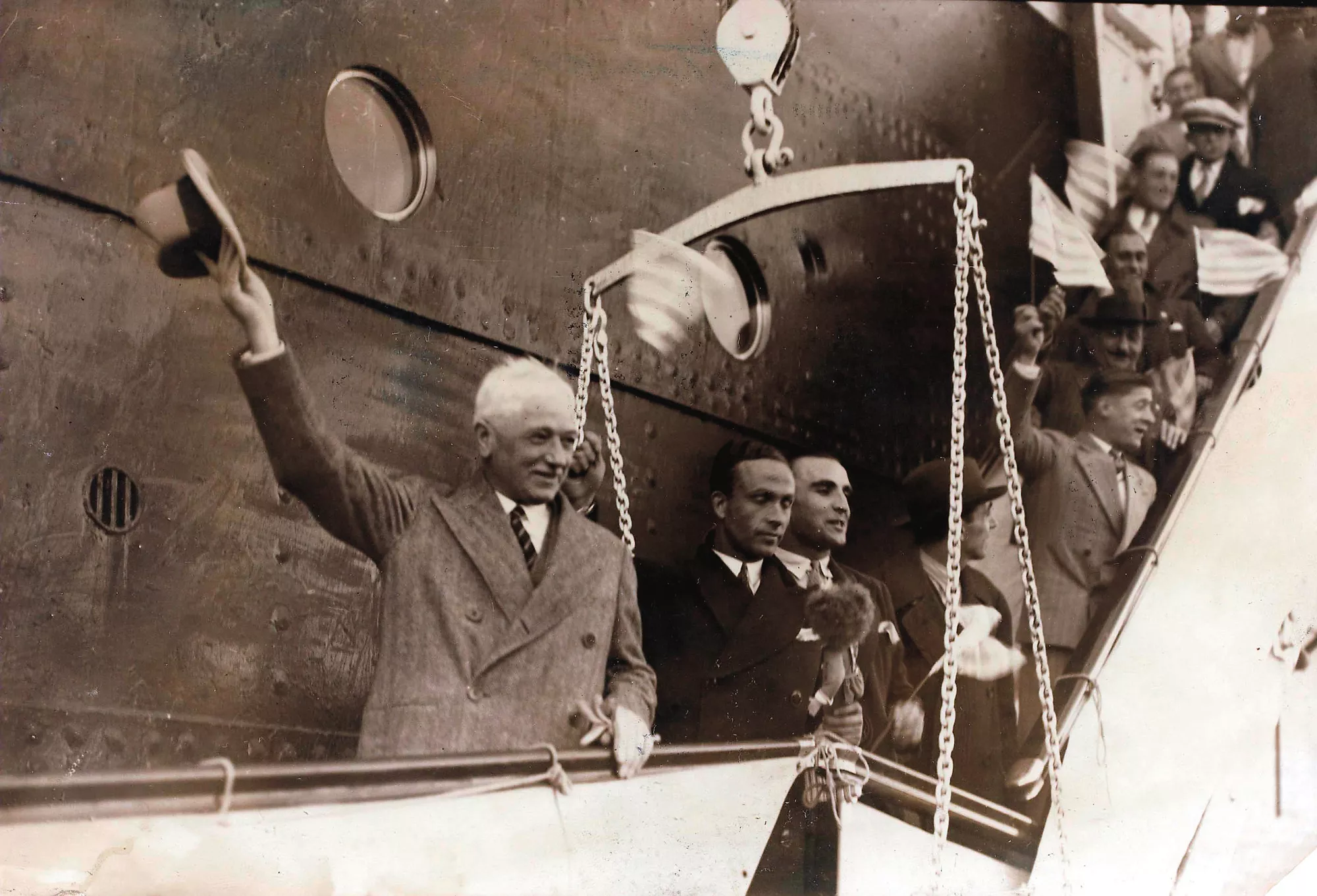
FIFA President Jules Rimet arrives in Montevideo, Uruguay, in 1930 to attend the first World Cup tournament.
Haynes Archive/Popperfoto via Getty Images
Standardized rules allowed clubs from different towns, and eventually different countries, to compete without confusion.
In an age of railways and expanding cities, football slotted neatly into the weekly rhythms of industrial life. The spread of Saturday half-day working hours in the late 19th century created new leisure time for working-class communities, helping turn football into a mass spectator sport in Britain’s growing industrial cities.
But codification did not contain the game within England. The same networks that powered the British Empire carried its rules far beyond its shores.
From British ports, factories and schools, football spread. Engineers and traders introduced it to Buenos Aires, Argentina, and Montevideo, Uruguay. Trade, migration and education networks carried it across Europe, Africa and Asia.
“By the late 19th century, clubs were already being founded in places like Argentina,” Fazzone notes.
Football spread quickly across the rapidly growing cities of the region. “Port cities around South America, prior to the Panama Canal, especially, experienced intense urban growth,” says Brenda Elsey, professor of history and Latin American studies at Hofstra University in New York.
In Brazil, for example, the game soon moved beyond elite clubs. Dockworkers and immigrants carried it into working-class communities, while factory owners, educators and early newspapers promoted it as a modern and disciplined sport. “Labor unions and working-class neighborhoods ultimately created the rituals that gave football its meaning,” Elsey says, “and it became uncontrollable despite elites’ best efforts.”
In parts of Africa and Asia, the game took root in schools and urban communities. What began as a codified English pastime was adopted, adapted and claimed elsewhere.
Radnedge notes that independence movements amplified football’s meaning. In newly sovereign African nations, he says, the sport emerged as “a declaration of new identity and national pride.”
A similar dynamic unfolded across the Arab world. Football clubs and national teams often grew into symbols of community identity and political expression.
“Football became deeply embedded in social and political life in many regions for three main structural reasons: accessibility, institutional diffusion and political symbolism,” says Mahfoud Amara, an expert on sports, society and politics in the Arab world at Qatar University. “As national federations joined FIFA and international competitions, the sport also became a powerful instrument of nation-building and international recognition.”
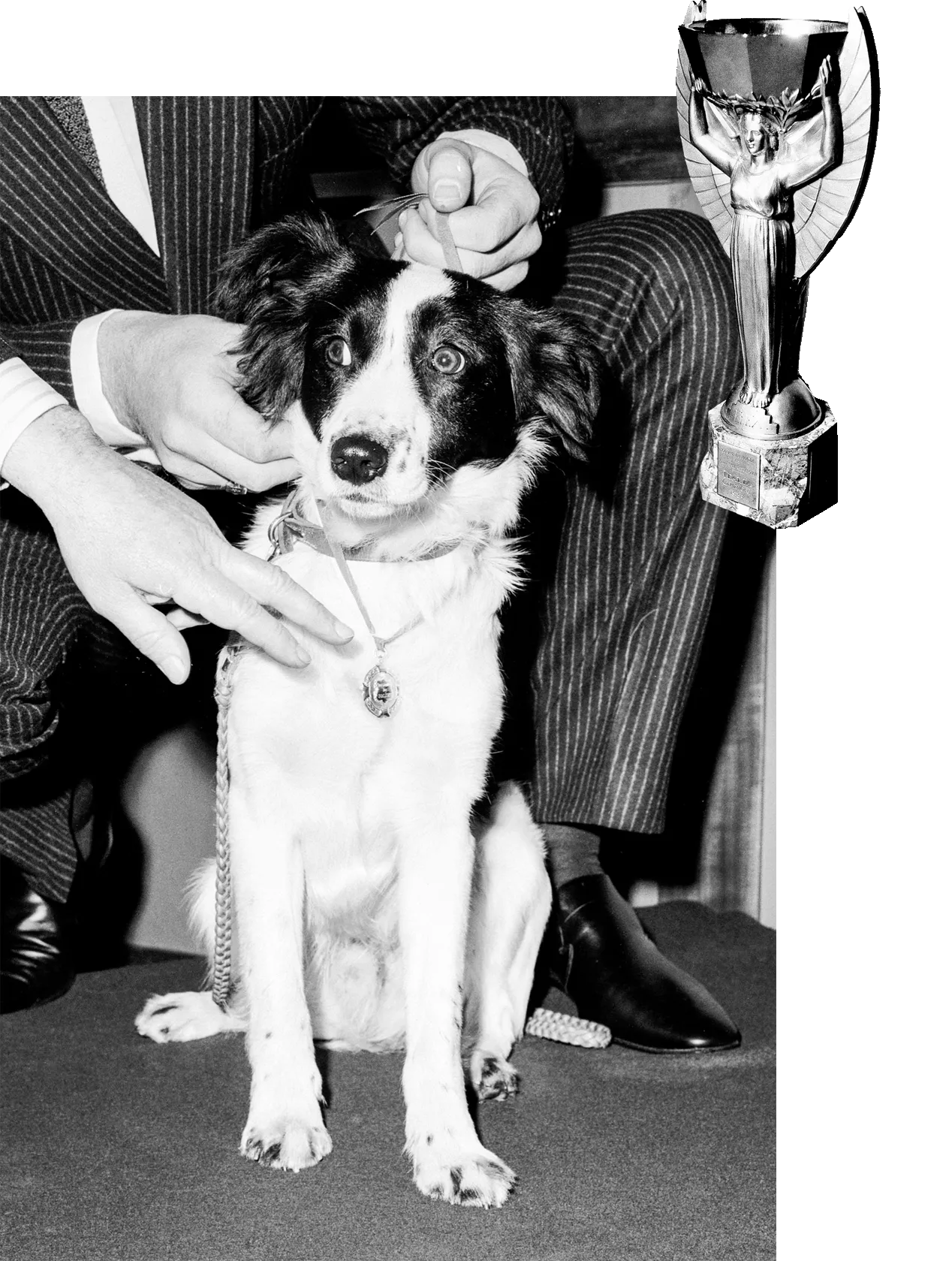
Hero dog Pickles sports a medal he was presented for recovering the stolen trophy in 1966.
S&G/PA Images via Getty Images
Formation of FIFA
In 1904 representatives from seven European nations founded the Fédération Internationale de Football Association in Paris.
“When FIFA was founded, the priority was practical: to regulate cross-border matches,” Fazzone explains. “In hindsight, it marked the moment when football began to organize itself internationally.”
That ambition became visible in 1930, when the first men’s World Cup was staged in Uruguay. Thirteen teams competed. By modern standards it was modest, yet it marked the beginning of an era.
“The first World Cup was far from guaranteed success,” says Fazzone. “What changed everything was the decision to create a truly open world championship.”
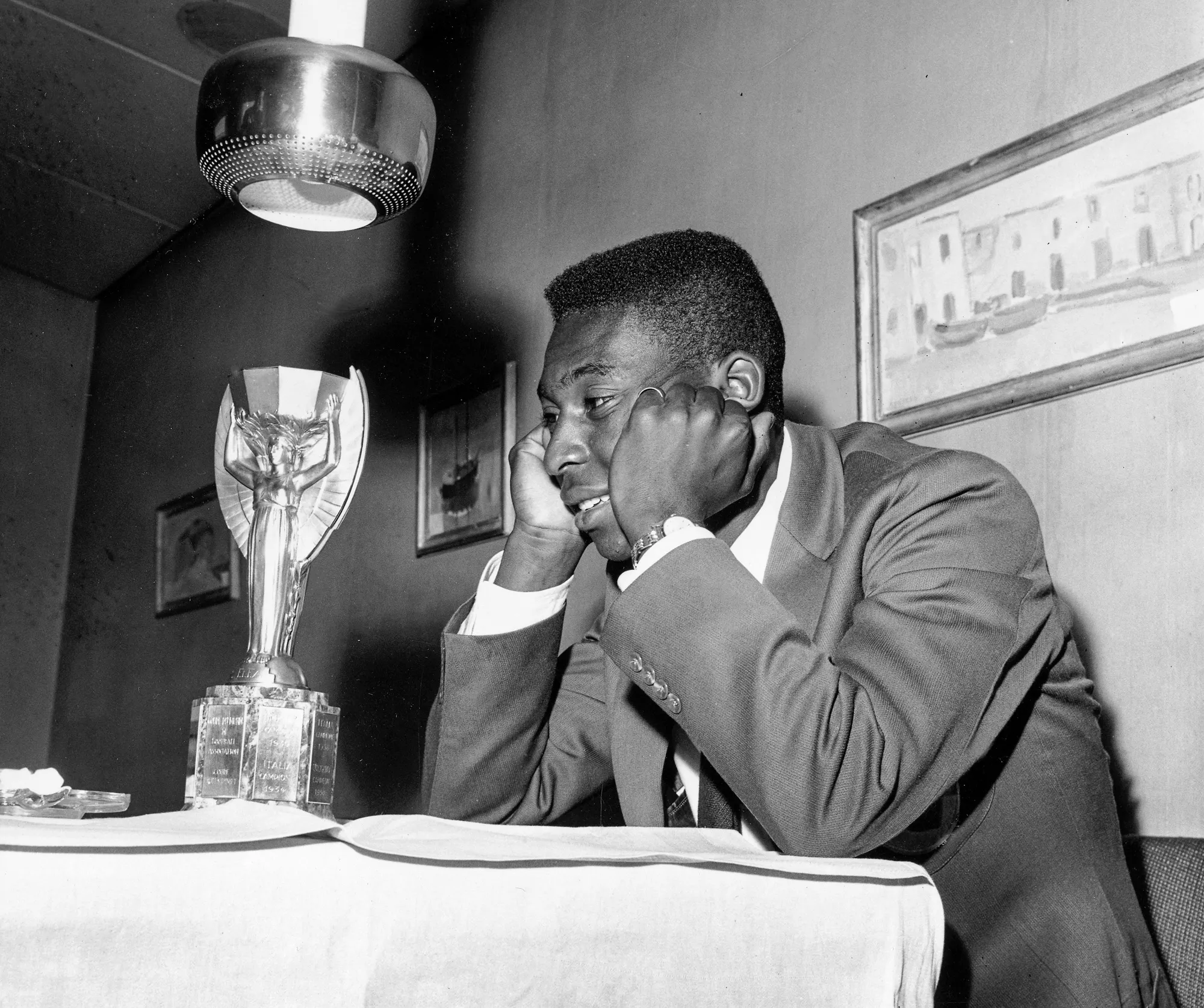
A young Pelé sets his sights on the ultimate prize: the Jules Rimet Trophy, circa 1958, when he helped Brazil win at just 17 years old.
Popperfoto via Getty Images
“[The World Cup] became a global ritual, a shared moment that brings nations together every four years.”
The final between Uruguay and Argentina captured the tournament’s early drama. The teams used Argentina’s ball in the first half and Uruguay’s in the second. Uruguay’s 4–2 victory crowned it the first world champion.
World Cup as Global Ritual
After the interruption of World War II, the World Cup expanded. By 1950 in Brazil, it had grown into a mass spectacle.
Over the decades that followed, FIFA’s membership expanded dramatically. Particularly during the decolonization era of the 1960s and 1970s, newly independent nations joined in large numbers. “As more nations joined FIFA, football became more democratized and less Eurocentric,” Fazzone says.
Television accelerated its reach, turning it into a shared global moment.
Radnedge points to 1970 in Mexico as a turning point. “It was the first World Cup broadcast in color,” he says. “Suddenly, seeing the green of the pitch, the colors of the shirts brought football to life.”
With Brazilian forward Pelé at its center, Radnedge continues, “the World Cup exploded into people’s faces. Nothing since then has been the same.”
As broadcasting technology improved, it was not only the colors that traveled. The sound of stadium chants, drums and, decades later, the vuvuzelas of South Africa in 2010 carried the atmosphere of the game into living rooms around the world.
Qualification now involves more than 200 national associations. Only eight nations have won the men’s World Cup, with Brazil the most successful, holding five titles.
Yet the tournament’s power lies beyond statistics. For many countries, participation alone carries symbolic weight, a moment of visibility on a global stage.
Morocco’s run to the semifinals of the 2022 World Cup in Qatar offered a vivid example. As the first Arab and African nation to reach that stage of the tournament, victories over Spain and Portugal sparked celebrations across the Arab world and Africa. As Amara notes, such moments can become “an arena where multiple identities—national, ethnic and regional—are articulated and negotiated.”
“It became a global ritual,” says Fazzone, “a shared moment that brings nations together every four years.”
Football’s history has not always been inclusive.
Women were playing organized matches by the 1880s. More than 50,000 spectators attended a women’s match at Liverpool, England’s Goodison Park in 1920 before institutional resistance set the game back decades.
In 1921 the English FA banned women from playing on its grounds, declaring the game “quite unsuitable for females.” The ban remained until 1971.
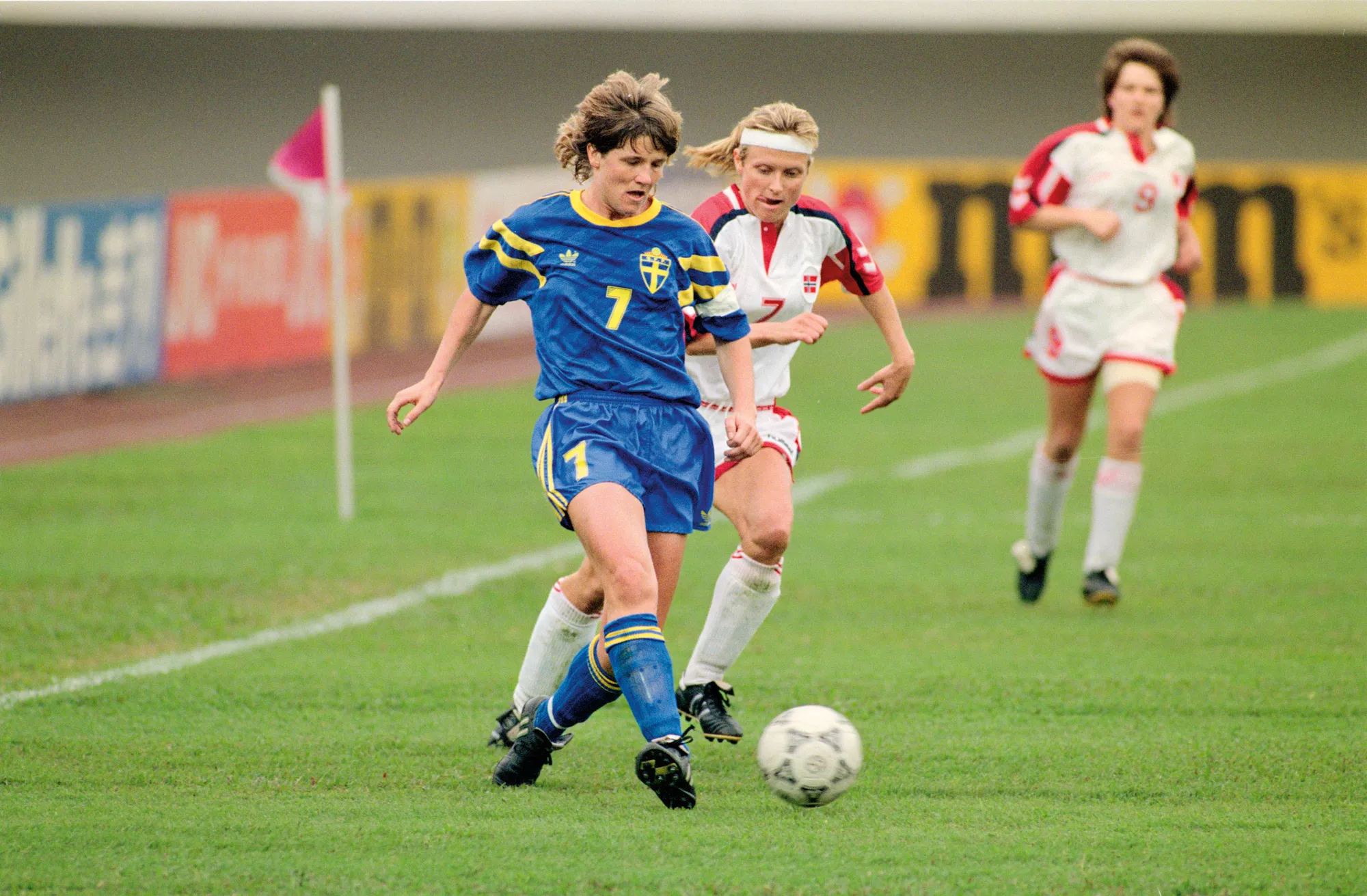
Pia Sundhage (7) of Sweden makes a run as Tone Haugen of Norway closes in during a semifinal of the Women’s World Cup in 1991, the first year the women’s tournament was held.
Bob Thomas via Getty Images
“The establishment of the FIFA Women’s World Cup in 1991 and the inclusion of women’s football in the Olympic Games in 1996 were defining milestones,” says Fazzone. Since then, growth has accelerated significantly.
The 2019 Women’s World Cup was watched by more than 1 billion people worldwide. In 2023 total tournament attendance reached nearly 2 million, with 75,784 spectators at the final in Sydney. In 2018, the Ballon d’Or Féminin was introduced to recognize the world’s best female player.
Professionalism and Media Power
If the 19th century gave football its unified rules, the late 20th century gave it global media reach.
The formation of England’s Premier League in 1992, underpinned by a £304 million (£816 million, or US $1.08 billion today) broadcast deal with the satellite television company Sky, reshaped the domestic game and signaled the power of television money. Today the league is broadcast in more than 180 countries.
Satellite television, combined with the 1995 Bosman ruling that liberalized player movement within Europe, reshaped football’s labor market.
As Radnedge puts it, “all these different strands came together into what you have nowadays with football: a global beast.”
Yet commercial expansion did not erase the sport’s local roots.
“Football is simple,” Fazzone says. “You can play in a stadium or with jumpers for goalposts in an open space. Anyone, anywhere, can play.”
That simplicity helps explain why the game settled so deeply into everyday life.
What began in a London tavern now shapes weekly routines across the world.
Supporters inherit allegiances from parents and grandparents. Rivalries spill into workplaces and family dinners. Shirts and scarves signal belonging.
From local grounds to vast modern arenas, stadiums remain places where communities gather, argue and celebrate together.
Radnedge describes sitting beside the same Tottenham supporter and his two sons for years. “I don’t know his name, where he lives or what he does,” he says. “But for those two hours on a Saturday afternoon, we are on the same level.”
As the sons have grown taller, the ritual has endured. “Ninety-nine percent of football is amateur,” he reflects. “That’s really the cultural root.”
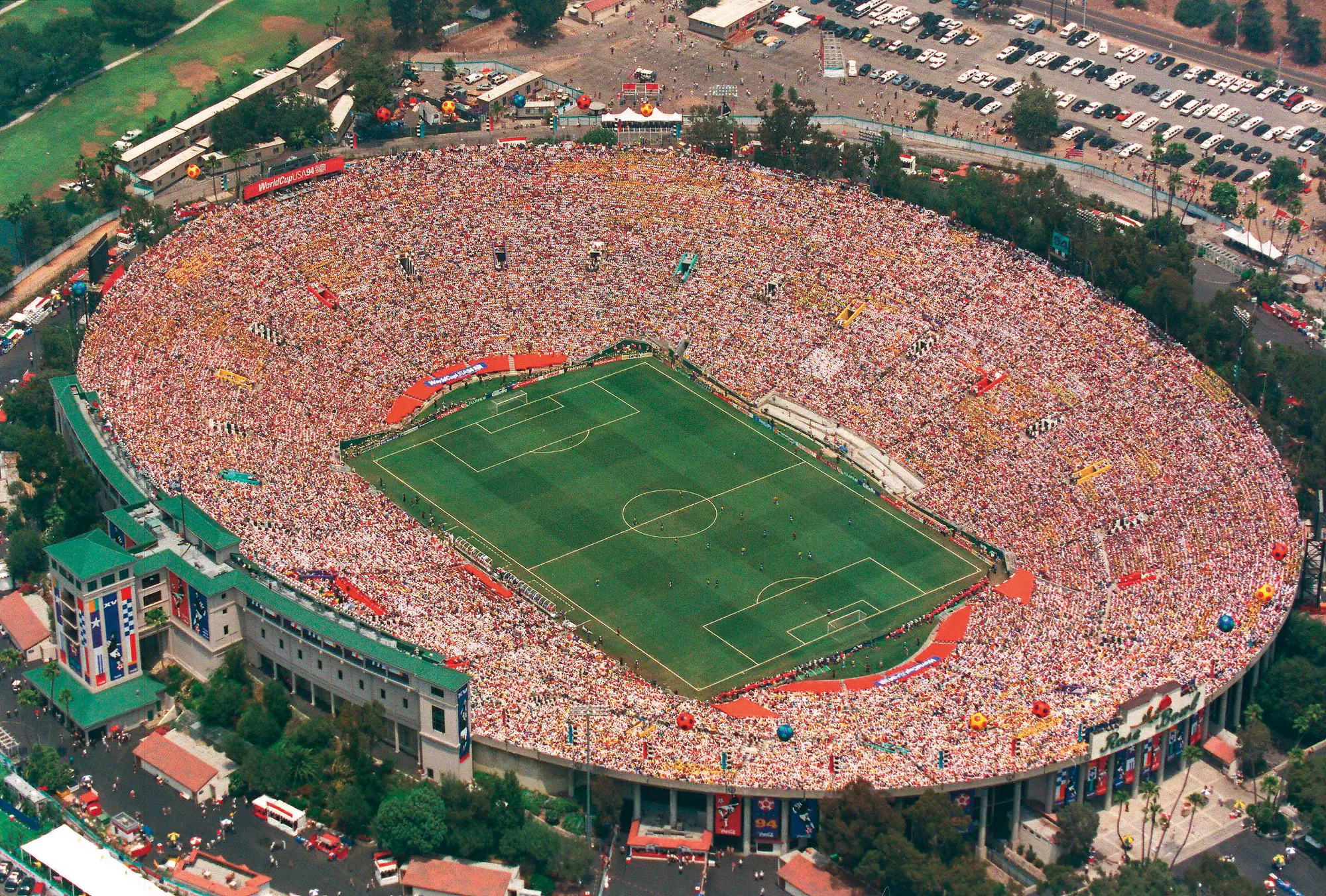
From local grounds to vast modern arenas, stadiums remain places where communities gather, argue and celebrate together, including the Rose Bowl in Pasadena, California, where the United States hosted the 1994 World Cup final. Brazil’s victory over Italy marked the first time the World Cup was decided on penalty kicks.
Mike Powell/ALLSPORT
In Lagos, five-a-side games spill out onto neighborhood streets and local pitches. In Buenos Aires, murals of football heroes turn city walls into galleries. In Cairo, Casablanca and Riyadh, cafés fill for European finals. In Tokyo and Dubai, youth academies train the next generation. In Manchester, London and beyond, weekend fixtures remain markers in the calendar.
“That is the magic of football,” says Fazzone. “It belongs to everyone.”
The rules were settled in England. The story has been written everywhere.

You may also be interested in...
Survey Results Are In: Readers Reflect on What Football Means
Culture
History
AramcoWorld’s question, “What does football mean to you?,” generated hundreds of replies from readers about playing and/or watching the sport.
A Quiet Path Through Recipes: A Conversation With Jeff Koehler
Arts
Culture
Jeff Koehler approaches food as a vessel for storytelling, for geography and cultural identity.
Othman Almulla Embodies Arab World’s Dream of a Golf Championship
Culture
The journey of Saudi Arabia's first professional golfer parallels that of the region from humble beginnings to leaderboard for the global game.