Who Were the Women Who Shaped the Mughal Empire?
The 500th anniversary of the Mughal Empire's rise prompts a fresh look at the women who helped sustain its politics, culture, commerce and architecture.
Written by Nilosree Biswas
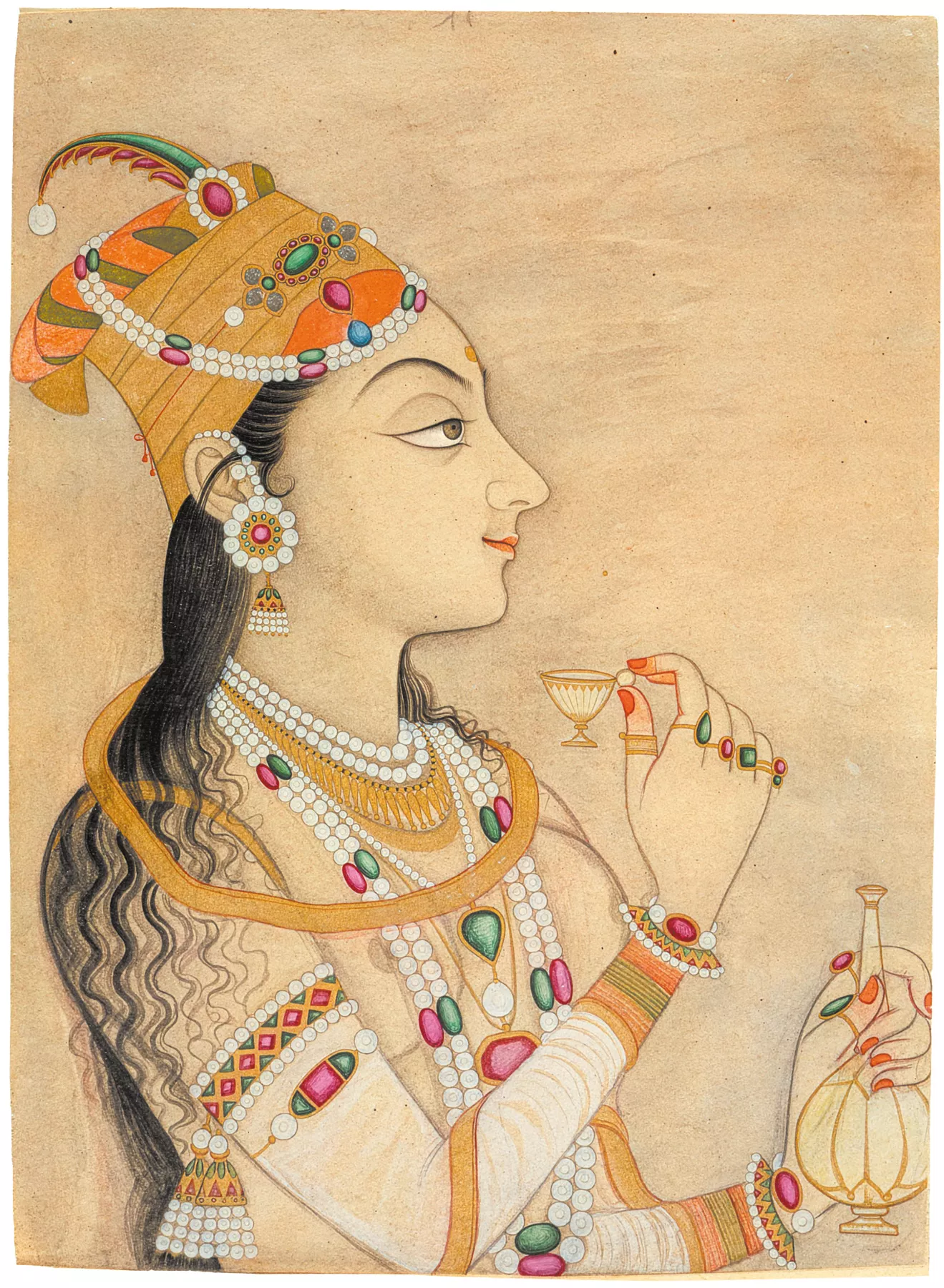
Nur Jahan, wife of Emperor Jahangir, enjoyed an exceptional degree of publicly acknowledged authority for a Mughal imperial woman. Los Angeles County Museum of Art/Wikimedia Commons
It is morning in Chandni Chowk, and Old Delhi is coming to life. Cycle rickshaws thread through its narrow lanes as shopfronts open onto one of the capital of India’s great commercial arteries.
Above the crush of signs and freely hanging electrical wires, crumbling facades and overgrown banyan trees pushing through old walls, and beyond the market streets, the Jama Masjid and Red Fort stand as monumental reminders of the Mughal city from which present-day Old Delhi grew.
When Emperor Shah Jahan established Shahjahanabad as his imperial capital in the 17th century, his daughter Jahan Ara Begum helped shape its civic and commercial landscape. She commissioned the bazaar that became Chandni Chowk, together with a caravanserai (a fortified, luxury roadside inn), a public bath and an adjoining garden.
The city offers a fitting point from which to reconsider an empire whose history has so often been told through its men.
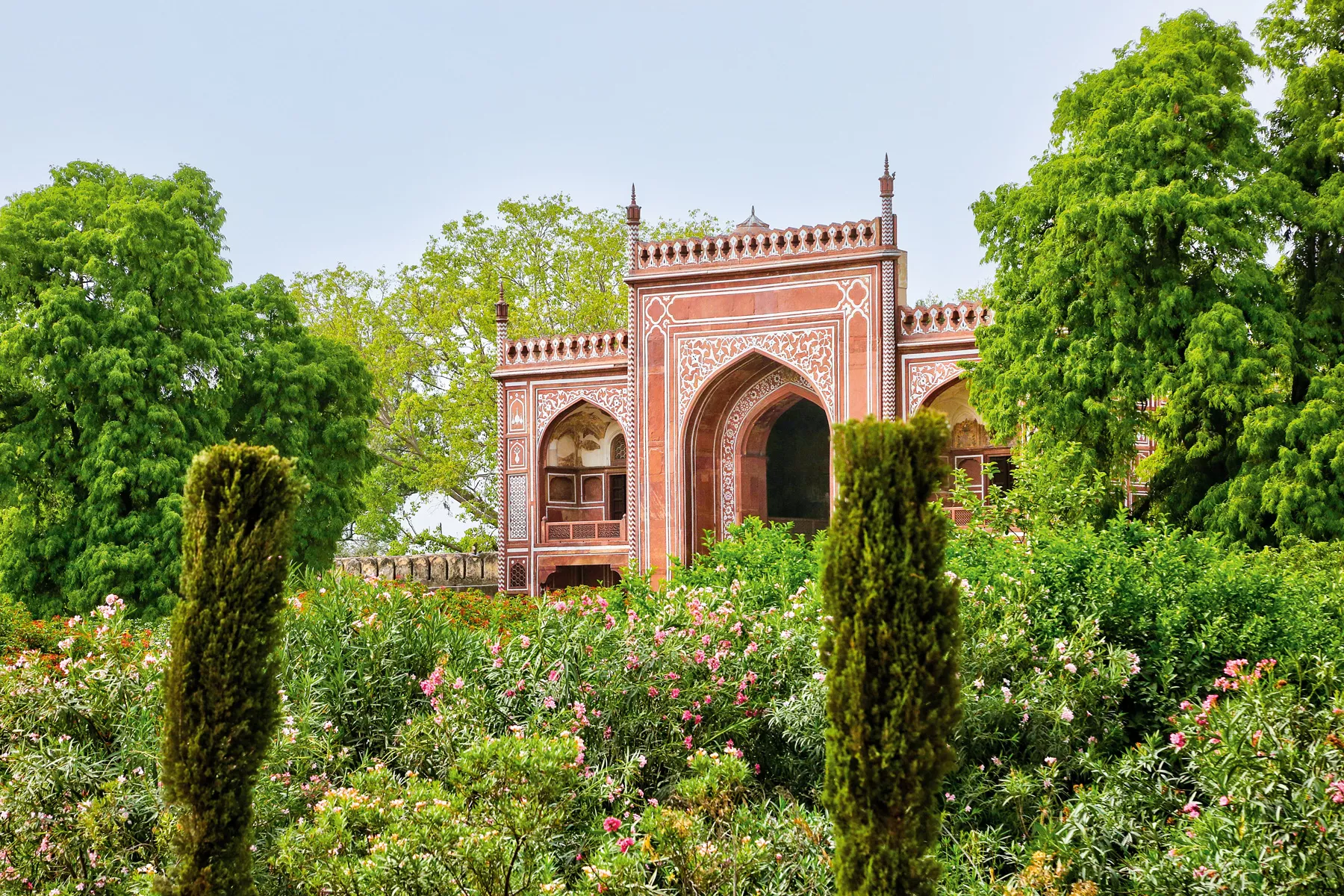
Completed in 1628, the mausoleum in Agra, India, that she commissioned for her parents exemplifies her influence on architecture.
Creative Touch Imaging Ltd./NurPhoto via Getty Images
This year marks 500 years since 1526, when Zahiruddin Mohammad Babur, a Timurid prince from Ferghana in present-day Uzbekistan, defeated Ibrahim Lodi at the First Battle of Panipat and established the Islamic dynasty that would become known as the Mughal Empire. Five centuries later, the imprint of the Mughals, who also known as the Gurkānī dynasty, remains embedded across South Asia’s architecture, art, language, literature, food and popular imagination.
But the anniversary invites another question: Who gets remembered as having built an empire?
“The contribution [of Mughal women] lay not merely in their position within the imperial household but in their participation in shaping the ethical, cultural and political ethos of the empire,” says professor Shadab Bano of Aligarh Muslim University, in the northern Indian state of Uttar Pradesh, whose research includes women and gender relations in medieval India.
The familiar dynastic story revolves around the great imperial names: Babur, Humayun, Akbar, Jahangir, Shah Jahan and Aurangzeb. Around them were women who advised rulers, negotiated politics, controlled substantial wealth, participated in long-distance trade, commissioned buildings and public spaces, traveled vast distances and recorded the dynasty’s history.
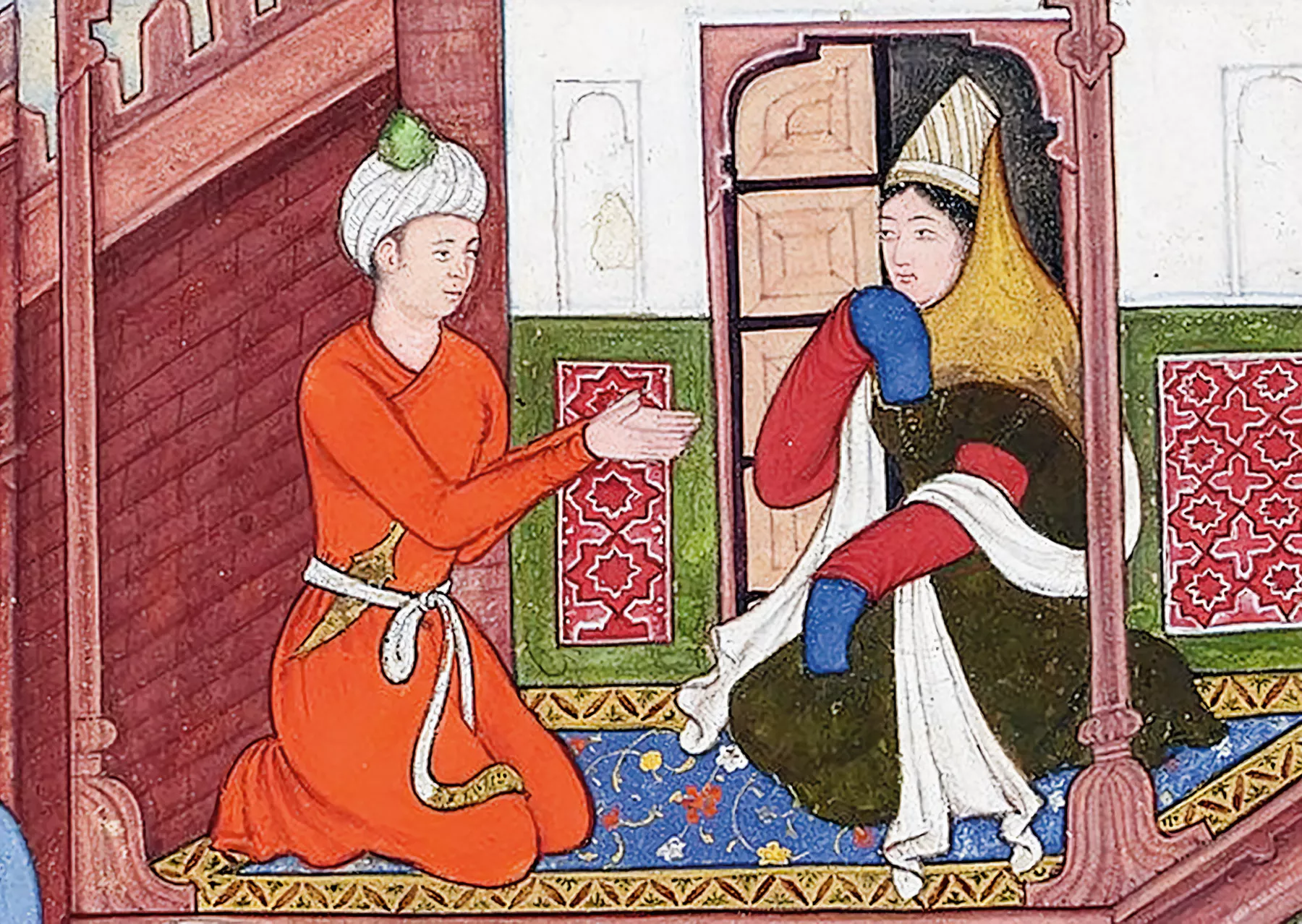
In this detail of a work by Mughal court painter Sānvalah, Isan Daulat Begum counsels her grandson Babur. She served as his chief adviser.
Sānvalah/The Morgan Library & Museum/Wikimedia Commons
Yet most remain far less familiar than the grandsons, fathers, husbands, sons and brothers alongside whom they exercised power.
The reason comes down to “the lack of information, and at times, silence, on Mughal women in [surviving] historical sources,” says historian Mehreen Chida-Razvi, who is associated with the Department of the History of Art and Archaeology at SOAS University of London.
Historiography compounded that imbalance. “Colonial writing painted the harem as a passive space in which women existed as objects of male desire with no political agency,” says professor Taymiya Zaman, a historian of Mughal India at the University of San Francisco.
The reality was more complex. Though zenana, or women’s quarters, was spatially isolated private residential space, it was not necessarily isolated from imperial affairs. Through family relationships, staff and messengers, property, patronage and access to the emperor, its women could remain closely connected to political and economic life. Historian Ruby Lal argues that these quarters became more formally institutionalized under Akbar as the once peripatetic dynasty developed an increasingly structured imperial court.
Five hundred years after the empire’s foundation, looking again at its women changes more than the cast of characters. It changes our understanding of where Mughal power operated.
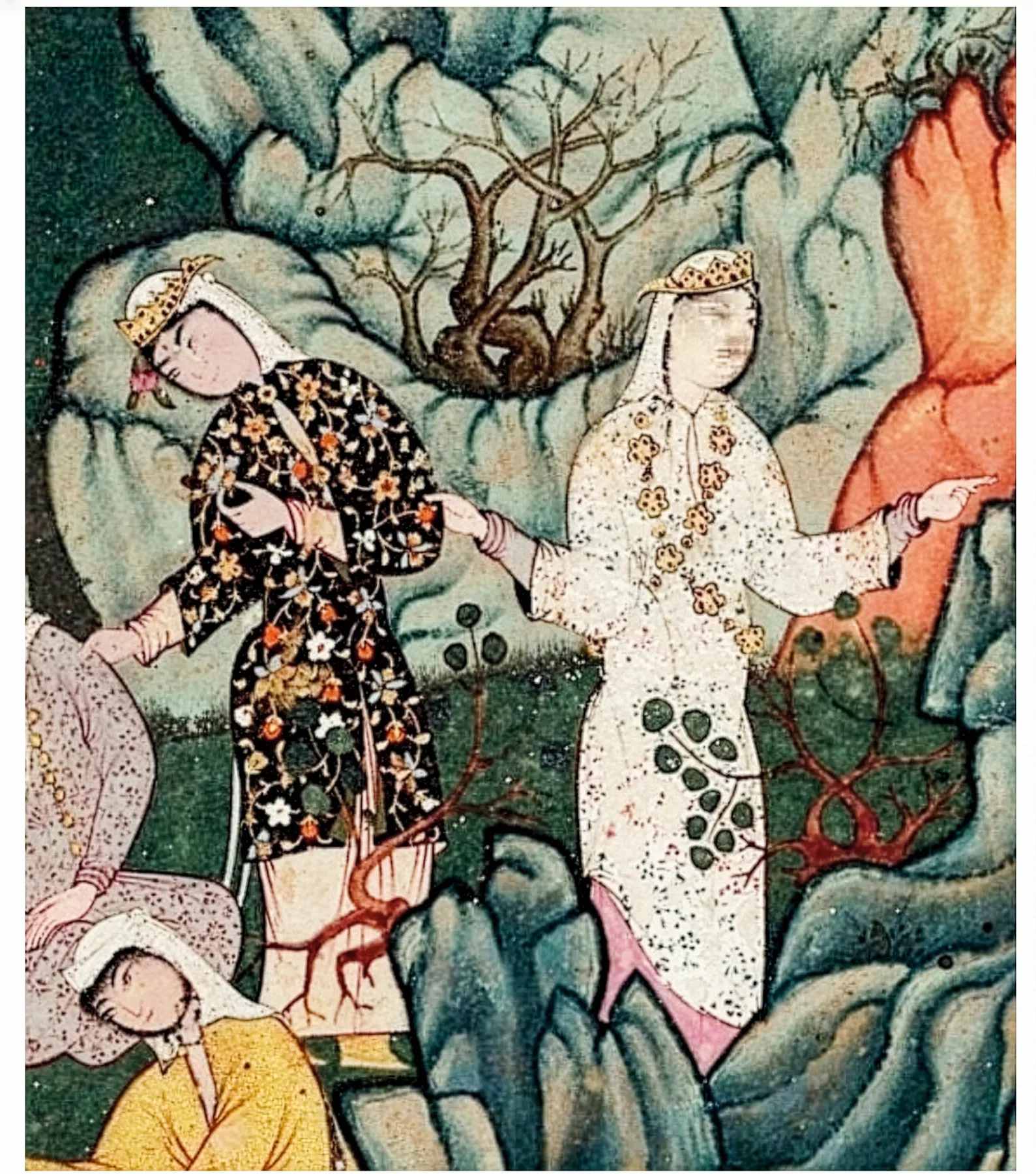
Detail of portraits likely depicting Gulbadan and Gulchihra, daughters of Babur, by painter Dust Muhammad, 1546.
Staatsbibliothek zu Berlin—PreuBischer Kulturbesitz (Berlin State University)/Wikimedia Commons
The Women Behind a Dynasty
Even before Babur established the empire in 1526, powerful women were helping sustain the family’s dynastic ambitions.
Babur’s own memoir, the Baburnama, makes that clear. Of his maternal grandmother, Aisan Daulat Begim, he wrote: “For tactics and strategy, there were few women like my grandmother. She was very intelligent and a good planner. Most affairs were done by her counsel.”
It is a revealing admission. Before there was a wealthy Mughal Empire to administer, women were already helping preserve the political ambitions of the family that would create it.
Lal, professor of history in the Department of Middle East and South Asian Studies at Emory University in the United States, has drawn attention to the roles of Babur’s mother and grandmother during those uncertain early years. Their influence suggests that female participation in Mughal politics was not a product of the empire’s later wealth and stability; it was embedded in the Timurid world from which Babur emerged.
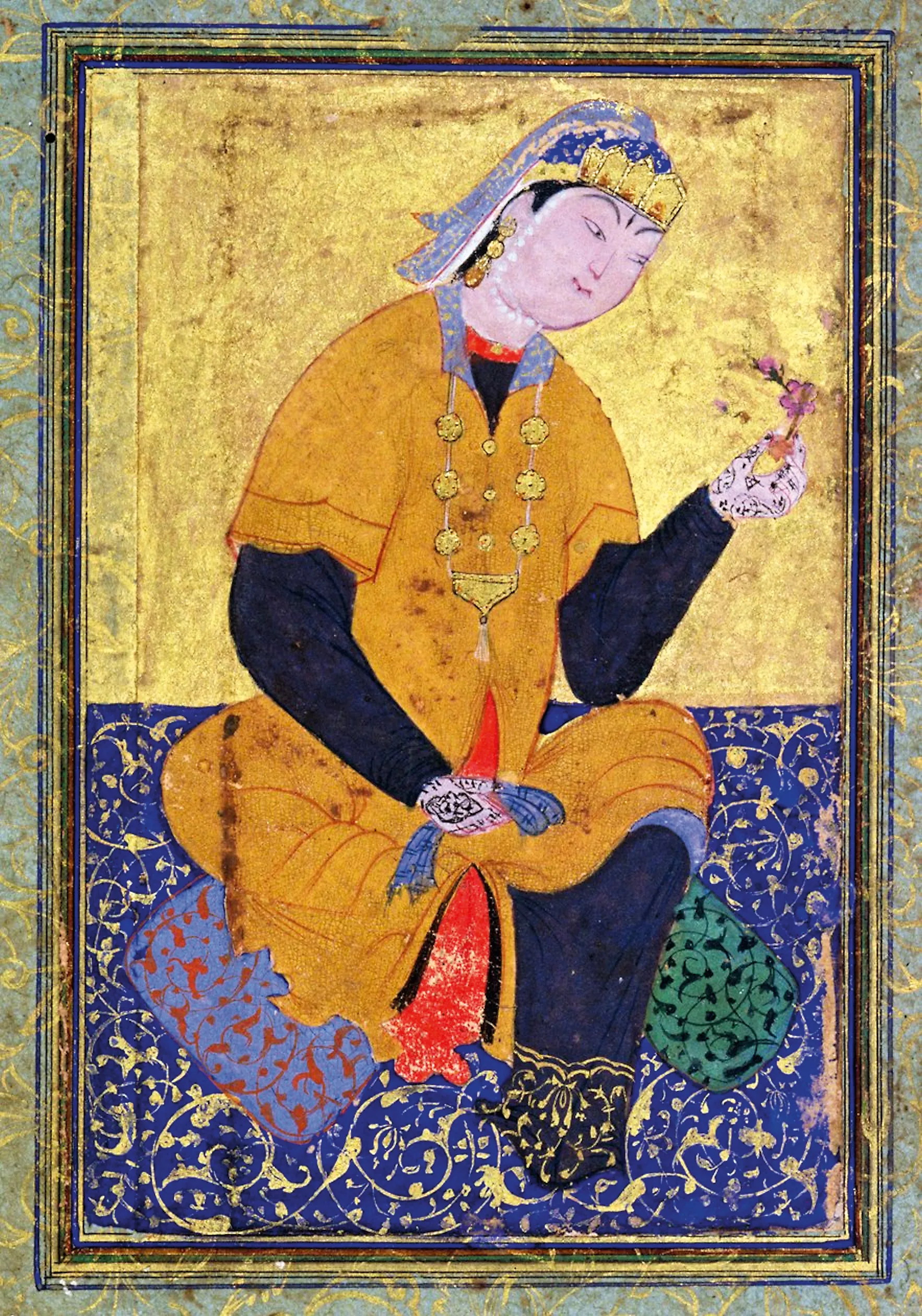
Through family relationships and access to the emperor, women such as Hamida Banu Begum, depicted in 1550, the mother of third Mughal Emperor Akbar, could stay close to political and economic life.
Anthology of Mir ‘Ali (Bayaz)/National Museum of India/Wikimedia Commons
The next generation left something rarer still: a Mughal history written by a woman.
Gulbadan Bano Begum, Babur’s daughter, was born in 1523, three years before the Battle of Panipat. She lived through Babur’s death, her half-brother Humayun’s exile and the restoration and consolidation of the empire under her nephew Akbar.
Late in her life, at Akbar’s request, she drew on decades of observation and family memory to write the work now known as the Humayun-nama.
“Her text is the only Mughal history authored by a woman, and there’s just one extant copy, which is itself incomplete,” Zaman, the professor, says. It’s kept at the British Library’s India Office collections. “Meanwhile, many copies exist of official chronicles penned by or commissioned by kings.”
That disparity matters. Official chronicles foregrounded emperors, battles, administration and kingship. Gulbadan brings into view the emotional and domestic texture of the dynasty—births and marriages, journeys and separations, quarrels, deaths and reconciliations.
In one striking scene, as Babur lies dying, Gulbadan describes Humayun breaking down and urgently summoning physicians to find a remedy. An emperor’s death becomes a family crisis: The conqueror appears as a dying father, recalled by his daughter through the distress of his son.
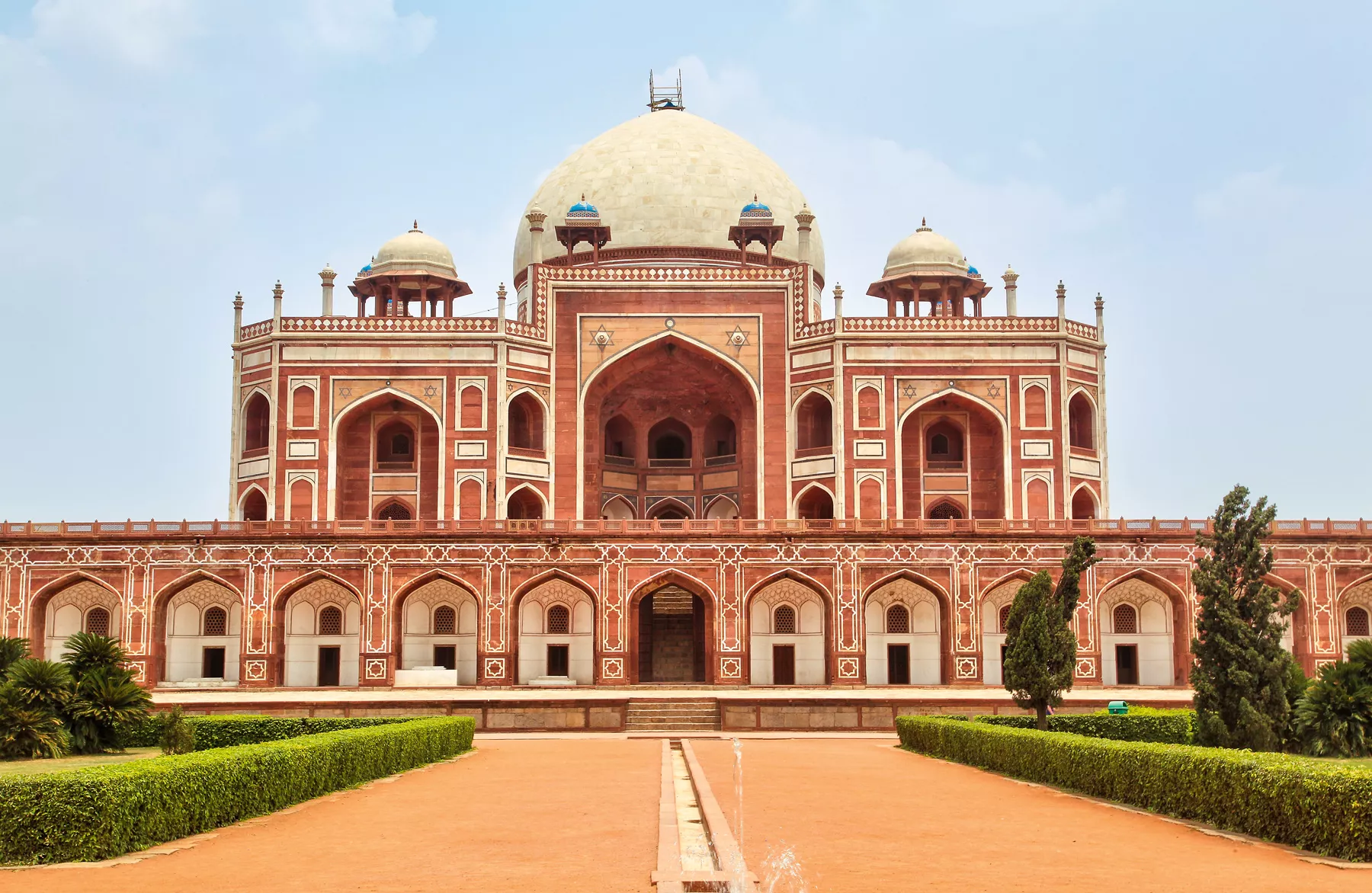
Humayan’s Tomb in New Delhi became synonymous with Mughal architecture. The mausoleum, completed in 1570, contains the tombs of the emperor as well as those of Bega Begum, Hamida Begum and Dara Shikoh.
Creative Touch Imaging Ltd./NurPhoto via Getty Images
Wealth Beyond the Zenana
Under Gulbadan’s nephew, Emperor Akbar (rule 1556-1605), the imperial family expanded through marital alliances with powerful Rajput houses, bringing women from different regional, cultural and linguistic backgrounds into the Mughal household. Their influence could extend far beyond it.
Mariam-uz-Zamani, the Rajput princess who married Akbar in 1562 and became the mother of his successor, Jahangir, demonstrates the extraordinary economic reach some imperial women acquired.
As queen mother she held considerable resources and became a major participant in the maritime economy connecting Mughal India with the Red Sea. Her most famous ship, the Rahimi, was among the largest Mughal vessels of its time, carrying valuable commercial cargo as well as pilgrims traveling toward Makkah.
“The scale of Mariam’s fleet was extraordinary,” Zaman says. Maritime trade was only one element of Mughal women’s financial lives, she adds. Women also held revenue-generating estates and commissioned caravanserais, mosques, tombs, gardens and public spaces while patronizing art, music and literature.
Mariam-uz-Zamani commissioned architectural and charitable projects, including the grand mosque that bears her name, built in 1614 in Lahore, modern-day Pakistan.
As queen mother she could also issue orders bearing the royal seal—evidence that imperial women’s economic power could intersect with administrative authority.
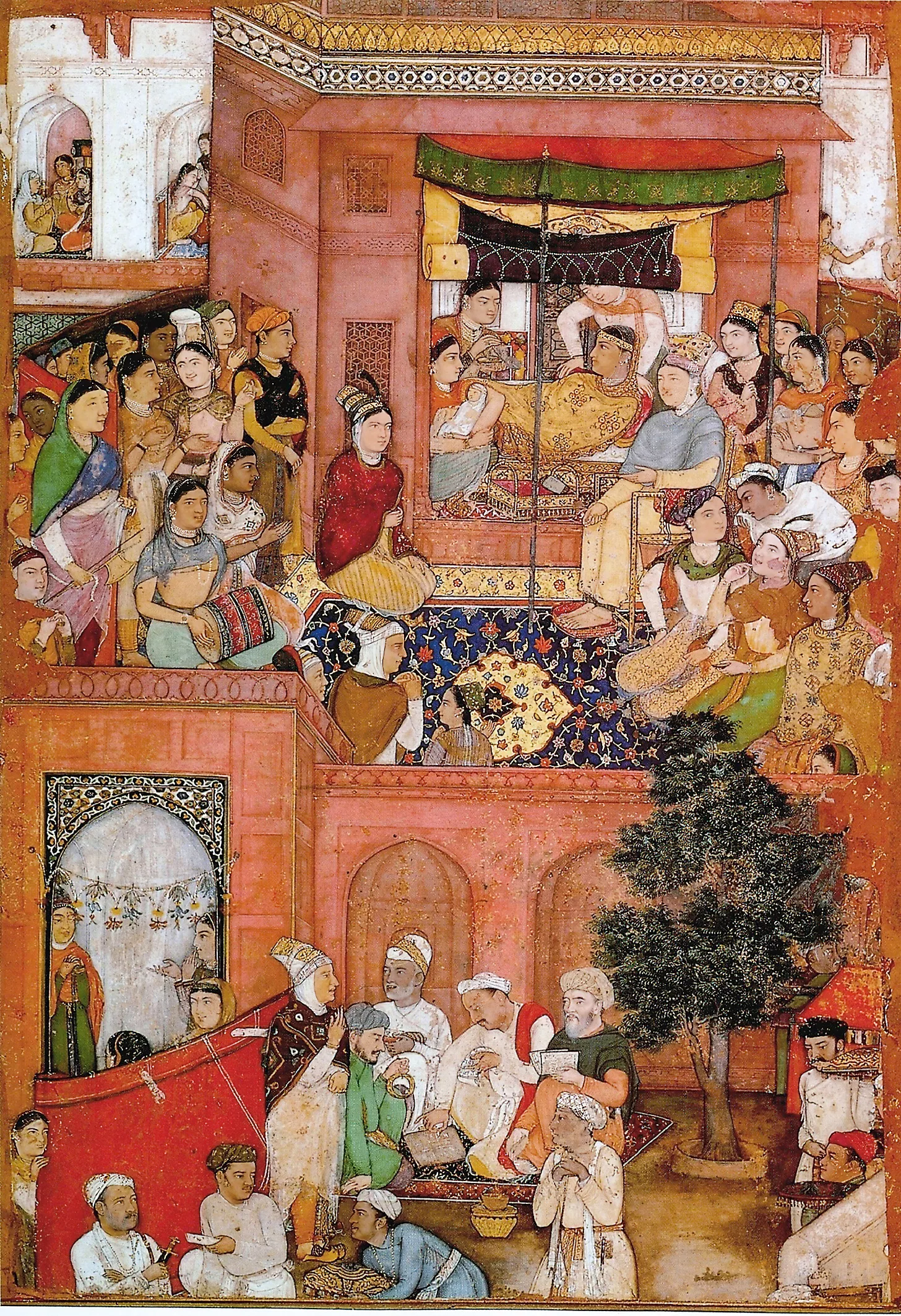
A painting by royal court painter Bishandas shows the court waiting as Mariam-uz-Zamani, wife of Akbar, gives birth to Jahangir. The queen mother played a big role in the maritime economy connecting Mughal India with the Red Sea.
Bishandas/Museum of Fine Arts, Boston/Wikimedia Commons
Nur Jahan: Authority Made Visible
On the eastern bank of the river Yamuna in Agra stands another material argument for the ambitions of Mughal women. Light enters the tomb of I’timad-ud-Daulah through carved marble screens and falls across walls covered with flowers, vessels, trees and geometric patterns that vividly stand out in colored stone.
The mausoleum was commissioned by Nur Jahan for her parents, Mirza Ghiyas Beg—who held the title I’timad-ud-Daulah—and Asmat Begum. Built between 1622 and 1628, it represents a major shift in Mughal architecture.
“It’s the first major tomb built in white marble with inlaid semiprecious stones,” says Zaman. “The marble-and-inlay work is what Shah Jahan scaled up dramatically in the Taj Mahal.”
Nur Jahan’s influence reached beyond architecture. Born Mihr-un-Nissa, she married Emperor Jahangir in 1611 at about age 34 and received the title Nur Jahan, meaning “Light of the World.” According to Lal, she became his co-sovereign during the later years of his reign—an exceptional degree of publicly acknowledged authority for a Mughal imperial woman. Coins even bore her name.
Mika Natif of George Washington University in the US describes her as “a gutsy, smart, sharp and creative woman whose authority was unusual because it was “more openly recognized and institutionalized.”
Razvi cautions, however, against interpreting that authority as independent sovereignty. Nur Jahan exercised her prerogatives with Jahangir’s consent. That itself raises a revealing question about how historians understand shared power.
“The strength of women,” Zaman says, “is often seen as the weakness of men, so if a man has a strong wife, he must be weak. Alternatively, we could see Jahangir as being fairly shrewd in knowing that Nur Jahan could handle statecraft and admiring her for it.”
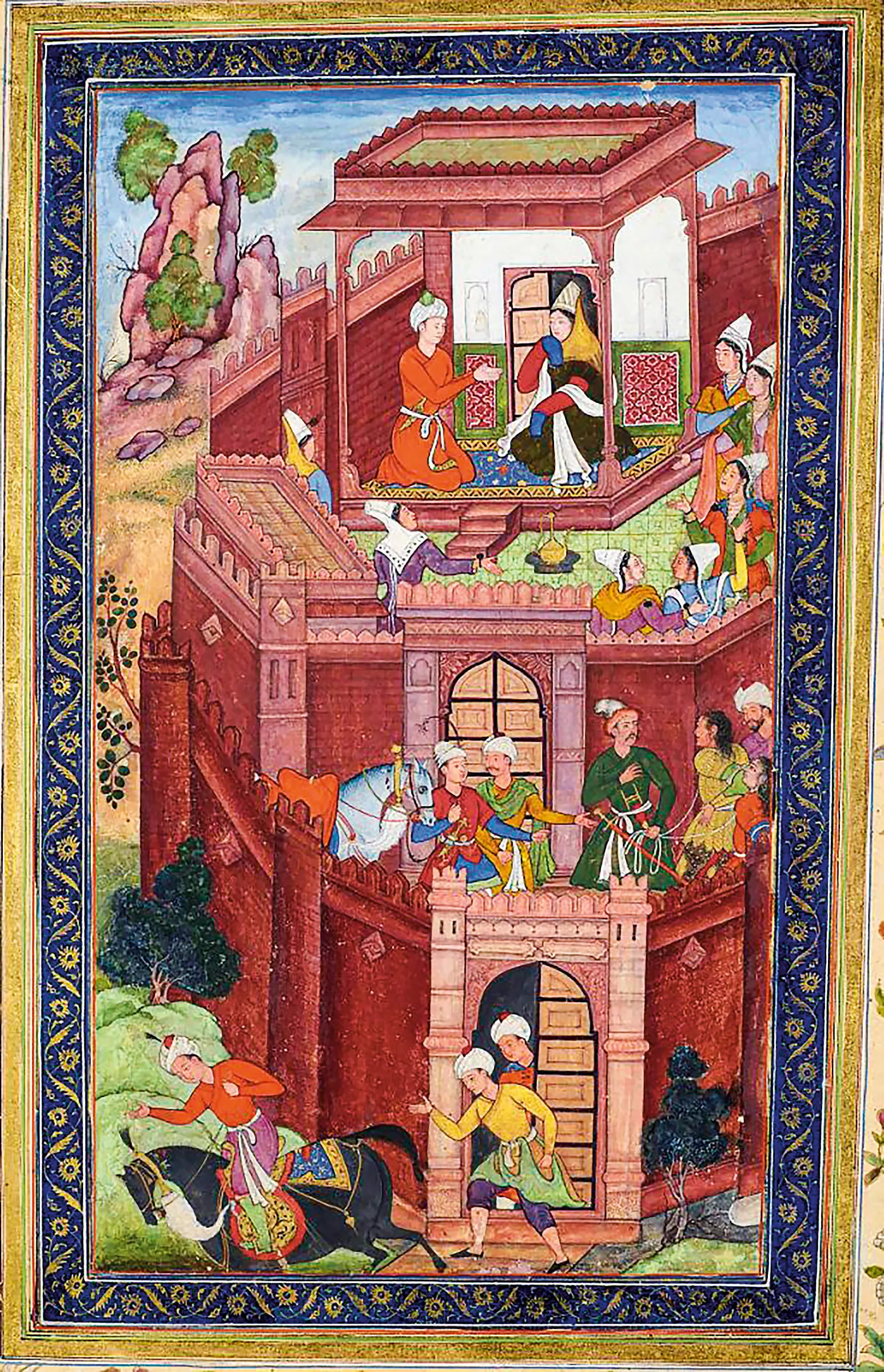
Babur seeks his grandmother's advice.
Sānvalah/The Morgan Library & Museum/Wikimedia Commons
Jahan Ara and the Architecture of Influence
Political authority did not always resemble Nur Jahan’s unusually public form of power.
When Mumtaz Mahal—Shah Jahan’s wife and the woman for whom he built the Taj Mahal—died in childbirth in 1631, her 17-year-old daughter Jahan Ara became Padshah Begum, the premier woman of Shah Jahan’s court. She was entrusted with the imperial seal and acquired substantial wealth and responsibility.
“Jahan Ara’s most distinct contribution lay in the way she exercised authority through patronage, charity and the creation of public spaces,” Bano says.
Her charitable activities included supporting hospitals and free kitchens and assisting pilgrims traveling on her ships. Her architectural and religious patronage similarly extended beyond the palace. At Ajmer, she supported separate quarters for women visiting a religious shrine; in Delhi, her projects included the caravanserai, garden and commercial landscape associated with Chandni Chowk.
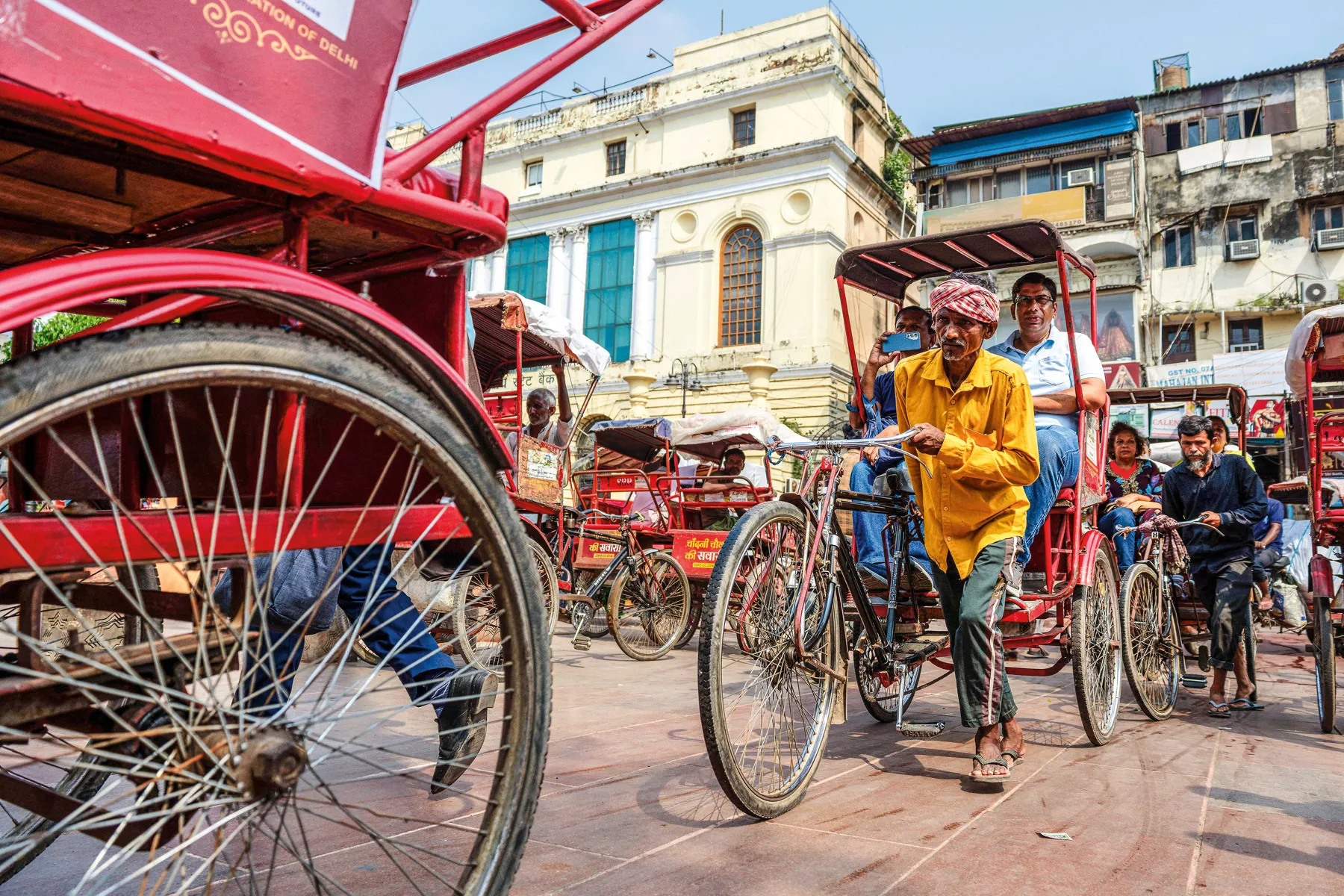
With the State Bank of India as a backdrop, the busy thoroughfare of Chandni Chowk still reflects the influence of Shah Jahan’s daughter Jahan Ara Begum on commercial life in Old Delhi, India.
IMAGO/Frank Bienewald
Jahan Ara also became involved in the succession struggle that followed Shahjahan’s ill health in 1657, supporting her eldest brother, Dara Shikoh, in his bid to become emperor. After Aurangzeb prevailed and confined Shahjahan in Agra Fort, she joined her father and cared for him during his final years.
Bano cautions against allowing that act of care to define her. “Her history cannot simply be reduced either to her care work for the ailing emperor in his final years or to her role as a sister supporting Dara Shikoh in his claim to the throne,” she says.
Jahan Ara’s public works offer another measure of authority. Mughal power was not expressed only through armies, fortresses and imperial decrees. It could also take material form in the places where people traded, traveled, worshipped, ate and gathered.
Today, much of the Chandni Chowk Jahan Ara created has disappeared or been transformed. Yet the commercial district she helped shape remains embedded in the daily life of Old Delhi. Its survival provides an apt reminder, 500 years after Babur’s victory at Panipat, that the Mughal legacy was built by more than emperors. The traces left by its women survive in tombs, manuscripts, coins, gardens and streets. Recovering them reconsiders how the empire itself worked—through kinship as well as conquest, commerce and patronage as well as formal politics.
Reinstate women into Mughal history, and the story of who built the empire changes.
You may also be interested in...
Ottoman-Era Hijaz Railway’s Legacy Endures, Chugging Toward Revival
History
The legacy of an Ottoman-era project to connect Damascus, Syria, to the holy site of Madinah in modern Saudi Arabia and beyond is breathing new life into today’s vision for rail in the region.
Spotlight on Photography: Navigating Guinea-Bissau's Rainy Season

Cake Rusk Tiramisu: The Story of an Improvised Dessert
Food
Cambridge, UK, supper-club hostess Kinza Malik recalls how, during her childhood in Pakistan, her mother improvised with a classic dessert.