What It Takes To Feel Ramadan Again
Creative minds rebuild Ramadan traditions through deliberate acts of memory and care.
Before dawn, Sahtinay Abaza moves through her Jacksonville, Florida, living room, relighting tea candles inside metal lanterns she once knew from homes in the United Arab Emirates. She sets them along the mantel, where the fairy lights of a 60-centimeter-tall crescent-shaped moon tree flicker and dazzle.
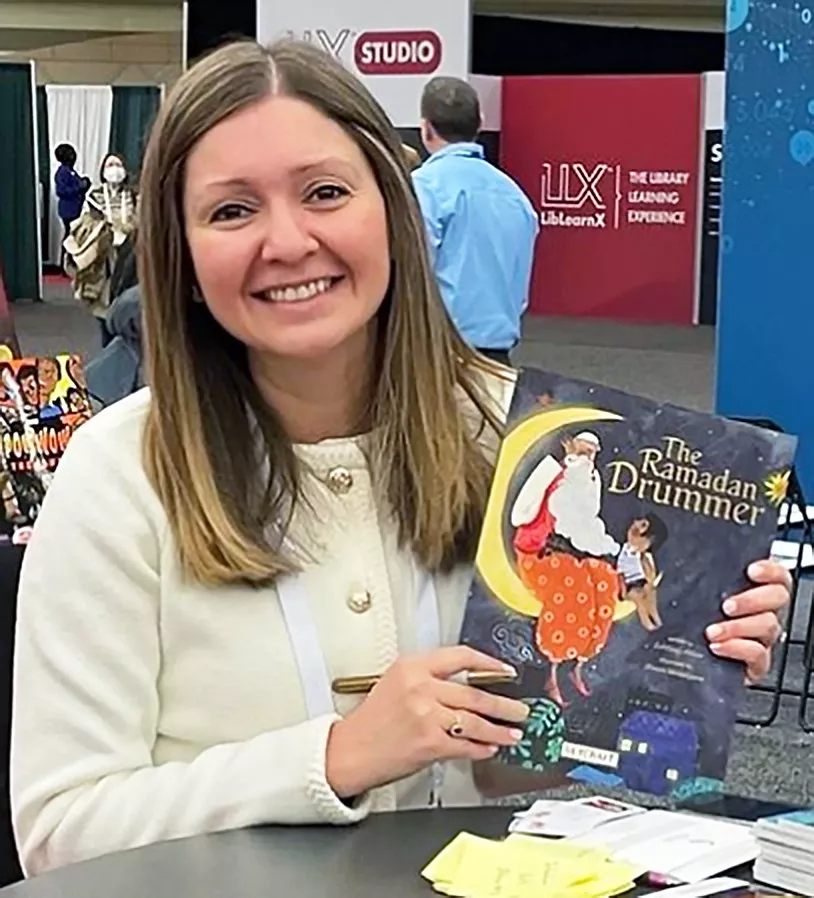
Sahtinay Abaza poses with a copy of her first children’s book, The Ramadan Drummer, a story of tradition the US-based author first encountered as a child living in the UAE
Photo courtesy of Sahtinay Abaza
In the kitchen, the kettle comes to a boil. Cheese- and spinach-filled fatayer warm in the oven as suhoor , the predawn meal before fasting, takes shape in the house.
Abaza, 42, has lived in the United States since 2009. She and her husband are raising their children in a largely non-Muslim neighborhood in Florida, where Ramadan leaves little trace beyond the walls of their home. Here, the month does not announce itself. It is something she must assemble.
Her small, domestic gestures reflect a wider reality shared by many Muslims living far from their ancestral homelands: the need to actively reconstruct Ramadan’s atmosphere when it no longer arrives by default.
Abaza’s own memories are layered. Of Circassian descent, her family history stretches through Syria, while she grew up in the UAE, where Ramadan shaped daily life—shared meals, shortened days and a city moving at the same pace. Yet the image that has stayed with her most didn’t come from her own experience, but from what she inherited.
She never saw the drummer herself. He came to her through her mother’s stories from childhood in Damascus. The mesaharty, a man walking the streets pre-dawn during Ramadan, beating his drum to wake households for suhoor and to set the shared rhythm of the month.
“I would wake up for suhoor and imagine this drummer walking through the streets, in the dark, beating his drum,” Abaza says.
Years later, the imagined figure would step out of memory and onto the page. In The Ramadan Drummer, her first children’s book, a boy traces the sound of a drum through the night and learns that Ramadan’s rhythm grows not only from fasting itself but from attentiveness to others and small acts of care.
Living far from a Muslim-majority community, Abaza now finds herself creating traditions her daughters—now 11 and 13 years old—can hold onto. On the night before Eid, she takes them outside with binoculars and asks them to search the sky for the crescent moon. Often, it’s hard to see. When disappointment sets in, she sends them on a second hunt, this time through the house or backyard, looking for glowing “moon rocks”—small plastic balls filled with money and small gifts—hidden among plants and furniture. The rocks are a prelude to celebrating Eid, and the inspiration for her second book, Looking for the Moon.
“It keeps the excitement alive,” she says. “Especially when you don’t have a big Muslim community or extended family nearby.”
Across the world, storytellers, artists and photographers are doing similar work—finding ways to recreate the atmosphere of Ramadan through creative practice.
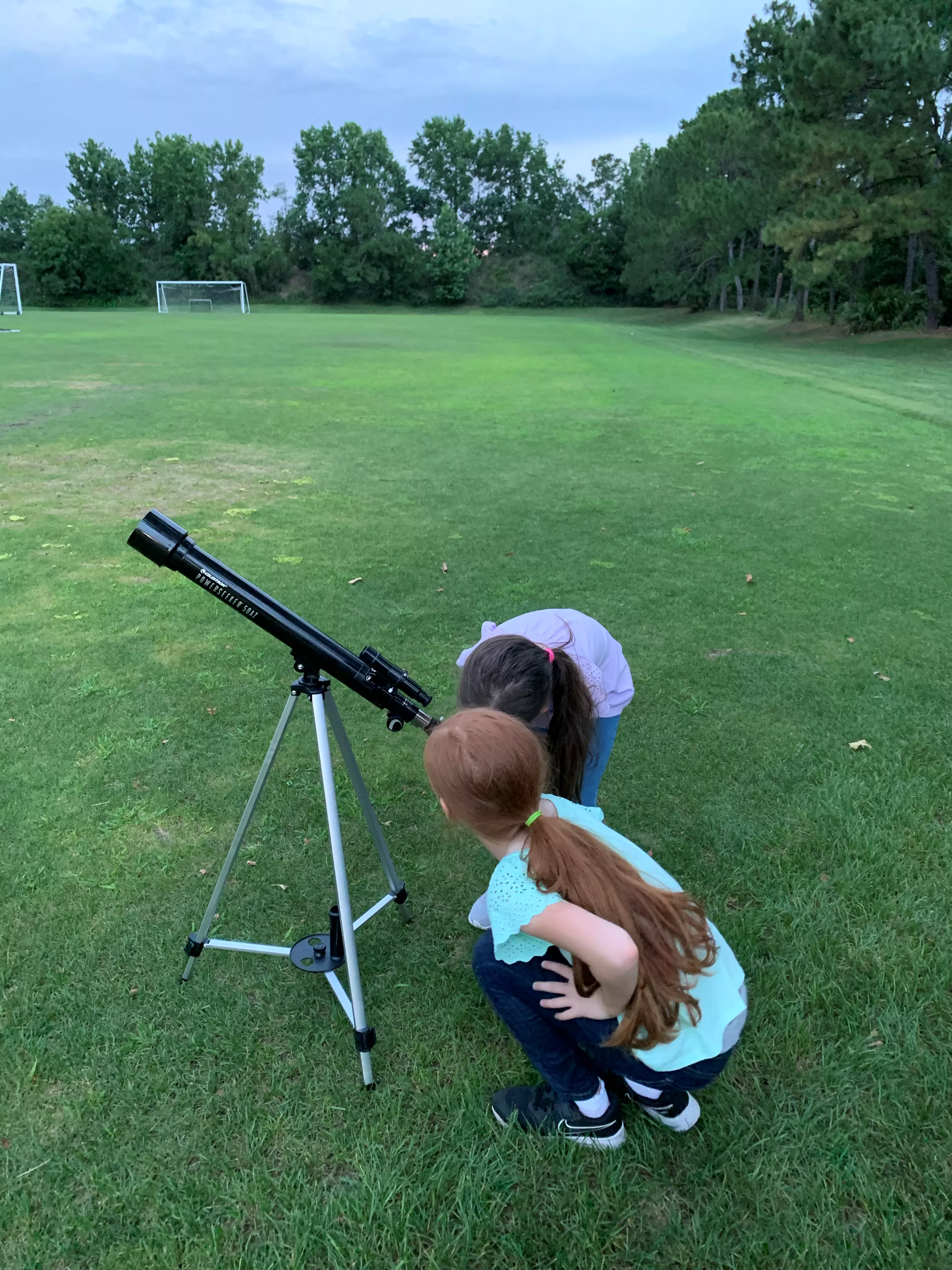
Abaza’s two daughters, ages 11 and 13, search the sky for the crescent moon. Much like the message of her debut book, Abaza is constantly finding ways to recreate the atmosphere of Ramadan through creative practice, an effort that can applied in keeping other traditions alive.
Photo courtesy of Sahtinay Abaza
For architect and photographer Basel Almisshal, that work took on a global form. Now 48 and living in Florida, he launched Capture the Spirit of Ramadan, an international photography project that ran from 2011to 2015.
.webp?cx=0.5&cy=0.5)
Architect and photographer Basel Almisshal in front of a banner for the launch of his photography exhibition, The Holy Month of Ramadan: A Visual Celebration, which displayed in 2014 and 2015 at the Islamic Arts Museum Malaysia. The exhibition featured 66 works of photography from Almisshal’s photo competition, Capture the Spirit of Ramadan, which circulated more than 6,000 images. For Almisshal, the competition and exhibit demonstrated how photography “anchors memory in something real.”
Photo courtesy of Studio Basel
The project emerged at a moment when social media was rapidly morphing into a daily, global platform. Rather than explaining Ramadan, Almisshal wanted to create a space where people could show it—through lived moments shared day by day across the month. A small core team collaborated remotely across countries and cultures, while contributors from more than 60 countries shared photographs daily over the 30 days of Ramadan.
Images captured moments of iftar, when people broke the fast together, in Old Jerusalem, mass prayers in Washington DC, markets in Indonesia; others lingered on stillness—solitary prayer, empty mosques at dawn, light settling on familiar objects.
Across this tapestry, Almisshal noticed recurring motifs: sunrises before fajr, meals marked by generosity, moments of introspection alongside collective worship.
“Photography allows us to capture the spirit of Ramadan in ways that language simply cannot,” he says. “Through light, gesture, silence and emotion.”
Many of the submissions came from Muslims living outside their ancestral homelands. In those photographs, Almisshal observed a careful attentiveness—prayer rugs laid deliberately in unfamiliar rooms, lantern light held in frame a moment longer, meals arranged with intention.
The attentiveness shaped the archive itself. As the more than 6,000 images circulated daily across time zones, viewers encountered Ramadan not as a single spectacle but as a shared rhythm unfolding hour by hour around the world.
Even after the project formally ended, its images continue to resurface each Ramadan. Photographers rediscover them, viewers return to them, and others ask whether the project might begin again.
“Photography doesn’t just document,” Almisshal says. “It anchors memory in something real.”
.webp?cx=0.5&cy=0.5)
Artist Dinara Mirtalipova works on prints in her studio. Mirtalipova, who focuses on folk illustration, decorative arts and storytelling, grew up during the late-Soviet period of the 1980s. She has called the US home, however, since 2005. According to Mirtalipova, distance has only sharpened her memory than dulled it.
Carrie Wise courtesy of Dinara Mirtalipova.
That impulse to give form to what might otherwise fade also animates the work of illustrator Dinara Mirtalipova.
Mirtalipova illustrated The Ramadan Drummer, and when she first encountered Abaza’s manuscript, she recognized in the drummer a figure absent from own childhood. Growing up in Soviet Uzbekistan in the 1980s, Dinara like everyone else lived in a society where public religious celebrations were practiced quietly, without the street-level rituals that marked Ramadan elsewhere.
.webp?cx=0.5&cy=0.5)
Mirtalipova’s earliest memories of Ramadan reflect the social and celebratory nature of the holiday, marked by family visits .
Photo courtesy of Dinara Mirtalipova
Now 43, Mirtalipova, who moved to the US more than 20 years ago, lives in suburban Ohio with her husband and 14-year-old daughter. Distance from her homeland has sharpened memory rather than dulled it.
.webp?cx=0.5&cy=0.5)
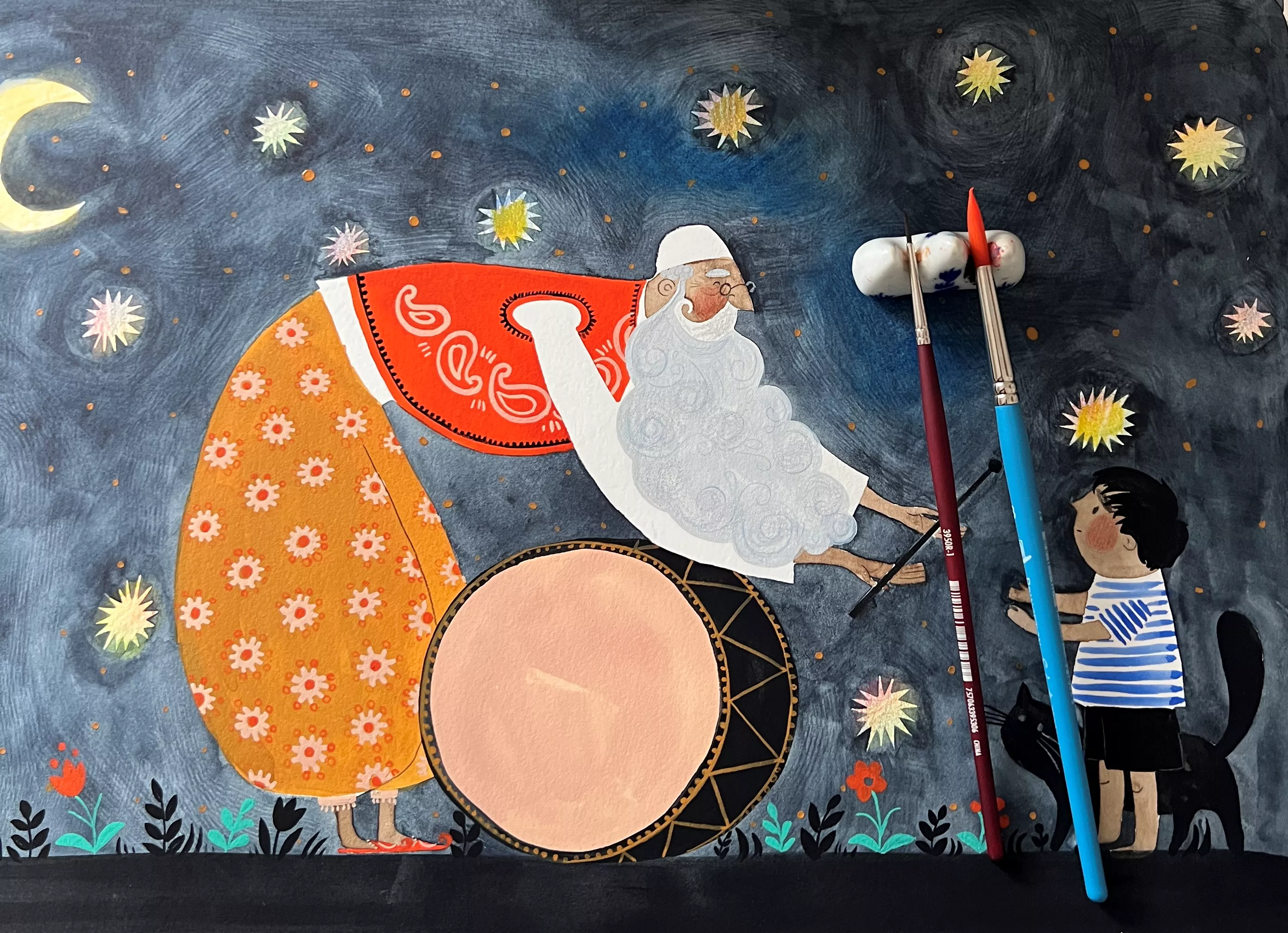
One of Mirtalipova’s original paintings for The Ramadan Drummer, written by Abaza, shows the story’s protagonist, Adam, meeting the famed Ramadan drummer.
Photo courtesy of Dinara Mirtalipova
Her earliest recollections center on her grandmother who would wake before the first sound of the rooster’s crow to prepare suhoor and would spend the day moving between prayer, cooking and quiet instruction. When Ramadan ended, the neighborhood would open outward.
During Eid, the festival of prayers with friends and family, celebrated on the last day of Ramadan, gates stood wide, benches appeared outside homes, and neighbors drifted from house to house, children following along without invitation. In the US, that collective rhythm is hard to find. Over time, a small circle of friends—Uzbek, Pakistani, Emirati—has helped recreate fragments of it.
Motherhood deepened that sense of absence. Mirtalipova found herself singing her daughter the songs her grandmother once sang to her. “That’s also when nostalgia began appearing in my art,” she says.
When she illustrated Abaza’s manuscript, lanterns and moonlight flowed easily from memory. She imagined the drummer in red slippers with tassels on the toes, his long beard echoing figures from Uzbek folklore. After first seeing the artwork, Abaza was struck by how closely it matched the world she imagined.
It blew me away,” Abaza says. “I wanted the story to be magical and whimsical, and I think she captured that.”
Before dawn ends, Abaza once more moves through the rooms she has already arranged—lanterns lit, the moon tree standing in the living room, the kitchen returning to stillness. Outside, the neighborhood carries on as usual.
“We have to create the magic in our own homes,” Abaza says. “It helps children feel proud of who they are.”
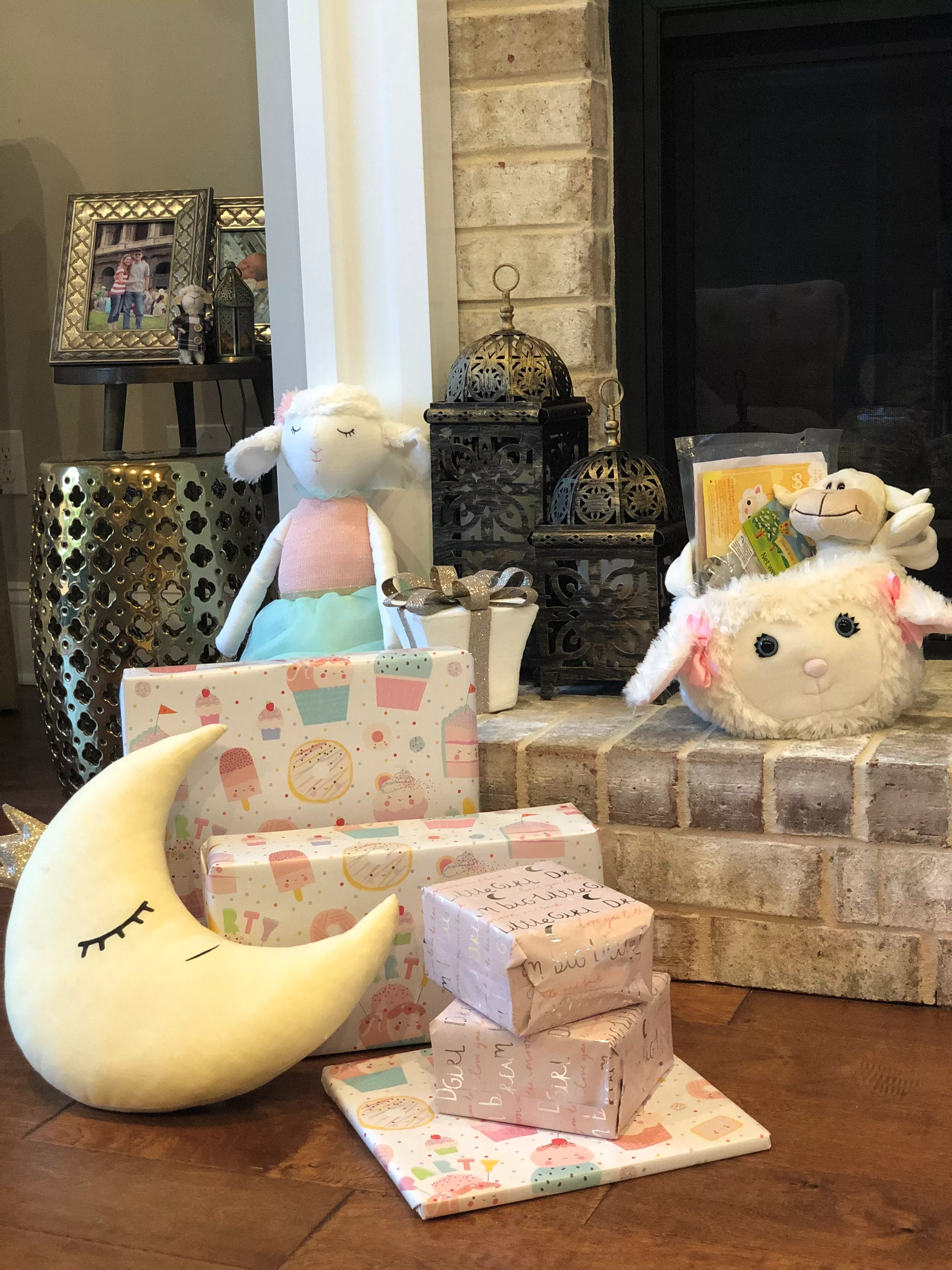
Photo courtesy of Sahtinay Abaza
From the Archive
Where Ramadan Is Remade Each Year
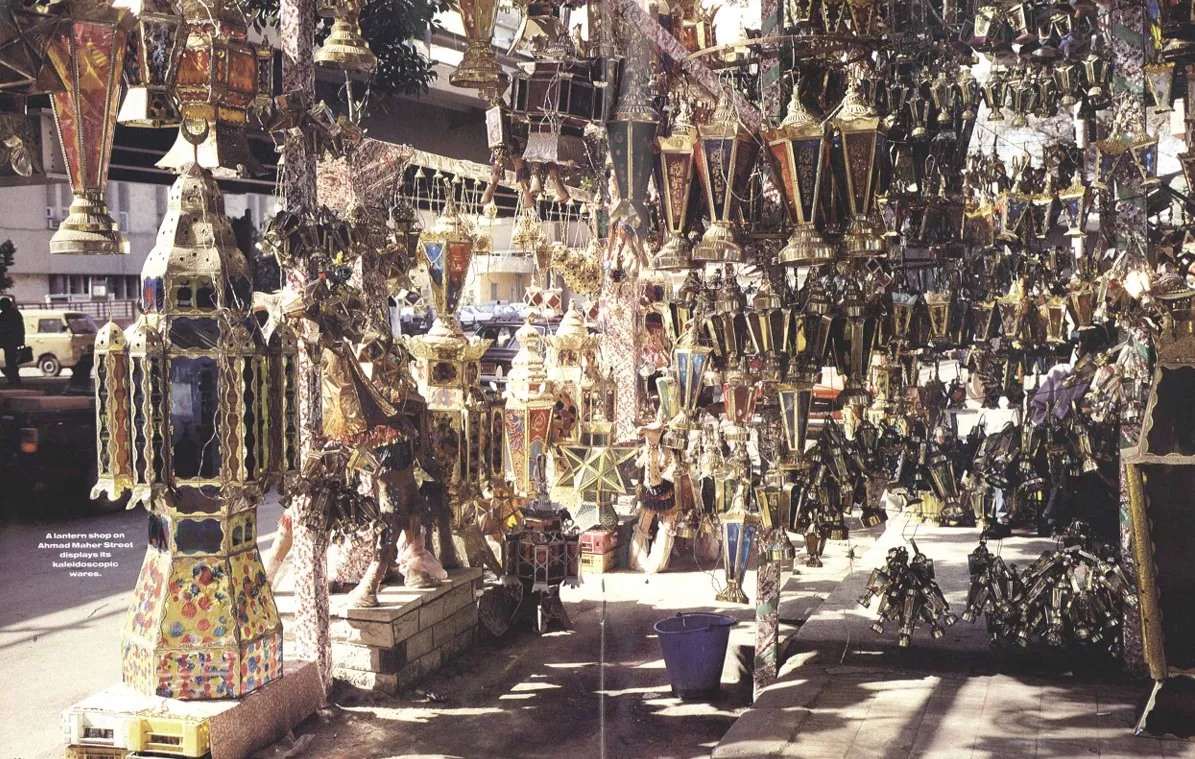
Through lanterns, song and craft, streets of Cairo beckon the Ramadan season with light, sound and seasonal labor.