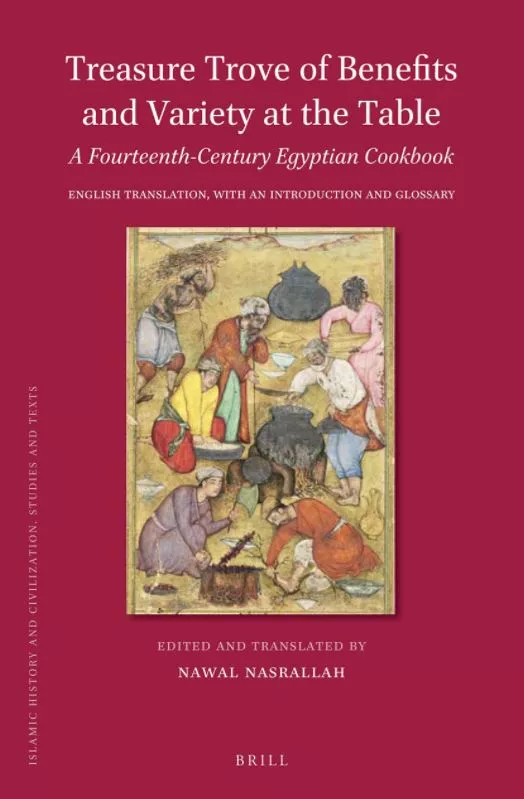
Treasure Trove of Benefits and Variety at the Table: A Fourteenth-Century Egyptian Cookbook
Tom Verde
Nawal Nasrallah, ed. & trans.
2017, Brill, 978-9-00434-991-9, $155, e-book.
This book of medieval Egyptian cuisine dates to a time when Cairo was regarded as “the mother of all nations (umm al-bilad),” having surpassed Baghdad as “a flourishing metropolis [and] a cultural haven for diverse ethnicities and nationalities.” It contains 830 recipes for food and drink, plus recommendations for food preservation and preparation, and descriptions of techniques and tools that bridge “the gap between ancient gastronomic riches and today’s cuisine.” Recipes for sweet-and-sour purslane (a leafy green), sautéed in sesame oil with onion, honey and vinegar, or chopped, boiled chard, blended with yogurt and crushed garlic, sound as modern as they do delicious. The medieval version of the electric mixer, the mifrak—a wooden dowel with rows of perpendicular pegs at the end—is still used in Upper Egypt and Sudan. Translated for the first time into English by Nasrallah, who also provides the introduction and glossary, this scholarly title includes 22 recipes updated for the modern kitchen, offering general readers a chance to sample the cuisine of medieval Cairo.
You may also be interested in...

Memoir Paints World’s Biggest Game as Great Connector—Our Book Review
Tim Bascom transforms a lifetime of playing football across five continents into a meditation on belonging, arguing that the game’s great gift is not the goals but the wordless understanding it creates among people.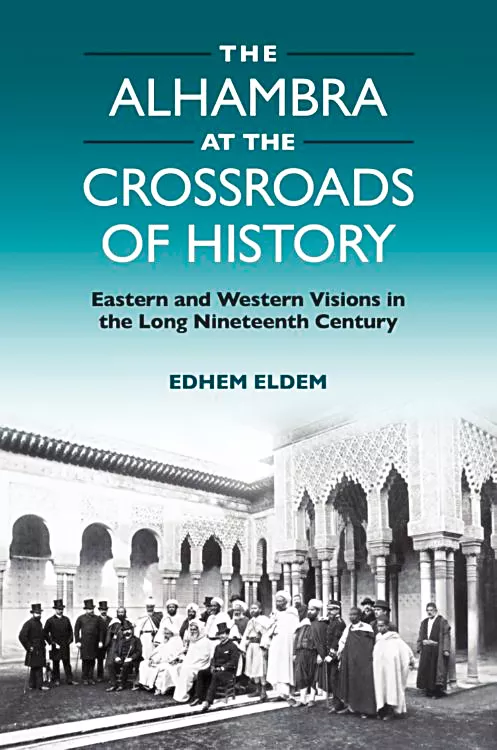
The Alhambra at the Crossroads of History: Eastern and Western Visions in the Long Nineteenth Century.
The Alhambra at the Crossroads of History shows how the 13th-century Andalusi palace complex in Granada, modern Spain, generates often conflicting meanings at the same time—meanings actively constructed and sometimes misread. Edhem Eldem, an Istanbul-based history professor, traces its role in shaping social and cultural identities across imperial Europe, Arab North Africa and Ottoman Türkiye from the 18th to the early 20th centuries.