A Taste for Home: The Modern Middle Class in Ottoman Beirut
Matthew Teller
Toufoul Abou-Hodeib
2017, Stanford UP, 978-0-80479-979-9, $65 cloth.
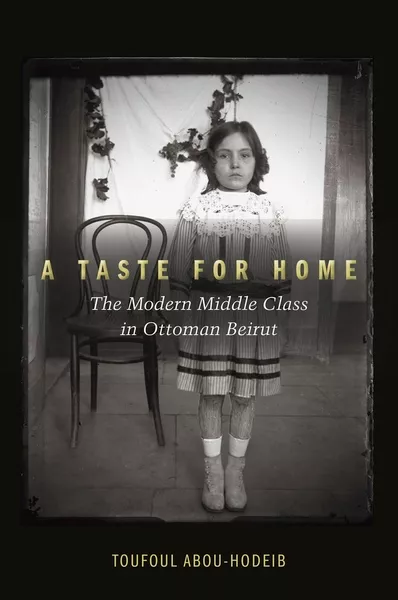
In the late 19th and early 20th centuries, Beirut grew from a small coastal town into an international port city. Rapid political and economic development brought social change as a newly empowered Arab middle class developed tastes for consumption that influenced new ideas of domesticity. Abou-Hodeib takes that social upheaval as the spark to investigate the middle class’s “global intimacies of taste.” With access to archival sources ranging widely across French, English, Arabic and Ottoman Turkic, she looks at how Beirut became a place seen as “neither Oriental nor quite Western.” She delves deeply into Beiruti lives, for example, by examining advertisements to understand how material objects defined notions of social status. Of the many points that emerge, one stands out. European imperial influence may have played a role in shaping urban development, but on the ground—and especially in the new privacy of home—Beirutis were making their own city.
You may also be interested in...

Anthology Shows Soccer—and Sport—as Our Favorite Muse—Book Review
In Picturing the Beautiful Game, art historian Daniel Haxall shows readers the perspective of the artist’s psyche—one rarely depicted in discussions of sport.
Memoir Paints World’s Biggest Game as Great Connector—Our Book Review
Tim Bascom transforms a lifetime of playing football across five continents into a meditation on belonging, arguing that the game’s great gift is not the goals but the wordless understanding it creates among people.