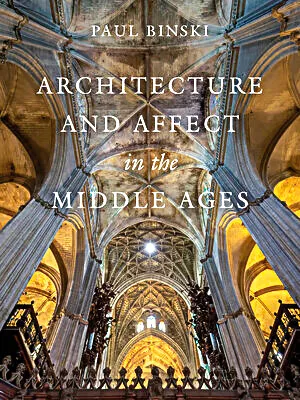
Architecture and Affect in the Middle Ages
Jamie S. Scott
Architecture and Affect in the Middle Ages.
Paul Binski. University of California Press, 2024.
From the opening pages, Paul Binski’s Architecture and Affect in the Middle Ages immerses the reader in a dense, multisensory world. It reveals a central claim: Medieval architecture did not merely surround worship; it actively shaped how it was perceived and felt. Drawing on classical, biblical and medieval texts, Binski, a professor emeritus of medieval art history at the University of Cambridge, shows how language and symbolism informed the way these buildings were understood. He conducts us through cathedrals across Europe, where architecture emerges as part of a larger environment. Context is key, he insists. For example, when French philosopher Jean de Jandun described the Virgin Mary at Notre Dame Cathedral as terribilissima in 1323 CE, he invoked reverence rather than fear. Within these spaces, soaring columns draw the eye upward. Intricate carvings and opulent materials hold it there. Sound seizes the ear—the rumbling organ at Winchester or the authority of bells at Ely. Comparisons with the sunlit marble of Hagia Sophia and the uplifting sublimity of the workmanship in the Alhambra extend the book’s scope, though these remain part of a broader comparative framework. Richly illustrated, the book ultimately asks us to reconsider these sites not as monuments to be viewed but as spaces that act upon those who enter them. —Jamie S. Scott