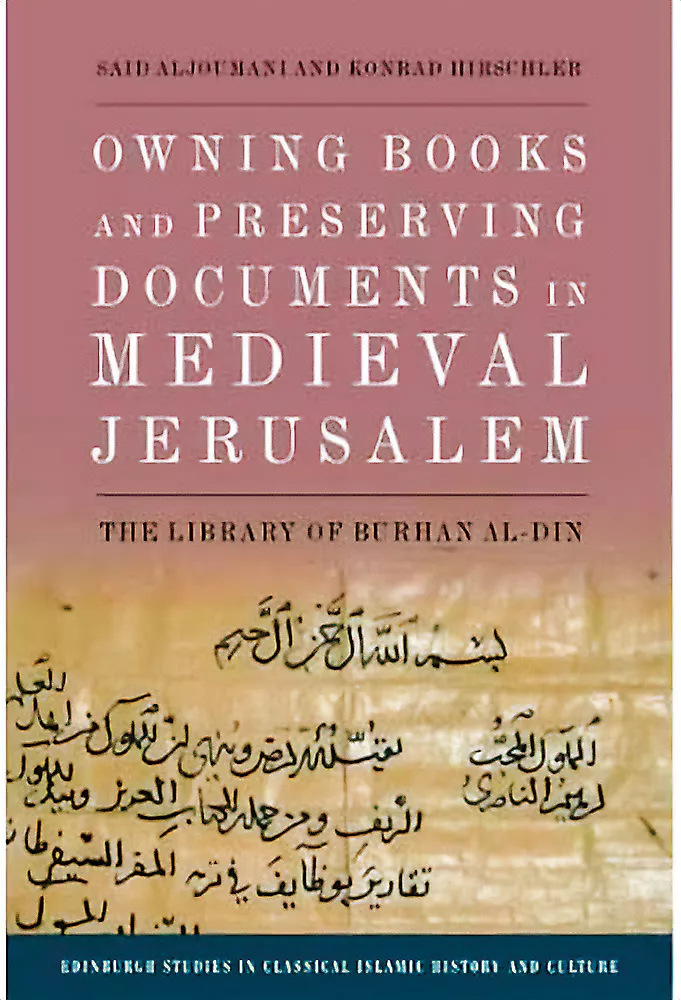
Owning Books and Preserving Documents in Medieval Jerusalem—Book Review
Dianna Wray
Owning Books and Preserving Documents in Medieval Jerusalem: The Library of Burhān al-Dīn
Said Aljoumani, Konrad Hirschler. Edinburgh University Press, 2023.
In this painstaking work, Owning Books and Preserving Documents in Medieval Jerusalem, historians Said Aljoumani and Konrad Hirschler explore a culture in which books became woven into the fabric of daily life through the case of Burhān al-Dīn Ibrāhīm al-Nāsīrī. A man whose part-time work and personal library make him feel unexpectedly familiar, al-Nāsīrī led a middle-class life in Jerusalem during the 14th century. Al-Nāsīrī, a reciter on the fringes of scholarly circles during the Mamluk rule of Bilād al-Shām (present-day Levant), might have vanished into the ocean of history if not for a detailed inventory of his 300-volume personal library. Rediscovered in the 1970s, this record of books and everyday documents constructs a kind of ghost library that reveals Jerusalem’s vibrant culture, otherwise glimpsed only in chronicles. In their translation and analysis, Aljoumani and Hirschler craft a microhistory that redefines how literacy and book ownership shaped life in the late Mamluk period. They show that collecting books reflected not only patronage but also individual ambition and growing literacy across social classes. Beyond tracing one man’s shelves, the authors uncover how writing itself—whether in books, ledgers or receipts—shaped social life, blurring the line between private libraries and public archives. Their compelling scholarship invites readers to ponder the deep ties between books and society and to imagine this rich, long-vanished book world of Bilād al-Shām. —Dianna Wray
More From AramcoWorld
From Jerusalem's Shelves to Global Manuscript Treasures
You may also be interested in...

A Scholarly Look at Football in the Middle East—Our Book Review
This collection, edited by Abdullah Al-Arian, explores the early history and growing influence of football throughout the region.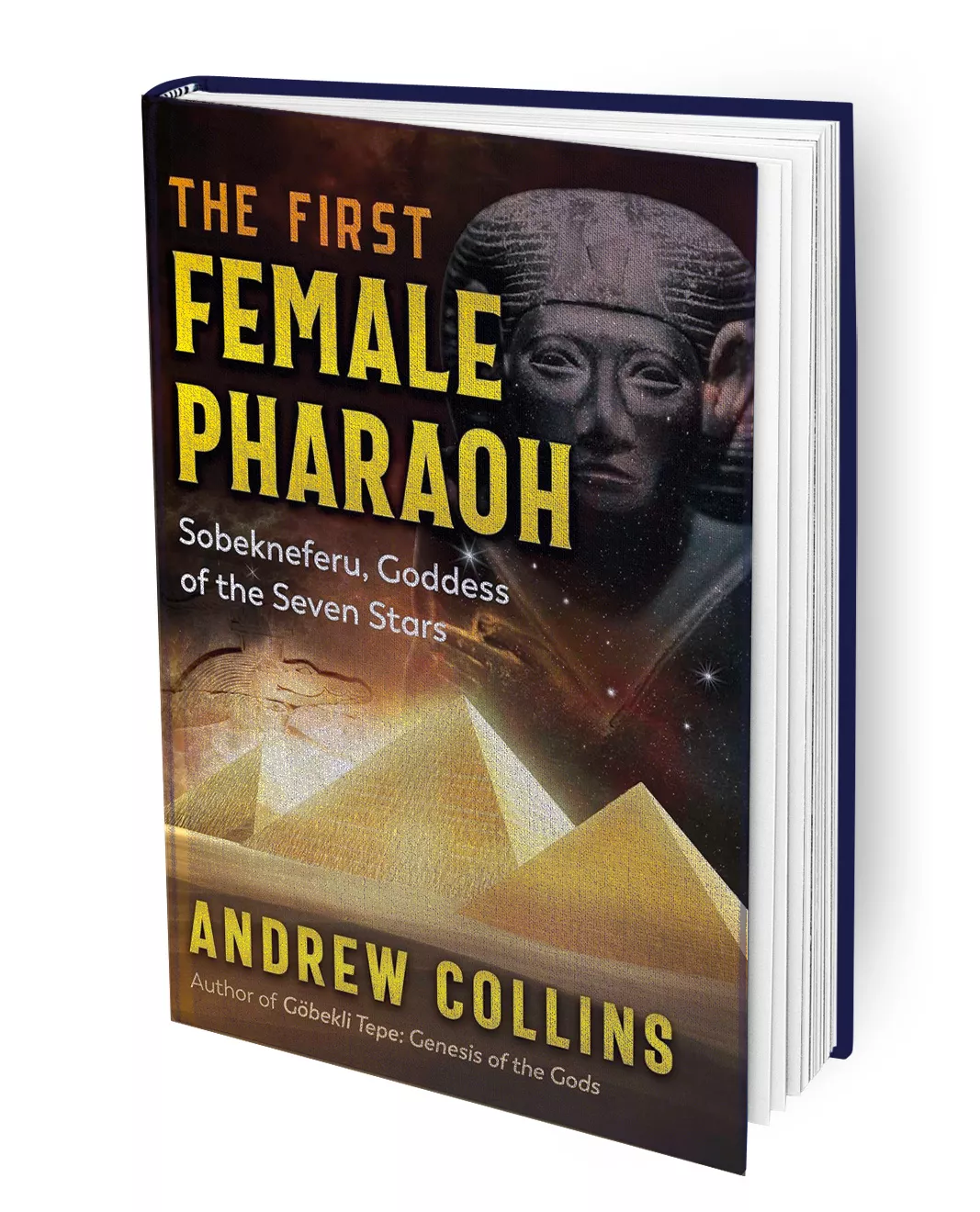
The First Female Pharoah: Sobekneferu, Goddess of the Seven Stars
In The First Female Pharoah: Sobekneferu, Goddess of the Seven Stars, historian Andrew Collins offers a reassessment of Sobekneferu, the first woman to rule both Upper and Lower Egypt—an achievement long obscured by fragmentary evidence and mythmaking.