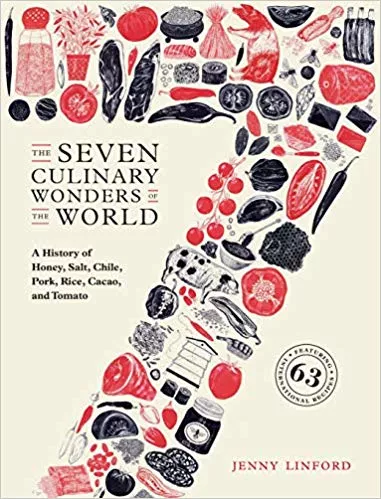
The Seven Culinary Wonders of the World: A History of Honey, Salt, Chile, Pork, Cacao, and Tomato
Tom Verde
Jenny Linford
2018, Smithsonian Books, 9-781-58834-6-421, $27.95 hb.
Humankind’s relationship with the seven ingredients so diligently and informatively explored in this cookbook is “a long one, developed over thousands of years,” to the extent that they “have acquired cultural and religious values.” With these pedigrees in mind, food writer Jenny Linford reaches back into the histories of each ingredient, advising that none should be taken for granted. Images of honey-gathering adorn caves in Valencia, Spain, occupied in prehistoric times, as well as the walls of temples in Egypt where “we come across the first records of beekeeping or apiculture.” Those same Egyptians relied on salt “medicinally to dry out and disinfect wounds.” Rice had a long journey from India and China, reaching the Middle East around 1000 BCE, and was introduced to Europe by Arabs through southern Spain. It forms the foundation of Middle Eastern mejadra (rice and lentils), one of 62 recipes in this thoughtfully curated culinary history.
You may also be interested in...
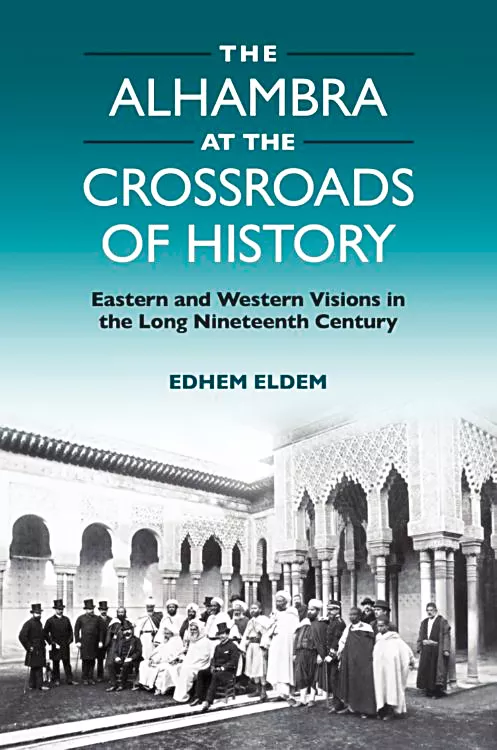
The Alhambra at the Crossroads of History—Our Book Review
The Alhambra at the Crossroads of History shows how the 13th-century Andalusi palace complex in Granada, modern Spain, generates often conflicting meanings at the same time—meanings actively constructed and sometimes misread. Edhem Eldem, an Istanbul-based history professor, traces its role in shaping social and cultural identities across imperial Europe, Arab North Africa and Ottoman Türkiye from the 18th to the early 20th centuries.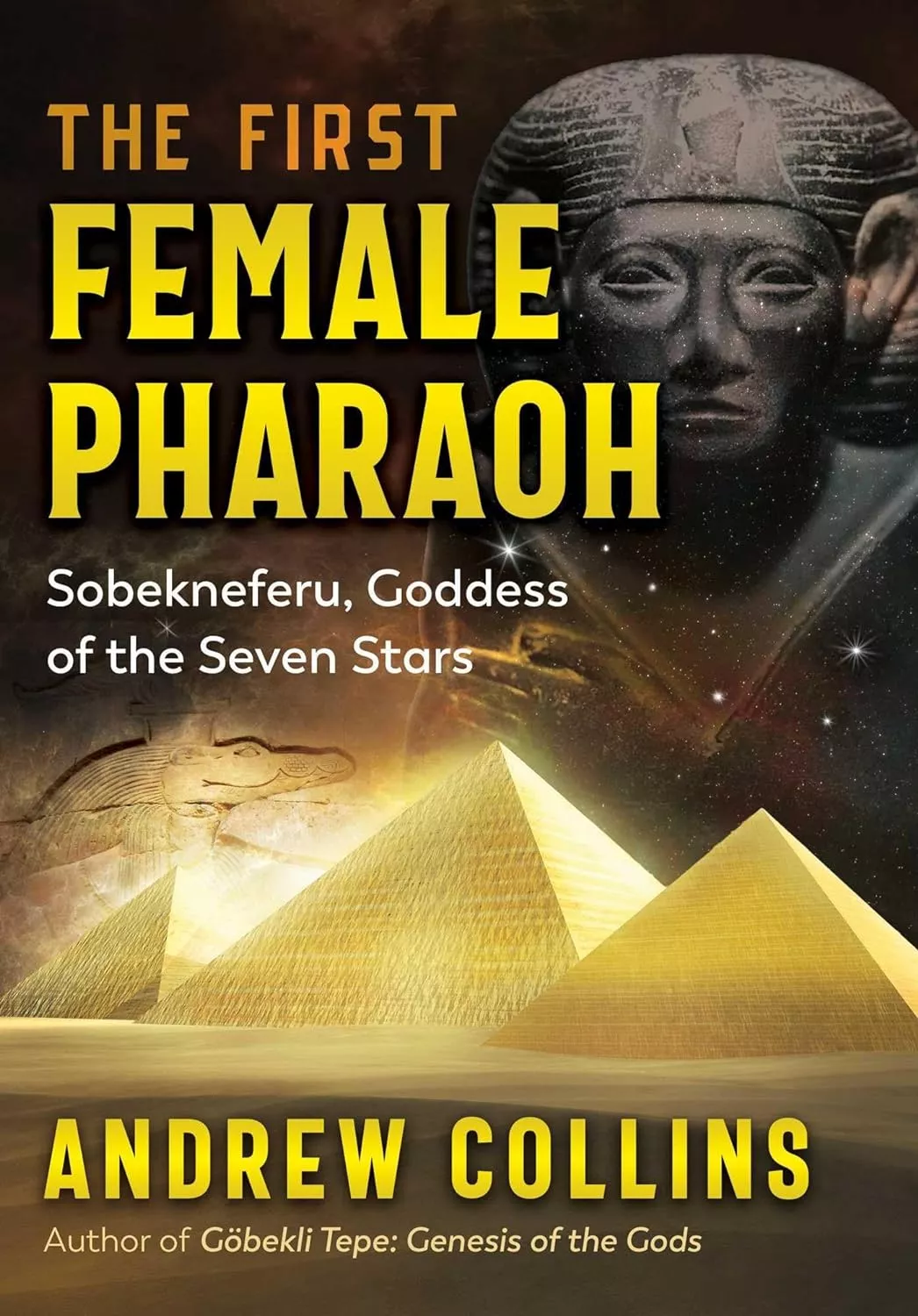
Author Andrew Collins’ The First Female Pharaoh—Our Book Review
Andrew Collins explores the mythmaking and historical erasure of Egypt’s first female pharaoh.