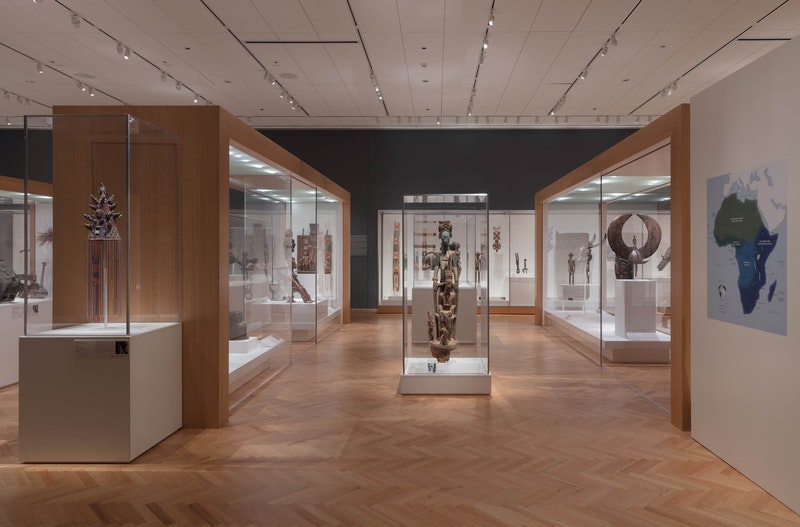
African Art Gallery
Art Institute of Chicago,Chicago,USA;Illinois
The recently reinstalled African Art Gallery uses a revised color and lighting scheme to create a more intimate experience that showcases the artistic quality and cultural resonances of individual objects, including four new acquisitions and exceptional loans.
Key works from the collection anchor and elucidate the gallery’s four broad regional divisions: Northern Africa and the Sahel, Coastal West Africa, Central Africa, and Eastern and Southern Africa. A fifth, thematic section focuses on our important holdings of ceramics and textiles, two art forms predominantly created by women.
Enhancing the gallery further is a new audio tour of a dozen works featuring the insights of various collaborators.
Key works from the collection anchor and elucidate the gallery’s four broad regional divisions: Northern Africa and the Sahel, Coastal West Africa, Central Africa, and Eastern and Southern Africa. A fifth, thematic section focuses on our important holdings of ceramics and textiles, two art forms predominantly created by women.
Enhancing the gallery further is a new audio tour of a dozen works featuring the insights of various collaborators.
You may also be interested in...
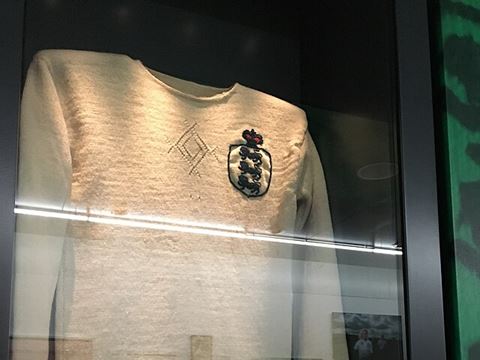
National Football Museum
Manchester, England
The National Football Museum is home to the world’s largest public collection of football objects—more than 40,000—and archives, with a rotation of about 2,500 items on exhibition at a time.
Inner Structures — Outer Rhythms
Toronto, Canada
Inner Structures — Outer Rhythms showcases how innovative Arabic and Persian typography contribute to global visual culture—featuring the reinterpretation of tradition scripts by contemporary graphic designers from Southwest Asia and North Africa.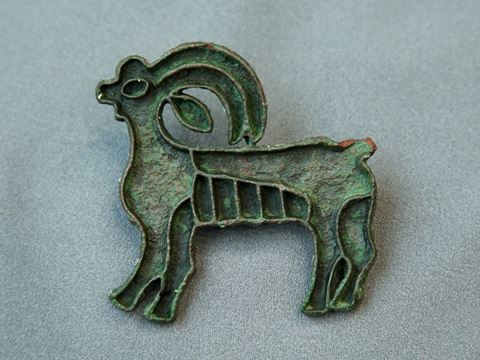
Ancient Civilizations of Turkmenistan
Rome, Italy
Ancient Civilizations of Turkmenistan presents more than 150 archeological works from the historical regions of Margiana and the Parthian capital of Nisa in modern‐day Turkmenistan.