.webp?cx=0.5&cy=0.64)
World's Largest Collection of Medieval Objects Reveals Secrets of Everyday Life
Reviewed by Marina Ali
The Wyvern Collection: Byzantine and Sasanian Silver, Enamels and Works of Art
Marco Aimone. Tr. Emma Mandley. Thames & Hudson, 2020.
“The objects in this catalogue offer new and valuable keys to interpretation, opening up the possibility of reconstructing many aspects of these Late Antique and medieval kingdoms.”
Art historian and curator Marco Aimone presents a portion of the extensive Wyvern Collection. While the 10-pound book looks more like a gym weight than an artistic catalog, it is a thorough record that provides provenance to hundreds of archeological artifacts. Because the Wyvern Collection is one of the largest, most well-regarded private collections of medieval art in the world, this is only the third volume of the full catalog. At first glance, a silver tray or an enamel jug does not appear like a masterpiece; however, the intricate handiwork of Late Antiquity and early Middle Ages (fourth century CE through the 15th century) metalsmiths elevate regular household objects into art. After all, it is through the understanding of everyday objects that the modern era connects with the past. Unfortunately, the work may come across as too dense for the average reader and better as a reference material in academic settings.
You may also be interested in...
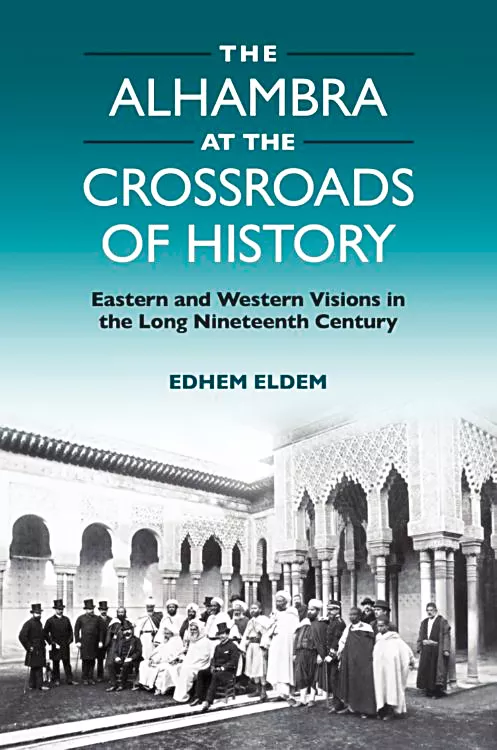
The Alhambra at the Crossroads of History—Our Book Review
The Alhambra at the Crossroads of History shows how the 13th-century Andalusi palace complex in Granada, modern Spain, generates often conflicting meanings at the same time—meanings actively constructed and sometimes misread. Edhem Eldem, an Istanbul-based history professor, traces its role in shaping social and cultural identities across imperial Europe, Arab North Africa and Ottoman Türkiye from the 18th to the early 20th centuries.
A Scholarly Look at Football in the Middle East—Our Book Review
This collection, edited by Abdullah Al-Arian, explores the early history and growing influence of football throughout the region.