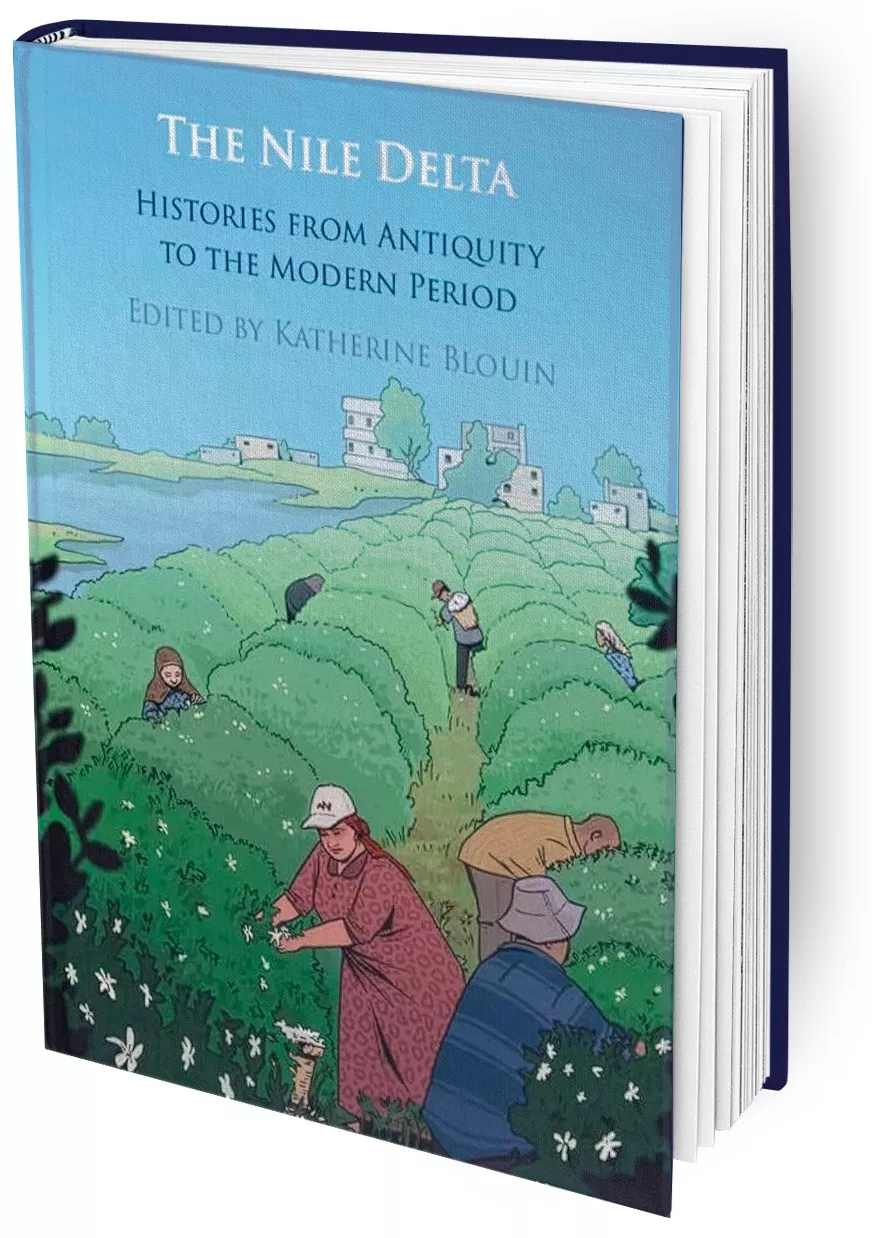
Essays on Nile Delta, From Ancient Egypt to Today—Our Book Review
Christina Riggs
The Nile Delta: Histories From Antiquity to the Modern Period.
Edited by Katherine Blouin. Cambridge University Press, 2024
If Egypt—as Herodotus said—is the gift of the Nile, the Nile Delta is more than a decorative bow. With rich farmland, marshes, waterways and lagoons, its deep green fan spreads toward the Mediterranean from a point just north of Cairo. For millennia, it has been a crossroads of coast, desert and Nile valley, opening Egypt out in each direction.
Renewed with silt each year, until the Aswan High Dam put a stop to annual floods, the delta was crucial to Egyptian agriculture: food crops, flax for oil and linen, or cotton in modern times. Today, it is a flashpoint for changes in the climate, as the sea encroaches and farmers contend with depleted soil.
Given its importance, why is the delta so little visited or studied compared to the rest of Egypt? In this edited volume, ancient historian Katherine Blouin asks 18 scholars from a variety of disciplines to address this oversight. Chapters cover ancient Egypt, the Greek, Roman and Byzantine eras, the Arab conquest and medieval period, as well as Ottoman rule and European colonialism.
The delta was a place of regeneration and a certain mystery, thanks to the difficulty outsiders had navigating its web of canals and marshes. In ancient myth, it is where the goddess Isis goes to hide with her infant son, Horus. But whenever would-be conquerors set their sights—and armies—on Egypt, the delta’s strategic position made it a key area to control. The famous port city of Alexandria is the focus of one chapter; another looks at the challenges of mapping the delta, using 18th-century French examples. By the late 19th century, Egypt’s first railroad cut travel time between Alexandria and Cairo from days to hours, and tourist guidebooks treated the delta as a literal backwater to move through without stopping. Archeologists first explored the region in hopes of finding places mentioned in the Bible. One of the most interesting chapters uses the archives of British Egyptologist W. M. Flinders Petrie to identify dozens of Egyptian women and girls he hired as excavators between the 1880s and 1920s, especially in the delta. At Tanis, site of a major ancient city, one girl was so eager to work that she gave her father’s name instead of her own. Petrie knew she wasn’t a boy, and snapped her picture, but he never recorded her real name. She is “Mohammed Hassan,” a fitting face today for the resilience of the delta and its people.
“The Delta is undoubtedly the most difficult part of Egypt to map.”