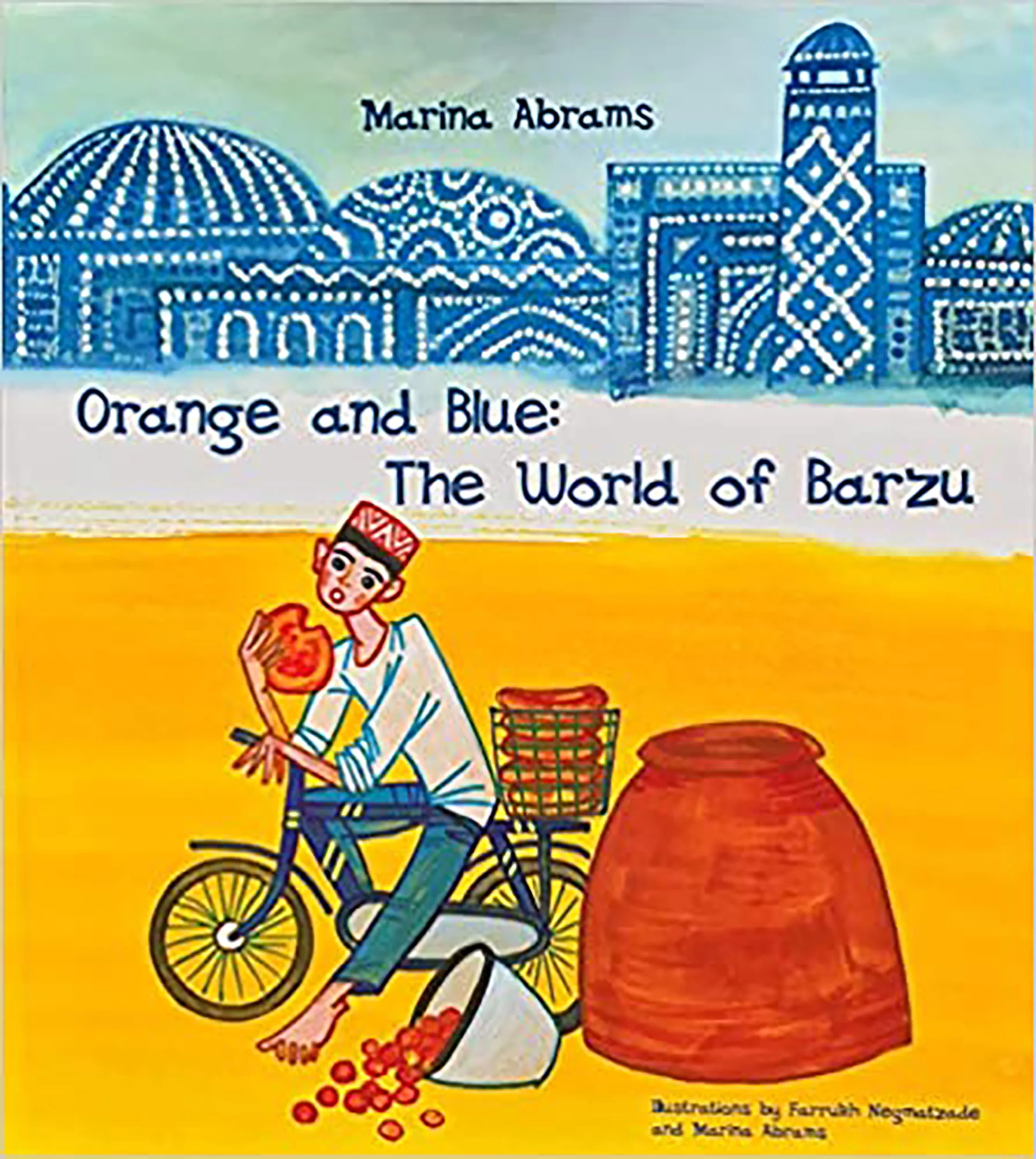
Orange and Blue: The World of Barzu
Tom Verde
Marina Abrams. Farrukh Negmatzade and Marina Abrams, ils.
Barzu World, 2018.
Barzu’s world is one of bell-shaped tanoor ovens and intricately decorated, freshly baked nan bread, of grandmother’s kitchen and apricots drying on rooftops in the sun and of legendary trading cities with sparkling blue domes and bazaars offering “everything your heart desired.” In this colorful, educational children’s book, Abrams, a native of Kazakhstan, summons these and other childhood memories, vividly brought to life by Tajik illustrator Farrukh Negmatzade. Barzu’s home, not specifically named, could be any rural area of Central Asia (Kazakhstan, Turkmenistan, Uzbekistan, Tajikistan and Kyrgyzstan). Bicycling from kishlak (a word of Turkic origin meaning village) to neighboring kishlak, Barzu visits friends and relatives who share stories of local culture such as the apricot harvest, the generational craft of making clay tanoors and the region’s distinctive nan, the “Bread of Wonder.” Educators will appreciate an extensive section at the back of the book featuring historic, geographic and linguistic information.
You may also be interested in...
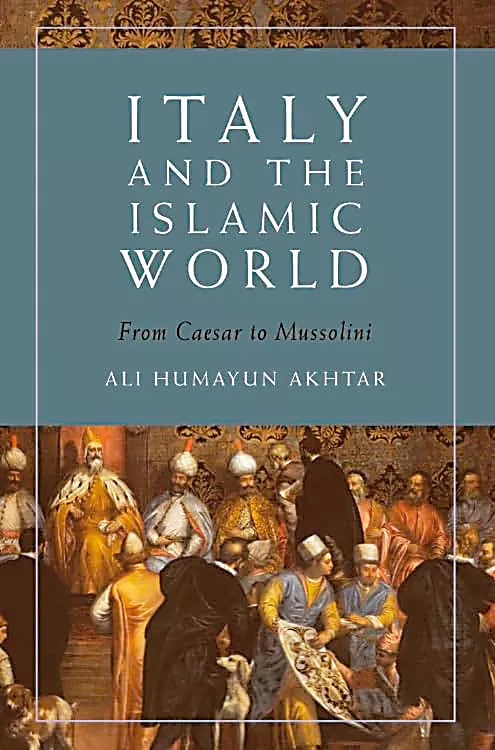
Ali Humayan Akhtar's Italy and the Islamic World—Our Book Review
By situating Italy within its Mediterranean and Islamic contexts, Ali Humayan Akhtar powerfully reshapes how we see its past.
In The Power and the Glory, Football Reinvents Nations—Our Book Review
Jonathan Wilson traces the World Cup’s evolution to global theater where nations negotiate identity, memory and power.