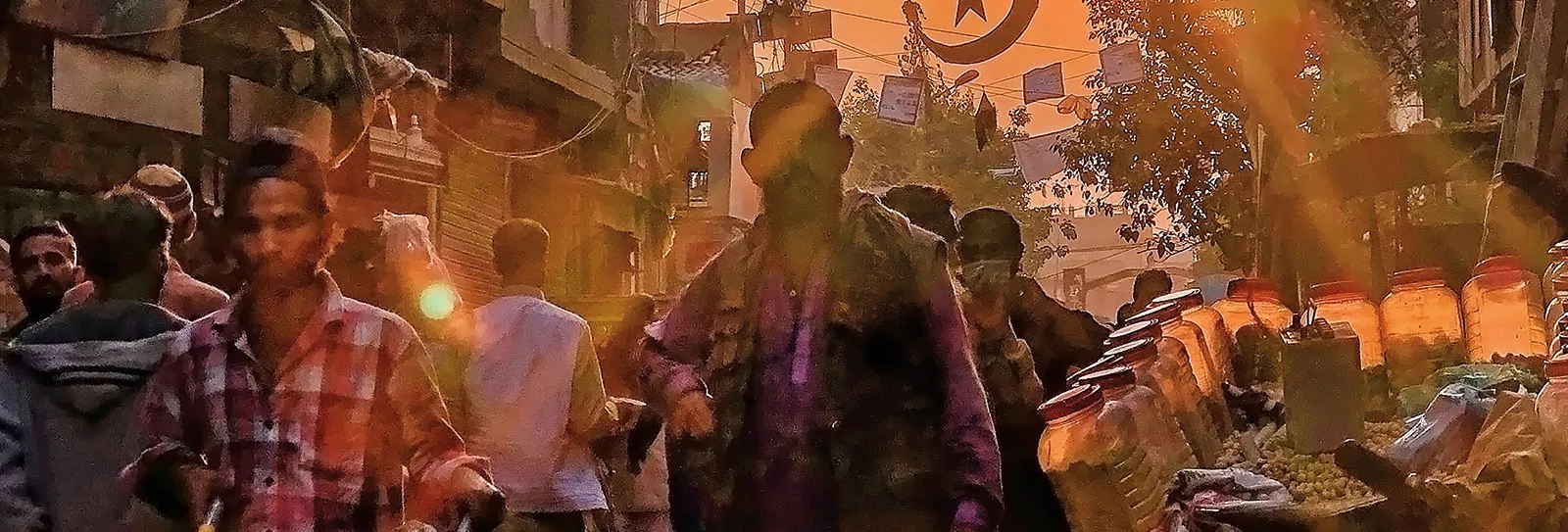
Spotlight on Photography: Karachi's Golden Hour Wows Khaula Jamil
For a long time now, I have felt there is a richer, more complete narrative about Karachi—my hometown—than what is often produced in news media.
For a long time now, I have felt there is a richer, more complete narrative about Karachi—my hometown—than what is often produced in news media. I’ve seen it labeled one of the world’s least-livable cities, one of the most violent. Perhaps. But that’s not Karachi’s full story.
For this photo series, I walked the narrow alleys of Lyari, the most-populated locality of Karachi, with two German filmmakers who were interested in capturing authentic Karachi narratives. It was nearing sunset, and as I looked up, I saw stunning rays of light spilling into the street. It was the “Golden Hour,” or “Magic Hour,” as we photographers call it—that time right after sunrise and right before sunset that offers the softest, warmest, most-dramatic lighting, perfect for photography. Many people were walking home from work, and I remember thinking I had never seen the Golden Hour quite this distinctively in any part of Karachi before. It was magical indeed, and the scene shown here reflects words that come to my mind in describing my city’s people: resilient, passionate, courageous and determined.
—Khaula Jamil
@khaula28
www.khaulajamil.com
You may also be interested in...

Spotlight on Photography: Orion Through a 3D-Printed Telescope
Arts
With his homemade telescope, Astrophotographer Zubuyer Kaolin brings the Orion Nebula close to home.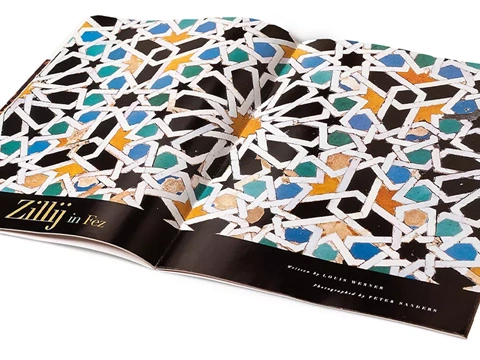
Spotlight on Photography: Explore Moroccan Zellige (Zillij) Tilework in Fez With Peter Sanders
Arts
In patterns and refractions, the old city of Fez, Morocco, comes to life through the geometric tile works known as zillij. In 2001, AramcoWorld commissioned photographer Peter Sanders to tell the story of a family who for five generations has added new dimensions to art and architecture.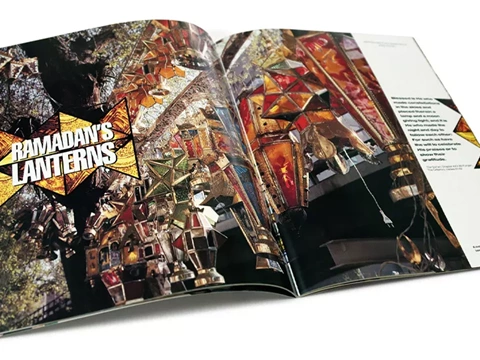
Find Ramadan Lanterns on Cairo's Streets with John Feeney
Arts
In the March/April 1992 issue, writer and photographer John Feeney took AramcoWorld readers on a walk through the streets of Cairo during Ramadan.