A Conversation With Author and 'World Bedouin' Wafa' Tarnowska
A self-described "world Bedouin," Wafa' Tarnowska's extensive travels sowed the seeds for her new children's book, Amazing Women of the Middle East.
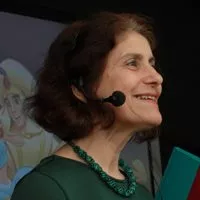
Wafa' Tarnowska
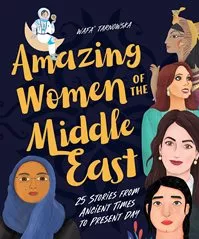
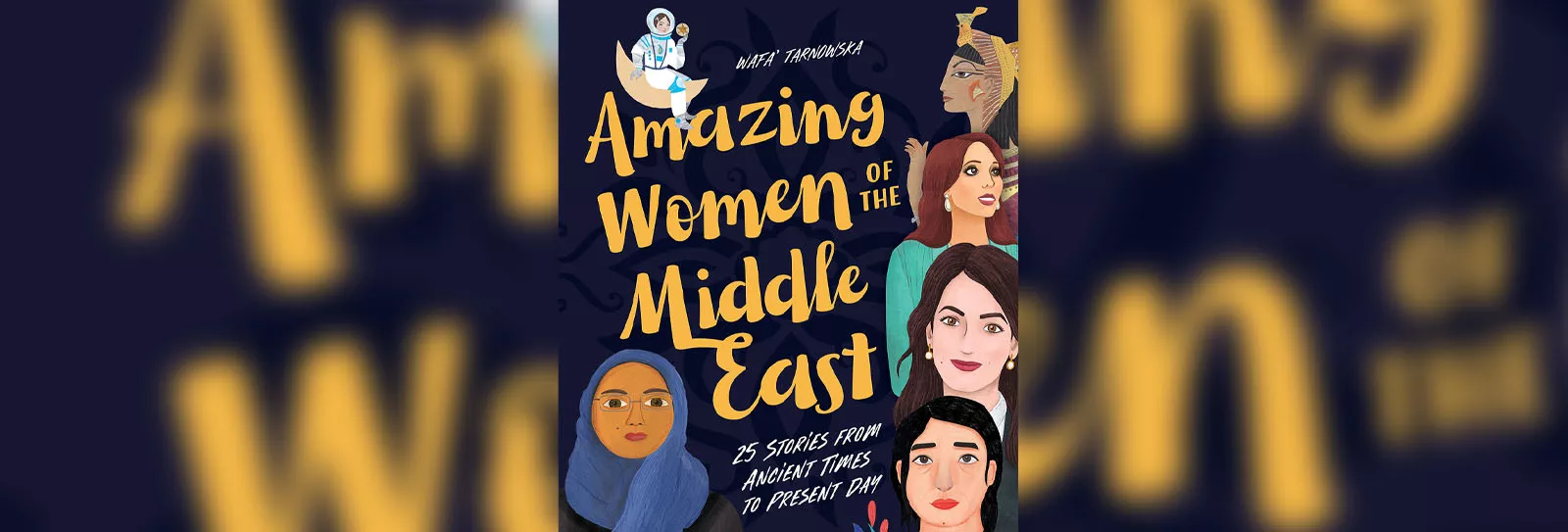
Amazing Women of the Middle East: 25 Stories From Ancient Times to Present Day
Wafa' Tarnowska.
Crocodile Books, 2020.
A self-described "world Bedouin," Wafa' Tarnowska's extensive travels sowed the seeds for her new children's book, Amazing Women of the Middle East. She's lived in in her native Lebanon, Australia, India, Cyprus, Dubai and Canada, and she currently splits her time between Poland and the UK. Ironically, her optimism belies a life of hardship and perseverance. At age 19 Tarnowska packed for Melbourne University under nonstop gunfire during the Lebanese Civil War after classes at her local university were suspended. While studying in Australia, she translated the news into Arabic for Radio 3 Ethnic Australia and later became a host on a children's Arabic storytelling program. After 4 years with no breaks, Tarnowska earned her bachelor's degree in political science with a minor in psychology. Later, she obtained a master's degree from the American University of Beirut. For Tarnowska, languages are her life. While translating and teaching to pay the bills, her true love is storytelling.
How did you get into writing for children?
My kids studied Greek myths when they began school in Cyprus. They roleplayed as Greek deities, like Aphrodite and Apollo. Once, they asked me, "Mummy, are there any gods and goddesses in Lebanon?" Of course, there are gods and goddesses from my country! Then they asked, "Why don't we know anything about them? Why are we only studying the Greeks?"
How did you respond?
I started researching about Phoenician myths and legends. I couldn't believe there were no children's books on Phoenician legends. So, I said, "I'm writing it!" This led to my first book, Dances with the Gods. It came out in 1991 and was instantly sold out. I realized that people want to see stories about themselves, and this inspired me to write The Seven Wise Princesses and The Arabian Nights.
How do you pick subjects?
I write for Western audiences, and Middle Eastern children who don't know their country of origin but would like to learn more. Maybe they were born there and, like me, left their country of origin. don't think the mainstream media addresses this population very much, so I'm interested in it.
How did you choose each of the women for Amazing Women of the Middle East?
I wasn't going to write about a woman I didn't admire. Each person had to be amazing in their own way, but different. Princesses and queens get girls to open my book, but not everyone can be royalty. So, I included a smorgasbord of professions and ages. There are Jewish, Muslim and Christian women.
Why was it important to show women of different backgrounds?
I grew up in such a multicultural society, so I wanted Amazing Women of the Middle East to reflect this. I included women who were not well-known or popular. Mainstream Western society doesn't know there are remarkable Middle Eastern women who aren't helpless or down-trodden. After all, one of the women in my book, Sheherazade, saved her life by telling stories.
What are you working on now?
In April I'm releasing a book called Nour's Secret Library. It's based on a true story from the Syrian Civil War, where children collected books to make a secret library, while their town was under attack. I don't mention politics, but think children should know a little bit about reality in a sensitive way. Nour's Secret Library reflects my experience.
Which experiences does it reflect?
Because I lived in the basement like the kids in my story; I know what it's like to almost be killed by bombs. I read [Aleksandr] Solzhenitsyn during the Lebanese Civil War, and it made me grateful. I was happy to be alive and with my family. [Solzhenitsyn's characters] were exiled and starving in the Siberian gulags. I always looked at the bright side of things. I'm never a victim, no matter what life throws at me.
You may also be interested in...
Spotlight on Photography: Long Exposure Grabs AlUla's Starry Night
Arts
Photographer Waleed Dashash gets away from urban light pollution, adjusts his aperture and shutter speed—and catches the majesty of AlUla at night.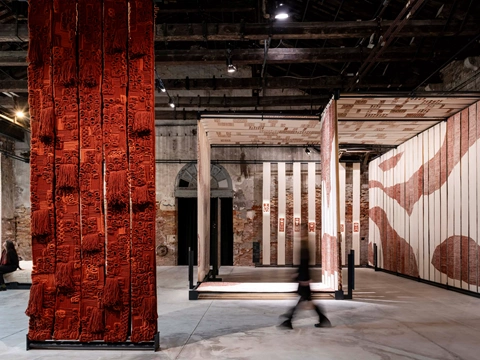
Threads of Memory at the Venice Biennale
Arts
History
Culture
At the Venice Biennale, which runs through November 22, 2026, the Moroccan, French and Saudi national pavilions show how craft and shared memory can resist cultural erasure.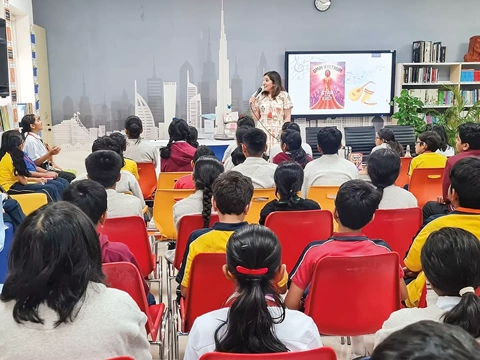
Meet the Author Who Invites Children To Discover ‘Star of the East’
Arts
Culture
In Umm Kulthum: The Star of the East, Syrian American author and journalist Rhonda Roumani illuminates the life of a girl from the Nile Delta who rose to become one of the most celebrated voices in the Arab world.