.webp?cx=0.5&cy=0.5)
Spotlight on Photography: A Bustling Kuwaiti Port Market
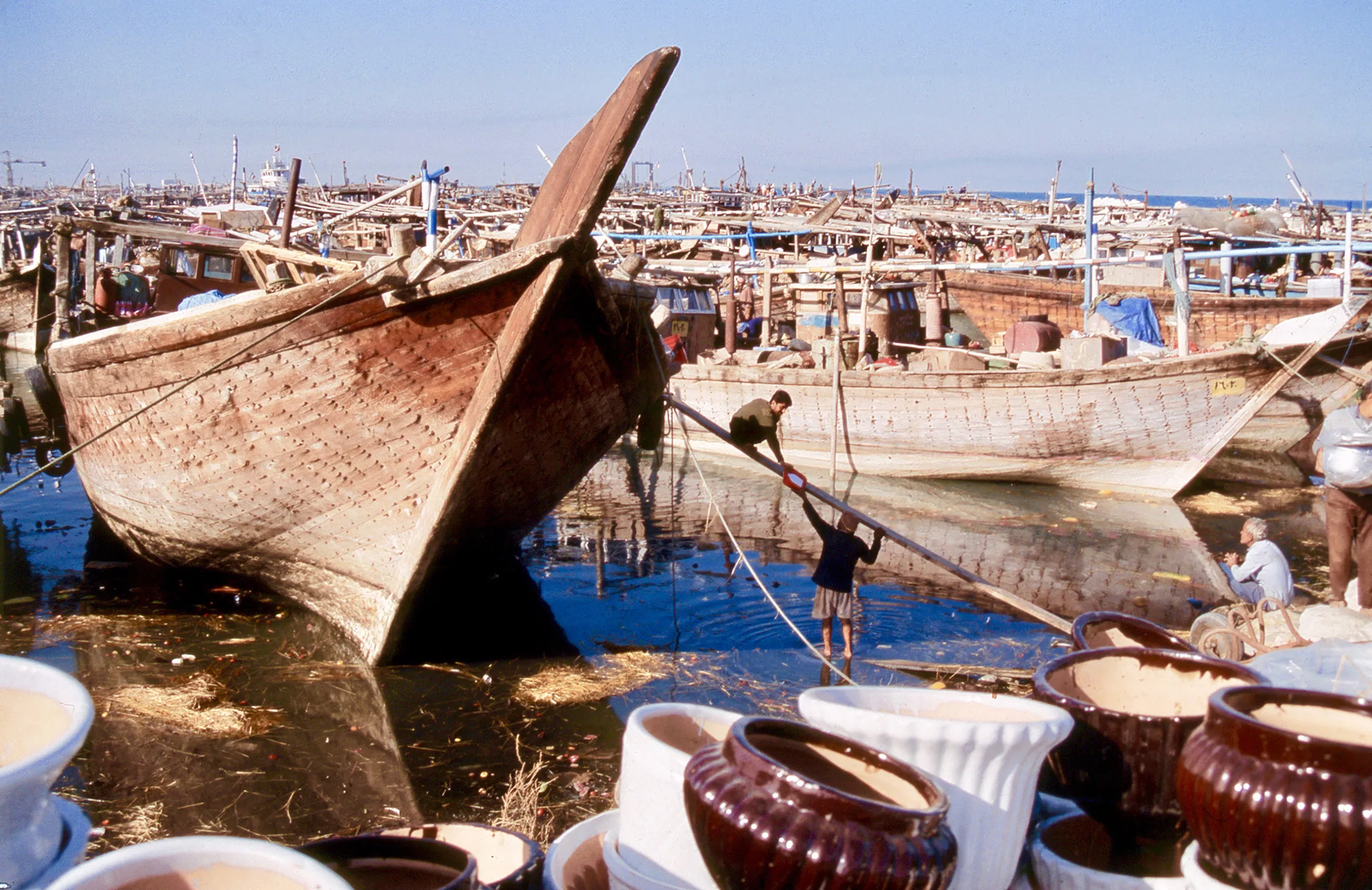
After the war in 1991, Kuwait faced a demand for consumer goods. In response, a popular market sprang up, selling merchandise transported by traditional wooden ships. Eager to replace household items that had been looted, people flocked to the new market and found everything from flowerpots, kitchen items and electronics to furniture, dry goods and fresh produce.
Until the 1950s a bustling marketplace called Souk Al Fordah operated along the seafront of Kuwait City. After the war in 1991, Kuwait faced a demand for consumer goods. In response, a popular market reminiscent of Souk Al Fordah sprang up in the same area, selling merchandise transported by traditional wooden ships. Eager to replace household items that had been looted, people flocked to the new market and found everything from flowerpots, kitchen items and electronics to furniture, dry goods and fresh produce. Claudia Farkas Al Rashoud, the first professional female photojournalist at the Arab Times, who has documented Kuwait for more than 40 years, captured the scene. “Nostalgia undoubtedly played a role in the popularity of the new market. Shoppers took pleasure in an experience that took them back to the days when wooden dhows discharged their goods from ports around the Arabian Gulf, India and Africa,” recalls Al Rashoud, whose books on Kuwait’s history and heritage showcase her pictures.
You may also be interested in...
The Lost World Of Southern Iraq's Marsh Arabs
History
Arts
In late 1967, photographer Tor Eigoland traveled for more than: a month, mostly by canoe, among the countless villages of southern Iraq's vast marshes. Now, 45 years later, writer Anthony Sattin calls his photographs a "rare and ethnographic record of a lost world. They bring us back to a time and place where people lived in harmony with their environment and respected the balance the natural world needs to thrive.'
Find Ramadan Lanterns on Cairo's Streets with John Feeney
Arts
In the March/April 1992 issue, writer and photographer John Feeney took AramcoWorld readers on a walk through the streets of Cairo during Ramadan.
Ambon Island, East Indonesia by Hengki Koentjoro
Arts
This photo was taken off Ambon Island, East Indonesia in 2010. It is one of my favorites, illustrating the free-spirited nature of the children in the rural archipelago. While some children in the big cities may stay inside and play computer games, the children in Ambon with easy access to the water see the ocean surrounding their village as their playground.