Għana Folk Music Helping To Keep Maltese Language Alive
Ghana, Malta's poetic folk music tradition, is in harmony with a reinvigorated sense of national pride—and is helping to protect the Maltese language.
Fans call him "tas-Samba," or The Samba.
His stoic face barely cracks a smile as the guitars reach a crescendo and the audience looks intriguingly at this slender 13-year-old boy, seemingly out of place among the middle-aged men flanking him.
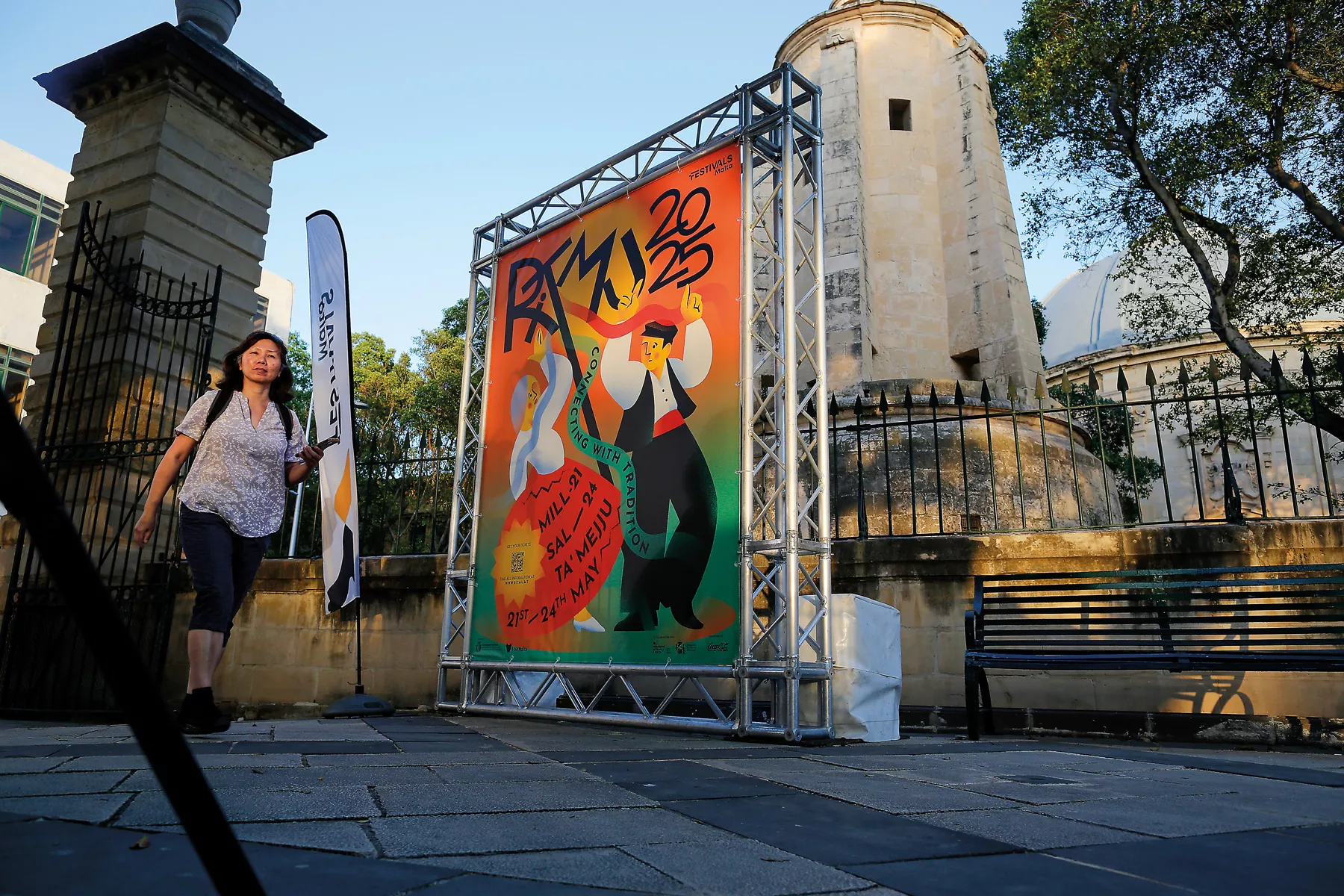
This scene unfolds at the Ritmu Roots Festival (recently rebranded Festgħana). The annual four-day affair, kicking off at a bocce ball club in the country's port region of Floriana, showcases performances of quick wit and mastery of the Maltese language in the folk music tradition known as Għana (pronounced AH-nah).
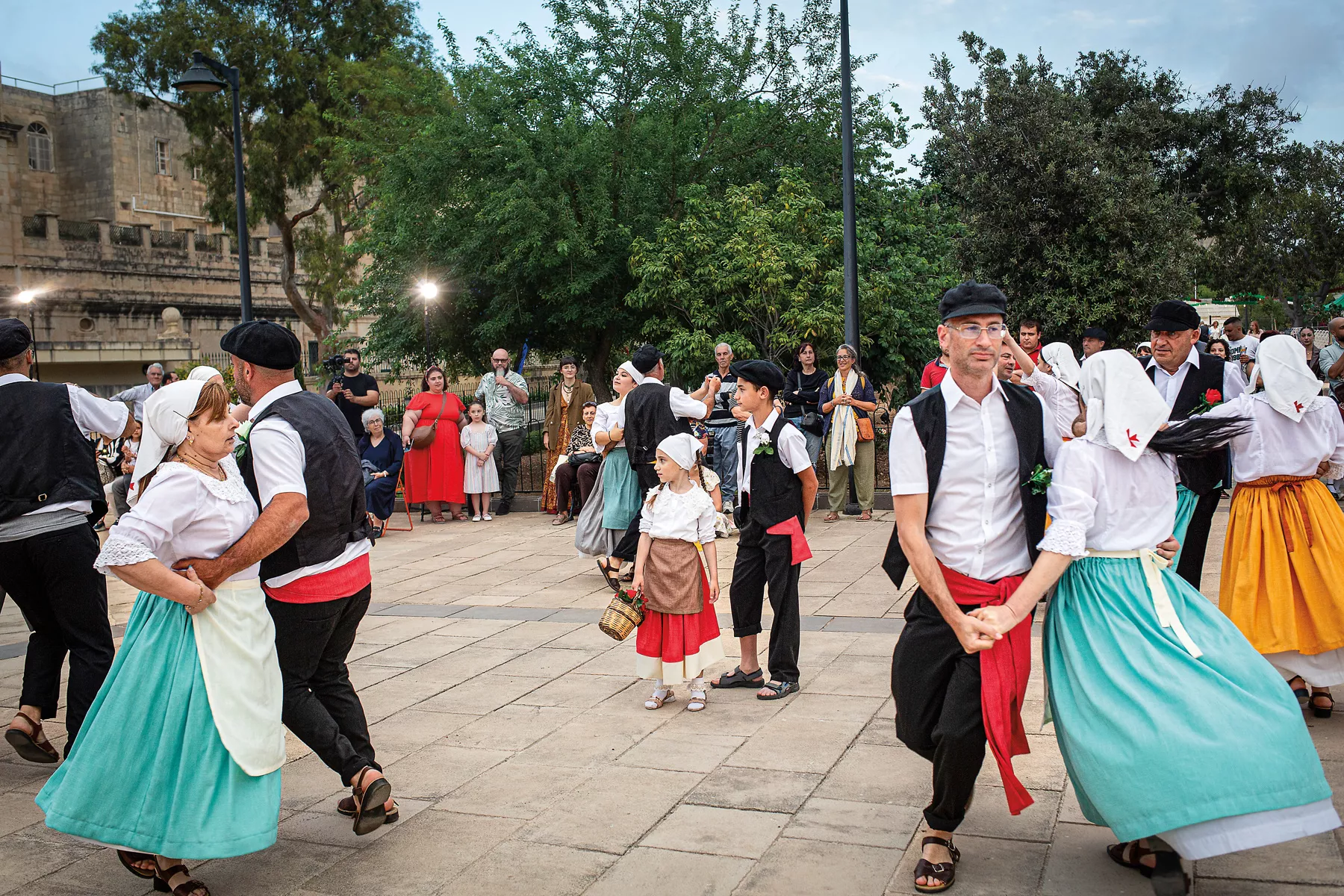
The Ritmu Roots Festival includes a traditional folk dance in the Argotti Gardens of the region of Floriana. Top The Ritmu Roots Festival, recently rebranded Festgħana, features the Maltese language in the folk music tradition known as Għana in Floriana, Malta.
The genre is playing a key role in safeguarding both the cultural and linguistic legacy of Malta: In 2021, UNESCO added Għana to its representative list of the intangible cultural heritage of humanity, calling it "vital to the transmission and development of the unique Semitic Maltese language."
The festival's artistic director at the time, Andrew Alamango, stresses Għana's importance. He says the genre has preserved what nowadays is a marginalized community called the għannejja-or those who perform Għana. He adds that "the language which they use to express everyday moments is poetry in rhyme. It's a tradition that is not your everyday language."
Ranier Fsadni, a professor of anthropology at the University of Malta, is in the back of the audience and explains that the genre has three main styles: tal-Fatt, a historical ballad that can last for hours; la Bormliza, a vocally ornamental performance sung at a very high register; and what is currently on stage, the relatively popular spirtu pront, which can be interpreted as "champion of rhyme."
"What you see is three guitarists accompanying four performers, which are actually two competing couples. Singer 1 is the antagonist of Singer 3. Singer 2 is the antagonist of Singer 4," says Fsadni.
These competitors are not judged by any jury, but by the audience through informal discussions following the performance. Fsadni says spectators will pore over the quatrains they've just heard. As with chess aficionados, "there are people who can remember the give-and-take and the crushing years and decades afterwards."
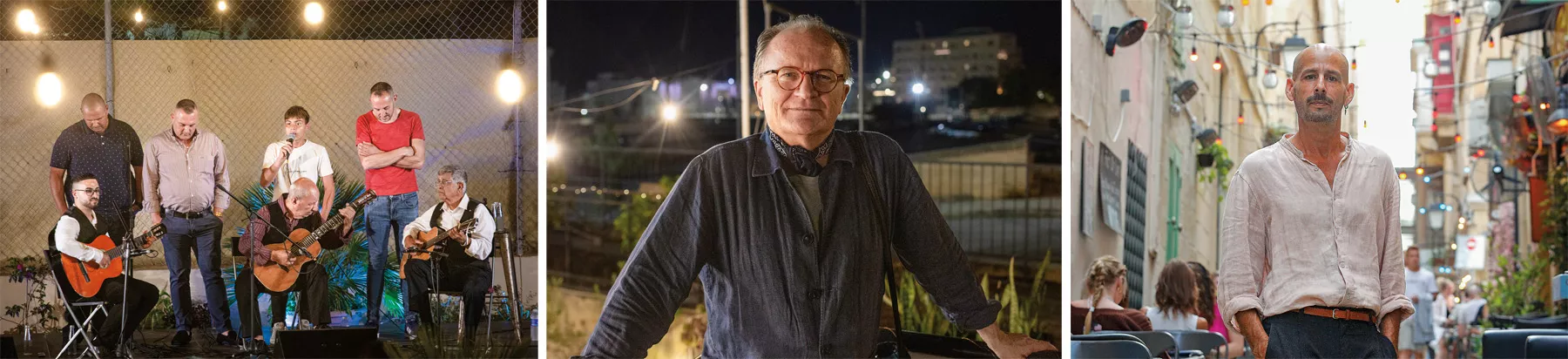
Left Thirteen-year-old Liam Gatt, known as "tas-Samba," or The Samba, performs Għana at the festival. Middle Ranier Fsadni, a lecturer in anthropology at the University of Malta, says spectators pore over the competitors' performances. Right Andrew Alamango served as artistic director of the festival.
In 2021, UNESCO called Għana "vital to the transmission and development of the unique Semitic Maltese language."
And yet, what typically is a back-and-forth battle of words that traditionally takes place in taverns and social clubs across this country's three inhabited Mediterranean islands, in this case turns out to be more a heartfelt correspondence between a young apprentice and his mentor. Tas-Samba, whose real name is Liam Gatt, belts out:
Għalkemm ilna ħafna ma ngħannu,
M'għalaqtx il-bieb u m'għadtx daqshekk,
Bejnietna pjaċir sa nieħdu,
U ma naqbdu l-ebda battibekk.
Although it has been a while since we had performed together,
I didn't shut down this opportunity (closed the door and said enough),
We shall enjoy this performance together.
And we will not quarrel.
His counterpart, Rene Calleja, a coachman of traditional Maltese horse-drawn carriages who goes by the nickname il-Bessie, responds with his own assurances:
Inti rasek tista sserraħha,
Kull darba li tgħanni miegħi,
Għannili waħda u ngħidlek oħra,
Nistmgħak qisek it-tifel tiegħi.
You can put your mind at ease,
Every time we will perform together,
You will give me a reply and I will give you another,
I hold you in high esteem as if you were my own child.
A slight look of consternation emerges from Fsadni, who remarks, "They might not be antagonists in the end; they might actually, particularly if it is in a festival setting, have decided to act as a representative of this art form that is not given its due."
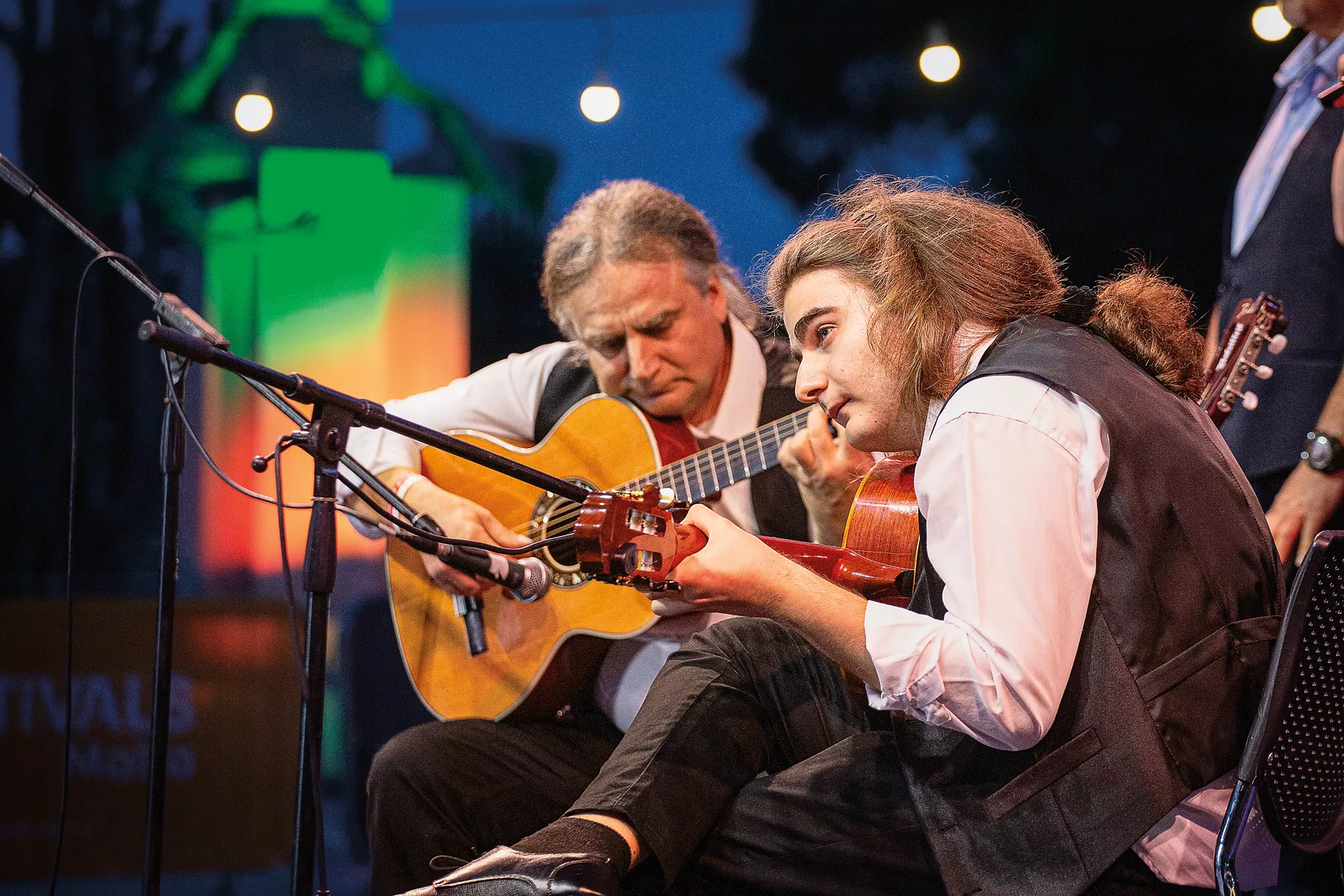
George Aquilina "ta' Nofsillejl," left, and Karol Aquilina "ta' Nofsillejl" play traditional folk music called prejjem, which accompanies Għana performers.
Preserving ‘a kind of ‘Arabic’ music
In his academic research paper, "From the Bar to the Stage: Socio-Musical Processes in the Maltese Spirtu Pront," ethnomusicologist Philip Ciantar writes, "Għana is generally looked at as symbolizing a kind of 'Arabic' music that predates Maltese romance culture."
For an uninitiated Western audience, it's easy to understand why. Gatt and Calleja's improvised stanzas follow an A-B-C-B verse structure that resembles more of an explosive recitation of a haiku than a melodic song in the Western tradition. That's mainly because in Għana, multiple pitches are belted out on a single syllable. "There is some parallel which you will find with raï," Fsadni says, referring to a still popular form of Algerian folk music that arose in the 1920s and later was popularized in Morocco.
Għana fits squarely into Malta's pre-industrial framework, where the lyrics are likely to be about owning herds of horses, farming and nostalgic times before the 1950s, when the country transformed into a mainly tourist economy and exported mostly English-language media.
However, what gives Għana its defining characteristics as a Maltese traditional art form is also what marginalizes it within the country's popular culture and has caused a rift between traditional and modern audiences.
Writing about Għana, Ciantar says nowhere is the tension between language and official culture more apparent than "the decision taken [in the mid-1970s] by the Maltese Cultural authorities to participate in the Eurovision Song Contest with a song in English rather than in Maltese."
The televised competition, which is one of the continent's biggest platforms for showcasing European culture, is massively popular in Malta. Competing since 1971, the country has voted to send an overwhelming number of pop songs in English.
At a cafe in Malta's capital, Valletta, a young girl poses for a picture with Gordon Bonello, a television music personality and the head of Malta's Eurovision delegation.
In his capacity as a government official, Bonello says he dreams of having more Maltese-influenced music exported outside the island. But he concedes that he "cannot push [artists] to write in Maltese."
Sipping tea from a glass largely akin to those used throughout Türkiye and the Middle East, he notices the musician Fiona Cauchi walk by. "We have lots of good singers on the island ... but they worry about what sells to an international audience," he says. "Why not use the Maltese language, or the Maltese sounds or the Maltese stories so they can be different from the rest of the world?"
Bonello says that some people perceive a class division between speaking Maltese and English or Italian. But following a major influx of immigration to the island, coupled with an exodus of Maltese speakers to mainland Europe, the United States and Australia, Bonello contends that there recently has been a reinvigorated sense of nationalism. "That is helping with local people here embracing the Maltese language-I've seen that they're more passionate now about it."
“There is some parallel which you will find with raï [Algerian folk music].”
Festival's mission for Maltese identity
Day 3 of the festival is spread throughout the Argotti Botanical Gardens in the town of Floriana. Folk dancers wearing traditional cloaks called għonnella (for women) and faldetta (for men) participate in "Il-Maltija," Malta's national dance.
A local caterer serves plates of antipasti that inadvertently showcase Malta's agrarian kaleidoscope of cultures stemming from successive conquerors. They include fava beans called ful (stemming from the Arabic word); olives stuffed with tuna, which were popularized by the island's North African rulers; a sheep's cheese called ġbejna that resembles Greek feta; and Italian penne pasta in a pomodoro sauce.
During what amounts to a three-ring circus of activity, Alamango maintains a cool air of calm despite busily conferring with performers, stage hands, audio engineers and patrons. As a musician and archivist who studied musical heritage in Athens, Cairo and Istanbul, Alamango says his goal is more ambitious than putting on a mere musical event. He instead aims to create a vehicle to preserve a critical aspect of Maltese identity.
"It's a social catharsis, with a need for us to come together," he says. "My focus is to find new audiences for the għannejja, who don't merely choose their artistry but are raised on it."
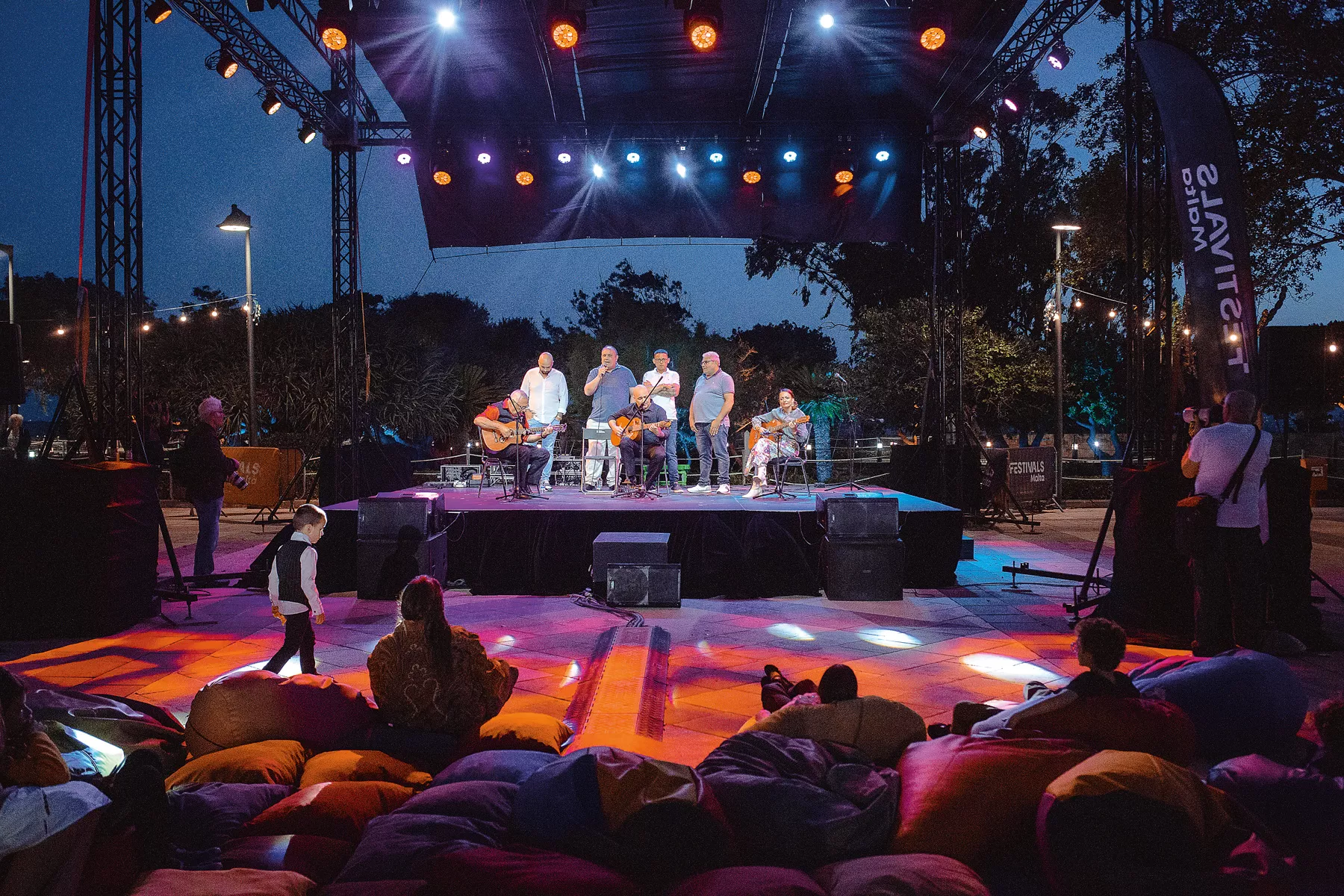
The Ritmu Roots Festival showcases a tradition that usually takes place in taverns and social clubs across Malta.
Up on stage, second-generation għannej Jeanclaude Zahra, "tal-Fox," is handed a microphone and unknowingly confirms Alamango's sentiment:
Li twilidt u trabbejt ġol-Għana,
Dal kliem għandna nikkonfermaw,
Mel'isa u ibda illustrani,
Issa'mbgħad kif nidher naraw.
That I was born and raised in Għana,
These words need to be confirmed,
So hurry up and start polishing me,
Then we shall see later how I'll look.
About the Author

Jack Zahora
Jack Zahora is an award-winning journalist whose work has appeared on various major outlets including National Public Radio and Al Jazeera English. He’s also the Chief Content Officer and managing partner of TW Storytelling Agency, a media company that’s based in Lisbon, Portugal.
Tara Todras-Whitehill
Tara Todras-Whitehill is an award-winning photojournalist and CEO of the TW Storytelling Agency, based in Lisbon, Portugal. Her passion is empowering NGOs, social impact teams, and journalists with impactful storytelling.
You may also be interested in...
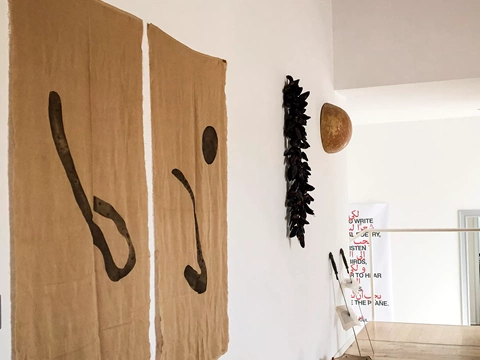
Artist Stefania Artusi Khalfi Maps Palermo's Arab Society
Culture
An artist looks past the history books to uncover the hidden landscape of Sicily's capital.
Photojournalist Tor Eigeland on Book 'Stuff Happens'
Arts
History
Culture
Photojournalist Tor Eigeland set sail from his hometown of Oslo in 1947 at age 16, and he never looked back until he had completed his last photography assignment, in Tangier for AramcoWorld in 2016.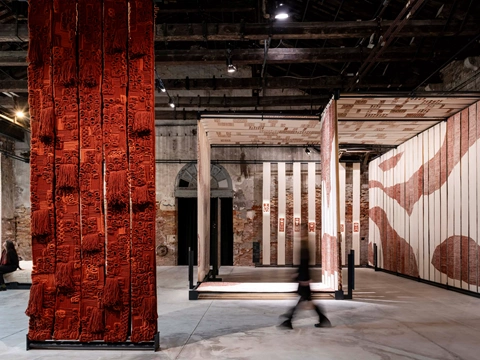
Threads of Memory at the Venice Biennale
Arts
History
Culture
At the Venice Biennale, which runs through November 22, 2026, the Moroccan, French and Saudi national pavilions show how craft and shared memory can resist cultural erasure.