Football’s Power and Drama Inspire Art Around the World
For the 2026 World Cup, as in the past, the game offers artists fertile ground, concentrating into 90 minutes a wide spectrum of human experience.
Stooped figures huddle into their overcoats as they make their way toward a football stadium. Under an overcast sky, they come in the hundreds, converging from every direction.
The stands are beginning to fill with spectators, yet there is barely a glimpse of the football pitch itself.
In the distance lie the faint outlines of an industrial landscape—mills, factories and towering smokestacks.
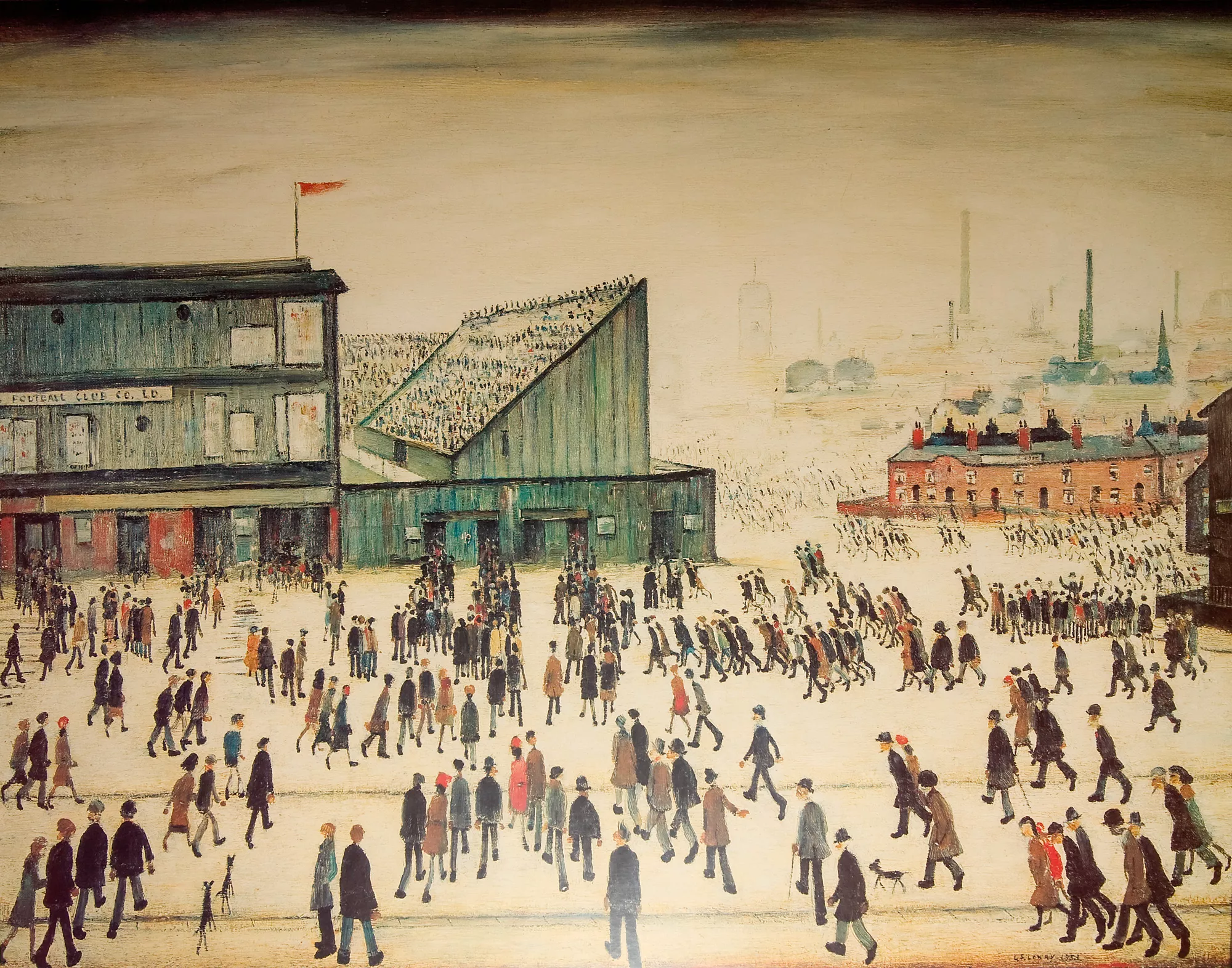
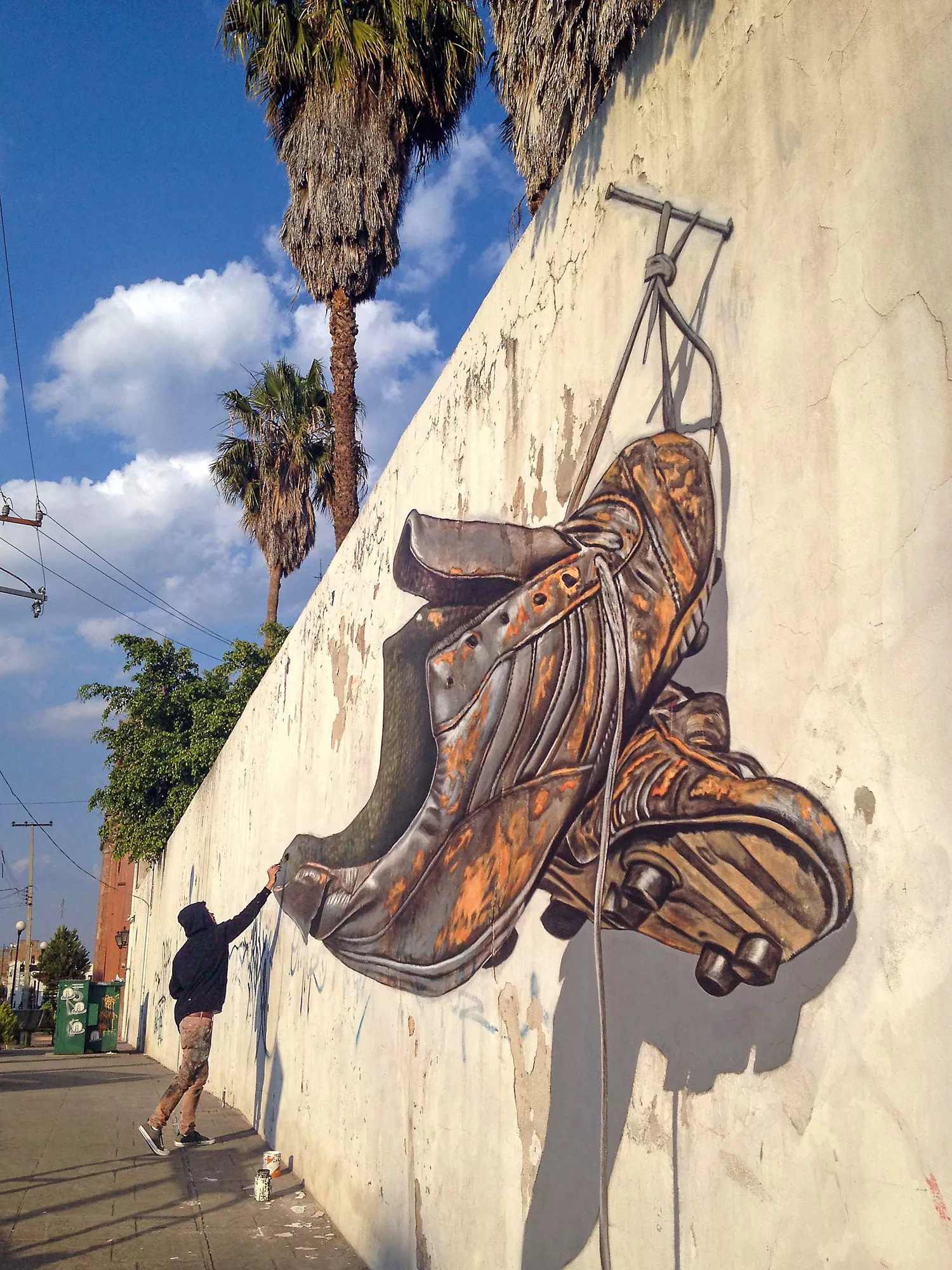
British artist L. S. Lowry’s “Going to the Match” captures the timeless feeling of anticipation for football matches. Top Muralists Juandrés Vera, Dazer Ramírez and Peter Westerink’s optical illusion lends a worn pair of football boots a 3D effect in Salamanca, Mexico.
Stephen Pond/PA Images via Getty Images; Top: ©“TRIBUTE” by Juandrés Vera feat. Dazer Ramírez & Peter Westerink, Salamanca, Mexico
This is the scene depicted in “Going to the Match,” probably the best-known work by British artist L. S. Lowry. It captures the pre-match atmosphere of northern England in the mid-20th century.
“I think Lowry is much more interested in the ritual and gathering-together of people than the football match itself,” said Claire Stewart, curator of The Lowry Collection in Salford, northern England, where the painting is on display.
“Maybe the stadiums have changed, the prices have gone up, and the food is better. But the picture captures that feeling of anticipation that hasn’t changed over the years.”
Football is arguably the most popular sport on the planet, arousing strong and conflicting emotions. For artists, the game offers fertile ground, concentrating into 90 minutes a wide spectrum of human experience.
That universality is what makes football such a powerful subject for visual culture ahead of the 2026 FIFA World Cup, the first to be hosted across three countries: the United States, Canada and Mexico.
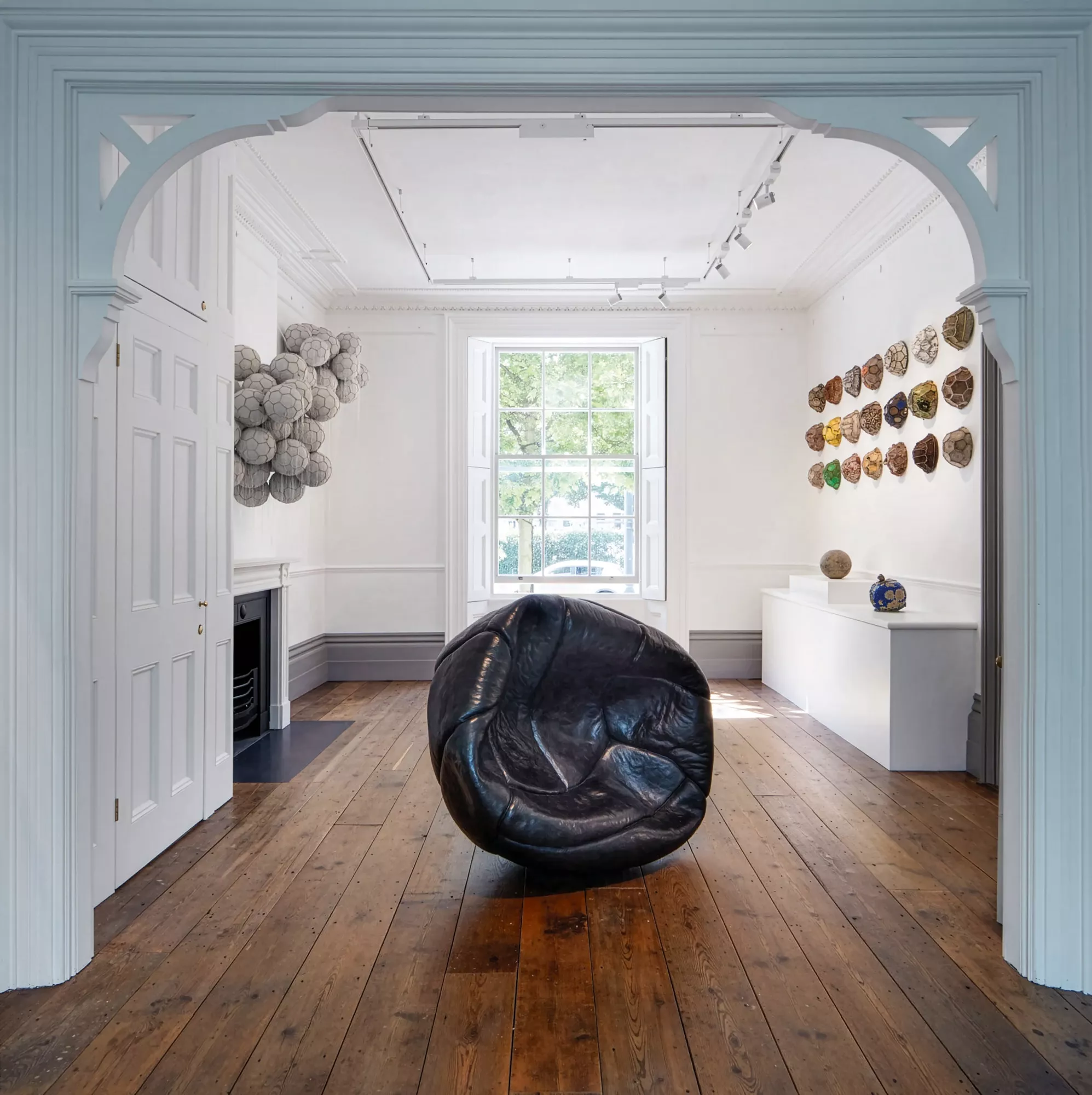
Contemporary art at OOF Gallery, within the Tottenham Hotspur Stadium complex in north London, includes football-themed pieces such as “Victoria 2008” by Marcus Harvey, above, and a series of charcoal drawings and plywood footballer sculptures by Leyman Lahcine, below.
Installation view of “Balls” at OOF Gallery, 2021. ©Marcus Harvey, Sarah Lucas, Paul Deller and Dario Escobar/courtesy of OOF Gallery
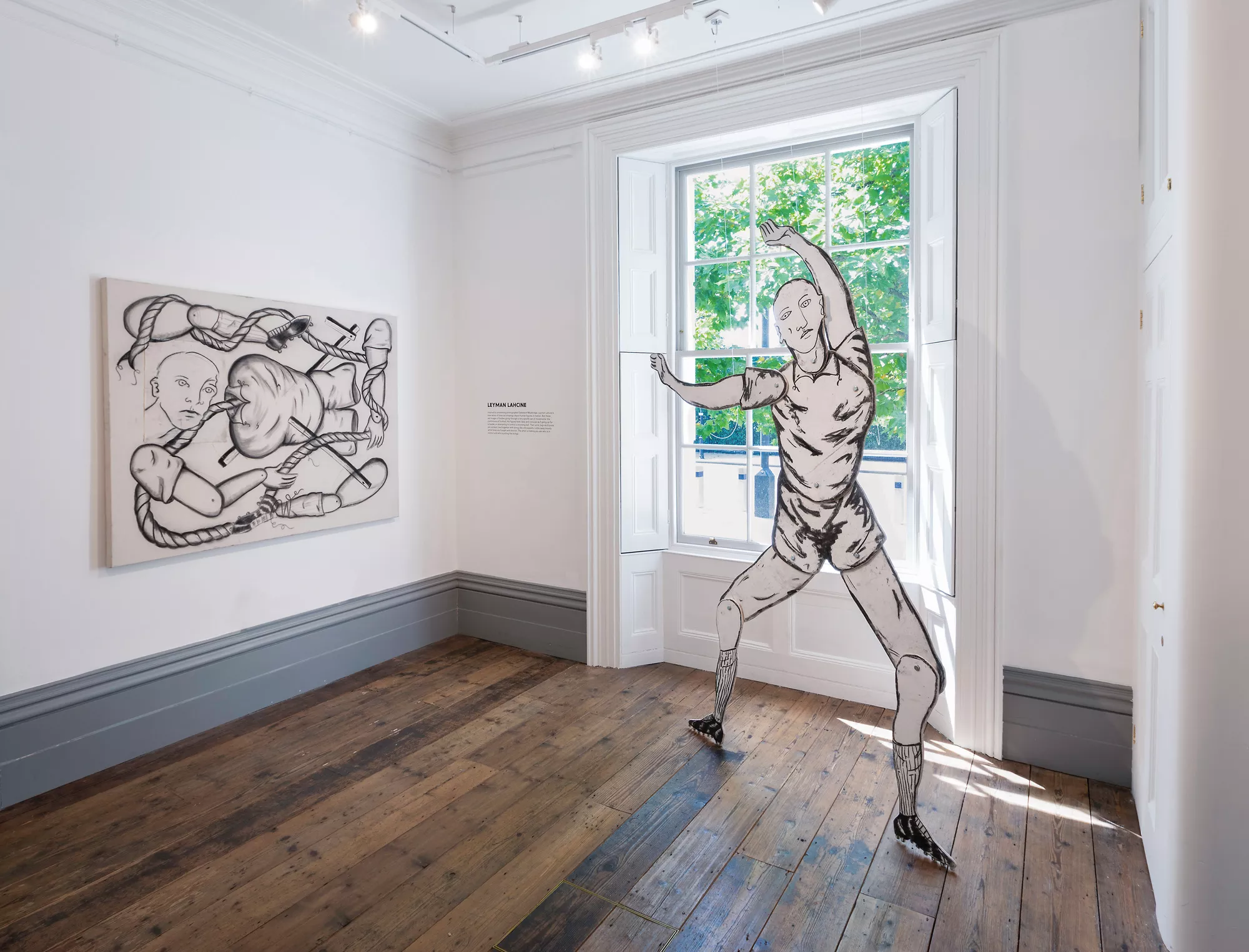
©Leyman Lahcine/courtesy of OOF Gallery
Pride Across Art Forms
Along with the tournament posters of each host city, the official tournament poster offers a prime example of this visual culture. A unique collaboration among artists from the three host nations, it brings together indigenous heritage, urban street art and national colors to express their distinct identities and cultural connections.
Additionally, with the World Cup expanding to 48 teams, Africa is seeing its largest-ever participation. Those countries’ kit designs reflect the continent’s rich and diverse culture.
The angular black patterns on Egypt’s red shirt evoke ancient hieroglyphics, while Morocco’s away kit draws on the country’s distinctive geometric tile work. South Africa’s kit pays subtle tribute to its 12 official languages.
Art Inside the Game
A huge shimmering bowl of glass and steel rises above a busy street in north London, as if a flying saucer has landed among the kebab shops and grocery stores.
Tottenham Hotspur Stadium boasts high-tech innovations such as a retractable grass pitch. The stadium complex is also the unlikely setting for a contemporary art space—OOF gallery—dedicated to the intersection of art and football.
“I had a passion for football and a passion for art, but they were kept totally separate,” said Eddy Frankel, art critic and co-founder of OOF Gallery.
When he began delving into art history, he realized that artists had been using versions of football in their work for centuries. This grew into the idea of a publication that would bring those two passions together.
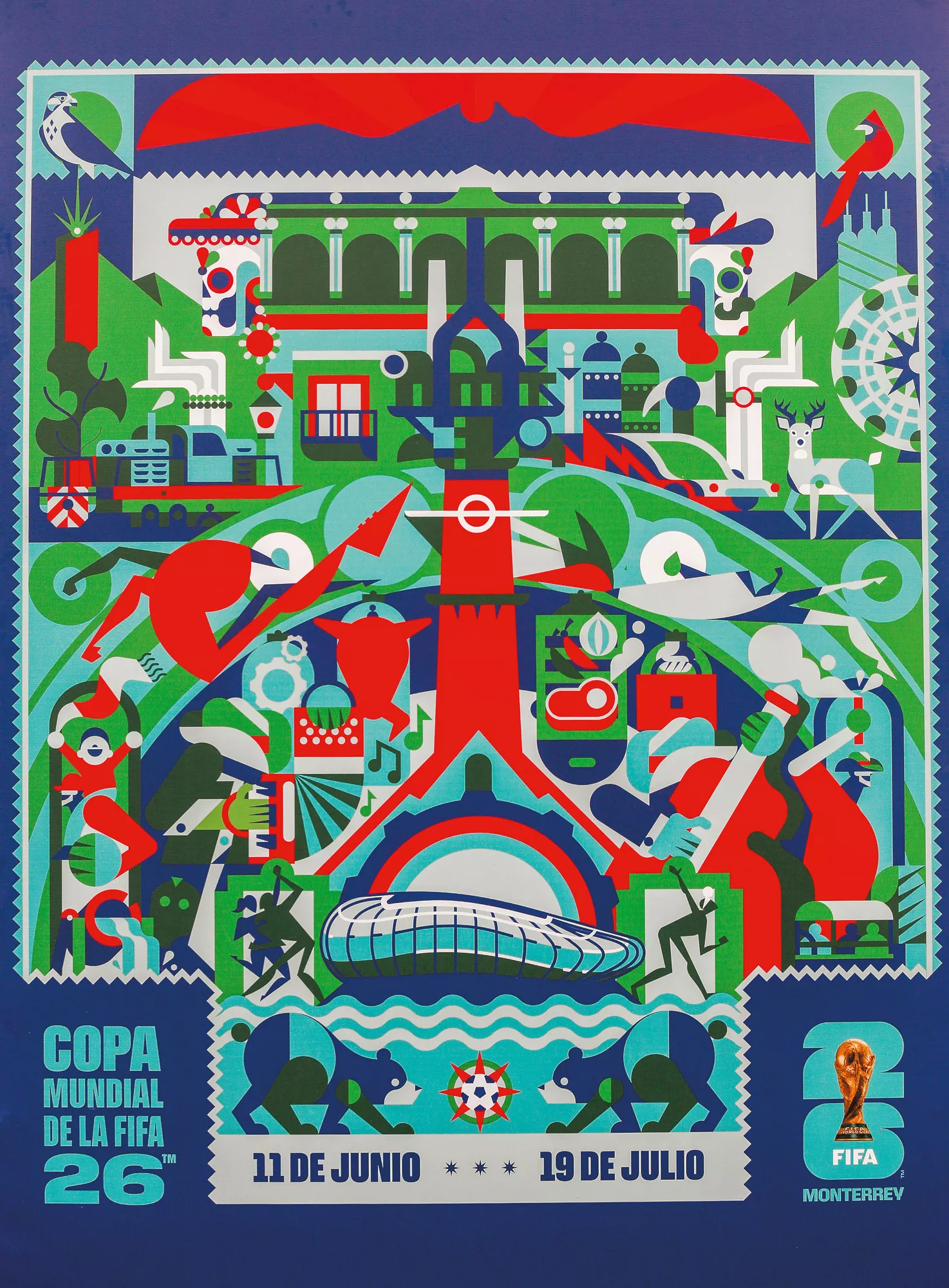
Each 2026 World Cup host city has styled its official FIFA poster with colors and symbols reflecting identity and pride, including this one from Monterrey, Mexico.
Julio Cesar Aguilar/AFP via Getty Images
Frankel launched OOF magazine in 2018 in collaboration with gallerists Jennie and Justin Hammond. After staging pop-up exhibitions around London, the trio opened OOF Gallery in 2021.
“We’re interested in artists who use football as a metaphor to talk about other things,” said Frankel.
“Football is a microcosm of wider society. Everything that happens on a football pitch also happens in the real world.”
That idea—football as a lens through which to explore wider human experience—runs through the work of many contemporary artists.
American-born artist Paine Proffitt discovered football in 1994 after moving to England as a student.
Many of his paintings have a naive, almost comic-strip quality: fans wearing bobble hats and scarves, supporters yelling instructions from the sidelines, spectators standing in the freezing rain.
“Frustration, anger, deflation and disappointment are par for the course,” Proffitt said. “Of course, it makes the excitement that much more enjoyable when your team does well. It’s those deep feelings that make the game what it is—and find their way onto the canvas.”
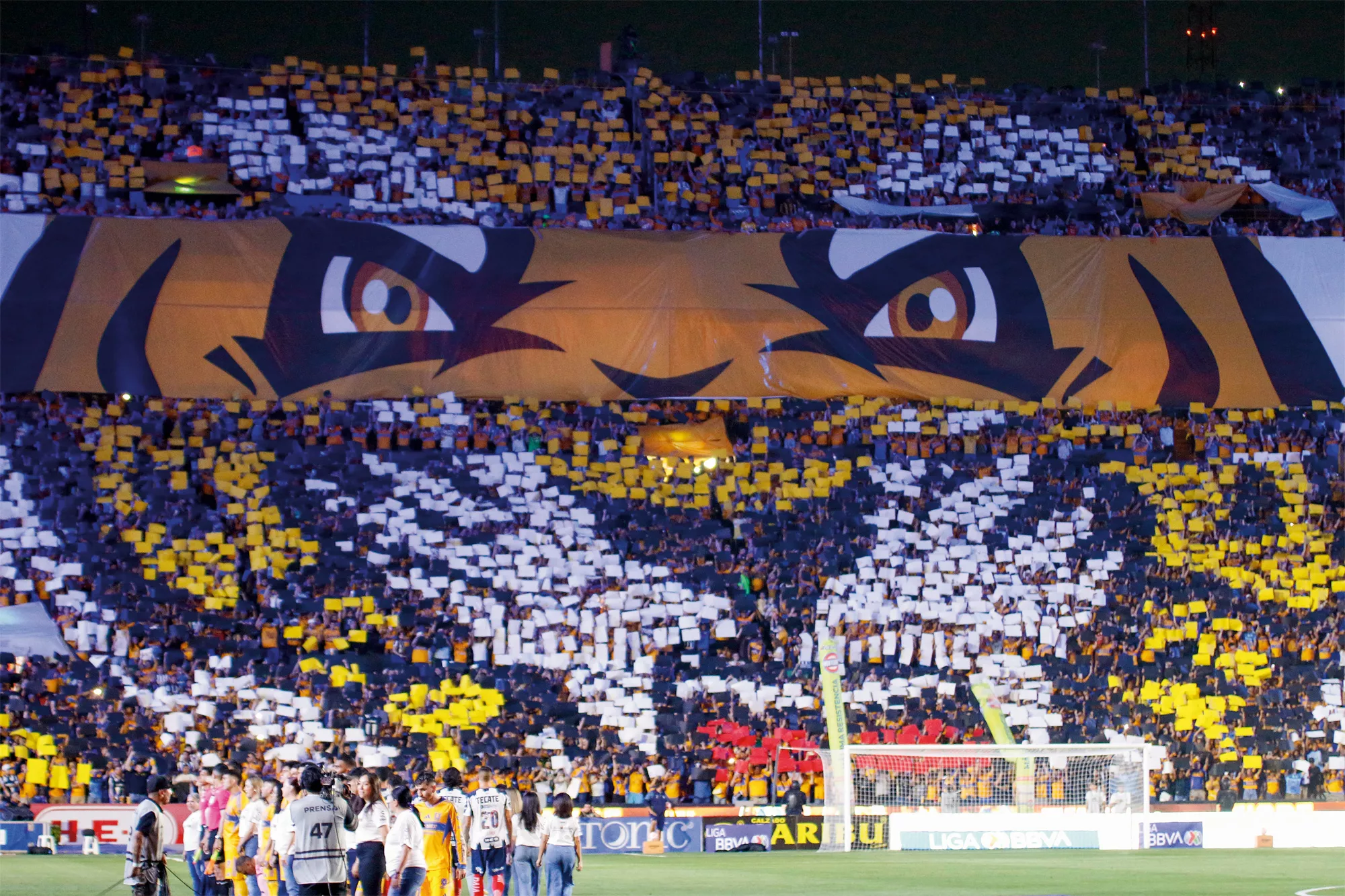
Tigres team fans choreograph placards to become living art in the form of a tiger tifo at a Liga MX Clausura match against Monterrey.
Julio Cesar Aguilar/AFP via Getty Images
Surrealist Expressions of Football
While Lowry painted football as part of everyday life, surrealist artists took a very different approach. Rejecting straightforward representation, they turned instead to dreamlike imagery and unexpected juxtapositions to explore states of mind.
In posters designed for the 75th anniversary of the Spanish club FC Barcelona in 1974, Salvador Dalí and Joan Miró offered strikingly different interpretations of the game.
Using pen and ink, Dalí transformed the footballer into an otherworldly figure with a hollow carved from its heart, through which the Barcelona crest can be seen. The surreal symbolism elevates both the sport and the club to mythic status.
“Dalí was particularly interested in the sense of belonging and the collective passion that football arouses,” said Montse Aguer, director of the Centre for Dalinian Studies in Figueres, Spain.
By contrast, Miró condensed the game into a black insectlike creature bearing the club’s crest on its back.
Miró later designed the official poster for the 1982 FIFA World Cup, hosted by Spain, using vibrant colors to transform a sporting event into a celebration.
“The poster reveals a compelling dynamism that is both visually striking and conceptually rich,” said Elena Escolar, a curator at the Miró Foundation in Barcelona.
“The central figure, with arms raised toward the sun-ball, suggests a connection between humanity and the cosmic—perhaps reflecting the universal spirit of the sport.”
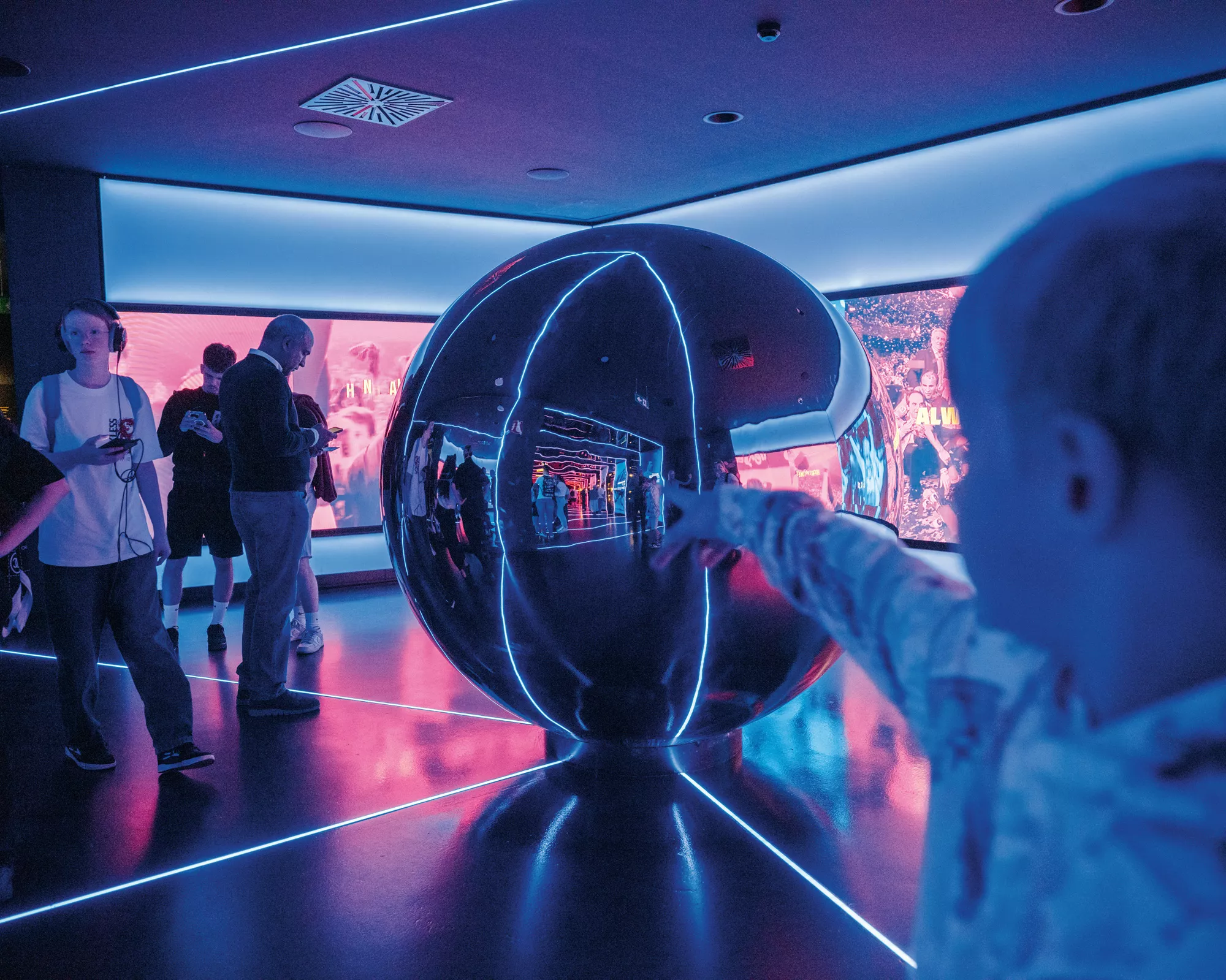
FC Barcelona’s Football Museum offers an immersive tour. This type of museum has popped up around the globe—from Germany to Brazil to Spain.
Matthieu Paley
Today, artists across the globe are reinterpreting those ideas in different media and environments.
During a residency at OOF Gallery, Leyman Lahcine, a London-based French artist of Algerian heritage, created a series of charcoal drawings and plywood footballer sculptures inspired by string puppets.
“I was interested in that violent, aggressive instinct that is needed to compete in football at a high level,” Lahcine said. “I created a link with the puppet—as if that instinct was the puppeteer, pulling the player’s strings.”
Group Works and ‘Older Spirit of Football’
Football can inspire large collectives as well as individual artists.
One global phenomenon finds groups of supporters turning stadium terraces into living artworks with their vast choreographed displays known as tifos. From Mexico’s Tigres UANL football club of Monterrey to Tunisia’s Espérance Sportive de Tunis, fans use banners or colored cards to create giant human mosaics that pulsate with emotion and identity.
Back in Barcelona, the sound of skateboard wheels ricochets off the concrete in a small urban park. Street artists have covered the surrounding walls in murals that sometimes last only days before someone paints over them.
“The street is a living gallery,” said Juandrés Vera, a Mexican street artist based in the city.
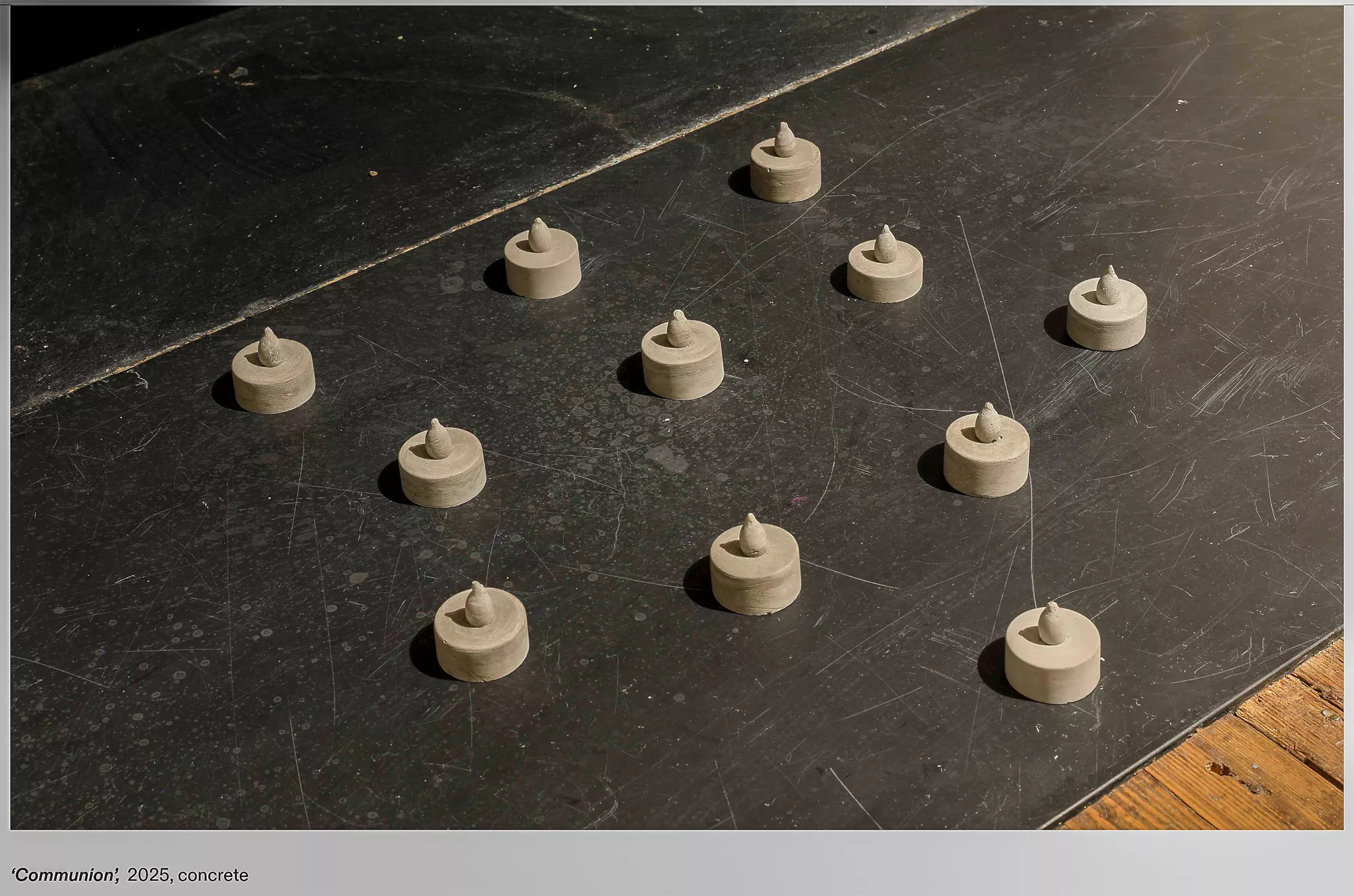
“Communion,” by AC Larsen and displayed at OOF Gallery, replicates with 11 tea lights cast in concrete the winning formation England used at the UEFA Women’s Euro 2025.
©AC Larsen/courtesy of OOF Gallery
Working with two other artists, Dazer Ramírez and Peter Westerink, Vera created a mural in Mexico depicting a pair of dirty football boots hanging by their laces. An optical illusion makes the boots appear three dimensional when viewed from a certain angle.
“Football—even at a professional level—used to be about playing the game,” Vera said. “Nowadays it can feel more about money and merchandising. So we painted these boots from the last century as an homage to that older spirit of football.”
Street art in the United States and Canada often reflects local identity, social issues and music culture. While football is not a dominant subject, its presence is growing as the sport gains popularity across North America.
Around the world, artists have responded in different ways to the challenge of translating football’s kinetic energy into static art forms.
“Any Wintry Afternoon in England”—a 1930 painting by C. R. W. Nevinson—made such an impact on Proffitt that he adopted a futurist style for several years.
“Futurism is all about breaking up the canvas with movement—for example, a player kicking, with his leg painted several times in fading tracer lines,” he said.
“Now I mostly just pick a pose of action—kicking, heading, tackling—and that translates the movement onto the canvas.”
British artist Emma Cousin grew up in a family of devoted football fans and became fascinated by how the game inspires intense loyalty and extremes of emotion.
She studied video footage of players, both male and female, to explore how that passion manifests itself physically.
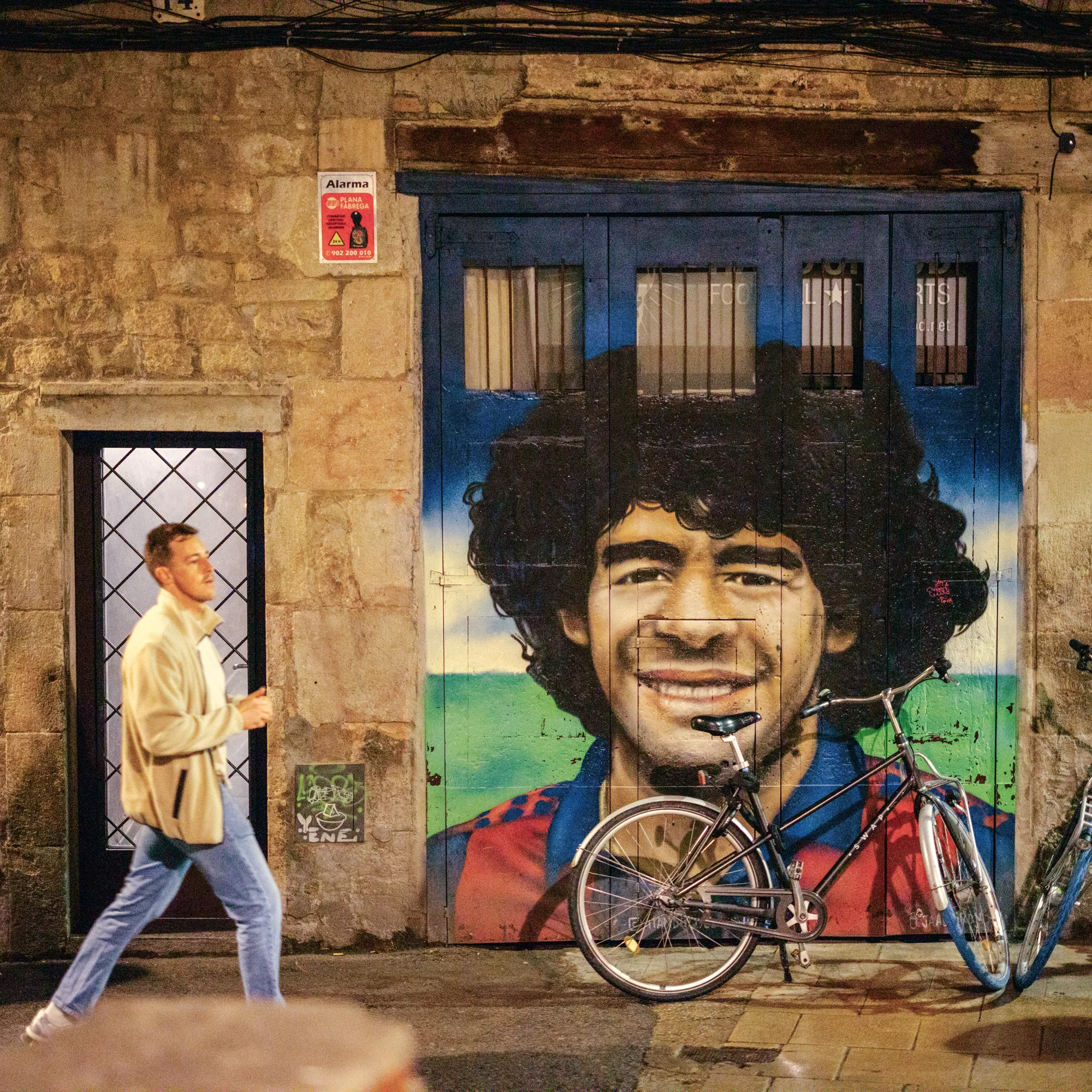
Carrer dels Agullers, a street in the Ciutat Vella historical district of Barcelona, Spain, that housed artisans and manufacturers, bears a mural of revered football figure Diego Maradona. The game has inspired artists across media and regions—and will continue to do so for generations.
Matthieu Paley
“There’s a buildup of tension in the body,” Cousin said. “I became interested in seeing the deformation of the face—an expression that looks like anguish but is actually deep connection, love and joy.”
Cousin’s painting “Hard Side Part Undercut” featured in an exhibition organized by the founders of OOF to coincide with the 2019 FIFA Women’s World Cup.
The work depicts an imagined collision of female players with such force and energy that the figures appear almost to shoot off the canvas.
“I’ve exaggerated the shape of these bodies because I want them to be flying or falling in different directions,” Cousin said. “These forms are both heavy and weightless at the same time.”
Women’s Game as Inspiration
Women’s football inspired British sculptor AC Larsen to create “Communion”—11 tea lights cast in concrete and arranged in the winning formation used by England at the UEFA Women’s Euro 2025. (UEFA is the Union of European Football Associations, the sport’s governing body in Europe.)
“I took this flame—something delicate and impermanent in real life—and cast it in concrete to give it weight,” said Larsen.
“For me, it symbolizes hope.”
Football continues to offer artists something rare: a shared experience powerful enough to hold beauty, belief and contradiction all at once: whether in the shadow of northern factories, on the walls of a southern city or in the shifting identities of a global game.
More From AramcoWorld
Where Fog Met Feet: Football's Spread From England to the World
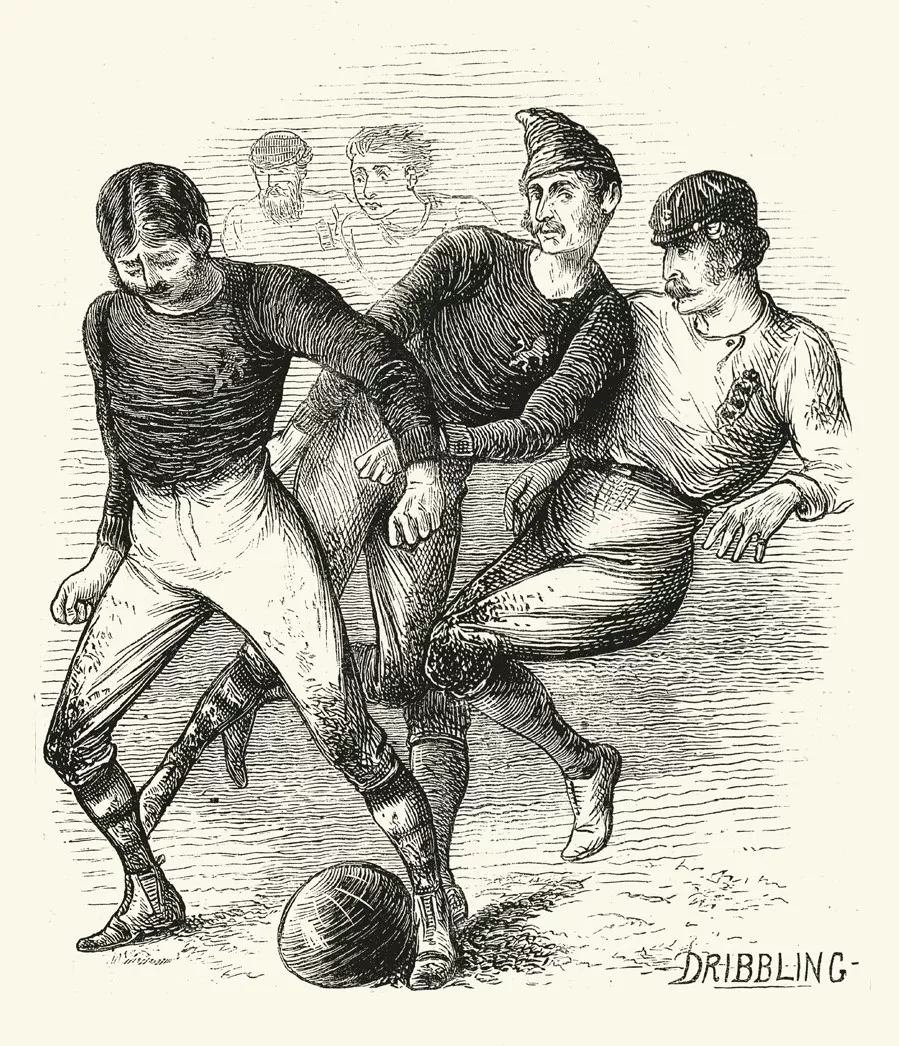
Since its birth in 1863 in London, football has spread around the globe, with billions of fans who connect with the game as a source of cultural pride beyond the pitch.

You may also be interested in...
A Conversation With Author Tim Bascom on Why Football Endures
Arts
Culture
As the 2026 World Cup nears, Tim Bascom asks: Why do people keep playing soccer when the world is ready to break apart?
Othman Almulla Embodies Arab World’s Dream of a Golf Championship
Culture
The journey of Saudi Arabia's first professional golfer parallels that of the region from humble beginnings to leaderboard for the global game.
Survey Results Are In: Readers Reflect on What Football Means
Culture
History
AramcoWorld’s question, “What does football mean to you?,” generated hundreds of replies from readers about playing and/or watching the sport.