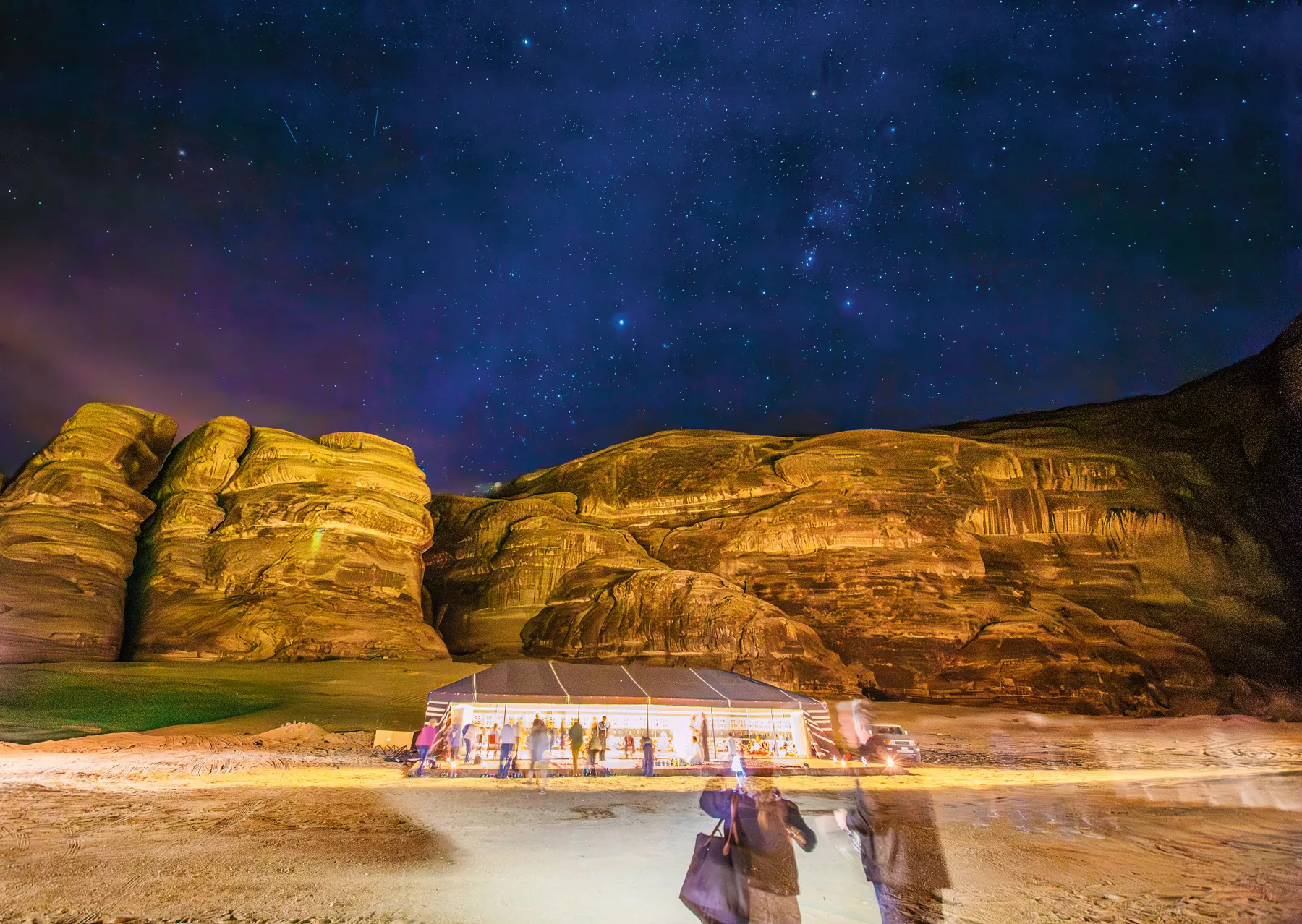
Spotlight on Photography: Long Exposure Grabs AlUla's Starry Night
Photographer Waleed Dashash gets away from urban light pollution, adjusts his aperture and shutter speed—and catches the majesty of AlUla at night.
The night before our visit to Mada’in Saleh, an archeological site in northwestern Saudi Arabia, in March 2015, we camped 20 kilometers (12 miles) south in AlUla, a place of timeless beauty inhabited for thousands of years whose sandstone formations draw tourists today. I had packed my tripod, which would become the most important piece of gear that night.
While everyone gathered for dinner, I wandered away into the quiet desert, looked up and found a sky unlike any I had seen in years. Having lived in Daytona Beach, in the US state of Florida, and Al Khobar, Saudi Arabia, where light pollution often hides the stars, I saw an opportunity to photograph a truly dark night sky. I set up my camera and began experimenting with long exposures, adjusting the aperture and shutter speed. The beauty of long exposure is that, rather than catching one still image, it captures movement.
Capturing the stars alone, however, wasn’t enough—I wanted a sense of place. With the rock formations adding scale and character, the long exposure on AlUla’s desert landscape proves that one can paint something with light.
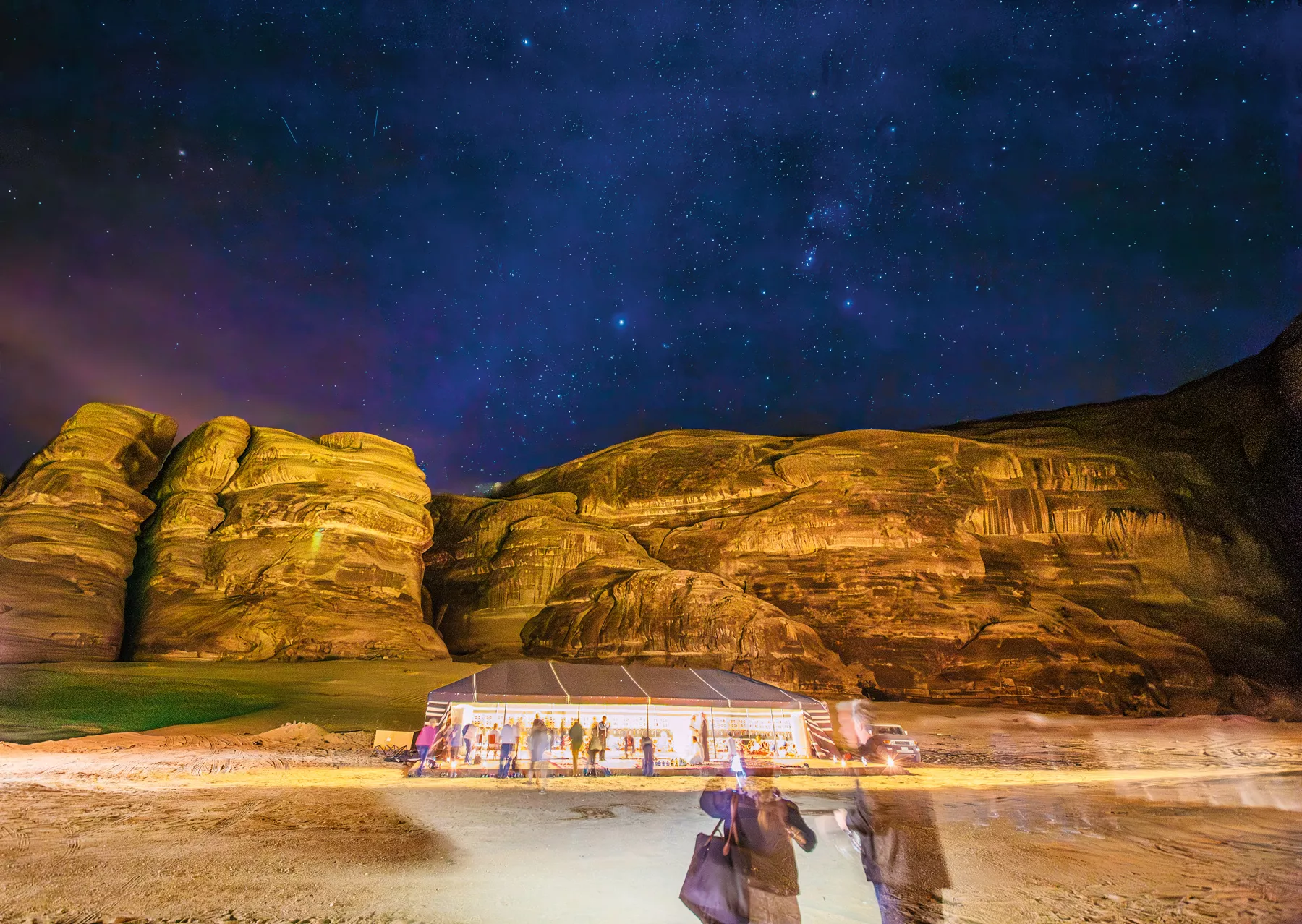
Photograph by Waleed Dashash

You may also be interested in...
How Gulf's New Museums Are Championing Cultural Memory and Heritage
Arts
The result of decades of planning, new facilities in Saudi Arabia and the rest of the Arabian Gulf reflect the region's cultural renaissance and effort to preserve its heritage.
What It Takes to Feel Ramadan Again
Arts
Creative minds rebuild Ramadan traditions through deliberate acts of memory and care.
Sisters Behind HUR Jewelry Aim To Honor Pakistani Traditions
Arts
Culture
What began with a handmade pair of earrings exchanged between sisters in 2017 has evolved into a jewelry brand with pieces worn in more than 50 countries.