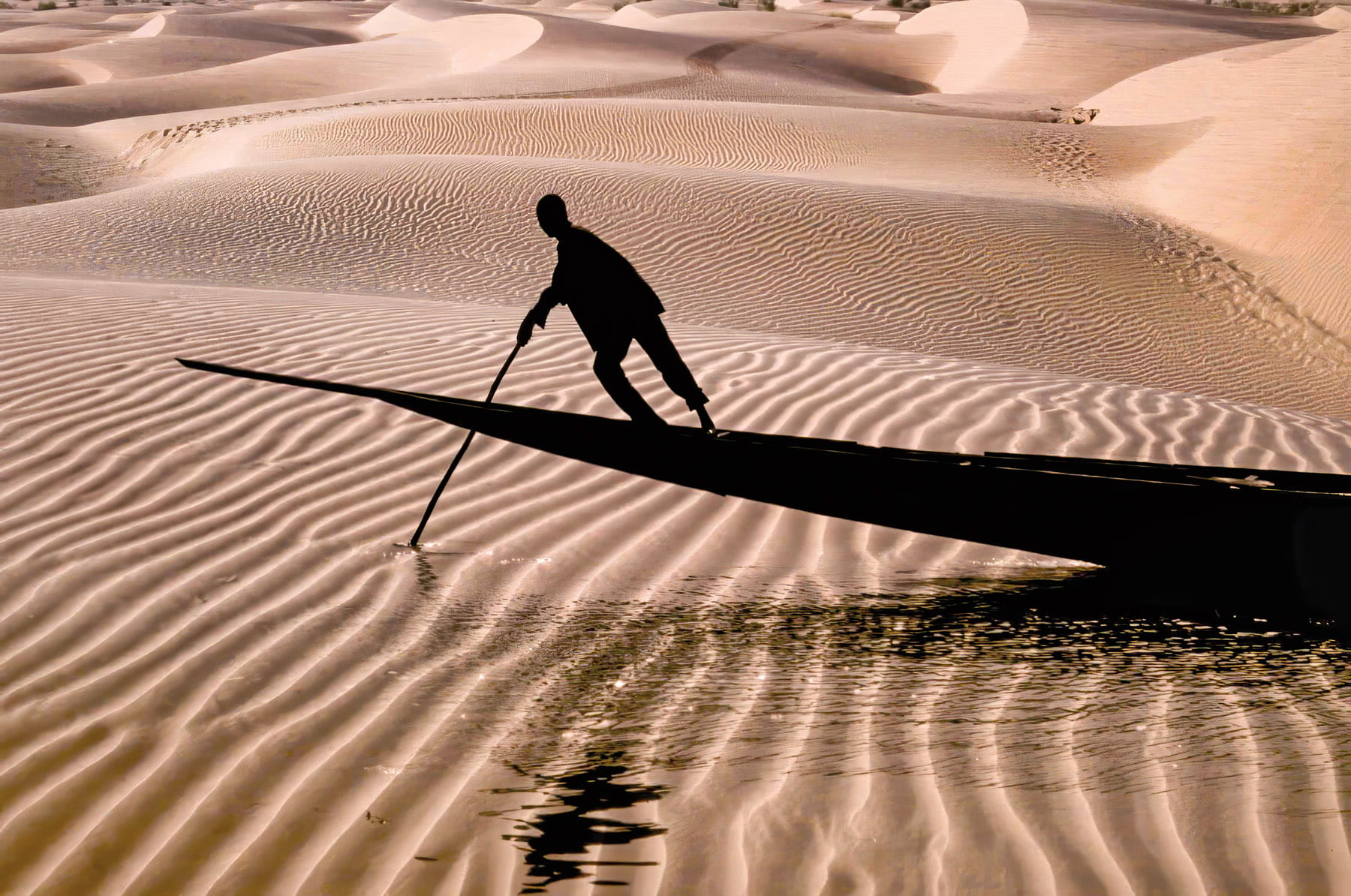
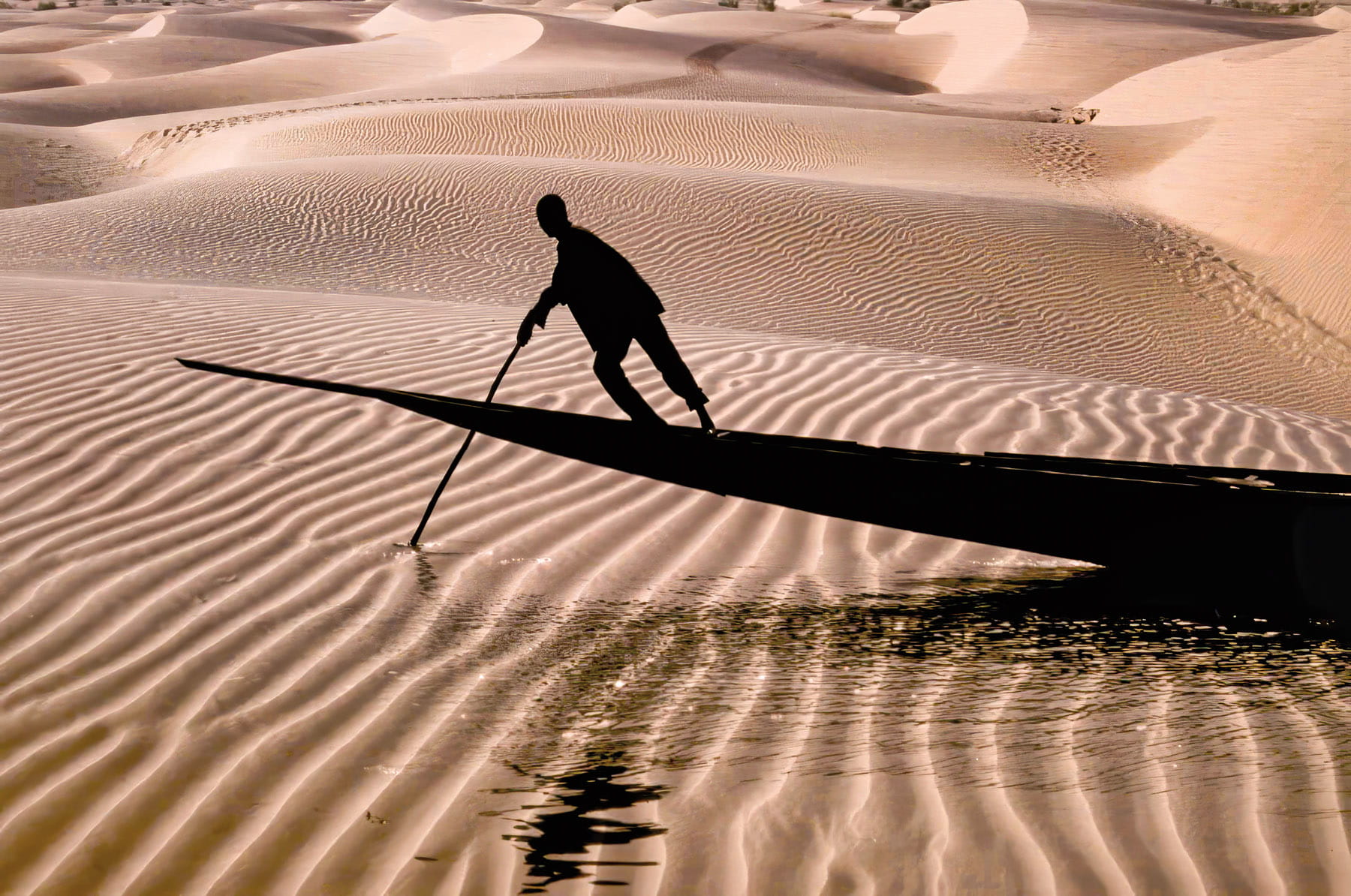
FirstLook: Poetic Fusion
Prior to our modern practice of image manipulation with editing software, photographers worked more with planned intention and craft.
Prior to our modern practice of image manipulation with editing software, photographers worked more with planned intention and craft. We made premeditated and physical creations either through in-camera techniques, trick shots during the photo shoot, post-manipulation of negatives/slides or during the darkroom processing itself.
In this image taken in 1993, I sandwiched two original slides together, one a high-contrast silhouette image of a boat on the Senegal River separating Senegal and Mauritania, the other a photo of wind-carved sand dunes taken in the same vicinity. The result is more than an illusion—the visual poetry and fusion of these two realities is a metaphor for Mauritania itself, where the Sahara Desert meets the Atlantic Ocean, and where nomads and fishermen live side by side.
I created this while living in Mauritania, working with humanitarian agencies, before founding a local NGO focused on collective social and behavior change.
—JONATHAN SHADID
@JonathanShadid
www.jonathanshadid.com
You may also be interested in...
The Lost World Of Southern Iraq's Marsh Arabs
History
Arts
In late 1967, photographer Tor Eigoland traveled for more than: a month, mostly by canoe, among the countless villages of southern Iraq's vast marshes. Now, 45 years later, writer Anthony Sattin calls his photographs a "rare and ethnographic record of a lost world. They bring us back to a time and place where people lived in harmony with their environment and respected the balance the natural world needs to thrive.'
FirstLook - A blistering triumph for the back-street boys
Arts
Amid the roar of racers zooming toward the finish line in London during the 1980 Grand Prix, longtime auto-racing photographer and renowned artist Michael Turner trained his lens on a Saudia-Williams FW 07.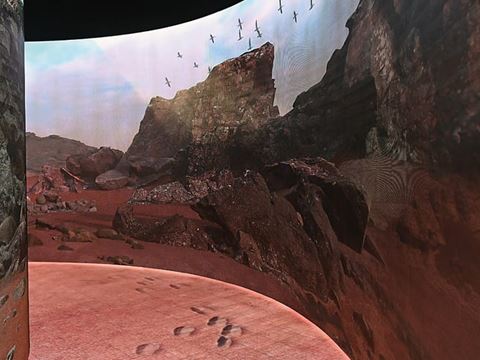
Ithra Explores Hijrah in Islam and Prophet Muhammad
History
Arts
Avoiding main roads due to threats to his life, in 622 CE the Prophet Muhammad and his followers escaped north from Makkah to Madinah by riding through the rugged western Arabian Peninsula along path whose precise contours have been traced only recently. Known as the Hijrah, or migration, their eight-day journey became the beginning of the Islamic calendar, and this spring, the exhibition "Hijrah: In the Footsteps of the Prophet," at Ithra in Dhahran, Saudi Arabia, explored the journey itself and its memories-as-story to expand understandings of what the Hijrah has meant both for Muslims and the rest of a the world. "This is a story that addresses universal human themes," says co-curator Idries Trevathan.