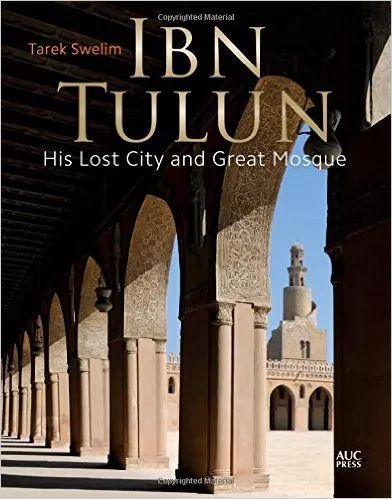
Ibn Tulun: His Lost city and Great Mosque
Tom Verde
Tarek Swelim
2015, AUC Press, 978-9-77416-691-4, $49.95 hb.
This elegant, richly illustrated volume covers the history, architecture, folklore and cultural significance of Africa's "longest surviving" mosque. Built by Abbasid Governor Ahmad Ibn Tulun between 867 and 879, it was the centerpiece of his new city of al-Qata’i, northeast of Fustat, the earliest Arab settlement in Egypt (both now part of Cairo). Tarek Swelim comprehensively documents the building's "glorious architecture," focusing on its elegant inscriptions, pointed arches (among Egypt's first), famed scroll-shaped minaret and more. He also examines periods of neglect, e.g., during the Crusades of the 13th century when Mamluk sultans had their hands full elsewhere, and restoration, such as the work undertaken early in the 20the century by King Fuad. Filled with modern and historical images, maps and illustrations, including 3D renderings of the structure throughout its history, the book's design provides visual context for the mosque's important role in the history of Egypt and Islamic architecture.
You may also be interested in...

Memoir Paints World’s Biggest Game as Great Connector—Our Book Review
Tim Bascom transforms a lifetime of playing football across five continents into a meditation on belonging, arguing that the game’s great gift is not the goals but the wordless understanding it creates among people.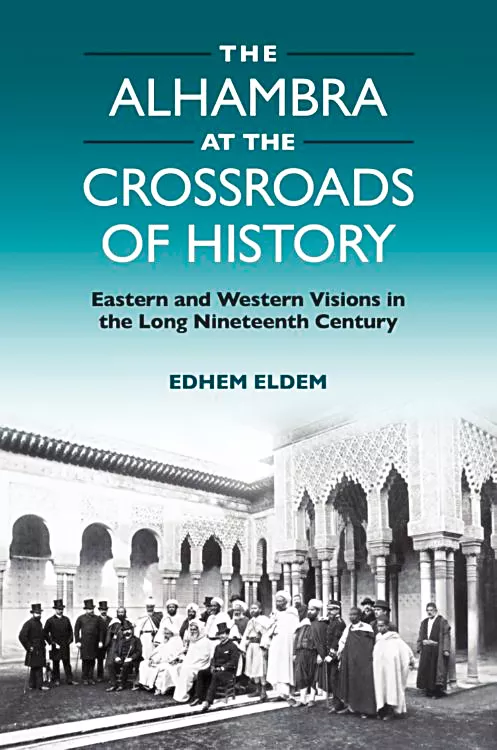
The Alhambra at the Crossroads of History—Our Book Review
The Alhambra at the Crossroads of History shows how the 13th-century Andalusi palace complex in Granada, modern Spain, generates often conflicting meanings at the same time—meanings actively constructed and sometimes misread. Edhem Eldem, an Istanbul-based history professor, traces its role in shaping social and cultural identities across imperial Europe, Arab North Africa and Ottoman Türkiye from the 18th to the early 20th centuries.