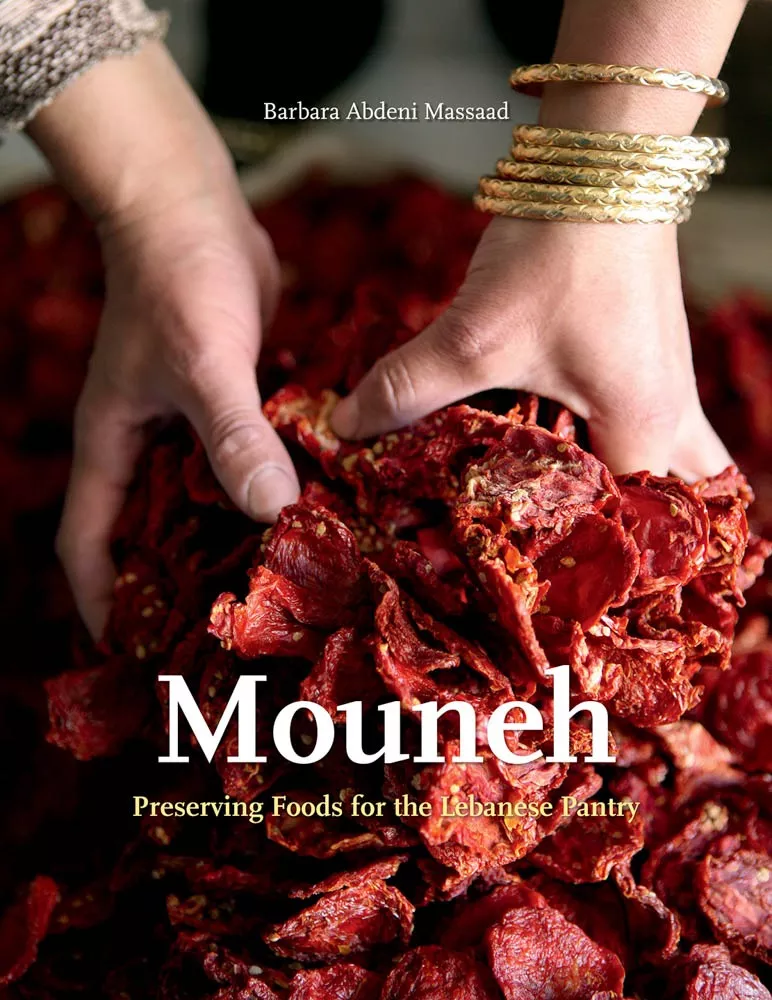
Mouneh: Preserving Foods for the Lebanese Pantry
Tom Verde
Barbara Abdeni Massaad
2018, Interlink Books, 978-1-56656-036-8, $50 hb.
Mouneh, “from the Arabic word mana, meaning ‘storing,’” is a custom that “continues to flourish in many parts of Lebanon,” writes Massaad, a Beirut native. Pickling, salting, sun-drying, sweetening with sugar or packing in oil—all these methods date back centuries in the region. They evoke memories of grandparents putting up fruit preserves and pickling garden vegetables. Massaad looks to this know-how, and history, in this expansive volume about how to preserve produce, from fresh herbs (sage, rosemary, wild thyme) to fruit jams (watermelon, fig, black sour cherry), to vegetables (stuffed eggplant in oil, red pepper paste) and cracked wheat and yogurt (kishk), a Bekaa Valley specialty. Reflecting the natural rhythms of food production, the book’s sections are arranged seasonally. Mastering many of these recipes will require time and practice. Yet the rewards of preserving one’s own food, Massad promises, can be gratifying.
You may also be interested in...

Anthology Shows Soccer—and Sport—as Our Favorite Muse—Book Review
In Picturing the Beautiful Game, art historian Daniel Haxall shows readers the perspective of the artist’s psyche—one rarely depicted in discussions of sport.
Author Nawar Shora Untangles Arabs, Muslims and Arab Americans
In his book Nawar Shora examines how identities too often treated as interchangeable have shaped public perception and why understanding the differences matters.