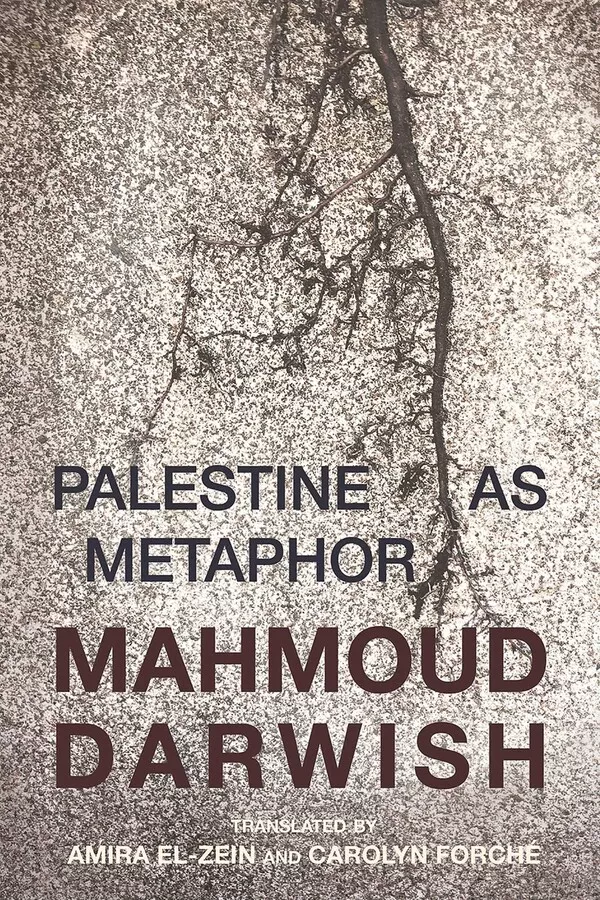
Palestine As Metaphor Mahmoud Darwish
Piney Kesting
Amira El-Zein and Carolyn Forché, trs.
Olive Branch Press, 2019.
“I am convinced that exile is profoundly anchored in me, to the point that I cannot write without it. And I will carry it wherever I go, and I will bring it back to my first home.”
—From Palestine As Metaphor
This collection of five interviews with the late Mahmoud Darwish (1941–2008) opens a door into the heart and soul of Palestine’s most beloved poet. Translated for the first time into English, the interviews date to 1993–1996 and reveal how intimately Darwish’s life is intertwined with that of Palestine. “When he tells his own story,” explains Forché, the compilation’s translator and a poet herself, “he inescapably tells the story of Palestine; destiny has ordained that his personal history would be read as collective, and his people recognize themselves in his voice.” Exile emerges as a dominant theme for Darwish, who explains how it is anchored deeply within him and indispensable to his writing. “I have constructed my own homeland,” notes Darwish. “I have even established my state in my language.” The heart of the book rests in the conceptualization of Palestine as a metaphor —recreated, revived and immortalized through poetry as a declaration of identity.
—Piney Kesting
You may also be interested in...
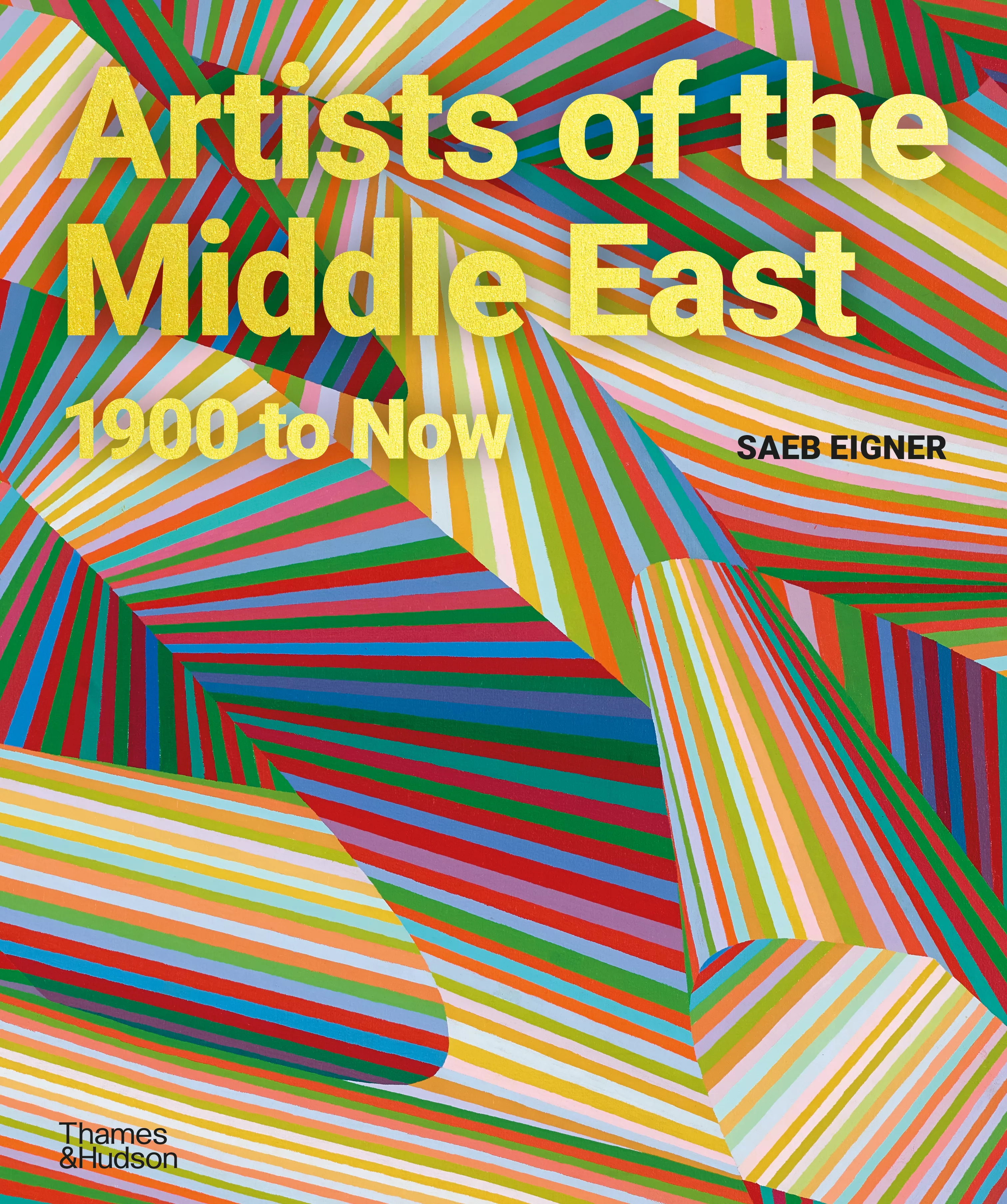
Saeb Eigner Brings Readers Closer to the Artists of the Middle East
Artists of the Middle East emphasizes the breadth of an artistic community that spans nations, styles and mediums while challenging the assumption that these artists are at once the same as each other and different from those in the West.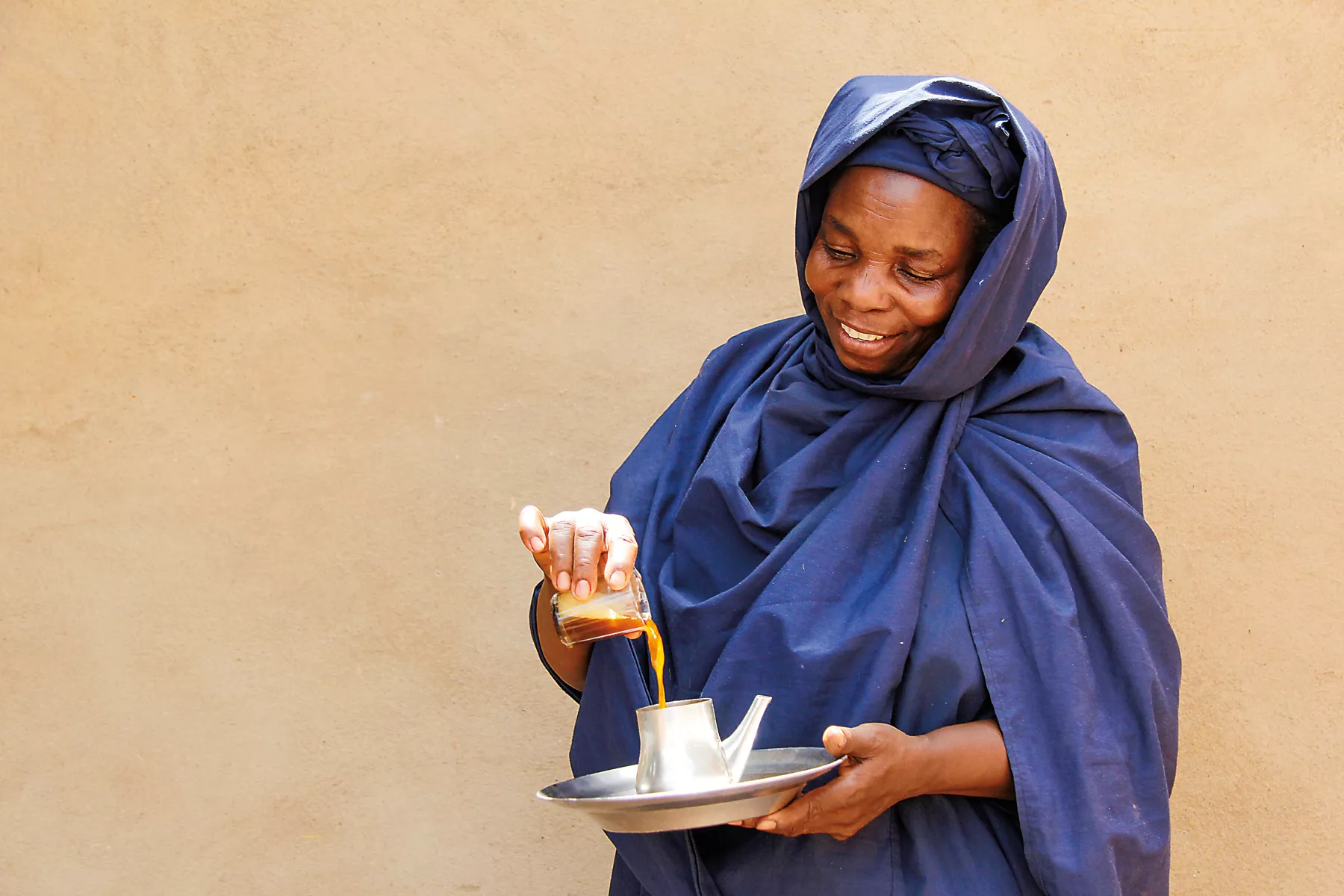
A History of Mali’s National Drink Traces Green Tea—Book Review
By tracing ritual instead of commerce, anthropologist Ute Röschenthaler shows that the story of tea in West Africa involves multidirectional routes and local agency.