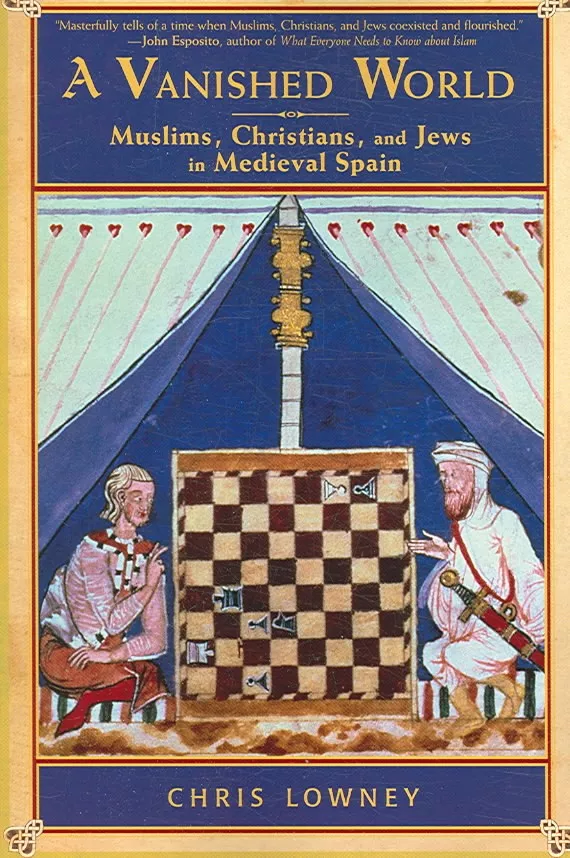
A Vanished World: Medieval Spain’s Golden Age of Enlightenment
Robert W. Lebling
Chris Lowney
2005, Free Press, 0-7432-4359-5, $26 hb
Lowney surveys the history of al-Andalus (Muslim Spain), from its beginnings in the eighth century, through its Golden Age and decline, to Ferdinand and Isabella’s conquest of the last Muslim stronghold in 1492, providing ample colorful anecdotes and little-known facts. His goal is to take a close look at the convivencia—the “living together”—of Muslims, Christians and Jews in medieval Spain, for Lowney, a former Jesuit and banker with degrees in medieval history and philosophy, believes the story of religio-ethnic cooperation in al-Andalus offers hope in today’s strife-torn world. Yet he does not try to sugarcoat the “Golden Age.” He points out that convivencia was not without its problems, at times breaking down in spasms of bloody violence. He demonstrates that cooperation among the religious groups in al-Andalus was motivated not by idealism or charity, but by each community’s recognition that survival often depended on getting along. Lowney shows how the three communities grew in wisdom, prospered economically and flowered culturally in this atmosphere.
You may also be interested in...

A History of Mali’s National Drink Traces Green Tea—Book Review
By tracing ritual instead of commerce, anthropologist Ute Röschenthaler shows that the story of tea in West Africa involves multidirectional routes and local agency.
Author Andrew Collins’ The First Female Pharaoh—Our Book Review
Andrew Collins explores the mythmaking and historical erasure of Egypt’s first female pharaoh.