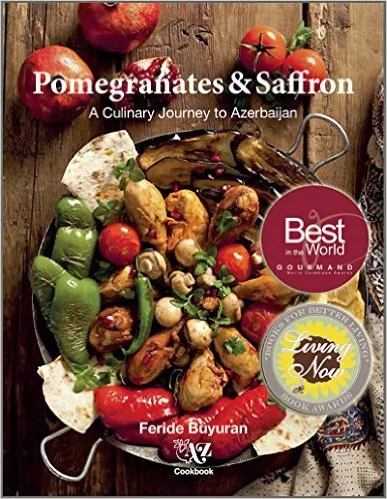
Pomegranates and Saffron: A Culinary Journey to Azerbaijan
Tom Verde
Feride Buyuran
2015, AZ Cookbook, 978-0-99617-312-4
Azerbaijani cuisine is “the product of centuries of cultural exchange between East and West,” writes food blogger Feride Buyuran in her introduction to this colorfully illustrated and informative cookbook. Her homeland’s cuisine is a mezze, if you will, of pickled vegetables, grain and bean soups, wildly diverse pilafs, an array of savory and sweet baked items, and grilled kebabs, originating from Russia, Iran, Turkey and the Middle East. As such there is no one, single Azerbaijani cuisine, but many: the starch-heavy dishes of the capital, Baku; cured meats in the rugged northwestern districts of Gakh and Zagatala; stuffed fish recipes from Lankaran near the Caspian Sea. Recipe headnotes offer rich details that set Azerbaijani regional cuisine apart, such as the light infusion of ginger and cardamom in the northern highland “Sugar Bread” cookies from Lahij, or traditional Tabriz meatballs, the size of soccer balls (serves 2-3). More than just a cookbook, Buyuran’s work is an educational, epicurean ramble through a region not often spotlighted on cookbook shelves.
You may also be interested in...
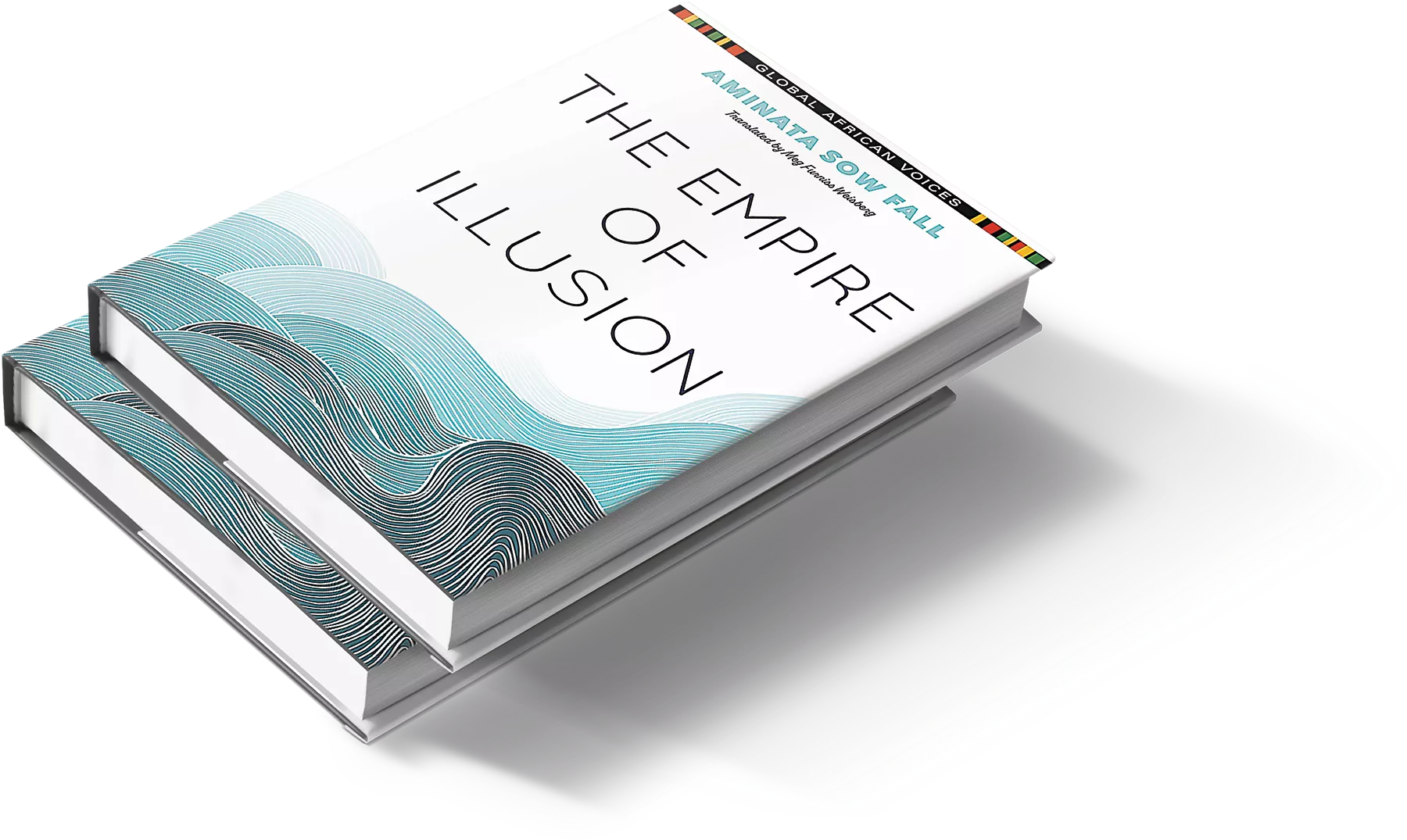
Author Aminata Sow Fall’s Empire of Illusion—Our Book Review
What do we owe each other? What do we owe ourselves? These are the questions that Senegalese author Aminata Sow Fall has posed for nearly half a century.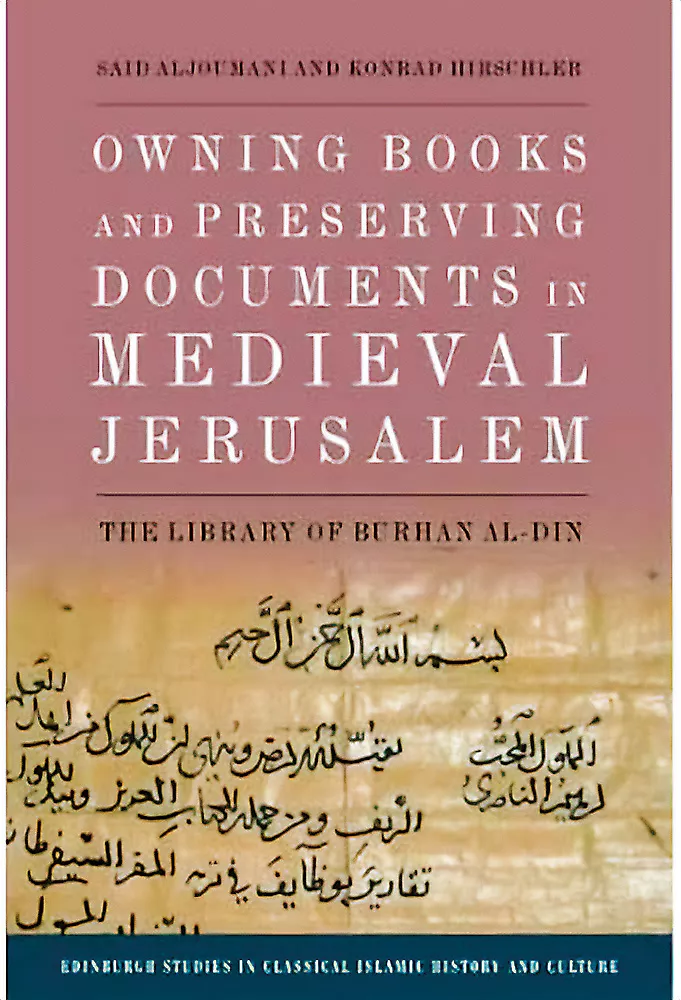
Owning Books and Preserving Documents in Medieval Jerusalem—Book Review
In this painstaking work, Owning Books and Preserving Documents in Medieval Jerusalem, historians Said Aljoumani and Konrad Hirschler explore a culture in which books became woven into the fabric of daily life through the case of Burhān al-Dīn Ibrāhīm al-Nāsīrī.