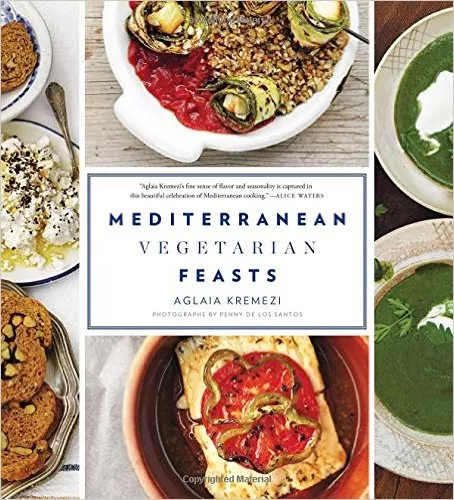
Mediterranean Vegetarian Feasts
Tom Verde
Aglaia Kremezi
2014, Stewart, Tabori & Chang, 978-1-61769-073-0, $35 hb.
Once a “Roman Lake,” by the Middle Ages the Mediterranean Sea was every bit an “Arab” or “Muslim Lake,” as this beautifully illustrated cookbook demonstrates. Rooted in the author’s Greek heritage, most of the recipes reflect the wider Mediterranean world, where Arab cuisine greatly influenced, and was influenced by, local flavors. Okra and Zucchini in Harissa-Tomato Sauce is a braised marriage of Italy’s signature sauce and North Africa’s famous, fiery spice paste; oranges (introduced by the Arabs via Sicily) add sweetness to Orange and Olive Oil Carrots, which provides the foundation for Sautéed Olives and Carrots with Preserved Lemon (a Moroccan specialty) and Thyme. In addition to informal yet informative recipe headnotes, Kremezi provides seasonal menu suggestions, tips on techniques and sidebars that delve into the cultural background of many traditional dishes. “Balkan polenta is ‘finer’ than the Italian version, while kishk, a fermented mash-up of grains and yogurt,“ can be traced back to Persia and “spread to the West” courtesy of the Ottomans. This title will appeal to any Mediterranean-diet enthusiast, omnivore or otherwise.
You may also be interested in...

A Scholarly Look at Football in the Middle East—Our Book Review
This collection, edited by Abdullah Al-Arian, explores the early history and growing influence of football throughout the region.
Author Andrew Collins’ The First Female Pharaoh—Our Book Review
Andrew Collins explores the mythmaking and historical erasure of Egypt’s first female pharaoh.