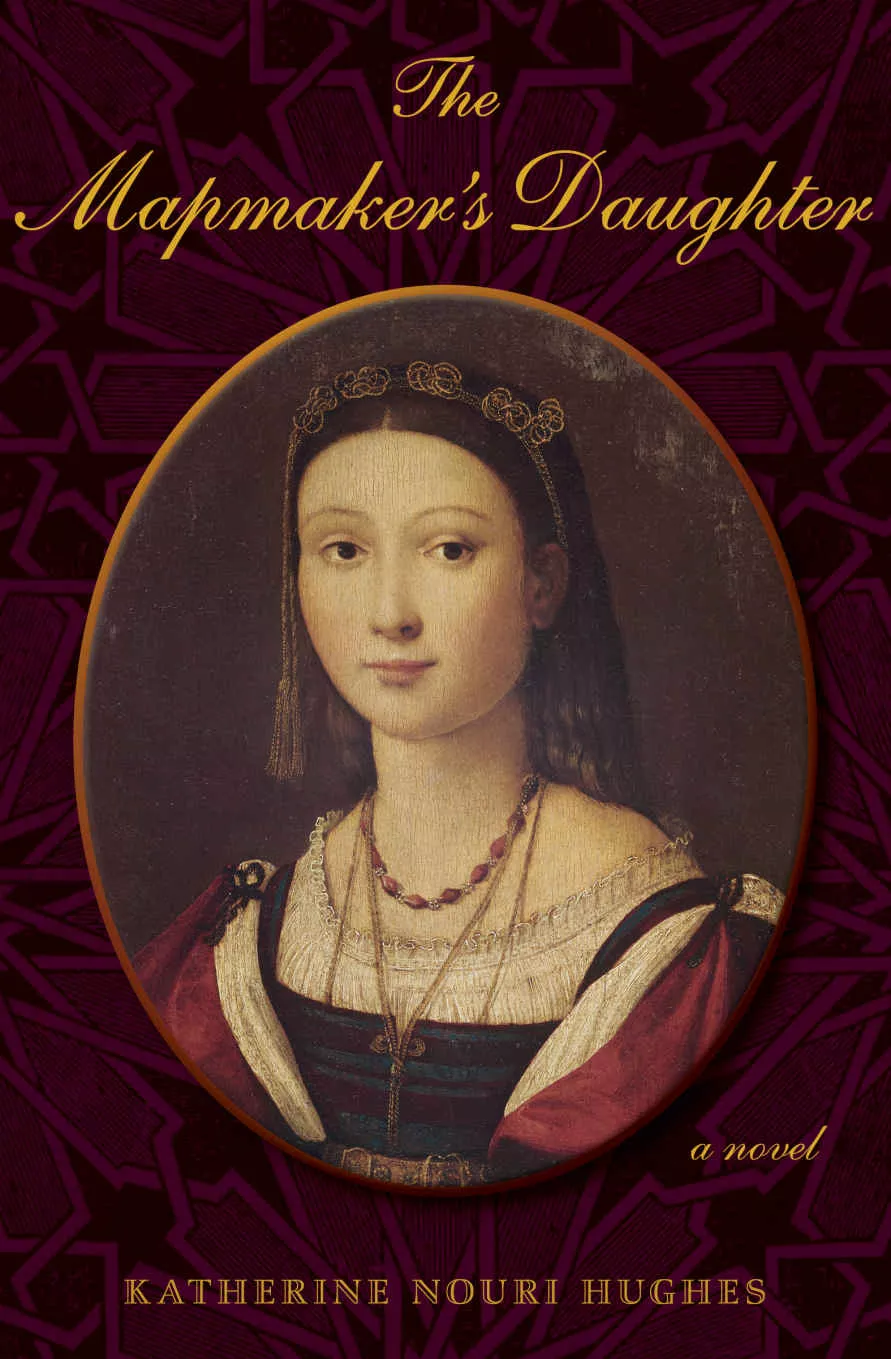
The Mapmaker's Daughter: The Confessions of Nurbanu Sultan 1525–1583
Louis Werner
Katherine Nouri Hughes
2017, Delphinium Books, 978-1-88328-570-8, $18 pb.
A good historical novel about a mostly undocumented figure must nevertheless rely on impeccable sources. That is the case with this richly imagined memoir of Nurbanu, the Venetian-born chief consort, or haseki sultan, of Selim II, and the valide sultan, or mother, of Murad III—the first in a line of strong royal wives who founded what some historians call the “sultanate of women.” Unlike most other historical accounts, this novel introduces us to eminent but overlooked women of the harem. These include Suleiman the Magnificent’s talented daughter Mihrimah; Safiye, the powerful Albanian consort and mother of sultans who steered her own fate, much like her mother-in-law, Nurbanu; and the worldly Esther, who as a Sephardic freewoman was able to leave the seraglio to do Nurbanu’s bidding in the domain of men. This novel is about women in the confinement of the harem, but it also describes their role in Ottoman affairs of state.
You may also be interested in...
Author Aminata Sow Fall’s Empire of Illusion—Our Book Review
What do we owe each other? What do we owe ourselves? These are the questions that Senegalese author Aminata Sow Fall has posed for nearly half a century.
Nuha Alshaar’s Essay Compilation Muslim Sicily—Our Book Review
What emerges from this volume by Nuha Alshaar, a professor of Arabic literature and Islamic studies, is a rounded picture of Sicily as a site of cultural exchange that shaped the medieval Mediterranean.