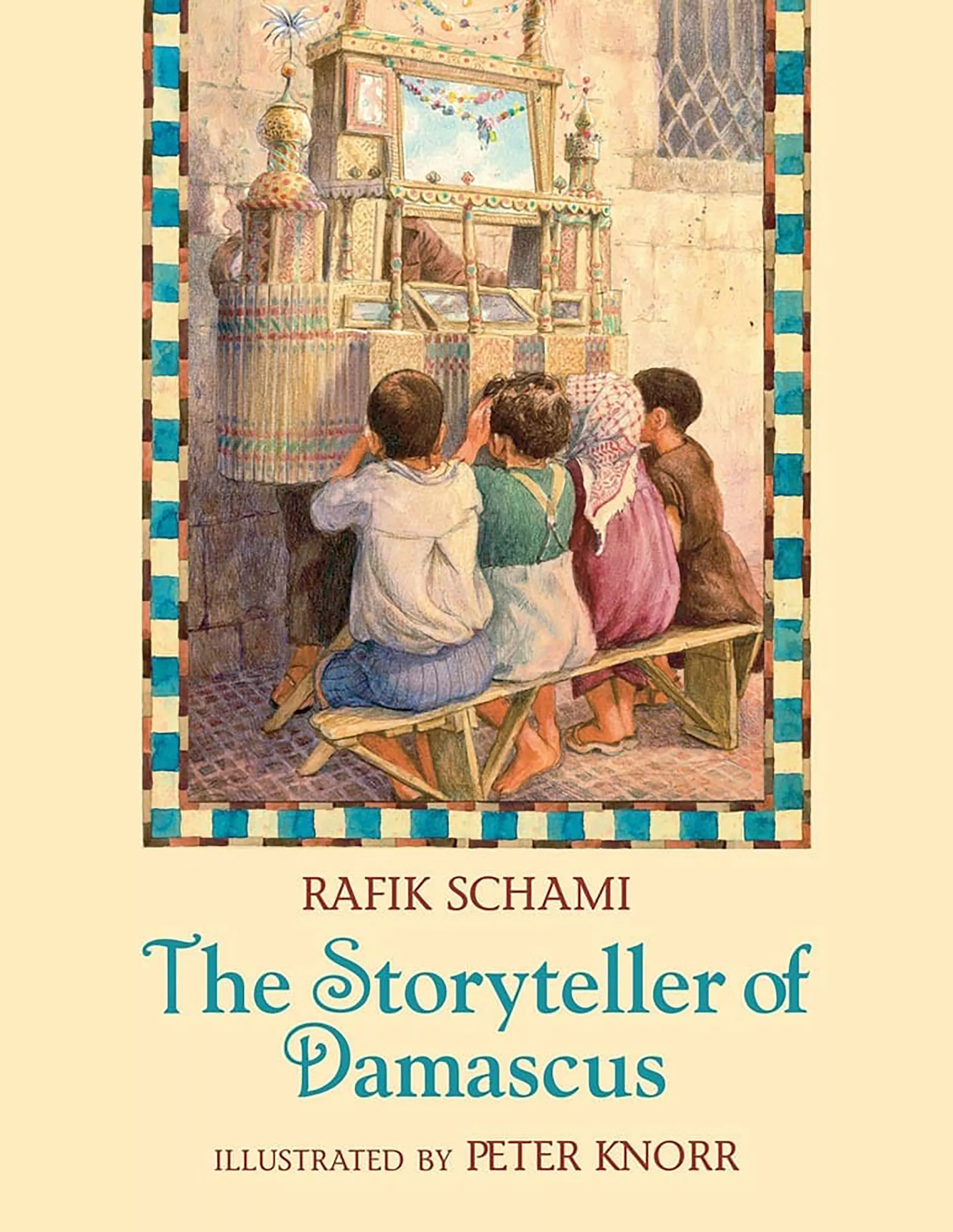
The Storyteller of Damascus
Sophie Kazan
Rafic Schami. Peter Knorr, Il.
Crocodile Books, 2018
Rafic Schami presents an illustrated, postmodern rendition of Arabian Nights, where his protagonist, a storyteller who delights children, arrives in the narrator’s neighborhood of Damascus with a chest of wonders and captivating chuckle. As in any magical tale, the timeline is binary; stories fade into the past and in the blink of an eye the city’s street culture becomes contemporary and international. The familiar tale of Sami the shepherd boy in love with the beautiful Leyla is modernized and abridged. The story changes to reflect the effects of popular culture and mass media on modern life. Schami reassures the reader the traditional art of storytelling remains, as he weaves this romantic and mystical story around the passage of time, exploring the art of oral improvisation. When read aloud, this book cleverly draws the reader into the storytelling tradition. Knorr’s magical images pair perfectly with this timeless tale.
You may also be interested in...
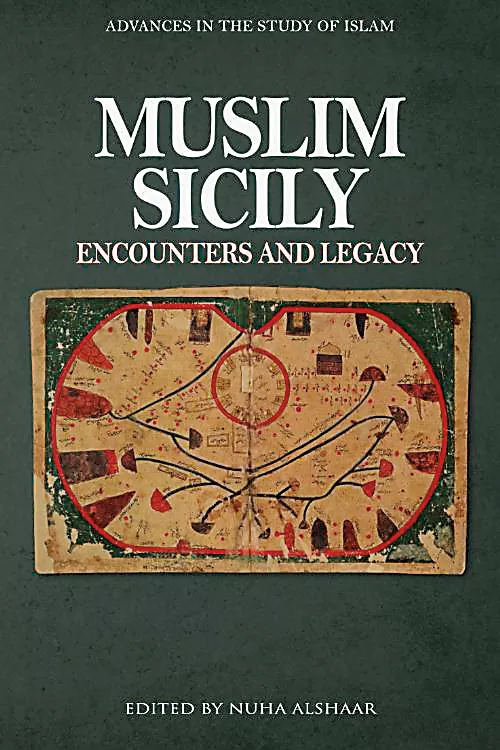
Nuha Alshaar’s Essay Compilation Muslim Sicily—Our Book Review
What emerges from this volume by Nuha Alshaar, a professor of Arabic literature and Islamic studies, is a rounded picture of Sicily as a site of cultural exchange that shaped the medieval Mediterranean.
In The Power and the Glory, Football Reinvents Nations—Our Book Review
Jonathan Wilson traces the World Cup’s evolution to global theater where nations negotiate identity, memory and power.