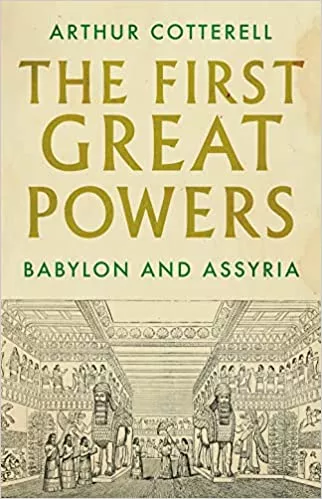
The First Great Powers: Babylon and Assyria
Jane Waldron Grutz
Arthur Cotterell.
Hurst, 2019.
Noted historian Cotterell brings the long and complex history of Mesopotamia to life in this survey of one of the world’s first great civilizations. This history begins in the fourth millennium BCE, on the Euphrates River, with the founding of the world’s first city, Uruk, in Sumer, where it is thought the Sumerians began to inscribe symbols on clay tablets. There, cuneiform was born, the world’s first form of writing. What followed was progress in the sciences, particularly mathematics and astronomy, paving way for the rise of Babylon and later Assyria, where both sciences were used to control economies and foretell the future. Cotterell states the role played by kings and gods throughout Mesopotamian society and how advances in warfare allowed some nations to expand and, over time, create power centers capable of administrating large tracts of land and bringing diverse peoples together into a unified whole, thereby creating a civilization not so different from our own.
You may also be interested in...
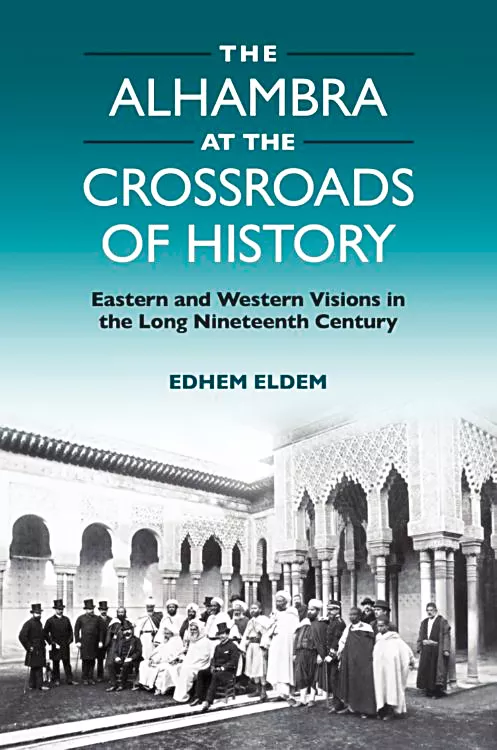
The Alhambra at the Crossroads of History—Our Book Review
The Alhambra at the Crossroads of History shows how the 13th-century Andalusi palace complex in Granada, modern Spain, generates often conflicting meanings at the same time—meanings actively constructed and sometimes misread. Edhem Eldem, an Istanbul-based history professor, traces its role in shaping social and cultural identities across imperial Europe, Arab North Africa and Ottoman Türkiye from the 18th to the early 20th centuries.
A History of Mali’s National Drink Traces Green Tea—Book Review
By tracing ritual instead of commerce, anthropologist Ute Röschenthaler shows that the story of tea in West Africa involves multidirectional routes and local agency.