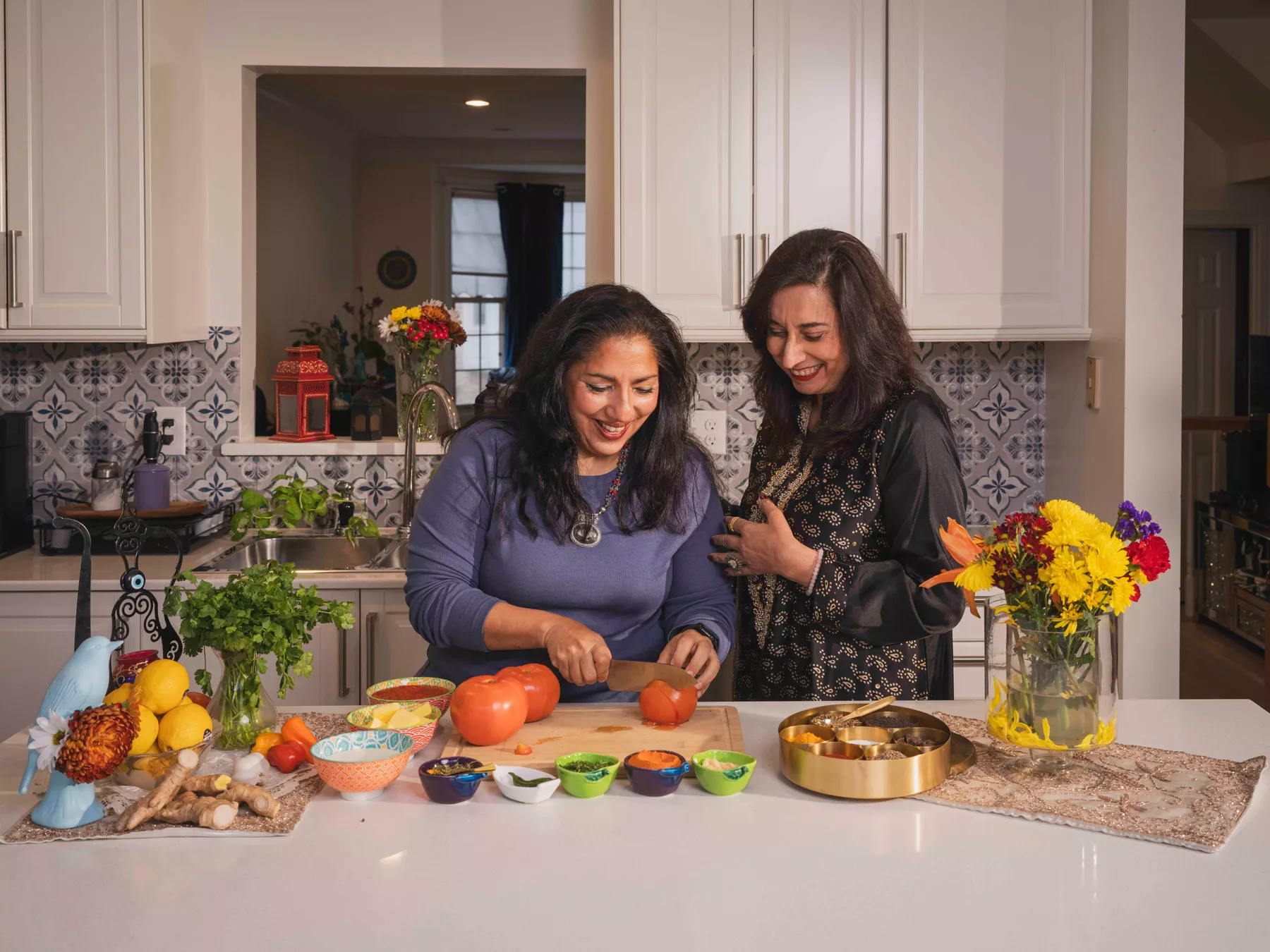
How a Quest To Perfect Butter Chicken Rekindled Memories and Heritage
What begins as a lesson in a beloved recipe becomes a journey through diaspora, friendship and the scents that tie us to places we’ve never lived.
Whenever I toss coriander, mustard seeds and cumin into a hot iron skillet, their pungency rises to meet the sweet warmth of cinnamon already toasting beside blistering cardamom pods. Next comes a dried red chile, crackling as it releases a sharp, smoky scent. After a few seconds, I sweep the spices out of the pan and into a grinder, where they whir into the fragrant powder that will anchor whatever Indian dish I’m cooking that night.
It feels like the beginning of a meal a grandmother would make.
Well, somebody’s grandmother, anyway.
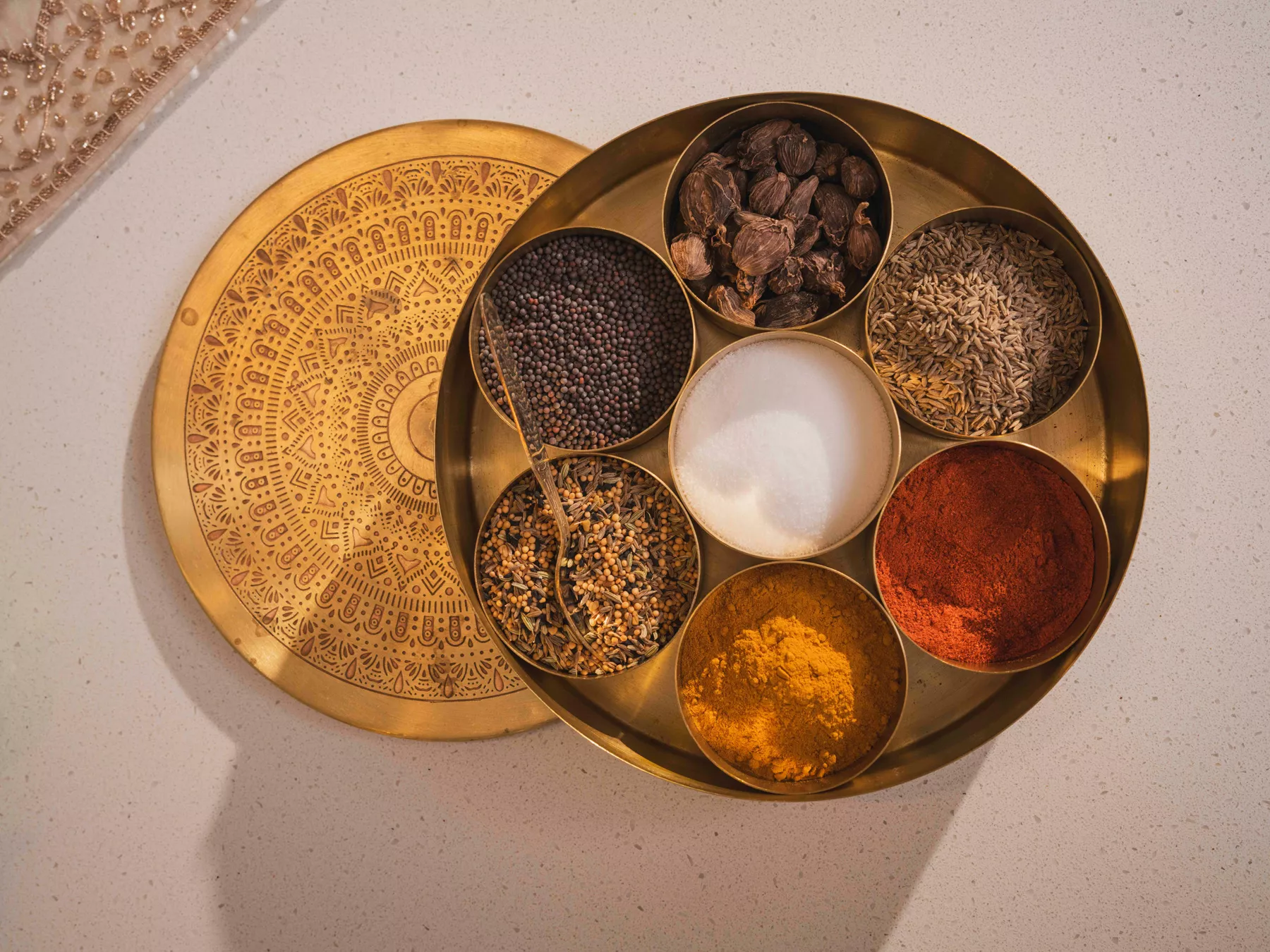
The butter chicken marinade begins with a customizable tandoori masala, in this case consisting of, clockwise from top: black cardamom; cumin; chili powder; turmeric; a mix of coriander, fennel and other spices; mustard seeds; and salt, center.
Like many people of Indian descent living across a diaspora that spans continents and centuries—nearly 35 million of us worldwide—I know surprisingly little of India itself.
My father was the grandson of an indentured laborer brought from the Punjab to the Caribbean island of Trinidad more than 150 years ago to cut sugar cane on an English plantation. I grew up identifying myself, at least partially, as Indian, and believing that Trinidad’s Indian foodways had followed a straight line from the subcontinent.
Once I got older, I realized that Trinidadian food is an intricate braid of Indian, African, indigenous Caribbean, Spanish, French, Syrian and Chinese influences. Authentic to Trinidad, yes. But to India? Not exactly.
I tasted what I considered “authentic” Indian food in restaurants in my 20s, and it was a revelation. Among many dishes that dazzled me, one quickly became an obsession: butter chicken. Tender pieces of chicken, cooked in a creamy, tomato-based sauce, layered with aromatics and warmth, it is the sort of dish that coaxes pleasure out of even the spice averse. And I am hardly alone in my reverence: Of all the Indian dishes that have traveled the world, none is more beloved, or recognizable, than butter chicken.
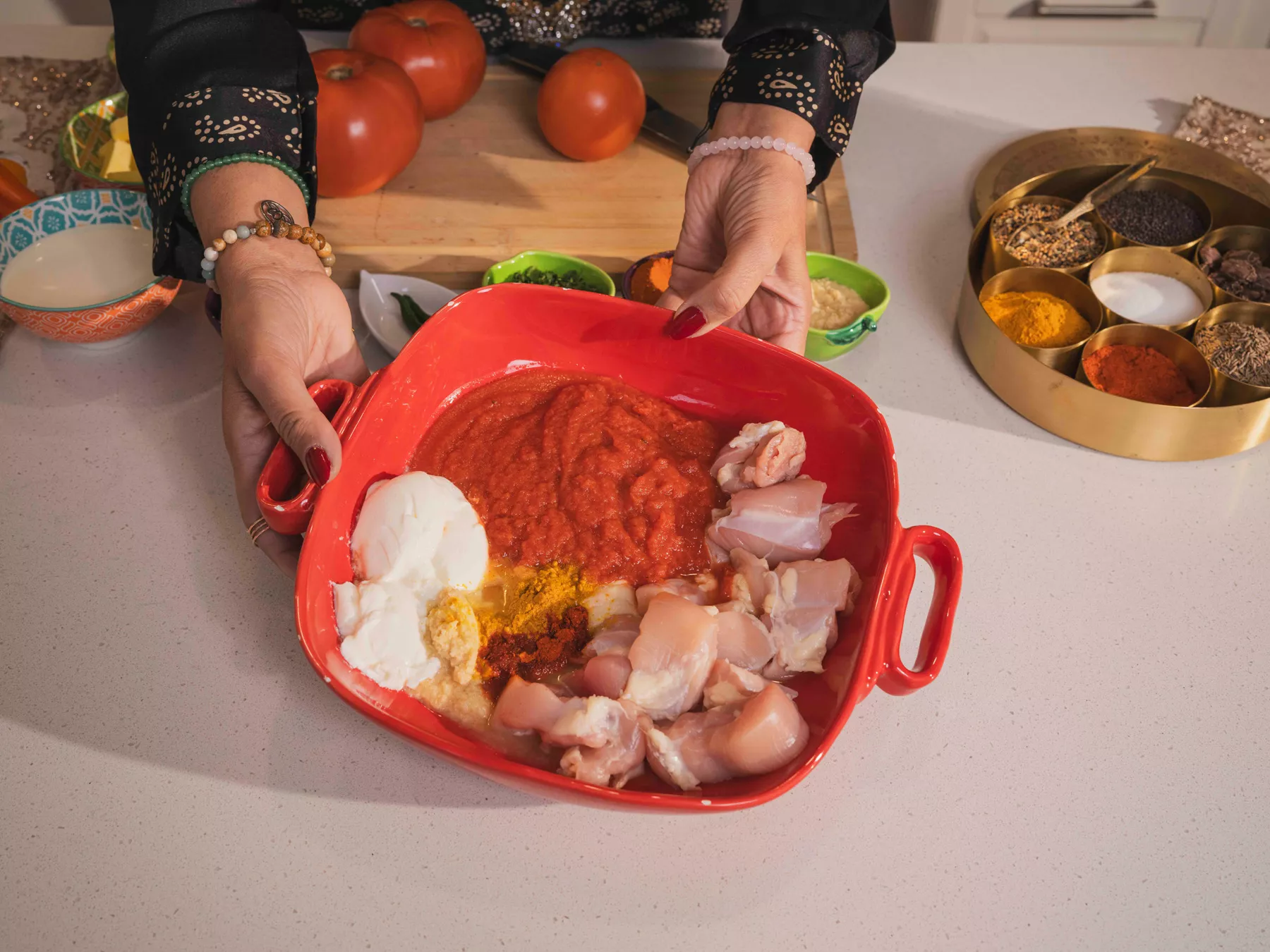
Strained yogurt, spices, tomato puree, salt, lemon juice and butter make up the marinade that is poured over the chicken pieces before roasting.
Food historians trace its invention to the legendary Moti Mahal restaurant in Old Delhi. There, Kundan Lal Gujral—one of the many Punjabi Hindu chefs displaced from Peshawar during the violent upheaval of Partition—combined leftover tandoori chicken with a buttery tomato gravy to keep it from drying out. The accidental innovation became the restaurant’s signature, anchoring a trio that would define post-Partition Punjabi cuisine: butter chicken, the lentil dish known as dal makhani and the flatbread staple tandoori naan. As migrants carried these flavors across oceans, murgh makhani traveled with them, arriving in London, Toronto and New York, where the name “butter chicken” took hold by the 1970s.
Like the millions of butter chicken lovers worldwide, I am enamored of the dish. Given my cultural heritage, it seemed silly not to learn how to make it at home. With this in mind, I sought out my friend, the celebrated food writer and novelist Monica Saigal (formerly Monica Bhide). A trained engineer turned pioneering voice in digital food writing, she helped shape early online food communities long before “food blog” became a household phrase.
I’ve been lucky enough to be a guest at Monica’s table many a time—and to experience her butter chicken, her signature dish. It is cooked, always, with abundant love. She has even centered two books around it: Karma and the Art of Butter Chicken, her 2016 novel about a young chef raising money for his soup kitchen by entering a national TV cooking contest, and Papa’s Butter Chicken, a 2024 picture book inspired by her childhood in Bahrain, where her father, Dina Saigal, worked as an engineer. In its pages, her father’s butter chicken becomes an event, bringing family and friends to the table in joyful anticipation.
When Monica agreed to teach me her method, I arrived with labneh, my favorite strained yogurt, to add to the marinade, though Greek yogurt is often used. “If you can leave the chicken in the marinade for longer than an hour—even overnight—do it,” she advised as we whisked yogurt with ginger, garlic, tandoori masala, tomato puree, lemon juice and melted butter. “It will tenderize the meat even more and help it absorb the spices for a richer taste.”
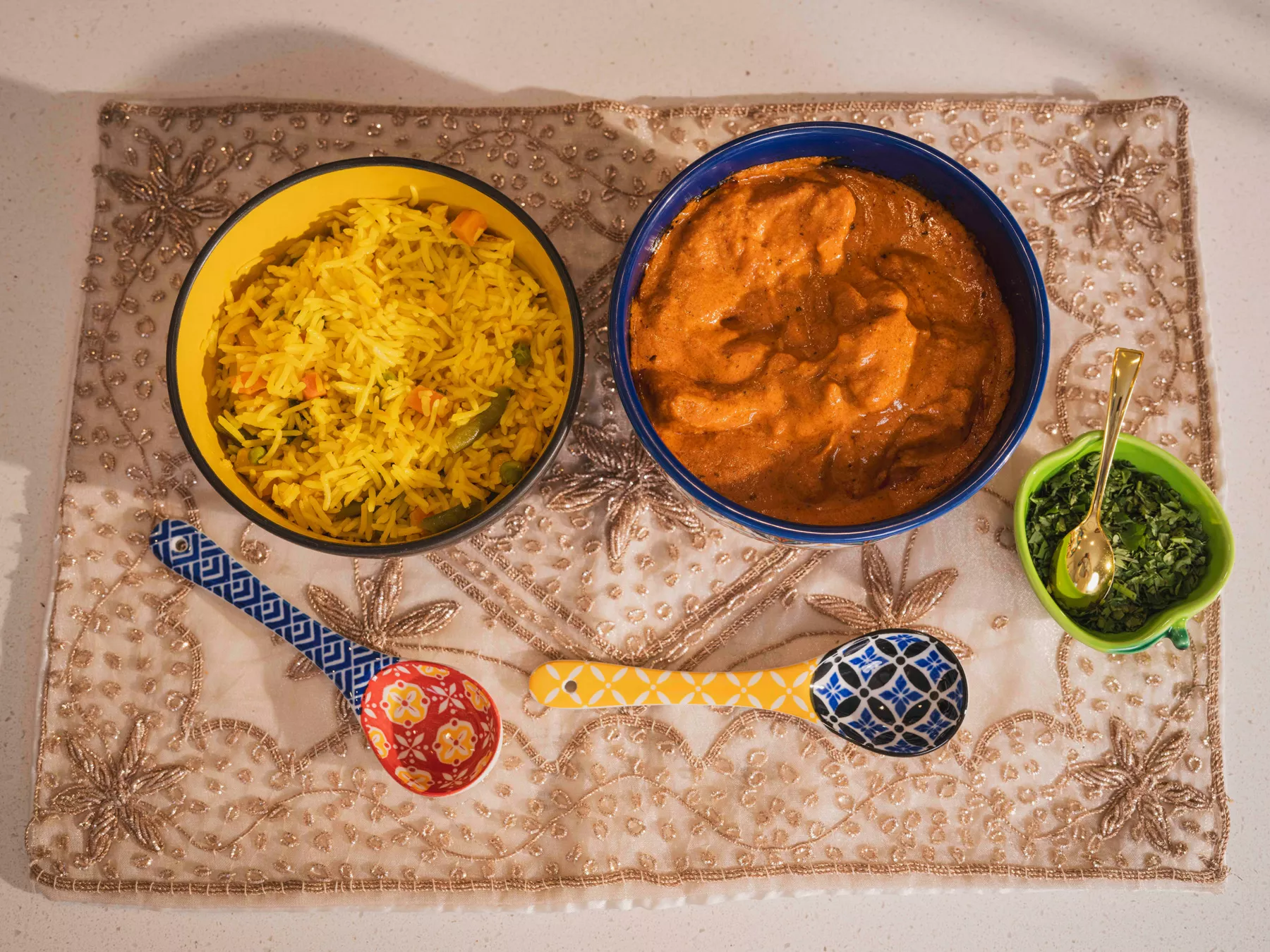
Saffron basmati rice accompanies the finished butter chicken.
After a couple of hours of enjoying tea and Indian sweets, we slid the marinated chicken in a hot oven.
Within 10 minutes, the kitchen filled with warm notes of cinnamon and coriander, an aromatic promise of what was to come.
While the chicken roasted, we built the sauce: sautéing garlic and ginger in butter, then stirring in summer-ripe tomatoes until they slumped into a vivid red mash. When the chicken emerged from the oven, my instinct as a chef was to strain the cooking juices and to remove any remaining bits of baked yogurt clinging to the pan, but Monica gently and firmly course-corrected me on this point.
“Everything that is left in the roasting pan—the chicken’s juices, yogurt bits—should all be part of the final sauce,” she said. “It’s what gives the sauce its magic.”
Then came the final flourish: dried fenugreek leaves, toasted lightly and rubbed between our palms over the pot. While a familiar addition in my own dishes and popular in many Middle Eastern and Indian recipes, I had never used it this way. The moment the herb hit the sauce, the unmistakable perfume of butter chicken bloomed around us.
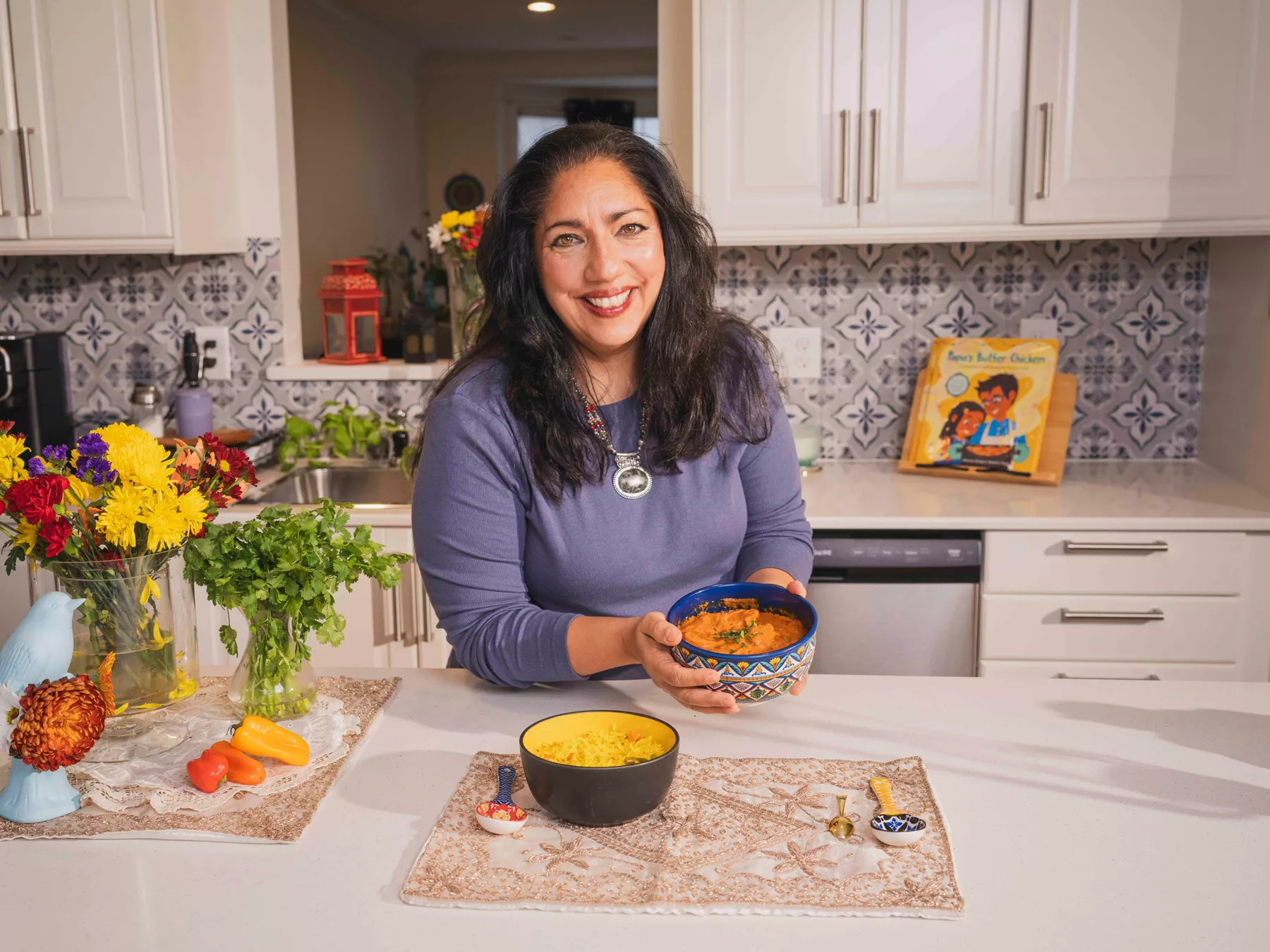
Writer and food historian Ramin Ganeshram connects to her Indian heritage over butter chicken, which she calls her “obsession.”
With the first taste of our creation, I realized that the butter chicken I made under Monica’s guidance was better than any I’d ever had in a restaurant. Was it because of my friend’s skill in the kitchen? Without a doubt. But more than that, by incorporating me into the generations of her own family tradition, she gave me a link to those of my own, now long forgotten.
As we cooked, Monica’s kitchen held layers of memory—hers of home and family; mine of a homeland centuries removed; and ours together of an afternoon shaped by food, friendship and the stories recipes carry long after the cooking ends.
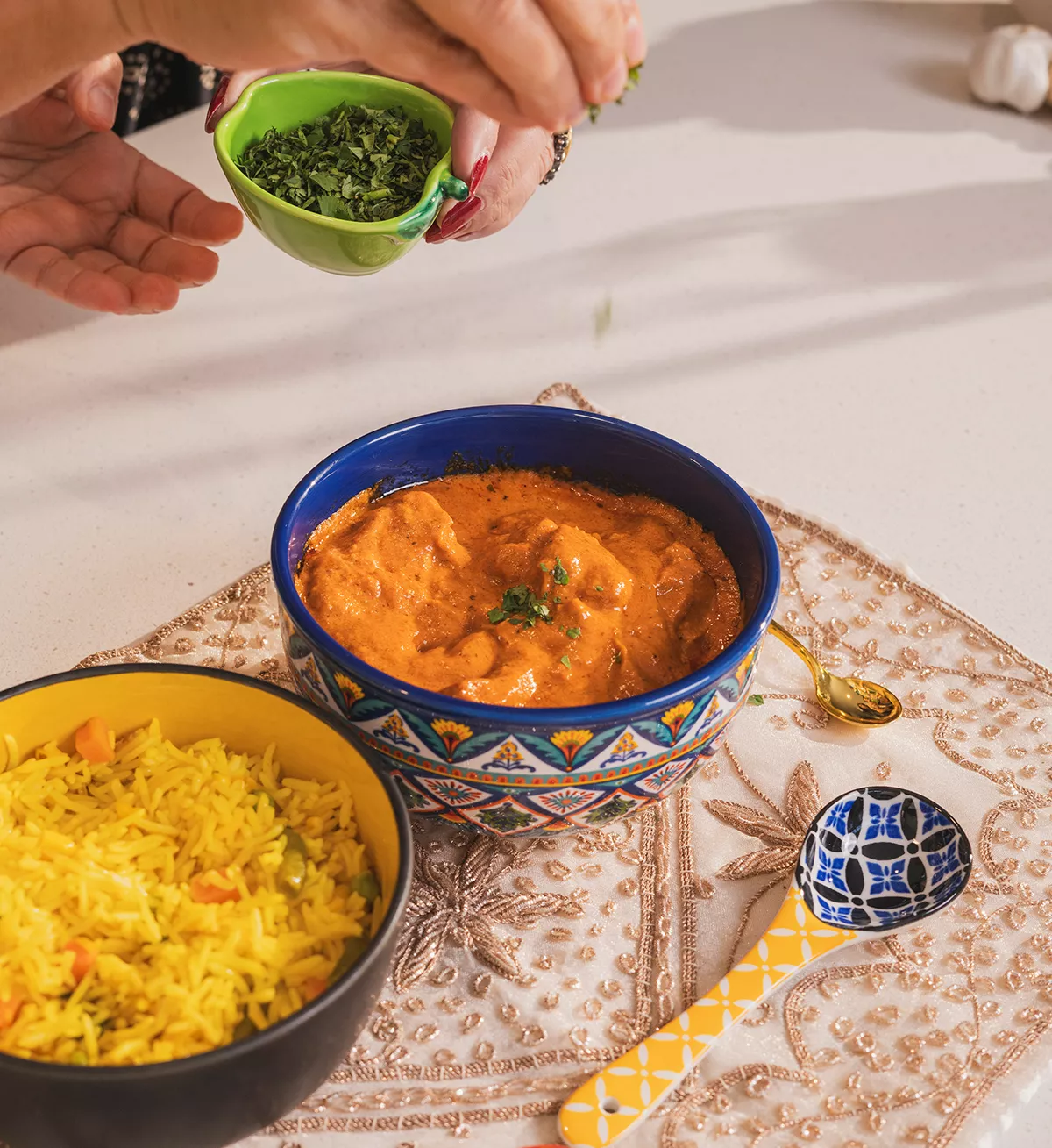
Recipe
Monica Saigal’s Butter Chicken
Makes 4 to 5 servings
For the chicken
- 1 cup whole-milk Greek yogurt
- 1 tablespoon peeled, grated ginger
- 1 tablespoon peeled, minced garlic
- 2 tablespoons Indian tandoori masala (Saigal recommends Shan brand)
- ¼ cup canned tomato puree
- Salt, to taste
- 2 tablespoons fresh lemon juice
- 2 tablespoons melted butter or ghee (clarified butter)
- 8 skinless, bone-in chicken thighs (make slits in the chicken to allow the marinade to penetrate)
For the sauce
- 4 tablespoons butter
- 1 tablespoon peeled, grated ginger
- 1 tablespoon peeled, minced garlic
- 2 medium tomatoes, finely chopped
- 1 teaspoon dried fenugreek leaves
- Salt, to taste
- 1 serrano chile, finely minced
- ½ cup heavy cream
One taste of this dish reveals why this relatively young entry in the canon of South Asian cuisine has become one of the world’s most popular Indian restaurant dishes. Its ingredients are deceptively simple—and accessible to cooks everywhere. But, as I discovered, mastering the dish requires a few key techniques: Use strained yogurt, don’t discard the cooked marinade, and toast the fenugreek leaves before adding.
Use 2 cups of tomato puree if ripe, fresh tomatoes aren’t available, but avoid tomato paste, which can overpower the sauce. Serve with steamed basmati rice or plain naan so the butter chicken remains the star.
Method
Step one: Prepare the marinade
We start by mixing the yogurt, ginger, garlic, Indian tandoori masala, tomato puree, salt, lemon juice and butter in a large bowl. Next we add the chicken and mix well before covering and refrigerating for at least an hour.
Step two: Roast the chicken
With the oven preheated to 400ºF (200ºC), we place the chicken in a single layer in a roasting pan. We pour all remaining marinade over the chicken and roast for 20 to 30 minutes, or until the chicken is cooked and its juices run clear.
We remove the chicken from the oven and place all the pieces on a platter. Be sure to reserve the cooked marinade in a bowl for the sauce.
Step three: Make the sauce
In a large skillet, we heat the butter over medium heat and add the ginger and garlic. This just needs a quick sauté of about 30 seconds.
Next we add the tomatoes and cook, stirring constantly. Using the back of a spatula, we mash the tomatoes as we go until they are completely mashed and soft, about 10 minutes.
We then add the reserved marinade—sparing nothing from the roasting pan—and stir well.
In a small dry skillet over medium heat, we add the fenugreek leaves. By swirling the pan to move the leaves around, they don’t burn. We remove from pan from the heat and allow it to cool.
Next we add the salt, chile pepper and chicken and mix well. Rubbing the cooled fenugreek leaves between our palms into the pan releases an aroma that instantly transports us to an Indian restaurant. We let the mix simmer for about 10 minutes.
Step four: Finishing the dish
Finally, we add the cream and simmer for another minute. After stirring well, we enjoy our options of serving the dish hot with steamed basmati rice or plain naan, satisfied that our mission to rekindle our heritage is complete.
About the Author

Greg Kahn
Greg Kahn is an award-winning American documentary and fine art photographer. Kahn’s photography centers on the forces that shape personal and cultural identity. His work has been exhibited in major galleries and museums around the world and published in The New York Times Magazine, National Geographic and British Vogue, among others.

Ramin Ganeshram
Ramin Ganeshram is an award-winning journalist and culinary historian focused on colonial and early-19th-century history of the United States and the Caribbean. She is also a professionally trained chef who has authored cookbooks including Sweet Hands: Island Cooking From Trinidad & Tobago and Saffron: A Global History and is working on various forthcoming books.
You may also be interested in...
Trace Moruga Hill Rice's Cultural Path to Trinidad
Food
Moruga hill rice is a nutritious dry-land red rice grown in Trinidad whose history dates to Merikin settlers.
In Diverse Nigeria, a Simple Side Dish Holds Universal Appeal
Food
The starchy side dish can be made from a wide variety of grains or vegetables, and its appearance is as humble as its appeal is universal.
Couscous for Lunch or Dinner: Algerian Pasta Soup With Labneh
Food
The berkoukes are giant couscous balls cooked into soups and stews, with little differentiation across North Africa and the Levant.