America at 250: The Eastern Foods the Nation Has Always Loved
As the United States marks the 250th anniversary of its independence from Great Britain on July 4, the foods that filled the tables of the Founding Fathers—the late-18th-century statesmen who were most influential in the new country’s creation—are a reminder that elite households relied on ingredients carried through trade routes connecting the Mediterranean, Africa, Asia and regions now known as the Middle East.
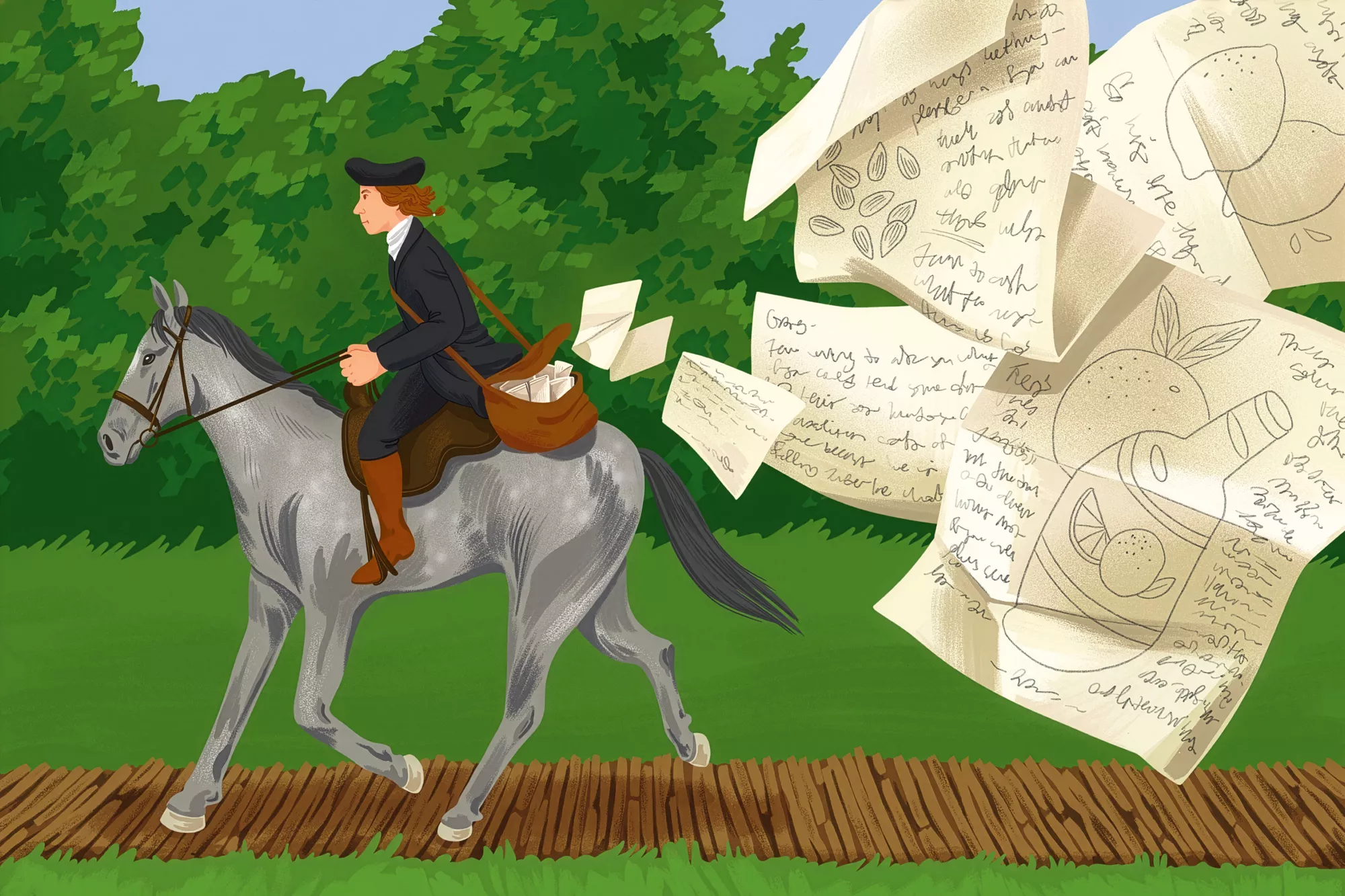
In 1781, during the final years of the American Revolutionary War, Martha Mortier-the wife of an army paymaster in British-occupied Manhattan-learned that Gen. George Washington's wife, Martha, had fallen ill and sent a gift of lemons, oranges, limes, tamarind and orgeat, a syrup made from almonds and orange flower water.
The gesture revealed something often forgotten about early America. As the United States marks the 250th anniversary of its independence from Great Britain on July 4, the foods that filled the tables of the Founding Fathers-the late-18th-century statesmen who were most influential in the new country's creation-are a reminder that even before the nation was founded, elite households relied on ingredients carried through trade routes connecting the Mediterranean, Africa, Asia and regions now known as the Middle East.
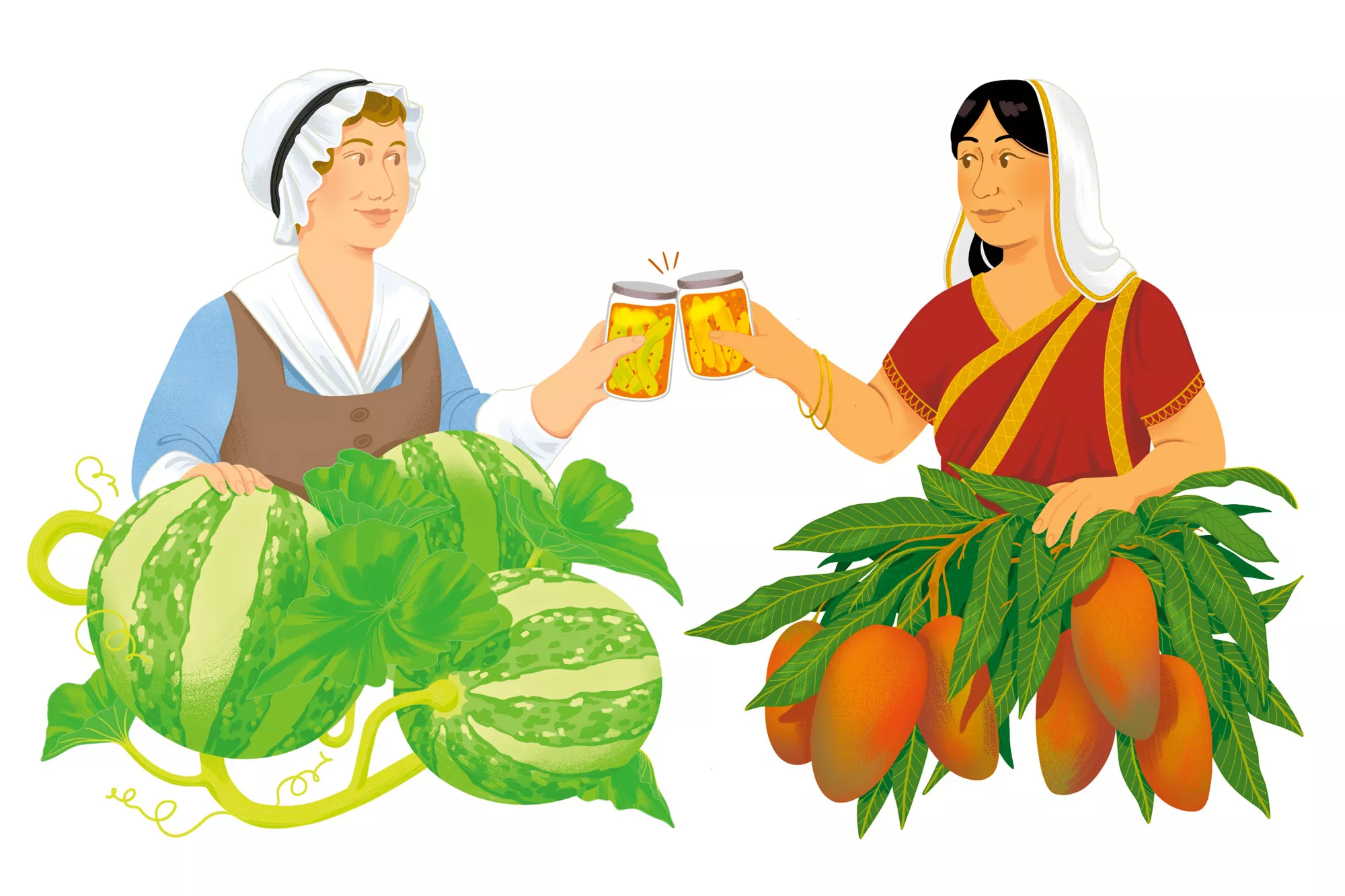
Mangoes and melons-and the South Asian tradition of pickling them-were part of the culinary exchange with early America. Top A British Army paymaster's wife sent a letter and citrus fruits, medicinal syrup and tamarind to Martha Washington, wife of American Gen. George Washington, as a goodwill gesture.
In my research as a culinary historian of early America, I've found that many foods recently introduced to American cuisine were already staples of the more affluent kitchens during the founding era.
The misconception persists because some of these ingredients only recently became accessible to mainstream America. Ten years ago, mangoes were not an everyday item in the produce section of a grocery store. Fresh ginger was unlikely to be found 15 years ago. When I was a child, cooking with olive oil-or even being able to buy olive oil in anything but the smallest bottle was unheard of. Only a campaign promoting it as a heart-healthful oil in the late 1980s helped popularize it among American consumers. Even then, the oil was tied to the Mediterranean diet-a sophisticated form of eating that promotes maximum health.
In the last decades of the 20th century and first two of the 21st, the "food as culture" craze ushered in an era of beautifully photographed, coffee-table-style cookbooks. It has also brought televised food programming and, more recently, digital streaming content featuring gorgeously crafted eats-very often focused on "nontraditional" American ingredients. Curry, tamarind, rose water and saffron are promoted as "exotic" and retain an association with recent newcomers to the US.
But historical records tell a different story. The foods of the East are key characters in the story of the creation of the American republic. I've found that the Founding Fathers' palates were more adventurous than even modern Americans of comparable wealth and status. Washington's pantry, for example, demonstrated an appreciation for the flavors of the present-day Middle East, Asia and Africa. Wealthy enough to import food from around the world, America's first president enjoyed a larder that included pickled mangoes from India, creamy Mediterranean almonds, woodsy pistachios in the shell and delicately flavored virgin olive oil-then commonly called "sweet oil."
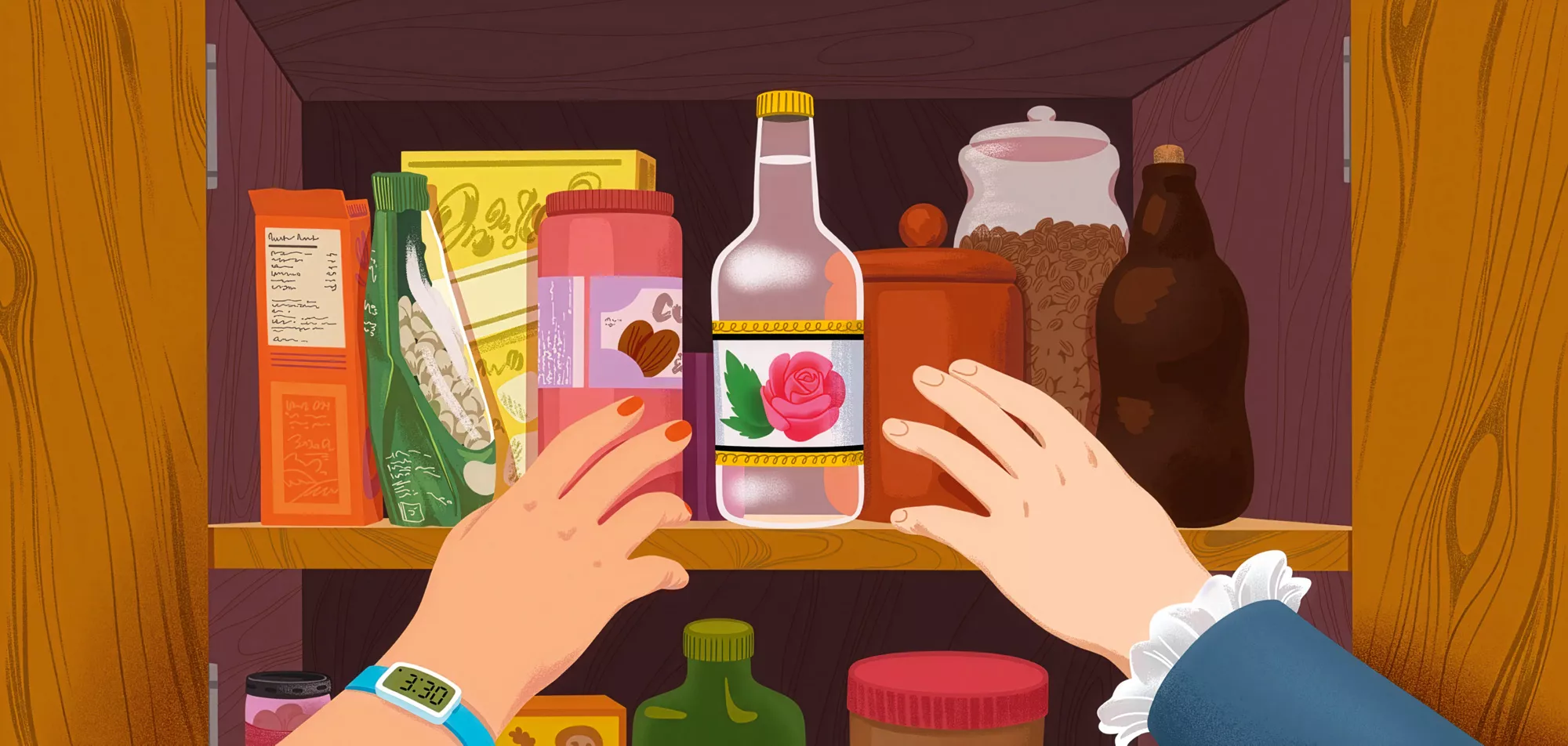
Some of the same ingredients found in today's pantry were used in the mid-19th century.
"It's a fallacy that the foods of 250 years ago were somehow simpler than foods eaten today and, at the same time, rather monotonous and bland," said Mary V. Thompson, research historian emerita at George Washington's Mount Vernon in Northern Virginia, just outside the capital city that now bears his name, and an expert on foodways at the Virginia estate. "That might have been true of people on the lower rungs of the socioeconomic ladder who lacked the money to import foods and time to prepare elaborate meals, but it was hardly the case for the wealthier members of society."
I discovered that Washington's food-supply ledgers while he was president in Philadelphia (the U.S. capital in the 1790s) feature specific entries for "Foreign Fruit" and "Foreign Nuts," and citrus was in the regular rotation. Mortier's gift of tamarind was not a new flavor for the first couple after all. Washington was fond of its tart flavor and consumed it in all the ways common to his time: as a sour agent in fruit chutneys, in stews and sauces, and as a refreshing drink, flavored with rose water, like the tamr hindi popular in the Middle East during Ramadan. The preparation likely traveled through longstanding Atlantic food exchanges from Africa, where tamarind is a native tree.
Another key flavor in Washington and his contemporaries' kitchens was rose water (mā al-ward in Arabic, gülsuyu in Turkish, golab in Persian and gulab jal in Hindi), which was used in desserts the way modern-day bakers in the West use vanilla.
The flavoring was used in pound cake, an almond "macaroone" similar to Moroccan ghriba or Iraqi hadji bada, and various puddings, including one made of boiled carrots and flavored with cinnamon, calling to mind Indian carrot halwa recipes. Even American apple pie was flavored at the time with rose water.
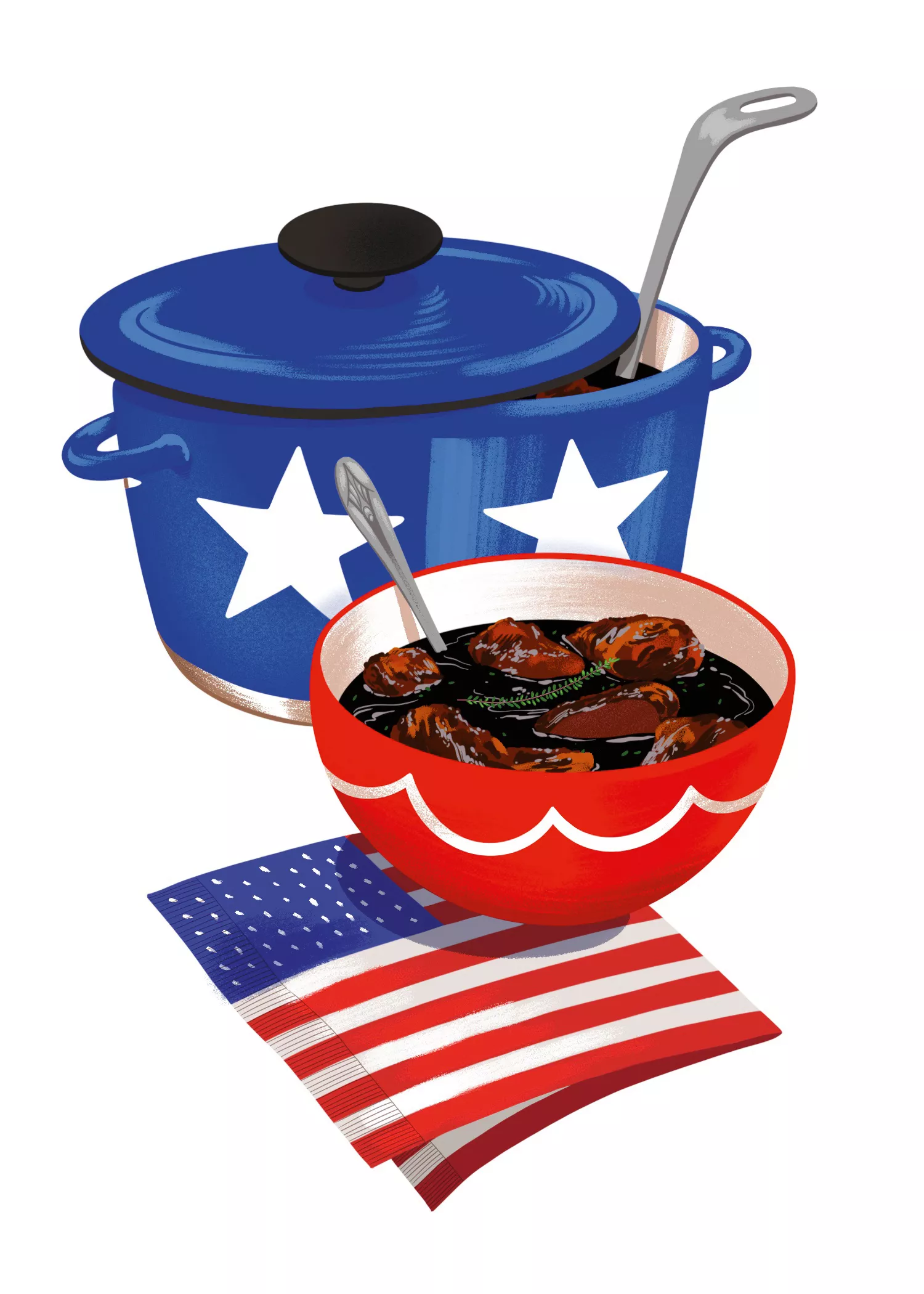
The spicy beef stew known as pepperpot that was popular in 18th-century Philadelphia likely drew influence from Caribbean and African cooking traditions.
Re-creating Early American Foods Today
Chef Justin Cherry is the owner of Half Crown Bakehouse, a mobile bakery based in South Carolina that employs a trailered beehive oven, authentic to the 18th century, which produces authentic colonial and early American baked goods. Cherry is also the baker in residence at George Washington's Mount Vernon. He says he tries to stay as true as possible to baked-goods recipes of America's founding era but has to adapt for modern tastes that are not as accustomed to Eastern flavors.
"I have to account for the fact that the palate has evolved over 250 years, so I educate folks on what they are about to taste and why they are tasting certain flavors. It is staying true to the authenticity but getting the mind ready for what the mouth is about to taste," said Cherry.
Recipe
Shrewsbury Cakes
Makes about 25 Cakes
- 1 cup / 225g butter, softened
- 3 cups / 425g all-purpose or soft white wheat flour
- ¾ cup / 176g sugar
- 1 teaspoon mace
- 1 tablespoon toasted caraway seeds
- 1 egg, beaten
- 1 teaspoon rose water
Shrewsbury Biscuits were a common English shortbread cookie popular in North America. Justin Cherry, of Half Crown Bakehouse, a historical baker and baker in residence at George Washington’s Mount Vernon, serves this version which that he adapted from Elizabeth Raffald, an 18th-century British cookbook author. Carraway seeds and rose water were common flavorings in baked goods of the era, although Mr. Cherry says he often cuts back on 18th-century quantities since the flavor profiles can taste unusual to modern American palates. To toast the carraway seeds, place them in a dry skillet over medium-low heat and swirl constantly. Remove them from the heat as soon as they begin to release their aroma, about 1 to 2 minutes. If desired, lightly crush the seeds with a mortar and pestle to release more flavor.
- Cream the butter the butter in a large mixing bowl of a stand mixer, or by hand until fluffy, about 2 minutes. In a separate bowl, whisk together the flour, sugar, mace and carraway seeds by hand.
- Add the flour mix into the creamed butter while mixing on low. Slowly add the egg and rose water until the mixture forms into a thick dough.
- Scrape the dough to form a ball, and cover in plastic wrap and refrigerate for 1 hour.
- Preheat oven to 350 degrees Fahrenheit (177 degrees Celsius).
- Remove the dough from the refrigerator and place on a clean, well-floured surface. Roll the dough out evenly to about ¼ inch thickness.
- Use a round or fluted round 2-inch-wide cookie cutter and place each cookie on a baking sheet lined with parchment. Bake for 8-10 minutes or until lightly browned around the edges. Remove and cool before serving with tea or coffee.
+++
By Justin Cherry, Half Crown Bakehouse
Adapted by Ramin Ganeshram
Early Americans' passion for Eastern foods wasn't limited to sweets. Spicy pickles were a favorite of Thomas Jefferson, who wrote the Declaration of Independence and served as the nation's third president, and, as with Washington before him, included spicy, salty pickled mangoes from India and the Caribbean. Even in the early 18th century, recipes substituting young melons, soaking them in a saltwater brine then a mixture of sugar, vinegar, spices and hot peppers allowed common folk to approximate the delicacy.
On the other hand, the orange flower water equally used in confections like baklava and basbousa was, in the Americas, often the basis for medicinal syrups, called capaillaire or orgeat, and mixed at home by those who could afford them. I found that among orange flower water's aficionados was the American scientist and statesman Benjamin Franklin.
By the time the Continental Congress voted to secede the 13 North American colonies from the British in 1776, the foods of the East had long been commonplace for some and aspirational for others.
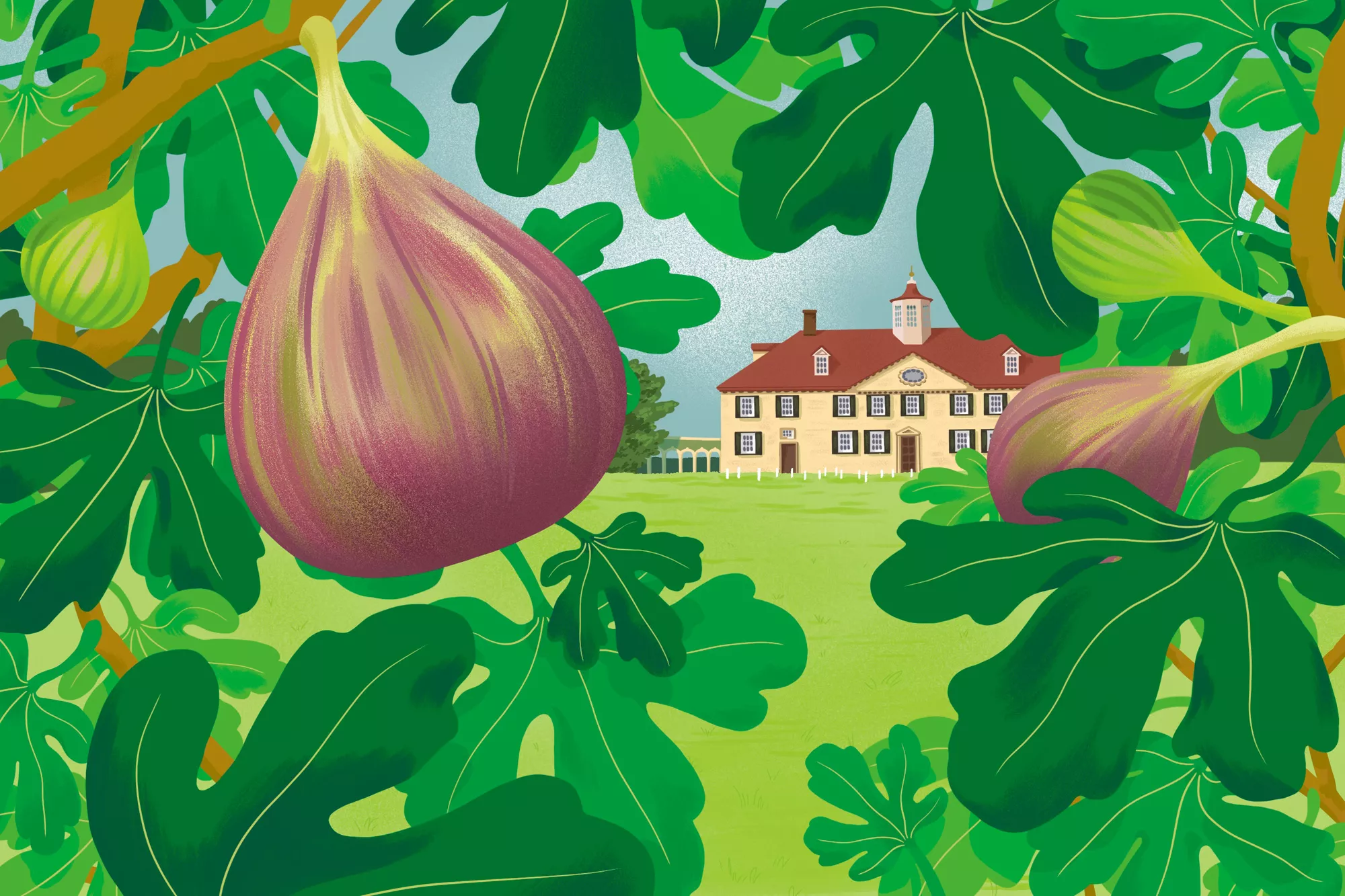
George Washington's Mount Vernon greenhouse grew figs, which are native to North Africa, Türkiye and northern India.
Historical Trade, American Style
The Europeans who ultimately colonized the Americas developed their taste for these flavors many generations before they set foot on the other side of the world. It was the medieval spice routes that brought spices like cinnamon, nutmeg, anise and saffron, along with nuts like pistachios and almonds, and dried fruits like plums, peaches, raisins and dates, into their sphere. Such costly imports became markers of celebration and status reserved for feast days, weddings and religious festivals.
According to a 1945 article in the academic journal William and Mary Quarterly, "The Import Trade of Colonial Virginia," this culture of cuisine came over on the ships to Virginia, Massachusetts and New York. Ingredients moved through Mediterranean and British trade networks before reaching American ports, where food exchange in the form of sugarcane crop first transplanted from India and its byproducts of molasses and rum were building dizzying fortunes by the 17th century in Jamaica and Barbados. Yet even for the wealthy planters who were rapidly becoming the richest men in the world, the import system proved costly. The solution was all around them: the fertile soils of the Caribbean. In less than a hundred years, all manner of produce and spice from the East had been transplanted and was thriving: tamarind, bananas, nutmeg, cinnamon, mangoes, coffee, pomegranates, lemons, oranges and more. In temperate North American climes, items like rhubarb and quince grew well, as they had in parts of Europe. Barberries were transplanted in the North to be preserved in jams and syrups flavored with rose water. Washington even grew figs in his greenhouse at Mount Vernon.
But some things could not be uprooted from the Old World to the New; tea, almonds and curry powder still had to be imported at high costs. When British tariffs to pay for the French and Indian War (the North American theater of the wider Seven Years War of 1756-1763) began to impact access to these and other goods, the colonists decided it was time to throw off the yoke of their British monarch.

President Thomas Jefferson hosted an iftar feast in 1806 for Tunisian envoy Sulemein Mellimelli.
Culinary Diplomacy
Within one year of the signing of the Declaration of Independence, the Sultanate of Morocco was the first country to recognize the United States as a sovereign nation. In 1786, it formalized a treaty of peace and friendship, but the relationship was fraught because of conflicts between American trading ships and pirates off the coast of North Africa in the early 19th century.
Among then-President Jefferson's diplomatic efforts was an iftar feast in December 1806 at the White House with the Tunisian envoy Sulemein Mellimelli and his entourage. Jefferson, who had demonstrated an intellectual curiosity about Islam from youth, moved the mealtime from his customary 3:30 p.m. to sunset to accommodate his Muslim guests.
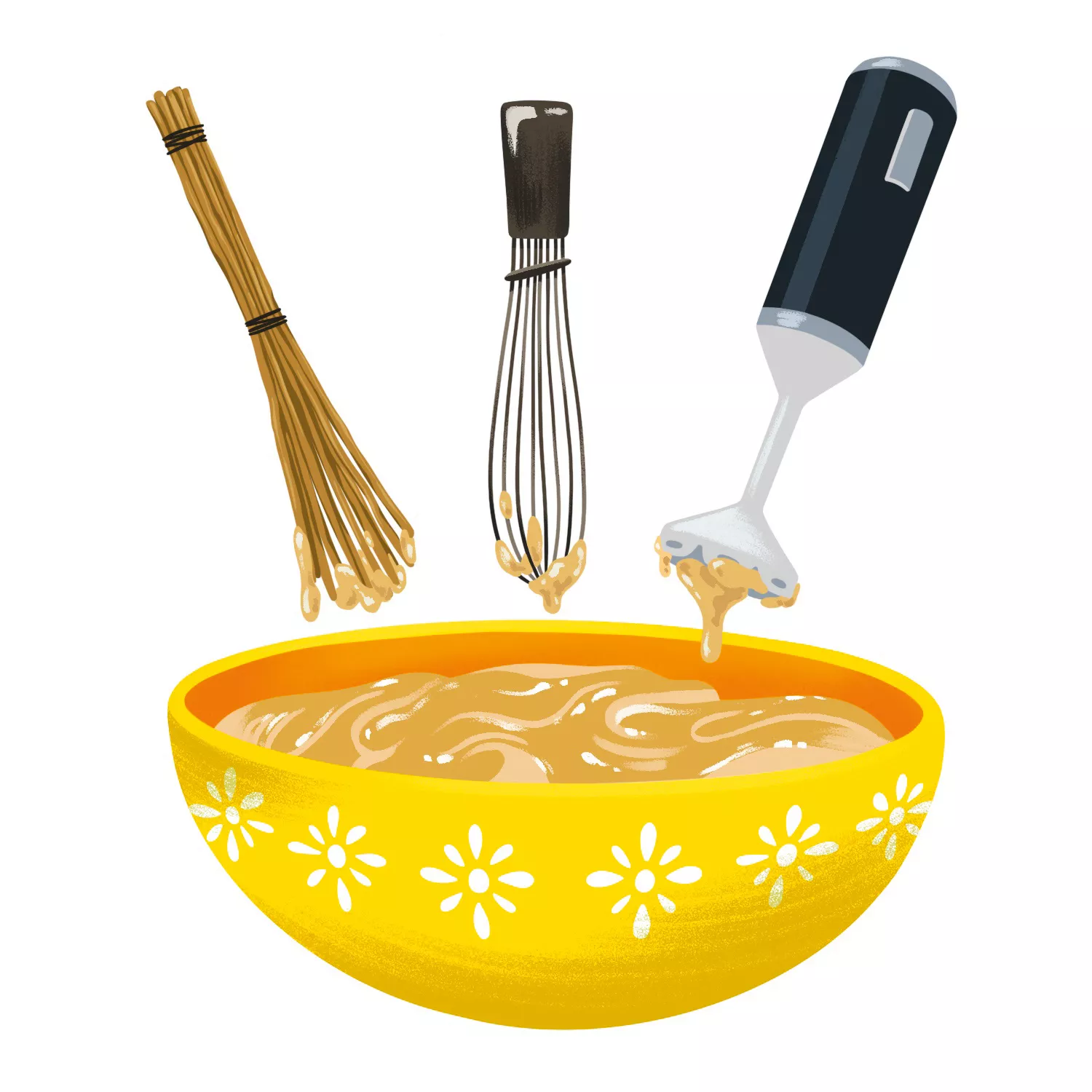
It is easy to imagine old and new whisks preparing dishes for early and modern Americans alike.
While we don't know precisely what was served, according to The Founding Foodies by food historian Dave DeWitt, Jefferson's purchasing log details what his staff bought ahead of the dinner. The list included sturgeon, watermelon, beef, mutton, olives, olive oil, three kinds of almonds, seedless raisins, figs, prunes and more. Much would have been familiar to Mellimelli: rose water in the desserts, salads dressed with olive oil and chutneys flavored with tamarind.
Jefferson became a gourmand who developed his fine tastes not only while serving in Paris as the American ambassador to France prior to his presidency but also through interaction with French Caribbean people trading in Virginia and Maryland, according to Leni Sorensen, independent scholar and retired African American research historian at Thomas Jefferson's Monticello.
At his central Virginia estate, Jefferson cultivated a variety of produce and herbs, including pomegranate, eggplant-then still often considered ornamental-Spanish almonds and benne (sesame) seeds, which throughout the American South were baked into cookies similar to Middle Eastern barazek.
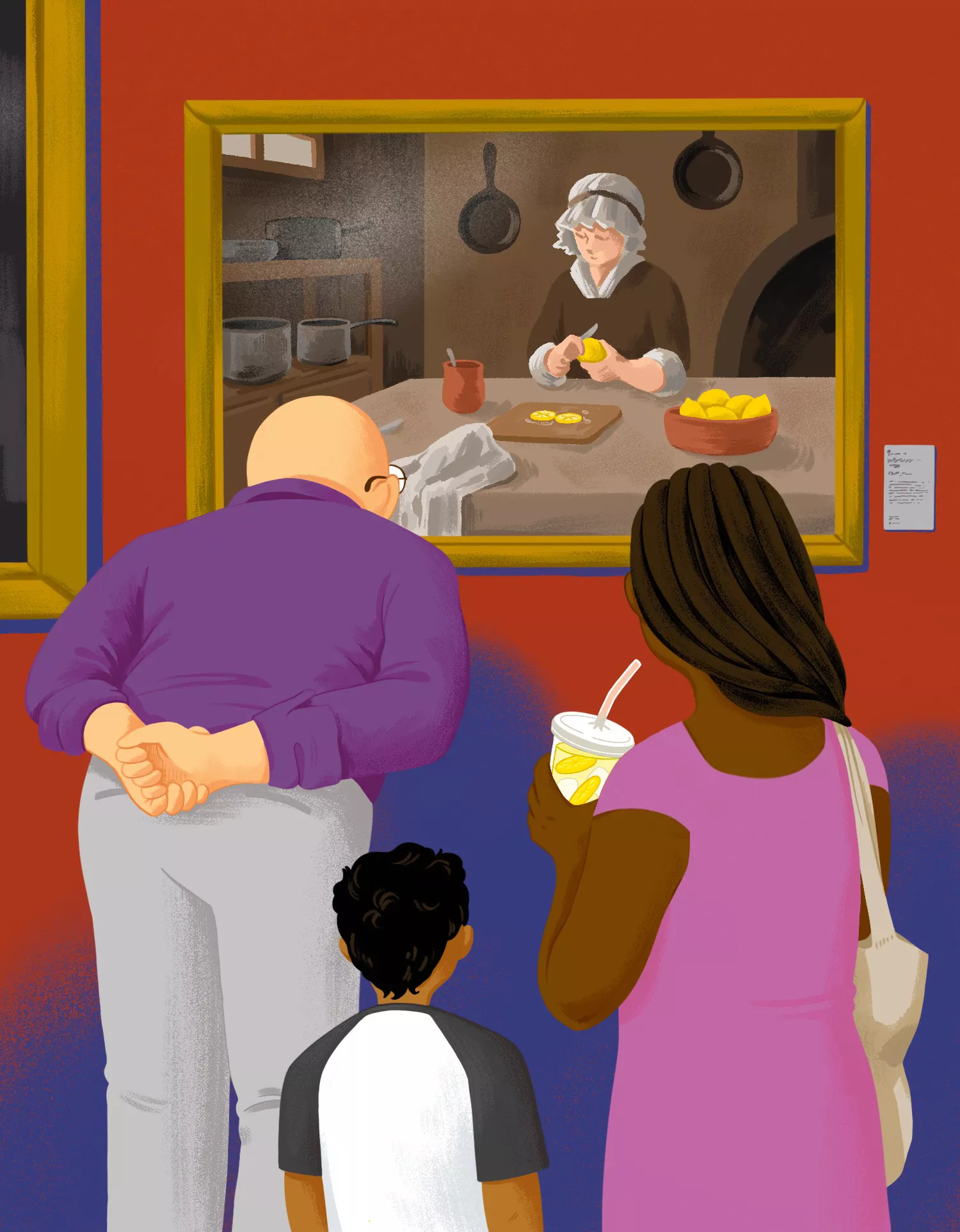
Similarly, today's lemonade aficionado perhaps enjoys the foodways of the lemon as much as a New World connoisseur enjoyed the Old World citrus fruit.
Eventually, rose water was distilled in North America and curry powder made locally.
Over generations, these ingredients were cultivated, prepared and adapted in American kitchens, where culinary traditions from Europe, Africa, the Caribbean and Asia continued to shape how they were enjoyed and consumed.
In 1824, Mary Randolph, a distant cousin of Jefferson, included two recipes for curry powder in her cookbook The Virginia House-Wife. "The book was published in 1824, but there is no doubt it was based on recipes being made in her household for far longer," said Sorenson. Randolph's recipes included turmeric, cumin and coriander imported from South Asia, along with nutmeg, mace and white ginger that may by then have been sourced from the Caribbean.
Recipe
Mary Randolph's Chicken Curry
Serves 4 to 6
- 1 3-pound / 1.3 kg chicken, cut into 8 pieces
- 1 tablespoon salt
- 8 ounces / 225g butter, cut into large pieces
- 2 large cloves of garlic
- 1 large onion, sliced
- 3 tablespoons curry powder (recipe follows)
- Juice of 1 lemon
- 1 bunch fresh parsley, minced, for garnish (if desired)
Mary Randolph was a member of an influential Virginia planter family with family connections to Thomas Jefferson and Martha Washington’s children by her first husband, Daniel Parke Custis, and her Randolph’s husband had political connections to George Washington. A celebrated hostess, Randolph opened a boarding house in Richmond, Virginia, after her husband’s fortunes declined. Utilizing the labor of enslaved people, the establishment quickly became known for its fine food, and Randolph wrote a cookbook called The Virginia House-wife or Methodical Cook, featuring 500 regional Southern recipes, in 1824. Among them was a recipe for “A Curry After the East Indian Manner.”
Curry had become popular in the early 18th century when officials from the British East India Company brought it to England, from where it eventually traveled to America. By the early 19th century, it was common for cooks to make versus import their own curry powders based on their preferred mix of spices.
While this recipe for chicken curry is adapted from Randolph’s cookbook, the volume also includes a recipe for catfish curry, and she regularly recommends adding a teaspoon of her curry powder to “season any made dish.” The following is Randolph’s original curry recipe, which calls for much more nutmeg and mace than modern versions. The recipe also calls for dried ginger, which had been milled locally in the North America since the 1600s. If this curry powder is not to your liking, substitute your favorite yellow curry powder.
- Put the chicken pieces in a Dutch oven and add the salt and enough water to just cover. Place the pot over medium-high heat and bring to a boil, then cover and reduce to a low simmer. Cook covered, skimming often until just tender, 30-40 minutes.
- Remove the chicken from the pot and let it cool enough to handle. Remove the skin and set aside. Strain the chicken cooking liquid through a fine mesh sieve and return to the pot. Reserve.
- Heat a large frying pan on medium and add the butter until it melts. Cook the butter for 1 to 2 minutes or until it begins to brown. Add the garlic and onions; fry for 5 to 6 minutes until they are browned.
- Add the chicken to the pan and sprinkle the curry powder over it. Mix well so that all the pieces are coated. Cook for 1 minute.
- Scrape the chicken mixture into the pot with the reserved liquid and continue to simmer, uncovered, on medium until the meat is tender enough to fall away from the bone and the sauce is thickened, about 30 minutes.
- Arrange in a deep platter and add a squeeze of fresh lemon over it. Garnish with parsley. Serve with rice.
Recipe
Mary Randolph's Curry Powder
- 1 ounce turmeric powder
- 1 ounce coriander seed
- 1 ounce cumin seed
- 1 ounce dried white ginger
- 1 ounce nutmeg
- 1 ounce mace
- 1 ounce cayenne pepper
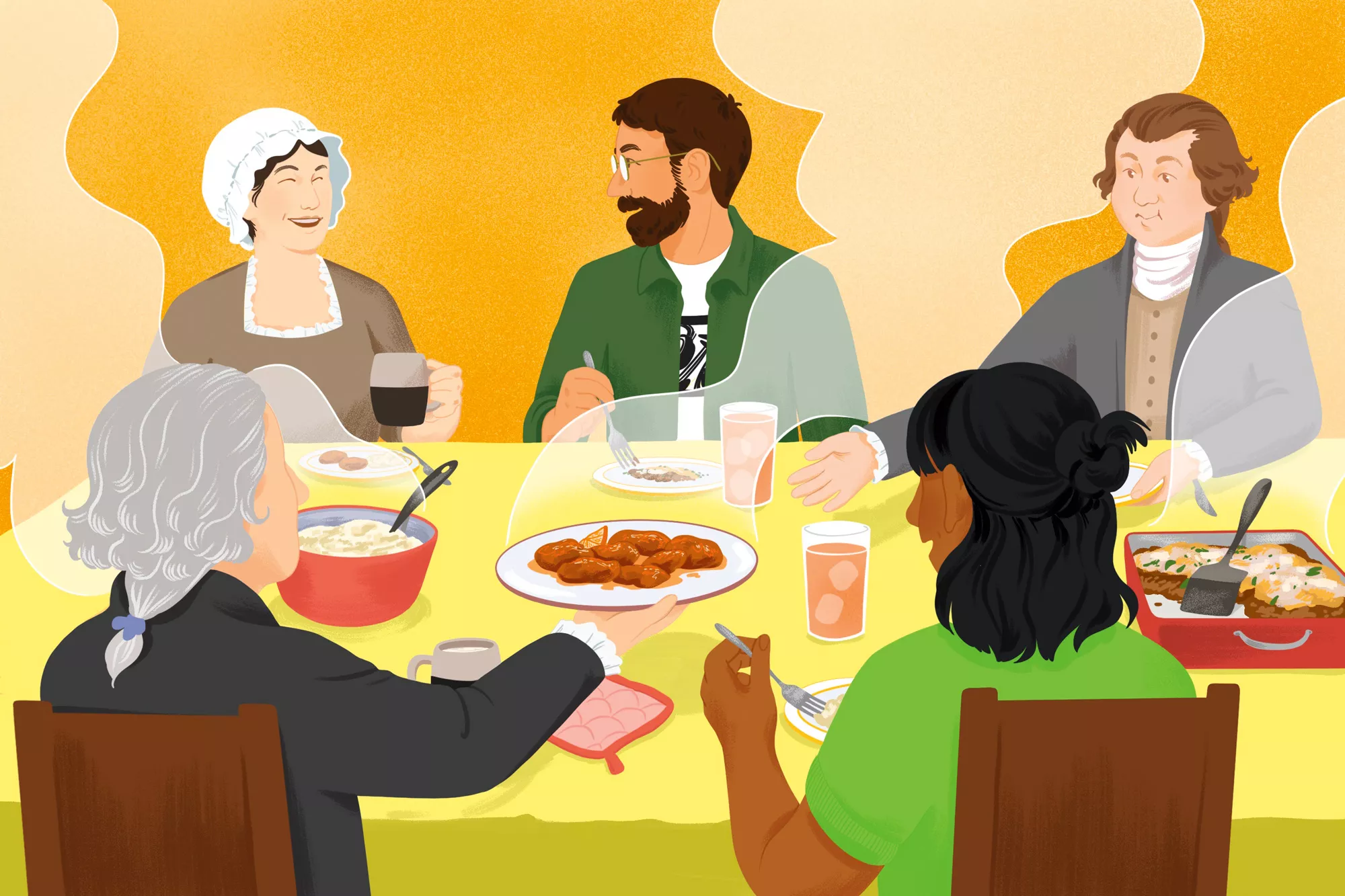
Though generations separate them, both early and modern Americans have enjoyed foods and foodways from the Mediterranean, Africa, Asia and the Middle East.
The stew called pepperpot is another example. The spicy beef dish popular in 18th-century Philadelphia likely drew influence from Caribbean cooking traditions layered with those of Africa. It featured cinnamon and cloves, key flavorings in the slow-cooked meat dishes of North Africa and parts of the Arab world. By this time, it may well have been seasoned with an all-purpose spice mix, unique to each household and generally called "kitchen pepper," featuring pepper, cinnamon, nutmeg and clove.
Equally enjoyed by the upper classes in quality inns and taverns as by common laborers at market stands, pepperpot is still eaten today in the Caribbean. With its rich spices of the Far East, hot chilies native to Central America and the Caribbean and ingredients shaped by centuries of Atlantic trade, the dish embodies the globally connected cuisine that took shape in early America.
About the Author

Ivy Johnson
Ivy Johnson is an illustrator and cartoonist based in Queens, New York. Her work has appeared in The New Yorker, The Toronto Star, The New York Times and MUBI Notebook.

Ramin Ganeshram
Ramin Ganeshram is an award-winning journalist and culinary historian focused on colonial and early-19th-century history of the United States and the Caribbean. She is also a professionally trained chef who has authored cookbooks including Sweet Hands: Island Cooking From Trinidad & Tobago and Saffron: A Global History and is working on various forthcoming books.
You may also be interested in...
Threads of Memory at the Venice Biennale
Arts
History
Culture
At the Venice Biennale, which runs through November 22, 2026, the Moroccan, French and Saudi national pavilions show how craft and shared memory can resist cultural erasure.
Want To Perk Up Carrot-Ginger Soup? Use African Spices
Food
Marie Kacouchia's recipe for a warm bowl of Creamy Carrot-Ginger Soup can be tailored with cacao, soumbala and chile powders.
From Sultan’s Kitchen to Delhi’s Streets: Ni‘matnāma Lives On
Food
A sultan’s 500-year-old cookbook still ripples across South Asia, from kitchens to street stalls to celebratory tables, preserving centuries of technique and taste.