
Spotlight on Photography: Navigating Guinea-Bissau's Rainy Season
Rainy season in Guinea-Bissau makes for a particularly challenging but also uniquely rewarding time of year to take pictures.
As someone who has been photographing in the West African country since 2008, I have developed a certain rhythm to creating images in public spaces. It involves a lot of walking and even more waiting.
During the June-to-October rainy season, the dirt turns to mud in the capital, Bissau. Potholes put me at near-constant risk of being splashed by a passing public transport. The one in this photo is the blue and yellow minibus known in Portuguese-based Guinea-Bissau Creole (Kriol) as a toca-toca, meaning “touch, touch,” because passengers tap or knock on a wall or window to signal the driver that they want to get off.
If I go out right before the rain hits—when the light is electric orange and the air is heavy—or right after the rain—when the drops of water have put a moody gray filter on everything—I can capture the essence of the rainy season in Bissau.
Here, I was walking just after a downpour in September 2025. The roads were still wet, and everyone was moving cautiously to avoid puddles. Buses moved more slowly than usual around the potholes, which had deepened. As the toca-toca pulled up in front of me, I lifted my camera and waved at the woman sitting at the window. She glanced at me and smiled before letting her mouth relax a bit. I snapped her, and the bus lurched back into motion, splashing muddy water onto the sidewalks.
You may also be interested in...

America at 250: The Eastern Foods the Nation Has Always Loved
Food
History
As the United States marks the 250th anniversary of its independence from Great Britain on July 4, the foods that filled the tables of the Founding Fathers—the late-18th-century statesmen who were most influential in the new country’s creation—are a reminder that elite households relied on ingredients carried through trade routes connecting the Mediterranean, Africa, Asia and regions now known as the Middle East.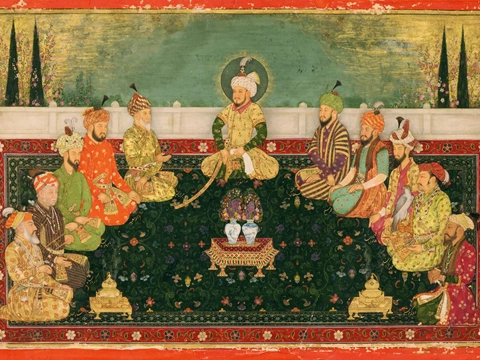
When India Sailed to Makkah: A 350-Year-Old Hajj Chronicle
The 17th-century Anīs al-Ḥujjāj, a Hajj travelogue newly translated into English, shows the forgotten maritime world that bound Mughal India to Islam's holiest city.
Meet the Gemologist Who Digs Into Nigeria's Little-Known Treasures
Engineer, gemologist and jeweler Lotanna Amina Okpukpara explores rural artisanal mining sites to promote gems in Nigeria.