Journalist Leyla Hamed Finds Her Voice in Football's Human Stories
Moroccan Spanish journalist Leyla Hamed has built a career telling the human stories inside football, the world's largest sport.
6 min
Written by Indlieb Farazi Saber | Photographs Courtesy of Leyla Hamed
As a girl playing football with her brother and other neighborhood boys on a street pitch in Benalmadena, near Málaga in southern Spain, Leyla Hamed learned rules that were unwritten but strict. She learned that participation wasn’t a right.
“You had to be really good or really into football for them to look your way and be like, ‘OK, you’re playing with us.’” Even then, acceptance was conditional. When she got the ball, the instruction was immediate: “Pass it. Quick, quick.” If she didn’t follow the boys’ rules, she risked being frozen out. “It was a constant challenge,” she says. “You kind of had to earn your place.”
That daily audition wasn’t only about gender. It was also about name, faith and how quickly a child learns the social maths of belonging. “Leyla Hamed, where are you from?” she remembers being asked, again and again. If she answered “Spain,” she was questioned; if she explained her parents were from Ceuta—a Spanish autonomous city bordering Morocco at the Strait of Gibraltar—she was told, effectively, that it didn’t count. “I felt helpless,” she says. “It doesn’t matter which answer I give them, I will never feel fully accepted.”
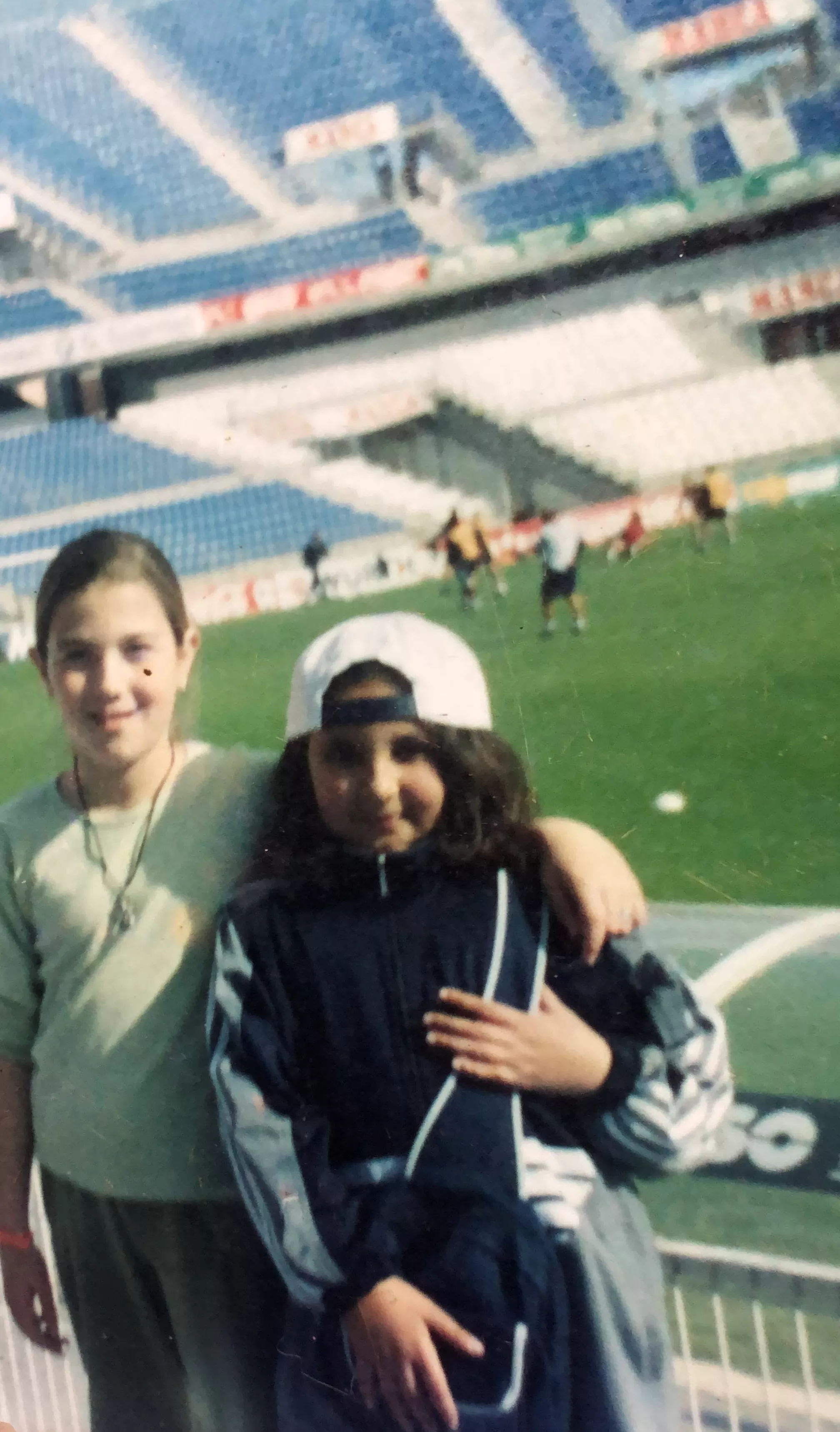
Leyla Hamed (in ball cap) and her childhood friend Natalia attend a Málaga FC match at La Rosaleda Stadium in Málaga, Spain.
Morocco was different. Her Darija, a colloquial Arabic, was “broken,” and her accent gave her away. But belonging wasn’t treated as something you had to win. “They’d be like, ‘You’re a sister. You belong here.’” Over time, she says, she felt herself leaning toward Morocco, not because Spain wasn’t home but because it kept demanding proof.
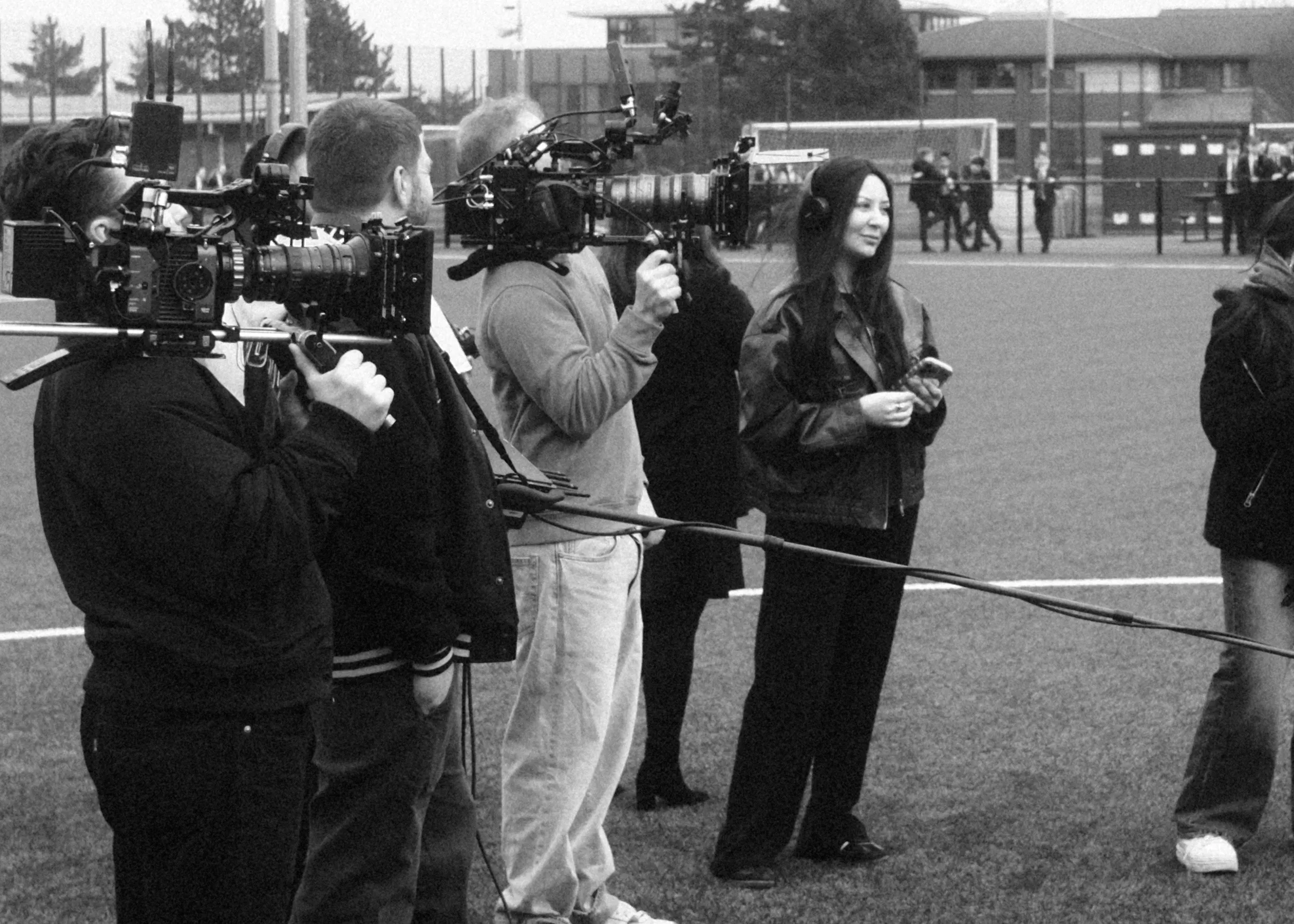
Today, Hamed works within football’s backstage—news conferences, mixed zones and the quiet press boxes where stories are written as matches unfold below.
As a Moroccan Spanish journalist covering the game, she has built a voice in a sport whose media culture still skews overwhelmingly male. The stories that interest her most are rarely just about tactics or results. They are about belonging: who gets to be inside football’s rooms and whose voices frame the way the game is understood.
Those stories are shaped in part by a childhood that coincided with the early 2000s era of Real Madrid’s “Galácticos,” when the club filled its squad with global stars like Luís Figo and Ronaldo Nazário.
One signing in particular stayed with her: Zinedine Zidane.
Zidane arrived at Real Madrid as one of the biggest stars in the world, but for Hamed the significance ran deeper. The son of Algerian immigrants to France, he carried North African heritage into the center of European football—something rarely visible on television screens at the time.
“For the first time,” she says, “I saw someone from our community represented.”
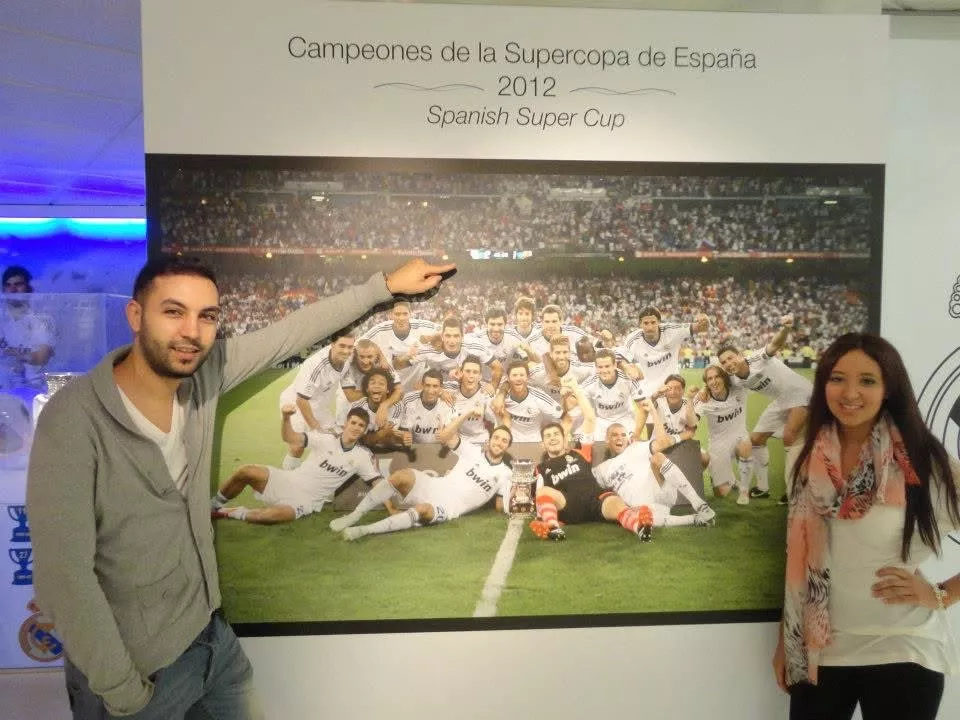
Hamed makes her first visit to Bernabéu, the stadium in Madrid, Spain, where Real Madrid plays, at age 15 with her brother Sufian.
Some of her other vivid memories of football come from her annual visits to family in Tétouan and Tangiers.
It was here that she watched neighborhood Ramadan tournaments. Makeshift teams formed on dusty pitches. Families gathered in plastic chairs to watch the games unfold before sunset.
“You could spend the whole day there,” Hamed remembers.
Children perched on walls watching older players compete. The atmosphere built through the afternoon until the call to prayer echoed and everyone went home to break the fast.
“It was entertainment for hours,” she says. “Everyone was so into the game.”
Those experiences of “feeling football” unfold within communities rather than in stadiums shaped how Hamed would later understand the sport.
At 16, a health scare paved the way for her first foray into football commentary. After months of unexplained exhaustion, Hamed collapsed at home; a diagnosis of Type 1 diabetes followed. She spent almost a month in the hospital, where a television in her room aired football channels from around the world— England’s Premier League, Italy’s Serie A, Spain’s La Liga. She studied the sport for hours a day: the matches, the commentary, the analysis. “Football became my refuge,” she says.
It was during that period that she realized she didn’t have to play professionally to stay inside the sport. She could write about it. Her first newsroom was Twitter (now X).
Hamed began translating Spanish football news into English, teaching herself the language through football broadcasts, films and music.
By 17, she had built an audience of 15,000 followers—enough to convince her that football journalism might actually be possible.
“It meant so much,” she says, “because I was just a teenager behind a screen, and people were choosing to read what I wrote.”
With her defiant personality, she convinced her parents that studying biology or law wasn’t for her. Instead, she enrolled in journalism classes at Madrid University, before completing a master’s degree in football communications at the Real Madrid Graduate School–Universidad Europea, a specialized institution affiliated with the football club.
Her early professional break came in 2010, when Qatar bought Malaga FC, and Hamed would manage the club’s social media channels while learning more about the football world’s inner machinery.
Finding her Footing
The mixed zone after a match is rarely glamorous.
It’s a narrow corridor filled with microphones, camera cables and journalists leaning forward with recorders. Players pass through quickly, answering questions while still breathing heavily from the game.
The first time Hamed stood there during a Málaga-Barcelona match, Lionel Messi walked past.
“I was nervous,” she says. “I was starstruck.” Hamed laughs at the internet’s expectation that everyone plays it cool now—influencers meeting players like it’s nothing—but she couldn’t. She had idolized him on screen for years. If she’d been able to ask a question, she says it wouldn’t have been tactical. It would have been emotional: a plea for the player to understand what his football gave to people watching from hard places. “You can make a person who is feeling really down feel so excited watching you play,” she says.
Working in football media also revealed the quiet barriers of the industry.
Hamed describes the subtle forms of underestimation, such as being assigned to a big match but given “basic” questions that don’t allow her to show depth of knowledge and being cut off midpoint on TV or podcasts. Sometimes the clearest confirmation arrives afterward, in messages from listeners: I noticed what happened there. You were contributing, and they cut you off.
Online it’s harsher and more predictable: the “stick to the kitchen” comments, the trolling that tries to reduce her to appearance rather than talent. But in person, she says, disrespect is rarely explicit. It’s structural: who gets space, who gets time, whose expertise is treated as default.
What changed wasn’t a sudden acceptance but her own confidence. “I wouldn’t say I changed my voice. I refined it.” Authority, she learned, doesn’t come from mimicking the tone of a traditional football pundit. It comes from being grounded in your perspective and being willing to let opportunities pass if they require you to shrink yourself. “Otherwise, you’re contributing to the system.”

Hamed interviews footballer Roberto Carlos.
But the biggest growth, she says, came when she stopped treating football as sealed off from the world. Hamed says it’s important to widen the frame so that people who live inside football—players, fans, families—are allowed to be fully human.
That philosophy comes through most clearly in the stories she tells about players from the Middle East and North Africa. Too often, she says, they’re approached only through conflict: what it’s like to represent a nation under strain, what it’s like to play with tragedy at home. Those questions matter, but they can become a trap. “Sometimes these players never get to speak about their dreams … or just easy talk—what food do you like, what music do you like, travel, lifestyle.” She wants to give them that space too.
It’s also why she’s drawn increasingly to Morocco—not just the national team but local football culture. In April 2025, she attended the Casablanca derby between Raja and Wydad, one of African football’s most intense rivalries.
Green and red smoke, representing the clubs’ colors, filled the air outside the stadium. Inside, thousands of voices rose in Darija chants that echoed through the stands.
This time she understood every word. “That was special,” she says.
For someone who spent much of her childhood explaining where she belonged, it felt like football had answered the question.
Gratitude, Defiance and Hope
At the 2022 World Cup, Morocco beat Spain, and in the knot of her own identity, Hamed felt both gratitude and defiance.
She has celebrated Spain’s victories; she remembers the 2010 World Cup championship as a countrywide eruption of joy. She is grateful, she says, for the opportunities Spain gave her family.
But she wanted Morocco to win in order to push back against a European gaze that explains away non-European excellence as passion rather than preparation. “Behind that fire,” she says, “there was a manager who knew what he was doing [and] mentally well-trained players.”
Looking to the future, Hamed hopes young girls see the promise of football when they watch her work.
“I hope they see that there is space for them in football,” she says.
Not only as players—although women’s football is growing rapidly—but as journalists, analysts, filmmakers and storytellers. The game, she believes, becomes richer when more voices are allowed inside it.
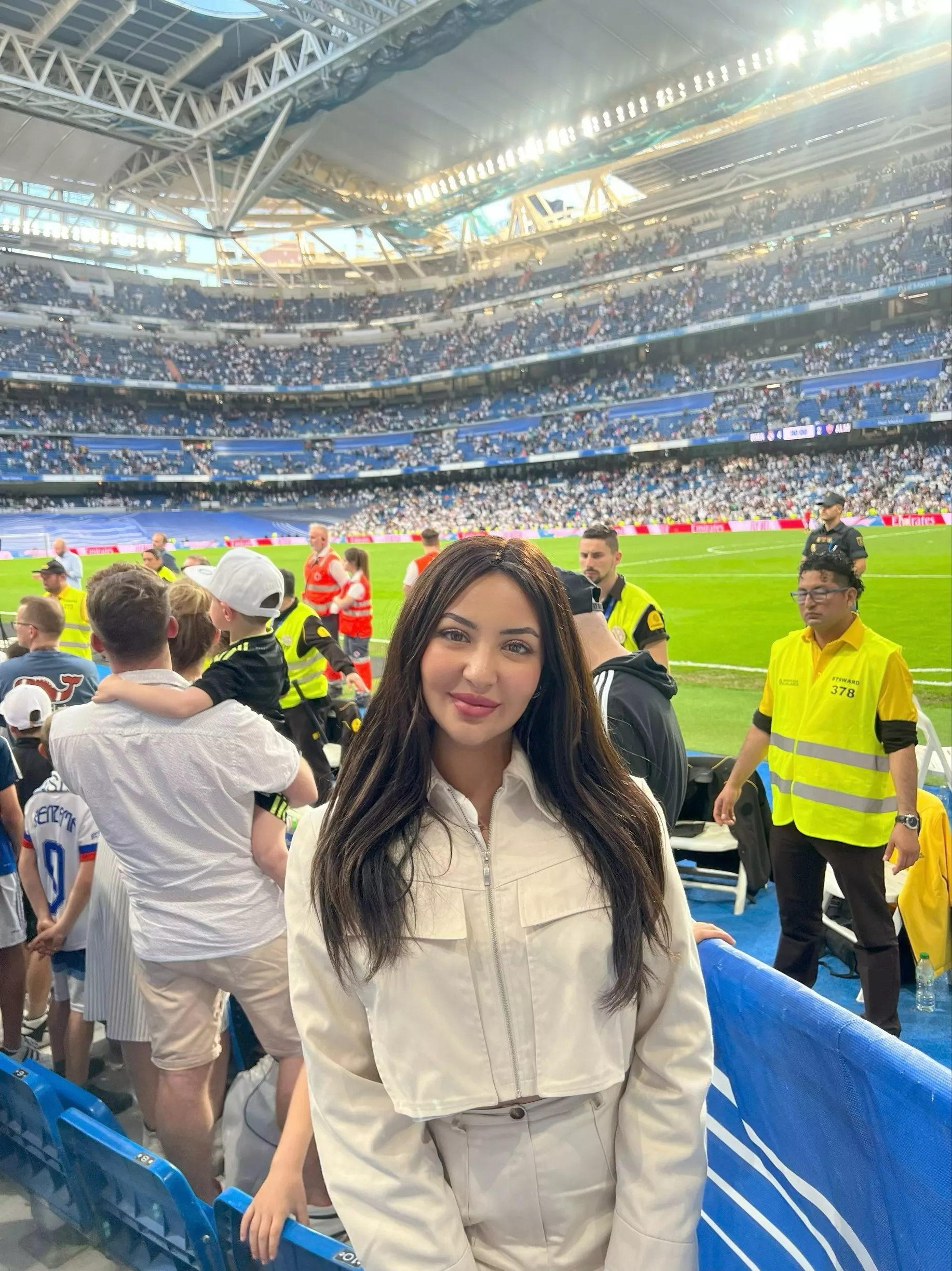
Hamed covers Real Madrid vs. Manchester City at Bernabéu for the 2024-’25 season.
More From AramcoWorld
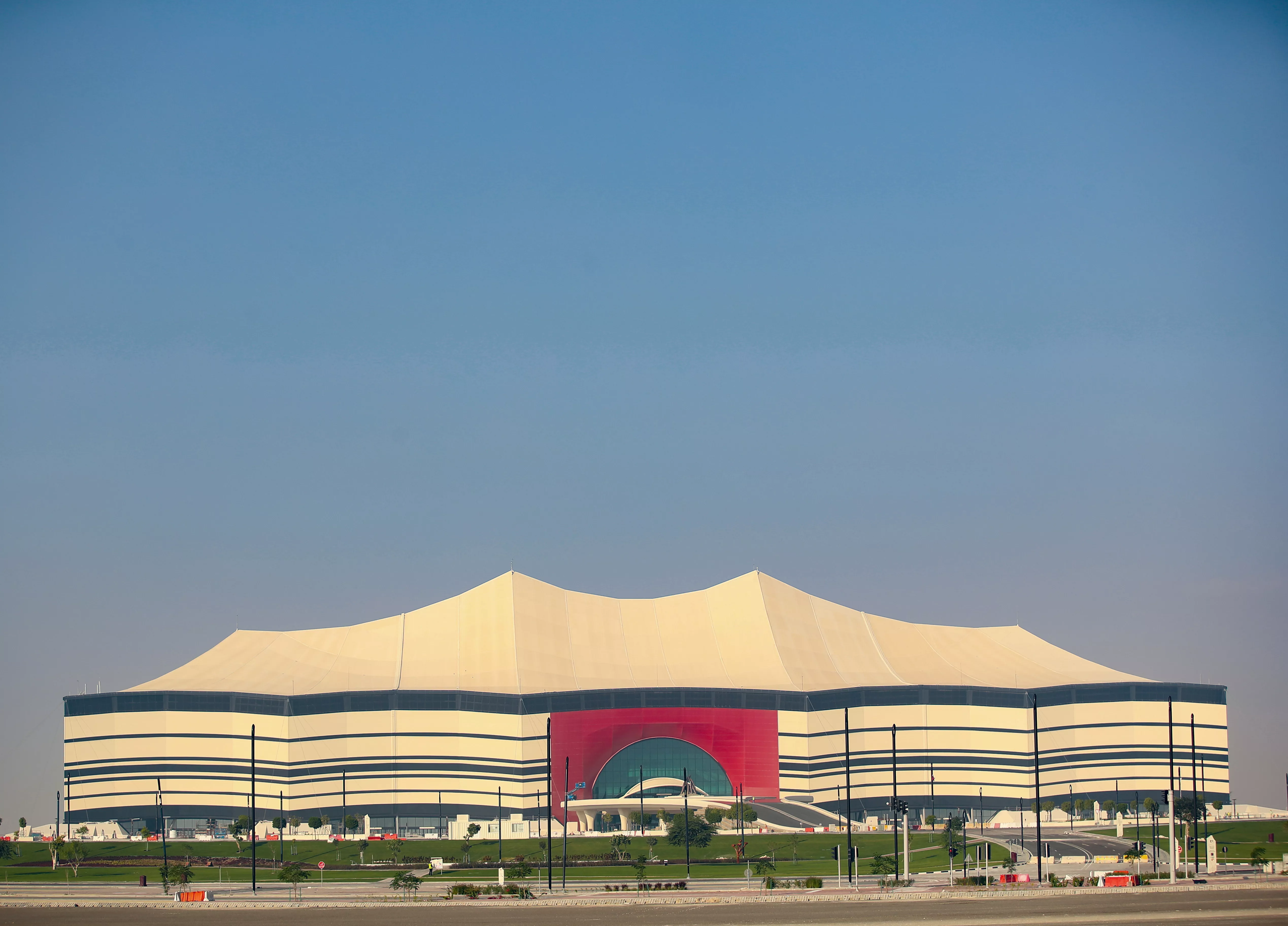
Built for the Beautiful Game: Stadiums Reflect Heritage
You may also be interested in...
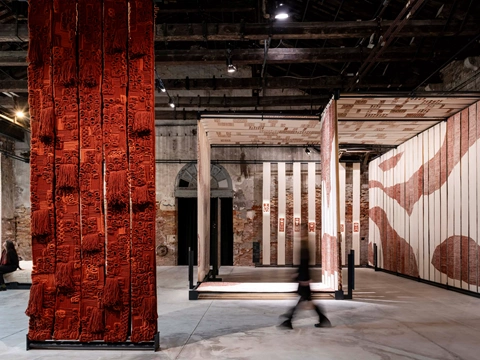
Threads of Memory at the Venice Biennale
Arts
History
Culture
At the Venice Biennale, which runs through November 22, 2026, the Moroccan, French and Saudi national pavilions show how craft and shared memory can resist cultural erasure.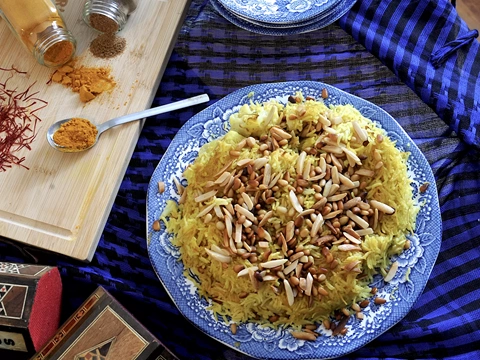
Momma’s Maqluba: From Damascus to My Alabama Table
Food
This is how a Damascus dish became my Alabama family story, one generation at a time.
Connecting Across Cultures: A Conversation With Author Nawar Shora
Through humor and shared stories, Nawar Shora explores how understanding builds trust across cultures and communities.