World Cup Stadiums Built on Nations’ Living Heritage
Football grounds are no longer just engineered arenas. They are designed to project cultural and national identity—and leave a legacy long after the final whistle.
What do football stadiums, culture and heritage have in common? More than you might think.
For much of modern history, stadiums were treated as “an engineering problem, primarily,” says Benjamin Flowers, a professor of architecture at The Ohio State University. “The real shift to what we see now really starts in the early 2000s.”
Venues such as Munich’s Allianz Arena, which opened in 2005, signaled that change: Stadiums were no longer expected simply to work, but to speak.
Part of this evolution, Flowers says, is visibility. “It’s impossible to overstate the influence of television and more particularly streaming.” Stadiums are now designed for a world that watches endlessly, clips endlessly and rewinds endlessly. The leap is staggering: “In the 1960s, there were generally four camera positions. Today you have something between 26 and 32 camera locations, plus the aerial choreography of drones, tracking shots and those cinematic sweeps from the city into the stands.”
The result is a new kind of pressure: According to Flowers, these broadcast demands have created the expectation that the venue has a distinctive identity, both on the interior and the exterior.
Once a stadium becomes a global image, cultural expression becomes part of the brief. Clubs want an “iconic identity,” says Flowers, and at a national level, “state actors are expecting to see these venues broadcast an image, an identity of the nation-state.”
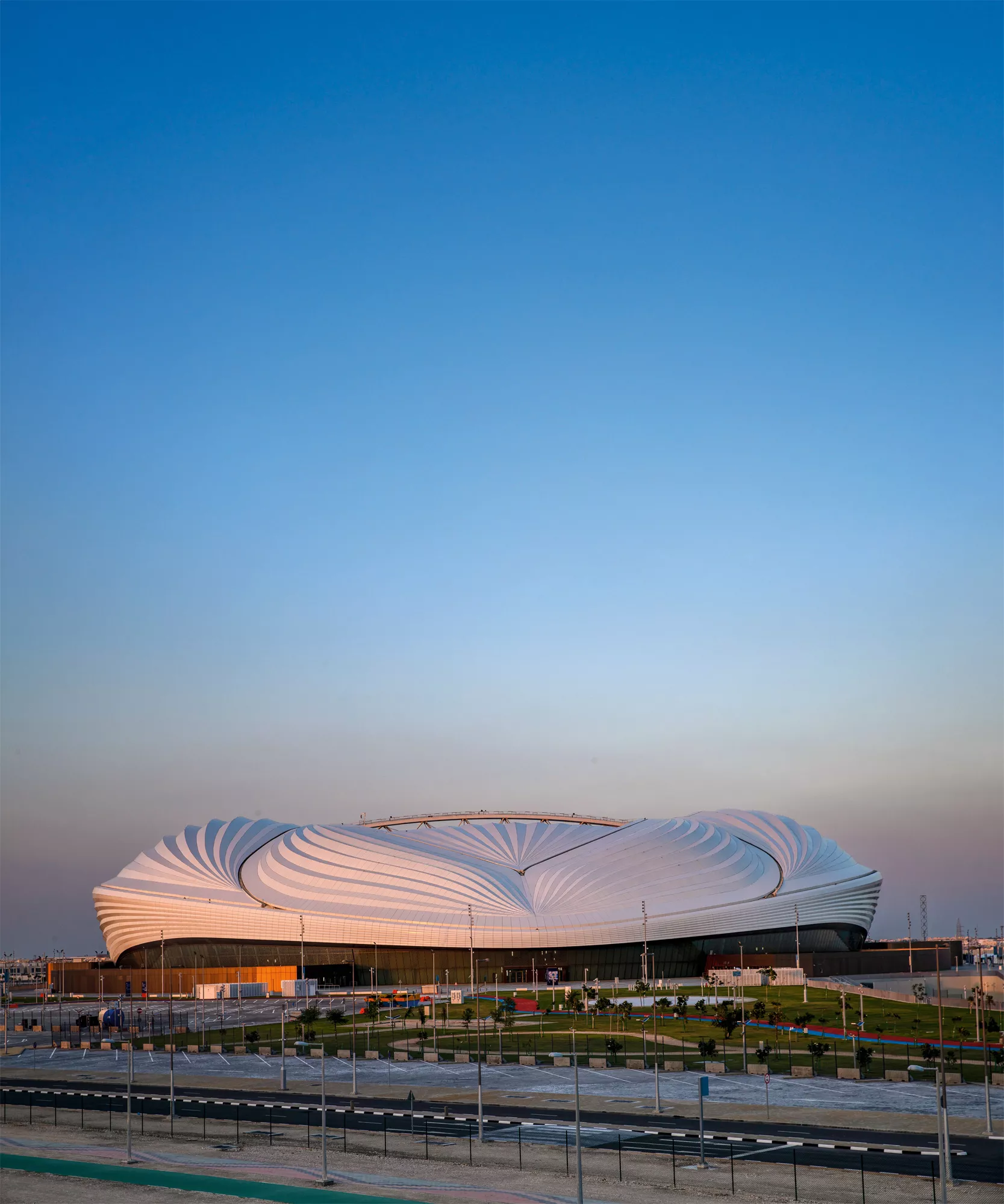
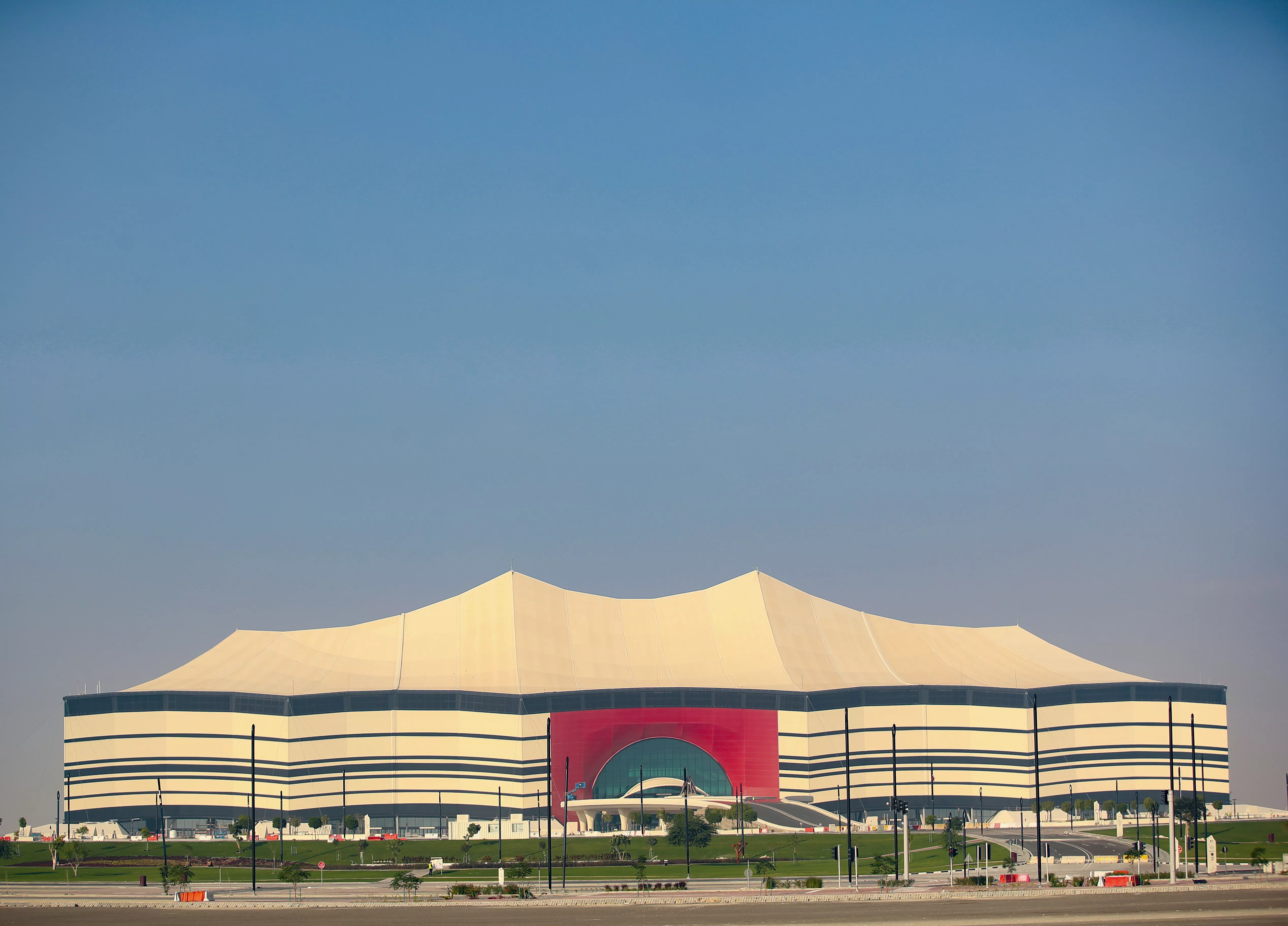
Al Janoub Stadium pays homage to Qatar’s Arabian Gulf sailing heritage with its resemblance to a dhow. Top Al Bayt Stadium in Al Khor, Qatar, a venue for the FIFA Qatar World Cup 2022, nods to a traditional Bedouin tent.
Matthew Ashton/AMA/Getty Images
Qatar: From Sand and Sea to Stadium
When the world arrived in Qatar for the 2022 FIFA World Cup, it encountered stadiums that were anything but generic. The venues didn’t feel like neutral shells dropped onto a map. They felt like deliberate translations of place, carrying references to desert life and Bedouin hospitality, seafaring heritage, traditional dress and Arab craft.
Al Bayt Stadium in Al Khor made that point in one glance, turning the traditional Bedouin tent into a bold architectural statement. In addition to the tent depiction, the name itself reflects Bedouin heritage, as bayt means “house” in Arabic. Lusail Stadium, in the city of the same name, leaned into Arab pattern and light, using ornament and shadow that glows as much as it holds. But in Al Wakrah, Al Janoub Stadium shifted the reference from desert to sea, drawing on the dhow, a traditional Arabian Gulf sailing vessel, and the town’s maritime memory.
For Jim Heverin, director of Zaha Hadid Architects, the goal was never to turn heritage into a prop. The starting point, he says, was to create something “culturally relevant but without reducing it to pastiche.” That balance matters in a building type that comes with so many nonnegotiables, and Heverin is candid about the constraints: The stadium has to satisfy global tournament requirements while still finding its own identity.
Al Janoub’s references to the dhow and Qatar’s maritime history are often cited, but Heverin is careful about how that story is told. “It was not about producing a boat,” Heverin says. “The intention was to abstract those qualities, to build a contemporary stadium that still carried the memory of Al Wakrah’s relationship with the sea, without becoming literal.”
Heverin also stressed that in a place like Qatar, culture can’t be separated from climate. The stadium needed “a protective shell” to manage the heat, and that practical reality shaped everything from the design to the way spectators experience shade and cooling. “You really need to find the expression in the functionality of the stadium,” he says.
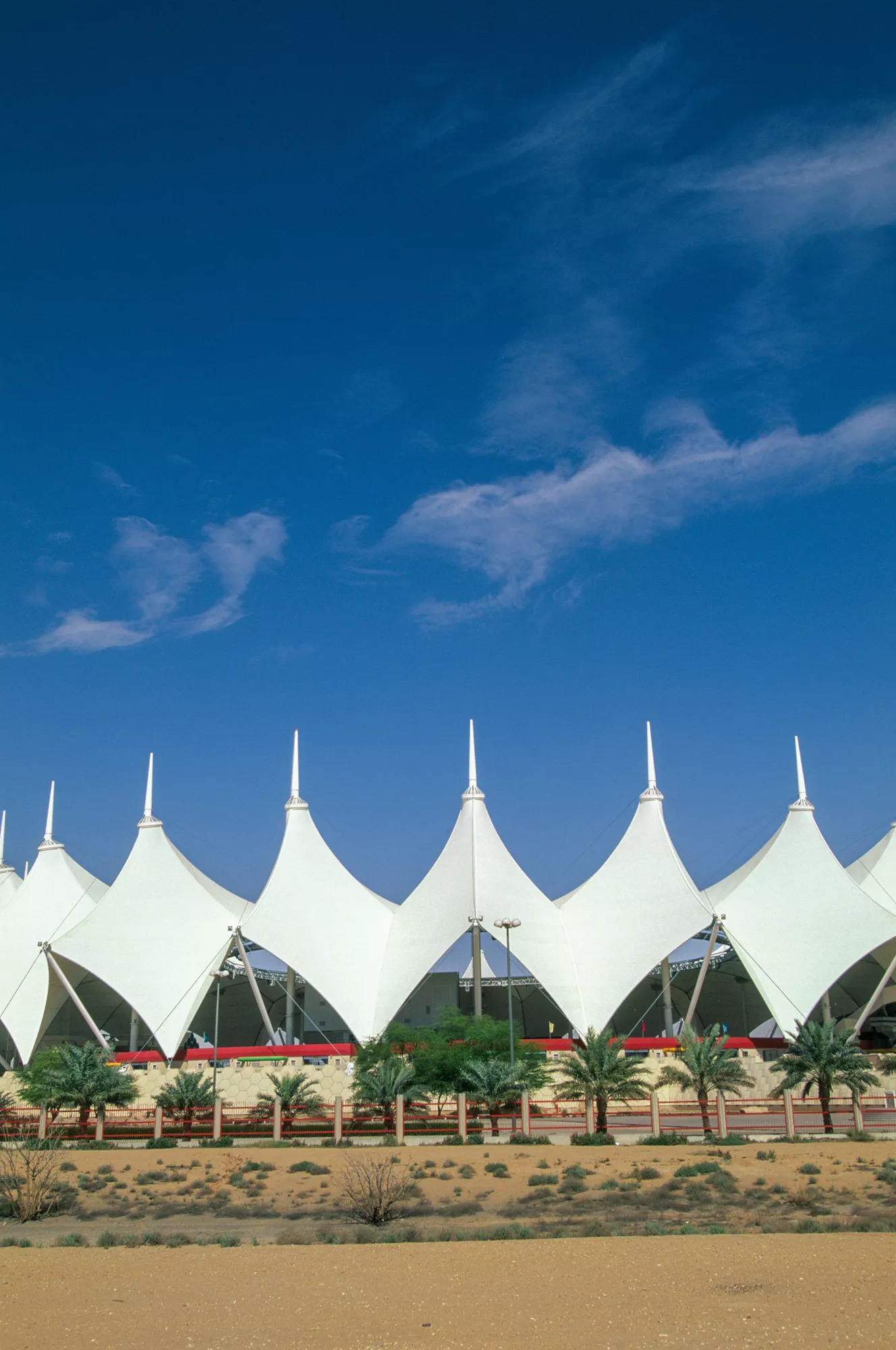
The architectural style was seen earlier in Riyadh, Saudi Arabia’s King Fahd Stadium which opened in 1987 and is set to host the tournament in 2034.
Wolfgang Kaehler/LightRocket via Getty Images
Rather than treating performance as separate from expression, the design integrated them. The façade strategy, including recessed glazing and outer screens, was driven by the heat and humidity, but it also allowed the architecture to nod toward traditions of screening and shading.
That is where Al Janoub becomes a particularly useful example in a wider global story. It shows how cultural references can be embedded into the logic of a building rather than applied like decoration—how the story can sit inside structure, surface and atmosphere.
Stadiums as Storytellers
From there the question becomes bigger than any one country. What are stadiums being asked to do, and why do these cultural references matter so much?
Professor Christopher Gaffney from New York University, who studies stadiums as urban and cultural phenomena, calls them “powerful vehicles for cultural and national storytelling,” describing them as “social and political objects.” The architecture may be what draws the eye, he says, but “the stadium also carries a message about ambition, identity and how a place positions itself in the world.”
Flowers agrees that intent is only part of the equation. “Intentions matter quite a bit in architecture, but how buildings are defined is really by the public.” Occasionally, intention and reception align. “Sometimes,” he notes, “there’s a profound divergence.” That gap is where cultural expression can either feel meaningful or slide into superficial symbolism.
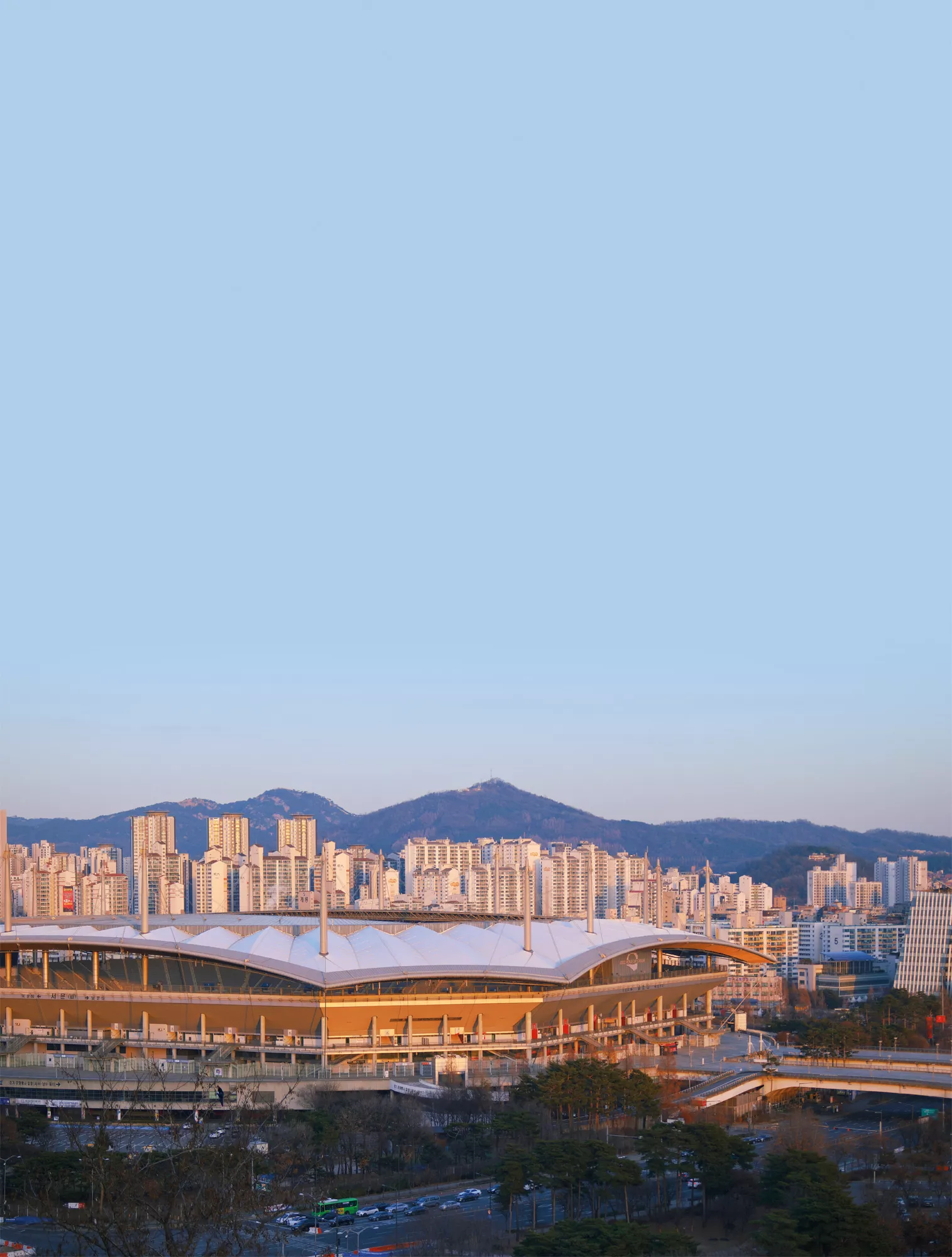
South Korea’s Seoul World Cup Stadium, host of the 2002 tournament, evokes a traditional paper kite.
Getty Images
East Asia: Heritage in Motion
In South Korea, heritage often shows up through atmosphere rather than monumentality. Seoul World Cup Stadium, also known as Sangam Stadium after its location in Sangam-dong, Mapo-gu, was built for the 2002 FIFA World Cup. Its design evokes a traditional Korean kite, with a roof associated with hanji, handmade Korean paper, creating a lanternlike glow at night.
It is a reminder, as Flowers says, that “the meanings we attach to buildings are dependent in large part on the nature of our interactions with them,” whether in the physical space or “in the world media via screens.” Heverin calls that first impression “the level that most people understand it at,” before the deeper references reveal themselves.
On screen, that atmospheric quality becomes part of the stadium’s identity, shaping how it is recognized far beyond Seoul.
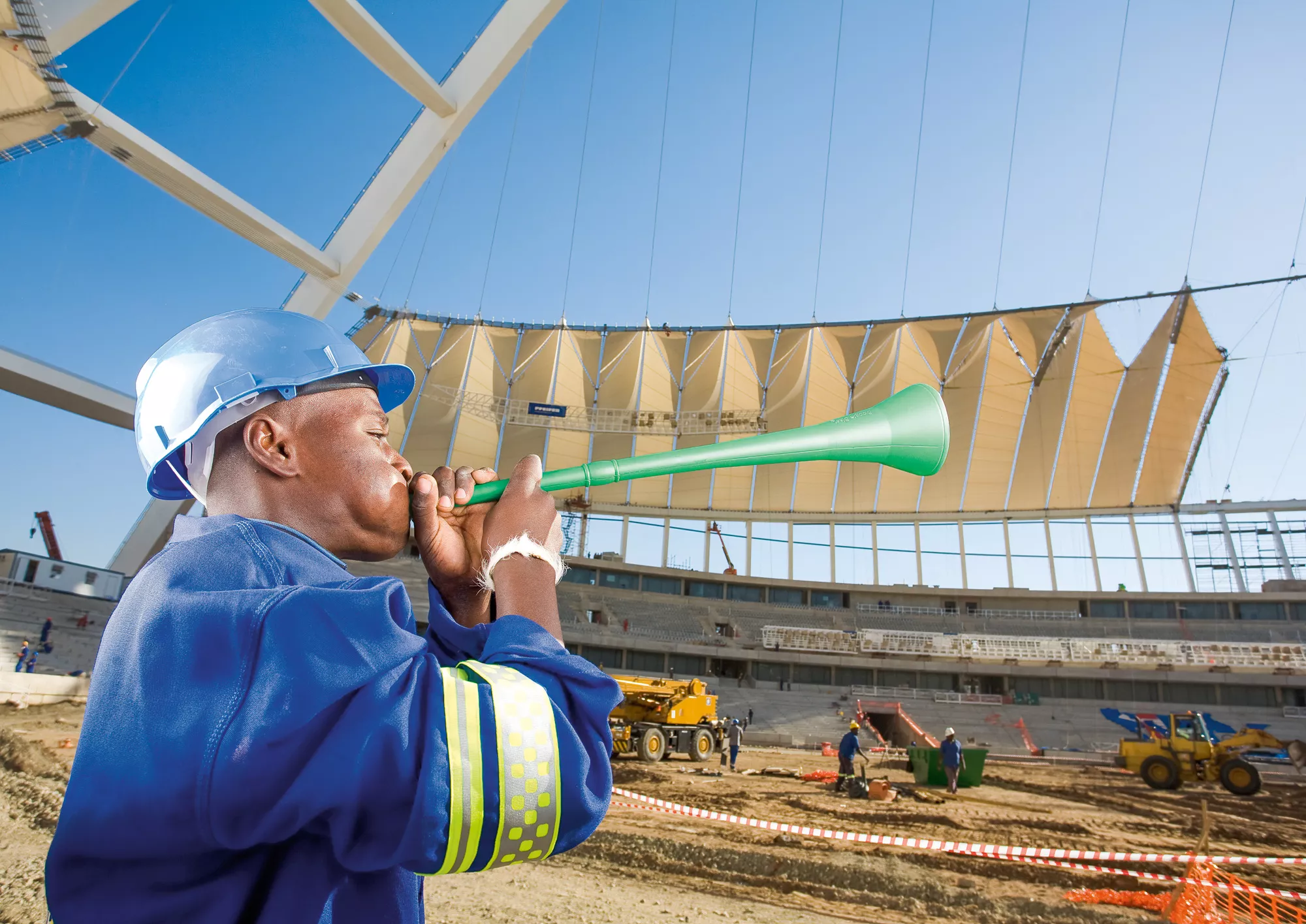
A construction worker blows a vuvuzela, a musical instrument symbolizing South Africa, in front of the partially built Moses Mabhida Stadium in Durban ahead of the 2010 World Cup.
Getty Images
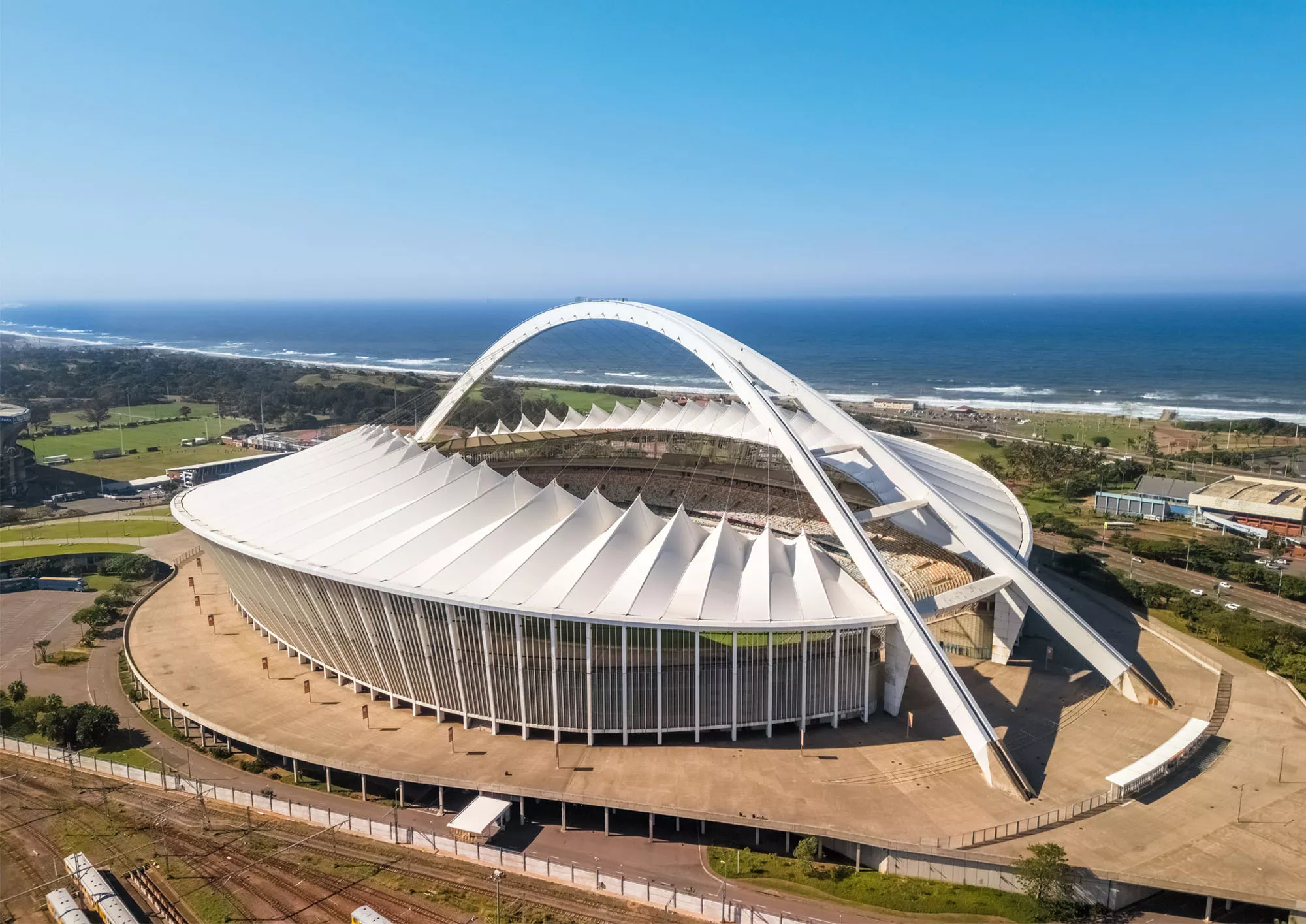
The completed multiuse stadium today hosts a variety of events.
Getty Images
South Africa: The Shared Vessel
South Africa offers a bolder metaphor, wherein the stadium becomes a national object and communal symbol. Johannesburg’s FNB Stadium, short for First National Bank Stadium and also known as Soccer City, was reimagined for the 2010 FIFA World Cup with a design inspired by the calabash, a traditional African pot.
Here, Gaffney draws on the old idea of bread and circuses to explain why stadiums still hold such sway: “They sit in the space where spectacle and public life meet.” The phrase comes from ancient Rome, where public entertainment was used to distract from political discontent. The point is not that football is shallow, but that stadiums have always carried meaning beyond sport. “They signal ambition, and they project identity,” he says.
Europe: Heritage in the Landscape
Europe often expresses identity through context rather than costume. Portugal, which will co-host the 2030 World Cup with Spain and Morocco, is no exception. Its Estádio Municipal de Braga, in the city of Braga, built for Euro 2004, is carved into a former quarry, with a dramatic rock face forming one end of the stadium. It doesn’t rely on a literal cultural symbol. Instead, it folds the venue into the land, turning geology into architecture and giving the building the feeling of having emerged from its surroundings.
That choice reflects a more understated approach often seen in European stadium design. Heritage here is not stitched onto the façade but embedded in the ground. The stadium’s most powerful reference is its relationship with place, drawing the landscape into the match-day experience and shaping the approach well before the pitch comes into view.
“Braga’s impact begins long before you reach your seat,” Flowers says, “in the approach, the rock and the sense of place.” It’s a reminder that cultural expression in stadium design isn’t always something you can name.
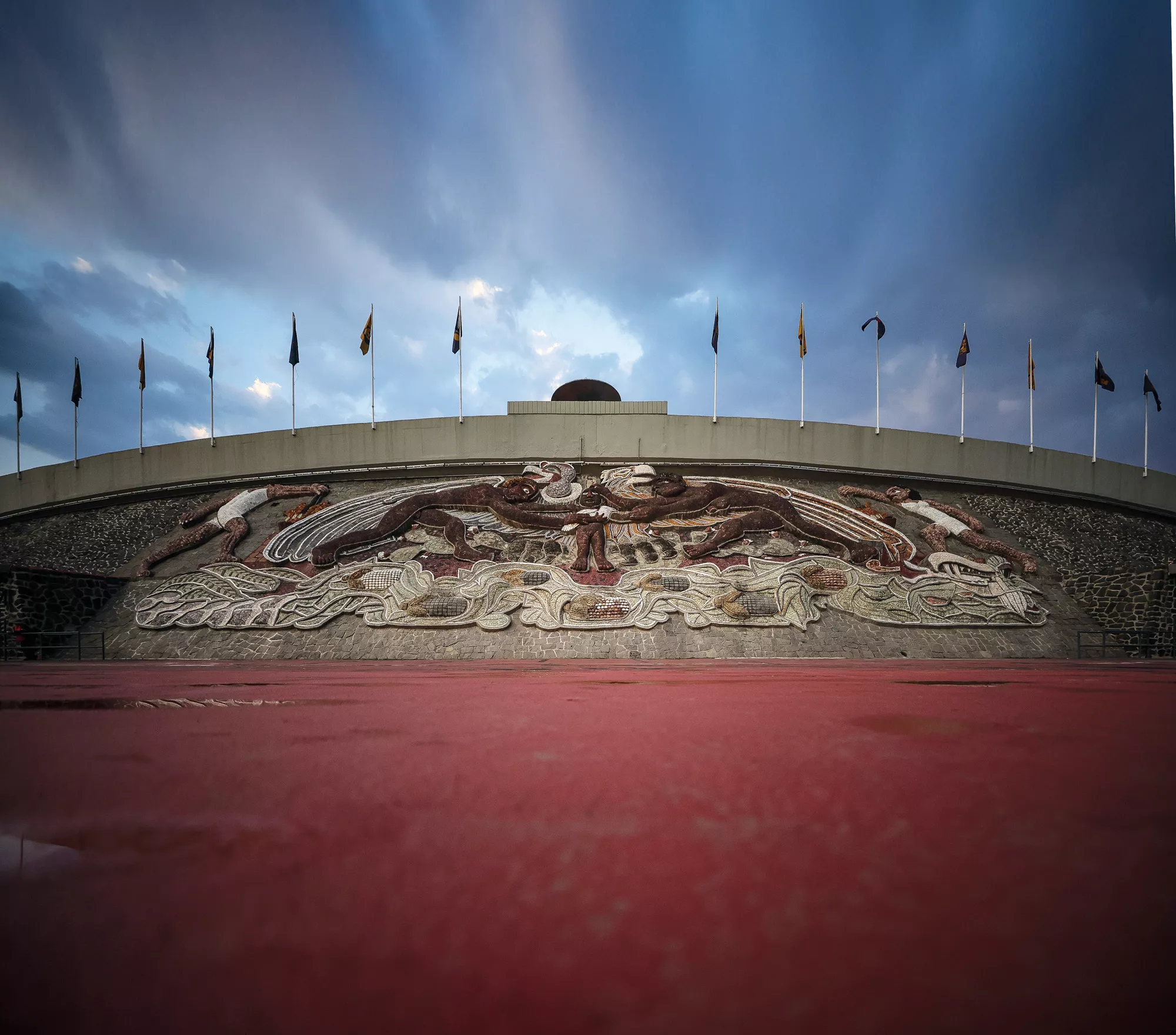
Mexico City’s Estadio Olimpico Universitario, which hosted World Cup matches in 1970 and 1986, feels less like an object placed on a site and more like a landmark that belongs to it.
Manuel Velasquez/Getty Images
Mexico: Stadium as Civic Canvas
In Mexico City, Estadio Olímpico Universitario shows how cultural expression can be carried through art and nation-building. Built into volcanic terrain and marked by leading Mexican artist Diego Rivera’s monumental mosaic, the stadium makes identity unavoidable. It turns it into a public artwork as much as a sports venue, carrying meaning even on non-match days.
As Flowers puts it, the most powerful stadiums are those that feel not like “an alien that has been dropped into the landscape” but “something that emerged seemingly around the same time as its surroundings.”
Here, that encounter starts long before the turnstiles. The volcanic terrain underfoot and Rivera’s mosaic on the façade assert a clear cultural identity from the outset, turning the approach into a civic statement. The stadium feels less like an object placed on a site and more like a landmark that belongs to it.
Grounded in Understanding
Across these examples, the same questions keep returning. “If it is a local architect designing the project, then one can say this is an authentic expression of local identity,” Flowers notes. But “if it is a foreign architect designing it, then it raises the question of, is this merely quotation?” His follow-up hits the back of the net: “Appropriate for whom, and appropriate how?”
The question isn’t theoretical. In Tokyo, Zaha Hadid’s original design for the 2020 Olympic Stadium, officially Japan National Stadium, prompted exactly this kind of debate, with critics asking whether such a prominent national venue, designed by a foreign architect, could truly speak in a local architectural language.
It is a question that pushes the conversation beyond easy symbolism. By “quotation,” Flowers is referring to the risk of borrowing cultural forms, like patterns, materials or motifs, without grounding them in real understanding. A dhowlike gesture or reference to craft can feel meaningful, but it can also become surface level without cultural awareness. And in a global era when major venues are often delivered by international teams, that question only grows louder.
After the Fireworks
Then comes legacy, the part of the story where symbolism meets real life. Flowers is blunt about what separates a one-tournament venue from a stadium that truly lives. “The key to the legacy success of a venue is whether, two or three years after the event, it is still being used on a regular basis,” he says. In his view, “it has to be multimodal. It can’t just host games.” Without a long-term plan, he warns, the economics catch up quickly because the “stadiums are not assets, stadiums are liabilities; they become a very expensive obligation.”
There are examples of both outcomes. North London’s Tottenham Hotspur Stadium has become a year-round venue, combining football with concerts, American National Football League games and other uses. By contrast, Brazil’s Arena BRB Mané Garrincha, one of those that hosted the 2014 World Cup, symbolizes the post-tournament burden: striking in scale but harder to sustain in everyday life.
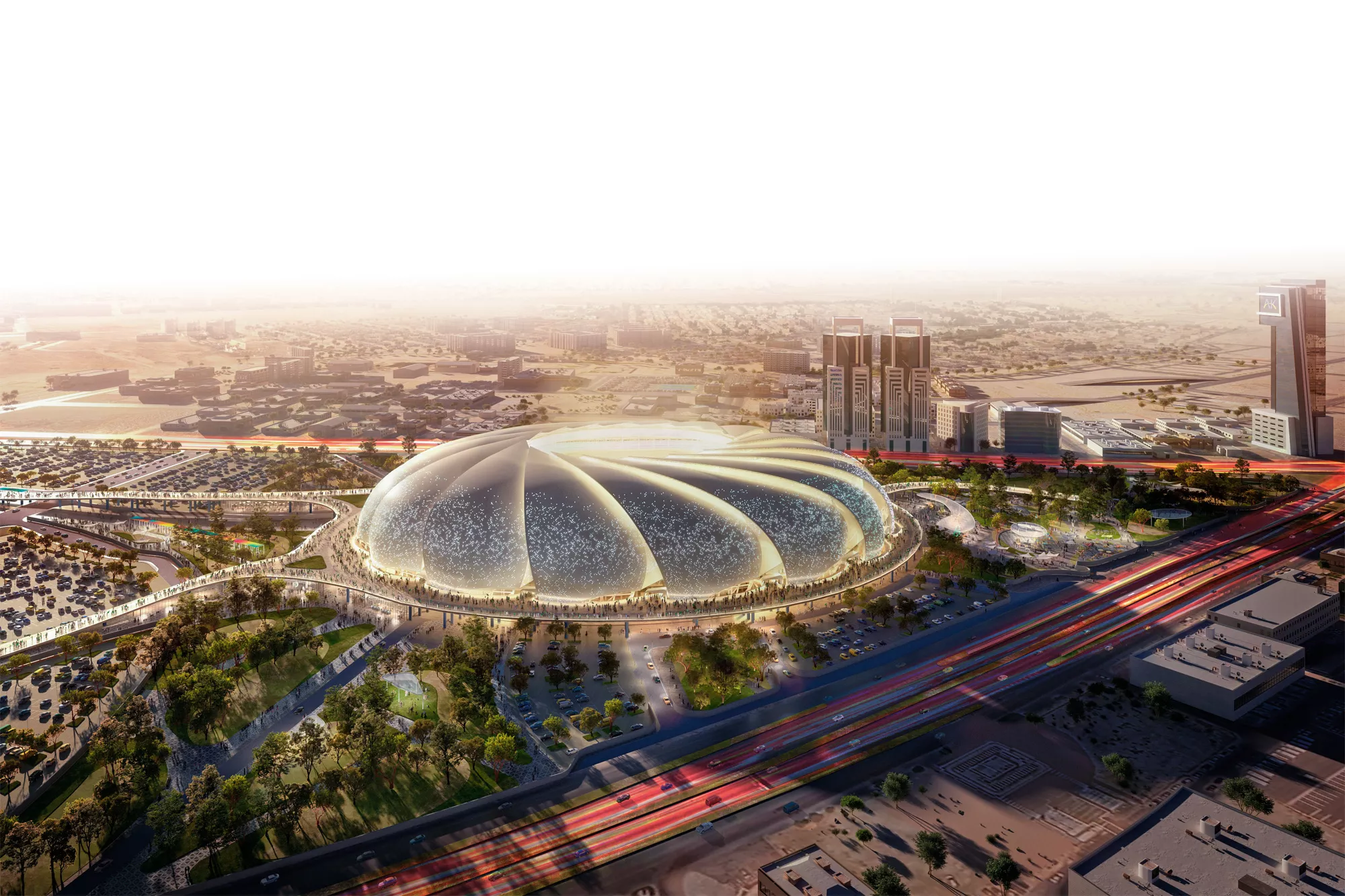
An artist rendering depicts the future Aramco Stadium in Al Khobar, Saudi Arabia, host of the 2034 World Cup. The venue’s prioritized construction timeline means that in 2027 the country also will host the Asian Cup for the first time. Its look and feel reflect its coastal setting.
AramcoStadium.com
Saudi Arabia: The Next Chapter
Saudi Arabia is where this story naturally turns, as a new wave of stadiums is being imagined in real time. In Al Khobar, designs for Aramco Stadium, one of the venues planned for the 2034 FIFA World Cup, place the project within a wider district vision. Here, the stadium acts as an anchor rather than a stand-alone object. The idea is not only a match-day destination but a place that works year-round.
Aramco Stadium’s design language is explicitly tied to Al Khobar’s coastal setting on the Arabian Gulf. Global sports architecture firm Populous describes an exterior shaped by the “graceful rotation of waves” and spiral motifs found in nature. These are expressed through overlapping translucent “sails” that allow natural light to filter into the stadium through openings in the façade.
Heverin is clear that the hardest part of modern stadium design is avoiding the feeling that a venue “could be anywhere.” The reason, he says, is structural: “The standards are generic. What FIFA wants, what UEFA [Union of European Football Associations] wants, they’re all the same kind of standards.” His point is that when the brief is global, the effort has to be local. “To make it site-specific and culturally specific takes quite an effort because it still needs to perform as a football stadium.”
For Heverin, that’s where design becomes translation. “You take references, and you need to abstract them and then find a language that people can automatically feel is related to their culture but also related to a football stadium. In the end, it should feel unique. It should feel very different.”
That thinking connects directly to the district model. Heverin says that on Qatar’s Al Janoub, the approach went beyond the stadium footprint: “We also looked at not just the stadium but a wider precinct, how it works on tournament match days and, crucially, after the World Cup, how can it be a community facility?”
Then there is the part hosts can’t avoid anymore, he says. “The whole legacy discussion is also something that’s very much come to the forefront.”
Flowers explains why he believes these places last emotionally: “Stadiums run on ritual and rhythm, with a symbolic cadence to your approach to the stadium, your inhabitation of it and then your departure.” Inside, he adds, “we will hug and kiss and embrace total strangers in moments of joy and despair.”
Heverin puts it in plain terms: “For a building to become deeply meaningful, it’s not only the physical form, but it’s the memories that are attached to it. That is the real afterlife of stadium design. Not just what it looks like on opening night but what it holds, year after year.”
More From AramcoWorld
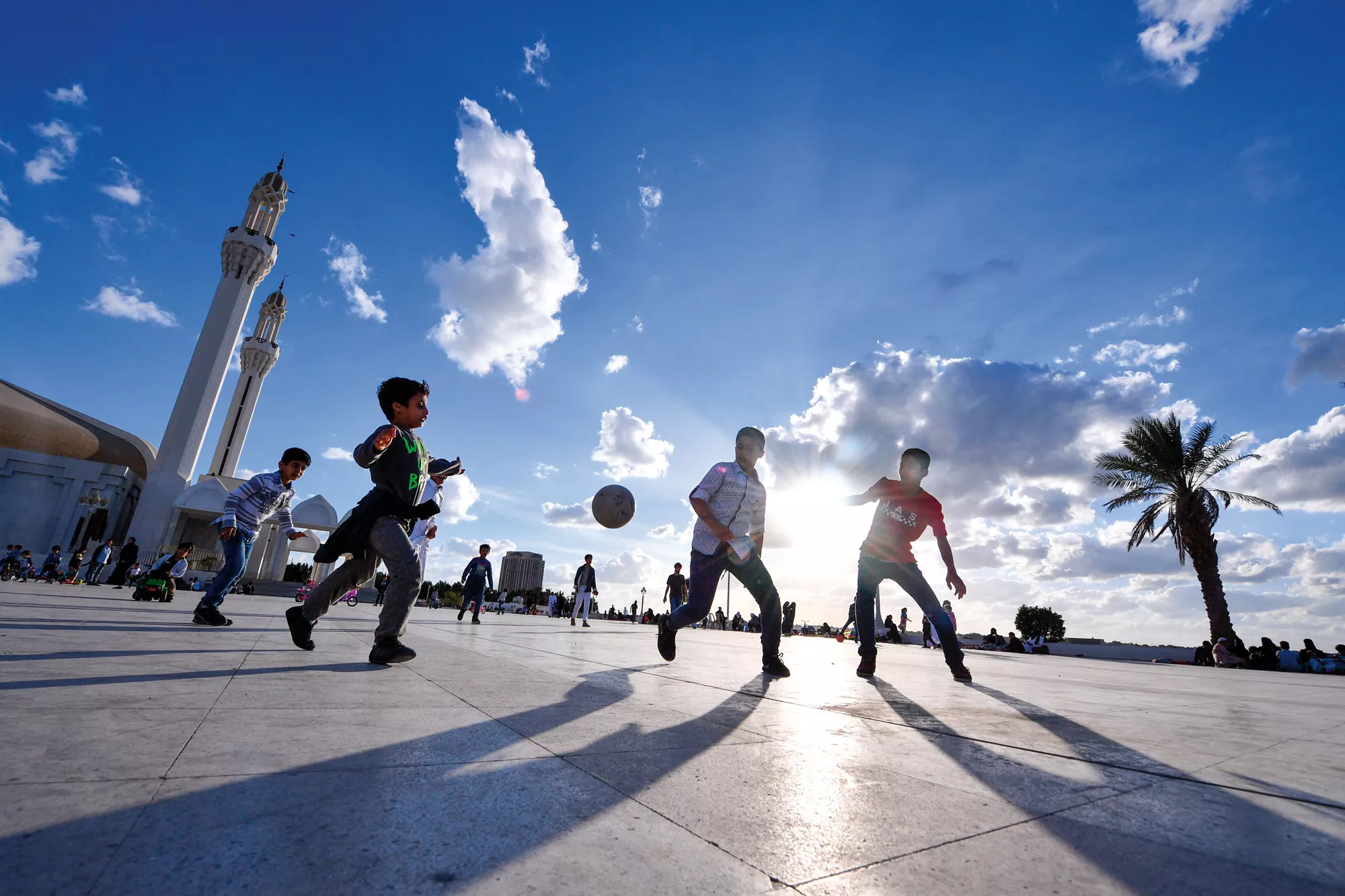
Story in Pictures: In Our Formative Years, Football Shapes Our Souls

You may also be interested in...
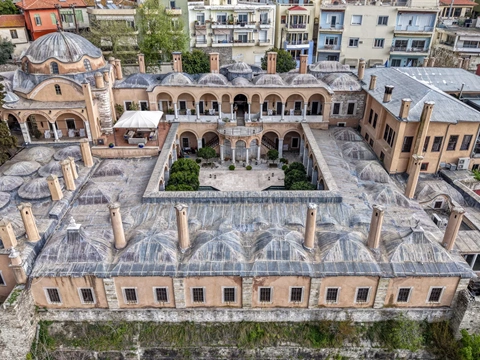
Preserving the Imaret of Kavala: Safeguarding an Ottoman Landmark
Culture
Preservation efforts have protected the historical design and cultural legacy of the Ali Pasha-gifted Imaret of Kavala—one of most important Ottoman landmarks in Greece.
From Leather to Labs: The Science of Football Design
Culture
The ball's continually refined materials and construction affect its behavior, quietly reshaping how the game is played.
A Conversation With Author Tim Bascom on Why Football Endures
Arts
Culture
As the 2026 World Cup nears, Tim Bascom asks: Why do people keep playing soccer when the world is ready to break apart?