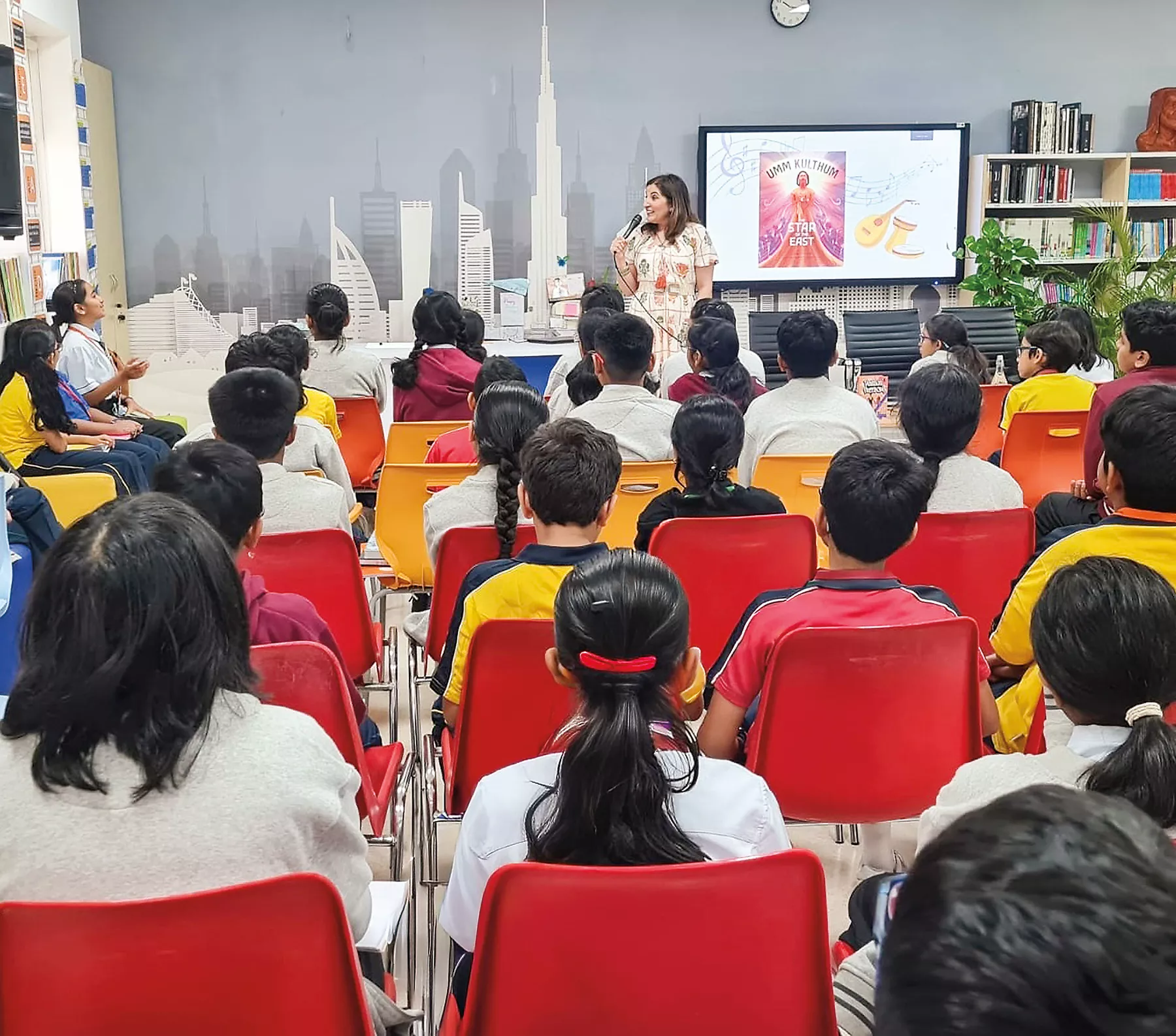
Meet the Author Who Invites Children To Discover ‘Star of the East’
In Umm Kulthum: The Star of the East, Syrian American author and journalist Rhonda Roumani illuminates the life of a girl from the Nile Delta who rose to become one of the most celebrated voices in the Arab world.
In Umm Kulthum: The Star of the East, Syrian American author and journalist Rhonda Roumani illuminates the life of a girl from the Nile Delta who rose to become one of the most celebrated voices in the Arab world.
Published 50 years after Umm Kulthum's death in 1975, Roumani's work traces the journey of the woman born Fatima Ibrahim as-Sayed el-Beltagi, from a childhood spent beside her father in the village courtyard to the moment her voice became a vessel for Egyptians on Cairo's grand stages.
Roumani presents more than just a biography. Umm Kulthum: The Star of the East meditates on perseverance, identity and the courage to stay true to one's voice. Drawing from her own experience growing up Arab American, Roumani reclaims the story of a woman who turned authenticity into art-and art into legacy, earning the title "Star of the East."
We sat down with Roumani, who reflects on what drew her to Umm Kulthum, what her enduring voice continues to teach us and how writing for children became her way of passing that light forward.
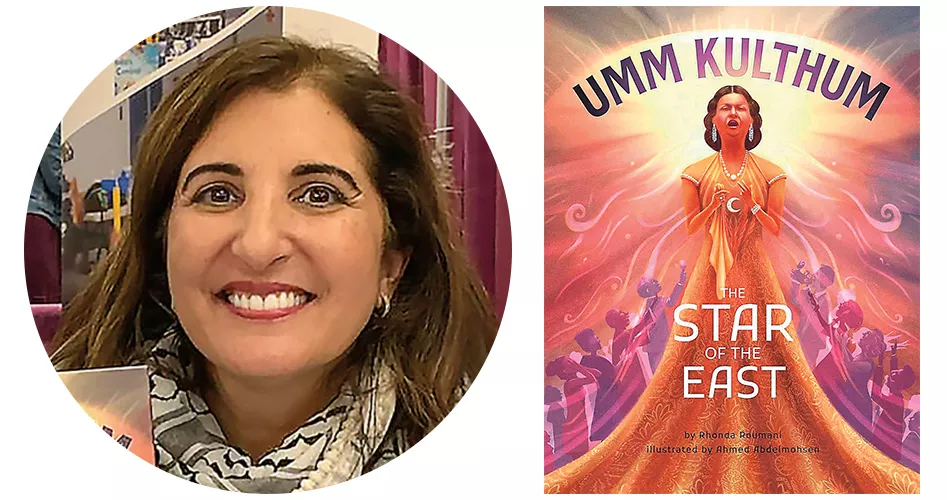
Umm Kulthum: The Star of the East, Rhonda Roumani. Crocodile Books, 2024.
Rhonda Roumani
You first encountered Umm Kulthum's music as a child in your family's home in California. What do you remember about that, and what drew you back to her story later as a writer?
As an Arab American, I grew up listening to Arabic music by Fairouz, Sabah Fakhri and contemporary pop. But I never really listened to Umm Kulthum until I was older, when my father became close to an Egyptian friend, Ahmed Zewail-we'd call him Amo Ahmed-who'd later win the Nobel Prize in Chemistry.
My father would teach him about classical music, and Amo Ahmed would introduce him to Umm Kulthum. It became part of their friendship, a sort of musical exchange. It was almost as if they were giving each other what they loved the most.
From my father's basement office, I'd hear the sounds of Umm Kulthum. But it wasn't the songs that captivated me-it was watching Amo Ahmed listen, completely mesmerized. It was as if he was consumed by the music, under a spell.
As a teenager, Umm Kulthum's music had felt heavy and distant to me but witnessing that connection made me curious about her power.
Years later, when I became a parent, I noticed how few books existed about Arabs written by Arabs. That realization-and wanting my own children to see themselves in stories-pushed me to write for young readers.
Umm Kulthum's story moves from a poor village to international fame. What about that journey spoke to you personally or creatively?
Discovering how this young woman from Egypt's countryside lifted her family through her talent-it's such a powerful story. She started performing religious songs with her father and ended up shaping modern Arabic music.
There's also something timeless in the way she took control of her image. When she moved to Cairo, she decided how she wanted to be seen. Today that reminds me of how young people manage their presence online, shaping how they're perceived.
And as someone who became a fiction writer later in life, I admire that she mastered her craft. She refused to sing a line she didn't fully understand. For me, as a writer-or for any artist-that's everything: knowing the meaning behind what you create.
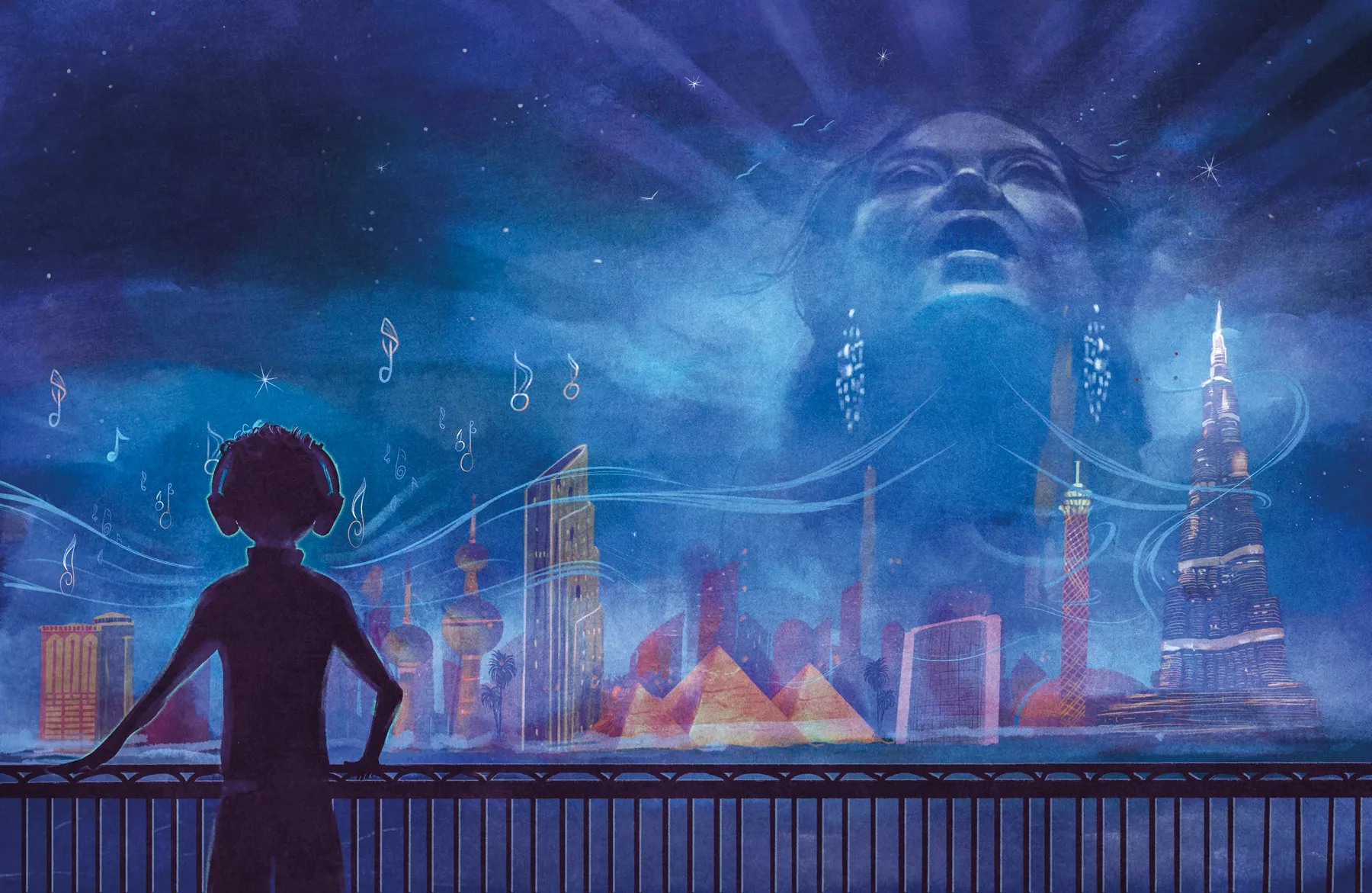
From Umm Kulthum: Star of the East, published by Interlink Publishing. Illustration copyright ©Ahmed Abdelmohsen. Reprinted by permission of the publisher
The book feels both historical and deeply human. How did you bring her story to life for young readers?
Writing for children means connecting to your younger self. I focused on her childhood-her desire to go to the Kuttab [religious elementary school] when only her brother could, her determination to learn. Those emotions are universal.
I also wanted the book to feel Egyptian. I requested that Interlink, the book's publisher, find an Egyptian illustrator, and they found Ahmed Abdelmohsen, who did an amazing job of infusing his drawing with details of Egyptian culture and the countryside that really only an Egyptian could bring-because whereas all Arabs loved Umm Kulthum, she is really an Egyptian icon. Egypt's fourth pyramid!
His full-page spreads pull you into her world, the Nile villages, the tents, the sense of movement. Picture books have that power to let children jump into the pages of another time and place.
Umm Kulthum faced criticism and social limitations early on. What do you think her life teaches us about staying true to oneself?
It's about authenticity. Everything she did was rooted in that. When she first came to Cairo, she tried to sing what was popular, and it didn't work. So she returned to what she knew best, the classical Arabic forms, and that became her strength.
When someone is authentic, we feel it, we see it. That's what drew great poets and musicians to her: They knew her voice carried truth. She spoke for herself but also for generations. That's what made her timeless.
Your books often explore identity and resilience. Do you see a connection between Umm Kulthum's story and your larger body of work?
Definitely. As a journalist, I've always tried to tell stories of ordinary people in the Arab world, rather than through Western lenses. Writing for children is an extension of that. It's about telling our stories early, so young readers grow up knowing that these figures existed and mattered.
My earlier picture book, Insha'Allah, No, Maybe So, introduces the word inshallah to Western audiences through a child's eyes. It's about reframing how our words, our stories and our cultures are seen. In a way, every book I write is an act of reclaiming our narratives.
Umm Kulthum's music still echoes across the Arab world. What gives her voice such enduring power, and what do you hope readers take from her story?
She sang about love and longing-feelings everyone understands. That nostalgia, that yearning, is part of who we are as Arabs. Even today, you listen to Umm Kulthum at night for dreaminess and Fairouz in the morning for vitality.
What I hope readers, especially young ones, take away is that doing what you love is key to a fulfilling life. You don't have to conform. If you stay true to yourself, no matter your values or background, there's space for you in the world.
This interview has been edited for length and clarity.
More From AramcoWorld
Cairo Still Hums Her Name
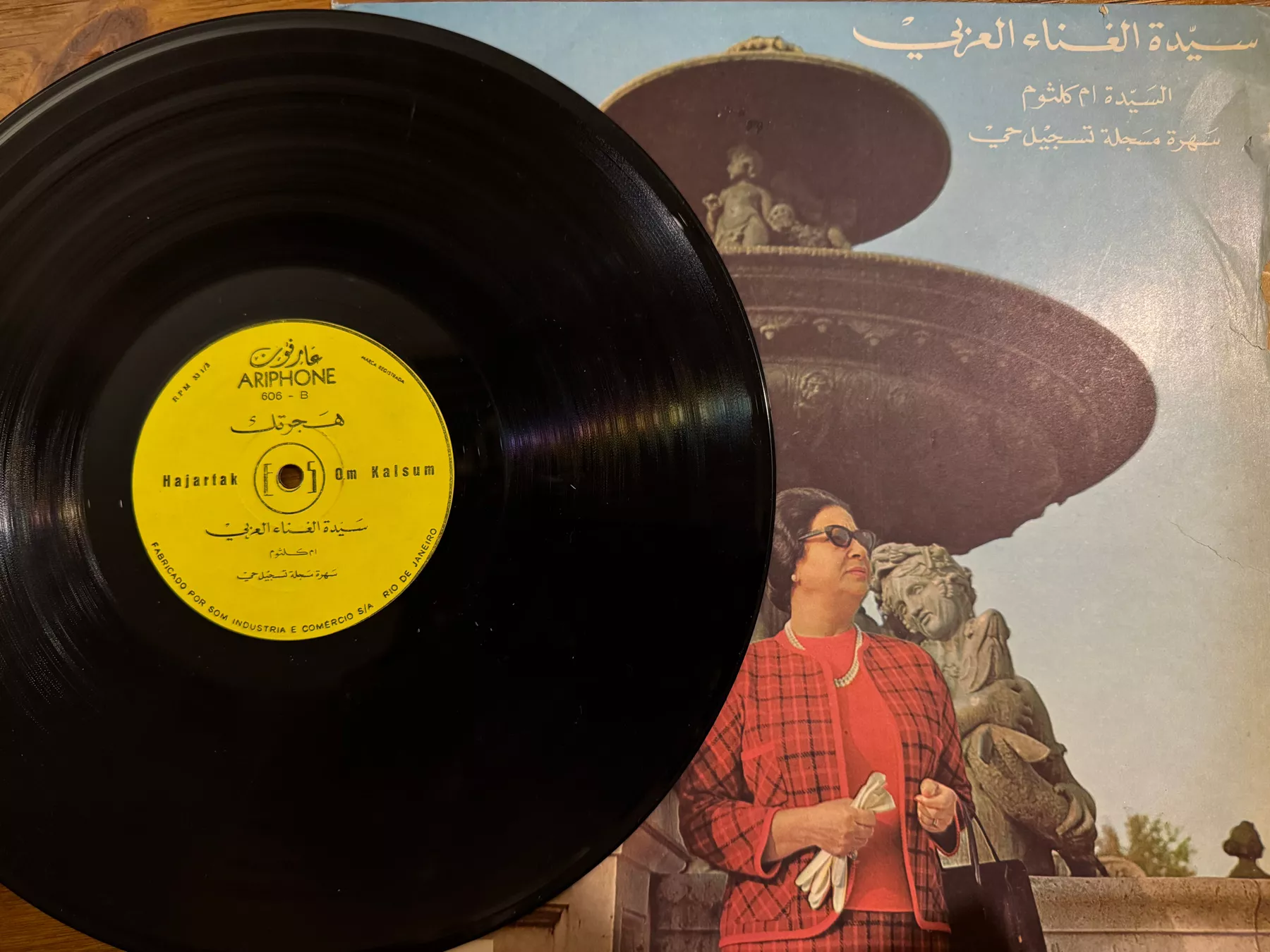
You may also be interested in...
Artist Stefania Artusi Khalfi Maps Palermo's Arab Society
Culture
An artist looks past the history books to uncover the hidden landscape of Sicily's capital.
World Cup Stadiums Built on Nations’ Living Heritage
Culture
Football grounds are no longer just engineered arenas. They are designed to project cultural and national identity—and leave a legacy long after the final whistle.
Spotlight on Photography: Long Exposure Grabs AlUla's Starry Night
Arts
Photographer Waleed Dashash gets away from urban light pollution, adjusts his aperture and shutter speed—and catches the majesty of AlUla at night.