Football's Other Score: World Cup Music Unites Fans Around the World
The collaborative nature of World Cup songs reflects the global scale of the tournament itself.
How Football’s Global Soundtrack Became the Game’s Second Language
For just a moment, put aside thoughts of football and just consider the global reach of “Waka Waka (This Time for Africa),” the official song of the 2010 FIFA World Cup in South Africa. Sixteen years after its release, Colombian pop star Shakira’s song has been streamed more than 1 billion times, a fraction of its viewings on YouTube, prompting the Guinness Book of World Records in 2025 to designate it the World Cup’s most popular song. This serves as a reminder of how deeply music has become embedded in the football tournament’s identity.
Over more than two decades covering music, I’ve seen how songs like this come to define events that extend far beyond the stadium.
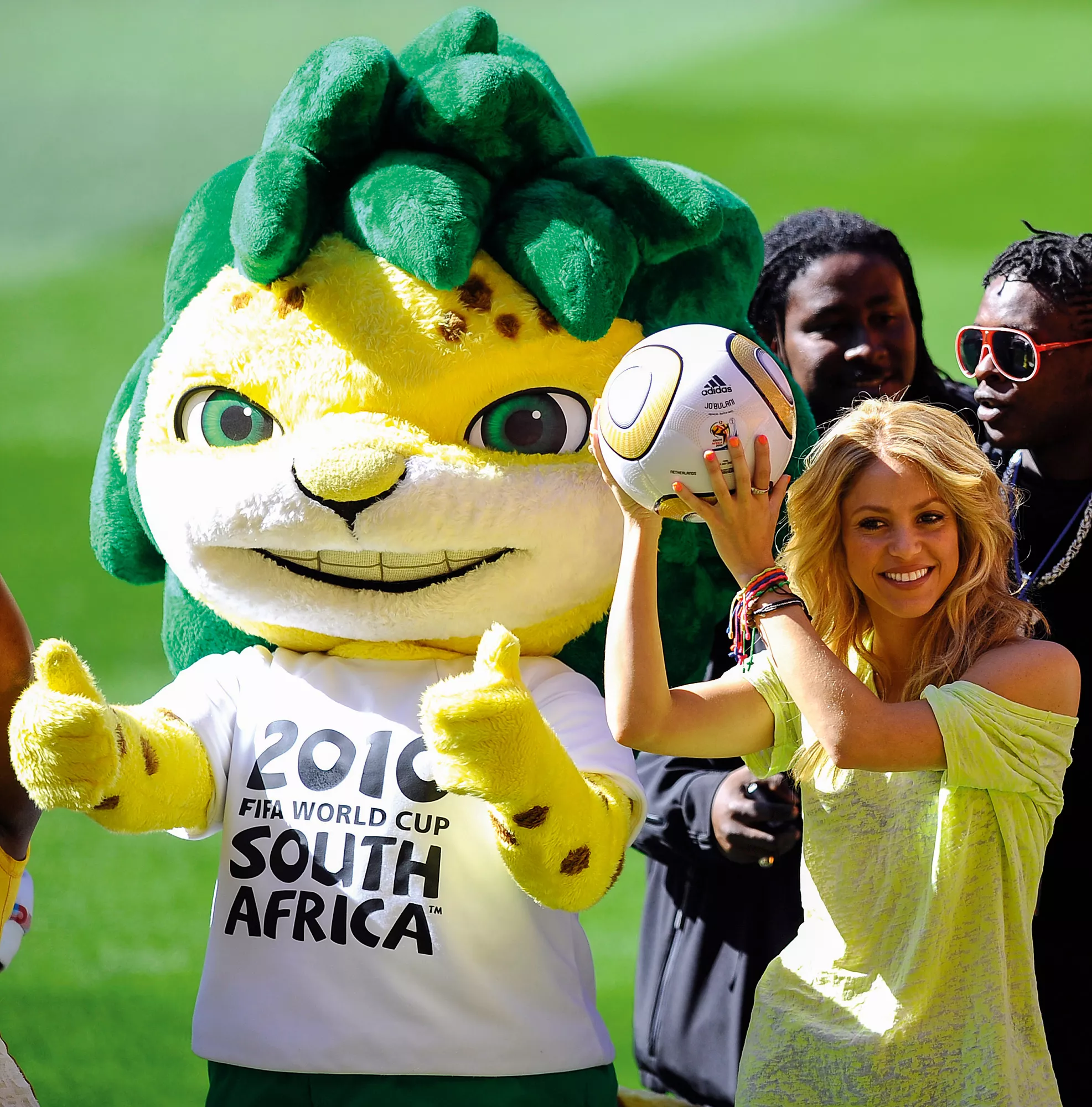
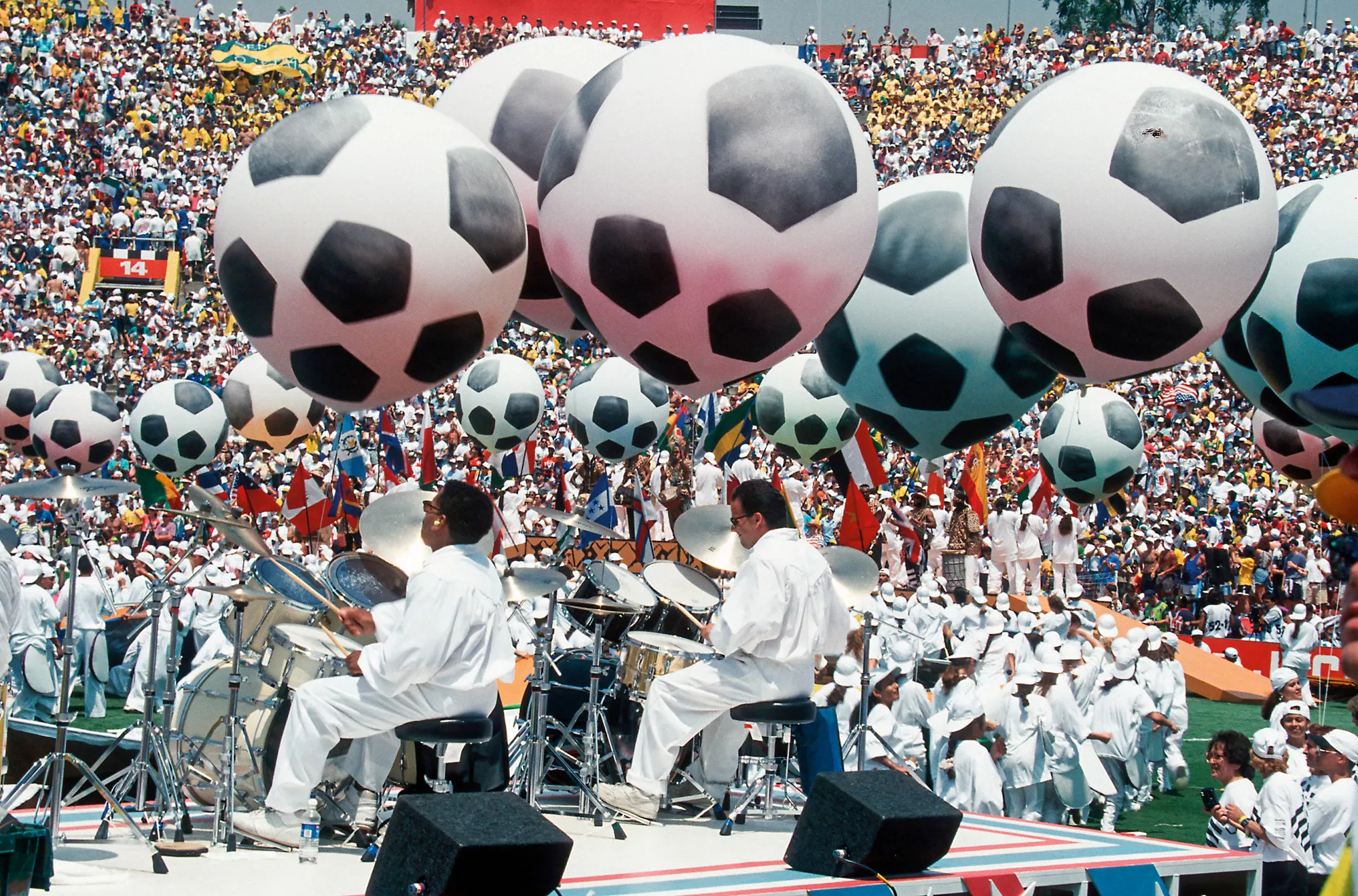
Colombian singer Shakira is joined by mascot Zakumi, ahead of the 2010 World Cup final in Soweto, a suburb of Johannesburg, South Africa. The singer performed the World Cup anthem “Waka Waka” to open and close the tournament. Top During each World Cup, people around the globe commune not only over the game but also over its music—sharing its pulses, chants and melodies in homes and arenas, including at the closing ceremony in 1994 in Los Angeles.
Evrim Aydin/Anadolu Agency via Getty Images Top: Lutz Bongarts/Bongarts/Getty Images
Consider the architecture behind “Waka Waka”—because it takes a village to create a pop song. Shakira, who boasts Lebanese ancestry, co-wrote it with producer John Hill, and they brought in Freshlyground, a South African band to add instrumentation. What was born was a multilingual, multicultural marvel of a song in Spanish, Xhosa (an indigenous South African language) and English with musical elements from the Congo, Cameroon, the Caribbean and South America.
It became a kind of global collaboration—a soundtrack built to reflect the scale of the tournament itself.
That approach has only expanded over time. The 2022 World Cup in Qatar—the first held in the Arab world—pushed it further, foregrounding artists from across the Middle East, North Africa and beyond.
A Game You Hear as Much as See
Music and football have been intertwined since the game’s earliest organized forms in 19th-century England, where chants and songs emerged alongside the sport itself. Long before the World Cup existed, football fans were already using music to create atmosphere, identity and belonging.
From the outset, football was as much something you heard as something you watched—a pattern that holds just as true in English terraces as it does in North African stadiums or Arabian Gulf arenas, where drums and chants shape the rhythm of the game.
The two, music and football, feel like natural counterparts. Confronted with silence, we tap out a rhythm. Presented with a spherical object on the ground, we kick.
Both rely on structure while leaving space for improvisation. Both can quicken the heart and cross language barriers. It stands to reason that these impulses—for song and for sport—would evolve together over time.
That connection, though, is not a single tradition so much as a collection of many. As David Goldblatt, the football historian and author of The Ball Is Round: A Global History of Football, told me, football operates at multiple levels—from global spectacle to grassroots play—but music runs through them all.
“There’s a lot of singing in football in all different cultures. ... When we speak of music and football, it’s a varied thing.”
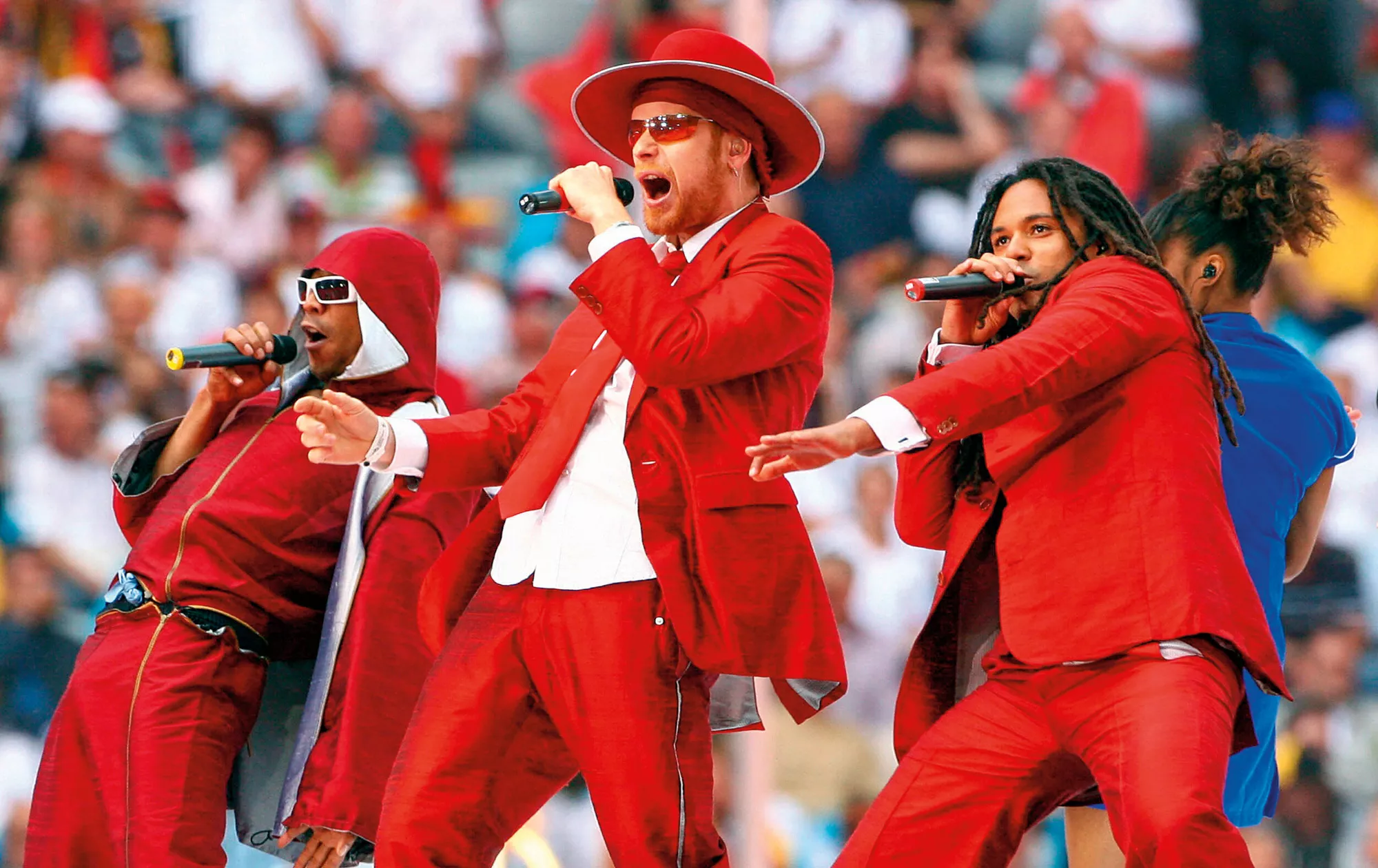
Members of German reggae/ragga band Seeed perform during opening festivities in 2006 at Munich’s World Cup Stadium.
Michael Kappeler/DDP/AFP via Getty Images
“We often speak of football meaning the male professional spectacle,” he says. “But you have women playing professional football. The game reaches all parts of the world. It’s also a grassroots sport with kids kicking a ball around the pitch in South London. But obviously there’s a lot of singing in football in all different cultures. ... When we speak of music and football, it’s a varied thing.”
Back in Uruguay in 1930, that synergy was more modest. The first World Cup was composed of 13 teams in an era of less advanced international travel. Due to inclement weather, Egypt literally missed its boat, leaving Africa without representation. But seven nations from South America, two from North America and four from Europe convened in Montevideo, where Uruguayan singer José “Pepino” Ministeri’s performance of “Uruguayos Campeones” —widely considered the first World Cup song—introduced the world to the sounds of the host nation.
From these modest beginnings, the relationship between football and music grew steadily more elaborate. By the late 20th century, FIFA had begun commissioning official songs and anthems for each tournament, transforming the World Cup into one of the world’s most visible musical stages.
Today the game is immersed in sound. Music envelops players as they emerge onto the pitch. When the game rests, music fills the void, inside stadiums, on broadcasts, in public spaces.
Goldblatt cites Pelé, the football icon and World Cup champion who also released an album of songs in 1977. He also mentions English internationals Glenn Hoddle and Chris Waddle, who scored a hit between them with “Diamond Lights” a decade later. These examples are curiosities, but they point to the porous boundary between sport and music.
Of course, not all of football’s most enduring songs are tied to victory.
Mariano Siskind, a Harvard University professor who studies the cultural and emotional dimensions of the game, points to “Un’Estate Italiana,” the official song of the 1990 World Cup in Italy, as a particularly powerful example.
“I was 17 at the time, and that was a mythical moment for [Diego] Maradona and the Argentinian national team,” says Siskind, who grew up in Argentina. “That wasn’t from a board room discussing Ricky Martin or Shakira or Robbie Williams. That was a piece of music that still explodes through Argentinian fans’ hearts. If you play that song now in Argentina, even though it’s in Italian, people will start crying and immediately sing in Italian and hug each other.”
Siskind pauses, then begins singing the song himself. (The 1990 World Cup wasn’t even Argentina’s year. The defending champion lost to West Germany.) As FIFA’s musical ambitions expanded, the most enduring songs often emerged from outside official channels.
“If you have a melody that sticks, fans will change the lyrics, and suddenly they’ve created an anthem that fans chant,” Siskind says. “You see this in the U.K. in general, and it’s becoming more common around the world.
“Football is such an effective medium. It’s football, of course, but it’s not just football. There’s music and language that go with it. All these cultural things. So you have this manufactured globality in some music. But you also have songs invented by fans, which is local [as a phenomenon] and resonates in a different way with people that gets replicated in different cultures around the world.”
In that sense, the World Cup’s soundtrack operates on two levels at once. There are the official songs—carefully produced, globally distributed—and then there are the ones that rise organically from the stands, reshaped and reinterpreted by supporters.
Both travel. Both endure. And together they form a kind of parallel language to the game itself.
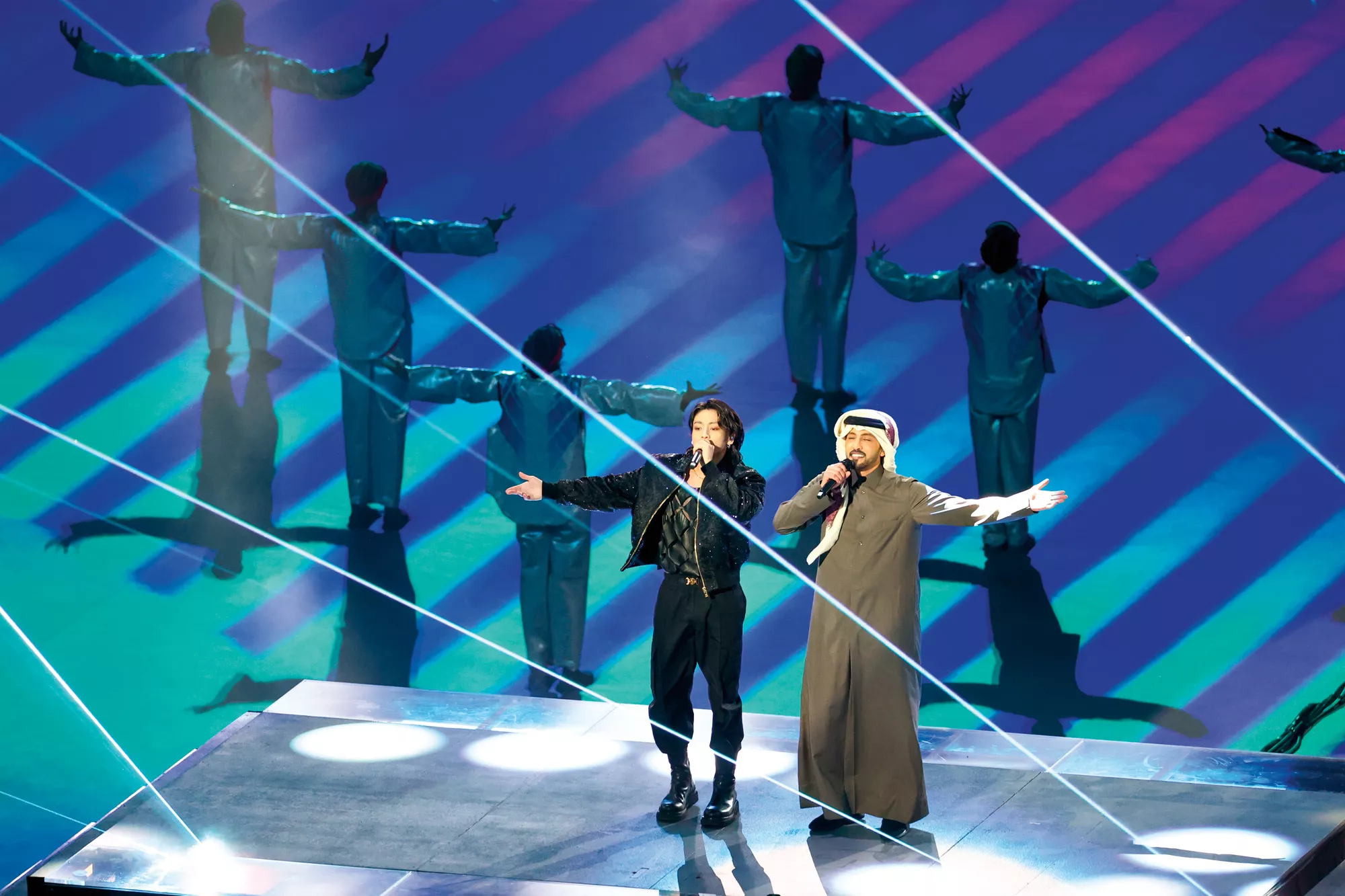
Jung Kook, left, of South Korean band BTS and Qatari singer Fahad Al Kubaisi sing “Dreamers” during the opening ceremony of FIFA World Cup Qatar 2022.
Evrim Aydin/Anadolu Agency via Getty Images
From the Middle East to the World
That language has expanded most visibly in recent tournaments. The opening ceremony at the last World Cup, held in Qatar, reflected that shift when South Korean pop star Jung Kook performed “Dreamers” alongside Qatari singer Fahad Al Kubaisi, underscoring the tournament’s increasingly global musical identity.
That approach extended across the tournament’s official songs, namely tracks “Hayya Hayya (Better Together),” performed by Davido, Aisha and Trinidad Cardona, and “Light the Sky,” featuring artists including Nora Fatehi and Balqees—collaborations that brought together artists from across the Middle East and North Africa, placing regional voices within a global pop framework.
Beyond FIFA’s official releases, Algerian raï singer Khaled—one of the most prominent figures in Arabic-language music—became part of the tournament’s wider musical orbit, introducing global audiences to a sound shaped by North African traditions and carried across borders through migration and diaspora.
Raï—a folk music dating back more than a century—and football were natural counterparts, much like hip-hop and football are, as the Algerian music makes use of brisk tempos and leans heavily on percussion. Chants, raps, anthemic choruses: These are the short, sharp, repetitive spaces where music overcomes language barriers, much like the sport.
Global Anthems and Local Soundscapes
This year’s World Cup musical endeavor attempts to unify the sprawling host nations of North America: Canada, Mexico and the United States.
FIFA has commissioned musicians from each of the 16 host cities to remix a 2026 World Cup theme, “infusing it,” according to the sport’s governing body, “with the distinct rhythm, vibe and cultural essence” of each one’s respective city. The result is an anthology that showcases the host regions, taking fans on a unique auditory journey.
Some contributors are well-known entities like Kansas City rapper Tech N9ne and, perhaps the most inspired choice for this year, DJ Jazzy Jeff representing Philadelphia. Other cities offered contemporary music, including electronic/DJ project Mexican Institute of Sound in Mexico City. And the DJ collective Bombón in Houston, whose “Screwmbia”—a nod to the late, legendary hip-hop producer DJ Screw and the African-influenced South American dance music known as cumbia—speaks both to the past and present of a multicultural city.
Michael “Buckamore” Arbizu provided the vocal parts for Bombón’s signature remix. He describes the opportunity as a chance to plug into something grand and global.
“I remember being a kid around the hood, and all the other kids would play ‘FIFA,’” Arbizu says of the popular video game. “To hear what Bombón put together and brought me in to do, it felt like this full-circle moment. That’s what’s magic about music and sports: They take you back to these memories of being little and seeing and hearing things. Soccer was so important to our community, so meaningful to our people.”
Alongside these local musical projects, FIFA still presents a traditional global anthem—the kind designed to echo across stadiums and broadcasts.
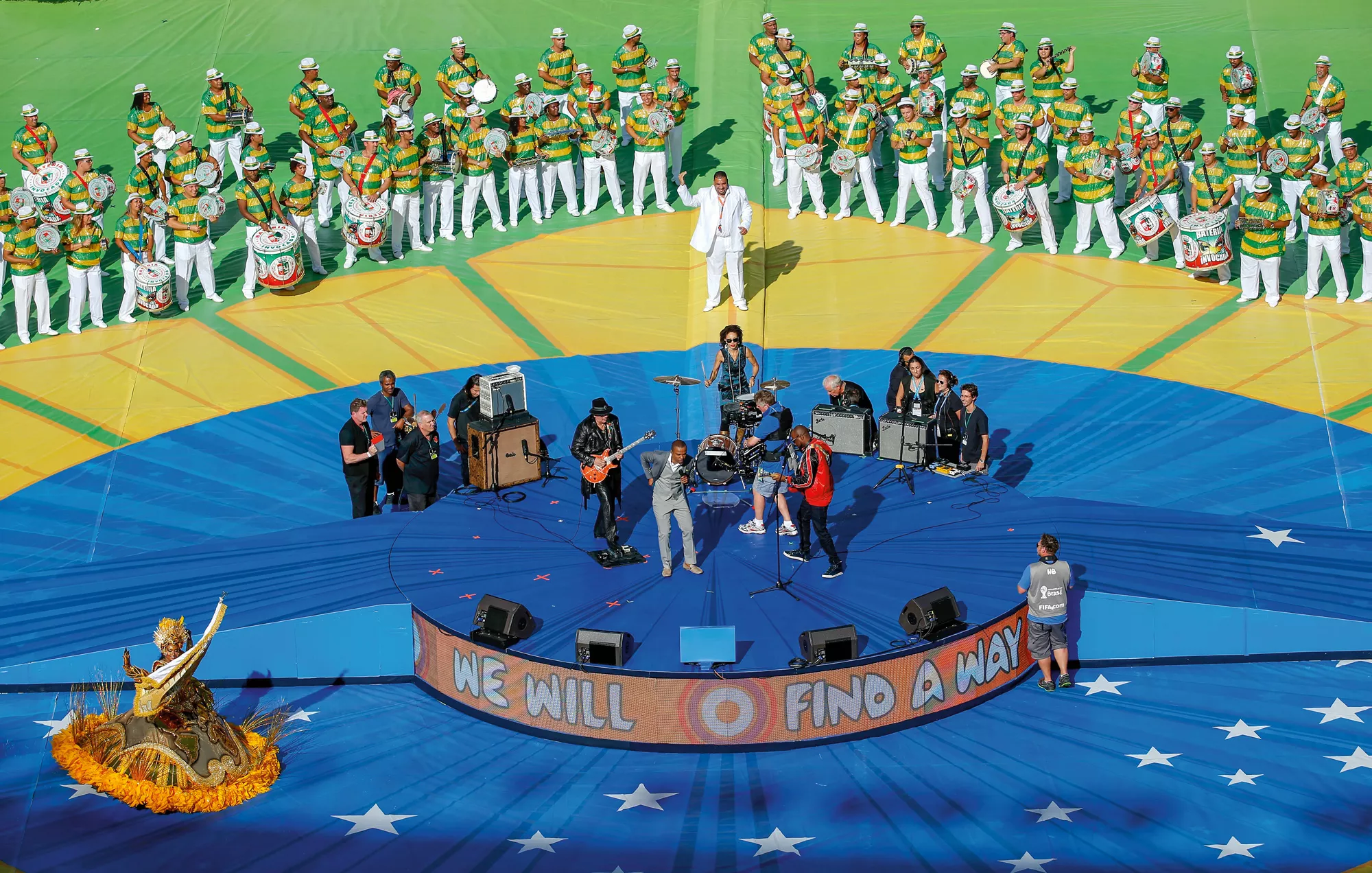
Carlos Santana, Alexandre Pires and Wyclef Jean perform “Dar um Jeito (We Will Find a Way),” the official anthem of the 2014 World Cup, during the closing ceremony in Rio de Janeiro, Brazil.
Pool/Getty Images
This year’s entry, “Desire,” recorded by Robbie Williams and Nicole Scherzinger, follows a familiar template: a slow build into a chorus engineered for collective release.
The lyrics give off high school coach vibes at intermission: “You’ve got the goal,” Williams sings, “And you’re driven by desire.”
Will it age into a classic? Not all World Cup songs are created equally, so we may not know for years.
But it ticks a lot of boxes.
Inspirational and aspirational -isms? “The dream is coming true!” Check.
Reference to the game itself? “It’s a beautiful game.” Check.
A wordless “whoah” or “oooh” within the chorus, a chant or such to send arms swaying upward? Check.
While songs like these are deliberately constructed for maximum impact, sometimes pop music sneaks into football lore. U2’s “One” was a 1991 hit for the Irish rock band. Thanks to ESPN, the song was grafted to World Cups in 2006 and 2010 for its “One Game Changes Everything” campaign.
Frenchman Jean-Michel Jarre’s “Rendezvous” was composed in the 1980s with space exploration in mind. A dozen years after its release, the piece was resurrected and remixed into “Rendez-Vous 98” for the 1998 World Cup television coverage.
Jarre told me in 2018, “You compose, and you bring pieces of music into this world, but you don’t know where they will go. Sometimes they live their own lives. I didn’t write ‘Rendezvous’ for the World Cup. But something about the music spoke to somebody, and it got a new life.”
More often, though, putting music to an event like the World Cup is a deliberate pursuit, with the breadth required of a truly international event. The list of musicians who have left fingerprints on the World Cup is vast and varied and runs through styles of music past and present: Queen, Il Divo, Ozuna, Darryl Hall, Giorgio Moroder, Tears for Fears.
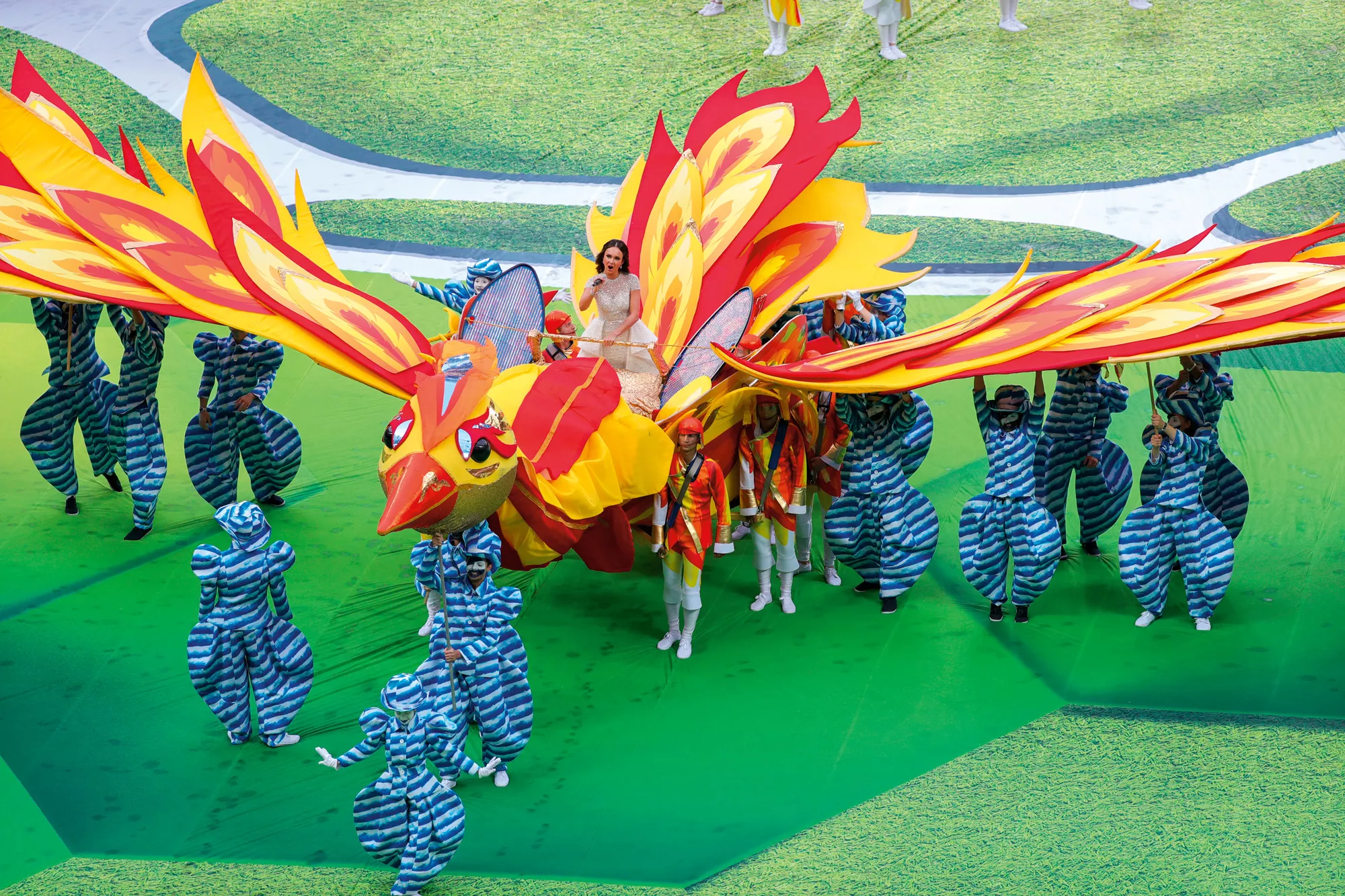
Music is integral to the pageantry that opens World Cup tournaments. Opera singer Aida Garifullina rides the firebird, a mythical symbol of Russia, ahead of the country’s first-round match against Saudi Arabia at the 2018 World Cup in Moscow.
Christian Charisius/Picture Alliance via Getty Images
Sometimes the artist already has achieved cross-cultural success. So a Colombian like Shakira is tasked with reversing a Babel-esque series of distinctions between us to create a song of commonality, as captured in “Waka Waka.”
There rests some of the allure of both music and the beautiful game. Each country brings with it a songbook of anthems, chants, cheers and the bright colors of a team’s kits and flags. A global game, like music, allows room for such regional revelry. But it also provides spaces for us to tap out a tune or to kick a ball that has rolled toward our feet. Both remind us that for all our celebrated differences, we feel a pull toward the same shared experiences.
More From AramcoWorld
Covering Football’s Backstage

You may also be interested in...
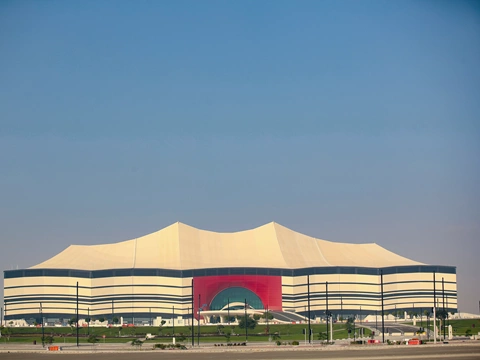
World Cup Stadiums Built on Nations’ Living Heritage
Culture
Football grounds are no longer just engineered arenas. They are designed to project cultural and national identity—and leave a legacy long after the final whistle.
Artist Stefania Artusi Khalfi Maps Palermo's Arab Society
Culture
An artist looks past the history books to uncover the hidden landscape of Sicily's capital.
A Conversation With Author Tim Bascom on Why Football Endures
Arts
Culture
As the 2026 World Cup nears, Tim Bascom asks: Why do people keep playing soccer when the world is ready to break apart?