At New York’s Oldest Mosque, Tatar Memory Endures
Founded by Lithuanian Lipka Tatars, Brooklyn’s Powers Street Mosque remains a quiet anchor for faith, culture and belonging.
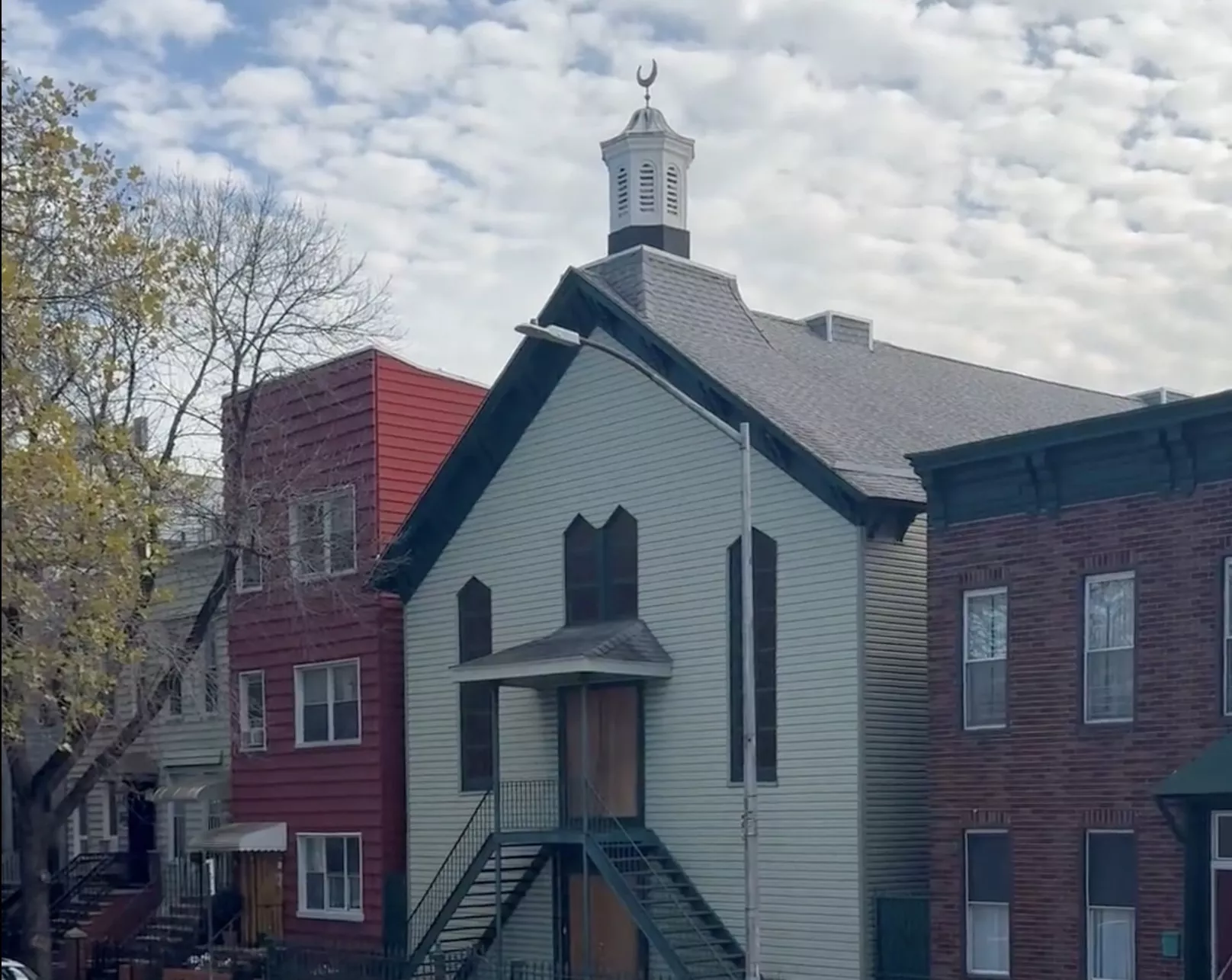
In the heart of the East Williamsburg neighborhood of Brooklyn, New York, on a quiet residential street, sits a green building with a small minaret rising from its roofline, a crescent perched gently on top. The structure is modest yet distinct—just unusual enough that anyone walking by would notice that it doesn't look quite like the neighboring row houses. This is the Powers Street Mosque, the oldest continuously used mosque site in New York City.
Entering the mosque feels like stepping back in time. Its main hall on the ground floor is warm, the air textured by an old vent heater protruding from the ceiling. Worn wooden doors and columns reveal the building's age.
The space is lined with aged photographs that trace the earliest years of the congregation. A closer look reveals something unique: The faces looking back appear distinctly European—men and women with light-colored eyes and fair complexions. Printed surnames resemble those more commonly associated with Eastern European or Jewish communities. On one wall hangs a Soviet-era ethnographic poster, a map of the former USSR showing the patchwork of ethnic groups that once existed across the region.
This content is blocked
You need to give permission.
Watch here to learn more about New York’s Muslim Tatars and how this story was produced.
This content is blocked
You need to give permission.
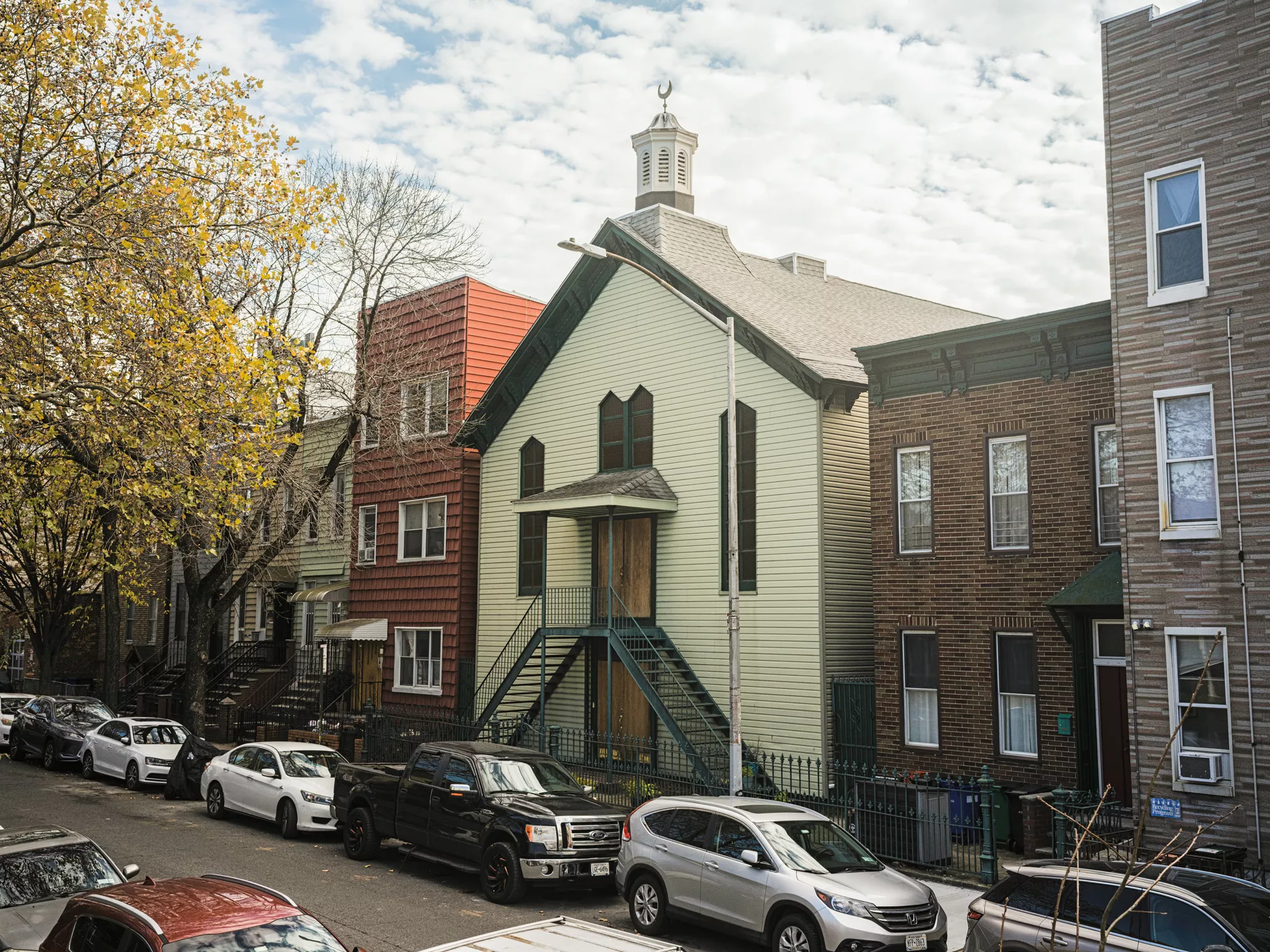
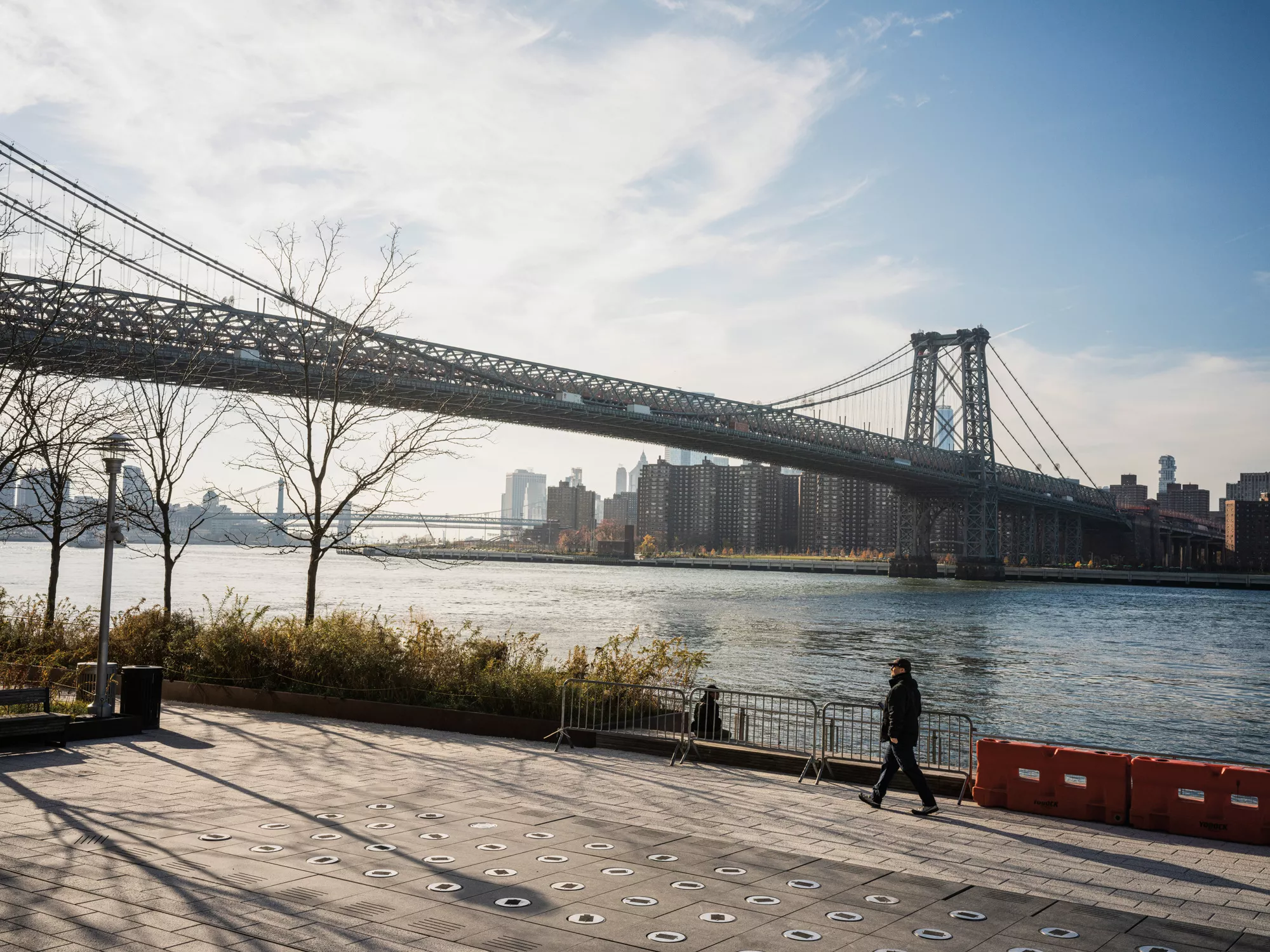
The Powers Street Mosque, the oldest continuously operating mosque in New York City, sits nestled between houses in the Williamsburg neighborhood of Brooklyn. Top The Williamsburg Bridge spans the East River from Manhattan to Williamsburg, where Tatar Muslims first settled.
This mosque was not founded by Arab, South Asian or African immigrants, groups more commonly associated with American Muslim institutions today, but by a small community of Lipka Tatars, Muslims whose ancestors lived for centuries in Lithuania and neighboring lands before immigrating to New York.
"We really start to see the migration of Lithuanian Tatars to New York, especially in Williamsburg, around the late 19th and early 20th centuries," says Dominique Jean-Louis, chief historian at the Center for Brooklyn History. "It's around that time period when you also have organizations start to spring up to support that community, like the American Muhammedan Society, which is established in 1907."
In the corner of the mosque's main hall sits a small library that houses not only books but personal documents of past members.
"These are handwritten personal prayer books and scrolls that folks have donated to us when a family member passes away and their children do not necessarily practice," says Alyssa Haughwout, the former caretaker of the mosque, a role she held for 10 years. Her family has been part of the mosque's congregation for five generations—each enveloped in its cozy, welcoming embrace.
Her first memory of the mosque was rolling a McDonald's Happy Meal toy along the prayer room floor as a child.
"I remember the sense of being related to everybody who was there. It might be a far distant branch on the family tree, but it was understood that everybody was connected to everybody else somehow," Haughwout says.
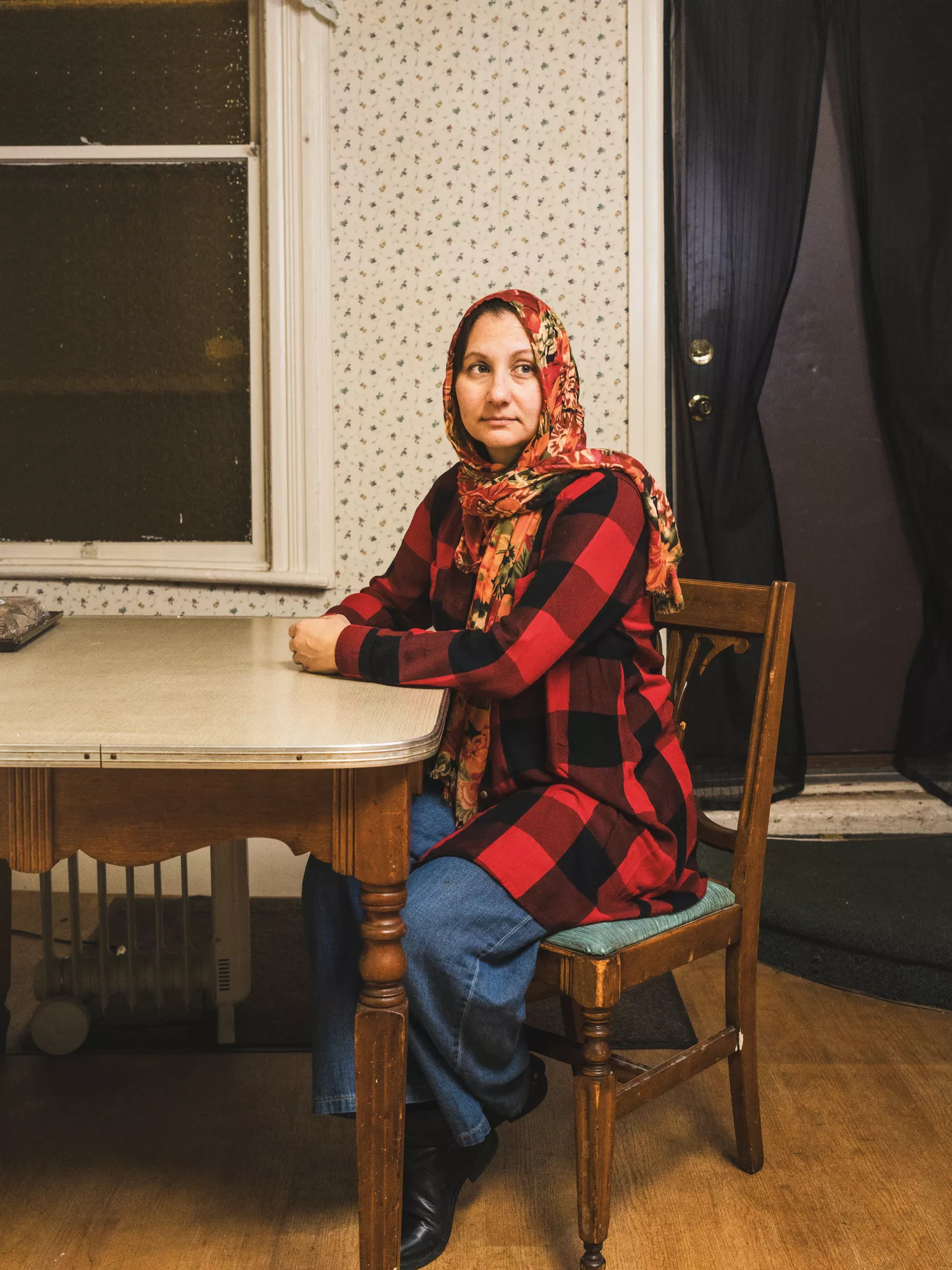
Alyssa Haughwout, a third-generation member of the Lipka Tatar community, served as caretaker of the mosque for a decade.
“It might be a far distant branch on the family tree, but ... everybody was connected to everybody else somehow.”
Today, she hopes to keep the legacy of the Lipka Tatar community in New York alive through the sustainability of the mosque it established more than 90 years ago.
Easier said than done.
Although the exact numbers are not known, a small Lipka Tatar community still lives in New York, but its presence is much less pronounced today. The mosque's survival has been in question for years since the dispersion and assimilation of the Lipka Tatar community. It is now at a crossroads: It must find that balance between identity and survival.
The upper floor is the carpeted prayer room. Along the walls are plaques displaying traditional Islamic creeds, rendered in Arabic script, handmade by past members, some dating back before the mosque's establishment.
At the front of the room sit the key architectural features that define any mosque. Tucked neatly into the corner is the mihrab, in this case a wooden stand that serves to orient worshippers toward Makkah. Haughwout explains that even though the direction of the mihrab is not "quite right," tradition has kept it in its original place.
Just beside it rises the minbar, a small, elevated platform from which resident imams deliver sermons.
At the far back of the room rests an American flag—a subtle but striking reminder of where this mosque's story ultimately unfolds.
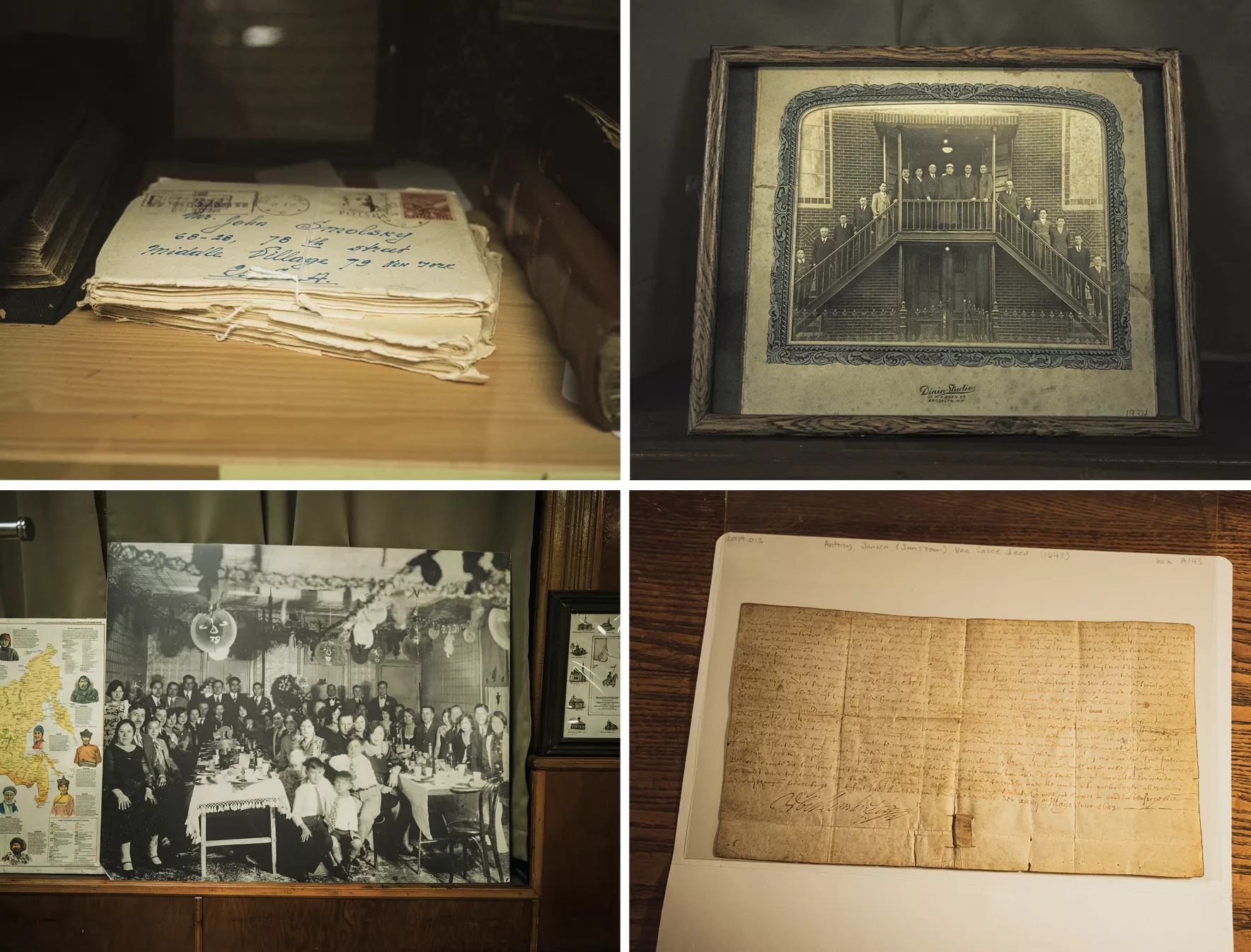
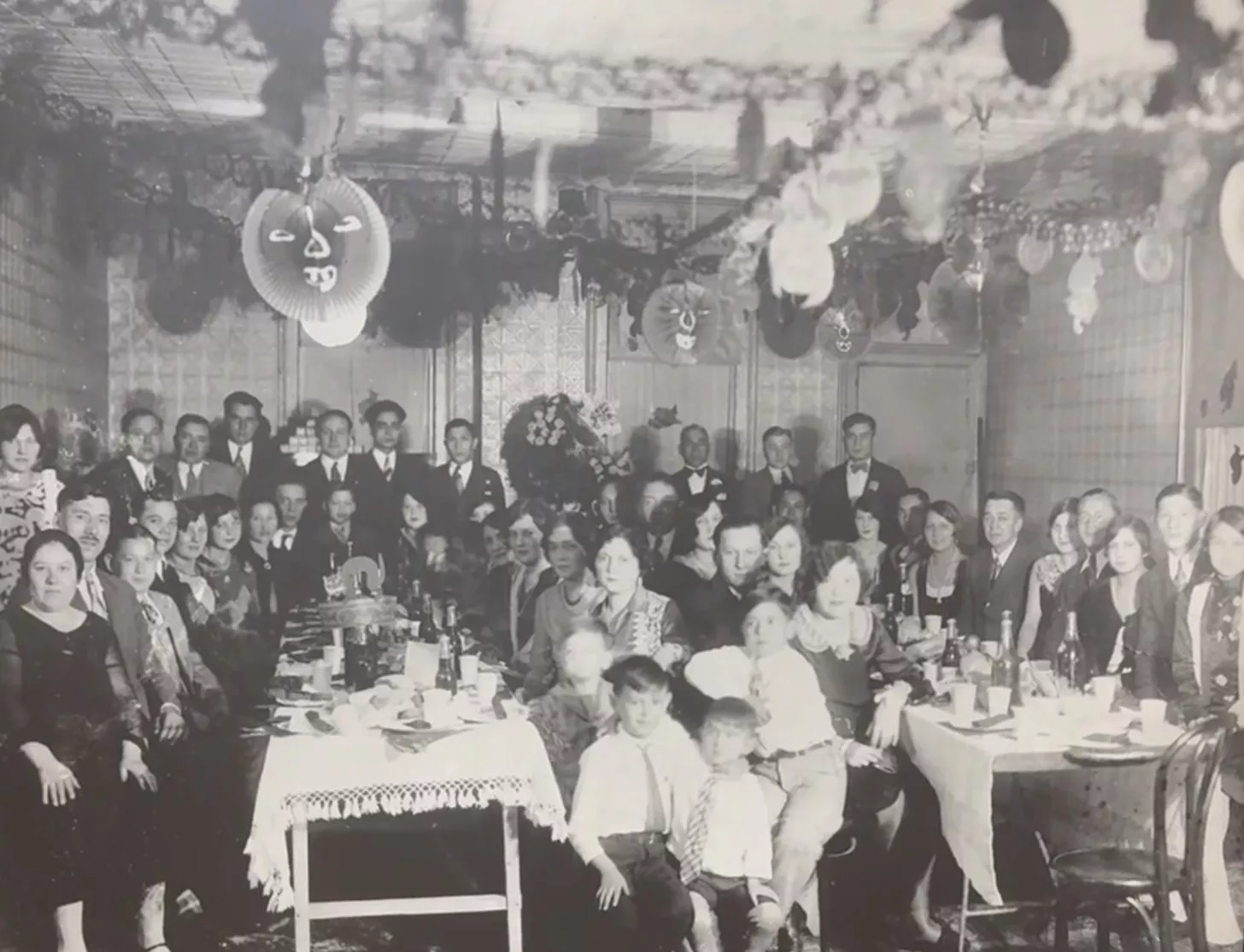
Clockwise from top left A case at Brooklyn, New York’s Powers Street Mosque contains donated prayer letters; the founders pose in front of the building in 1934; the Othmer Library, part of the Brooklyn Public Library system, houses a 1643 deed giving 200 acres near Coney Island, a neighborhood of Brooklyn, to Anthony Jansen van Salee, the first-known Muslim landowner in Brooklyn; and the mosque displays an undated photo of its Lipka Tatar members.
How did the Tatars get to New York?
Islam reached Eastern Europe during the 13th and 14th centuries CE, carried by the shifting politics that followed the breakup of the Mongol Empire. As that empire fragmented, Muslim, Turkic-speaking groups emerged across its former territories—and became the peoples later known collectively as Tatars.
Adeeb Khalid, professor of Asian studies and history at Carleton College in Northfield, Minnesota in the United States, explains: "'Tatar' is a broad term that has come into use over the last 150 years to refer to a number of different groups…. Today the word is used basically for two major groups: the Volga Tatars and the Crimean Tatars."
The Lipka Tatars, however, took shape through a different historical trajectory. Their story begins in 1397 CE, during what Khalid describes as "an intra-Tatar civil war." In that conflict, one faction ended up seeking refuge in Lithuania. Its members' military skill secured them a place in society: "They were turned into nobles because they were warriors, and so they had a pretty good niche in that society even though they retained their faith," Khalid explained.
From the 15th to 18th century, Lipka Tatars lived as a small, well-integrated minority in modern-day Lithuania, Poland and Belarus. When Russia absorbed those regions in the late 18th century, they became imperial subjects but remained distinct.
By the late 19th and early 20th centuries, many of them joined the wider Eastern European migration wave to the United States, driven by "the opportunity in the US more than anything else," Khalid said.
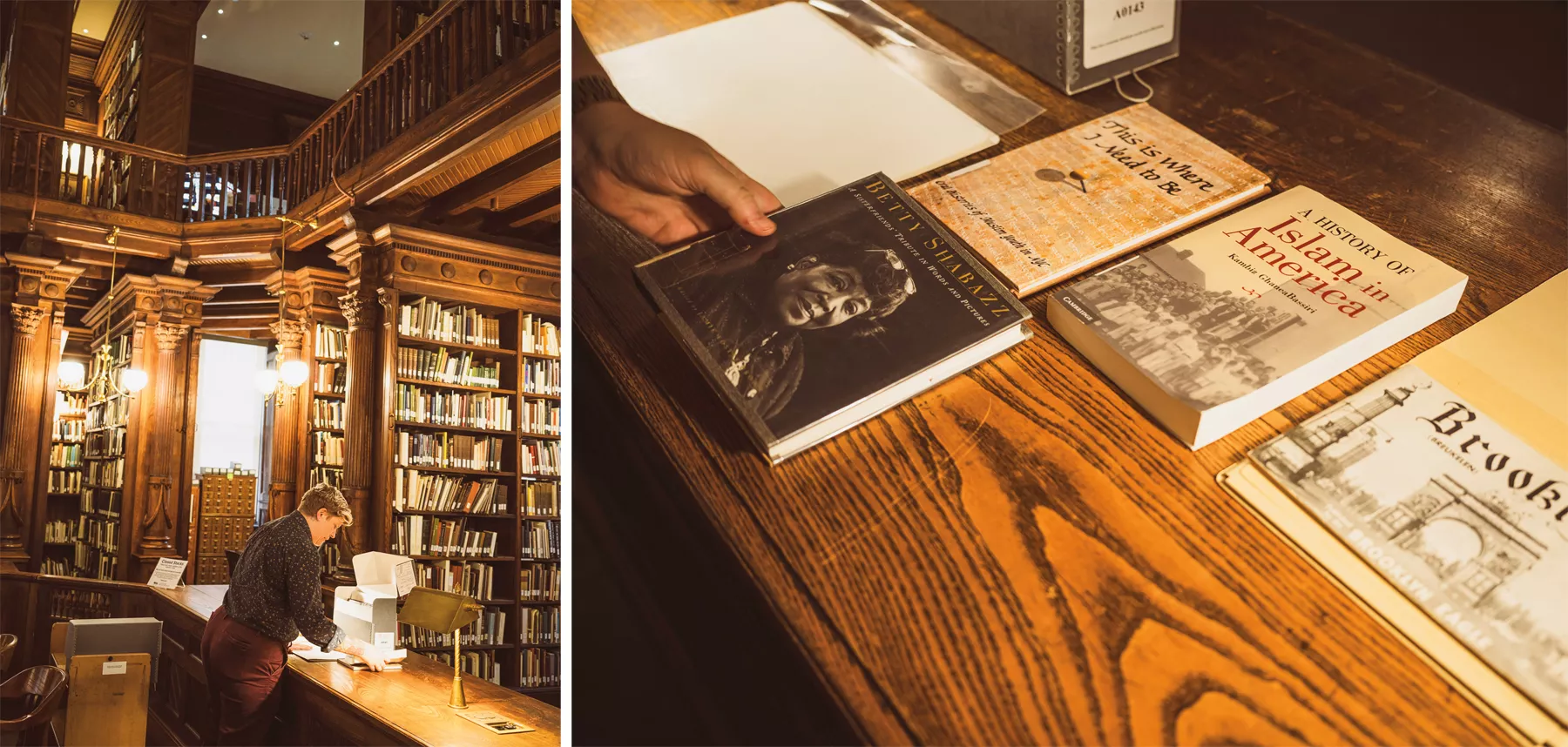
Left The Othmer Library archives manager Dee Bowers finds in a 1929 atlas that the building that became the Powers Street Mosque once was home to the Democratic Club of the 13th assembly district under Brooklyn’s old political ward system. Right The library contains various reference materials concerning Brooklyn and American Islamic history.
Their arrival coincided with a moment when New York, and specifically Williamsburg, was absorbing hundreds of thousands of immigrants every year.
Immigrants were drawn by both necessity and opportunity. "Jobs were becoming available in the United States. The economy was booming … we really saw Brooklyn's waterfront as being a source of many thousands of jobs," says Dominique Jean-Louis, chief historian at the Center for Brooklyn History. "Williamsburg is actually incredibly densely populated at this time with a number of different immigrants."
The Lipka Tatars entered this world as one of the smallest groups in a very crowded field. In Williamsburg, Jean-Louis notes, the dominant newcomers were Eastern European Jews, many leaving the Lower East Side for slightly more space across the East River, alongside older German immigrants, some Irish and Italian families, and Black migrants arriving from the American South. "This Tatar community would have definitely been amongst an extremely crowded, extremely diverse set of immigrants."
Early-20th-century Brooklyn was extremely crowded with limited sanitation and recurring disease outbreaks, according to Jean-Louis. "Water and its cleanliness is going to be a huge issue … you're also getting these waves of communicable disease … [and] a really heart-wrenchingly high infant mortality rate."
Within this setting in 1907, the Lipka Tatar community established the American Muhammedan Society, which Jean-Louis describes as one of the first organized efforts to support this new immigrant group as it navigated life in Brooklyn.
In its early years, the society rented assorted spaces for prayer and community gatherings, but the goal was always a permanent home. By the 1930s, that prospect became real when the community purchased a modest building on Powers Street to be its primary place of worship.
“I would love to continue to incorporate [the founders’ devotion] into programs so that the heritage is preserved.”
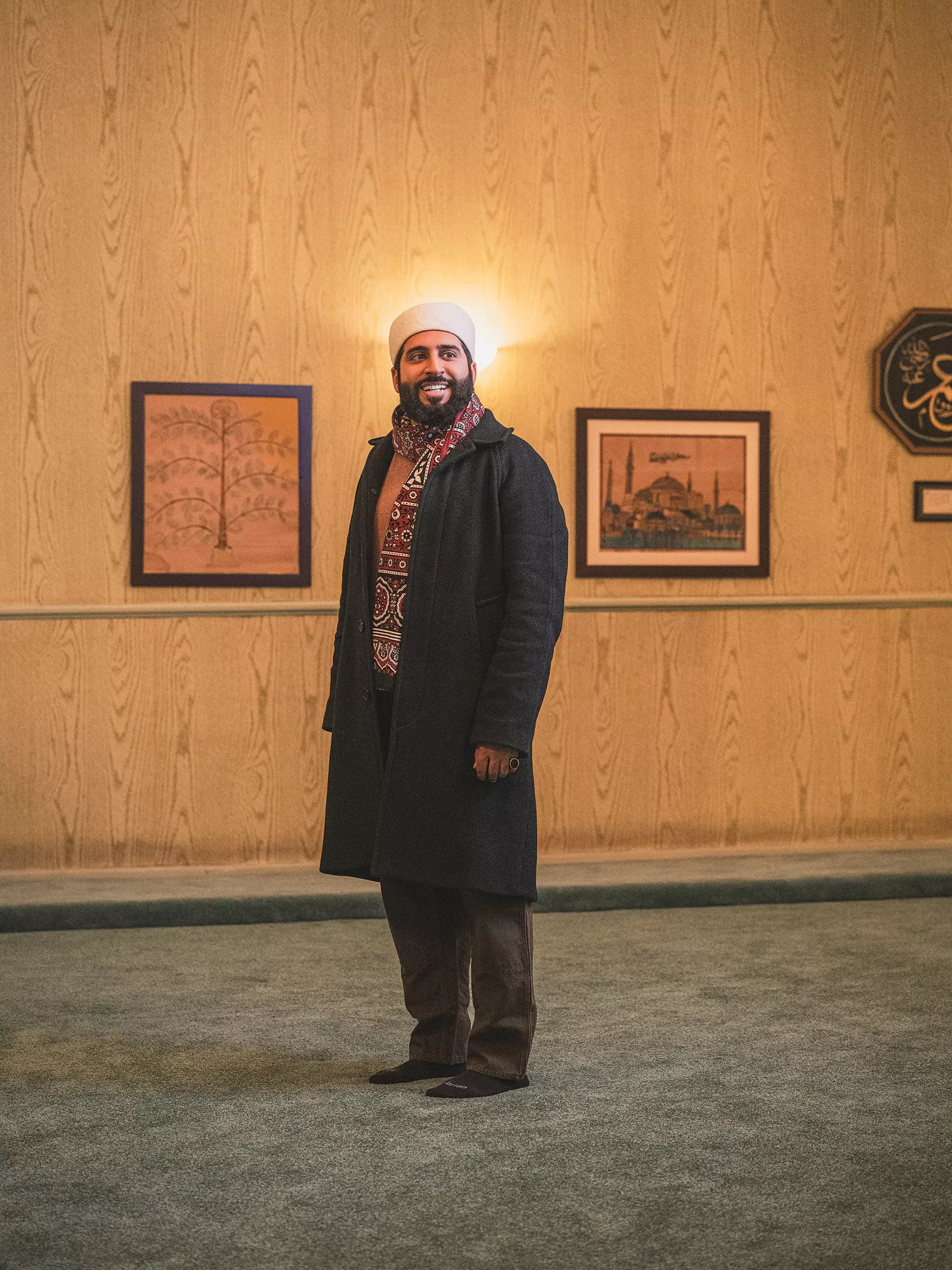
Imam Adnan Rokadia, who is not of Tatar origin, says he was drawn to the Powers Street Mosque’s rich history.
A mosque grows quiet
In the decades that followed, the building became the heart of a modest, tightly knit community. Longtime mosque member Jack Sedorowitz remembers the height of those years vividly. "The prayer room was full. Many people came for holiday prayers and special events…," Sedorowitz says. "We had our own culture and identity."
Yet by the late 1950s, dispersion was underway. Families followed opportunities to New Jersey and other parts of New York such as Long Island, Staten Island and other parts of Brooklyn. In addition, one of the pressures, Haughwout noted, was the community's instinct to fit in: a long-standing "push to Americanize."
Jean-Louis frames this shift within a broader reality of immigrant survival: "People were … thinking of assimilation as a survival tool. ... they understood the stakes of being 'othered.'"
Over time, the desire to blend in and the small size of the community meant that younger generations gradually lost fluency in the traditions their grandparents brought from Europe.
By the 1970s and '80s, the mosque's once crowded rooms grew quiet. Holiday gatherings diminished, elders passed away, and leadership roles became harder to fill. "Everything was so tied to the participation of only the Tatars, and that community … was dwindling," Alyssa recalls.
By the early 2000s, the mosque was still standing and its future was in question.
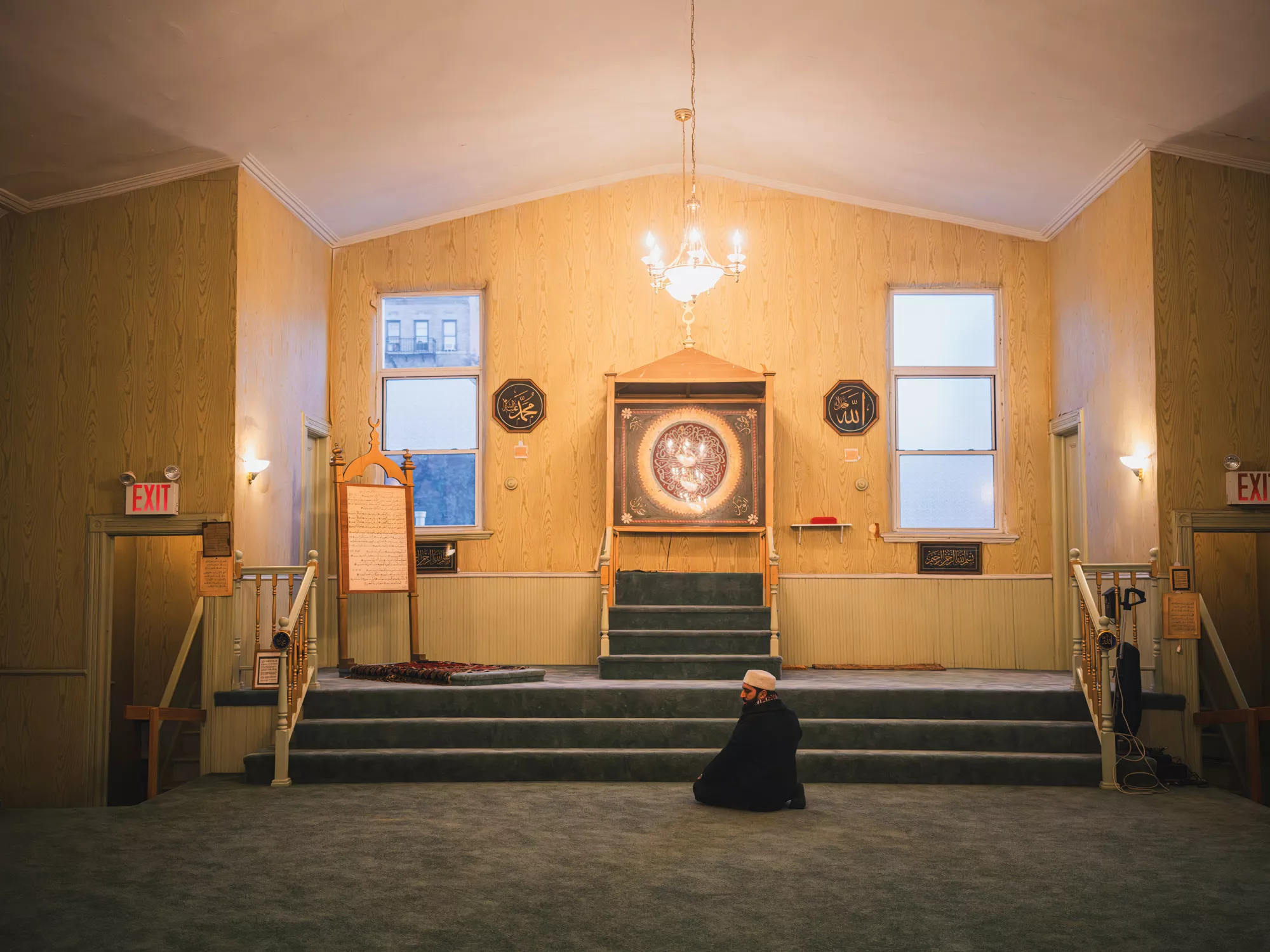
Rokadia prays in the second-floor prayer room.
Breathing new life into Tatar community
By the time Haughwout became caretaker of the Powers Street Mosque in 2015, she could see that it couldn't rely on family memory alone.
"When I started to be involved in my early 20s," she says, "that's when I was like, 'Oh, these things are kind of falling to the wayside because no one's around to take care of them.'"
For a decade the mosque was part of her daily routine. But she knew it needed more than maintenance. It needed a spiritual anchor.
Around 2020 the former imam had moved on to another mission, and the board began looking for a new imam. Haughwout knew the importance of finding someone who would be empathetic to preserving the traditions of the mosque's founding community.
Tatar groups generally followed their own Islamic traditions that had evolved over time, sometimes differing from those of other Muslim groups.
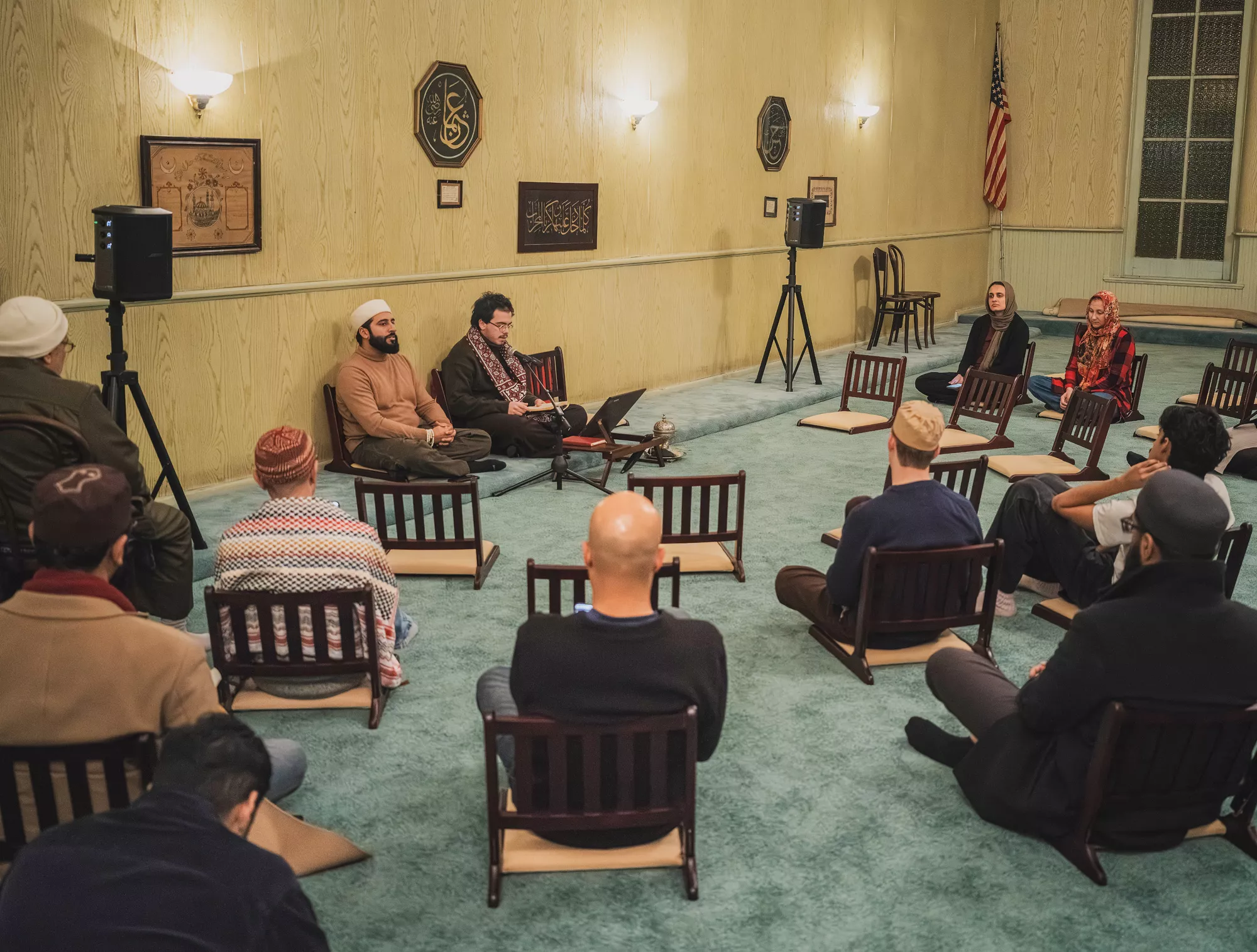
While honoring the founders’ mission, the Powers Street Mosque’s imam has implemented a community-building initiative with people of a variety of backgrounds.
"This is the way my grandmother taught me. My grandmother's grandmother taught her this. I think we're just such a unique case where there wasn't really a separation of culture from religion."
Haughwout contacted Adnan Rokadia, an imam she knew by reputation and who had attended events at the mosque but is not of Tatar origin. Expecting a referral, she asked whether he knew anyone who might serve. He wrote back immediately: "Yes, me. I can do it."
Born and raised in Queens, New York, Rokadia is a young, energetic imam who performs pastoral work at Mount Sinai Hospital and works as an interfaith advisor at the Pratt Institute, a private university in Brooklyn. What drew him to the Powers Street Mosque was not size but story.
"There was a lot of love and care that could be given into this very beautiful place to help bring it back to life slowly by appreciating and accentuating the beauty of the culture of the people that came and founded this place," Rokadia says.
His chaplaincy background shaped how he approached this small, aging, historically Tatar community wary of being overrun. "Some Muslims … can be a little bit headstrong about their ideas about things," he says. "In my work as a chaplain, it's all about understanding where people came from … being inquisitive, questioning."
A place like Powers Street, he says, "require[s] a delicate approach towards building a community that's going to be loving, caring [and] has the same values as the founders had intended."
Once he became imam, Rokadia launched a weekly gathering organized through an initiative he founded called Nafahat, with the goal to rebuild the mosque's congregation. The core purpose is community-building centered on spiritual practice.
"You see a younger crowd, young professionals, students and all sorts of different people from a wide range of ethnic backgrounds and histories," he says.
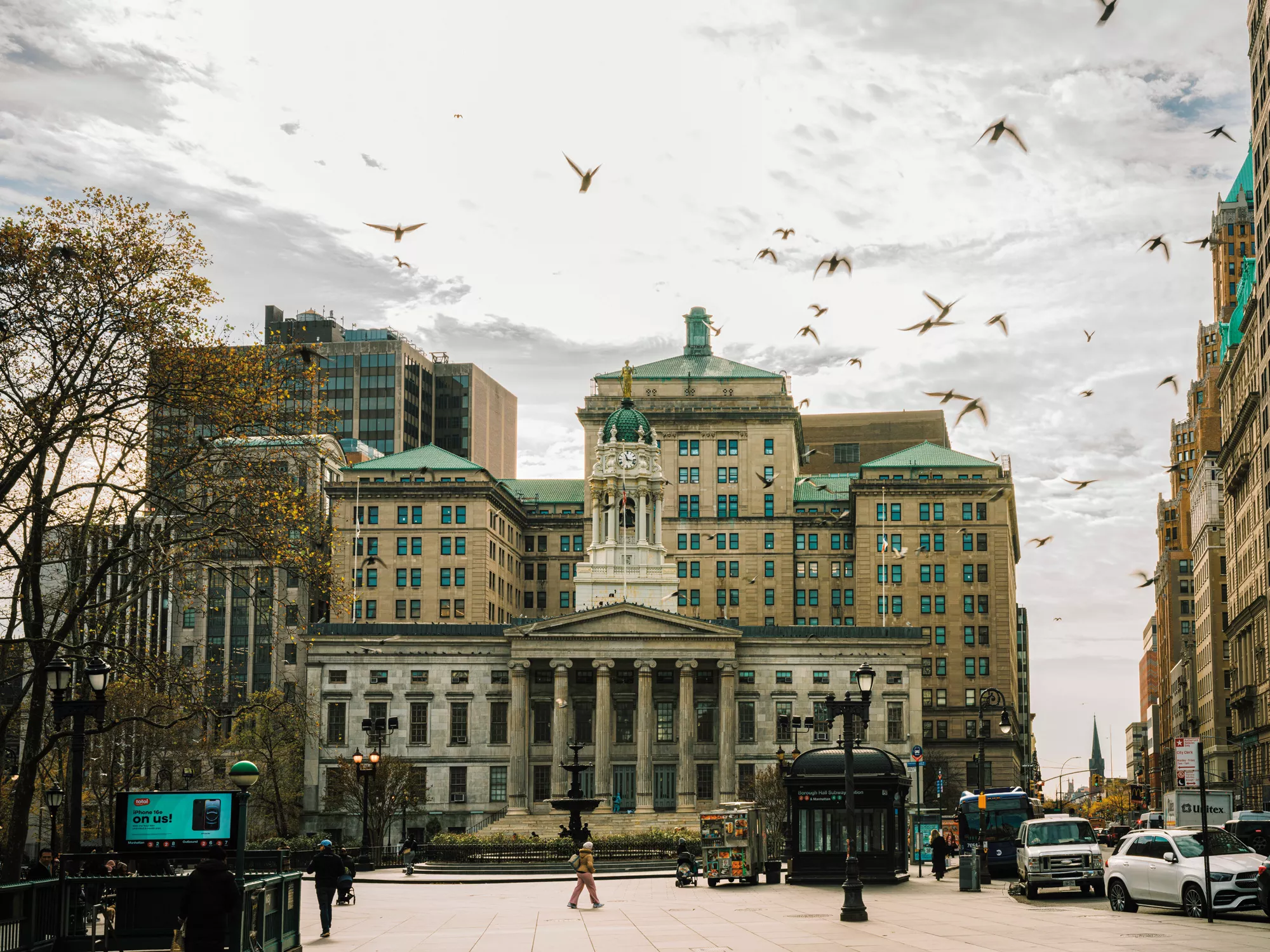
Downtown Brooklyn, New York, boasts a storied history, of which Lithuania’s Lipka Tatars form a distinctive chapter.
Nafahat is a closer reflection of the face of the Muslim community in New York today. At the same time, Rokadia makes a conscious effort to preserve Tatar traditions.
"There's a poetic tradition the founders had of praising the Prophet. The more I learn about the works of devotion from that community, I would love to continue to incorporate that into programs so that the heritage is preserved," he said.
Haughwout attends Nafahat meetings every Thursday. From her perspective, Rokadia's leadership has changed the energy of the building. "I'm feeling very optimistic. … I think we're on the verge of something that is very positive," she said. "It's really helped us breathe life into the organization the way that it kind of used to be. … It's a social gathering … we pray upstairs, we do the program, and then we come downstairs, and we eat."
Asked whether the current imam is truly taking Tatar traditions into account, she didn't hesitate: "Oh, 1,000%."
The story of the Powers Street Mosque is a microcosm of the immigration experience. While many large immigrant communities have become mainstream in American society, other small communities have lost elements of their identity and tradition.
However, it is through the efforts and drive of second- and third-generation descendants like Haughwout and Imam Rokadia who have found the common ground required to preserve identity and tradition while they pave the way for a better future.
About the Author
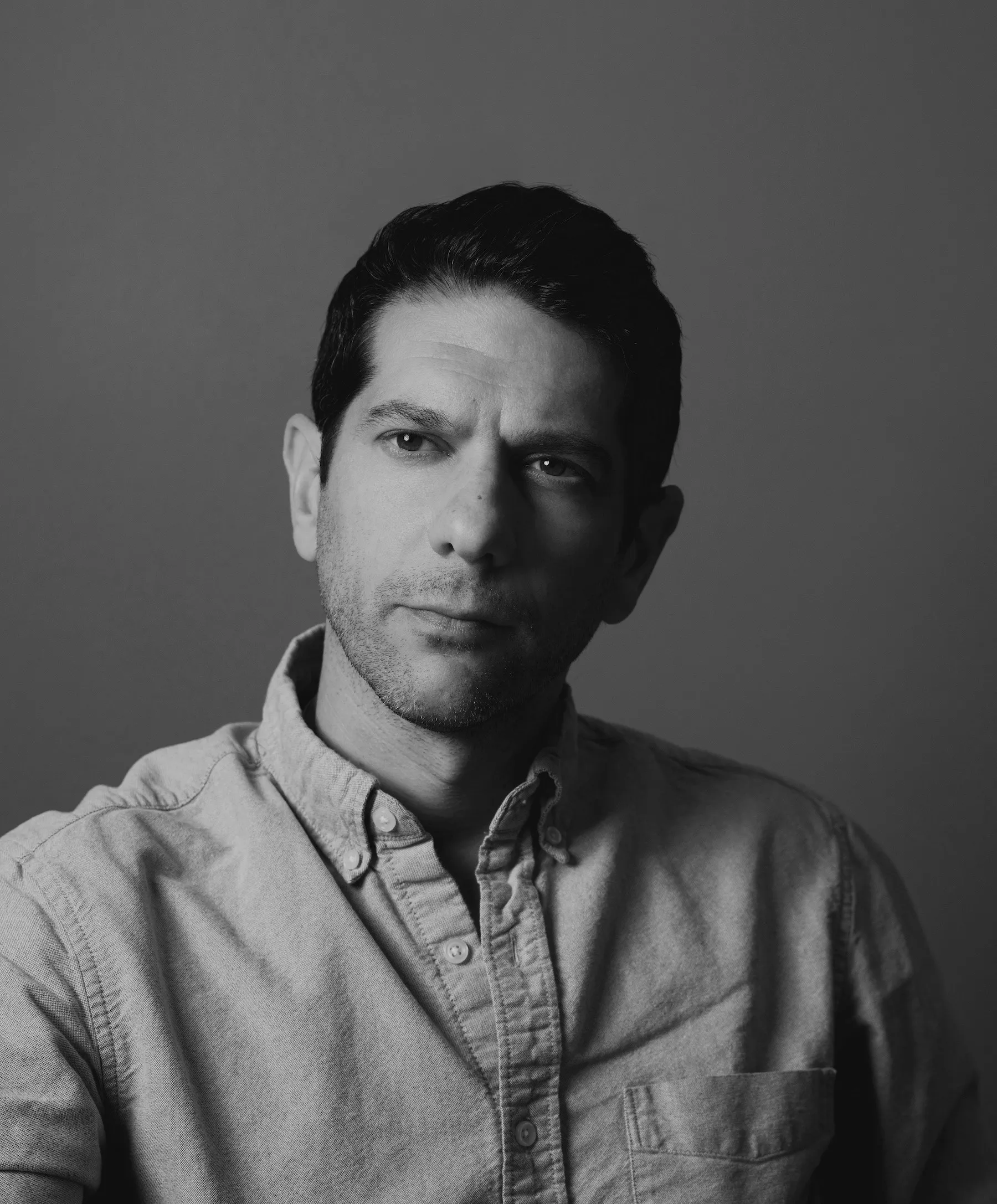
Greg Kahn
Greg Kahn is an award-winning American documentary and fine art photographer. Kahn’s photography centers on the forces that shape personal and cultural identity. His work has been exhibited in major galleries and museums around the world and published in The New York Times Magazine, National Geographic and British Vogue, among others.
Michael Shagoury
Michael Shagoury is a multimedia journalist and media strategist based in Washington, D.C. He has covered stories across the Middle East and North America for outlets including AJ+ and CNN International. As managing director of SideKix Media, he leads projects at the intersection of storytelling, digital strategy and emerging technology.
You may also be interested in...
Inside the Fight To Preserve Samarkand’s Ancient Wonders
With earthquakes, weather, tourism and time threatening some of the world's most celebrated Islamic architecture, restorers ensure that the knowledge behind the monuments survives alongside the buildings themselves.
A Conversation With the Keeper of Malaysia’s Peranakan Memory
Malaysian hotelier Chris Ong has amassed an impressive Peranakan heritage collection of at least 10,000 artifacts.
Ottoman-Era Hijaz Railway’s Legacy Endures, Chugging Toward Revival
History
The legacy of an Ottoman-era project to connect Damascus, Syria, to the holy site of Madinah in modern Saudi Arabia and beyond is breathing new life into today’s vision for rail in the region.