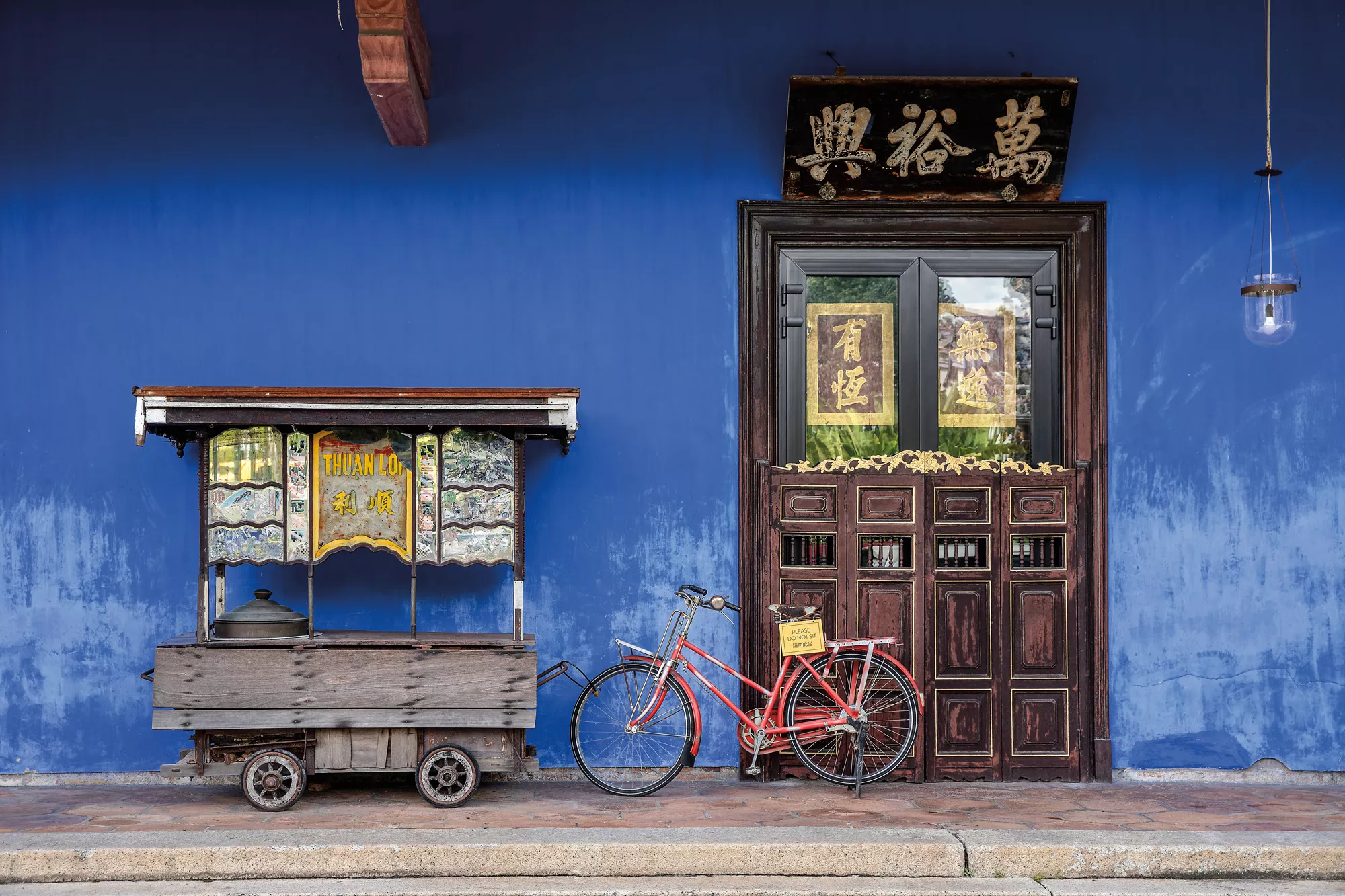
Guarding George Town: One Voice Keeping Penang’s Past Alive
Heritage advocate Loh-Lim Lin Lee helps people connect to George Town, a port city in Malaysia with a comingled Indian, Malay, Chinese, Arab and European past.
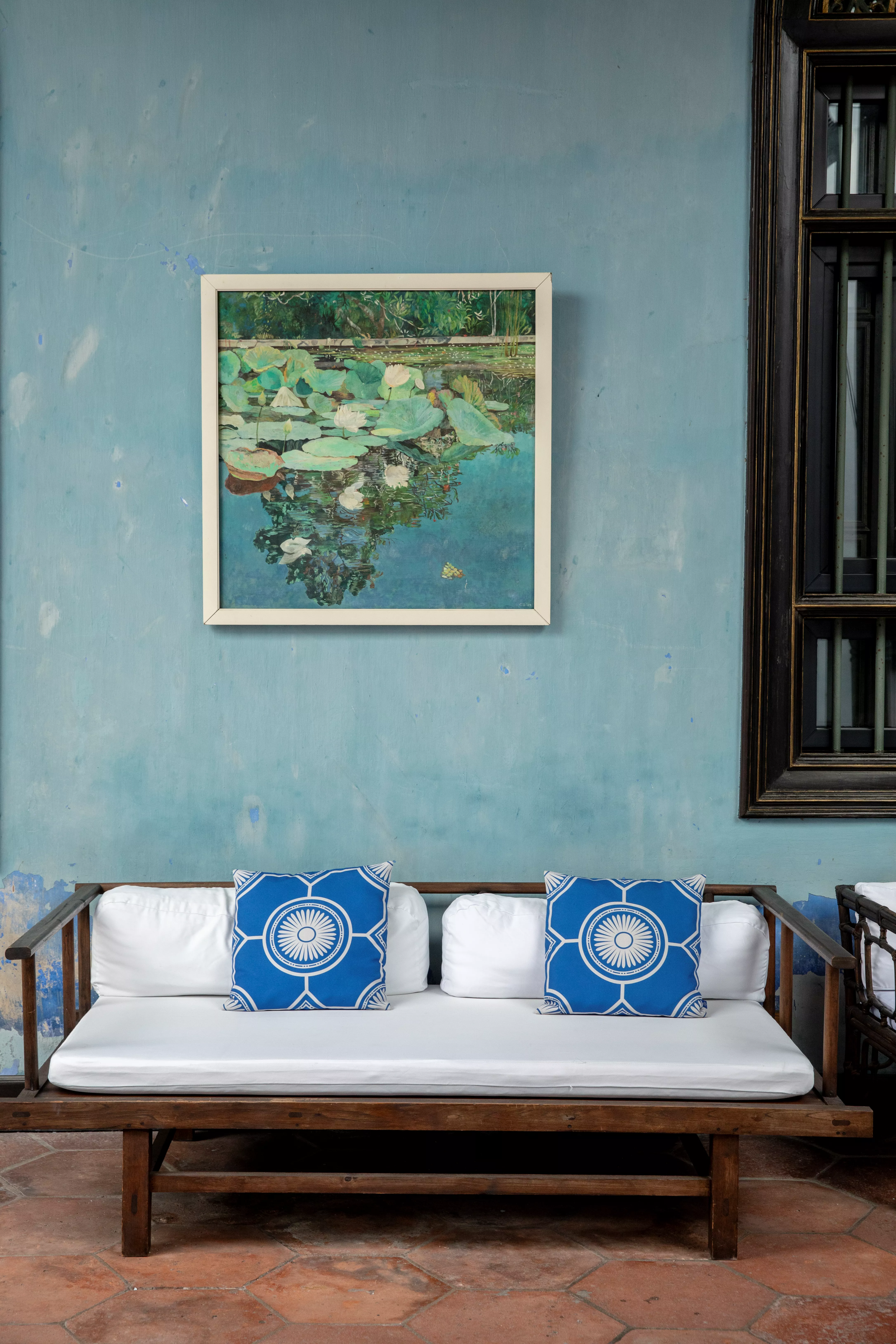
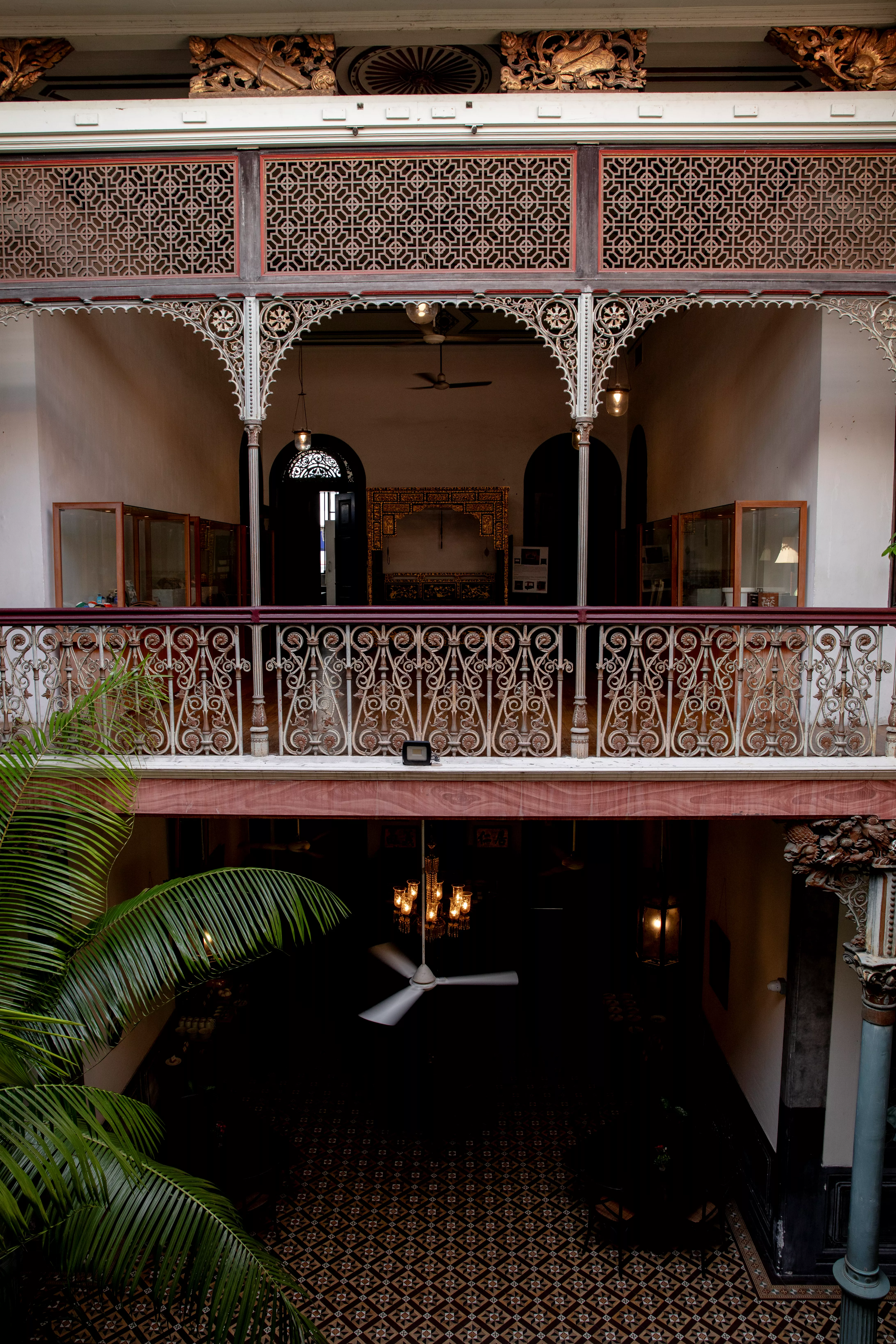
Indigo walls rise cool and luminous around a courtyard. Sunlight filters from above, lingering on carved timber shutters and cast-iron balustrades. At the center of the space stands a woman with a pixie-style haircut, commanding a small crowd. She pauses before she speaks.
"This was once a working house," Loh-Lim Lin Lee tells the visitors gathered around her. "People came and went all day."
The mansion, on the corner of Leith Street in Penang state's capital, George Town, Malaysia, is the former home of Cheong Fatt Tze, an influential Chinese merchant often described as the "Rockefeller of the East." His trading empire stretched across Southeast Asia and beyond.
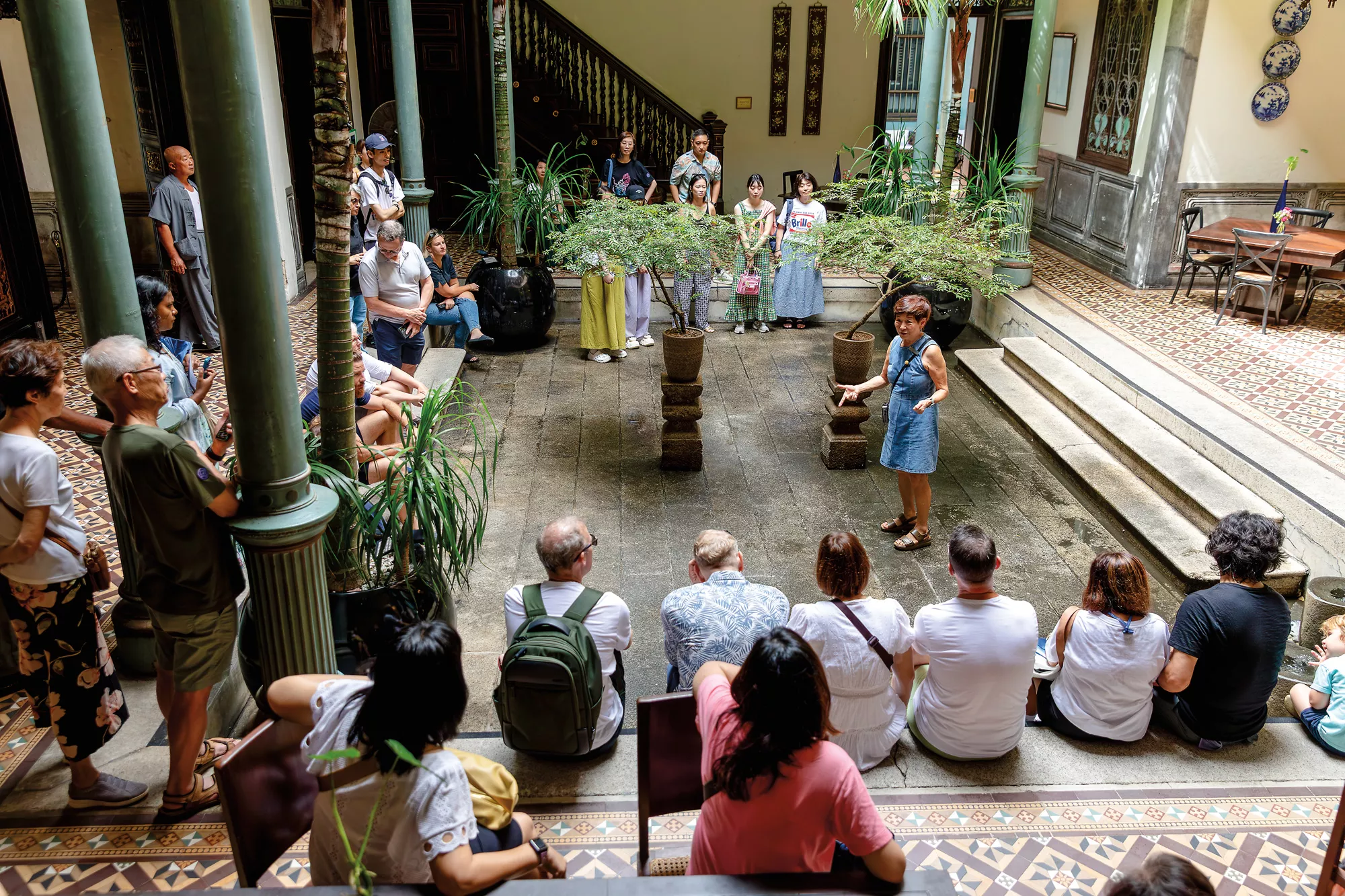
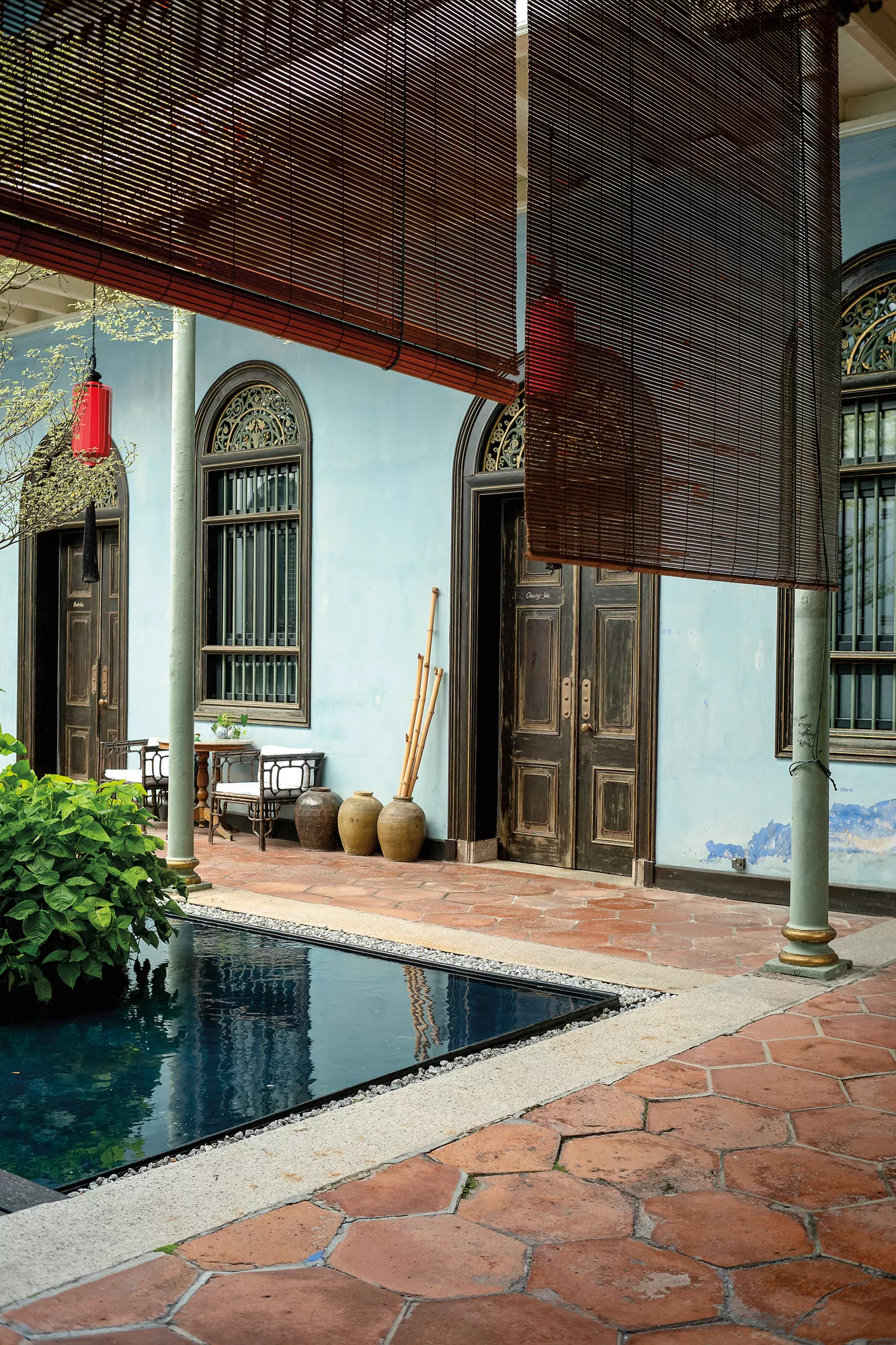
Above and below Loh-Lim Lin Lee leads a tour of the Cheong Fatt Tze Mansion, known as the Blue Mansion, in George Town, Penang, Malaysia. Restoration of the 19th-century residence revived its indigo façade, carved timberwork and traditional Chinese courtyard layout. The project became a model for heritage conservation.
More than a century after his death in 1916, his residence—known widely as the Blue Mansion—has taken on a second life, operating both as a heritage site and a boutique hotel owned by heritage advocate Lin Lee and her husband, architect Laurence Loh.
Unscripted and animated in her delivery, the Penang-born and fifth-generation Lin Lee, 76, wants the gathered heritage enthusiasts to notice the details: the wear on tiles, the layout of the rooms—but also to understand how commerce and domestic life once intersected within this space. For her, conservation fails if people cannot understand what they are standing inside.
She then adds another layer: the social hierarchies of the port city where Indian, Malay, Chinese, Arab and European influences have coexisted since the 1700s and the migration patterns that followed shortly thereafter.
"To understand Penang's heritage, it is important to comprehend Malaysia's 'checkered history,' including its colonial times," she says. "I am against the idea of 'pick and choose' when it comes to history."
George Town's Origin as a Trading Port
Francis Light, an English naval officer and an associate of the British East India Company (EIC), founded George Town in 1786. Light was quick to sense the topographical advantage of Penang as a potential free port in the Malacca Strait. Acquiring the region would boost the EIC's trading interests and keep competitors, the Dutch and the French, at bay.
A skilled negotiator, Light acquired Penang on lease from Sultan Abdullah Mukaram Shah of Kedah Sultanate in exchange for military protection. He founded the port town, naming it after King George III. This marked the beginning of British Malaysia, with Light as its first superintendent.
The settlement grew into a cosmopolitan port shaped by Malay, Chinese, Indian, Arab and European communities. The traders and their families played a central role in this history, building mosques, trading houses and institutions that still frame the city today.
After Malaysia gained independence from British colonial rule in 1957, George Town slipped from prominence. Investment slowed, buildings decayed, and private developers demolished historical shophouses and residences to make way for modern towers.
This erasure of local heritage swiftly changed the character of George Town's public spaces, decimating the memories of several communities. To remedy this, a movement toward mindful conservation rose.
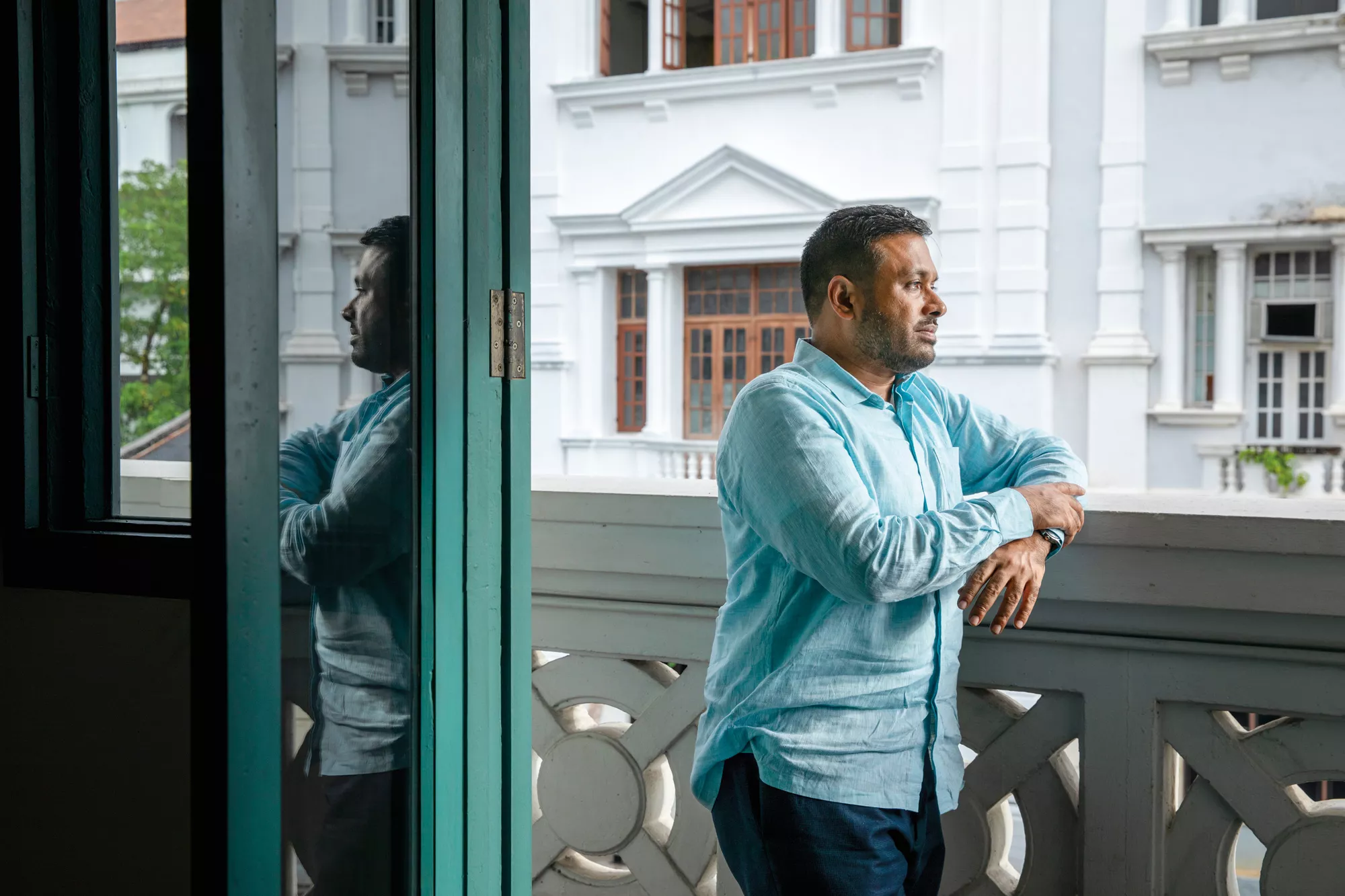
Dato’ Hamdan Abdul Majeed leads Think City, an organization established to drive conservation-led development in historical Malaysian cities, including George Town.
“Built heritage only endures when living culture thrives.”
A new purpose in Penang
Before she was drawn to mindful conservation, Lin Lee, an alumna of the London School of Economics, returned to Penang in the early 1970s, when few people of her generation chose to come back.
George Town's population was then fewer than 300,000, less than half of what it is today. Trade routes had shifted, and the free-port status that had allowed for the import and handling of goods without customs intervention had been revoked. Younger residents increasingly left for opportunities elsewhere.
Upon her and Loh's return, Lin Lee joined Universiti Sains Malaysia as a lecturer in social psychology, teaching and researching how people relate to space and environment. After seven and a half years in academia, she made a decisive shift. "Finally," she says, "I took a leap into conservation and heritage.
"The town was much smaller, and we thought we could impact the community with our vision," reflects Lin Lee.
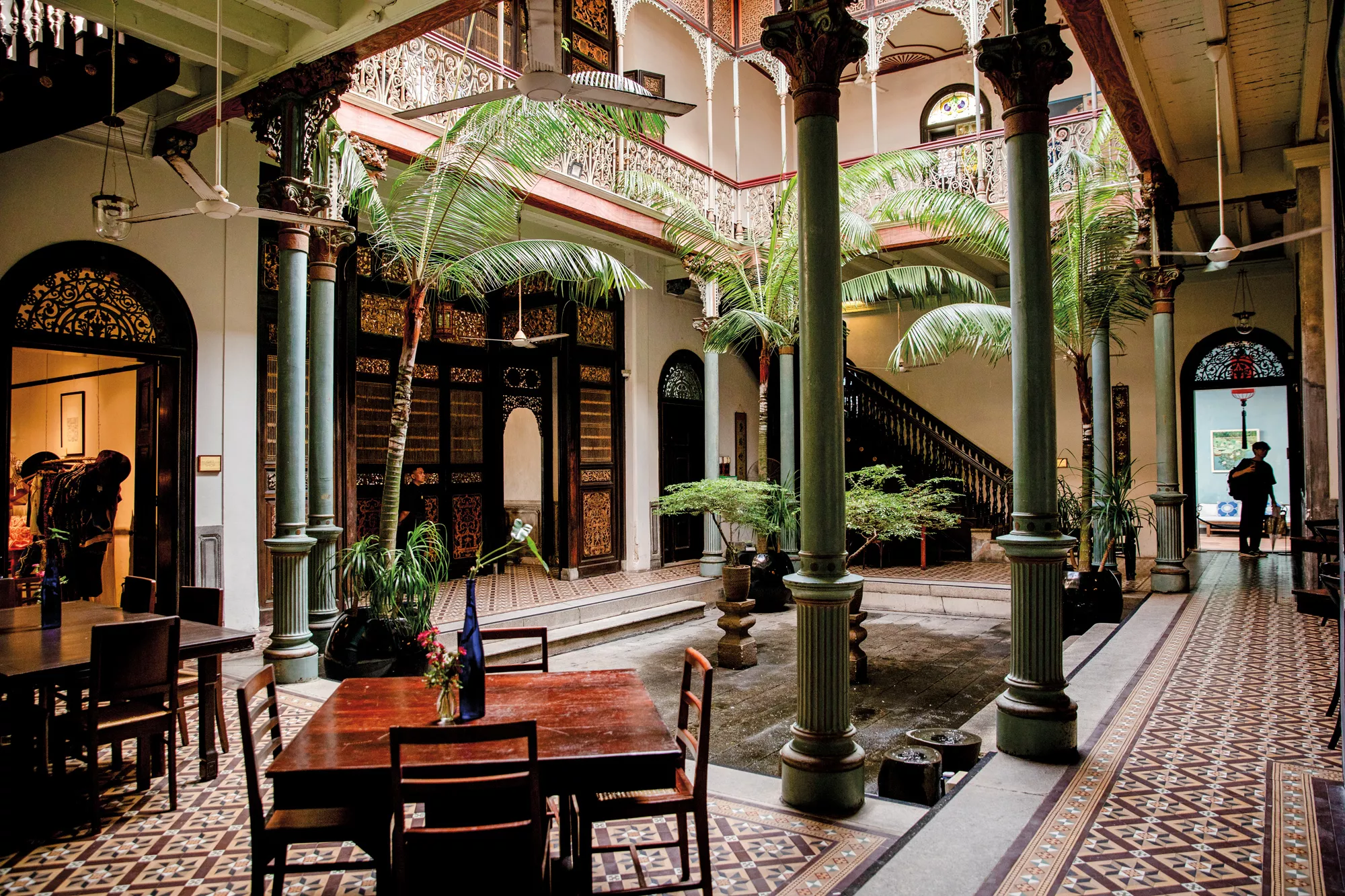
The Blue Mansion served as both family home and business headquarters for merchant Cheong Fatt Tze.
Over the past three decades, Lin Lee has played a catalytic role in reshaping how George Town engages with its past. She brings academic depth to heritage work.
Broader momentum is working in her favor.
The concept of history as an integrated whole has gained international traction. In 2008 UNESCO declared George Town and Melaka, south of Kuala Lumpur, a joint World Heritage Site, describing the cities as "a living testimony of 500 years of cultural exchange between East and West in the Strait of Malacca."
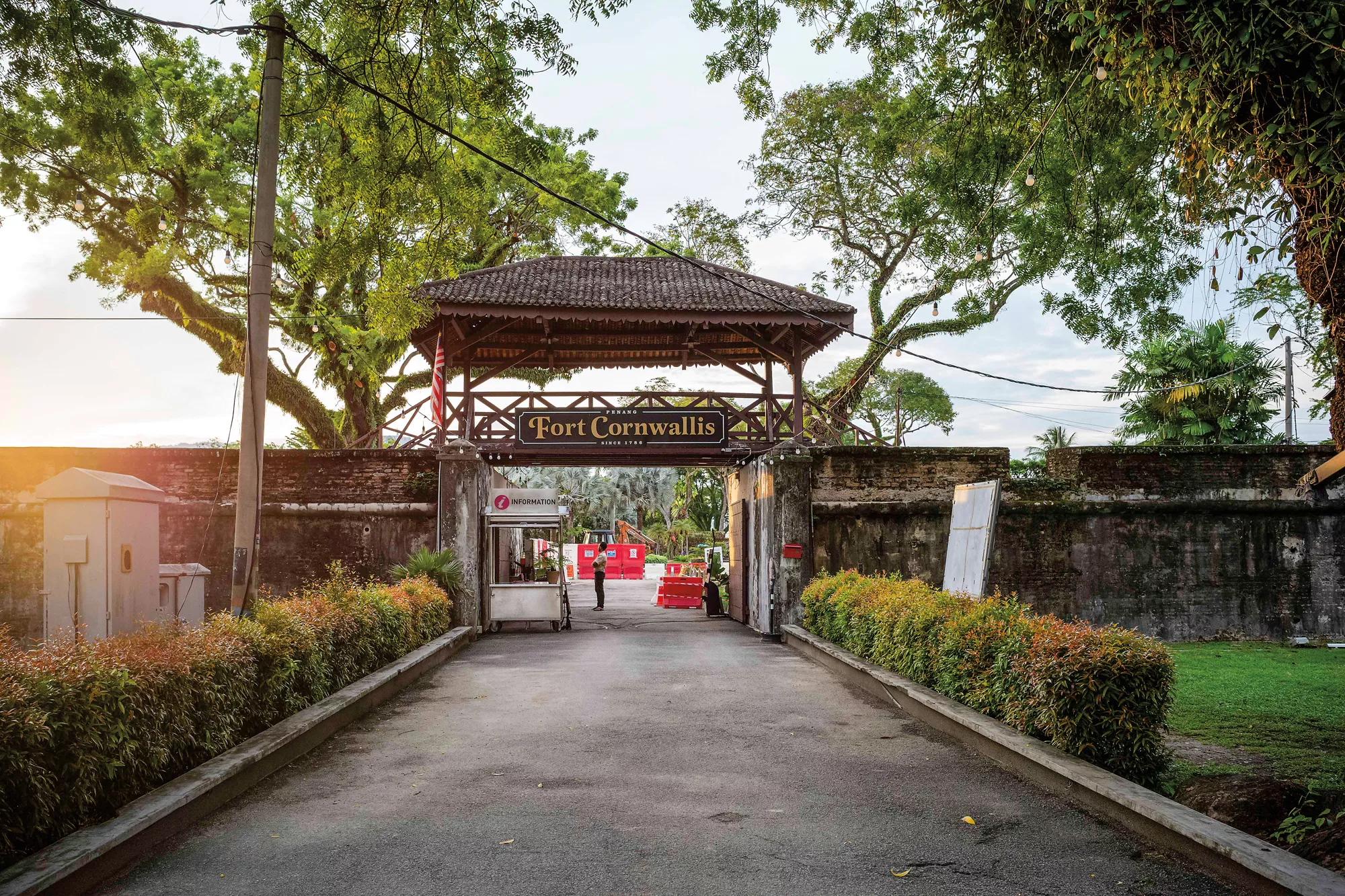
The idea finds its clearest expression today at Fort Cornwallis, an 18th-century bastioneded fort at the northeastern tip of George Town, facing the sea.
Low and expansive, its thick laterite walls trace the outline of early colonial defense. A long-buried moat has been reopened, the outlines of bastions and gunpowder magazines restored. The fort, named after Charles Cornwallis, then governor-general of Bengal, is the oldest surviving military structure in Penang and a centerpiece of the North Seafront—a flagship public effort to renew cultural assets.
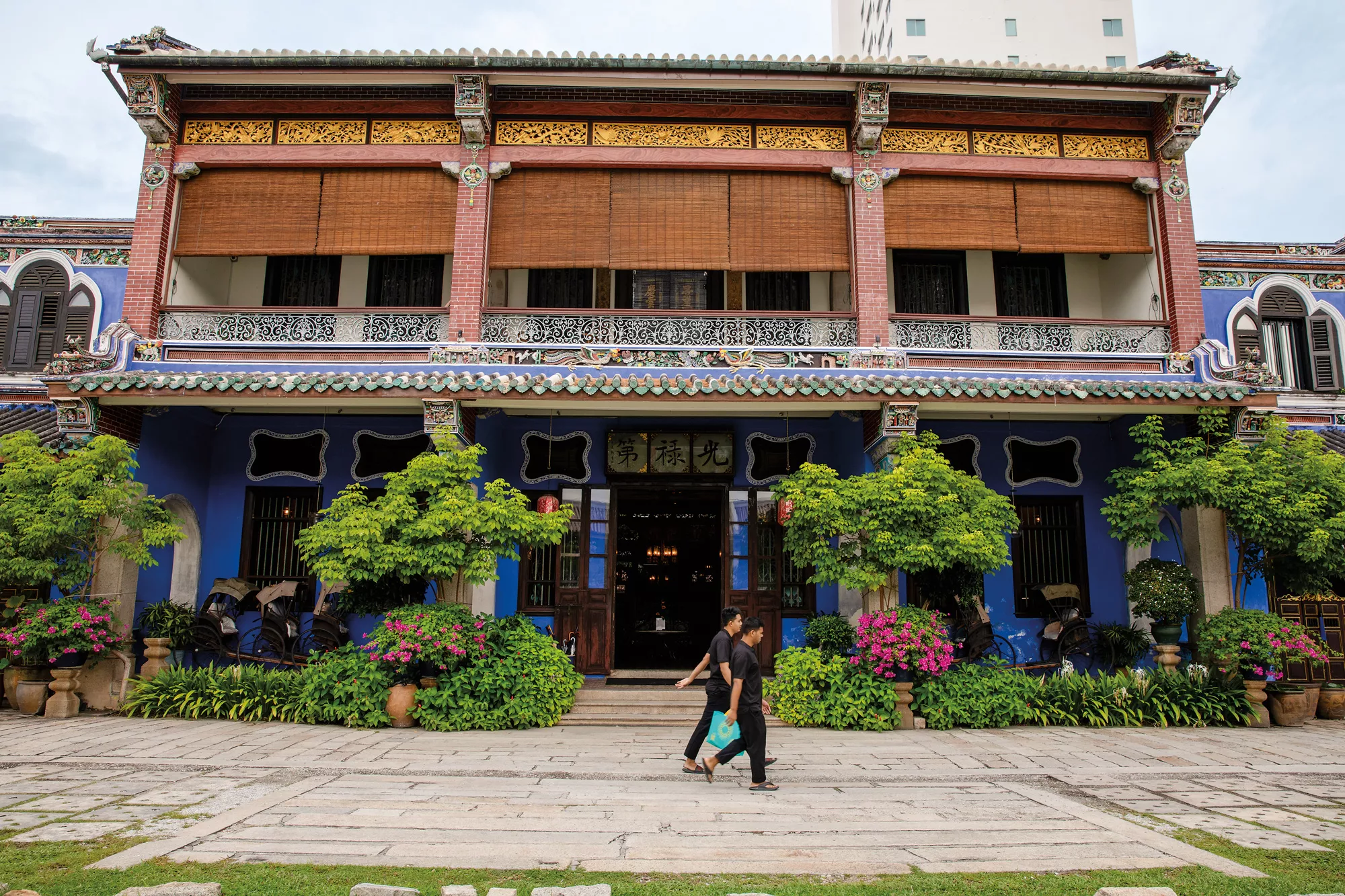
With its blend of architectural styles, the Blue Mansion serves as a hotel and cultural venue within George Town, a UNESCO World Heritage city that aims to conserve its multiethnic legacy.
The North Seafront project has re-established the site both as a historical feature and as a functioning stormwater-retention basin—notably resisting the urge to erase traces of damage and disuse.
"Madam Lin Lee is integral to the project," says Dato' Hamdan Abdul Majeed, managing director of Think City, an urban regeneration and social purpose organization established to drive conservation-led development in historical Malaysian cities, including George Town.
Lin Lee's role, however, goes beyond historical consultation. She leads the museology of the fort—shaping how its stories are told.
Inside one of the former storerooms, the stone floor collapses inward, forming a jagged cavity. The collapse dates back to the bombing of Penang in World War II. Rather than conceal the damage, Lin Lee insists it remain visible, anchoring the site's narrative in lived experience.
"For me that's very important," she says. "You may not repair that floor. Leave the great hole there—and then you put up an explanation. That's interpretation."
“Stories of the fort are long and too often retold, so we need to see that the right stories are narrated.”
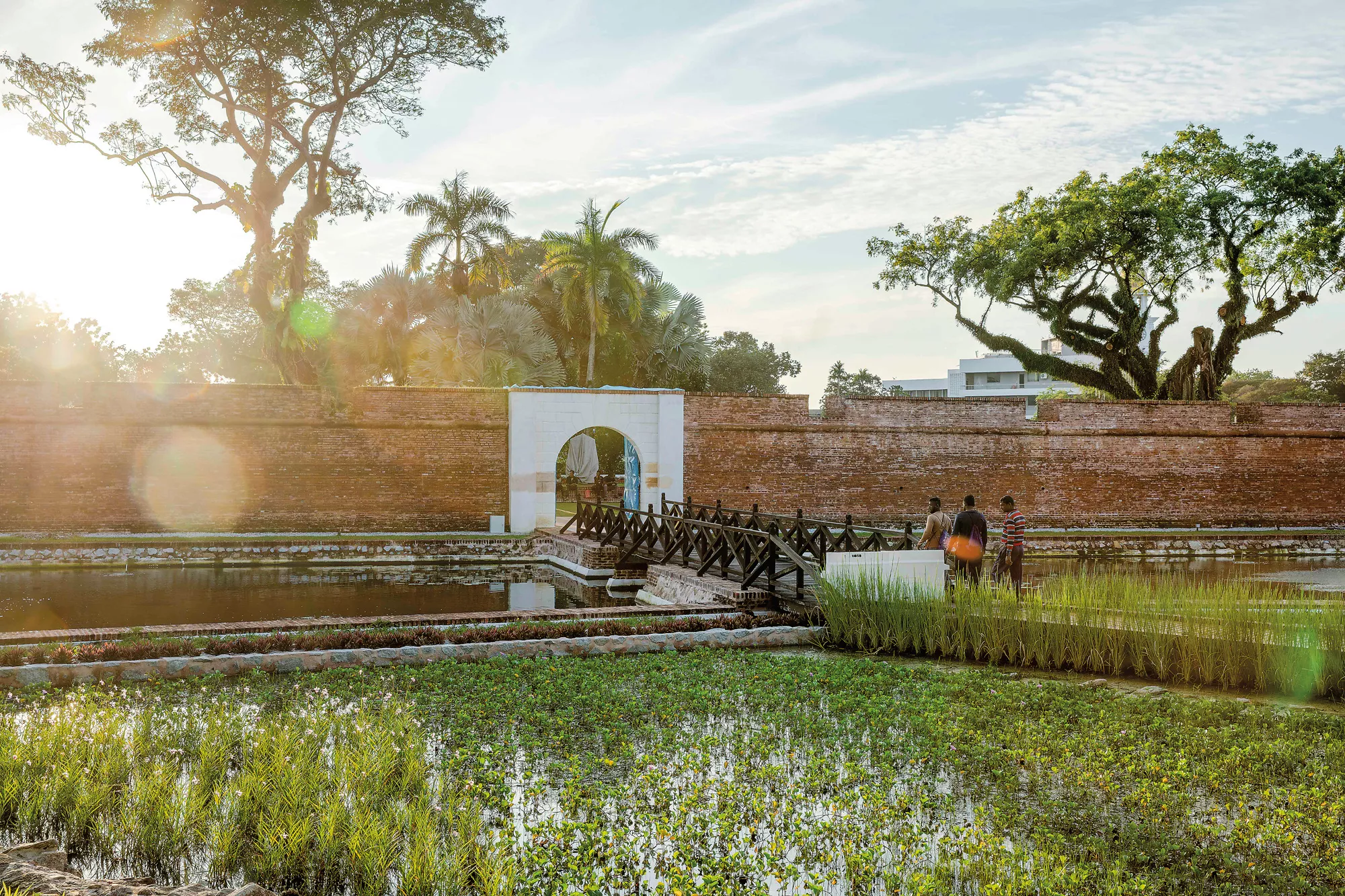
Fort Cornwallis, above and below, is undergoing conservation work supported by both the Aga Khan Trust for Culture and Think City. Built in the late 18th century, it stands as Penang’s oldest surviving fort and a symbol of George Town’s colonial past.
Think City's work at Fort Cornwallis is part of a broader conservation strategy that extends across George Town, focusing on public access, adaptive reuse and the regeneration of civic space.
"Built heritage only endures when living culture thrives," Majeed notes. "Heritage here is celebrated, contested and constantly reinterpreted. It tells us that preservation is as much about people as it is about buildings."
The project also draws on expertise from the Aga Khan Trust for Culture (AKTC), invited to collaborate with Think City and the Penang government.
"This approach drew from AKTC's experience in places such as Cairo, Zanzibar, Delhi and Mali, to name a few, where heritage conservation had been successfully used as a tool for social and economic development," says Francesco Siravo of AKTC. "In Penang this philosophy translated into a framework of practical action—turning the values of heritage into tangible urban improvements."
Lin Lee's approach communicates those values of heritage. Her storytelling draws a clear distinction between tour guiding and interpretation. Where tour guides often narrate events, she argues, a conservationist or museologist must deconstruct a monument—placing it within wider social, political and cultural histories.
Her academic training allows her to situate buildings within the historical narrative of colonial governance, global trade, war and migration, rather than presenting them as isolated artifacts. New technologies, including augmented reality, are used selectively to support this layered understanding, particularly for younger audiences.
"Stories of the fort are long and too often retold," she says, "so we need to see that the right stories are narrated and hopefully take away what's useful."
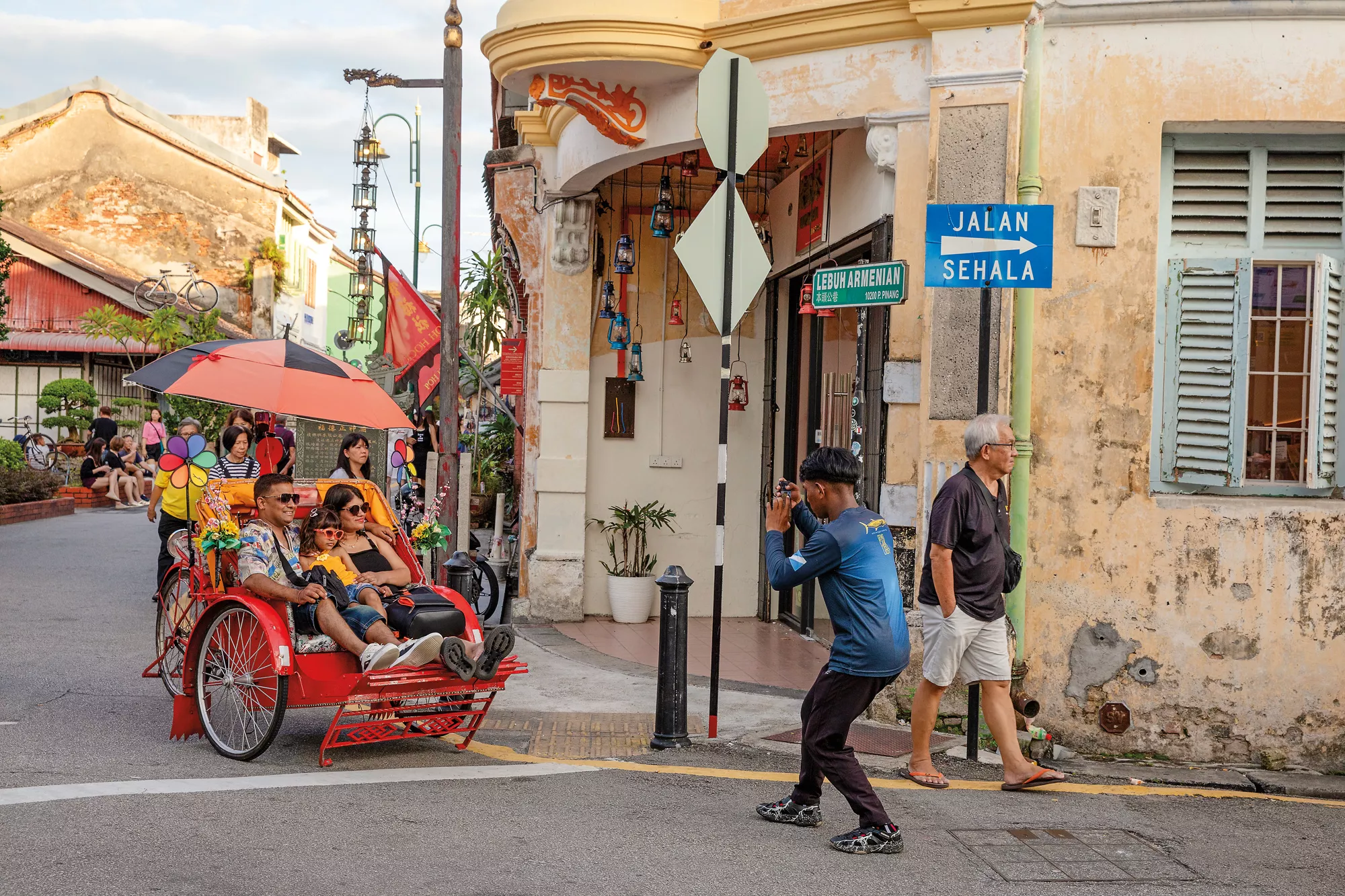
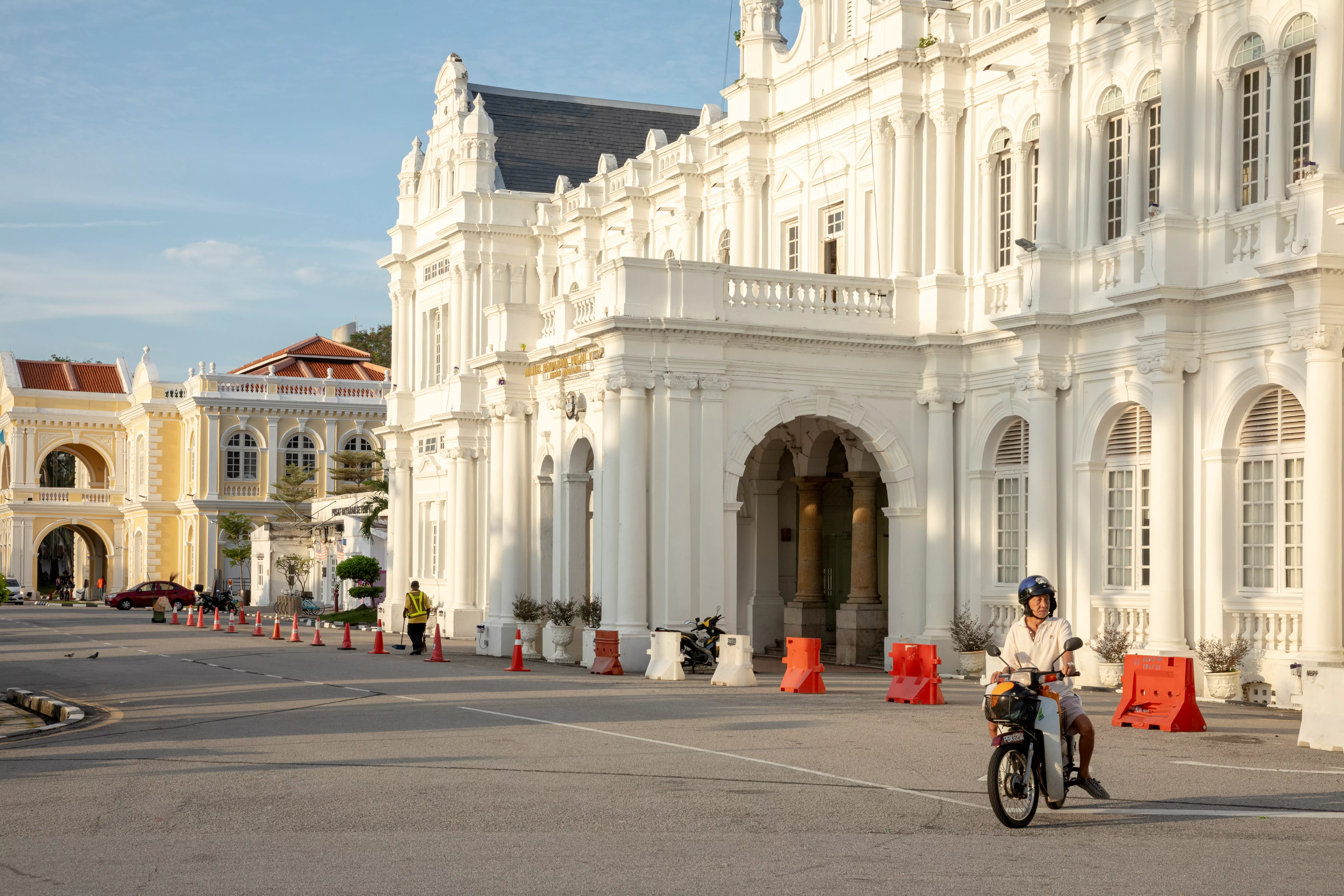
A rickshaw carries tourists along Armenian Street, once a bustling lane for Asian traders that today forms part of George Town’s vibrant heritage-tourism circuit.
Restoration in George Town
One early intervention saw the restoration of the mid-19th-century Syed Al-Attas Mansion, a two-story former residence of an upper-class Muslim trading family whose patriarch was an influential pepper merchant. Distinguished by its porte cochere and terracotta-tiled roof, the home had fallen into disrepair. With work begun in 1996 and completed in 2018 in collaboration with Think City, it was the first building restored under the George Town Conservation and Development Corporation. It houses the Penang Islamic Museum, highlighting the history of Islam in public life in Penang and Malaysia.
The project proved a testing ground for later restoration techniques across the city, according to Siravo.
"The lessons learned at Syed Al-Attas Mansion later informed the methods of restoration of other historic structures," he notes, "including the storage rooms at Fort Cornwallis and restoration of the moat."
Preservationists also recognized the Blue Mansion's worth. In 1989 Lin Lee and Loh intervened to save the Cheong Fatt Tze Mansion, which was abandoned and slated for demolition.
A broader conservation strategy extends across George Town, focusing on public access, adaptive reuse and the regeneration of civic space.
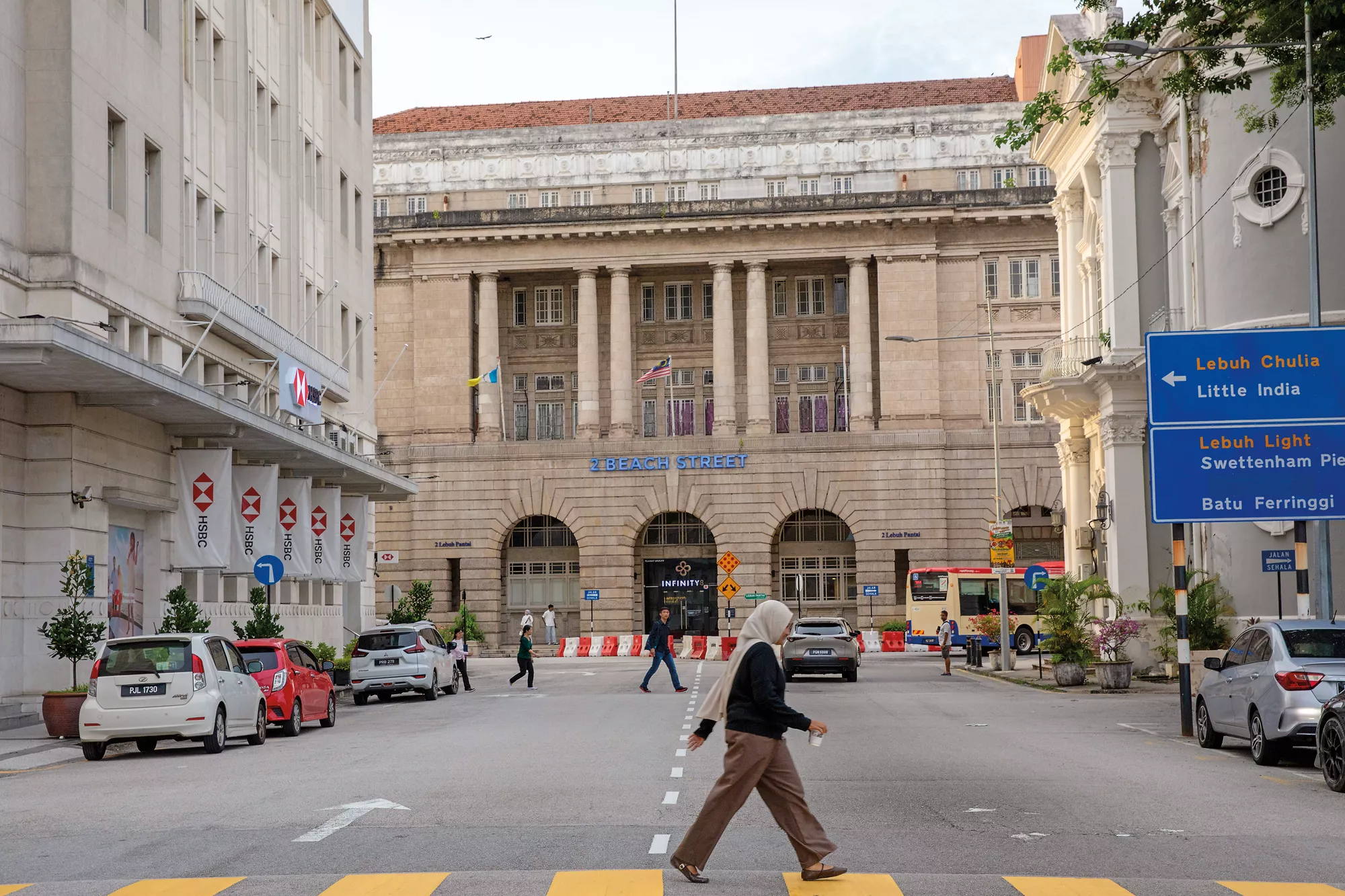
Institutions of commerce along Beach Street reflect the city’s British colonial heritage and mercantile past.
"I always joke that it was Cheong Fatt Tze himself who told us, 'You come and save my house,'" she says.
Over six "challenging yet fun" years, the couple reinstated the building, including preserving the mansion's distinctive indigo hue.
Eyes lighting up, she says: "We reintroduced the materials and techniques Fatt Tze had originally used, from Scottish cast-iron balusters to Chinese calligraphy to Hokkien cut paste porcelain. This is where Cheong Fatt Tze had lived his illustrious life, and as conservationists, we wanted everyone to experience those times, through the re-created reality."
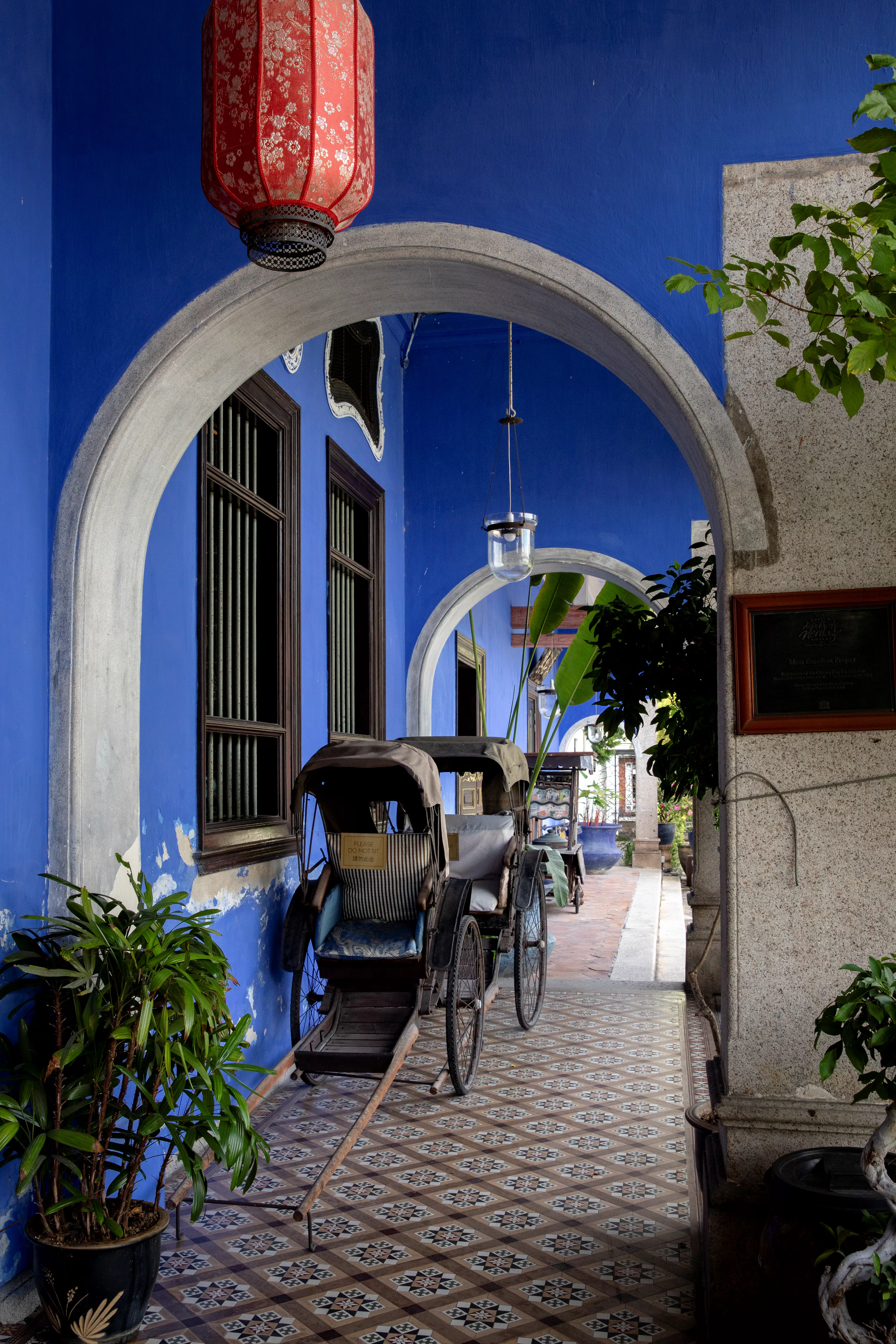
Today, the Blue Mansion is a cornerstone of George Town's cultural life. It has received a UNESCO award for the "Most Excellent Project in the Asia Pacific Heritage" and gained global visibility as a filming location for the 2018 American romantic comedy "Crazy Rich Asians" and the 1992 French period drama "Indochine." Yet its most enduring feature remains Lin Lee's weekly narrations.
"Without purposeful interpretation, even Stonehenge is a collection of rocks," she says. "It is the storytelling that elicits emotion and response, ignites the passion and appreciation of what we have inherited."
About the Author

Nilosree Biswas
Based in Philadelphia and Mumbai, Nilosree Biswas is an author, filmmaker and columnist who writes about Asian history, art, culture, food and cinema. Her work regularly appears in national and international media.
Suzanne Lee
Suzanne Lee is a Malaysia-based documentary photographer and filmmaker with over two decades of professional experience covering Asia through visual stories rooted in culture and heritage. She is also a photography educator and co-founder of altstudio.asia, where she leads workshops on visual storytelling.
You may also be interested in...
Banjo on the Atlas: An Instrument’s Journey Across Continents
Arts
How did an instrument with West African ancestors, entwined with Americana music, appear in the lineup of a North African orchestra? Two parallel narratives hold the answer.
When India Sailed to Makkah: A 350-Year-Old Hajj Chronicle
The 17th-century Anīs al-Ḥujjāj, a Hajj travelogue newly translated into English, shows the forgotten maritime world that bound Mughal India to Islam's holiest city.
Spotlight on Photography: Navigating Guinea-Bissau's Rainy Season