Diaspora Match Days: Food, Ritual and the World Cup
From New York to Toronto to Houston, immigrant communities re-create the rituals of the World Cup through food and shared traditions.
6 min
Written by Michael Shagoury Photographed by Greg Kahn and Sophie Bouquillon
On the corner of Steinway Street and 25th Avenue in Queens, New York, the smell of grilled merguez spills out of a small Algerian sandwich shop called Merguez and Frites. Behind the counter, 22-year-old Soufian Mekersi turns sausages on the grill while a young helper drops fresh french fries into a large metal bowl. The grill hisses as the sausages cook while conversations drift in from the sidewalk outside.
Across North America, immigrant communities will experience the 2026 FIFA World Cup far from the countries that shaped their traditions. In restaurants, homes and neighborhood cafés, supporters will gather around televisions and shared meals, re-creating the rituals of watching football at home. Food travels easily across borders. The culture of celebration that surrounds the game does not always travel as easily.
In this part of Astoria, Queens—not far from the New Jersey stadium hosting eight matches—North Africa never feels very far away. Storefront signs appear in both Arabic and English, the smell of grilled chicken drifts from sidewalk stands, and pastry shops display trays of honey-soaked baklava as conversations move fluidly between Arabic, English and French.
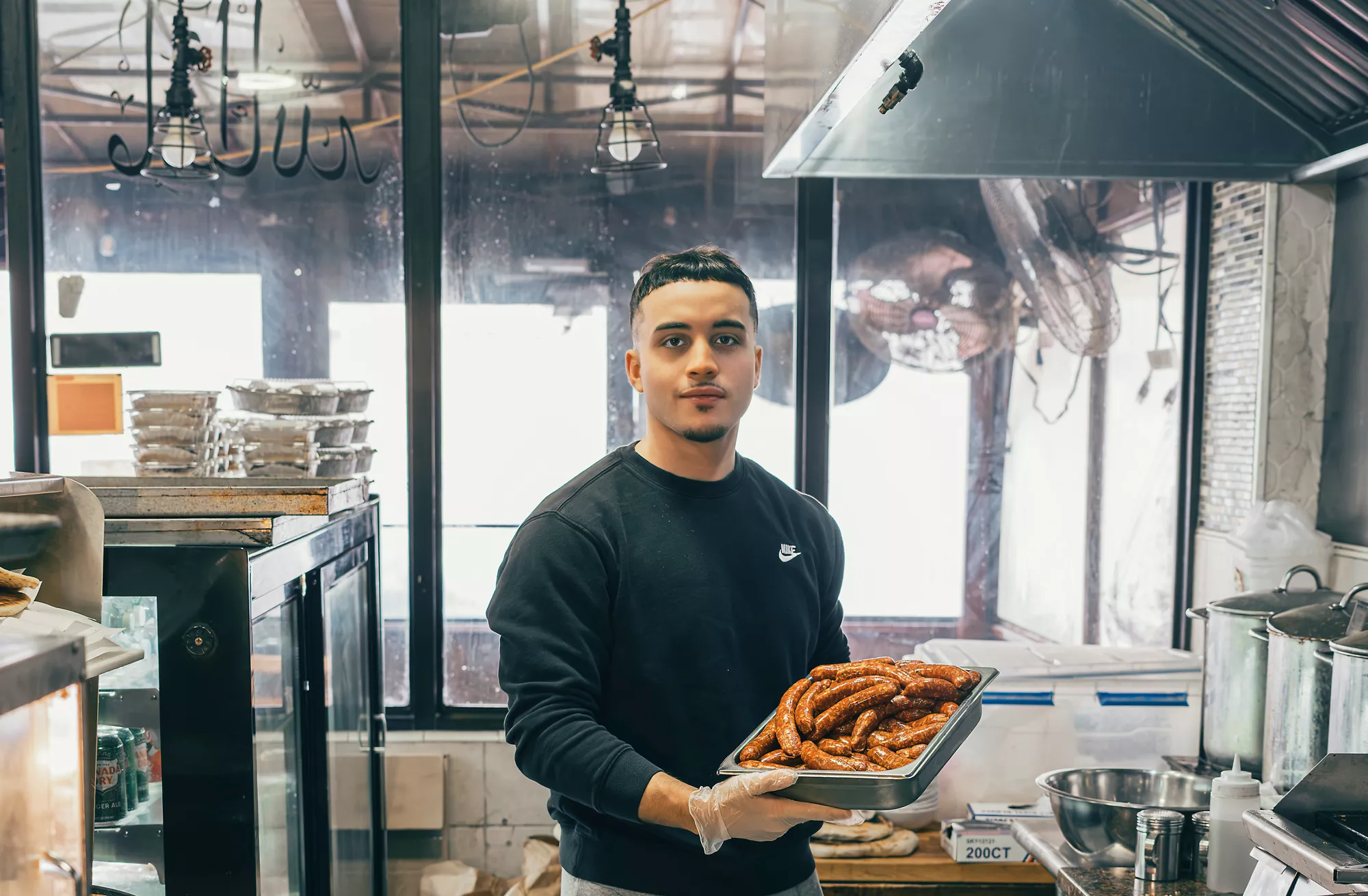
Soufian Mekersi holds a tray of grilled merguez at Merguez and Frites, the café in Queens, New York, that his father opened after emigrating from Algeria. It is known locally for its sausages, french fries and harissa.
GREG KAHN
This content is blocked
You need to give permission.
Recipe
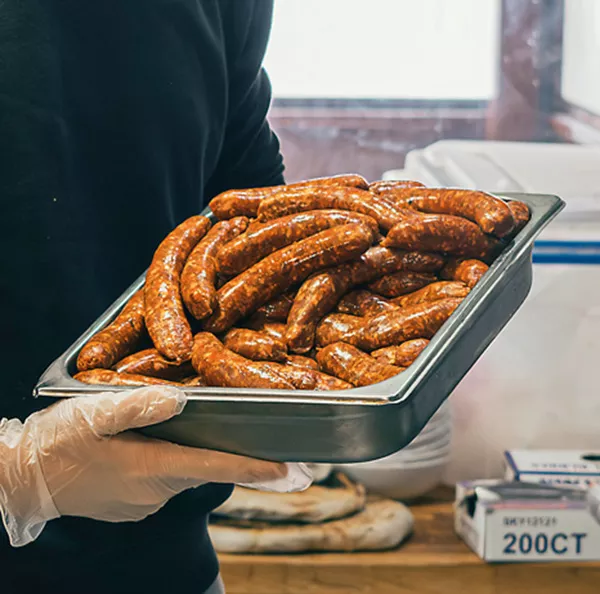
Merguez Sausage
Serve hot with flatbread, couscous, grilled vegetables or fresh salad.
- 2 teaspoons whole cumin
- 2 teaspoons whole coriander
- 2 tablespoons paprika
- 2 tablespoons salt
- 1 teaspoon chili powder
- 1 teaspoon garlic powder
- 1 teaspoon onion powder
- 820 grams beef, cut into 2-centimeter cubes
- 545 grams lamb, cut into 2-centimeter cubes
- 455 grams beef or lamb fat, cut into 2-centimeter cubes
- 2 tablespoons freshly minced garlic (about 6 cloves)
- ⅓ cup harissa
- Lamb casings, soaked in warm water for 30 minutes
Over the years, Sofian Merkesi has made thousands of merguez sandwiches at Merguez & Frites, the Algerian restaurant he runs with his father in Astoria, Queens, New York. His father, who arrived in New York in the late 1990s, trained in some of the city’s finest kitchens but cooked Algerian food at home. For the younger Merkesi, merguez carries memory: childhood trips to Algeria, streets corners in the capital, Algiers, football being played in the background.
A staple across the Maghreb, merguez traditionally uses lamb and bold spices. This version combines 60 percent beef with 40 percent lamb for a balance of flavor and texture. Paprika, chili, garlic and harissa build heat, depth and the sausage’s signature color.
Preparation
- Combine all spices in a small bowl.
- Place the cubed beef, lamb and fat in a large bowl. Add spices, garlic and harissa. Toss until evenly coated.
- Refrigerate 20 minutes, until chilled.
- Grind through a meat grinder fitted with a small die into a bowl set over ice.
- Transfer to a stand mixer with a paddle attachment; mix on low speed for 1 minute.
- Cook a small test patty; adjust seasoning as needed.
- Stuff into casings, and twist into 15-centimeter links.
- Refrigerate until ready to cook.
Cooking
- Prepare a grill for medium-high heat.
- Grill until sausages reach an internal temperature of 68°C (154°F).
- Remove and rest 5 minutes before serving.
The shop itself remains modest: a narrow countertop above a refrigerated display case filled with fresh meats, Algerian soft drinks, pickles and sandwich condiments. Mekersi runs the restaurant his father opened after emigrating from Algeria over 20 years ago. The signature dish reflects the street food he grew up around—a fresh baguette packed with merguez sausages, fries and harissa, finished with mayonnaise and spicy aioli.
Mekersi grew up with both the food and the culture surrounding it. At home, his father cooked the street foods he remembered from Algeria, where football anchors everyday life. As Mekersi explains it, the two rarely separate. “Football is Algeria,” he says. “That’s how I would describe it.”
He remembers as a young child visiting family in Algiers, Algeria’s capital, and seeing the game everywhere: children improvising fields in narrow streets, playing without nets or equipment, simply wherever space allowed.
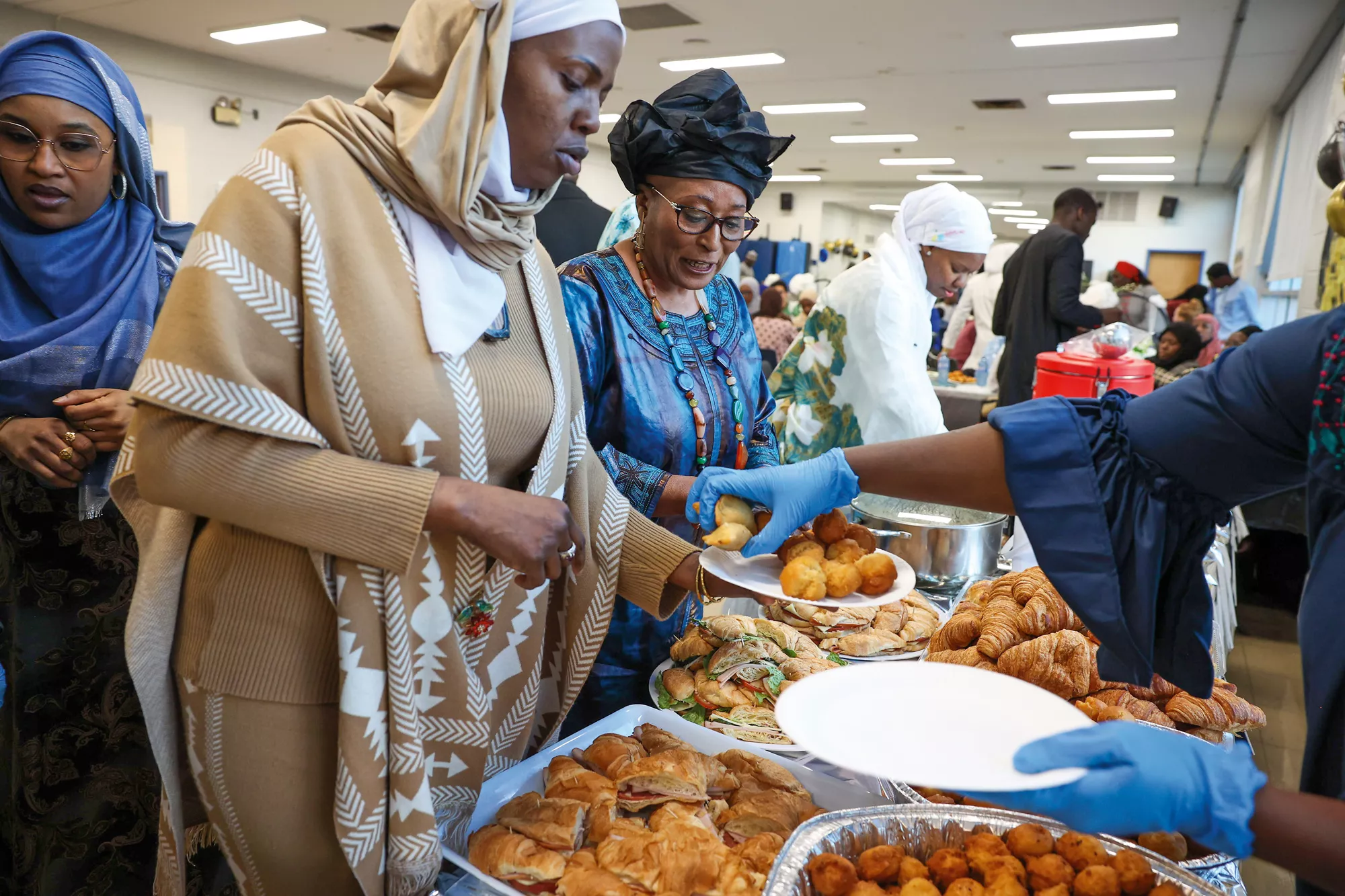
Senegalese residents across the Canadian province of Ontario plan to share the foods of home over World Cup matches being staged in Toronto.
“The passion extends to stadiums as well,” Mekersi says. “I remember driving past the stadium and seeing the red flares and people in the streets. It was a big experience.”
In Astoria, echoes of that atmosphere appear during international matches. When Algeria plays, Steinway Street transforms. Coffee shops fill with fans, hookah lounges turn into viewing rooms, and entire sections of the street become informal gathering spaces. “The whole block will be filled with Algerians,” Mekersi says. “You would think it’s a parade—but we’re just watching a soccer game.”
But Astoria is only one example.
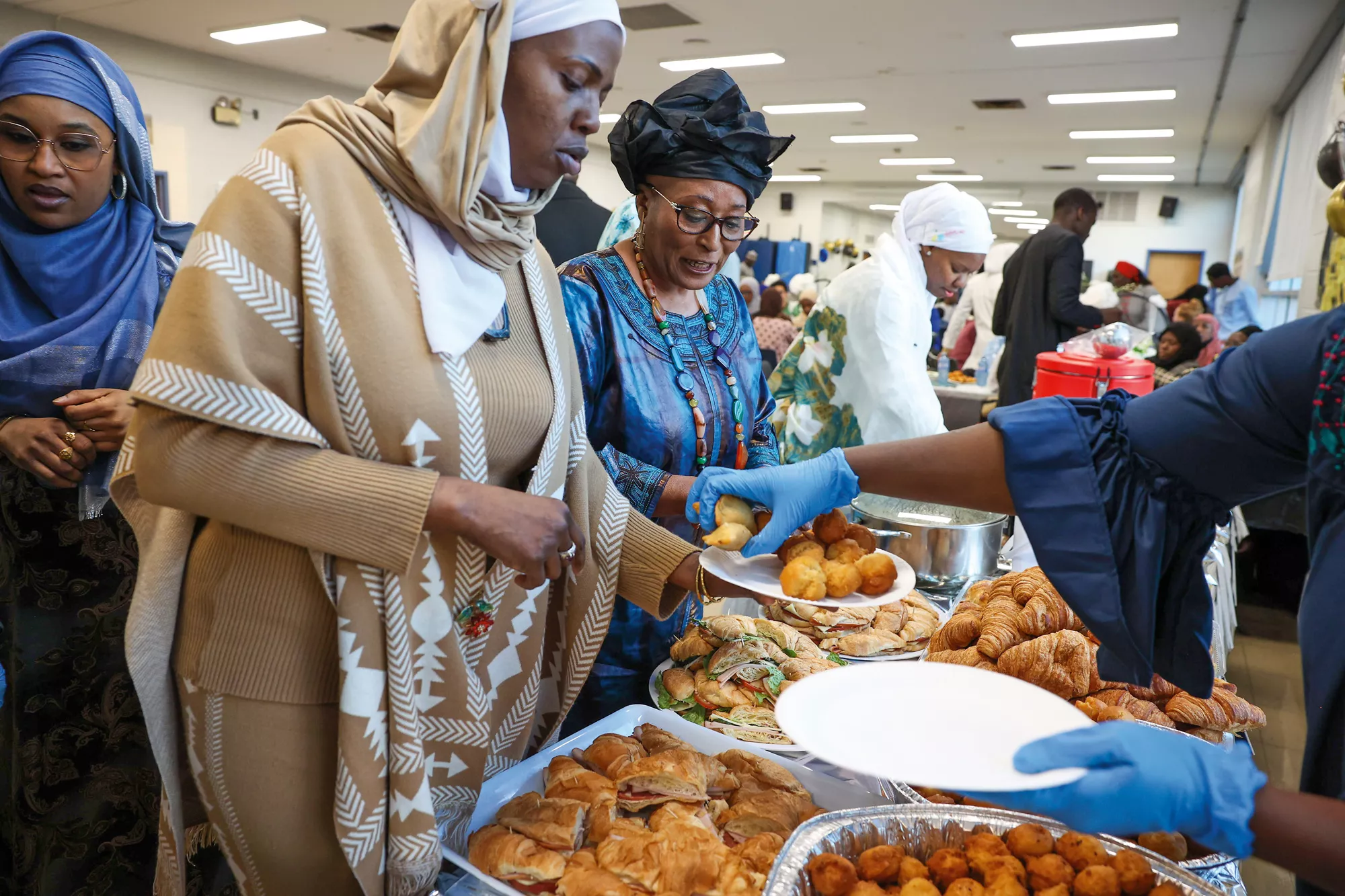
Several hundred kilometers northwest, Toronto too will host six World Cup matches, including games featuring West African teams such as Senegal, Ghana and Ivory Coast. Within Toronto’s Senegalese community, families are already preparing for gatherings that will accompany the tournament. Homes, restaurants and community spaces will fill with supporters watching matches together while sharing familiar foods.
Mamadou Ndaw, a project manager who moved to Canada in 2015 after growing up in Senegal, helps organize some of these gatherings through SenOntario, a group that supports Senegalese residents across Ontario. Founded in 2000, the organization helps connect a Senegalese community in the Greater Toronto Area with a growing Senegalese population. Although the community spreads across the region, football creates opportunities for people to come together.
“Football is one of the favorite sports in Senegal,” says Ndaw, the organization’s interim president. “It’s part of our culture.”
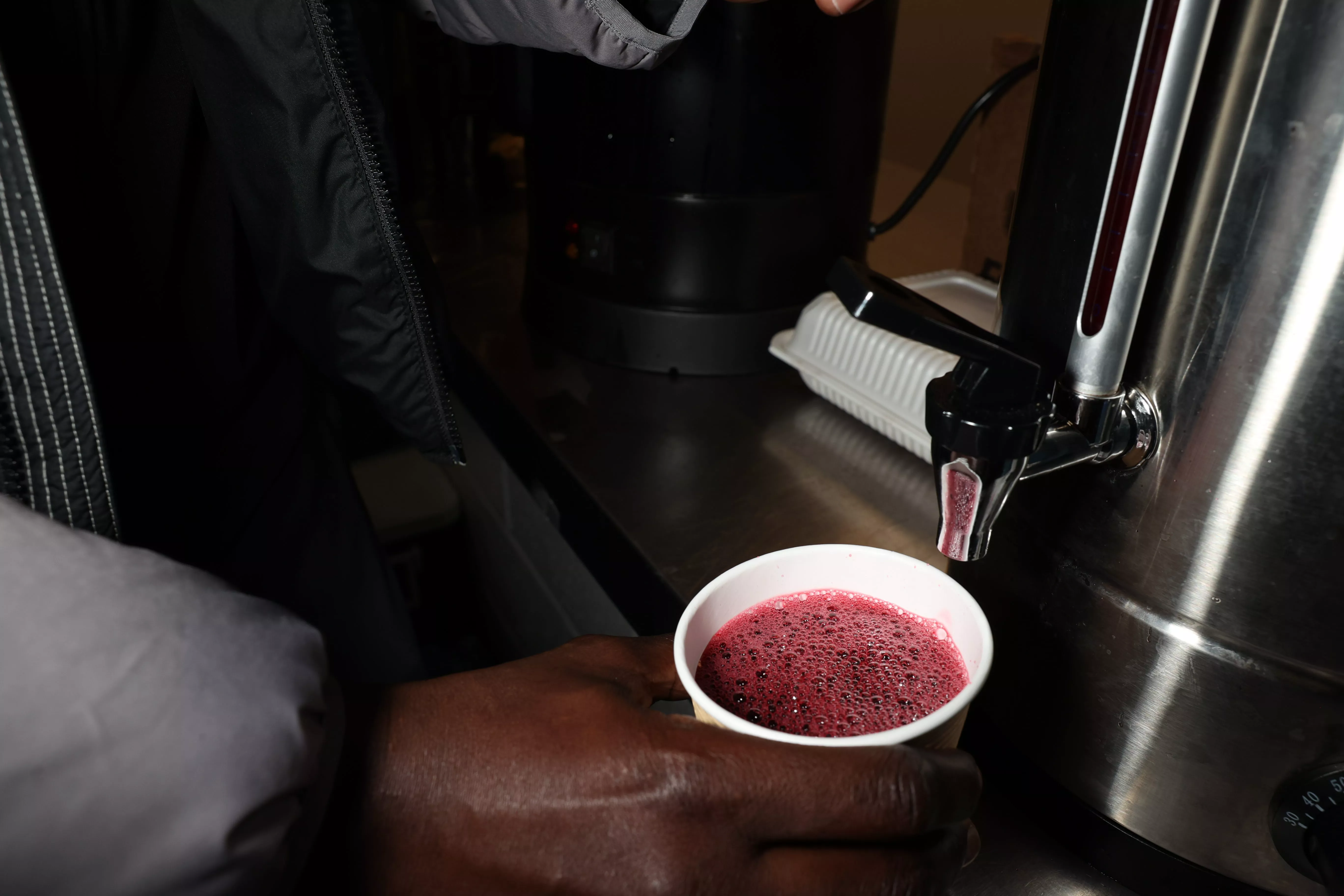
In Senegal, the sport extends far beyond professional leagues. Neighborhood tournaments known as navétane bring together local teams during school holidays, creating months of competition between districts and towns. Match days also carry their own food traditions. Vendors circulate through stadium crowds selling snacks that spectators share among friends and family—beignets, roasted groundnuts and chilled hibiscus juice known as bissap.
Recipe
Bissap Juice
- 1.5 liters water
- 100 grams dried hibiscus flowers
- A few fresh mint leaves
- 50 grams sugar
- Orange blossom water
- Vanilla
- Pineapple juice
For Khadidiatou Ndiaye, hibiscus juice, known as bissap in the Wolof language, serves up nostalgia. Growing up in Senegal, she watched her mother prepare it on weekends and for guests: rinsing dried petals, mint and vanilla filling the kitchen. Bissap marks gatherings, celebrations and relief from the heat—an expression of Senegalese hospitality.
Preparation
- Rinse hibiscus flowers and mint to remove impurities.
- Bring water to a boil; add hibiscus and mint.
- Steep 10–15 minutes, until deep red.
- Strain for a clear liquid.
- Stir in sugar and optional flavorings.
- Cool, then refrigerate.
Serving Suggestions
- Serve cold for refreshment.
- Serve warm as an herbal infusion.
- For a frozen variation, chill in the freezer for a few hours until small ice crystals form for a lightly frozen texture.
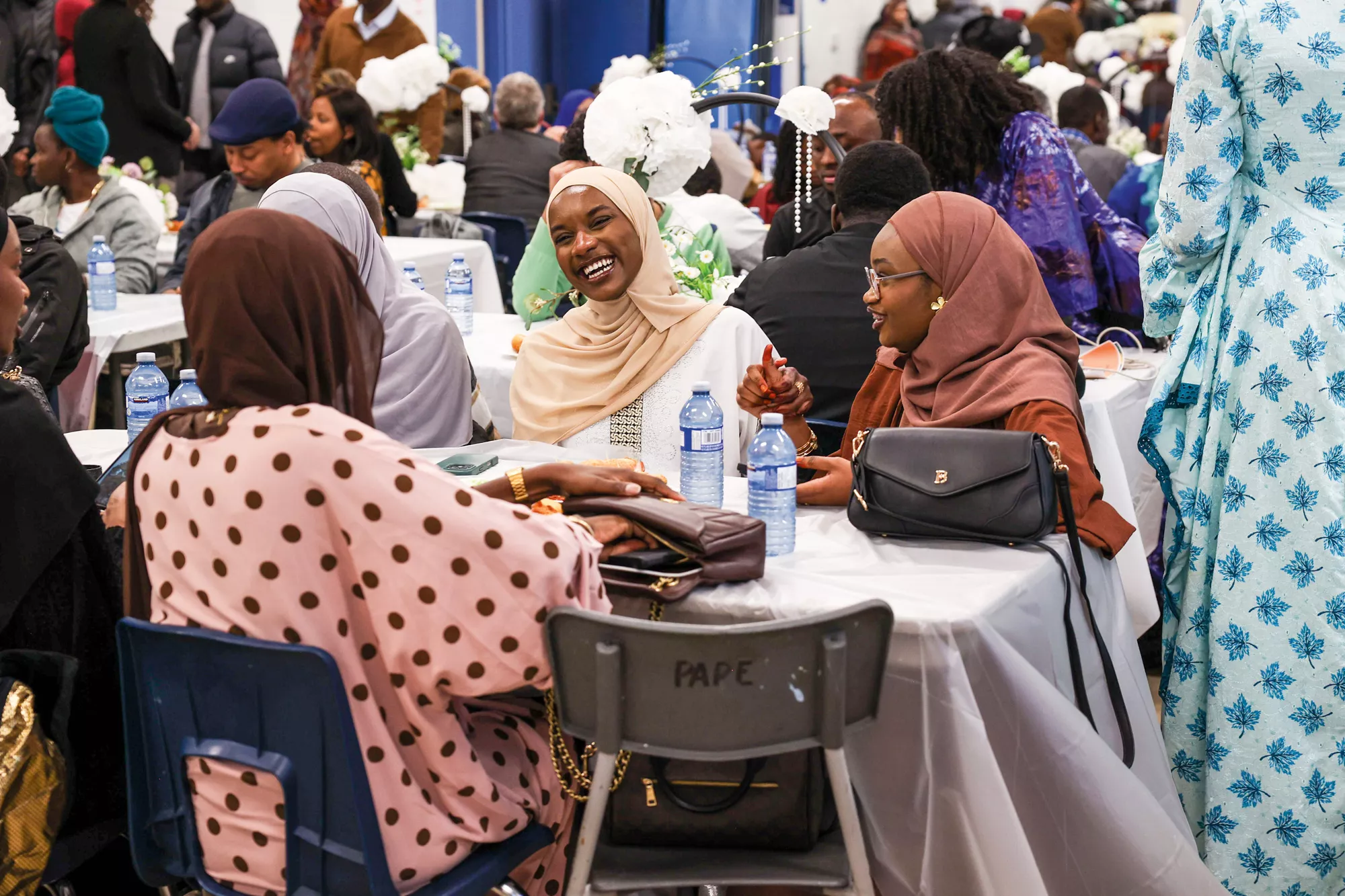
Friends gather in Toronto for ndogou, the word in Senegal’s Wolof language for the meal that breaks the Ramadan fast.
As the World Cup approaches, Senegalese families across Toronto plan similar gatherings. Yet some flavors remain difficult to re-create abroad. Ndaw points to roasted groundnuts prepared after the rainy season in Senegal, when the harvest produces a flavor difficult to replicate elsewhere.
“In Senegal, the groundnuts you get after a rainy season have a special taste,” he says. “They are just better.”
Meanwhile in Houston, the largest city in Texas and host to seven World Cup matches, families across Mexican American communities will gather around televisions to watch the same tournament. Match days often turn into communal events, with relatives and friends arriving throughout the game.
Chef Domenic Laurenzo, co-owner of the restaurant group LTO Cantina, grew up surrounded by Mexican American culinary history. His grandmother, the late Ninfa Laurenzo, opened the well-known Ninfa’s on Navigation restaurant in 1973 in Houston’s East End, a neighborhood historically rooted in Mexican influence. Demand from neighbors helped Mama Ninfa, as she was locally known, introduce fajitas to American diners.
Today, 44 percent of Houston’s population has Hispanic heritage, according to Data USA, and for Laurenzo football carries a similar significance as it does within Mexican communities as in Algerian and Senegalese ones.
“Soccer is critically important,” he says. “It brings a sense of national pride.”

Mamadou Ndaw organizes gatherings as interim president of SenOntario, a group that supports local Senegalese residents of the area. “Football,” he says, is “part of our culture.”
SOPHIE BOUQUILLON
During major matches, families gather in homes or restaurants, turning the game into a communal event. Someone grills outside, someone prepares tortillas in the kitchen, and the meal grows collectively as friends and relatives arrive. Match-day menus commonly include tacos, tamales, grilled meats and guacamole.
Even here, however, some culinary traditions remain tied to place. Laurenzo points to barbacoa, a dish traditionally prepared by burying meat in an underground pit lined with agave leaves and cooking it slowly for hours—a technique rarely permitted under US health regulations.
“You literally dig a hole in the dirt,” Laurenzo says. “You can’t do that here.”
During the World Cup, communities in New York, Toronto and Houston will gather around televisions and share meals, watching the same matches unfold far from the places that first shaped their traditions. In Queens, Algerian merguez sandwiches will fill tables along Steinway Street. In Toronto, Senegalese families will share beignets and roasted groundnuts while watching matches together. In Houston, tacos and tamales will accompany televised games.
Food helps re-create the atmosphere of home.
And when conversations with fans move beyond the menu, another theme emerges—one that has less to do with ingredients and more to do with memory.
For Mekersi, what immigrants miss most is not only the food but the neighborhood itself.
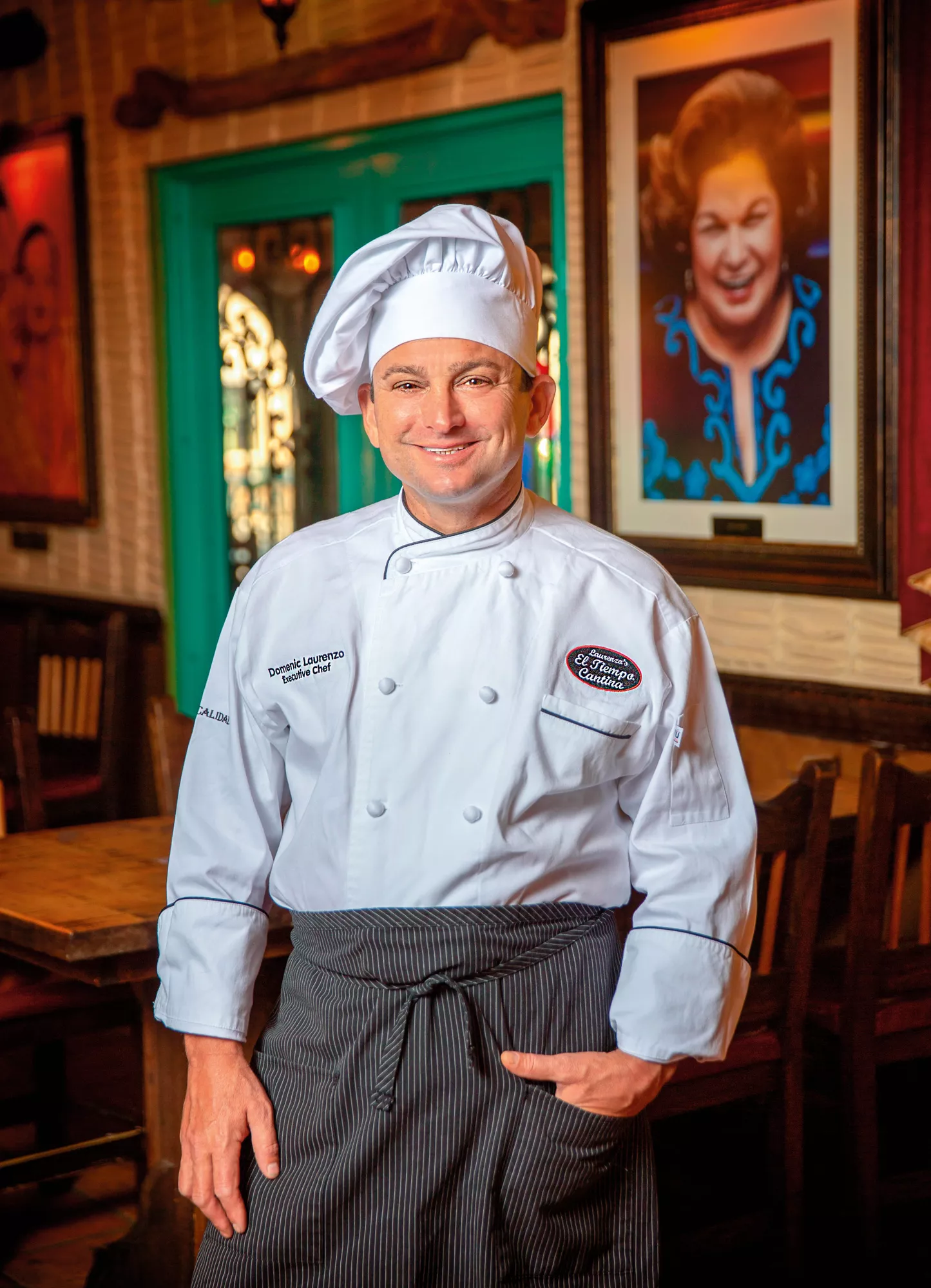
“Soccer ... brings a sense of national pride,” says chef Domenic Laurenzo, who grew up surrounded by Mexican American culinary history, thanks to his grandmother, the late restaurateur “Mama” Ninfa Laurenzo.
Kelley Jensen for LTO Cantina
“If I came thousands of miles away from my country,” he says, “I would miss my family … my neighborhood where I grew up.”
Ndaw, who grew up 100 kilometers from Dakar, the capital of Senegal, describes a similar absence when thinking about celebrations after major victories.
“In Senegal we celebrate in the streets,” he says. “Here you feel like you might disturb someone.”
Laurenzo sees the same contrast when comparing Houston with Mexico. In Mexico, victories spill into public squares and city streets. In US cities, celebrations often remain inside homes and restaurants.
And the streets and neighborhoods where people learned how to celebrate the game together remain far away.
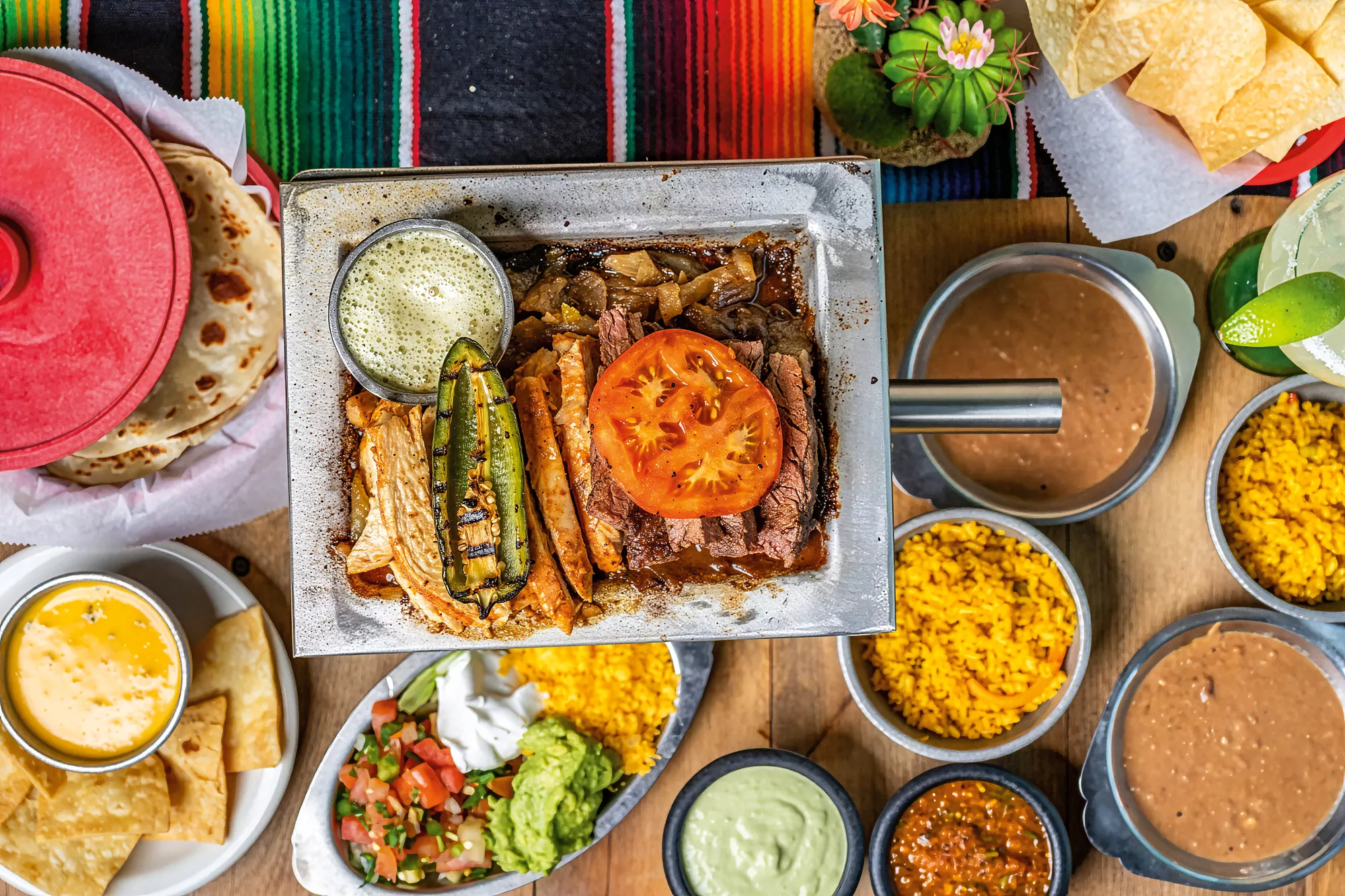
Match-day menus for El Tiempo Cantina restaurants he and his father run feature grilled meats, tacos, tamales, guacamole and more.
Carlos Rodriguez for LTO Cantina
On Steinway Street, however, the feeling of home still flickers during big matches. Coffee shops fill with fans, televisions glow behind restaurant windows, and crowds spill onto the sidewalks as supporters watch together.
For a moment, the neighborhood begins to resemble the places many fans left behind.
More From AramcoWorld
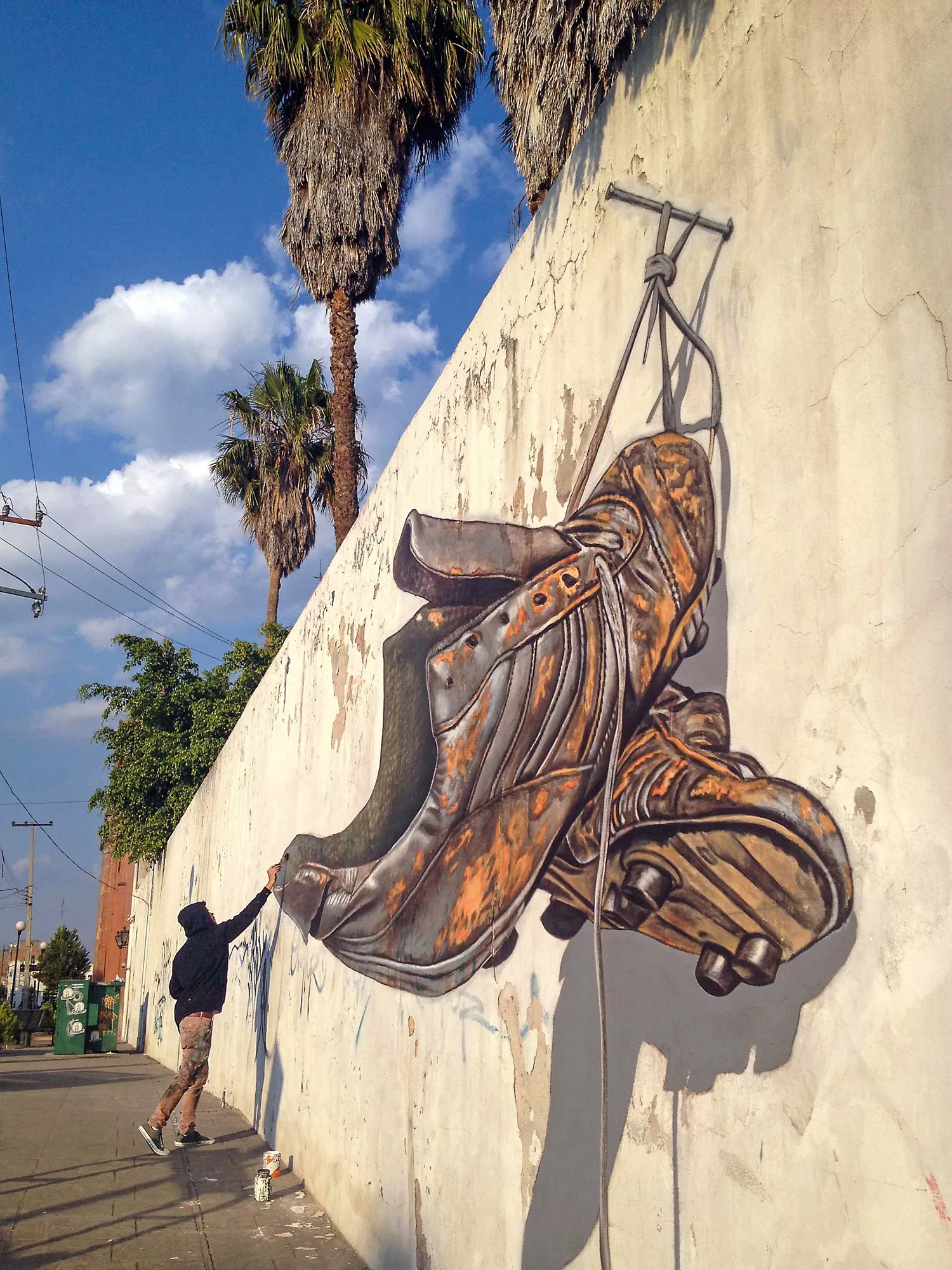
A Sphere as Muse: Football Drives Art Across Continents
About the Author
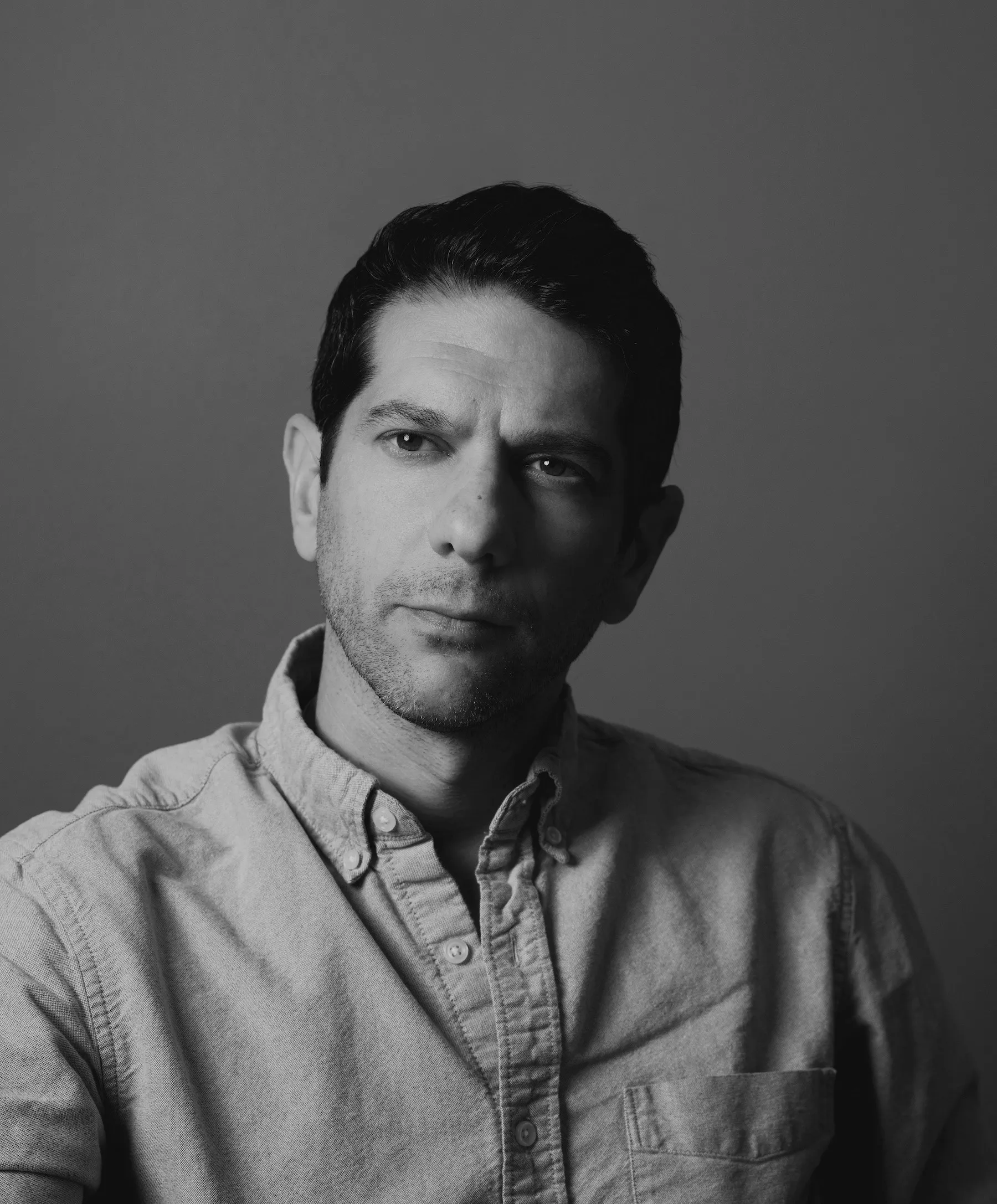
Greg Kahn
Greg Kahn is an award-winning American documentary and fine art photographer. Kahn’s photography centers on the forces that shape personal and cultural identity. His work has been exhibited in major galleries and museums around the world and published in The New York Times Magazine, National Geographic and British Vogue, among others.

Michael Shagoury
Michael Shagoury is a multimedia journalist and media strategist based in Washington, D.C. He has covered stories across the Middle East and North America for outlets including AJ+ and CNN International. As managing director of SideKix Media, he leads projects at the intersection of storytelling, digital strategy and emerging technology.
You may also be interested in...
Meet the Gemologist Who Digs Into Nigeria's Little-Known Treasures
Engineer, gemologist and jeweler Lotanna Amina Okpukpara explores rural artisanal mining sites to promote gems in Nigeria.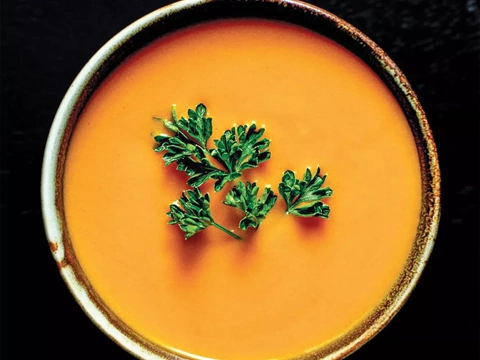
Want To Perk Up Carrot-Ginger Soup? Use African Spices
Food
Marie Kacouchia's recipe for a warm bowl of Creamy Carrot-Ginger Soup can be tailored with cacao, soumbala and chile powders.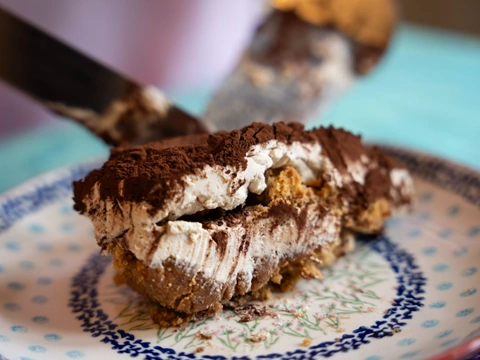
Cake Rusk Tiramisu: The Story of an Improvised Dessert
Food
Cambridge, UK, supper-club hostess Kinza Malik recalls how, during her childhood in Pakistan, her mother improvised with a classic dessert.