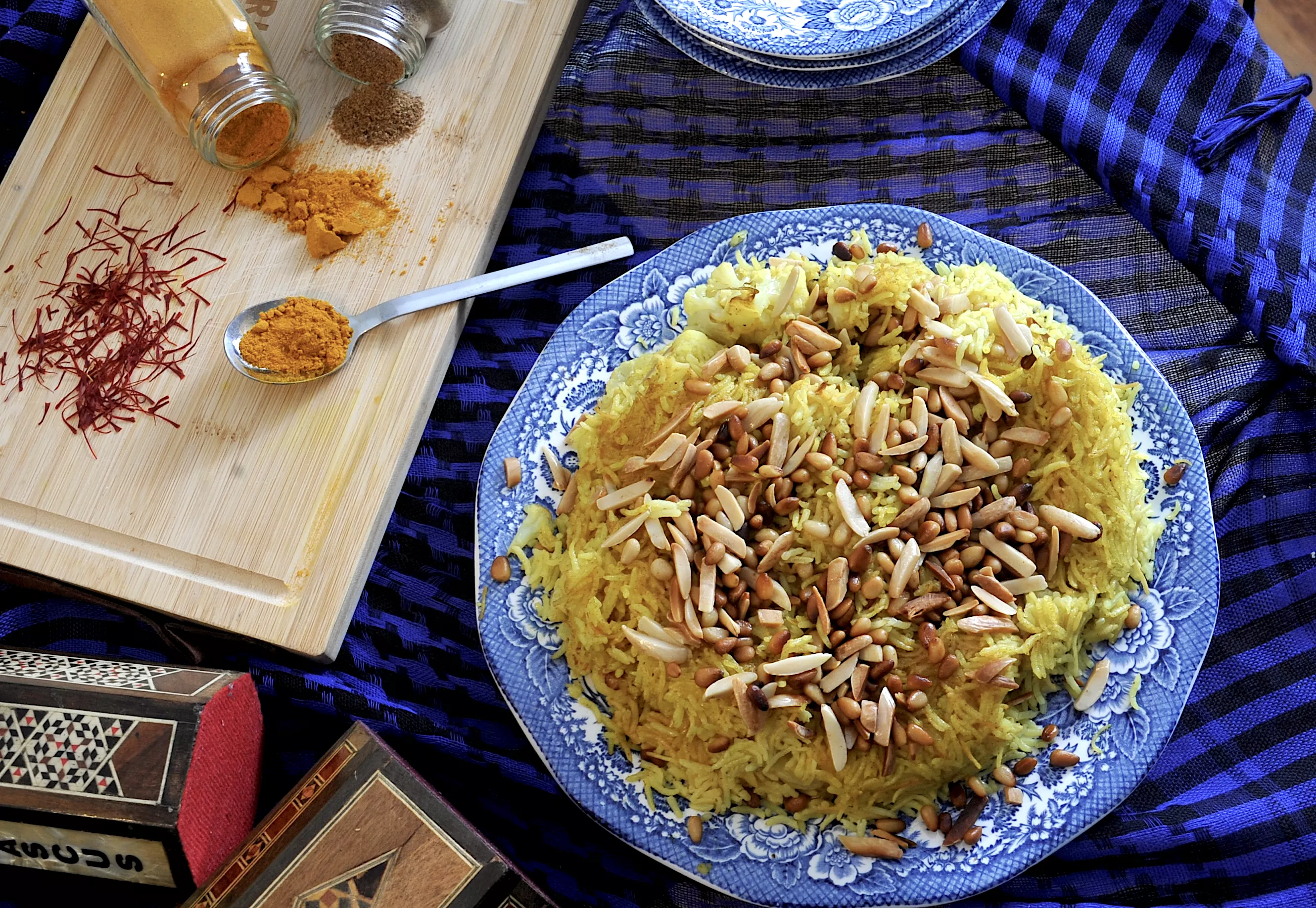
The summers of my childhood in Damascus, Syria, smelled of jasmine, olive oil and eggplant. We would play outside all day, riding bikes with squeaky brakes and launching ourselves over homemade ramps with more courage than common sense. Later, with muddy shoes and scraped knees, we swarmed around the soccer ball like bees.
By lunchtime, my stomach would begin to rumble. Then I would hear it: Momma’s call drifting from the kitchen window. Sometimes I would stay outside a little longer, but a certain aroma would always pull me in like a magnet.
That scent belonged to maqluba, Arabic for “flipped over,” a reference to its dramatic final act. I can still see Momma making it in our Damascus kitchen, her sleeves rolled up, her henna-dyed hair flowing, her gaze focused and loving.
She would brown thin slices of lamb before dusting eggplant with flour and lowering it into olive oil, where it hissed and crackled into golden slices. Vermicelli toasted to amber before disappearing into fragrant basmati rice. Finally came the careful layering: lamb, eggplant, rice.
There were no measuring spoons. Just a pinch. A dash. Salt and pepper, cumin, coriander, turmeric and saffron.
Then came my favorite part.
The flip.
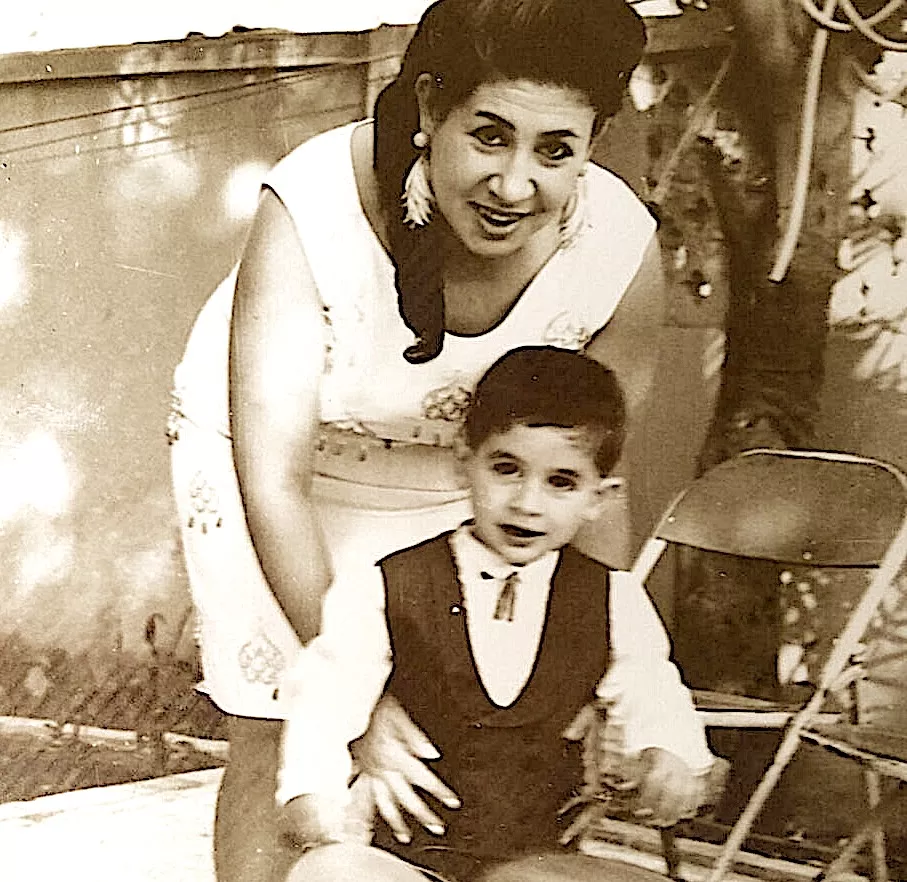
I would grip the pot with narrowed eyes, take a deep breath, then heave it upside down while bending my knees and biting my lip before landing it on the counter.
For a second, everything hung in suspense. Momma would step forward and tap the bottom of the pot with a spoon repeatedly, slowly lifting it away. Golden rice would appear first, followed by tender lamb nestled among glistening eggplant. Roasted almonds and pine nuts would crown the dish as fragrant steam drifted upward like a desert mirage.
I would stand there grinning as if I had just returned from a magic carpet ride before my siblings and I would devour the magnificent creation.
The maqluba was delicious, yes, but something lingered long after the last bite. Perhaps it was the way we would gather on our balcony beneath tangled grapevines, passing plates and stories as the Mediterranean breeze carried the afternoon into evening.
I did not know then how far that dish would travel with me, nor how many years would pass before I could re-create it.
Four decades later, the aroma of maqluba still takes me back to our Damascus apartment, to the grapevines that shaded our balcony, to the taste of salt on that breeze and Momma’s voice calling me in for lunch.
I have made maqluba countless times for my children, and it remains their favorite. Like my siblings and me, they fight over the crispy rice clinging stubbornly to the bottom of the pot. Around our table in the US state of Alabama, one reaches for seconds, another quietly picks out the pine nuts, and a third spoons yogurt onto the platter before the maqluba has fully settled.
The meal belongs to them now, not to Damascus.
Somewhere between two worlds, I stopped trying to re-create Momma’s maqluba and began making my own. A little more spice here, cauliflower instead of eggplant and substitutions shaped by American grocery stores and Southern seasons.
Whenever my children visit, they ask the same question before they’ve taken off their shoes.
“Babba, are you making it?”
While it cooks, they drift into the kitchen like I once drifted into Momma’s. They lift the lid to peek. They steal almonds and pine nuts. They ask when lunch will be ready.
Then comes the flip—the same dramatic moment that thrilled me as a child. Demi, my youngest, especially loves the act. She photographs the finished dish before anyone can touch it, then she posts the pictures on Instagram.
“Babba’s maqluba, the best dish ever,” she writes proudly.
The first time she did this, I laughed.
Then I realized something.
I saw myself standing beside Momma, waiting for the steam to clear. Now, it was my daughter holding her phone over the platter, waiting for the reveal. The kitchen was different. The language was different. Family still the same.
As I watched my daughter, another realization emerged.
I began noticing the way I tested the rice. The way I arranged the almonds and pine nuts. The way I stood at the stove.
Somewhere between Damascus and Dixie, Momma’s gestures had become my own.
I had inherited more than a recipe.
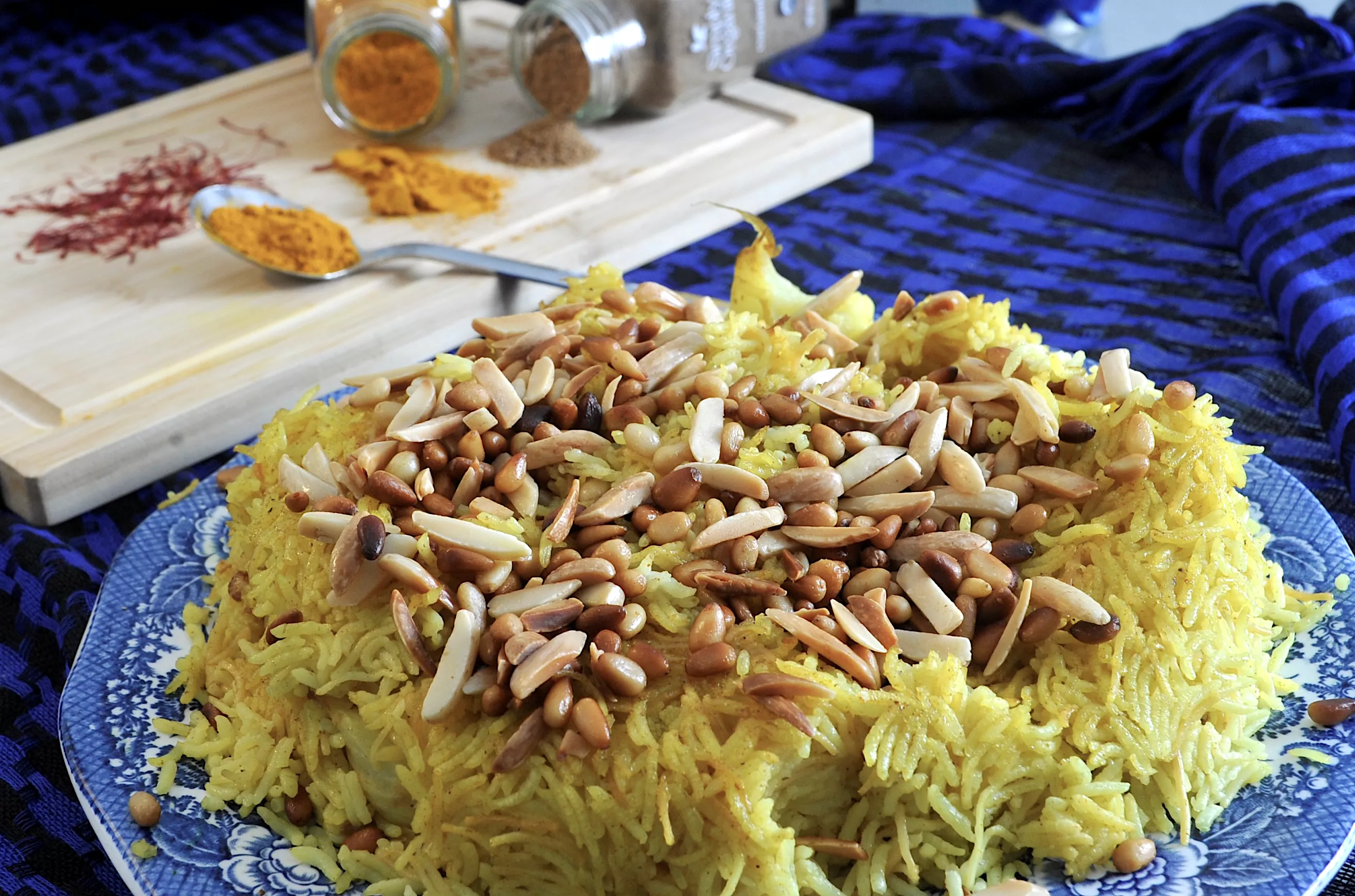
Recipe
Vegetarian Maqluba (Upside-Down Rice With Cauliflower)
Serves 4-6
Ingredients
- 1 large head cauliflower, cut into florets
- Olive oil for sautéing Salt and black pepper
- 2 cups basmati rice
- ¼ cup vermicelli noodles
- 2 tablespoons olive oil
- ½ teaspoon ground cumin
- ½ teaspoon ground coriander
- ½ teaspoon ground cardamom
- ½ teaspoon turmeric
- Pinch of saffron, soaked in 2 tablespoons warm water
- 4 cups vegetable broth
For garnish
- ½ cup toasted almonds
- ¼ cup toasted pine nuts
- Plain yogurt (optional)
- Toss cauliflower florets with olive oil, salt and pepper. Sauté until golden brown.
- Rinse the rice until the water runs clear.
- In a separate pot, heat 2 tablespoons olive oil. Add the vermicelli and brown. Stir in the rice, cumin, coriander, cardamom, turmeric and saffron.
- Spoon the rice mixture over the cauliflower, then pour the vegetable broth over the rice. Bring to a boil, then reduce heat to low. Cover tightly and cook for 30-35 minutes, or until the rice is tender and the liquid has been absorbed.
- Remove from heat and let stand for a few minutes, covered.
- Place a large serving platter over the pot. Holding the platter and pot firmly together, carefully invert them. Tap the bottom with a spoon before slowly lifting the pot.
- Garnish with toasted almonds and pine nuts. Serve with yogurt, if desired.

You may also be interested in...
Recipe: How a Spanish Tortilla Got Me Over My Distaste for Eggs
Food
A lifelong egg aversion softens through a recipe by Jeff Koehler for a simple Spanish tortilla and the quiet resourcefulness it shares with Pakistani kitchens.
Bengali Snack: Potato Chops Recipe
Food
The Bengalis are famous for their “chops,” or potato croquets eaten as snacks with tea.
‘Make It Your Own’: The Self-Belief Simmering in Noorjahan Bose’s Shemai Recipe
Food
A Bangladeshi dessert reflects hard-fought adaptability in life.