Echoes Through Dubrovnik: Sevdalinka’s Timeless Tales of Longing
With his acoustic guitar and haunting vocals, Ibrica Jusić of Croatia has honed a distinct style of sevdalinka, a musical genre that is rooted in Slavic tradition and influenced by Islamic life.
Written by Ian Bancroft, photographed by Armin Durgut
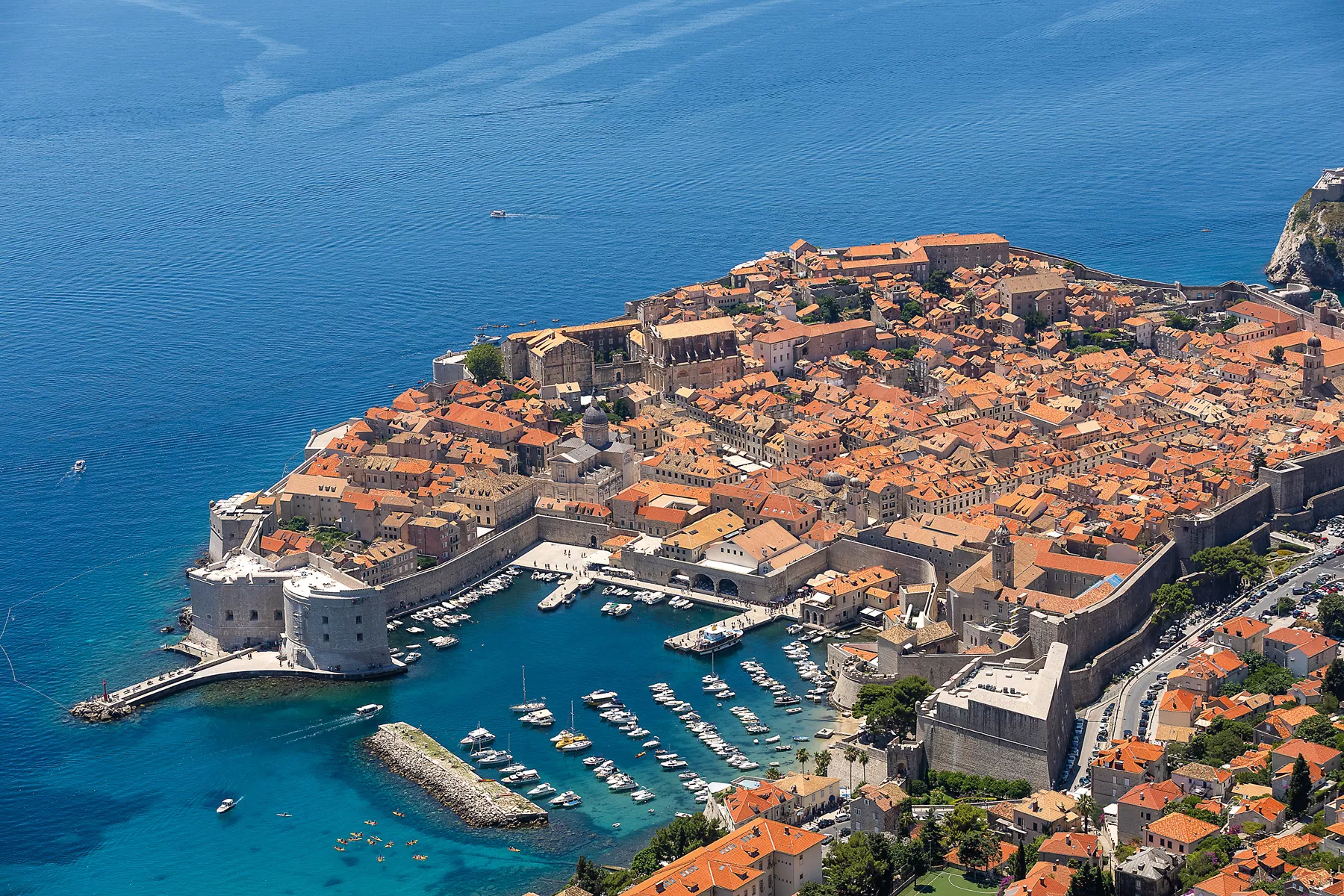
Above: Old Town of Dubrovnik, Croatia, on the coast of the Adriatic Sea.
From beyond Dubrovnik, Croatia’s commanding stone walls, an elderly gentleman with swept-back gray hair emerges with cautious steps. In his left hand, a guitar case; in his right, a long lead restraining an Akita named Simba. These are his two anchors, his two loves.
A regional legend, singer Ibrica (born Ibrahim) Jusić, now 81, is to some synonymous with this place, the town of his birth, the pearl of Croatia’s Adriatic Coast. He pauses for a moment to savor the sea view once more, his black T-shirt and jeans absorbing the beating sun.
For more than 60 years, Jusić has been one of the stars of sevdalinka, a musical genre associated with neighboring Bosnia and Herzegovina. Through acoustic guitar and deeply emotional vocals, he has woven a distinct and recognizable style.
The word “sevdalinka” derives from sevdah, or in Ottoman Turkish sevda, meaning “love,” “longing” or “passion.” Jusić explains its Arabic origins in sawda, meaning “black bile,” an excess of which was believed to cause melancholy. Asked what the word truly meant, a child remarked, in Jusić’s words, “Sevdah is when my father [babo] sings, and he is crying, but he isn’t sad.”
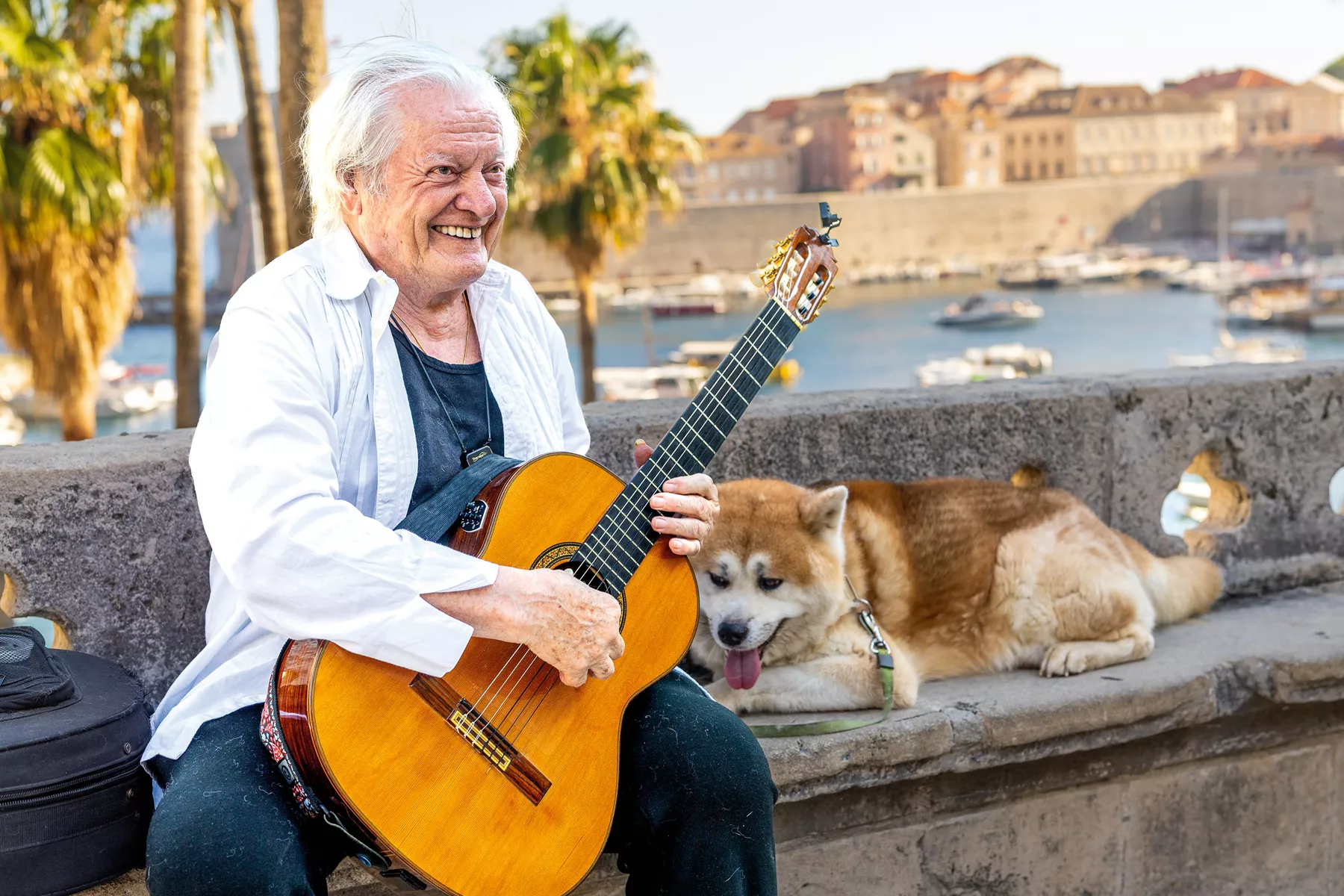
Singer-songwriter Ibrica Jusić, with his dog Simba, is a sevdalinka fixture in the Old Town of Dubrovnik, Croatia, on the coast of the Adriatic Sea.
Sevdalinka and the Flourishing of the Imagination
For Nirha Efendić, an ethnologist and curator at the National Museum of Bosnia and Herzegovina, sevdalinka is a “traditional Bosnian love song that appeared in a Muslim environment … rooted in the local Slavic tradition but heavily influenced by the Oriental way of living.” In December 2024, sevdalinka was inscribed into UNESCO’s Representative List of the Intangible Cultural Heritage of Humanity in recognition of its unique musical traits.
It flourished from the 16th century in the mahalas (urban neighborhoods) where the lives of men and women were strictly separated and meetings between young people before marriage were heavily supervised. Often the woman could see the man completely, but he couldn’t see her. “He had to clutch to his flourishing imagination to picture her as a whole,” Efendić says, often only hearing her voice.
“That environment is exactly where sevdalinka appeared in its most beautiful verses—born from that tension of intense desire on one side and an insurmountable barrier of tradition on the other,” Efendić explains.
“Sevdalinka comes from what I always say: Nobody in life has ever made a love song without it being an experience,” Jusić reflects. “You want to experience it, and now you are experiencing suffering. That is sevdah—suffering from the very essence of love.”
Many of the songs are not abstract reflections but instead capture a lived moment—a chance encounter, longing and yearning, a forced separation.
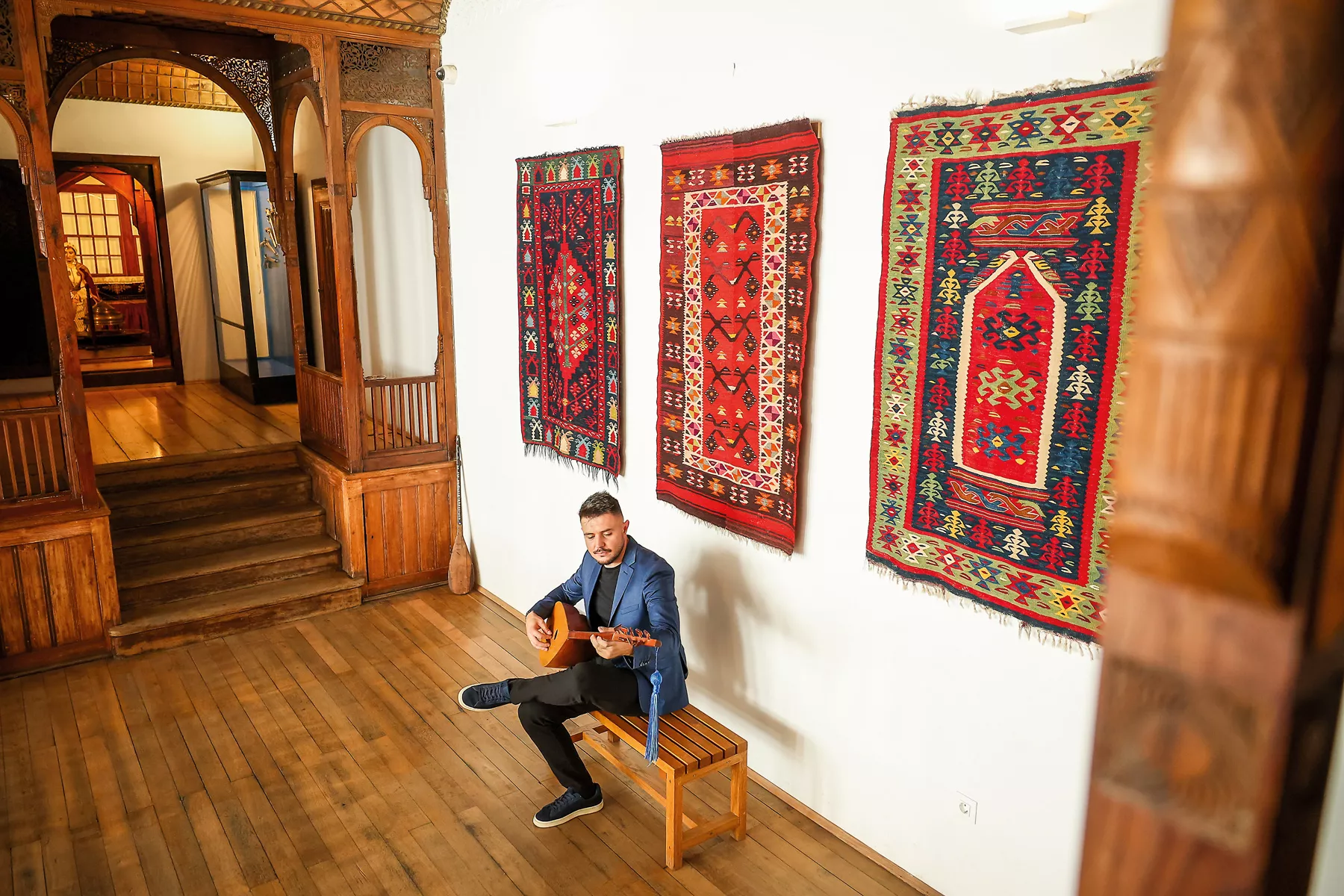
Zanin Berbić is gaining recognition in sevdalinka circles.
In “U Stambolu na Bosforu” (“In Istanbul on the Bosporus”), the sick pasha, his soul at its end and “gravitating toward the black earth,” voiced one final prayer before passing away. After his wife learned of his death, “a tear fell from her eye, and next to the pasha she fell dead, the pasha’s true love.” Their lives—and deaths—were perfectly bound together.
“Žute Dunje” (“Yellow Quinces”) further depicts the anguish of loss. “Two young people loved each other … [but] their enemies did not let them,” begins the song. Fatma soon falls ill and yearns only for yellow quinces from Istanbul. Her beloved goes to fetch the fruits but is gone for three years, “neither sending word nor returning.” When he finally comes back, with the quinces, Fatma is being laid to rest. He offers the pallbearers money in return for one final kiss.
What distinguishes sevdalinka, or sevdah, is the emotional weight with which it is sung. “They say today that it is a song of the heart—and it’s true: You can sing it, you can lament, you can even out-shout one another,” Jusić says, “but it only works when you possess that raw, genuine emotion and energy.
“Sevdah is lived,” he continues. “It has to deeply move us, to season our souls. That is how it has always been.”

The National Museum of Bosnia and Herzegovina’s Nirha Efendić is an expert on the genre.
“Over time [sevdalinka] became an intrinsic part of daily life for the Bosnian people.”
Sevdalinka’s origins have remained a source of intrigue. “Everyone thinks that it came from the East, but the Sephardic Jews brought the sevdalinka structure in the 15th century when they were expelled,” Jusić says, referring to the Spanish Inquisition, “and then they settled through Dubrovnik into Bosnia.” The Ottoman Turks, he says, didn’t reject them; on the contrary, “they embraced them all,” he reflects. “Over time it became an intrinsic part of daily life for the Bosnian people, evolving into their traditional song.”
Zanin Berbić, one of the rising stars of sevdalinka in Bosnia and Herzegovina, started singing these songs as a child. “For me, sevdalinka means life,” he says. It is “a unique song because it represents a conglomerate of different cultural influences that permeated Bosnia and Herzegovina for centuries.”
A keen historian of the genre, Berbić argues that it reflects and portrays the different social and political conditions the country has endured. Sevdalinka, he believes, constitutes “a witness and a symbol of Bosnian persistence and continuity.”
The genre has evolved through several distinct historical phases, according to Efendić.
“That first phase was when public meetings were problematic and the songs lived in private spaces,” she says. The transition to Austro-Hungarian rule in the late 19th century saw sevdalinka “moving from private houses to cafes (kafanas, as the Ottomans called them) … blending à la Turca and à la Franca styles.” The advent of radio finally brought it into homes in urban and rural areas. “It is essentially our local jazz—a beautiful, famous and deeply rooted tradition.”
A fundamental part of this evolution was the broadening of music’s reach. “In the beginning, sevdalinka was an oral creation that was transmitted and shaped by word of mouth,” Berbić notes, “but with the development of technology and media, it established itself as a musical genre that would reach the culmination of its popularity after 1945.” Since World War II and the birth of the former Yugoslavia, sevdalinka singers have enjoyed enormous popularity.
From the Streets of Dubrovnik to Global Fame
One of seven children, Jusić was born into a musically gifted but impoverished household. The family’s property in Dubrovnik was divided by the state, forcing them into cramped quarters.
“They put us in the basement; they put us in the storehouse,” Jusić reflects, recalling a youth spent carrying heavy fruit crates to help the family get by. “Since I was a kid, I didn’t have a chair to sit on,” he says. “Those are things that change you—it gave me [the determination] to be tough, to never let anyone walk over me.”
Music was both an inheritance and a form of escapism. “My dad had a Dallapé accordion [a famous Italian brand] with 120 basses,” he recalls. “Go find an accordionist today who even knows what a 120-bass Dallapé means!” (The company closed in 2010 after 134 years, and vintage versions are increasingly hard to find.)
“My mother sang very beautifully,” Jusić continues. “She had a gentle soprano voice … around the dinner table, it sounded gorgeous.” Her delivery became a blueprint for his own.
His late brother, Đelo, founded the famous Dubrovački Trubaduri (Dubrovnik Troubadours). “Đelo was relentless,” Jusić says. “He held that guitar in his hands constantly, just to show everyone he was the best. He would practice his heart out in secret and sit there dissecting how the tones and chords fit together.”
By only 17 or 18, Đelo was performing live concerts in Dubrovnik. “I used to pluck the double bass right next to him,” Jusić says. “Through that, he was my role model. It didn’t matter what I was doing—I just wanted to be near him.”
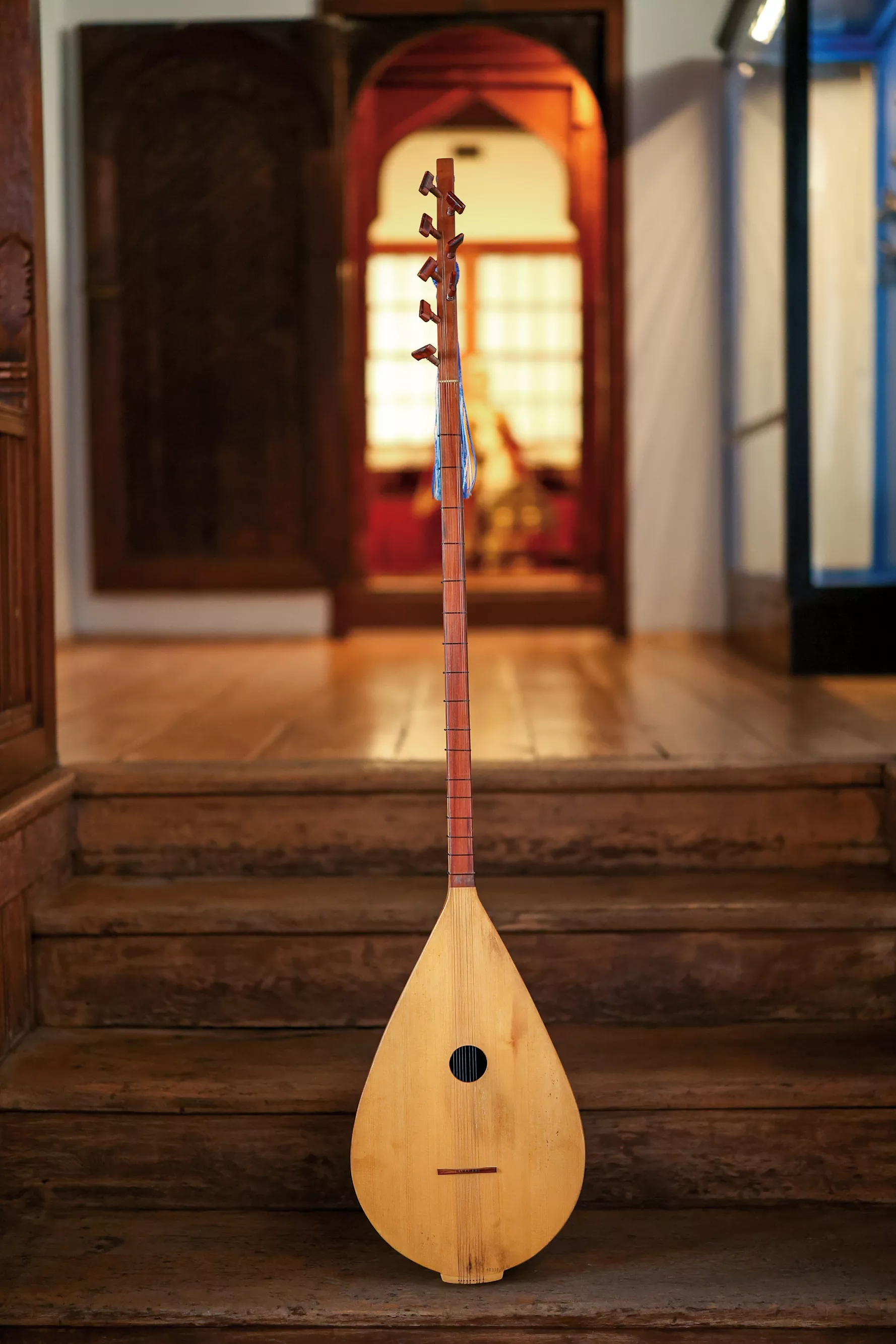
The saz, used for traditional folk music, arrived in the Balkans with the Ottomans. Today it continues to be played in folk ensembles and at cultural events, including those featuring sevdalinka.
Jusić’s own break came on the streets of his birth as a Muslim in a predominantly Catholic country. After serving in the Yugoslav army, he returned broke and desperate. He took his guitar to the stone stairs, known as skaline, outside the Dominican monastery. Jusić recalls that moment: “Sit there. That is your place … open up, move … spread positivity, spread love!” A young couple stopped to listen. “My heart was captured. … Someone is listening to me. I’m not alone!”
Those steps became his stage and emotional home, his audiences drawn from the different religious traditions of Dubrovnik.
At midnight one evening, a famous local artist heard Jusić performing and persuaded Pero Gotovac, a composer, to invite him to the Zagreb Festival, the region’s prestigious music event. “I had papers ready to go to Germany to work as an automotive upholsterer,” Jusić recalls. But stardom awaited. In 1968 he would win a major prize at the festival, catapulting him into the public consciousness. Thanks to this success, Jusić would remain tied to his hometown.
Sevdalinka was not the only musical influence he was exposed to in his youth. “We stayed at the festival in Dubrovnik, where there were classical concerts,” Jusić recalls. Along with local legends, Jusić became a definitive pillar of the coastal chanson style. “It was the Italian school on which we all grew up,” he says—less raw and arguably more melodious and catchy.
This diversity of heritage ultimately led Jusić to France, thereby fulfilling a childhood dream. “I didn’t go to Paris just to play for some local Yugoslav diaspora club—I was performing in the elite cabarets, like Don Camilo,” he says. “I remember on the television broadcast, the host introduced me, saying, ‘He sings beautifully and with immense passion, even in broken languages.’”
The “most beautiful moment” in Jusić’s life came when, after covering a song by Jacques Brel, the master of modern chanson, Brel told him, “I have a feeling I wrote that song for you and not for myself.”
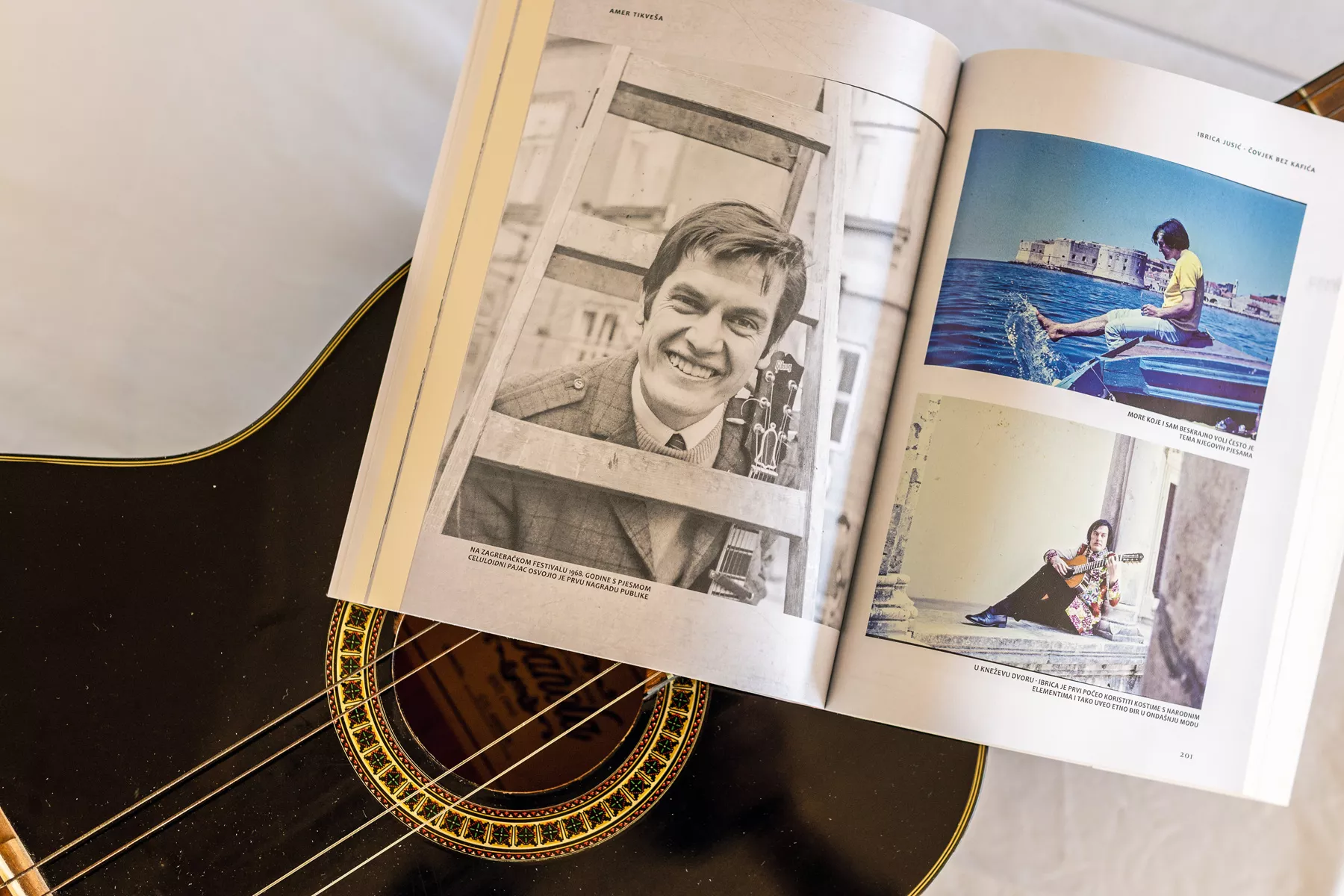
Jusić is the subject of the biography Čovjek bez kafića (A Man Without a Cafe), by Amer Tikveša, Its title is taken from Jusić’s album of the same name.
“I remember on the television broadcast, the host introduced me, saying, ‘He sings beautifully and with immense passion, even in broken languages.’”
Jusić’s Unique and Enduring Contribution
Wherever Jusić went, however, he carried sevdalinka in his soul, remaining true to its ideals. “Ibrica is incredibly knowledgeable and truly understands the tradition of sevdalinka,” Efendić says. “He lives it, and feels it deeply. He knows how to transmit the genre in his own specific way. He creates modern arrangements, but he deeply respects and knows the ‘soul’ of sevdalinka.”
As Berbić contends, “it is extremely important that artists of such quality as Ibrica Jusić feel and recognize the value of sevdalinka. His interpretation of sevdalinka is valuable because, on one hand, it is rooted in its primal, traditional stylistic qualities whilst also being strongly colored by Jusić’s unique artistic individuality, which has distinguished him for decades.”
As the older generation has passed away, responsibility for guarding these principles has fallen on Jusić’s shoulders. For him, the future of sevdalinka depends entirely on that spiritual preservation.
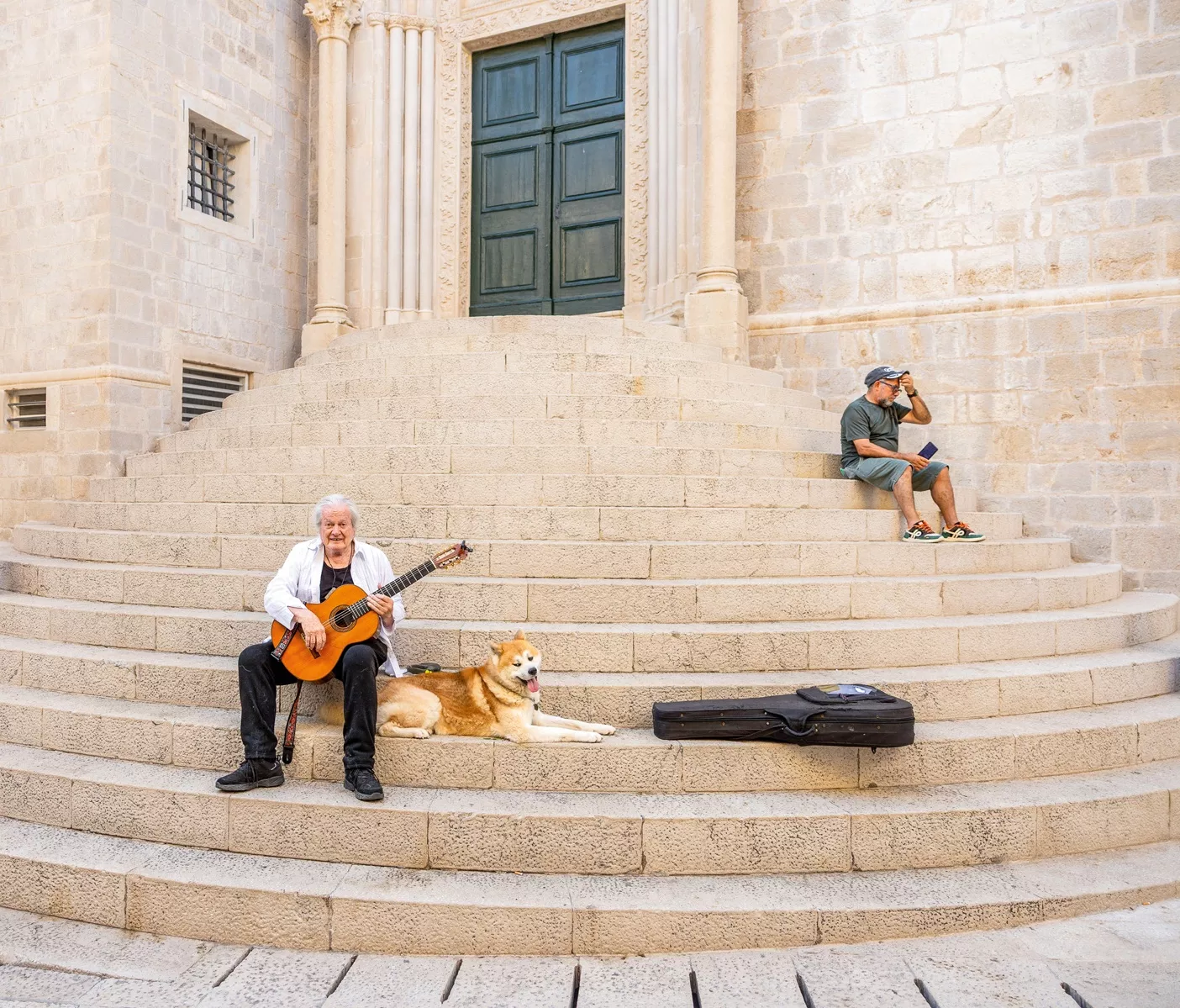
Jusić still sings and plays his guitar on the stone steps of the monastery where his career began.
“What is actually most effective among all true sevdah performers?” Jusić asks rhetorically. “It’s that we can all start singing intimately, quietly, so that we aren’t even overheard by the neighboring table.” It requires a certain setting, a venue where an audience member can feel that it is them, and only them, who is being sung to. It is about proximity, not amplification.
On another afternoon, echoing the past decades, Jusić sits on the steps outside the Church of Saint Dominic, in the Old Town of Dubrovnik, watching a passing wedding party. In his mind, he is singing about someone. His face is content, despite the anguish of his music. His bulging, boyish eyes swallow the surroundings.
For this is his city, and the walls of Dubrovnik will forever echo with the wailing of his voice and the yearning of his guitar.
About the Author

Armin Durgut
Armin Durgut is a freelance photojournalist and a documentary photographer. He is a regular contributor to Associated Press news agency and other publications. His book and an exhibition, “Mrtvare,” poignantly documents the footwear of the Srebrenica genocide victims, and his work often highlights significant historical and social issues.
Ian Bancroft
Ian Bancroft is a writer and former diplomat based in the former Yugoslavia. He is the author of a novel, Luka, and a work of nonfiction, Dragon’s Teeth: Tales From North Kosovo.
You may also be interested in...

Spotlight on Photography: Navigating Guinea-Bissau's Rainy Season
Chef Shane Delia’s Rosewater Sutlaç With Pistachio Crumble
Food
Chef and restaurateur Shane Delia re-creates a rice-and-milk pudding he discovered along Türkiye’s Black Sea coast, one of many sutlaç found on menus in the region; this recipe gets additional texture from a pistachio crumble.
Journalist Leyla Hamed Finds Her Voice in Football's Human Stories
Moroccan Spanish journalist Leyla Hamed has built a career telling the human stories inside football, the world's largest sport.