How a US Filmmaker Reclaimed a Forgotten Syrian Lebanese Legacy
Josh Chitwood belongs to a small group of American descendants trying to document and preserve their Syrian Lebanese history before it disappears. What compels people like him to recover what remains?
6 min
Written by Michael Shagoury, photographed by Greg Kahn
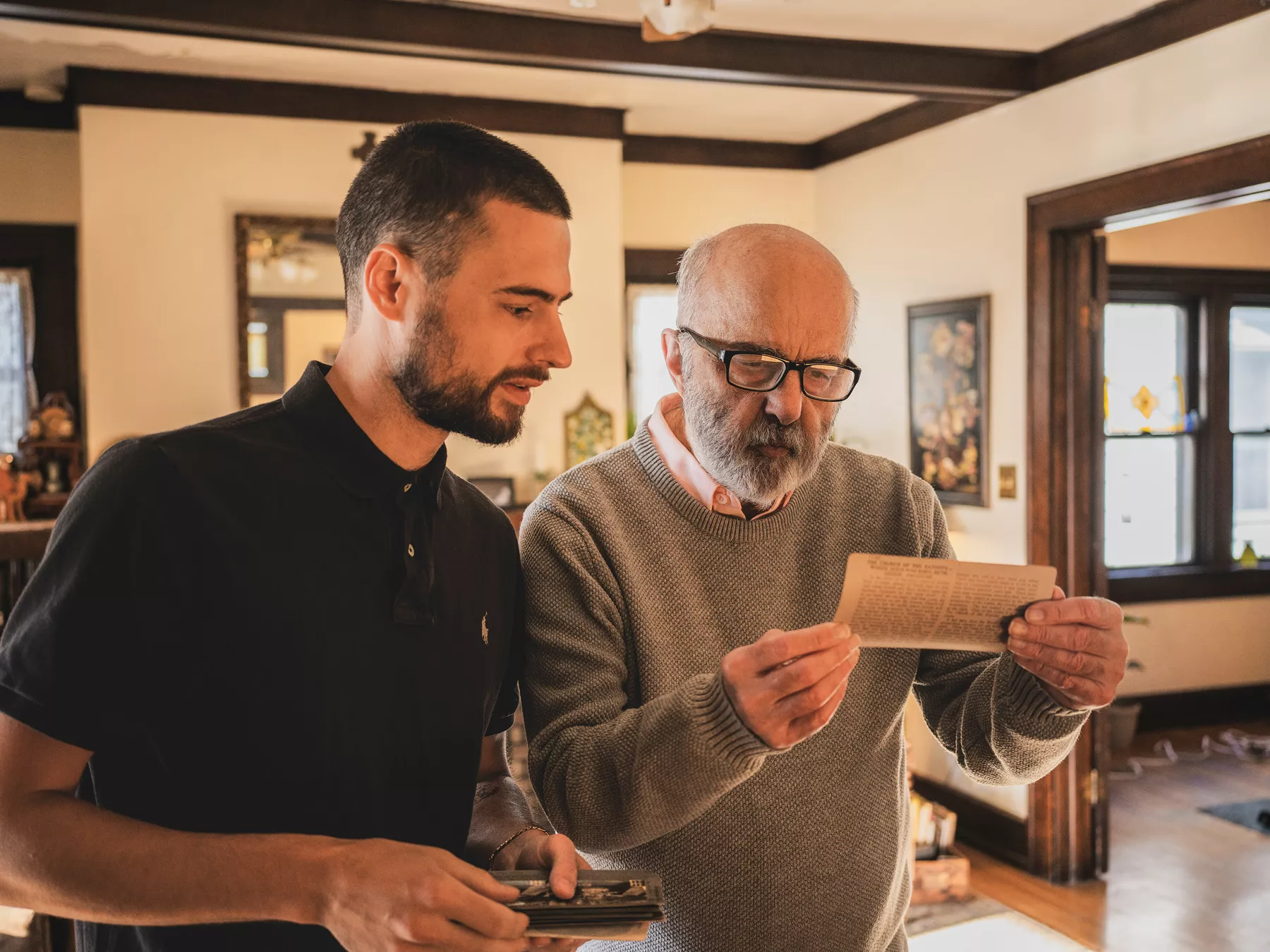
Filmmaker Josh Chitwood shows his Syrian Lebanese family artifacts to cousin Ronald Ellis at his home in Indianapolis, capital of the American Midwest state of Indiana.
In the Near Westside neighborhood of Indianapolis sits a modest house on North Mount Street. A flag honoring the Indy 500 hangs over the front porch, consistent with most houses on the block. Inside, the house tells a different story.
Near the entrance, an old stereoscope sits on a small shelf beside a stack of black-and-white cityscape photographs of Beirut, Lebanon, and Damascus, Syria, from the early 1920s. A scratchy musical track by Eddie “The Sheik” Kochak, an Arab American musician from the 1950s, plays in the background. Behind the dining room table, a small library holds vintage Levantine cookbooks, titles of which include The Art of Syrian Cookery, by Helen Corey and Lebanese Mountain Cookery, by Mary Laird Hamady.
Josh Chitwood, an independent filmmaker, lives here with his wife, Morgan, and three sons. Chitwood is a descendant of the Syrian Lebanese immigrants who came to Indianapolis, the capital of the American Midwest state of Indiana, in the early 20th century and has spent much of his adult life piecing together his family’s past, scanning family photographs, interviewing elderly relatives and filling his home with artifacts that might otherwise disappear.
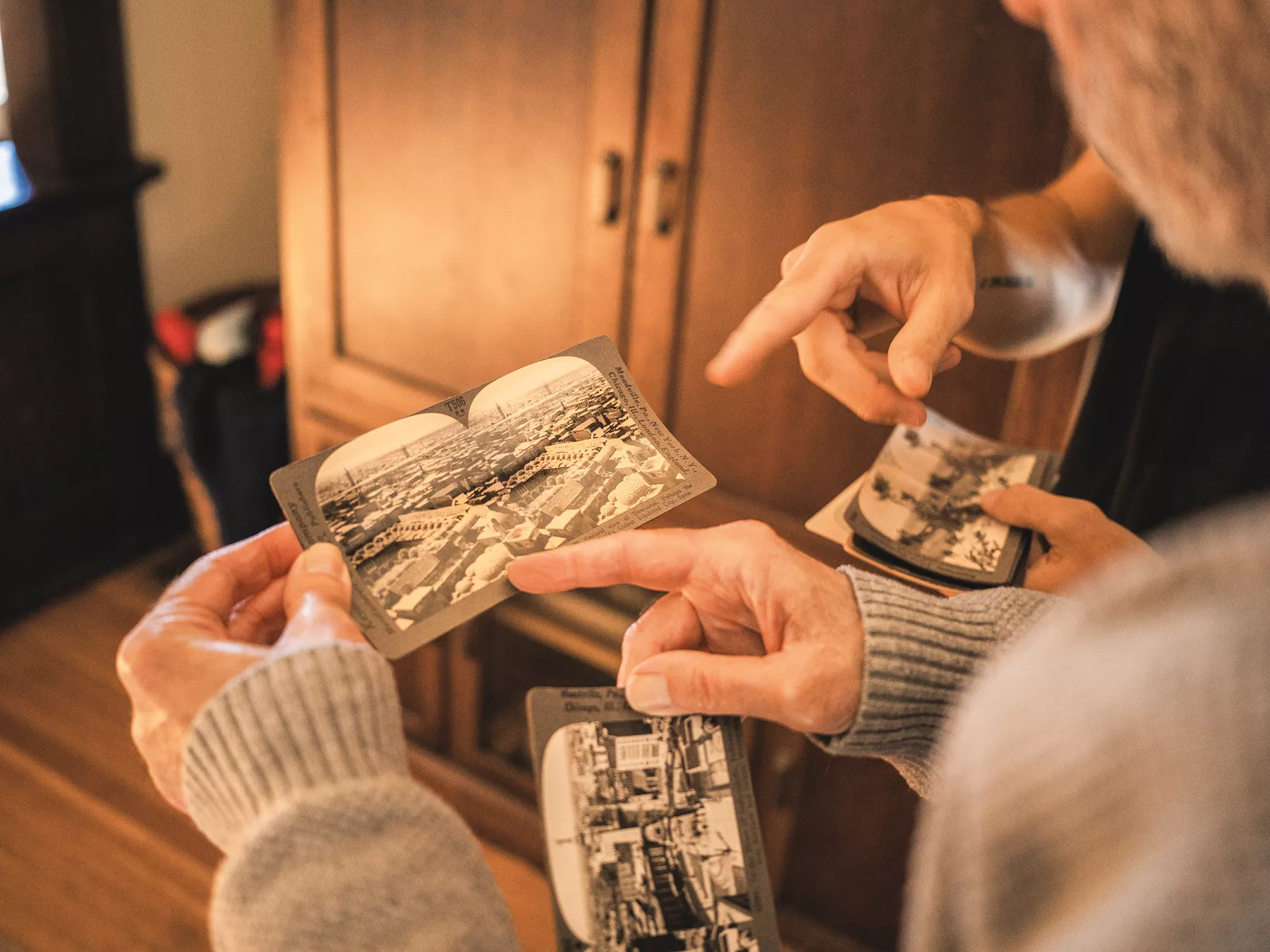
Filmmaker Josh Chitwood shows his Syrian Lebanese family artifacts to cousin Ronald Ellis at his home in Indianapolis, capital of the American Midwest state of Indiana.
This content is blocked
You need to give permission.
“I was always proud of my heritage, but I never really understood it,” Chitwood says.
As generations have passed, assimilation, whether intentional or not, has gradually eroded family traditions and the presence of the Arabic language. Chitwood belongs to a small group of descendants trying to document and preserve this history before it disappears. But how much has already been lost, and what compels people like him to recover what remains?
Growing up in small-town Illinois, Chitwood always knew he was of Syrian Lebanese origin. It showed up at Christmas in the dishes his mother and grandmother prepared—including kibbeh, baklava, tabouleh—and in the extended family network that stretched across Indiana. But knowing one’s heritage differs from understanding what it means.
“I almost wish we were Italian,” he says, laughing. “It’s such an easier heritage to wrap your head around. Frank Sinatra. Spaghetti. American pizza.”
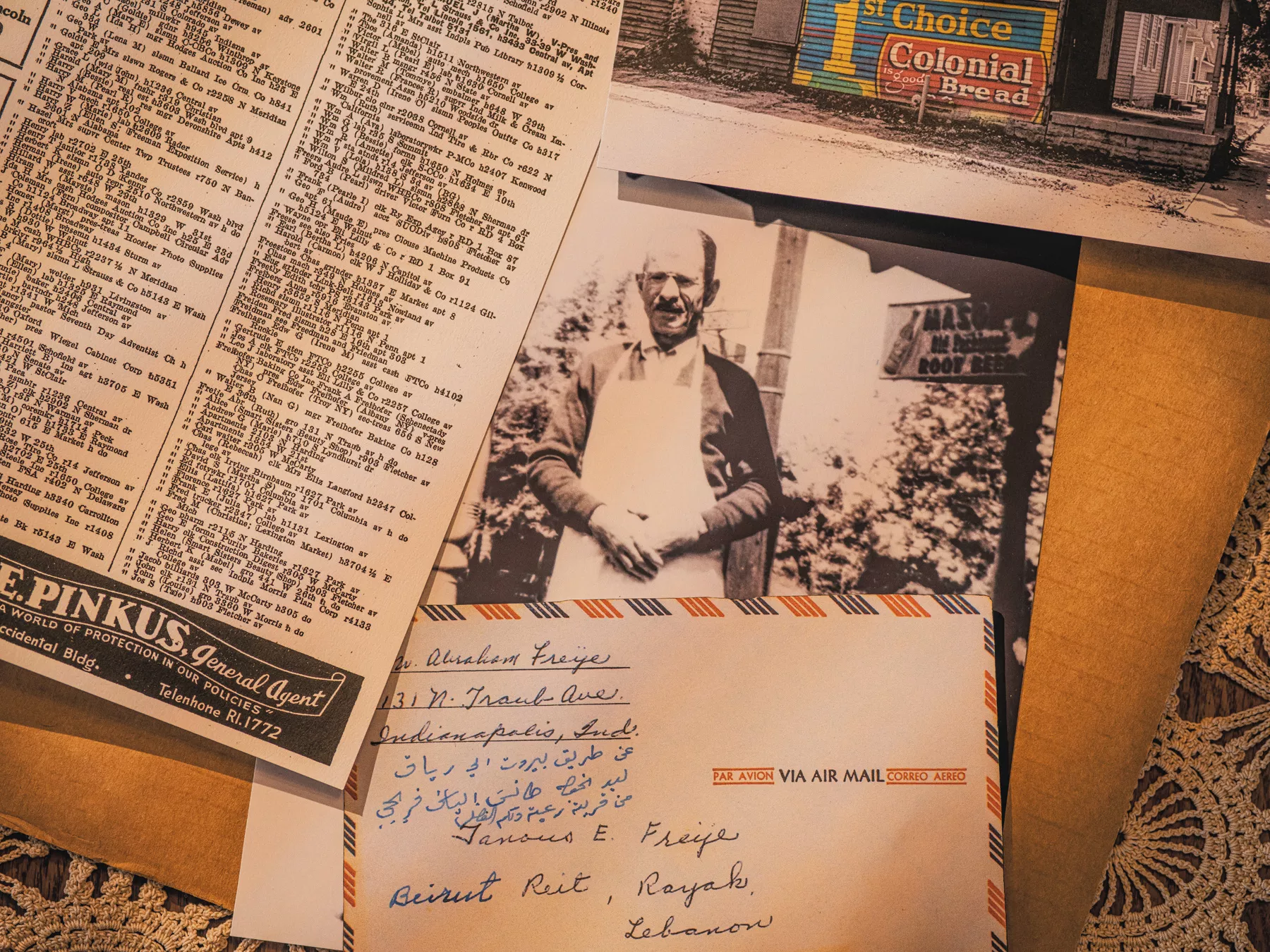
A postcard Chitwood’s great-grandfather sent to family in Lebanon rests among his collection.
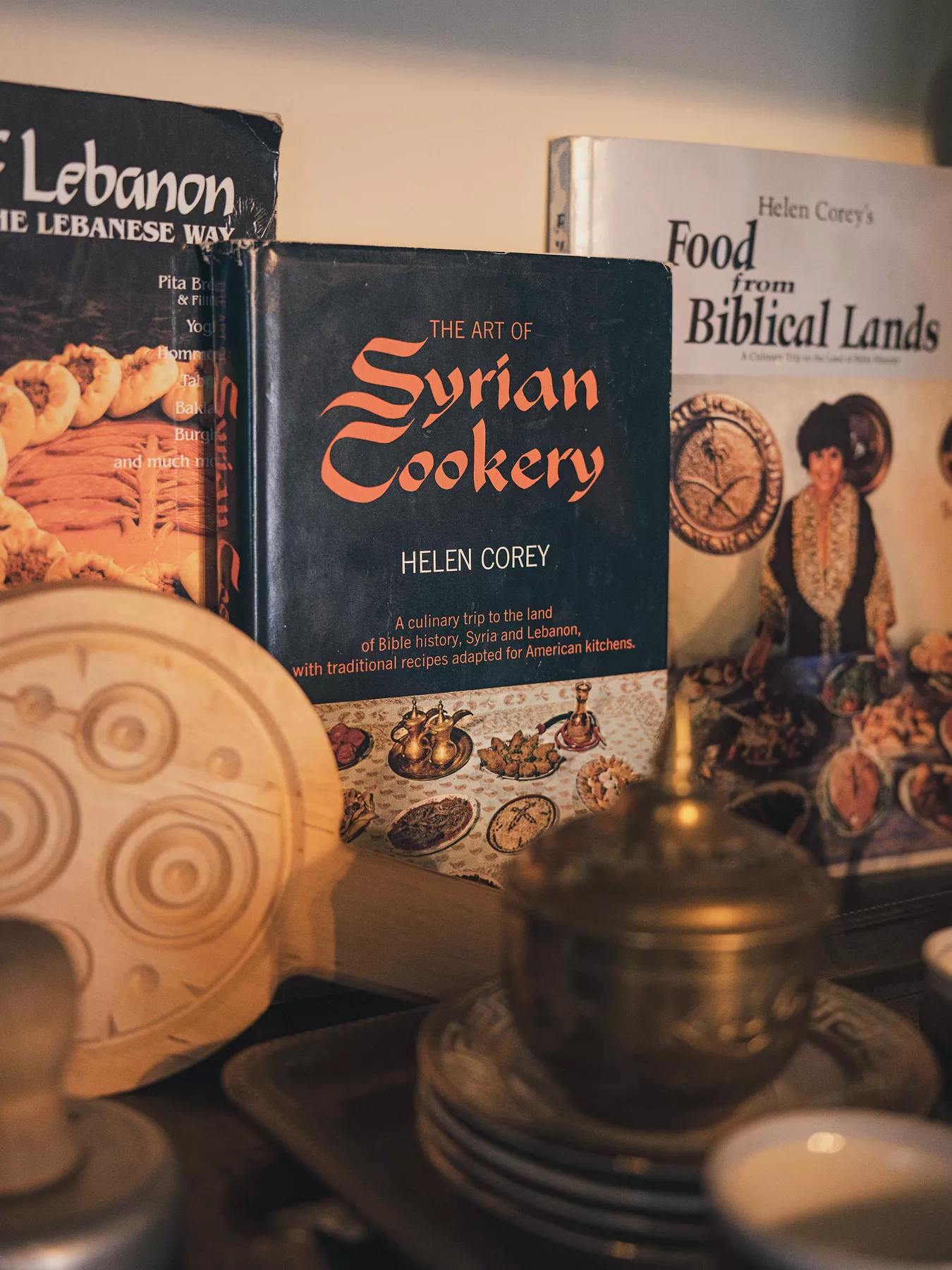
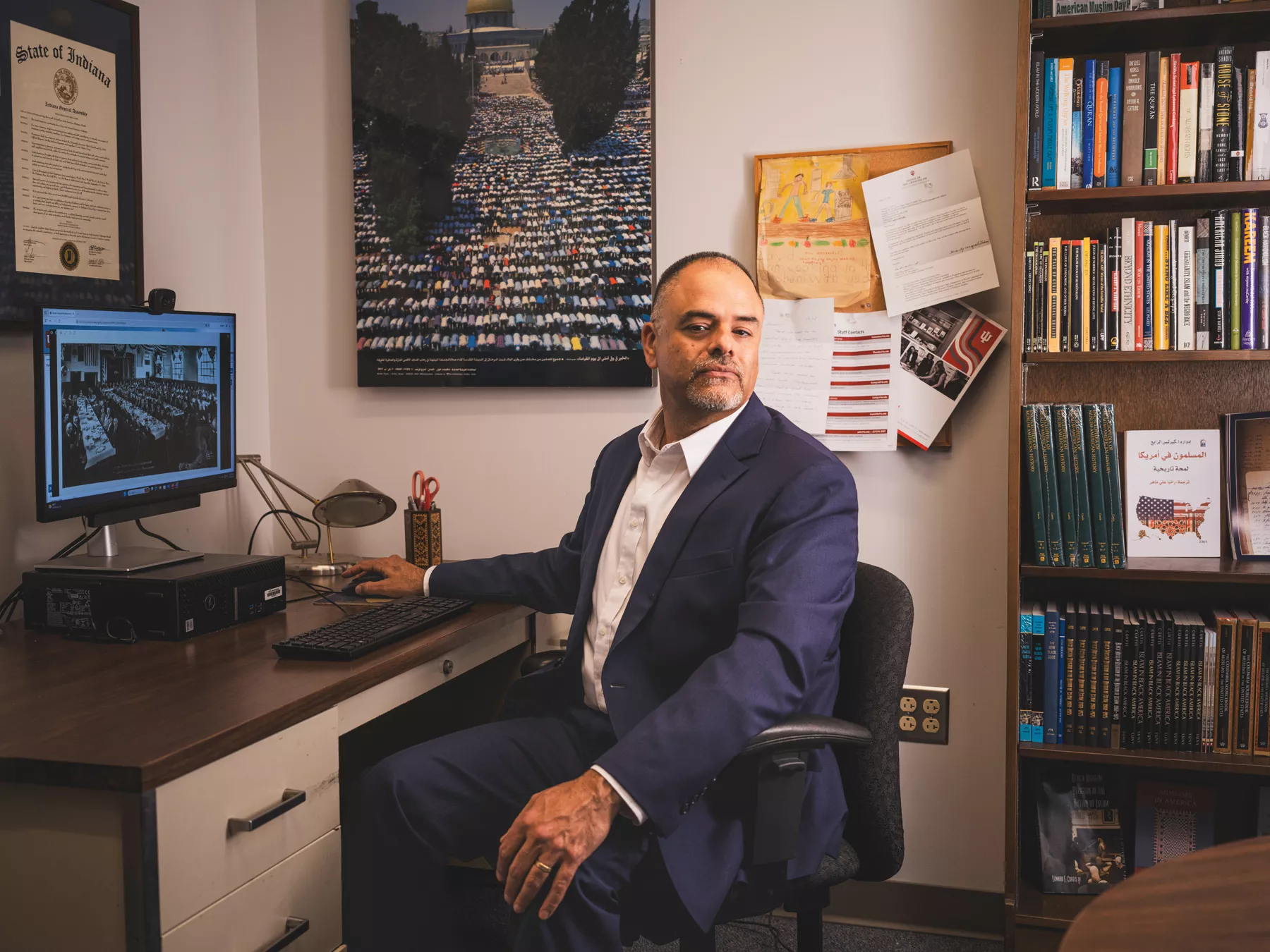
Edward Curtis, Indiana University Indianapolis professor, assisted Chitwood in tandem with research into his own Middle Eastern ancestry. Chitwood’s collection also contains vintage Levantine cookbooks, left.
Chitwood is among more than 24,000 Indianans who claimed Arab heritage as of 2024, according to the independent World Population Review, which tracks historical population data. Most trace their ancestry to Lebanon, though 2009-’16 saw an influx of displaced immigrants from across the Middle East, says Edward Curtis, a professor of world languages and cultures at Indiana University Indianapolis.
As Chitwood’s research expanded beyond his own family, he struggled to find much written about Indianapolis’s early Arab community. His search led him to Curtis, one of the country’s foremost scholars of Arab American history in the Midwest.
“By the turn of the 20th century, the United States experienced one of the largest migration events in American history,” Curtis explains. “The country had become the world’s largest industrial economy, and it needed workers.” Word spread quickly across the wider region around Syria and Lebanon that opportunity waited across the Atlantic.
“It was said that the streets were paved with gold in the United States, a story that has circulated in our families for generations,” says Curtis. “There wasn’t much gold, but there were a lot of jobs.”
By 1920, 100,000 Syrian and Lebanese migrants had settled in the US. While New York established itself as what historians would later call the “mother colony” of Arab America, the Midwest was not far behind. Indianapolis attracted migrants through its train station, then second only to Chicago’s in passenger traffic.
“Even if you decided not to stay, you often came through Indianapolis on your way somewhere,” Curtis explains as he scrolls a handwritten accounting ledger from the Syrian Ladies Aid Society Archive at the Indiana University Library.
“It was said that the streets were paved with gold in the United States. ... There wasn’t much gold, but there were a lot of jobs.”
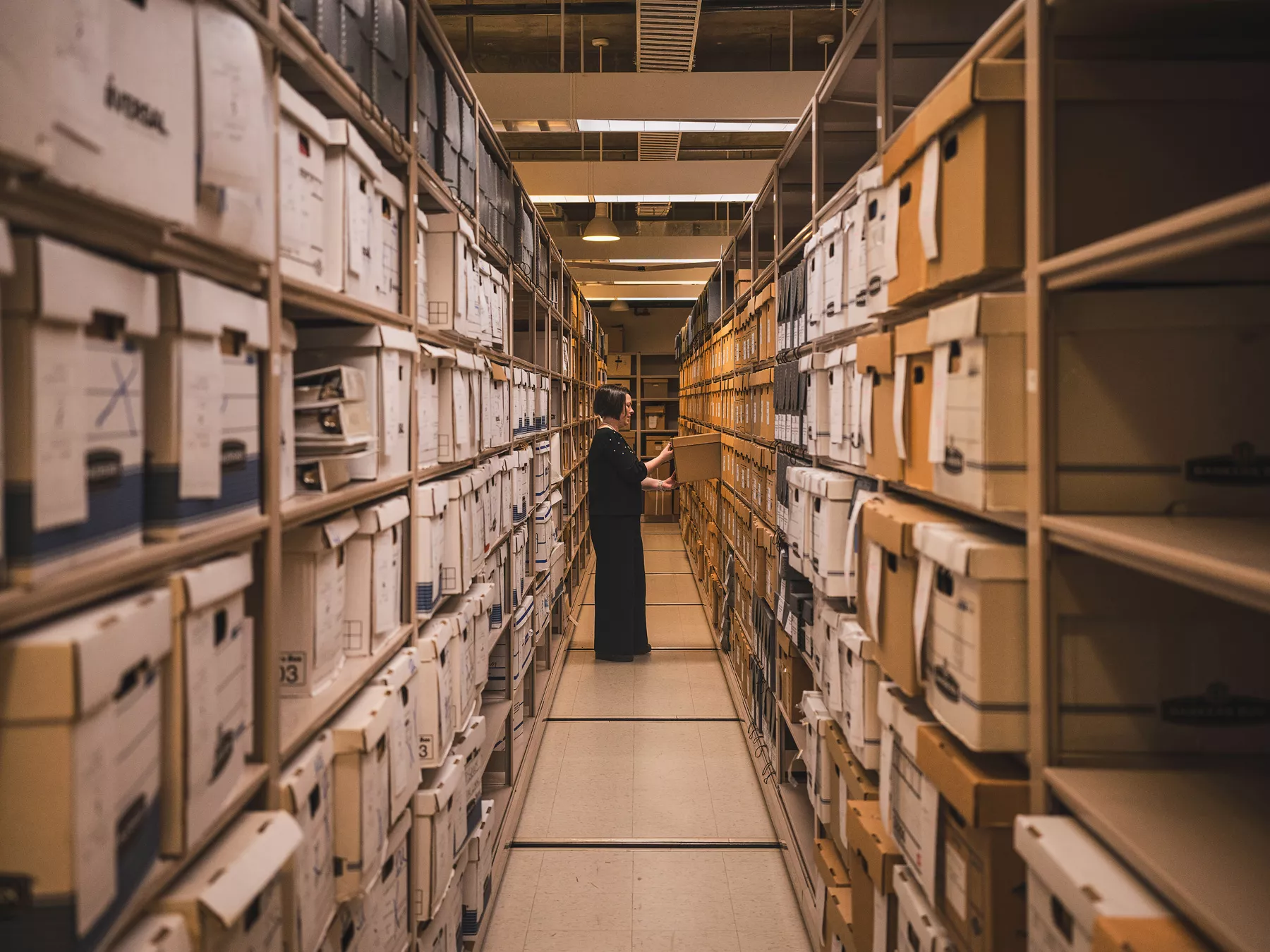
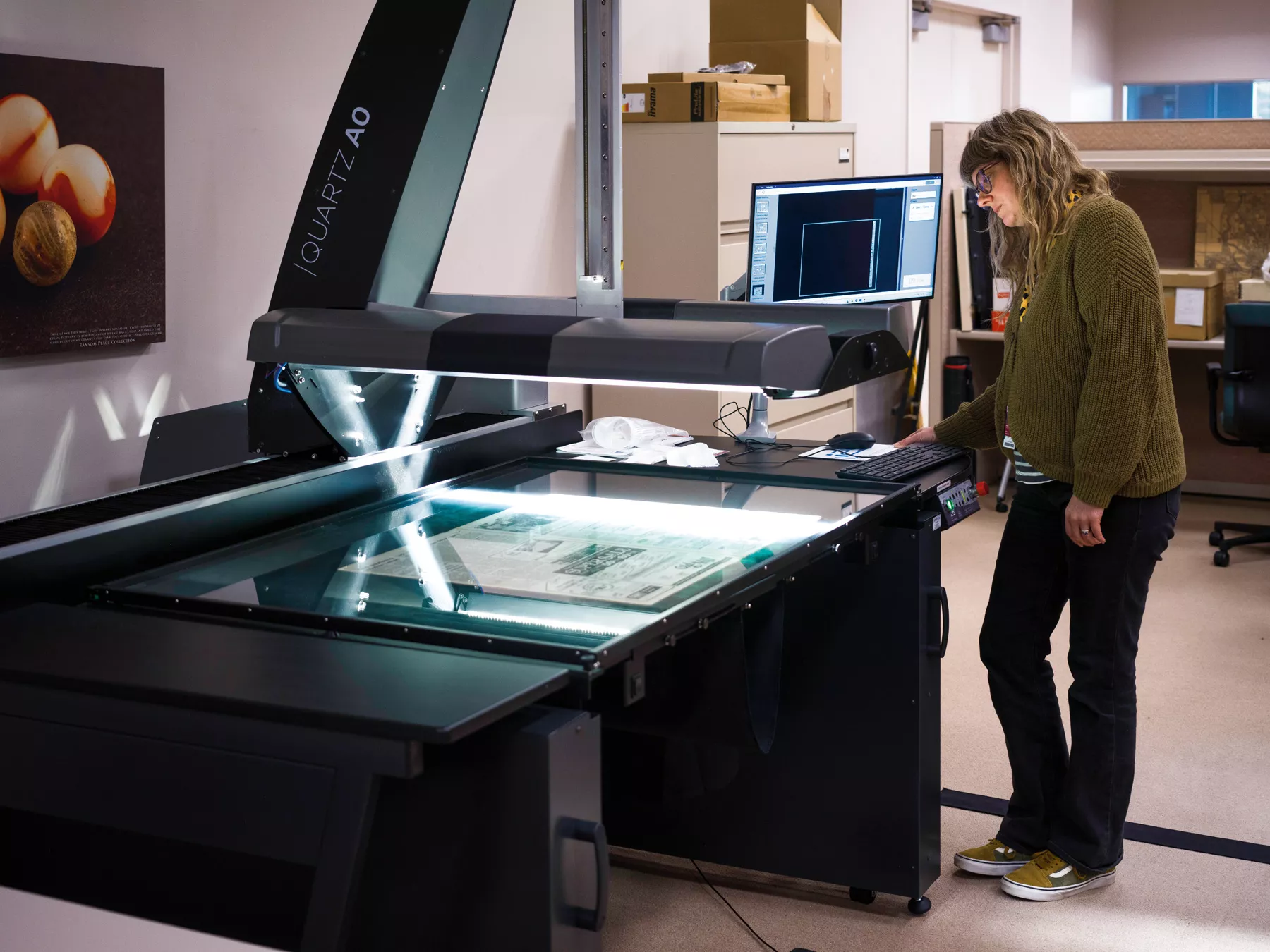
At the college’s library, left, Denise Rayman, director of Distinctive Collections, looks through artifacts from the Syrian Ladies Aid Society; and right Anna Proctor, digitization manager, scans a newspaper page.
Earning a Living
Chitwood’s great-grandfather Abraham Freije was part of that first wave. He migrated in 1902 from a small village in modern-day eastern Lebanon.
The work Abraham found when he arrived was typical of his generation. The common portrayal of the early Arab immigrant in America is the peddler, the door-to-door salesman moving through small towns and rural counties with a pack on his back, selling canned goods, perfumes and dry goods. Many went on to open grocery stores.
Census data suggests, however, that most Arab immigrants in the Midwest were industrial workers. The peddler reputation stuck partly because of the character the work required. “In order to make a sale, you have to be annoying at times. You really can’t take no for an answer,” Curtis laughs.
“I learned that my great-grandfather being a peddler and having a grocery store was not something unique to our family. That was like the thing that Syrian Lebanese men did during that first wave. It was such a discovery,” Chitwood explains.
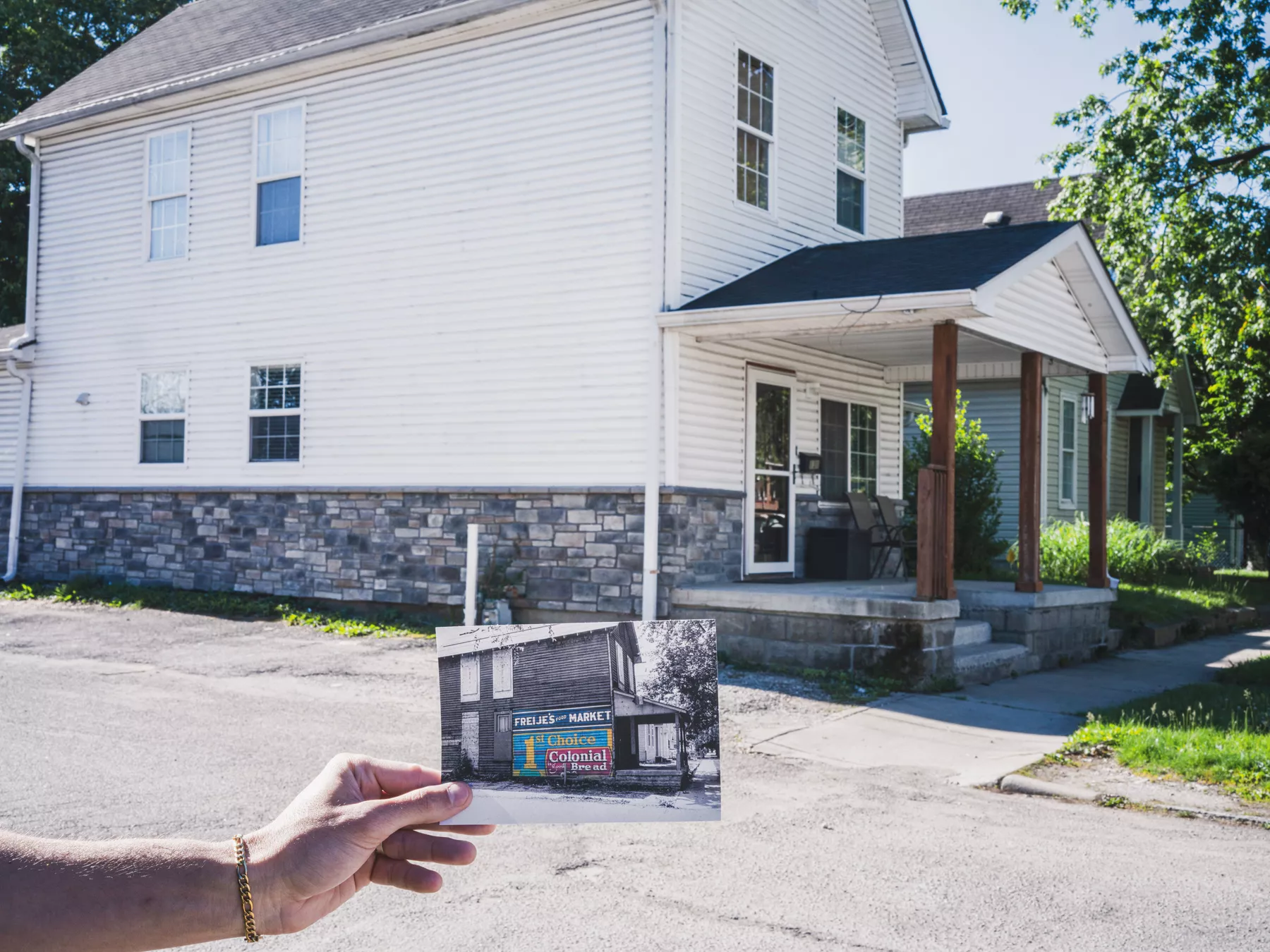
The former Freije’s Food Market is now a family home.
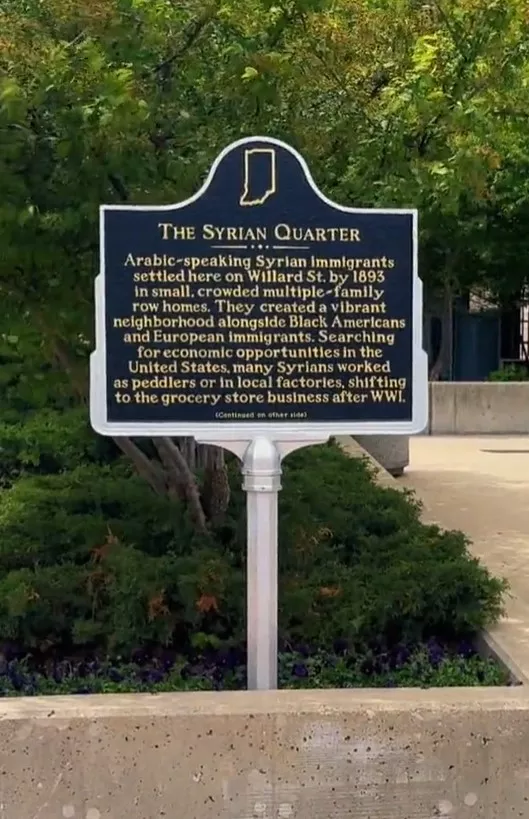
By 1905, Freije had settled in Indianapolis on Willard Street, a racially integrated neighborhood that today sits beneath the multipurpose Lucas Oil Stadium. An excerpt from The Indianapolis Journal from 1903 describes the street as “two rambling rows of broken down one-story frame houses.” Six years later he married his first wife, Latifa, and together they had five children, including Chitwood’s grandmother, and built a life that included a grocery store and multiple rental properties.
“The neighbors loved him,” says Ronald Ellis, one of Freije’s grandsons and Chitwood’s cousin. “He had a little clipboard, and he would make what were basically credit cards for people from used doughnut boxes. He kept a bill for people in the neighborhood. Everything was written in Arabic, and people would come pay at the end of the week.”
Hard times, however, followed the early years of stability. Latifa died from heart failure in 1923 after the death of the couple’s sixth child the previous year. Then in 1935, in the midst of the Great Depression, Freije lost his business and returned to peddling. Ellis recalls a story from about that time that he believes shaped the trajectory of the entire family.
According to family memory, a group of racists threatened Freije at his home.
“Grandpa put all the kids behind him. He had a shotgun and said, ‘If they’re coming in, they’re going to have to go through me.’” (They left without incident.)
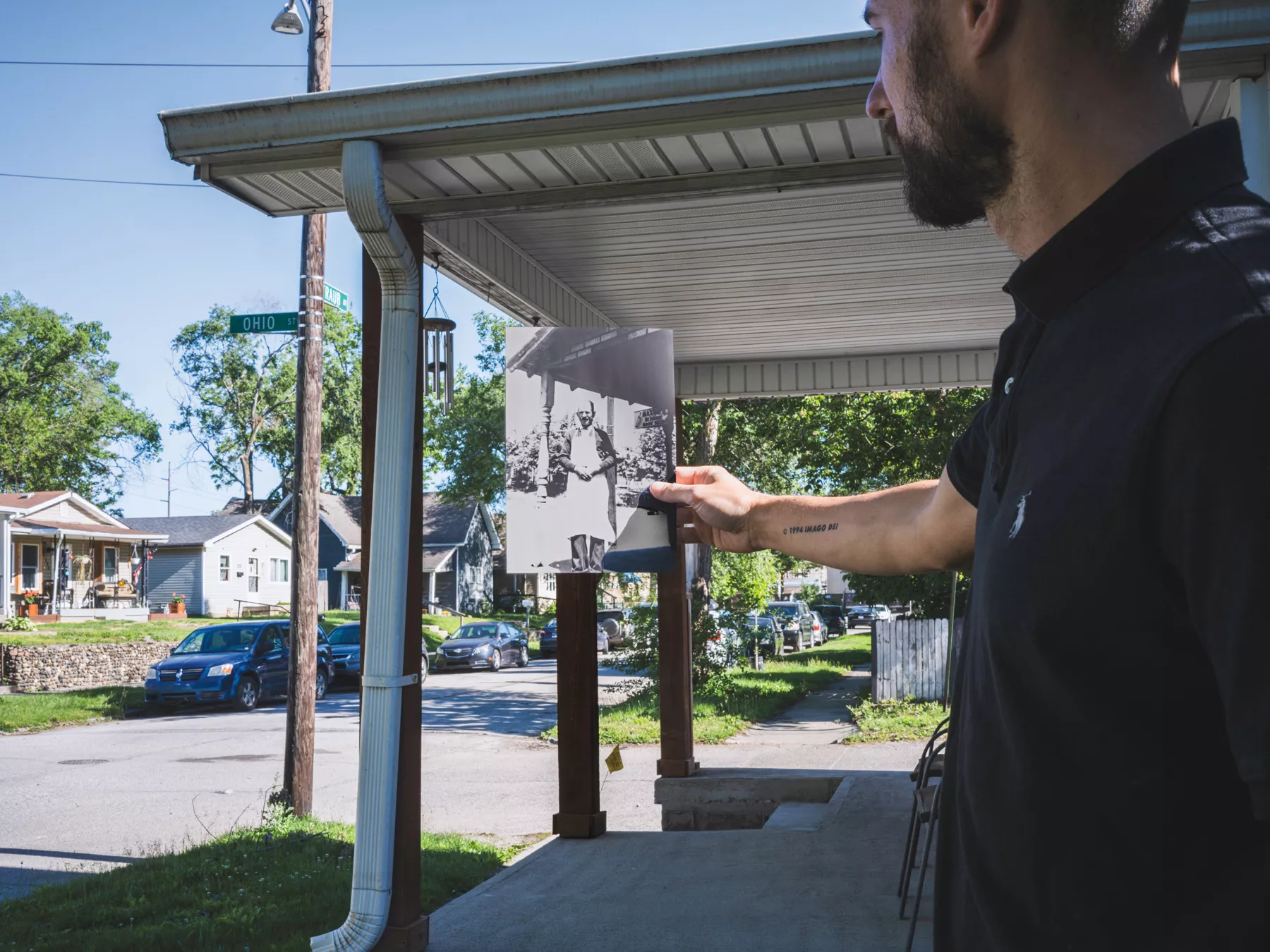
Chitwood holds a photo of his great-grandfather Abraham Freije, who, like many early Arab immigrants to the US, opened a grocery store.
“It literally felt like we were uncovering a family album that had been lost.”
Ellis pauses. “I think there was always that in the back of everybody’s mind. You wanted to assimilate, so you would be part of the broad American culture, if there was such a thing.” Assimilation followed. Freije’s children all married outside the Syrian community, and over time the Arabic language disappeared from family life.
For Chitwood, however, there was always a pull in the other direction.
One early moment came in a middle school home economics class. The teacher offered chicken parmesan as the default for a family-meal assignment but mentioned that students could cook something from their own tradition. Chitwood prepared a full Lebanese meal from scratch, which included kibbeh, a deep-fried bulgur and meat dish, and baklava. “That’s where I really started to own the heritage,” he says.
Chitwood scanned photographs. He read the book Becoming American by Alixa Naff, a Lebanese-born American historian. The book was one of the first academic studies of the Syrian Lebanese diaspora, which became, in Chitwood’s words, “gold.”
After one of his aunts, Mabel, died, he felt “an alarm” go off. Time was running out. He began visiting his great-aunt Louise with a camera, determined to capture what family stories remained. While teaching himself Arabic, he once brought a notebook of vocabulary to her house. At first she dismissed the words. Then one triggered a memory. She began repeating expressions her father had used decades earlier.
“It literally felt like we were uncovering a family album that had been lost,” Chitwood recalls.
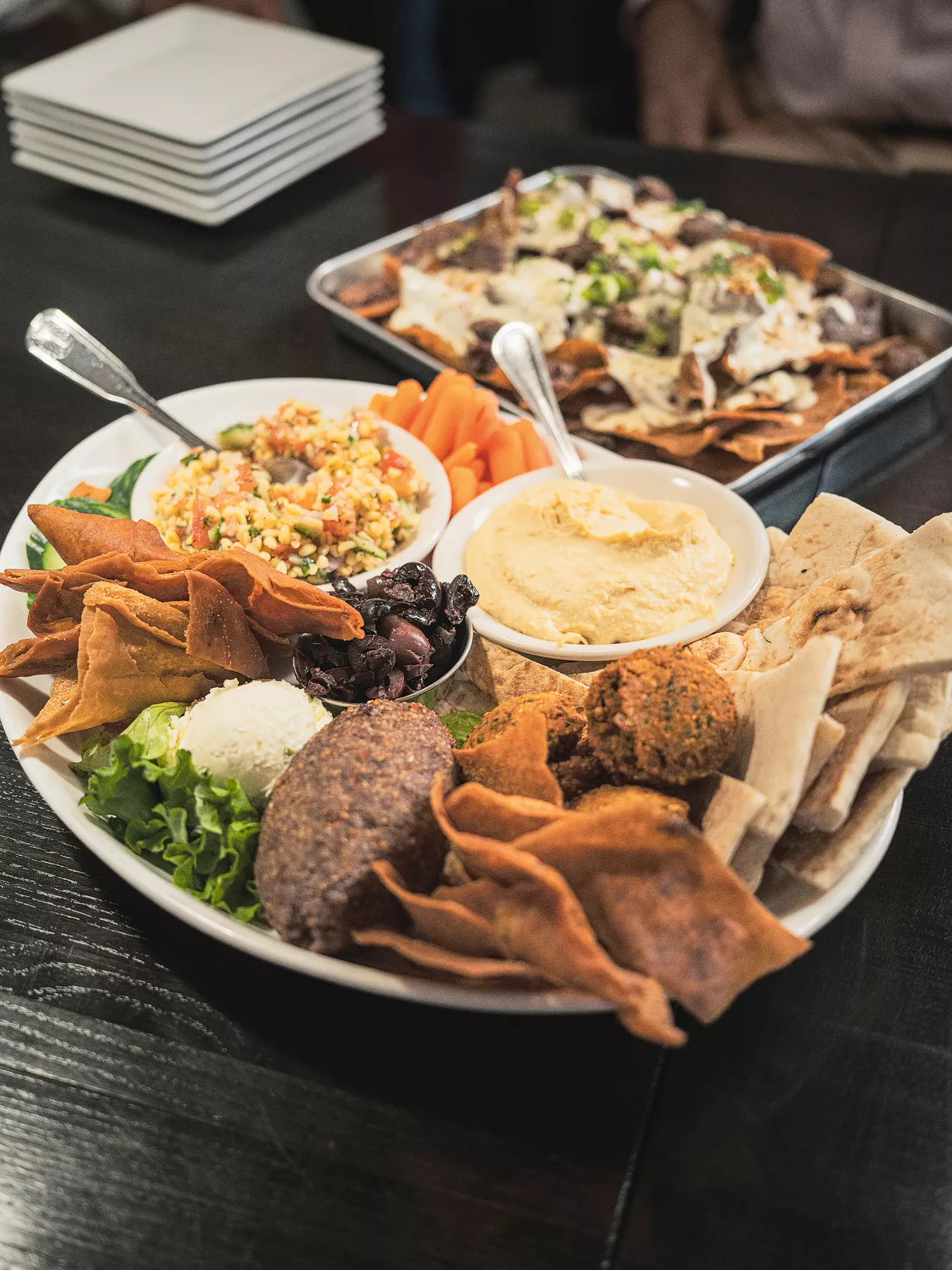
In a nod to Syrian Lebanese culinary heritage, the Saratoga Restaurant in Terre Haute, Indiana, serves dishes including kibbeh nachos.
The search eventually became “When We Were Syrian,” a short documentary about his own family history, commissioned by Curtis, also of Arab heritage, who had been raised by his Arab grandmother to identify proudly as Syrian and Lebanese.
For Curtis, the project connected to his own parallel effort: digitizing a decadeslong archive of Midwest Arab American records held by Thomas Tadros, historian of the Midwest Federation of American Syrian Lebanese Clubs. Working with archivists and library students at Indiana University Indianapolis, Curtis spent more than a year scanning hundreds of photographs, letters and annual convention programs catalogued with metadata so that researchers anywhere in the world can now find them.
“By digitizing the archive, it served my greater goal of allowing people to come to know the story of my great-grandparents and the people who helped to build the Midwest,” Curtis says.
Ellis appeared in the documentary and put it plainly: “I learned more from Josh than I did in my whole history.”
“My grandparents were immigrants, and they worked so very hard. We just want to keep the legacy going.”
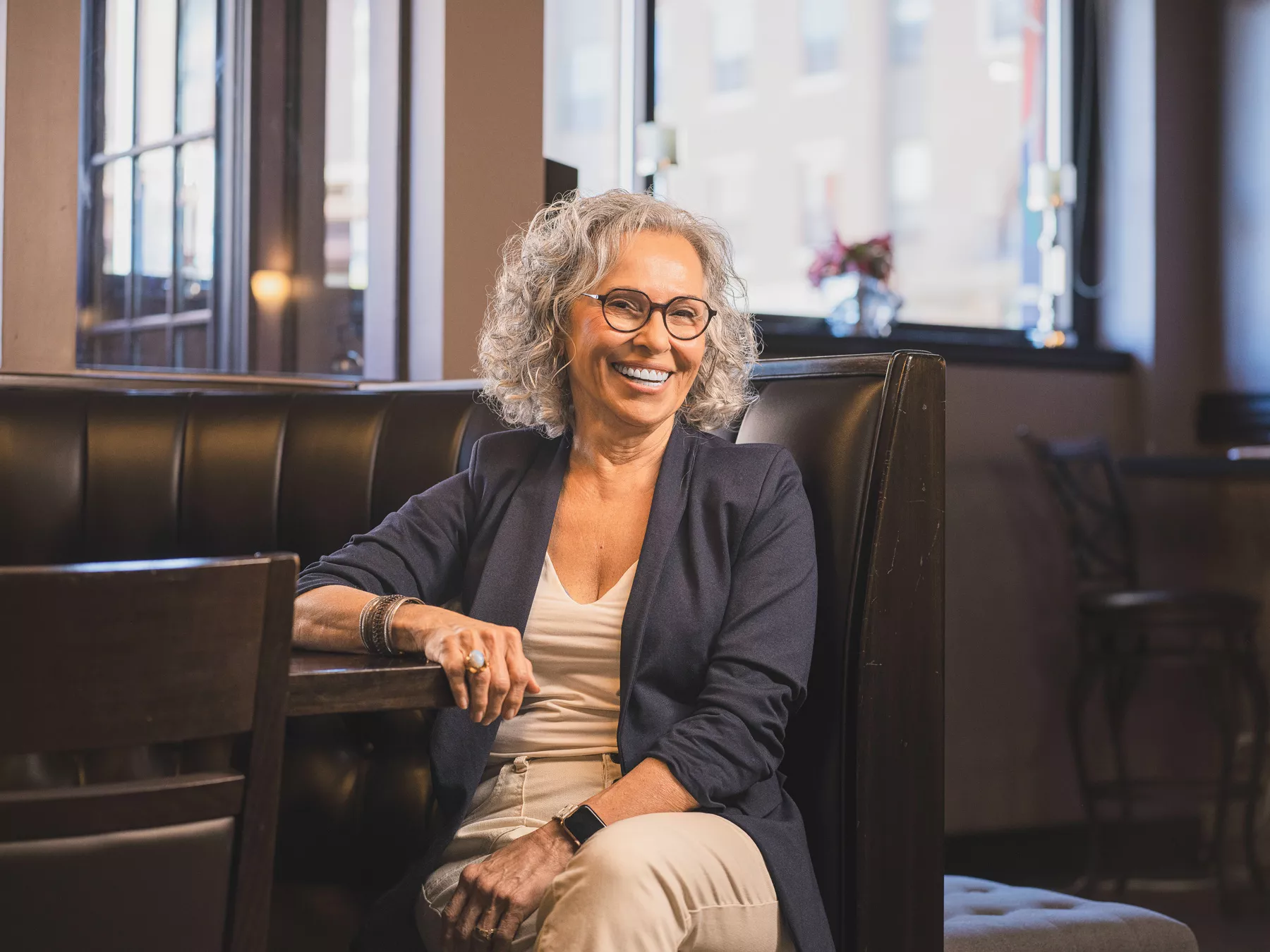
Cathy Azar, whose great-uncle opened the restaurant in 1942 and ran it with her grandfather, operates it today with her husband, George.
Foods Preserve Syrian Lebanese Traditions
The history Chitwood uncovered wasn’t confined to family photographs and archival records. It also survived in places like the Saratoga Restaurant, at Fifth and Wabash avenues in the town of Terre Haute, a 1-hour’s drive from Indianapolis. Here, generations of Syrian Lebanese traditions are still kept alive through food.
The restaurant has been owned and operated by the Malooley family for 84 years. After returning home from serving in World War II, Abe Malooley stepped in to help his brother Joe, who had opened the restaurant in 1942. Today, Abe’s granddaughter Cathy Azar runs it with her husband, George.
Every Thursday, Azar serves kibbeh nayyeh, a traditional dish consisting of raw meat, bulgur and spices, prepared using recipes passed down through her mother and aunt. The restaurant today maintains a family atmosphere. Azar and her husband welcome customers, many of whom they know by name, while their daughter Alexis oversees the bustling kitchen. Some elderly patrons claim to have been eating the dish there for over 40 years.
“It’s a tribute to that first generation,” Azar says. “My grandparents were immigrants, and they worked so very hard. We just want to keep the legacy going.”
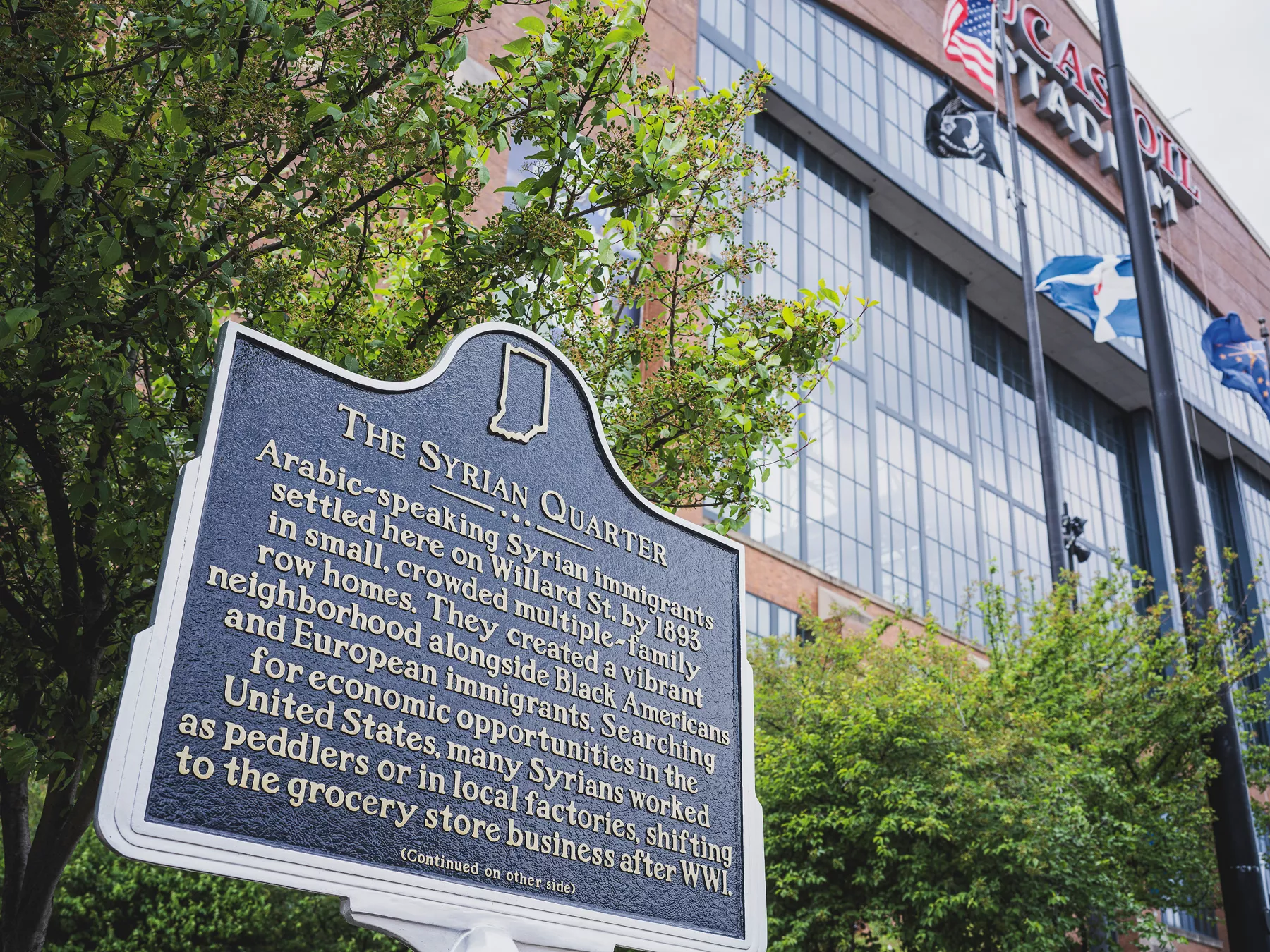
A historical marker notes the Syrian Quarter outside Lucas Oil Field, the stadium where the Indianapolis Colts football team plays.
But she is also candid about the limits of what food alone can hold. “I have grandchildren, and I don’t know how much they will carry on to their kids and grandkids. We’ll see.”
Chitwood carries a similar uncertainty alongside his conviction. Understanding where his family came from has also changed how he thinks about where they belong.
“It’s made me proud to be American and understand who we are as Americans,” he says. “Growing up, the Syrian Lebanese heritage was often dismissed or misunderstood. So preserving and telling these stories is me owning my heritage and encouraging others with this heritage to be proud of it, but also for those who are American from other places to see us as a fabric of America.”
What gets passed forward, and what doesn’t, remains an open question, one that Chitwood is still, carefully, trying to answer for himself and his children.
About the Author
Greg Kahn
Greg Kahn is an award-winning American documentary and fine art photographer. Kahn’s photography centers on the forces that shape personal and cultural identity. His work has been exhibited in major galleries and museums around the world and published in The New York Times Magazine, National Geographic and British Vogue, among others.

Michael Shagoury
Michael Shagoury is a multimedia journalist and media strategist based in Washington, D.C. He has covered stories across the Middle East and North America for outlets including AJ+ and CNN International. As managing director of SideKix Media, he leads projects at the intersection of storytelling, digital strategy and emerging technology.
You may also be interested in...
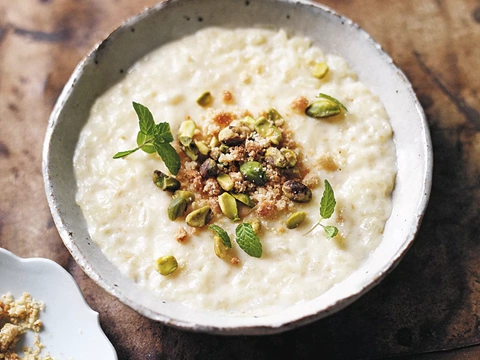
Chef Shane Delia’s Rosewater Sutlaç With Pistachio Crumble
Food
Chef and restaurateur Shane Delia re-creates a rice-and-milk pudding he discovered along Türkiye’s Black Sea coast, one of many sutlaç found on menus in the region; this recipe gets additional texture from a pistachio crumble.
Lamu's Last Dhow Builders and the Craft That Refuses To Vanish
On Lamu, off the northern Kenyan coast, builders of traditional wooden vessels that carried sailors who made their living from the sea for more than a millennium today steer them toward a different economic horizon: tourism.
America at 250: The Eastern Foods the Nation Has Always Loved
Food
History
As the United States marks the 250th anniversary of its independence from Great Britain on July 4, the foods that filled the tables of the Founding Fathers—the late-18th-century statesmen who were most influential in the new country’s creation—are a reminder that elite households relied on ingredients carried through trade routes connecting the Mediterranean, Africa, Asia and regions now known as the Middle East.