Turkmen Music Meets Classical Piano: A Conversation With Maya Tuylieva
The Turkmen pianist explores how distinct musical traditions can coexist, communicate and create something new.
Written by Alva Robinson
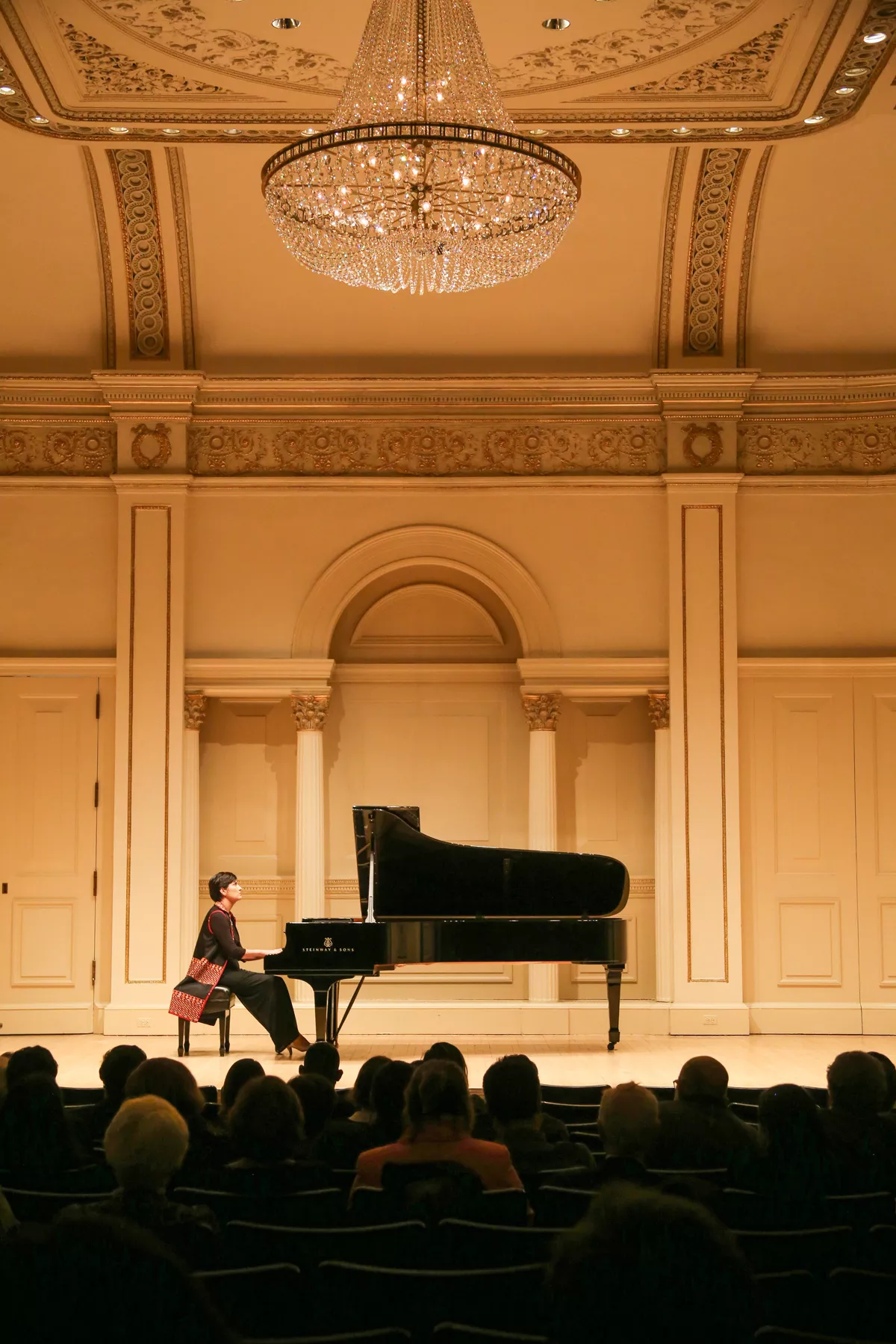
Maya Tuylieva, who has performed at Carnegie Hall in New York, above, puts Turkmen and Western music together. COURTESY OF MAYA TUYLIEVA
Pianist Maya Tuylieva grew up between two musical traditions. Turkmen music surrounded her in childhood through her father, composer and music theorist Suhan Tuyliev, whose study of the country’s musical modes and traditions led him to write Theory of Turkmen Music. In Turkmenistan, where centuries of nomadic life helped shape portable instruments such as the dutar, a two-stringed lute, music passed through performers including, baqshys, poet-musicians who carried songs, poetry and epics across generations. Alongside that inheritance, Tuylieva received rigorous Western classical training through the Soviet educational system.
Those musical worlds have continued to intersect throughout her career. Tuylieva moved to the United States in 2001 and went on to perform twice at Carnegie Hall and internationally. Today, as founder of the Music Academy of Kansas City, she teaches nearly 150 students of various ages and skill levels while continuing to perform works by Turkmen composers. For Tuylieva, the piano—an instrument from a different musical tradition—has become a meeting place where distinct musical languages can retain their character while speaking to one another.
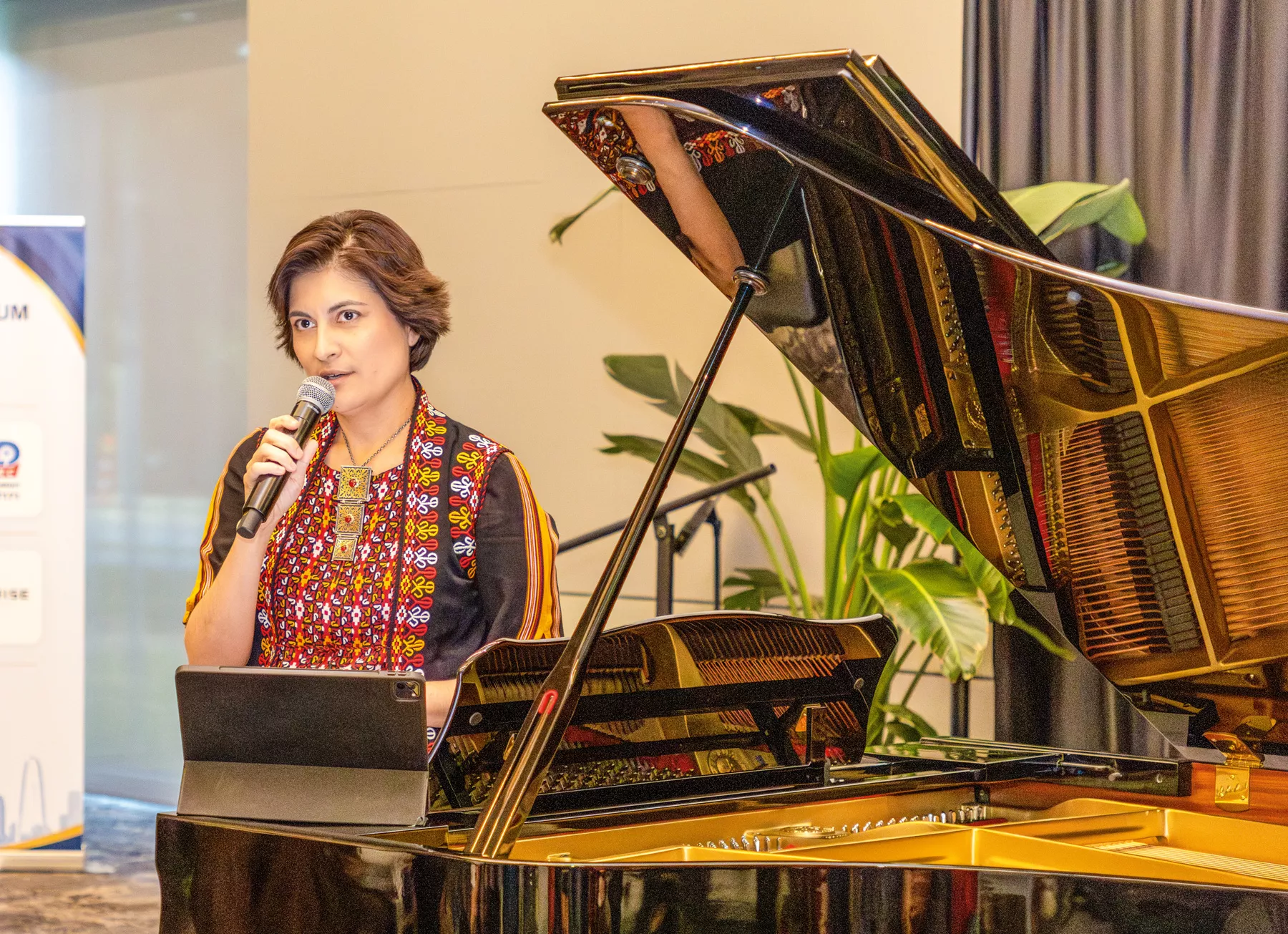
Shynggysali Mereke
What distinguishes Turkmen music from Western classical music?
The differences are vast because Western music developed on its own, and Turkmen music developed on its own. Because Turkmens were [from] nomadic tribes, their instruments are very light to carry. They are very easy, just grab-and-go kinds of instruments. You will not see instruments that are like the piano or anything bulky.
They did the best they could with what was given to them, and they reached really high levels. If you’ve heard dutar playing, it’s very virtuosic. Sometimes you can’t even see what they’re doing with their fingers. It’s very high-level playing—on two strings, mind you. Because they didn’t have the instruments from Western society, they weren’t influenced by how Western music developed, even in things like modal structures. They weren’t using the same scales. When you listen to Turkmen music, it’s very unique in that way.
When they converged during the Soviet Union, it was very interesting that they didn’t clash. Somehow, they were able to come together and exist harmoniously.
You grew up with both traditions. How has that shaped the way you approach music?
It shaped me greatly because … I grew up understanding both and listening to both. I guess I don’t have only one way of looking at music.
I have a background in Western music, but because Turkmen music is so deeply ingrained in me, putting them together is not a very difficult thing. Somehow, they do coexist like that for me.
I love playing Turkmen music on the piano because it does fuse both. It has both worlds meshed together, and it’s representative of the possibility of several cultures meshing together and coexisting together and creating something beautiful.
How did coming to the United States change the way you approach performing Turkmen music?
As I was encountering all these questions and performing, I was leaning toward the sounds of Turkmen music when I played. Then, when I was speaking to people, I would bring attention to those sounds and what I was trying to say through the pieces, explaining to people about dutar, about my culture: You will hear this, you will hear that. I’m trying to say this, or the composer is trying to say this.
I didn’t just do that with Turkmen music. I started doing it with all the other repertoire that I played because I started seeing that audiences responded better if I planted seeds in their minds about what they were about to hear.
If I’m trying to tell the story, then I have to dig deeper into that story. All of these little rabbit holes that you can go down help you discover the music for yourself, and then it makes your performance that much deeper when you’re trying to get it to the audience’s ears.
What does music allow you to communicate across cultures that you couldn’t otherwise say?
Basically, trying to show that no matter how different we are, we’re kind of the same. That’s always my main message when I play.
Yes, we’re different. But look how much you enjoyed my music. No matter where you go in the world, human desires are the same. We all desire acceptance. We all desire love. We all desire family. People are all the same in the world. There might be differences in how they do things or how they raise their families, but at the core, we’re all the same.
I think music shows that. I’ve played Turkmen music in Japan. I’ve played Turkmen music in Italy, Europe, Russia—almost everywhere—and the reaction is always, “Wow, that is such beautiful music” and, “You can tell that you love your country so much” or, “You love your tradition so much.” Somehow it comes through.
Have you seen an audience make that connection with Turkmen music?
All the time. People come up to me after concerts whenever I play something Turkmen. I give them a little seed and describe the scene, and then they tell me what happens for them.
At a recent concert in Philadelphia, we premiered my dad’s trio. There are three movements, and I gave them a little description of each. Afterward, a lady came up to me and said she could see the land, the field of tulips waving, mountains in the background, the wind going through and birds flying.
I didn’t tell her any of that. I just told her Turkmenistan is a desert and has fields of tulips, and we also have some mountains. She created this whole scene for herself. That’s the biggest gift that I can bestow on my listeners, but it’s also a gift when they come and tell me how I affected them.
She saw a picture of Turkmenistan from Philadelphia. In a way, Turkmenistan came to Philadelphia for a little bit.
After performing on international stages, what do you want to pass on to the next generation?
Music saved me when the world was coming crashing down. My parents were very adamant about it: “Yes, right now, we’re struggling. Right now, we’re starving.” Thankfully, education was free for us, and my dad always told us, “You study, study, study, study, and nobody can take that away from you.”
You can have money; you can have riches—all of that can come and go. But what you have here, that is the main treasure you have: education. Nobody can take that away from you.
And he was right. Education helped me pursue more, and I was able to achieve it. I had to work hard, but I achieved everything I wanted in life so far professionally, playing on international stages.
My main goal now, professionally speaking, is the school. Providing that kind of education to the next generation is my priority. I want to provide it to kids who are not able to receive good education otherwise. Because of that, we’re starting to give scholarships to some kids from not-so-affluent families.

You may also be interested in...
Spotlight on Photography: Navigating Guinea-Bissau's Rainy Season
Who Were the Women Who Shaped the Mughal Empire?
History
The 500th anniversary of the Mughal Empire's rise prompts a fresh look at the women who helped sustain its politics, culture, commerce and architecture.
In Diverse Nigeria, a Simple Side Dish Holds Universal Appeal
Food
The starchy side dish can be made from a wide variety of grains or vegetables, and its appearance is as humble as its appeal is universal.