In Diverse Nigeria, a Simple Side Dish Holds Universal Appeal
The starchy side dish can be made from a wide variety of grains or vegetables, and its appearance is as humble as its appeal is universal.
During family dinners in southern Nigeria, Obehi Ekhomu learned that swallow was never something you rushed.
Around the table, hands—not cutlery—did the work. Diners pinched off a fist-sized piece of the soft starch, rolling and pressing the clumps between fingers before kneading them into smaller bite-sized portions to dip into richly flavored soup.
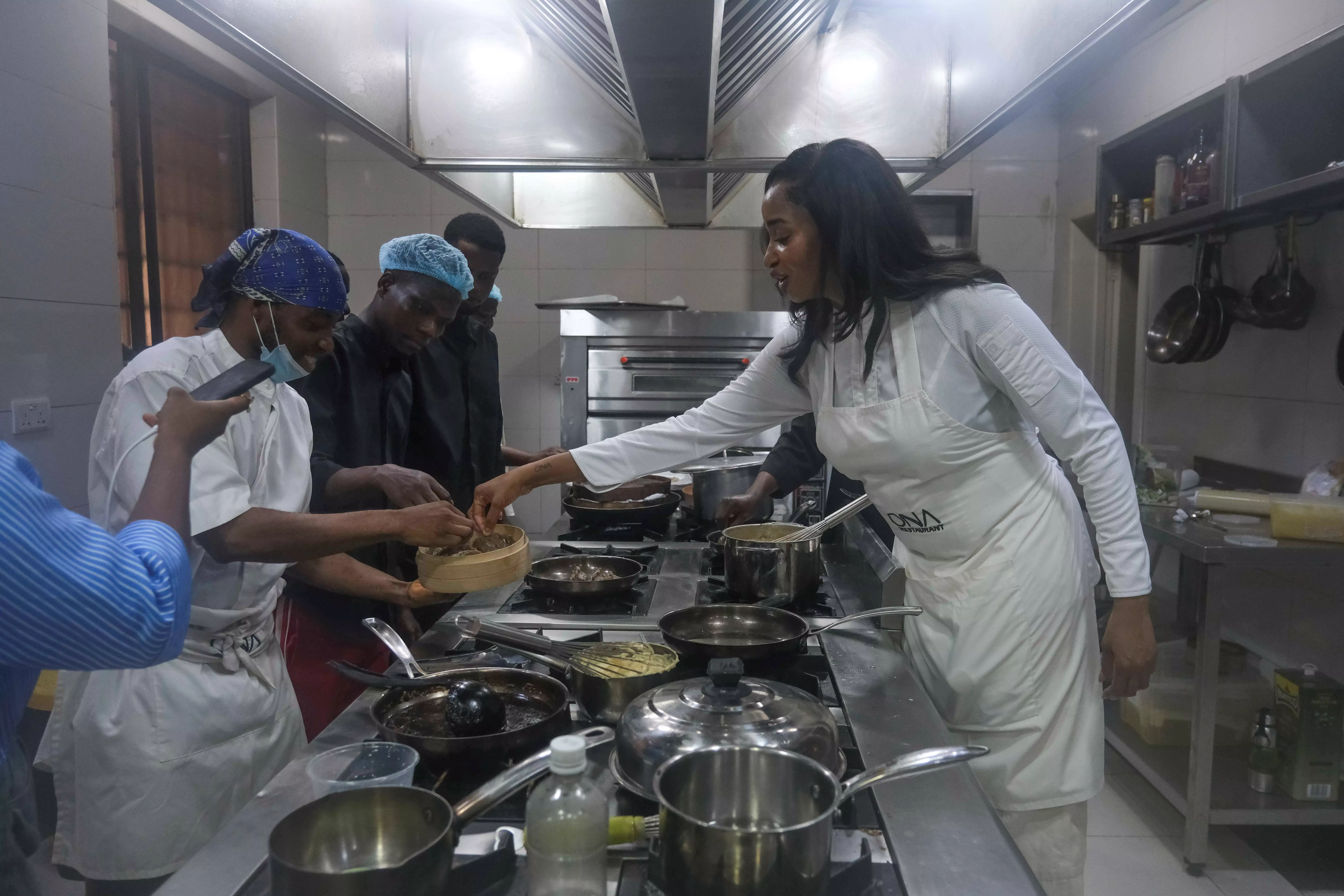
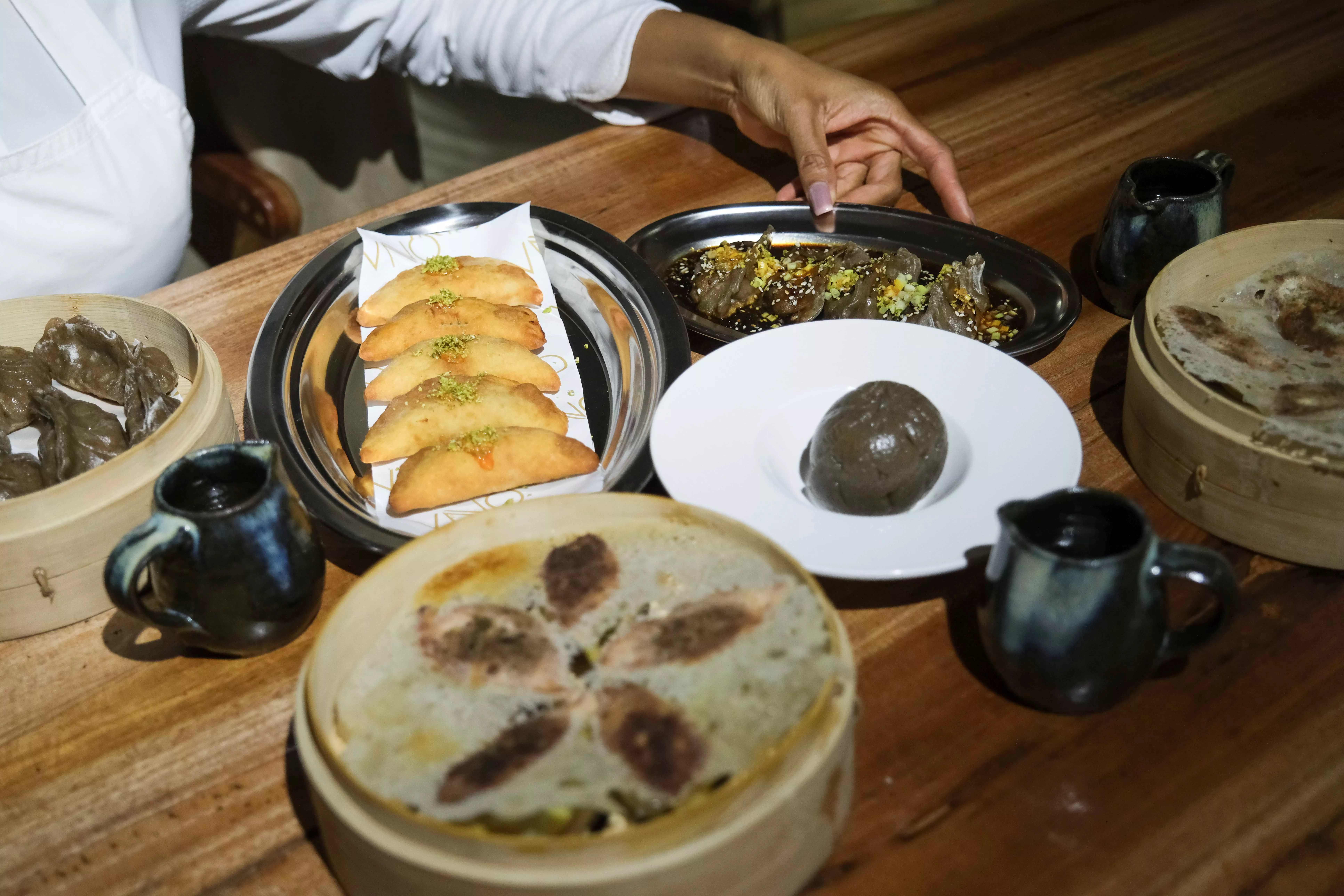
Chef Obehi Ekhomu transforms traditional Nigerian meals and side dishes, such as swallow, into fine-dining experiences at her Ona Restaurant Lagos. Top: Dumplings made with amala, a yam flour traditionally also used to make swallow.
The swallow stretched and yielded at the same time, pulling away from the communal plate in long elastic strands before finally breaking free. “It’s called swallow because you don't need to chew it,” says Maryam Ahmed, a culinary advocate based in the capital, Abuja, whose work documents and promotes northern Nigerian cuisine.
Ekhomu’s family meal would unfold slowly, with conversation and shared bowls taking center stage.
“It’s a loving dish,” says Ekhomu, now a chef at Ona Lagos in Nigeria’s commercial capital. “It’s low and slow. You have to take your time. You're very connected to it. It's physical. Your fingers are in there. It brings you all together.”
The details may vary from one household to another, but the experience she describes is familiar across much of Nigeria.
Ekhomu's crew makes a traditional swallow at her restaurant.
The hands may be different, the soups may change, and the language spoken around the table may shift from one corner of the country to another, but the gesture itself is instantly recognizable: pinch, roll, dip, eat.
That shared experience gives swallow an unusual place in the food culture of Nigeria.
Home to more than 240 million people and over 250 ethnic groups, Nigeria contains an extraordinary variety of languages, religions and culinary traditions. The foods eaten in the Muslim-majority north can differ dramatically from those found along the predominantly Christian Atlantic coast. Yet across regions and ethnicities, some form of swallow almost always finds its way to the table.
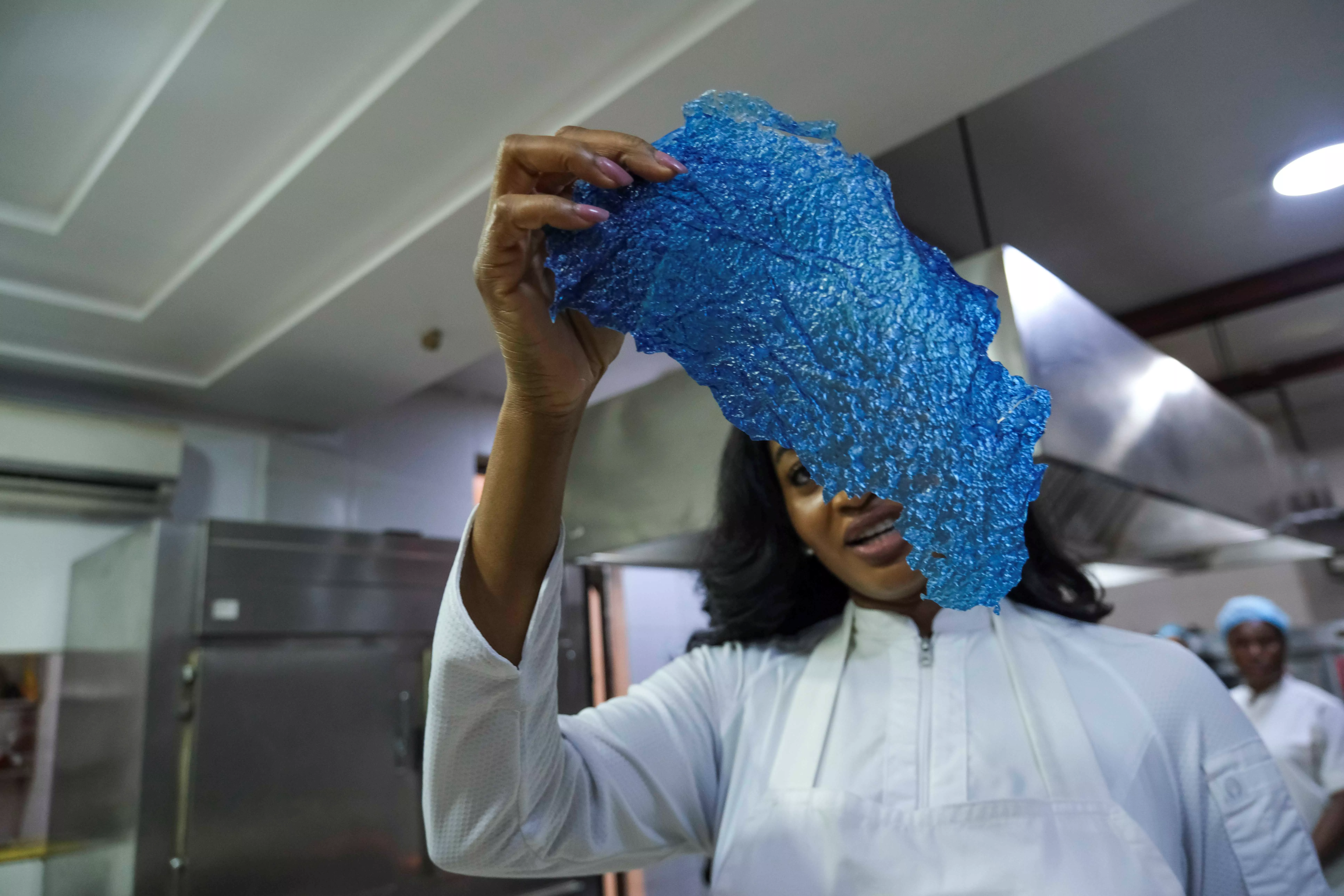
Ekhomu calls swallow “a loving dish.”
“It is hard to pin down a specific culinary culture” for Nigeria, says Opeyemi Famakin, a food critic and expert on Nigerian culinary history. But swallow remains one of the country’s great unifiers.
Few countries contain as many worlds within a single border.
In Kano, one of West Africa’s oldest continuously inhabited cities and a historical center of trans-Saharan trade, elaborate Eid celebrations honor the emir, the traditional ruler whose position dates back centuries. Riders in flowing robes and brightly colored turbans parade on horseback, carrying swords in a spectacle that links contemporary northern Nigeria to its deep pre-colonial past.
Nearly 1,000 kilometers southwest, in Lagos, one of Africa’s largest cities, Afrobeats pulses through packed nightclubs until dawn. Young Nigerians move among art openings, restaurants and music venues, embracing new sounds while dressed in the country’s latest fashions.
The two cities can feel worlds apart. Yet in both places, diners gather around bowls of soup with swallow at hand. The starchy side dish can be made from a wide variety of grains or vegetables, and its appearance is as humble as its appeal is universal.
Unlike many national dishes, swallow is not a single food. It is a category of foods: smooth, doughlike starches designed to accompany soups such as egusi and melon seed stews. Depending on location, it may be made from pounded cassava, yam, wheat, rice, millet or corn.
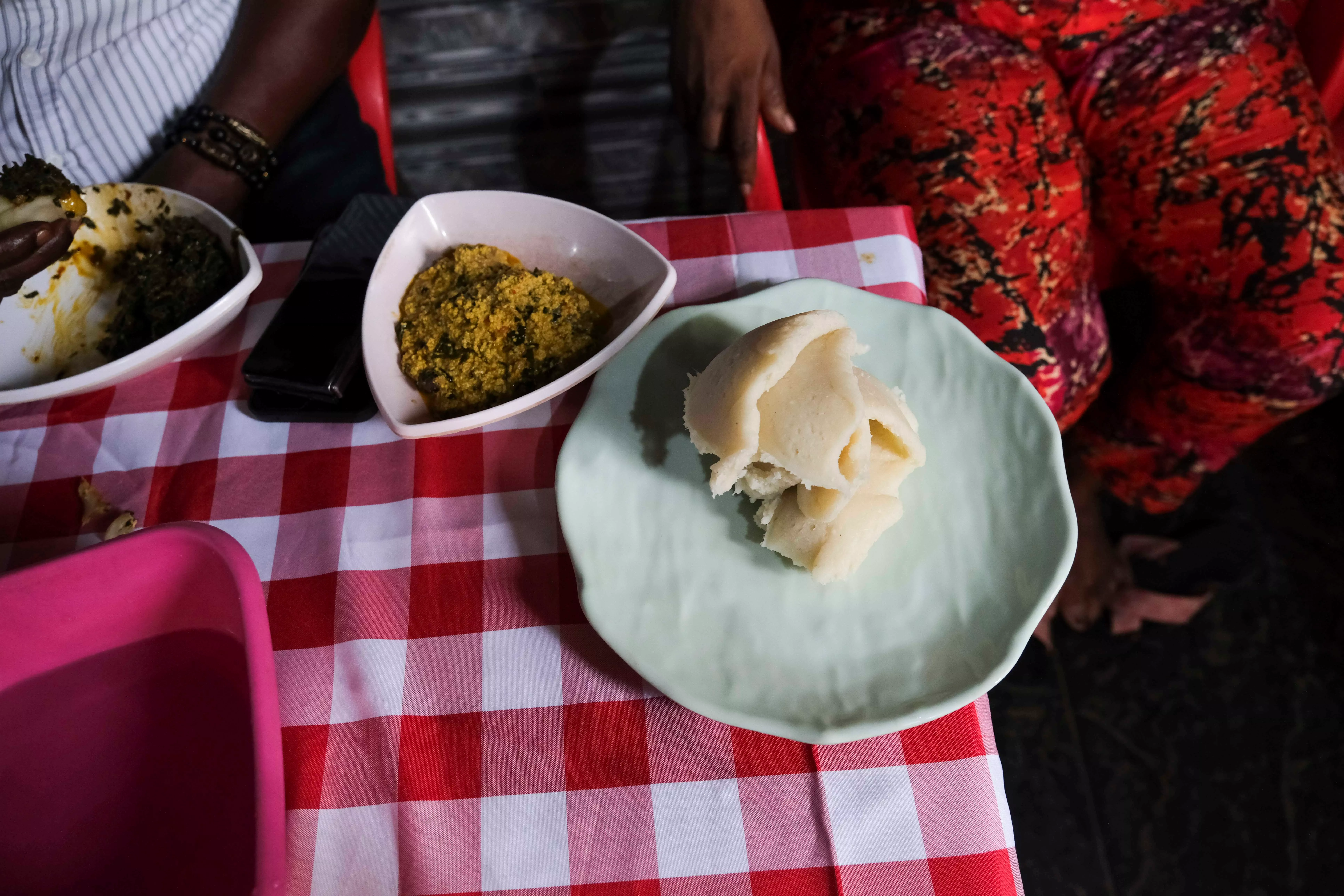
Chioma Restaurant, also in Lagos, serves traditional swallow. This form, made with fermented cassava and often called fufu, is served with the stewlike egusi soup.
The ingredients change across Nigeria, and so do some of the customs around eating swallow. "From the South, they take a fistful, and then they mold it. There's a way they do it with their fingers," says Ahmed. "But for the North, mostly they just take bite-sized portions."
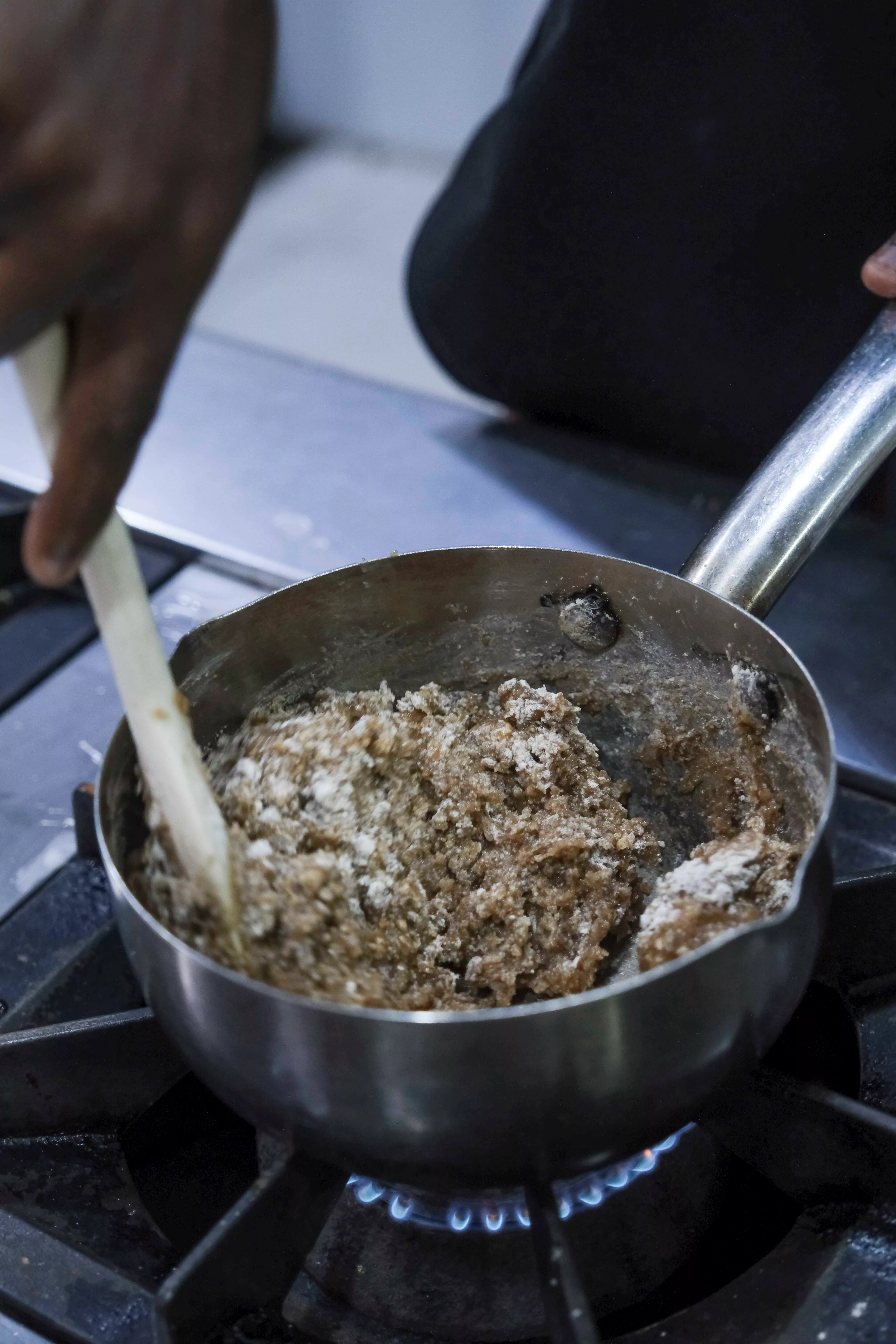
Grain-based swallows, more common in northern Nigeria, are made by washing, drying and pounding millet, corn or rice into a fine flour before cooking the grain with water. As the mixture cooks, the starches thicken into a smooth, spongy dough. Ahmed describes the texture as “sort of … like gluten jelly.”
The pounding is as much a social ritual as a cooking technique, often bringing family members together around a mortar and pestle.
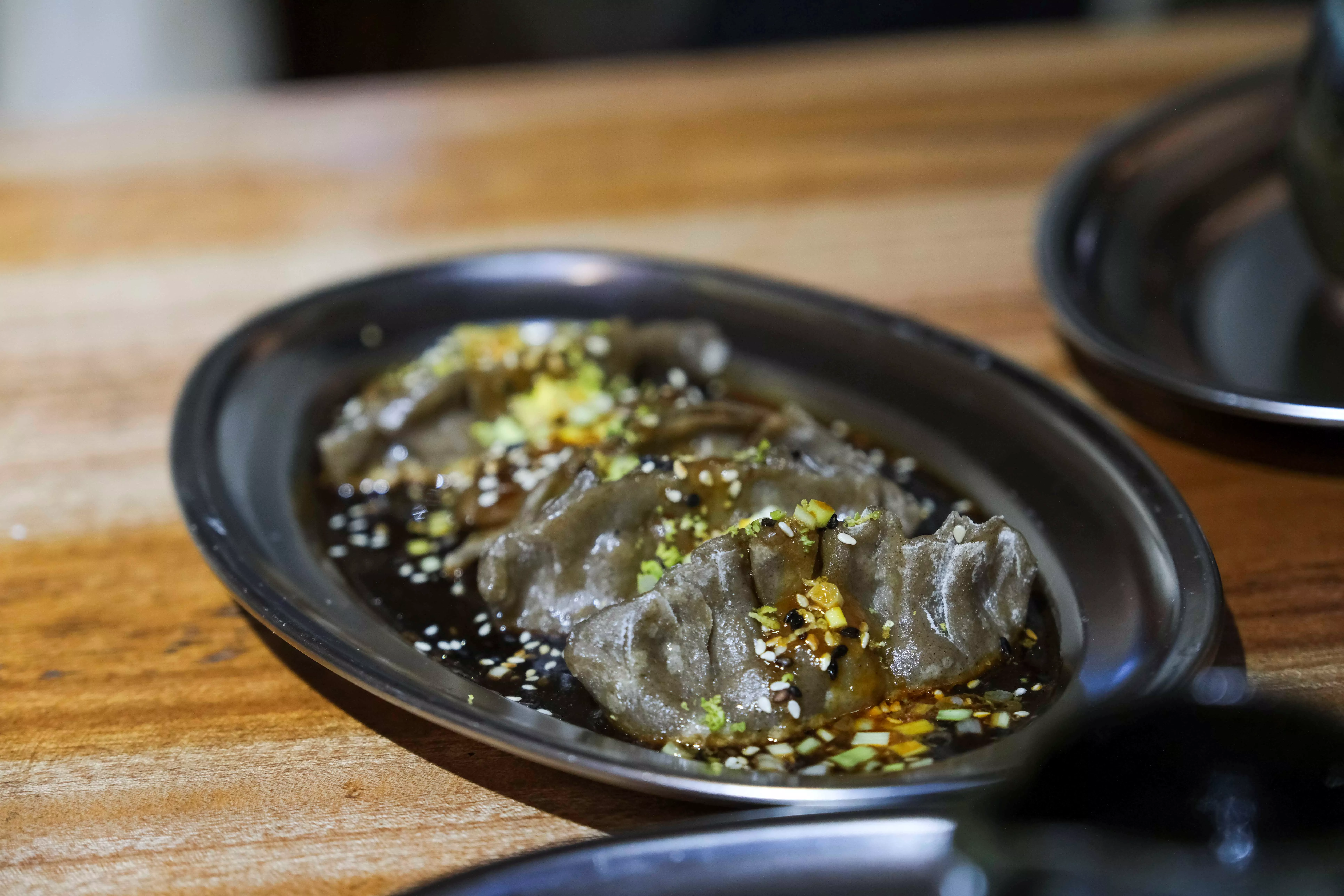
Ekhomu’s dumplings made from amala.
“It’s very cultural,” Ahmed says. “You see different women pounding at the same time. There's a rhythm to the pounding.” Sometimes, she says, the process becomes almost ceremonial, with people taking turns as they work together to achieve the required consistency.
More than a category of food, swallow is a reflection of Nigeria’s geography, agriculture, climate and cultural identity, says Ahmed.
The history of swallow also reflects centuries of movement and exchange across the Atlantic and West Africa, as crops, people and culinary traditions traveled among Brazil, Europe and the African coast.
“To pinpoint the exact history of swallow is going to be very, very difficult because many dishes that we call ancient Nigerian dishes are post-colonial dishes,” says Famakin.
“For example, we have eba (a type of swallow) in Nigeria. It's made from cassava that has been fermented and dried. If you ask the average Nigerian, they'll say, ‘Oh eba is a very, very old dish.’ But cassava came from Brazil, and it was the Portuguese that brought cassava to Nigeria. So, eba … is a post-colonial dish, and not a pre-colonial ancient dish.”
The observation surprises many Nigerians. Cassava is now so deeply embedded in everyday life that it feels inseparable from the country’s identity.
Nigeria today grows a fifth of the world’s cassava and is home to Zaki Biam market in Benue state, the largest open-air market for yams in the world. Both crops are essential ingredients in daily cooking, helping shape the many varieties of swallow.
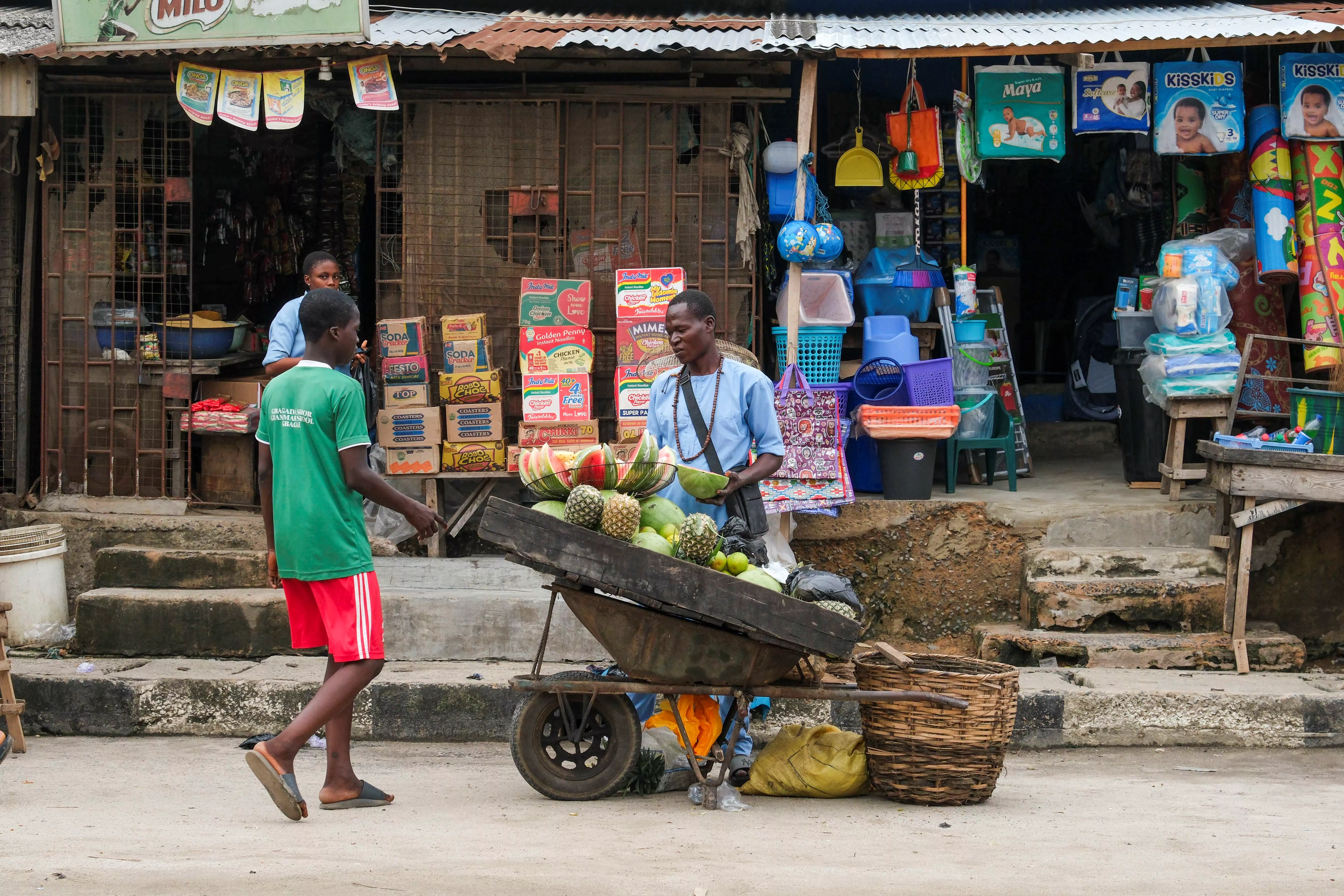
Residents of Lagos do some shopping for the Eid holiday.
According to Famakin, the swallow historians can most confidently trace to pre-colonial Nigeria is pounded yam. Amala, a swallow made from yam and associated with food traditions of the Yoruba ethnic group, also has deep roots in the country’s history.
The forms vary by region. In Yoruba communities, amala often arrives dark and earthy in flavor, hinting at its yam or cassava mix. Elsewhere eba and garri carry the tang of fermented cassava. In northern Nigeria, tuwo shinkafa is made from rice, while tuwo dawa draws on corn or millet. These local ingredients have produced countless variations on the same idea: a starch made for sharing because swallow is never meant to stand alone. Rather, it serves as a vessel to soak up Nigeria’s thick and rich stews.
The soups are often as important as the swallow itself. Egusi, made from ground melon seeds, is among the country’s most beloved dishes. Banga draws on palm fruit juice with beletete leaves. Richly flavored and deeply layered, these soups are designed to cling to the swallow.
Famakin says a proper Nigerian soup almost always includes fish, meat or both.
“If you serve a Nigerian almost any food, if meat and fish is not there, it is disrespectful.”
These culinary traditions do not stop at Nigeria’s borders. Many of the soups and starches also appear in neighboring countries, reflecting centuries of shared histories and languages and even ingredients. (A similar dish, asidah—made with wheat flour—is enjoyed across the Maghreb and the Middle East.)
In Ghana, different forms of swallow are often referred to broadly as fufu. In Cameroon, diners eat mashed green plantain fufu alongside dishes such as ndole soup, a hearty blend of peanuts, crayfish and bitter leaves.
Yet the qualities that have made swallow so enduring—its familiarity, its versatility, its place in everyday life—also make it ripe for reinvention.
Not everyone agrees on how far that reinvention should go.
At Ona Lagos, Ekhomu is experimenting with answers. While swallow evokes feelings of home and nostalgia, she acknowledges she was not always a fan.
“It just had no flavor for me. It didn't make me sing. It was just more of like a background, like cardboard,” she says.
Rather than abandoning the dish, she decided to reimagine it. She says she keeps returning to a fundamental question: “What is the essence of this? I really hope that we haven't also lost the communal [aspect] of it.”
Drawing inspiration from her travels and from Asian cuisines in particular, Ekhomu and her team have created swallow-inspired empanadas, crisps and dumplings. “I'm highly inspired by Asian cuisine and just the balancing of the sour, the sweet, the acidity,” she says. “The bit of the piquancy and the umami, the depth. So here we try to build a lot of depth.”
The experimentation has produced swallow-inspired amala ginger steamed dumplings, crisped semolina beef dumplings, akpu dumplings made from fermented cassava and stuffed with an herbed goat cheese filling. Alongside them sits a more traditional amala swallow, allowing diners to trace the connection between old and new.

Alongside traditional swallow, Ekhomu experiments, creating swallow-inspired dumplings with different ingredients.
“My food is just basically a melting pot of taste and layering of things that I've experienced in my journey. So I just try to re-create stuff that brings back nostalgia, in certain ways, of places I've been or just things, beautiful moments I've experienced,” Ekhomu says.
Not everyone is convinced.For Famakin the transformation raises questions about function as much as flavor.
“Functionality matters, you know. They'll make dumplings, but that dish is not a functional dish,” he says.
To him, swallow is more than just the ingredients, it’s the act of tearing, dipping, sharing.
And so, across Nigeria, families continue gathering around bowls of soupy stews and mounds of swallow, eating much as generations before them did.

You may also be interested in...

America at 250: The Eastern Foods the Nation Has Always Loved
Food
History
As the United States marks the 250th anniversary of its independence from Great Britain on July 4, the foods that filled the tables of the Founding Fathers—the late-18th-century statesmen who were most influential in the new country’s creation—are a reminder that elite households relied on ingredients carried through trade routes connecting the Mediterranean, Africa, Asia and regions now known as the Middle East.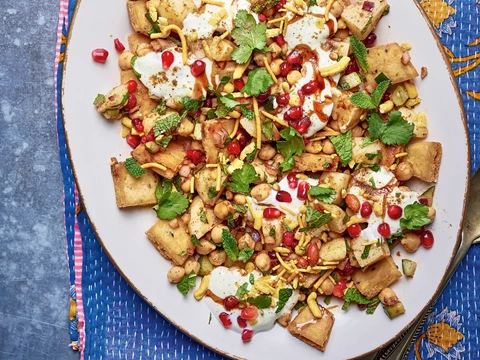
‘Desi Nachos’: Crunchy, Saucy Papri Chaat Recipe
Food
One of India’s most popular street foods, papri chaat are crispy chips of fried wheat dough, topped with zesty chickpea salad, drizzled with sweet tamarind sauce and finished with the crunchy Bombay mix and chaat masala seasoning.
Artichokes to Ricotta: How Arab Rule Changed Sicilian Cuisine
Food
The cultivation methods, crops and dishes that Arabs introduced in Sicily not only survive but thrive today through foods that are integral and widely celebrated.