Golden Vessel From the Islamic Golden Age Reflects Cross-cultural Connections
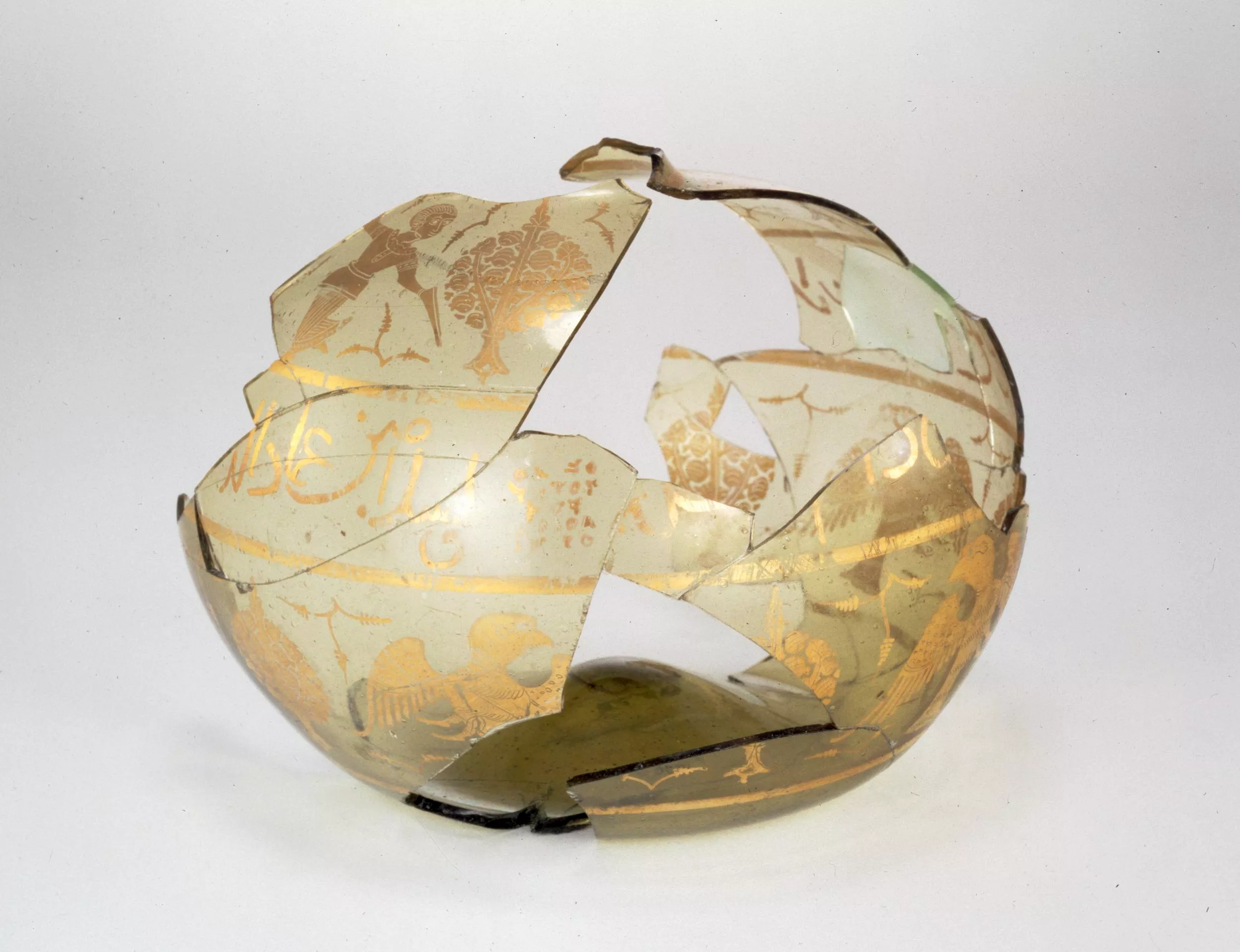
The mystery inherent in any ancient object amplifies when only fragments remain. Scholars believe this elegant vessel of thin, clear blown glass, which has been part of the British Museum since the remaining reconstructed pieces were acquired in 1906, was crafted in mid-12th-century-CE Syria or Anatolia. The bottle, which most likely originally had a neck for pouring liquid, might have held the rosewater typically shared with guests after a feast.
The rhythmically gilded patterns, created by painting the glass with gold dust suspended in liquid (most likely water and an adhesive) before lightly refiring the bottle, offer a tantalizing glimpse of courtly life during the Islamic Golden Age. Near the top, a dancer performs with castanets while another figure plays a harp next to lush pomegranate trees, a scene that evokes the pleasures of this world and the next. At the base, the trees alternate with depictions of fierce, open-winged eagles.
These iconographies reflect a world teeming with cross-cultural exchange emerging from both flourishing global trade and wide-ranging political turbulence. Similarly costumed dancers appear on near-contemporary works from Sicily and the Caucasus, while images of eagles show up in other areas of Christian and Muslim societies of the period to signify royalty and strength.
The Arabic inscription at the center pays homage to the Turkoman atabeg (ruler) Imad al-Din Zengi, who served Seljuk sultans as governor of Mosul and part of modern-day northern Syria from 1127 CE to 1146 CE. The founder of the Zengid dynasty and a champion of Islam, Zengi also retook Edessa (now Urfa, in southeast Türkiye) in 1144 CE from Frankish Crusaders, their first major setback. Given that history, is it coincidence that the trunks and branches of the pomegranate trees resemble the hilts of swords?
Quick Facts
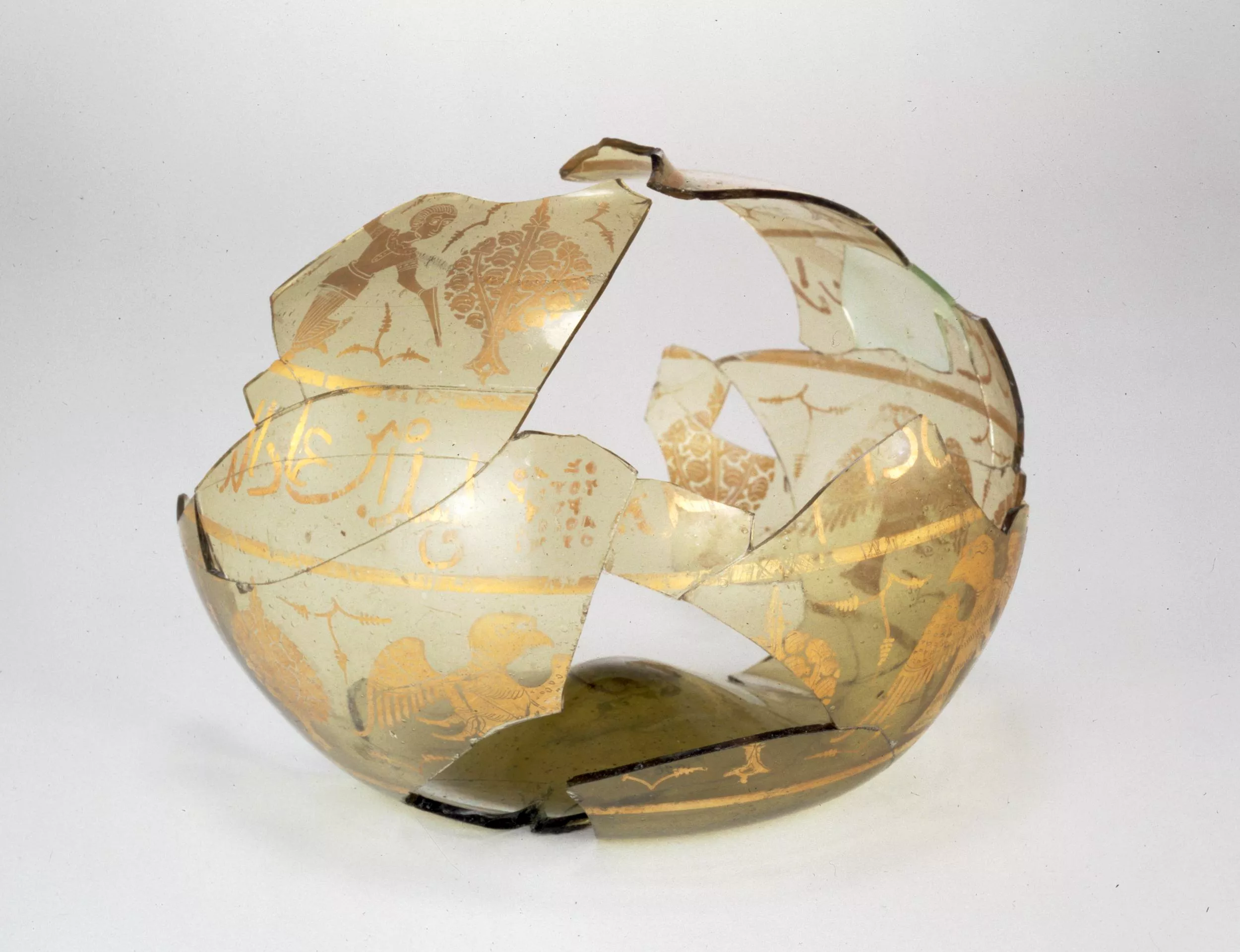
Seljuk Dynasty Gilded Glass Flask
Period: Seljuk Dynasty (1037 CE-1153 CE), c. 1127 CE-1146 CE.
Place of Origin/Found: Syria or Anatolia.
Medium: Glass, gold paint (gilded glass).
Dimensions: 12.8 cm x 16.1 cm x 16.1 cm (5 in. x 6.3 in. x 6.3 in.).
Where To Find It: The British Museum, permanently displayed in the Albukhary Foundation Gallery of the Islamic World.

You may also be interested in...
Sisters Behind HUR Jewelry Aim To Honor Pakistani Traditions
Arts
Culture
What began with a handmade pair of earrings exchanged between sisters in 2017 has evolved into a jewelry brand with pieces worn in more than 50 countries.
How Gulf's New Museums Are Championing Cultural Memory and Heritage
Arts
The result of decades of planning, new facilities in Saudi Arabia and the rest of the Arabian Gulf reflect the region's cultural renaissance and effort to preserve its heritage.
A Conversation With Author Tim Bascom on Why Football Endures
Arts
Culture
As the 2026 World Cup nears, Tim Bascom asks: Why do people keep playing soccer when the world is ready to break apart?