Ottoman-Era Hijaz Railway’s Legacy Endures, Chugging Toward Revival
The legacy of an Ottoman-era project to connect Damascus, Syria, to the holy site of Madinah in modern Saudi Arabia and beyond is breathing new life into today’ visions for rail in the region.
Tawfiq Al Juhani drove at great speed, though it was hard to tell exactly how fast because none of the dials in his battered old SUV worked. He rested one hand on the wheel, a ponytail poking out from beneath his cap. His feet danced back and forth between the clutch and the accelerator, rarely stepping over to the brake.
We were roughly 80 miles (129 km) south of AlUla in the west of Saudi Arabia. I traveled there in the spring of 2024 to research the Hijaz Railway, which, in the early years of the 20th century, ran for some 800 miles (1,287 km) from Damascus, Syria, to Madinah. On this day, looking at Hijaz, the rugged, mountainous region that extends in every direction, I found such a feat hard to imagine. Al Juhani, the head of his tribe in the area, had offered to show me what remained.
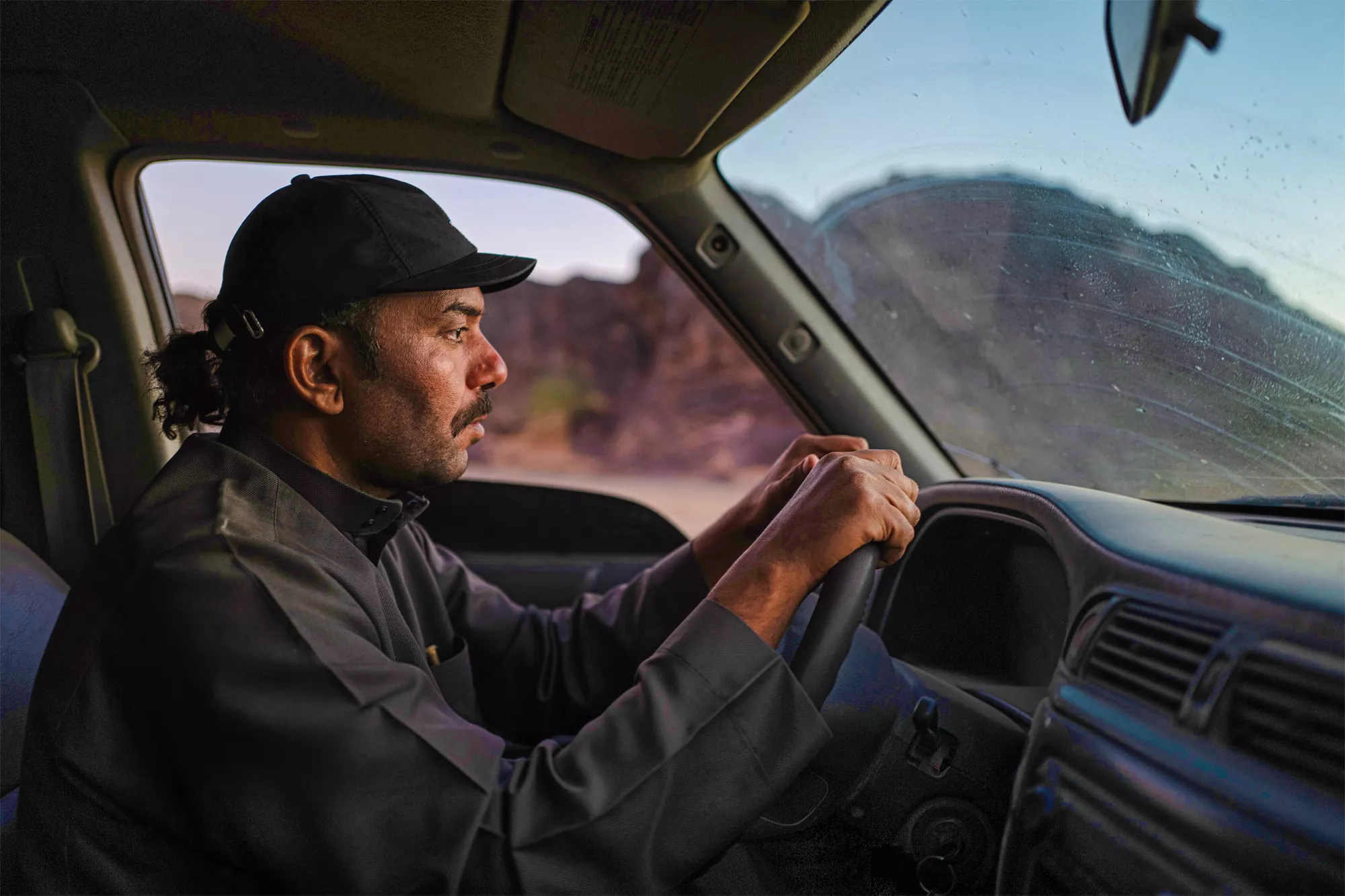
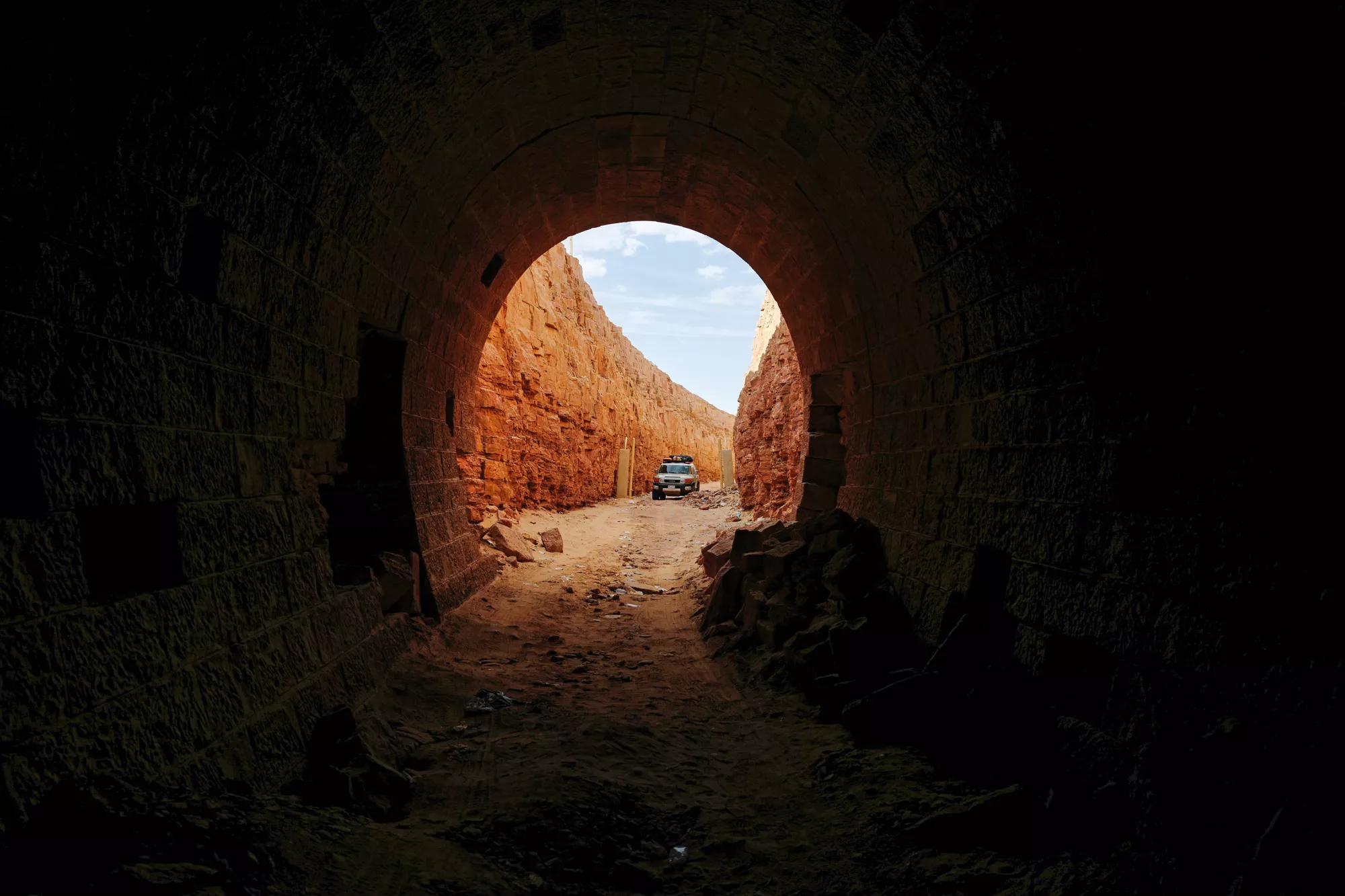
Tawfiq Al Juhani drives off-road near the remote train station of Bir Jdid, part of the historical Hijaz Railway, roughly 220 kilometers (137 miles) north of Madinah. Top A railway tunnel cuts through a steep and rocky section of the landscape 50 kilometers (31 miles) south of Tabuk, Saudi Arabia.
The ribbon of tarmac that we had started out on disappeared as the vehicle careered off-road, and Al Juhani swung us from one track to another. Eventually, at the edge of the wadi, or dry riverbed, he stopped and got out. There, nestled into the low, dark hills, was a two-story building made of black basalt. Red sandstone bricks lined the edges in decorative trim.
"This is the first railway station I remember," Al Juhani told me. It was called Mudarraj, and much of its structure has survived the intervening years impressively. "I was first shown this place by my grandfather," he continued. The old man had remembered the line and stations being built, and told his grandson stories of the Ottoman construction effort. "He was fascinated by the skill. And now I am too."
I discovered that the story Al Juhani was telling has been largely forgotten in Saudi Arabia. Yet the Hijaz (Hejaz) Railway helped shape the modern region. Over two years, while researching my forthcoming book on the railway, I traveled across the surviving route to understand what remains of that lost world.
What began as a journey into the region's past felt increasingly tied to its future.
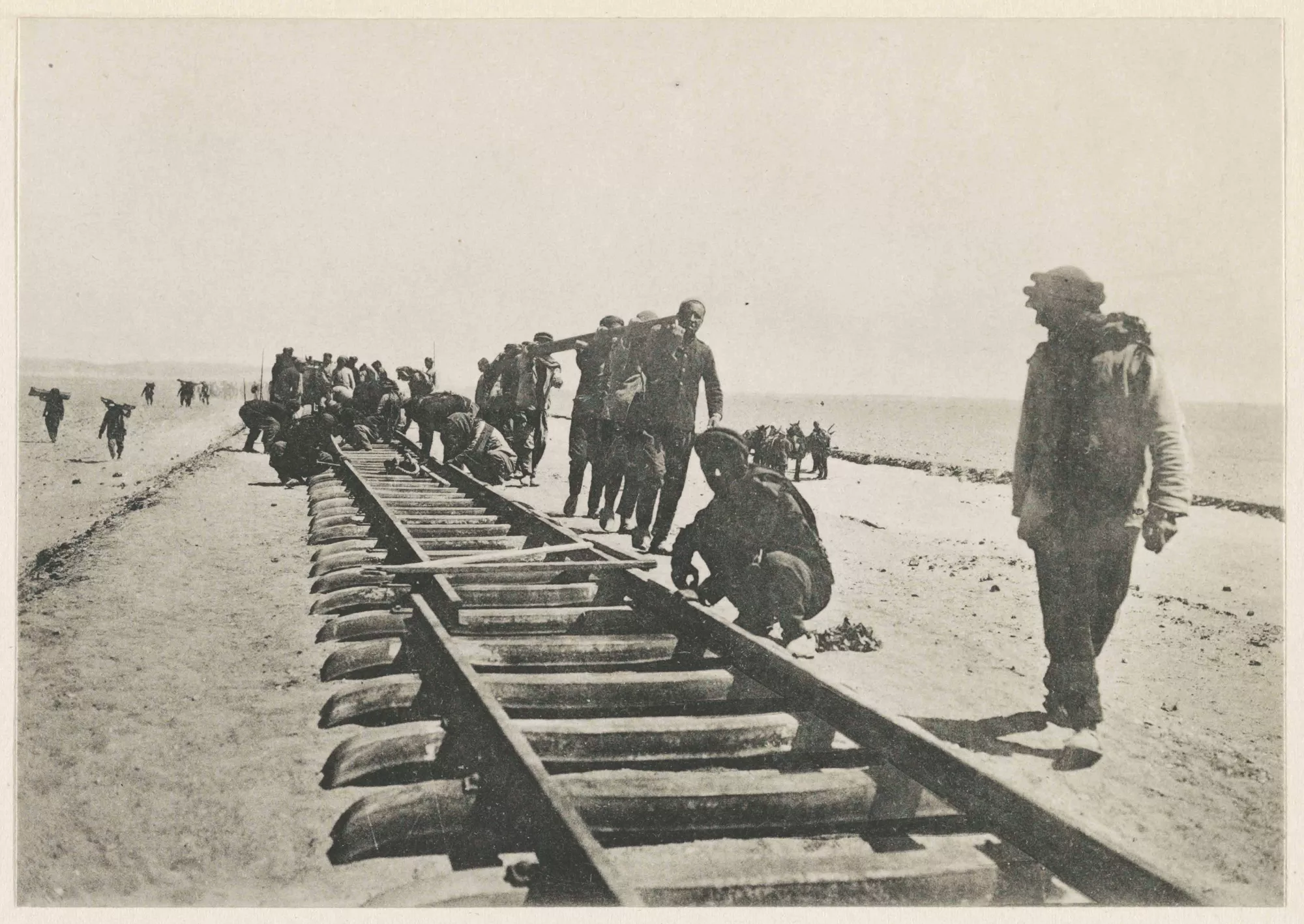
Workers lay rails near Tabuk in 1906. Construction of the Hijaz Railway required thousands of military conscripts who toiled for eight years in varied landscapes.
For some time after the untimely demise of the Hijaz route following World War I, part of its legacy endured. In Syria the line continued to be part of a broader railway network. Until 2011, it still crossed into Jordan, where it remained operational, if rarely used, all the way to the south of the country.
Since opening fully in 2018, Saudi Arabia's Haramain high-speed railway has achieved what the Ottoman-era Hijaz Railway never did: a direct rail connection between Makkah and Madinah, dramatically reducing journey times for millions of Hajj pilgrims. In a very different technological and political era, it nevertheless echoes one of the central ambitions behind the original project: shrinking distance across the Hijaz.
Today, however, no passenger services in the Middle East cross an international border. That absence increasingly looks anomalous as Arabian Gulf governments revive plans for regional rail integration.
In December 2025, Saudi Arabia and Qatar signed an agreement for a high-speed electric railway linking Riyadh and Doha. In the spring of 2026, Türkiye and Saudi Arabia formally agreed to advance plans for a railway connecting the two countries through Jordan and Syria. More than a century later, some of the original ambitions behind the Hijaz Railway-including regional integration and the movement of people-are once again shaping infrastructure discussions across the region.
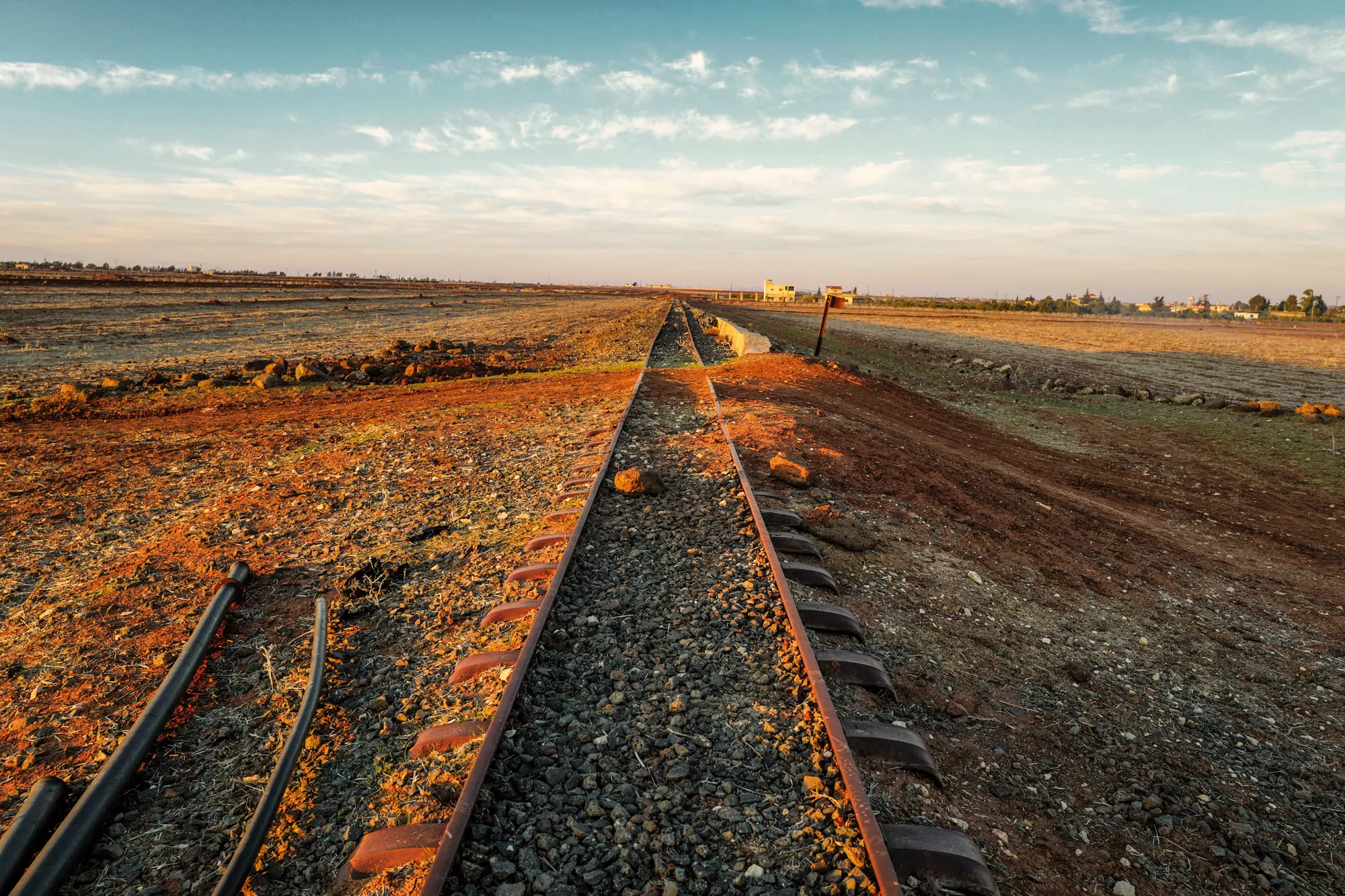
Tracks run through the countyside south of Daraa, Syria.
Origins of the Hijaz Railway
Construction of the Hijaz Railway began on September 1, 1900, on the orders of Ottoman Sultan Abdul Hamid II, amid the waning years of the empire. The Ottomans had already lost the Balkans and North Africa and were faced with growing internal opposition.
The railway was expected to serve three functions. Politically, Abdul Hamid wanted to connect the periphery of Ottoman territory back to the center, where his control was strongest. Militarily, the railway would act as a bulwark against European imperialism, allowing for reinforcement of defensive positions on the Mediterranean and Red seas. Religiously, it would replace the traditional Hajj camel caravan to Makkah and Madinah. By reducing the pilgrimage from 40 days-one way-to as few as three in a carriage, the sultan stood to gain much-needed legitimacy in trying times.
All three aims were important, said professor Zekeriya Kurşun, a specialist on the subject whose expertise I sought out in Istanbul, "but the religious reason was elevated above the others." It was popular with a majority of Ottoman subjects, and being the leader behind a sacred project was useful for the sultan. Journeys that once consumed weeks of hardship suddenly became predictable and comparatively safe, reshaping the psychological geography of the region.
"The most unique aspect of all was how it was funded," Kurşun added. Abdul Hamid contributed personally, and taxes were levied within the empire, complemented by voluntary donations from the global Muslim community. Donations arrived from across the Muslim world, including British India, Singapore and South Africa, turning the railway into a rare pan-Islamic infrastructure project that extended far beyond Ottoman territory itself. The railway became the first in Ottoman territory that received no financing from foreign powers and was designated as waqf: an Islamic endowment whose assets could not be sold and charitable purpose not easily changed.
Ottoman authorities deployed thousands of military conscripts to build the railway, said Kurşun, and the landscapes in which they worked were fierce, varied and often far from urban centers. In his comprehensive 2005 history book The Hejaz Railway, author James Nicholson writes, "Winding its way through some of the most dramatic desert mountain scenery in the world...its construction was a tale of endurance and resolve made epic by the heat [and] the harsh conditions."
Another factor was the variation in terrain, which required very different skills for the construction. In Syria, the route passes through the volcanic plateau called the Hauran. There, some years can see vast quantities of rain, making the area green and fertile, and famed for its agricultural capacity-so much so that during Roman rule it was referred to as "the granary of Rome."
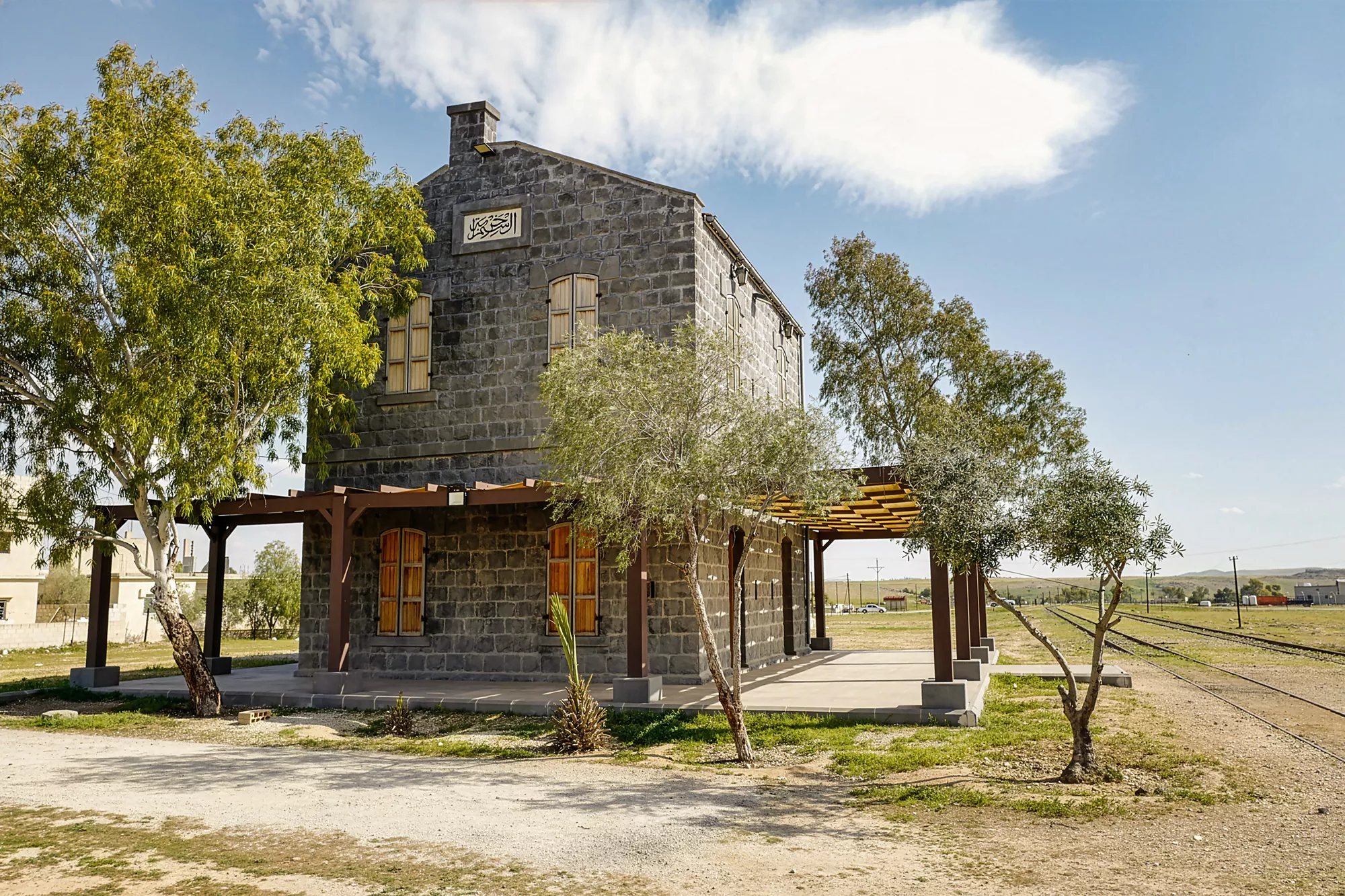
The Hijaz Railway passed through the station at Khirbet Samra in the north of Jordan, close to the city of Mafraq-whose name, coincidentally, means "crossroads" in Arabic.
The advancement of the line here required hundreds of bridges, aqueducts and culverts to manage the drainage. In the Yarmouk Valley-a stunning, steep cleavage in the earth (now the border between Syria and Jordan) and through which the railway passed on a slightly later branch line on the way to the Mediterranean Sea-a series of highly complex stone and iron bridges was required to navigate the gorge.
"The railway workers had to overcome many technical difficulties," writes Nicholson. These, ironically, also included a scarcity of water along much of the route south of the Hauran and a severe shortage of locally available fuel sources.
Even in this era, the journey along the route is challenging. I passed through Syria and northern Jordan in winter and spent nights shivering in temperatures that barely reached 40 degrees Fahrenheit (4 degrees Celsius). South of Amman, Jordan's capital, where the desert and its dry mountains take over, it feels terribly exposed, and it's feasible to travel for scores of miles at a time without seeing another human. I thought often of the laborers who built it, who survived on a poor and limited diet and toiled through opposite extremes of temperature that climbed to over 120 degrees Fahrenheit (49 degrees Celsius).
By 1908 engineers had extended the rails to Madinah, and six years later they connected a branch line to the Mediterranean. But in the face of opposition from local tribes who were unwilling to cede their traditional role of transporting Hajj pilgrims, planners eventually abandoned proposals to extend the railway to Makkah.
Still, it was a great success for the ailing empire. In 1909 French explorer Charles-Eudes Bonin noted admiringly in the academic journal Annales de Géographie: "By reducing costs and journey times, and by protecting travellers ... the Hijaz Railway has restored the terrestrial pilgrimage to its former glory."
The optimism surrounding the railway did not last long. Less than a decade later, during World War I, the railway was repeatedly attacked. Raiding parties destroyed large sections of the route-including the stretch Al Juhani showed me in the desert south of AlUla. The war eventually led to the Ottoman Empire's collapse.
The last train on the Hijaz line in what is now Saudi Arabia departed in 1925. By the middle of the past century, it fell into disrepair; even the rails had been removed.
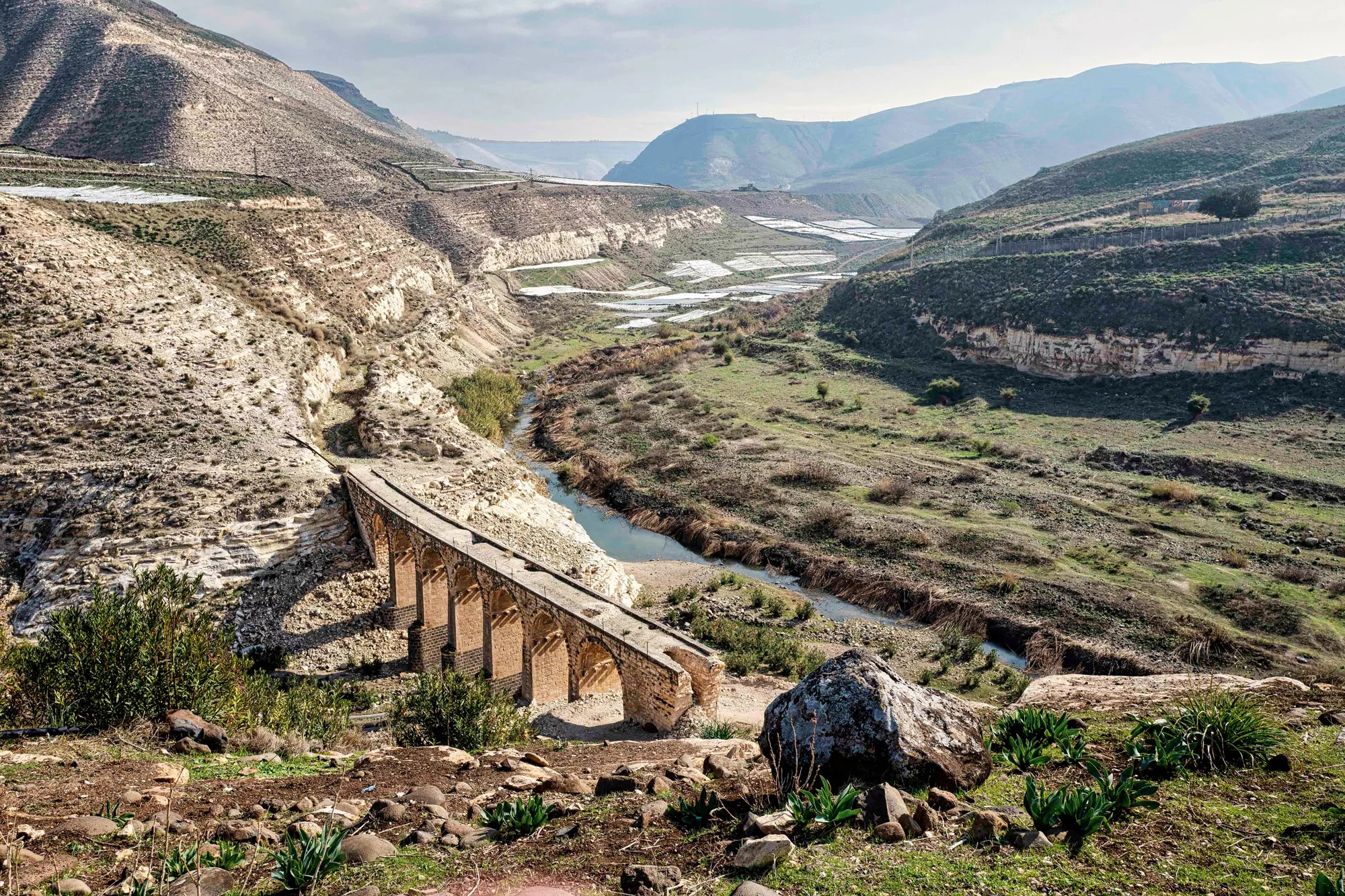
A Hijaz Railway bridge spans part of the Yarmouk Valley in Syria. More than a century later, some of the original ambitions of the railway are taking shape.
Steaming Ahead From Past to Future
Over the decades, various efforts were made to rehabilitate the Hijaz route. Most notably, in the 1960s, work in the north of Saudi Arabia involved rebuilding embankments and replacing dilapidated bridges and culverts. But cost spiraled, and that vision never fully materialized.
Yet traces of the Hijaz still survive across the region, scattered through deserts, cities, abandoned stations-and even make tourist attractions.
Since 2023 I have been exploring the route, returning multiple times to collect memories of a past era. Its starting point is marked by the grand Hijaz Railway Station in downtown Damascus, where a mixture of European and Ottoman influences is designed to make a suitably striking impression on those preparing to travel by rail.
It has now been 14 years since the last train from Damascus, and in some rural Syrian stations, employees have moved in, turning waiting rooms into divans. Others lie empty and have been targeted by looters. An enduring myth of the presence of buried Ottoman gold has led to stones being pulled from walls and doorways, and holes dug under the track, leaving sleepers sticking out like skeletal ribs.
But for many, it is still a source of pride, and there even lingers the hope of some kind of return.
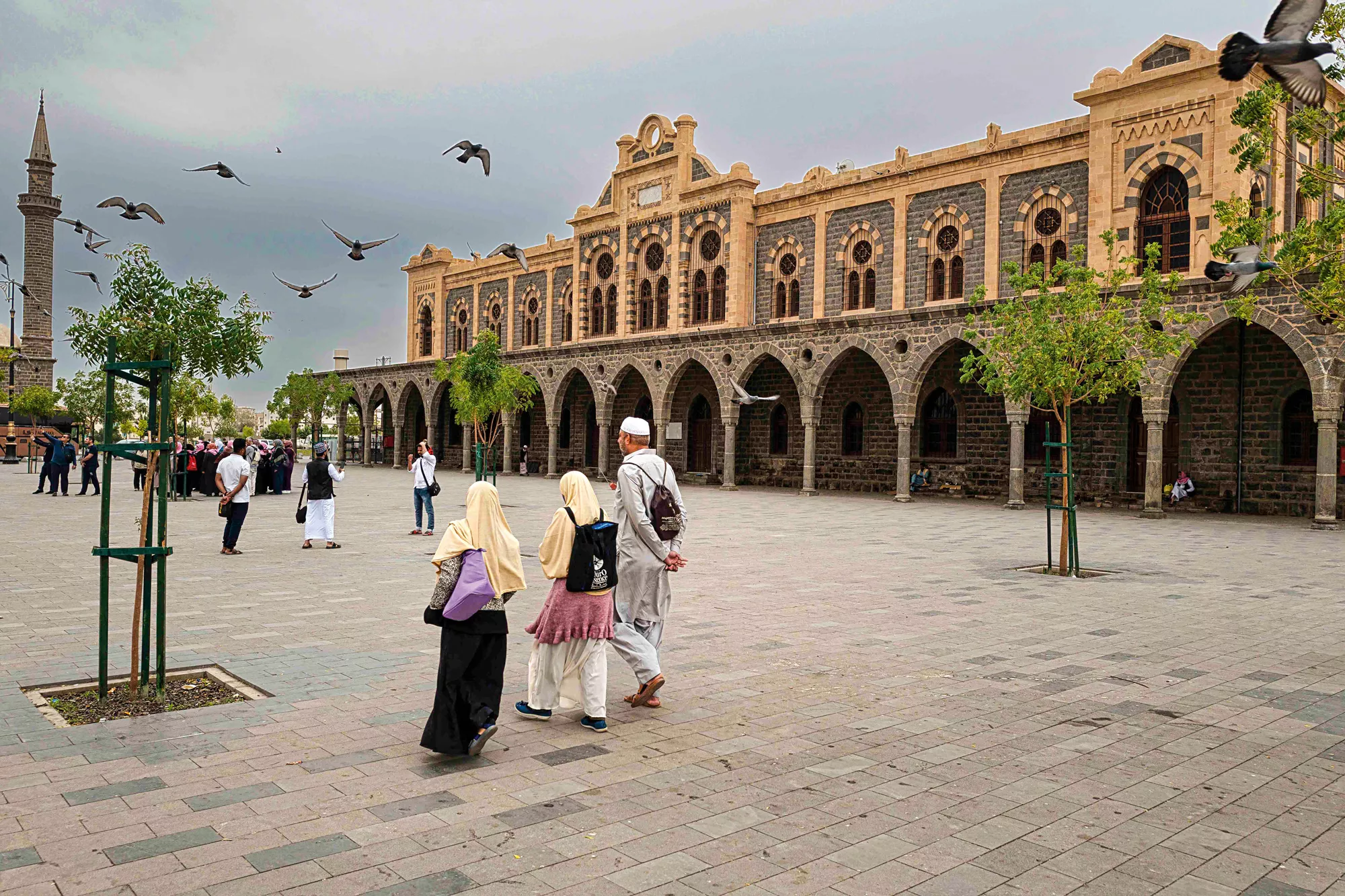
With its grand façade, the station at Madinah, Saudi Arabia, marks the end point of the Hijaz Railway route.
"When we worked on this railway, we knew we were part of this long, rich history," said Mazen Malla, an engineer at Al Qadem station in Damascus. "It's like a vein for us," echoed Na'im Al Kharazai, an employee from Daraa in southwestern Syria.
I have heard similar sentiments hundreds of times. Much of the desire was for the return of the sense of connection as much as the physical infrastructure. In Mafraq, northern Jordan, the stationmaster Fawzi Al Khar'azeh told me, "There was movement and life back then. I wish for it to return, and I believe that it must."
"The Hijaz Railway was one of the earliest models of industrial architecture in the Holy Lands," said Raja Gargour, who oversaw the renovation and installation of a museum at Ma'an in Jordan. Like Amman and Tabuk, in Saudi Arabia, Ma'an was a small oasis town before the arrival of the railway. The Hijaz, said Gargour, contributed greatly to the development of all three cities.
For many Jordanians, the railway is also intrinsically connected to the foundation of their country. It was at Ma'an that Emir Abdullah, later King Abdullah I of Jordan, arrived by train and established his first royal palace in a railway building. "There's a lot here that is integral to this country's story," said Gargour, "and all of that in turn impacted the rest of the region in the years that followed."
South of Ma'an's new museum, the rails have long since been removed, and only the shape of the railway embankment remains.
In Saudi Arabia the project is furthest from living memory. Yet there is still a physical presence. Bridges, culverts and fortresslike stations survive in isolation in the desert, like islands left behind when a river stops flowing. For many long stretches, the only company is sporadic herds of grazing camels.
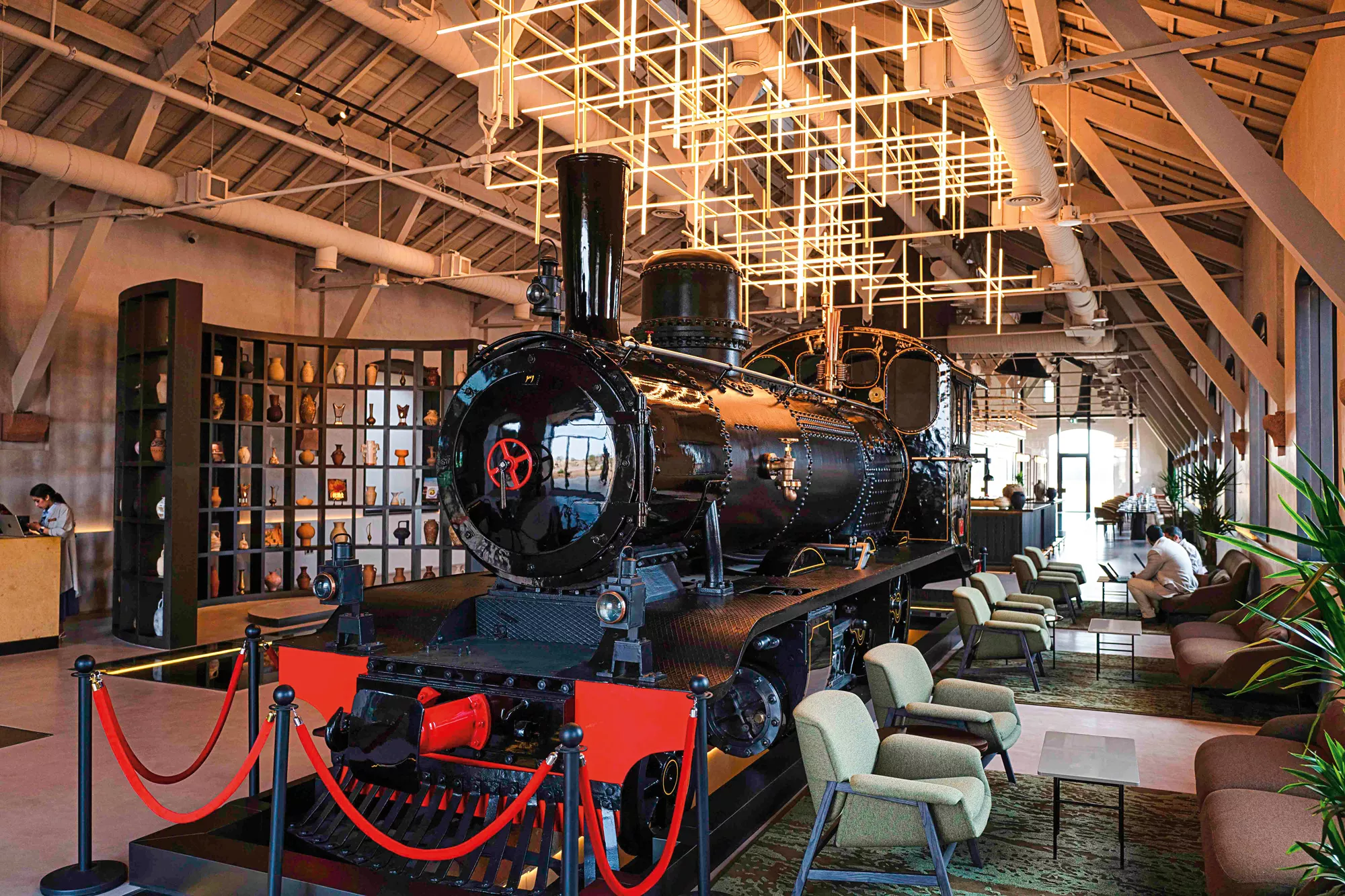
A refurbished locomotive from the original railway operations stands on display in the five-star Chedi hotel, which has repurposed the station buildings at Hegra (Mada'in Salih).
Another small but well-curated museum is housed inside an original building at Tabuk, and the extensive Hijaz station at Hegra, the archeological site also known as Mada'in Salih, has been refurbished spectacularly to find new life as a five-star Chedi hotel. What was once the maintenance depot is now a restaurant, and a restored locomotive takes pride of place alongside a section of original railing preserved under glass.
The resurgence of regional railway planning, including proposals for a new rail corridor linking Türkiye and Saudi Arabia via Jordan and Syria-often framed by commentators as a revival of the Hijaz Railway-suggests that regional leaders increasingly see railways as tools for economic integration and long-term infrastructure planning.
Although most of the original route survives only in fragments, the idea behind the Hijaz Railway continues to exert a powerful pull across the region.
As the British engineer Gareth Dennis puts it in his book, How the Railways Will Fix the Future: "Railways are both the past and future of human mobility. They are the safest and most energy efficient means of mass transport that we've conceived of and likely ever will conceive of."
For some though, regardless of modern developments, the audacity of the original story is itself essential to preserve. At the end of my journey with Al Juhani, we stopped at a remote Hijaz station called Bir Jdid, just over 137 miles (220 km) north of Madinah. It was one of four of which he was custodian. Close by was a pilgrimage fort, built to support the Hajj caravans a few hundred years before the railway, and behind both lay a deep well. Water sources like this made both early Hajj caravans and later the train journey possible.
"The Hijaz Railway was one of the earliest models of industrial architecture in the Holy Lands."
In twilight, close to the lip of the well, Al Juhani set a fire and began making tea. The sky slipped away. "Imagine what it took to design a railway here," he implored of me. "Think about all the people who passed by this way." The world was reduced to glowing embers and cracking twigs. "I tell my kids about the railway," Al Juhani said.
"What happened here affected all Arabs. It's our heritage, and I keep it alive by protecting these buildings." Its true value today, he believes, is in showing what humans are capable of creating, especially against the odds. "It can inspire us. But if no one knows, then history is lost."

You may also be interested in...

America at 250: The Eastern Foods the Nation Has Always Loved
Food
History
As the United States marks the 250th anniversary of its independence from Great Britain on July 4, the foods that filled the tables of the Founding Fathers—the late-18th-century statesmen who were most influential in the new country’s creation—are a reminder that elite households relied on ingredients carried through trade routes connecting the Mediterranean, Africa, Asia and regions now known as the Middle East.
AramcoWorld: 75 Years of Visual Storytelling Through Photography
Arts
History
Part 2 of our series celebrating AramcoWorld’s 75th anniversary this year highlights “visual vagabonding”—the magazine’s expanded use of vibrant images over the decades to fulfill the mission of cultural connection..webp?cx=0.5&cy=0.5&cw=480&ch=360)
Photo Captures Kuwaiti Port Market in the 1990s
History
Arts
After the war in 1991, Kuwait faced a demand for consumer goods. In response, a popular market sprang up, selling merchandise transported by traditional wooden ships. Eager to replace household items that had been looted, people flocked to the new market and found everything from flowerpots, kitchen items and electronics to furniture, dry goods and fresh produce.